Psychiatry - O. K. Napreyenko 2001
Clinical Psychiatry
Ecological Psychiatry
Since the mid-20th century, human impact on nature (anthropogenic) has acquired a global scale: the expansion of industrial agglomerations and monocultures; industrial waste; radioactive substances; electromagnetic and Other types of radiation; pesticides; ocean oil pollution, and other consequences of the scientific and technological revolution (the "price of civilization"). This has affected not only individual regions, but the entire biosphere as well.
Ecology (from Greek oikos — house, dwelling, environment, and logos — study) is the science of the relationships between organisms and with their environment. The term "ecology" was proposed in 1866 by the German scientist E. Haeckel to denote the science studying METABOLISM/18.html">The Influence of biotic and abiotic (ecological) factors on organisms. Biotic factors represent the totality of organic-origin factors that determine the conditions of Organism existence. These include anthropic, or anthropogenic, Factors affecting the organic world. Abiotic factors constitute the totality of external inorganic environmental conditions that affect an organism.
The last decade has been marked by The Emergence of a new branch of psychiatry — ecological psychiatry, which studies mental disorders and protects mental health under The impact of traditional natural factors and increasing anthropogenic pollution of the biosphere. A specialist in ecological psychiatry must be well-informed in related fields, namely: occupational pathology, radiation and military medicine, toxicology, disaster medicine, neurology, endocrinology, and internal medicine, among others.
The MAIN OBJECTIVES OF ecological psychiatry are as follows:
Epidemiological — The Study of mental disorders caused by the action of specific environmental factors.
Etiological and pathogenetic — the identification of the Causes and Mechanisms underlying Mental Disorders Associated with specific ecological situations.
Clinical — the investigation of the clinical manifestations and progression of mental disorders resulting from the aforementioned ecological factors, as well as the pathomorphosis of mental illnesses under their influence.
Diagnostic — The Development of appropriate Methods for diagnosing mental disorders.
Therapeutic and prophylactic — the development of effective means for treating and preventing mental disorders caused by environmental factors, as well as the Rehabilitation of patients.
Etiology AND Pathogenesis
Below is a Classification of environmental factors that can trigger the development of mental disorders or worsen their course. When the Influence of Environmental factors is proven, a dual coding system according to ICD-10 is used in registering the Diagnosis of a mental disorder. The etiological code is taken from Chapter XIX — "Injury, poisoning and certain other consequences of external causes" (S00–T98) and Chapter XX — "External causes of morbidity and mortality" (V01–V98). The diagnostic psychiatric code corresponds to the headings and categories of Chapter V — "Mental and behavioural disorders" (F00–F99).
The environmental factors presented in the classification are of both natural and artificial (anthropogenic) origin. The action of natural factors manifests itself in natural and extreme conditions (aerospace flights, underwater and surface navigation, expeditions to the North and South Poles and other regions difficult for humans to access: deserts, jungles, mountain peaks, etc.), as well as during natural disasters (earthquakes, hurricanes, floods, tsunamis, fires, etc.).
Nowadays, a process of anthropogenic modification of natural factors is taking place, which can alter their pathogenicity for human health, including mental health. For instance, environmental pollution has led to the "greenhouse effect," altering the planet's climate; the depletion of the ozone layer results in increased exposure to ultraviolet and ionizing radiation; edible mushrooms acquire toxic properties. Furthermore, natural cataclysms can lead to the contamination of the biosphere with anthropogenic factors in the event of the destruction of storage sites for toxic and radioactive substances.
Anthropogenic factors can exert their effects during the production, use, transportation, storage, and disposal of toxic and radioactive substances, as well as during technological accidents, armed conflicts, and terrorist acts.
Classification of environmental factors causing mental disorders (O. K. Napreenko, K. N. Loganovsky, 1997)
1. Physical
1.1. Radiation
1.1.1. Ionizing radiation
1.1.2. Microwave (SHF) electromagnetic radiation
1.1.3. Other electromagnetic fields
1.1.4. Visible, ultraviolet, infrared, including laser, radiation
1.2. Vibration and sound
1.3. Infrasound and ultrasound
1.4. Adverse climatic and meteorological conditions
1.5. High and low temperatures
1.6. Changes in atmospheric and Water pressure, and the gaseous environment
1.7. Effects of acceleration and gravity
1.8. Electric current and discharges
2.1. Drug intoxication
2.2. Intoxication by non-medicinal substances
2.2.1. Metal poisoning
2.2.2. Poisoning by other Inorganic Compounds
2.2.3. Organic compound poisoning
2.2.4. Pesticide poisoning (insecticides, herbicides, fungicides, rodenticides, etc.)
2.3. Effects of chemical warfare agents
3. Biological factors
3.1. Food poisoning caused by seafood, mushrooms, berries, plants, etc.
3.2. Toxic effects of contact with venomous animals (snakes, insects, fish) and plants
3.3. Poisoning or infection by medical biological substances (Vaccines, IMMUNOGLOBULINS, etc.)
3.4. Effects of biological weapons (toxins of biological origin)
Intoxicative mental disorders are of particular practical importance in ecological psychiatry. According to their degree of toxicity, substances are classified as extremely toxic, highly toxic, moderately toxic, mildly toxic, and practically non-toxic. Following the classifications developed by N. E. Bacherikov et al. (1989) and O. K. Napreenko and K. N. Loganovsky (1997), neurotropic poisons are divided into the following groups.
1. Strictly psychotropic
1.1. Convulsants (corazole, cicutoxin, strychnine, tremorine, etc.)
1.2. Psychodysleptic substances, or hallucinogens (lysergic acid diethylamide, bufotenin, psilocin, psilocybin, mescaline, ditran, cannabinol, harmaline, etc.)
1.3. Poisons affecting neurotransmission, or synaptic poisons: substances that stimulate cholinergic (acetylcholine and cholinomimetics) and adrenergic (adrenaline) systems, block cholinergic (atropine sulfate, etc.) and adrenergic (dihydroergotamine) systems, and monoamine oxidase inhibitors (imipramine, etc.)
2. Indirectly psychotropic
2.1. Poisons selectively damaging The Liver and Kidneys (tetrachloroethane, carbon tetrachloride, etc.)
2.2. Nephrotoxic agents (mercury, chromium, lead, oxalic acid, etc.)
2.3. Cardiotoxic substances (cardiac Glycosides, aconitine, etc.)
2.4. Anticoagulants (dicoumarol, etc.)
2.5. Poisons that suppress the respiratory center (narcotics, ethanol, sleeping pills, opiates, Hydrocarbons, etc.)
2.6. Hemolytic poisons (arsine, saponins, snake venom, etc.)
2.7. Poisons that convert Hemoglobin into methemoglobin (aniline, nitrobenzene, toluidine, etc.)
2.8. Poisons that paralyze respiratory Enzymes and Tissues (cyanides)
Changes in Central Nervous system activity play a significant role in the body's adaptive responses to harmful environmental factors. Clinical and instrumental examination data from patients with environmental-origin psychiatric disorders do not always confirm the presence of organic Brain damage. Asthenic, neurosis-like, and certain acute psychotic syndromes can occur due to the disintegration of brain activity caused by pathological afferentation from the altered internal environment of the body, as well As a result of direct neurochemical disturbances. Alterations in cerebral Blood flow are of particular importance in the pathogenesis of mental disorders during poisoning.
In acute poisonings, the following CNS impairment syndromes may be observed: coma, acute psychotic states, convulsive, apoplectic, and pain syndromes, as well as syncope. Cerebral syndromes can be combined with dysfunctions of the respiratory and cardiovascular systems, liver and Kidney failure, and allergic syndrome.
In chronic intoxications, CNS changes are phased in nature. Initially, excitation of the Cerebral Cortex AND higher autonomic centers develops. Clinically, this manifests as affective lability, Sleep rhythm disorders, lowered thresholds of analyzer excitability, increased excitability of the Autonomic nervous system, instability of neurohumoral regulation, and dysfunction of Endocrine glands that eventually progresses into a state of chronic impairment.
In the second phase, CNS depression is observed, accompanied by asthenia—exhaustion, irritable weakness, fatigue, drowsiness, lethargy, decreased analyzer responsiveness, and inertia
of the autonomic nervous system, along with a tendency toward hypotension and bradycardia. These disorders are rooted in metabolic disruptions and impaired neurohumoral regulation.
The nonspecific syndrome of chronic intoxication in its early stages precedes the development of more characteristic somatoneurological and frequently psychiatric disorders specific to particular types of intoxication (lead, mercury, manganese poisoning, etc.). The distinctiveness of these syndromes is associated with the known organotropism of certain poisons, which have the capacity to affect various parts of The Nervous System.
In cases of prolonged intoxication, so-called functional Changes in the nervous system may become persistent and transform into a dystrophic process. The subcortical and diencephalic brain regions, the vestibular analyzer, and peripheral nerves are most frequently affected.
Thus, toxic agents can exert their effects through various pathways: directly on the CNS when the agent crosses the blood-brain barrier (typically resulting in acute psychotic disorders), and on metabolic processes via Blood Circulation, oxygen supply to the brain, etc. (G. V. Morozov et al., 1989).
The pathogenesis of mental disorders under the influence of environmental factors can be universally described using the aforementioned stress theory. G. Selye considered typical Features of the stress response in mammals and humans to include the activation of the pituitary-adrenal system (with increased secretion of corticotropin, adrenal cortex hypertrophy, and hypersecretion of corticosteroids), involution of the thymic-Lymphatic system, and the development of gastric ulcers and hemorrhages (Selye's triad). Stress is defined as "a general nonspecific neurohumoral response that occurs in the body under conditions that threaten the disruption of Homeostasis" (E. N. Goncharenko, Yu. B. Kudryashov, 1985). The activation of Lipid Peroxidation is viewed as a key link in the stress response.
Following refinements to G. Selye's theory, the mechanisms of stress were expanded to include the activation of the sympathoadrenomedullary, cholinergic, histaminergic, and serotonergic systems.
The stress response unfolds in three stages:
1) alarm (mobilization of reserves and a short-term decrease in overall resistance);
2) increased resistance (activation of homeostatic regulatory systems);
3) exhaustion (decreased resistance).
If exposure to the extreme factor continues, the terminal stage of stress may result in the patient's death.
Two Types of stress response are distinguished:
1) somatic (biological) stress—a response to the direct action of a stimulus, including unfavorable environmental factors;
2) chronic and acute psychological stress—a stress response occurring without direct contact with the stressor, mediated by so-called distant reception (F. Z. Meerson, 1981).
THE CONCEPT OF Radiation Stress deserves separate consideration. V. O. Baraboi and co-authors (1991) emphasize that radiation injury, much like other types of stress, shares general regularities while also possessing distinct specificities. These include stochastic (probabilistic) genetic Mutations and reproductive Cell death. The authors demonstrated the significant role of lipid peroxidation in The Mechanism of stress. The nonspecific, stress-induced form of cell death during irradiation can be defined as interphase death, which is not directly associated with the damage to the cellular genetic apparatus and mitosis, but is primarily driven by membrane processes.
Since environmental disasters frequently result in the evacuation and resettlement of populations, the terms "ecological stressogenic situation" or "ecological stress" are used when discussing the adaptation of migrants (I. A. Khlebovich et al., 1975). This refers to the cumulative impact of natural and socio-economic factors that lead to strain on regulatory mechanisms, disruption of dynamic equilibrium, decreased resistance, and an increase in entropic processes within the physiological systems of the body. The old dynamic stereotype breaks down while a new one is formed, and the functioning of regulatory mechanisms maintaining physiological constants within the adaptation range undergoes alteration.
The ecological complex affects the body through The system of analyzers and regulatory mechanisms, as well as directly at the tissue, cellular, molecular, and submolecular levels, among others.
Clinical Picture
According to Bonhoeffer's teaching, exogenous psychoses manifest differently depending on the specific features caused by etiological factors. E. Kraepelin had already noted that infectious psychoses differ from intoxication psychoses in both The Nature and Structure OF THE leading psychotic syndrome. Infectious delirium is accompanied by profound impairment of consciousness and "patchy" hallucinatory experiences detached from the system, whereas intoxication delirium is characterized by a lesser degree of clouding of consciousness and staged hallucinations on a theme familiar to the patient (professional delirium). I. I. Kutko and V. V. Pavlenko (1995) demonstrated that psychological trauma and chronic emotional stress associated with the Chornobyl Nuclear Power Plant accident affect the structure and, particularly, the plot of the paranoid syndrome in Schizophrenia. In other words, exposure to certain adverse environmental factors leads to typical mental disorders. These disorders differ only in that the same factor, depending on the dose, rate (intensity) of exposure, and individual response, can trigger different syndromes. At the same time, the same syndrome can be observed under the influence of various environmental factors.
The systematics and classification of mental disorders caused by adverse environmental factors have been insufficiently developed. Nevertheless, it is possible to identify typical ("core") syndromes for the majority of ecological mental disorders.
M. V. Korkina et al. (1995) distinguish several types of acute intoxication psychoses. Like other organic and symptomatic mental disorders, according to ICD-10, they are classified under codes F04–F09, as well as F18; according to DSM-IV — under 293; and within the multiaxial system — Axis IV, "Psychosocial and Environmental Problems."
Intoxication delirium, like all delirious states, is accompanied by vivid visual hallucinations, which may be joined by thematically related auditory, olfactory, and gustatory hallucinations. Patients perceive these hallucinations as reality, lacking any critical attitude toward them, which ultimately dictates their behavior. Orientation to the environment is impaired. Disorientation in time may be the first symptom of a developing mild delirium. Except for the most severe cases, orientation to person is preserved. Predelirious states manifest as vivid dreams, episodic visual illusions and hallucinations, and sometimes unmotivated anxiety or euphoria. Delirium states can be caused by poisoning with atropine sulfate, astmatol, cyclodol, diphenhydramine, and can also arise as a complication of Treatment with leponex (clozapine), tisercin (levomepromazine), melipramine, etc. Delirium in Carbon monoxide poisoning is accompanied by olfactory hallucinations, and in tetraethyllead poisoning — by tactile hallucinations affecting the Oral Cavity (the sensation of having a Hair in the Mouth). Delirium is also observed in poisoning with aniline (muttering delirium), gasoline, hydrogen sulfide, methane, and other hydrocarbons, as well as following severe food poisoning (botulism, Mushroom poisoning).
Intoxication oneirism differs from delirium by motor passivity, even during complete disconnection of consciousness and immersion in fantastic visions. It most frequently occurs during poisoning with acetone, other ketones, or ether.
Intoxication stupor, sopor, and coma develop in cases of poisoning with barbiturates, large doses of tranquilizers, carbon monoxide, organophosphorus compounds (pesticides), tetraethyllead, and antifreeze (where stupor is combined with euphoria), among others.
Intoxication confusion is an amnesic syndrome characterized by a complete lack of understanding of the surroundings, failure to recognize close relatives, disorientation, bewilderment, and incoherent speech (emotional exclamations or stereotypically repeated phrases). It accompanies poisoning with ergot or its preparations (ergotoxin, ergotamine), as well as organophosphorus compounds.
Intoxication paranoids have been described during poisoning with certain psychostimulants (amphetamine, ephedrone, pervitin, cocaine). Delusions of persecution and reference, and sometimes auditory hallucinations, occur. Other types of delusions may also be observed. If delusions of control and pseudohallucinations appear, suspicion of a triggered schizophrenic episode becomes well-founded.
Intoxication mania-like states can occur during treatment with high doses of atebrin (mepacrine), as well as in hydrogen sulfide poisoning. In such cases, euphoria and talkativeness are usually accompanied by a maniacal drive for activity.
Other syndromes during acute intoxication are relatively rare. In cases of corticosteroid overdose or prolonged treatment with them, particularly in children, catatonia-like excitability may occur. In acute pesticide poisoning, a syndrome of extreme affective instability has been described—a continuous shift of uncontrollable emotions (alternating fear and euphoria, malice and bewilderment). Epileptiform syndrome is characteristic of acute lead poisoning.
Astheno-vegetative syndrome is the most common clinical manifestation of the prolonged action of adverse factors, primarily neurotropic substances, as well as ultra-high frequency (UHF) electromagnetic fields, vibration, noise, ultrasound, and ionizing radiation. In intoxications involving metals, hydrocarbons, their halogenated derivatives, phosphorus, and organofluorine compounds, disorders are typically described as toxic neurasthenia.
Under intense exposure, so-called ecological cerebrasthenia develops, which is an early manifestation of organic central nervous system damage resulting from adverse environmental factors. Its central manifestation is the irritable weakness syndrome combined with attention exhaustion, reduced mental performance, and dysmnesic disorders. Affective disturbances are clearly noticeable: irritability takes the form of affective explosiveness. Dysthymic mood changes—tearfulness, caprice, discontent, sometimes with a dysphoric tinge—are frequent. Hyperesthesia to sounds, bright light, and climate (meteopathy) may occur. Transient psychosensory disorders are also observed. Neurosis- and psychopathy-like syndromes frequently develop against the Background of cerebrasthenia.
Organic brain damage syndromes occupy a central place in The structure of mental disorders, including those caused by the prolonged action of adverse factors.
Psycho-organic syndrome (ecological encephalopathy) is a form of organic central nervous system Damage caused by adverse environmental factors, accompanied by the gradual development of a dystrophic process in the brain. It can occur in chronic poisonings—as a residual phenomenon after severe acute intoxications, as well as under chronic exposure to ionizing radiation, decompression sickness, etc.
Psycho-organic syndrome may present as a residual condition resulting from an acute exogenous (intoxicational) psychosis. It has a stable, monotonous course. Under chronic exposure to adverse environmental factors, a progressive organic disease may develop. In such cases, the psycho-organic syndrome can exhibit a certain dynamic—from initial cerebrasthenic manifestations to profound dementia.
Psycho-organic syndrome is characterized by helplessness accompanied by memory decline, weakened intellectual abilities, and an inability to adapt. Asthenia is a constant disorder. The triad by N. Walther-Buel (1951) highlights the main clinical signs of the psycho-organic syndrome: memory impairment (up to Korsakoff's syndrome), deterioration of comprehension, and affective incontinence. Signs of focal disorders of speech, agnosia, and apraxia are frequently added, leading to dementia on this basis.
Alongside progressive dementia in psycho-organic syndrome, psychopathy-like personality changes become noticeable. Depending on the predominance of dementia signs or psychopathy-like changes in the clinical picture, two Variants of the psycho-organic syndrome are distinguished: demented and charakteropathic. Often, these variants represent consecutive Stages of the organic process. In the further course of the disease, charakteropathic features are overridden by gross symptoms of dementia. In the charakteropathic variant of the psycho-organic syndrome, the symptoms of the psychopathy-like state are also accompanied by certain intellectual and mnestic impairments (I. Ya. Zavyiliansky et al., 1989).
The demented variant of the psycho-organic syndrome caused by adverse environmental factors is described in the diagnostic categories of ICD-10: dementia in other specified diseases classified elsewhere (F02.8) and unspecified dementia (F03), as well as in DSM-IV: dementia due to a general medical condition or neurological disease/damage; dementia due to multiple etiologies (294.1) and dementia with unspecified etiology (294.8). Intellectual and mnestic decline in this case is caused by a chronic progressive brain process of a toxic-metabolic and dyscirculatory nature. Multiple impairments of higher mental Functions are revealed, including memory, thinking, orientation, comprehension, calculation, and learning ability. Memory disorders are typically characterized by a decline in The ability to learn, retain, and recall new information, although the loss of long-acquired knowledge and skills is also observed. Consciousness is usually undisturbed. The impairment of cognitive functions is accompanied by a deterioration in the control of emotions, social behavior, and motivations.
The static variant of the psycho-organic syndrome caused by adverse environmental factors, according to ICD-10, corresponds to the diagnostic categories "Organic personality disorder" (F07.0) and "Other organic personality and behavioral disorders due to brain disease, damage, or dysfunction" (F07.8). According to DSM-IV, it is classified as personality change due to a general medical condition or brain damage (310.1). This disorder is characterized by a significant disruption of the usual premorbid behavioral pattern. The manifestations of emotions, needs, and drives undergo the most change. The deficit in cognitive functions primarily (or exclusively) concerns planning and the anticipation of obvious personal and social consequences. Characteristic psychopathological signs of organic personality disorder in victims of ecological disasters include apathy, paranoid thinking, and/or excessive preoccupation—most often Abstract (concerning concepts such as "justice" and "injustice")—along with detail-oriented and viscous speech. Volitional processes (persistence and goal-directedness, especially when activities require a prolonged time and delayed reward) are also diminished. In A number of cases, involvement in antisocial acts is observed.
A specific variant of the psycho-organic syndrome is the so-called cerebral-focal psychosyndrome, which is accompanied by pathology of drives and mood disorders. Its symptoms include restlessness, unrestraint, high activity or, conversely, apathy, a lack of drives, and stupor. Mood disorders manifest in various ways: pathological merriment, irritability, causeless tearfulness, and depression. As the cerebral-focal psychosyndrome progresses, dementia deepens. The symptoms become monotonous, brain structures disintegrate, and differentiated functions acquired during ontogeny and phylogeny are the first to be lost.
Thus, the clinical parameters of the psycho-organic syndrome are extremely broad—ranging from psychopathy-like changes to overt dementia. The main clinical variants of the psycho-organic syndrome, according to H. L. Voronkov et al. (1990), include the following:
1) asthenic (cerebrosthenic). Characterized by persistent asthenic features with increased physical and mental exhaustion, affective lability, and a tendency toward dysthymic states;
2) explosive. Accompanied by extreme irritability and brutality (with a tendency toward overvalued ideas and querulous trends), minor dysmnesic disorders, weakening of volitional inhibition, and heightened drives;
3) euphoric. Characterized by good-naturedness, uncritical attitude towards one's condition, dysmnestic disorders, outbursts of anger giving way to helplessness and tearfulness, and decreased work capacity;
4) apathetic. Accompanied by aspontaneity, lack of initiative, narrowing of the range of interests, indifference to everything, including the future, and dysmnestic disorders.
The asthenic (cerebroasthenic) and explosive variants of psychoorganic syndrome occur under the influence of harmful environmental factors and intercurrent illnesses, and can lead to decompensation, whereas the euphoric and apathetic syndromes are characterized by stability against these influences. Ionizing radiation most frequently causes the apathetic (asthenic) variants of psychoorganic syndrome.
Against the background of psychoorganic syndrome, an organic periodic psychosis may sometimes develop, running a course similar to affective-phase disorders, hallucinatory-paranoid states, twilight states of consciousness, and accompanied by various diencephalic disturbances. Pseudoparalytic syndrome or Korsakoff's syndrome may also develop. Lead poisoning can trigger Epilepsy. Chronic paranoid psychosis occurs in cases of prolonged intoxication with organophosphorus compounds (pesticides) and hydrogen sulfide.
Under the influence of certain unfavorable environmental factors (e.g., radioactive iodine), endocrine pathology may develop (in particular, pathological processes of The Thyroid Gland), on The basis of which mental disorders are formed. The endocrine psychosyndrome (M. Bleuler, 1954) is a variant of the psychoorganic syndrome.
One of the syndromes of organic brain damage in intoxications is Korsakoff's syndrome (amnestic), which combines fixation amnesia (memory impairment for recent events), disorientation regarding place, time, and surroundings, inactivity, and confabulations. According to ICD-10, organic amnestic syndrome not induced by alcohol or other psychoactive substances is classified as F04; according to DSM-IV, this amnestic disorder is the consequence of a general medical or neurological condition or injury — 294.0.
Along with psychopathological symptomatology in environmental mental disorders, a prominent place is occupied by various micro-organic neurological manifestations. Initially, against the background of asthenization, microfocal neurological symptoms appear, indicating dystrophic changes primarily in the Brainstem, vestibular analyzer, vascular centers, and diencephalic structures.
In environmental encephalopathies, the most common organic symptoms include: cerebellar and optico-vestibular; Asymmetry of the palpebral fissures and nasolabial folds; and oral automatism. The Optic nerve may be affected; its atrophy has been observed after poisoning with lead, hydrogen sulfide, etc.
ENVIRONMENTAL vasopathies can be observed in chronic intoxications with mercury, hydrogen sulfide, etc., as well as in chronic irradiation, Vibration disease, and chronic exposure to microwave radiation.
Extrapyramidal syndrome with manifestations of parkinsonism can be observed in particularly severe poisonings with certain substances, as well as under chronic exposure to ionizing radiation. Severe manganese poisonings are characterized by extrapyramidal disorders. Parkinsonian-like disorders have also been described in severe poisonings with hydrogen sulfide and carbon monoxide, which exhibit a tropism for the subcortical ganglia.
Syndromes of myelopathy and encephalomyelopolyneuropathy accompany severe poisonings with organic mercury compounds, lead, arsenic, tricresyl phosphate, phosphorus, organochlorine compounds, etc., and also occur under the action of ionizing radiation in significant doses.
Syndromes of encephalopolyneuropathy, polyneuropathy, autonomic polyneuropathy, and neuropathy caused by the action of organic Solvents, vibration, ionizing and microwave radiation, as well as intoxication with arsenic, lead, hydrogen sulfide, and others, are also distinguished.
PSYCHOGENIES AND THE CONCEPT OF POST-TRAUMATIC STRESS DISORDER
Emergencies exert a negative impact not only through exposure to specific environmental factors, but also via accompanying psychotoxigenic/psychotraumatic circumstances. These include: direct threat to life or health; indirect impact of such a threat due to the anticipation of its realization; other frustrating situations; situations of deprivation (emotional, social, sensory, motor, etc.) caused, for example, by changes in living conditions, including Separation from loved ones, loss of job, change of residence or place of study, etc.; pain and other unpleasant sensations, and loss of physiological functions. The pathogenicity of stressor situations is largely determined by their intensity, duration, significance for the individual, and suddenness of onset. Constitutional-typological personality traits (accentuated, infantilized, psychopathic), somatoneurological burden, and the inadequacy of psychological defense mechanisms in a given situation also play a significant role.
Psychogenic Disorders in disasters include: psychogenic reactions (non-pathological, i.e., within the limits of personality reserves, and pathological); persistent neurotic (proper neuroses) and psychopathic decompensations; neurotic and psychopathic development; and reactive psychoses. Among these, the following are distinguished: acute affective-Shock reactions (affective stupor, affective agitation, twilight states of consciousness, Ganser syndrome); protracted reactions in the form of psychogenic depression, paranoid and paranoiac syndromes, schiziform and schizophrenic reactions, asthenic and anankastic syndromes, and various hysterical reactions; epileptiform reactions — affect-epilepsy; and variants of psychogenic-situational development — paranoid, anankastic, hypochondriacal, depressive, hysterical. According to ICD-10, these disorders are included in categories F40—F48, F60—F69, F28, F23, F29; according to DSM-IV — 300, 301, 307, 308.3, 309, 295.40, 297.1, 298.8.
In 1% of disaster survivors, psychotic-level disorders occur. The proportion of individuals who exhibit various neurotic-level mental disorders varies widely, ranging from 3% to 35% of the victims.
Yu. A. Alexandrovsky et al. (1991), V. M. Garnov (1994), and M. V. Korkina (1995), applying a dynamic principle, distinguish three periods in the development of a life-threatening situation.
In the acute (isolation) period, those in the epicenter of the disaster may experience the following psychotic states: affective-shock reaction, psychogenic stupor, psychomotor agitation, reactive confusion, and hysterical psychosis. Reactive psychogenic agitation is usually accompanied by fugue-like reactions (from the Latin *fuga* — flight). When several individuals are seized by psychogenic agitation, this situation is termed panic. (The term "panic" originates from the name of the ancient Greek god Pan. According to legend, all living creatures, upon Hearing the sounds of his horn-pipe, were struck with terror and fled in all directions.) At the time of the disaster, the majority of people experience episodes of polymorphic psychopathological symptomatology of a neurotic level, the core element of which is anxiety-phobic disorders combined with autonomic dysfunctions.
In the subacute period, the onset of which coincides with the Organization of rescue operations and lasts until evacuation to safe zones, the intensity of anxiety-phobic reactions decreases in the majority of victims, facilitating social adaptation. However, in some of them, anxiety-phobic reactions transform into neurotic states assessed as non-specific (hypomanic, obsessive-phobic, hysterical, asthenic, depressive, hypochondriacal).
The third period (the aftermath period) begins after the evacuation of the victims to safe areas. At this time, many patients undergo a complex emotional and cognitive reassessment of the experienced situation, and the bitterness of loss intensifies. Persistent non-psychotic psychogenic disorders may arise due to changes in the habitual routine caused by having to live in unfamiliar conditions. In this case, somatogenic mental disorders are often subacute in nature. A somatization of many neurotic disturbances occurs. Particularly frequent is the development of various fears thematically related to the extreme situation, as well as the appearance of intrusive memories of what was experienced. These states can persist for a long time, subsiding and then flaring up again — especially in situations that bear even the slightest resemblance to the past trauma. Hysterical symptomatology may arise or become exacerbated through the same mechanisms. Sleep disturbances with nightmares often persist. Psychogenic influences can also manifest as psychosomatic disorders. According to ICD-10, the aforementioned disorders are included in categories F40 — F48, F60 — F69, F28, F29; according to DSM-IV — 300, 301, 307, 308.3, 309. The classification of psychosomatic pathology is presented in the relevant section.
In 1980, M. Horowitz and co-authors introduced the term "post-traumatic stress syndrome" when describing the psychopathological consequences of the Vietnam War. Subsequently, the diagnostic category "Posttraumatic stress disorder" (PTSD) was incorporated into the American psychiatric classification, and later into DSM-IV (309.81) and ICD-10 (F43.1). The longer the psychological trauma acts, the higher the likelihood of developing PTSD.
In E. Kraepelin's classification, the syndromes of so-called fright neuroses and traumatic neurosis were united under the concept of "symbantopathies." T. Bleuler, adhering to this classification, described under symbantopathies the so-called psychoses of a treacherous fate, namely: traumatic fright, accident-related pseudodementia, traumatic hysteria, and others.
During examinations of soldiers who participated in World War I and complained of nightmares, the hypothesis was put forward that these dreams reflect the primary localization of "traumatic images," while their repetition is an infantile form of defense. According to Freud, the schematic formation of such disorders appears as follows: external impact — memories — pathological effect — defense. Freud classified these disturbances as traumatic neurosis.
M. Horowitz's schema (1985) is as follows: traumatic stress — denial — re-experiencing — assimilation. Symptomatically, "denial" manifests as amnesia, attention deficits, general psychic inhibition, and the desire to avoid any reminders of the trauma or associations related to it. The symptomatology of "re-experiencing" is characterized by recurring intrusive memories, sleep disorders including nightmares, dissociative episodes of re-experiencing the stressor situation (flashbacks), and feelings of anxiety.
American psychiatrist P. I. Liston (1967), who studied the psychiatric consequences of the atomic bombing in Hiroshima, concluded that disasters cause long-lasting mental impairments. Such conditions were classified as "survivor syndrome." The mental state of patients can vary — from zombie-like psychic numbing and drastic overall personality changes to reactions corresponding to the psychological adaptation of practically healthy individuals with sufficient social activity. Based on his psychiatric research in Hiroshima, P. I. Liston proposed a paradigm of psychopathological behavior: The process of "psychic numbing" as a consequence of technological violence and absurd death. According to the author, psychoanalytic theory must be revised in the context of current historical events. The Freudian paradigm of sexual repression should be contrasted with The Theory of unlimited technical violence and absurd death encountered by modern man. The "numbing process" identified by the author impairs the functions of symbolization and image formation, ultimately leading to mental disorders.
The pathogenetic mechanism of PTSD is driven by impaired neurohumoral regulation caused by overwhelming stress. A decrease in 6-endorphin levels in the Blood Plasma has been observed, which apparently indicates the chronic depletion of the endogenous opioid system in PTSD. An excess of adrenergic activity has also been detected, accompanied by elevated levels of dopamine and catecholamines in the blood plasma. It has been established that intense and prolonged stress induces changes in the cerebral cortex Neurons, blockage of synaptic transmission, and even neuronal death. Primarily, the brain regions that control aggressiveness and the sleep-wake cycle are affected.
As previously noted, the concept of PTSD was shaped by the experience of psychiatrists during the Vietnam War. Epidemiological studies revealed PTSD in 15% of male veterans and 9% of female veterans. Among natural disaster survivors, nearly 10–20% exhibit symptoms of PTSD.
According to the ICD-10 diagnostic criteria, post-traumatic stress disorder (F43.1) is defined as a delayed or protracted response to a stressful event or situation of an exceptionally threatening or catastrophic nature, which is likely to cause pervasive distress in almost anyone. Premorbid personality traits, as well as prior neurotic disorders, may lower the threshold for developing this syndrome or aggravate its course, but they are not causative factors and therefore cannot explain the onset of the disorder.
Typical features of PTSD include episodes of re-experiencing the psychological trauma through intrusive memories (flashbacks), dreams, or nightmares, occurring against the background of chronic numbness and emotional blunting, alienation, unresponsiveness to the environment, anhedonia (the inability to feel pleasure or joy), and behavioral deviations in situations reminiscent of the trauma. Typically, the sufferer fears and avoids anything that triggers reminders of the psychological trauma. Occasionally, there are acute outbursts of fear, panic, or aggression provoked by stimuli that unexpectedly evoke memories of the trauma or the initial reaction to it. A characteristic state of heightened autonomic arousal with severe insomnia and an exaggerated startle response, combined with anxiety and depression, is common. Suicidal tendencies and substance abuse are also frequently observed.
PTSD develops after a latent period that can last from several weeks to 6 months. The clinical course is fluctuating. In most cases, patients recover. However, sometimes the illness persists for many years after the catastrophe and transforms into a enduring personality change (F62.0). This personality disorder manifests as rigidity and maladaptation, leading to impaired interpersonal, social, and professional functioning. The diagnostic criteria are as follows:
1) hostility or distrust toward the world;
2) social withdrawal;
3) feelings of emptiness and hopelessness;
4) chronic feelings of apprehension, constant threat, and living "on the edge";
5) estrangement.
Such personality changes persist for at least 2 years. Differential diagnosis must ensure there is no history of organic brain damage that could account for similar clinical manifestations.
O. K. Napreenko and T. E. Marchuk (2001) distinguish 5 Clinical forms of this disorder: asthenic (asthenodepressive), anankastic, hysteric (hysterohypochondriacal), paranoid, and mixed.
SELECTED ISSUES IN ENVIRONMENTAL PSYCHIATRY
Effects of Ionizing Radiation
Several MAIN MECHANISMS OF the impact of ionizing radiation on the nervous system are distinguished, namely:
1) direct action, including reflex or afferent action;
2) indirect action, mediated by multineurotransmitter, dysmetabolic, circulatory, and autoimmune disorders.
The classification of acute radiation sickness was developed by A. K. Guskova and G. D. Baisogolov (1971). The following forms are distinguished: typical (or Bone Marrow), transitional, intestinal, toxic, and cerebral. The severity of the injury depends on the radiation dose. Based on severity, the course of radiation sickness comprises the following stages: Grade I — 1–2 Gy; Grade II — 2–4 Gy; Grade III — 4–6 Gy; Grade IV — over 6 Gy.
Early neuropsychiatric manifestations of acute radiation exposure include general weakness, fatigue, apathy, indifference, dizziness, headache, paresthesia, neurological symptoms, nausea, vomiting, diarrhea, as well as drowsiness, depression, tearfulness, anxiety, fear, paroxysmal disturbances of consciousness, and psychosensory disorders (A. A. Portnov, D. D. Fedotov, 1971; B. I. Davydov, I. B. Ushakov, 1987).
The primary reaction to radiation is characterized by a typical dysphoric syndrome or its manic variant (the latter most frequently observed in Stage II of acute radiation sickness—the period of apparent well-being), i.e., euphoric excitation, also known as "X-ray hangover." During stage VIII (period of manifest symptoms), weakness, lethargy, and apathy become noticeable. The individual tires easily, and experiences fears, severe headaches, insomnia, nausea, and vomiting. In severe and extremely severe cases, immediately following a brief period of apparent well-being and a sharp somatic decline, symptoms of weakness and apathy rapidly escalate, progressing to states of stupor and varying degrees of delirium, sopor, and coma. In stage IV of the disease, patients with relatively mild radiation injury exhibit somatogenic asthenia, whereas those with severe injury develop amnestic syndrome, gross psychosensory disorders, and polyneuritis.
In survivors of the Chornobyl disaster exposed to doses of 1–4 Gy (acute radiation sickness of grades I–II severity), neuro-visceral regulation disorders and general asthenization were detected in the early post-exposure period. Exposure to doses of 4–6 Gy resulted in general cerebral and meningeal symptoms, autonomic disorders, and less frequently, minor focal and scattered cerebral microsymptoms and coordination disorders that worsened with increasing dose. In such cases, acute radiation sickness
of grade III (4.2–6.3 Gy manifested as acute radiation and radiation-toxic encephalopathies, acute psychosis with visual and auditory hallucinations, and cerebral edema. Grade IV severity (6–16 Gy) was diagnosed with acute radiation and radiation-toxic encephalopathies, subarachnoid-parenchymal Hemorrhage, and marked cerebral edema and Swelling (A. K. Guskova et al., 1987; F. S. Torubarov et al., 1989).
As long-term consequences of acute radiation sickness, peculiar forms of encephalopathy with a primary impact on the hypothalamo-pituitary region have been described. Alongside signs common to any encephalopathy, this form presents with relatively persistent asthenia, transitory catalepsy attacks, dystrophic and autonomic disturbances, and an inability to adapt to atmospheric changes — "meteopathy" (intolerance to heat, cold, barometric pressure fluctuations, etc.).
In the remote period of acute radiation sickness (3–5 years or more), post-radiation encephalopathy develops, manifesting as psycho-organic syndrome (A. P. Romodanov, O. R. Vynnytsky, O. K. Napreenko et al., 1993; A. I. Nyagu et al., 1997). Distinct personality changes are observed, cognitive functions and thought processes are impaired, memory declines (especially auditory-verbal memory), difficulties arise in concentration and mental task execution, alongside apathy, abulia, social alienation, anhedonia, fatigue, headaches, and dizziness. One of its manifestations is the schizoform psycho-organic syndrome, occurring when the Limbic System and the frontotemporal cortex of the left (dominant) hemisphere are affected (A. I. Nyagu, K. M. Loganovsky, 1998).
Prolonged exposure to ionizing radiation at doses exceeding maximum permissible limits, or following acute radiation sickness involving radionuclide incorporation, may lead to chronic radiation sickness.
The clinical picture of grade I (mild) chronic radiation sickness is dominated by moderate disorders of nervous regulation. As the disease progresses, asthenization and neurotrophic changes become more pronounced. A characteristic symptom is pain of various localizations, particularly headache, which is refractory to any analgesics. Sometimes it takes the form of a migraine accompanied by dizziness and nausea. When radionuclides accumulate in the bones, osteoalgic syndrome joins the clinical picture. Patients exhibit fixation hypomnesia, irritability, weakness, mental exhaustion, and increased fatigue.
Chronic radiation sickness of grade II (moderate) is characterized by diencephalic pathology and cerebroasthenic syndrome with pronounced fixation hypomnesia and rapid exhaustion of the nervous system. The osteoalgic syndrome intensifies, and sensitivity is impaired according to the radicular and polyneuropathic types. Signs of myelin damage in the PATHWAYS OF THE central nervous system are detected. The autonomic nervous system is affected at all levels, leading to progressive autonomic failure. Endocrine and neurotrophic disorders become distinct.
Grade III (severe) chronic radiation sickness is predominantly characterized by symptoms of diffuse organic damage to the central nervous system, with a predominance of Midbrain and diencephalic lesions. Encephalopathy progresses and is accompanied by vascular crises.
A characteristic form of psychopathological manifestations in chronic irradiation is an asthenic state, which manifests as polymorphism and the presence of "asthenic" crises accompanied by intensified headaches, general weakness, apathy, or violent affective outbursts. In cases of chronic irradiation in significant doses, radiation leukoencephalopathy, brain atrophy, and necrosis may develop, accompanied by psycho-organic symptoms, including intellectual-mnestic impairments that reach the degree of dementia.
The clinical picture of psychotic states—particularly in endogenous mental disorders developing in individuals exposed to ionizing radiation—does not significantly differ from the manifestations of psychosis in residents of other regions. Productive symptoms are characterized by a considerable number of coenesthopathies, as well as a developed system of delusional hypochondriacal ideas. Over time, in some patients, a peculiar delusional Concept of the disease crystallized as a consequence of, for example, the "psychotropic Influence of the 'Chernobyl-2' object" or another factor that cannot be explained from the standpoint of normal logic. Delusional ideas of invention on topics relevant to the Chernobyl Exclusion Zone ("methods for decontaminating the exclusion zone", "solving the energy problem", "radioprotection", etc.) are also observed. Most patients revealed microneurological symptoms and autonomic disorders.
Below is the systematization of mental disorders associated with the consequences of the Chornobyl NPP accident, which characterizes the variety of etiological factors and clinical courses of the aforementioned pathology.
Systematization of mental disorders associated with the consequences of the Chornobyl NPP accident
Class="center">(O. K. Napryeyenko, K. M. Loganovsky, 1999)
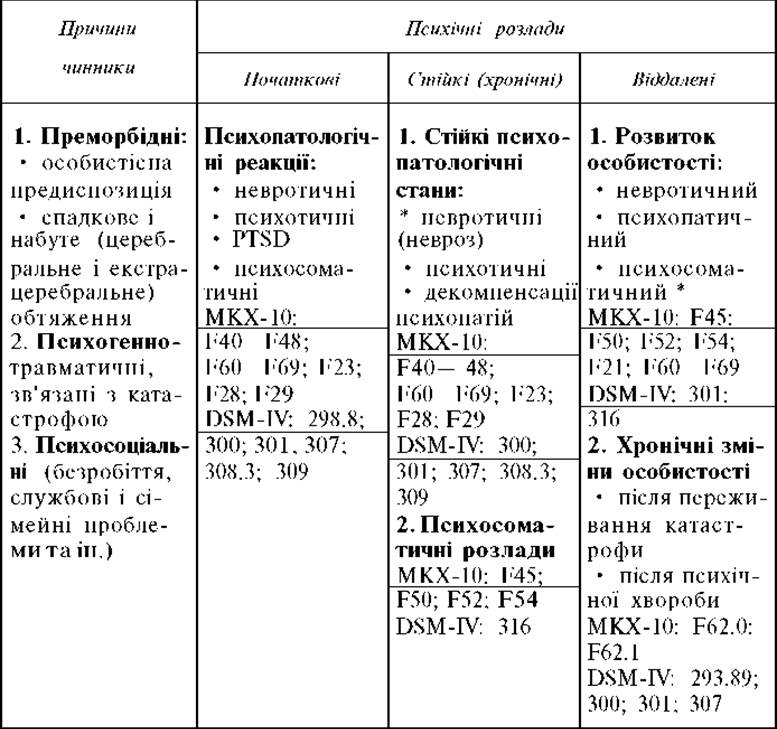
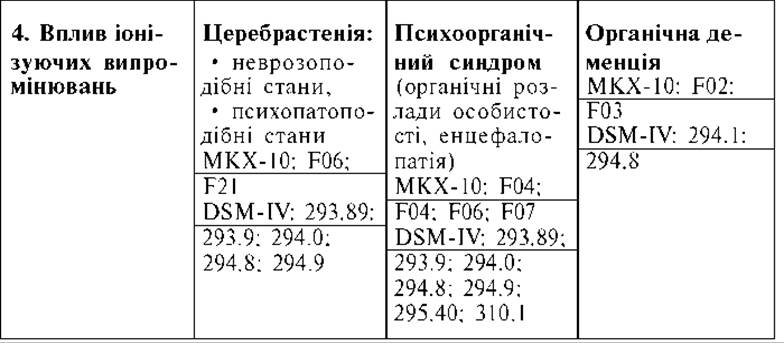
* Note. The term was proposed by G. K. Ushakov (1987); the disorder was described in detail by O. K. Napryeyenko and K. M. Loganovsky (1997).
The Study of the mechanisms underlying The formation of organic mental disorders associated with the Chornobyl accident has confirmed the pathogenetic role of alcoholization and psychoactive substance abuse under stressful circumstances. Regarding post-radiation disorders, mention should be made of The Role of exaggerated ideas among a certain part of the population regarding the radioprotective properties of alcohol. Therefore, it is advisable to trace the dynamics of such disorders in individuals affected by the Chornobyl accident: systematic use of psychoactive substances (ICD-10; F10–F19, F; DSM-IV; 303–305; 291–293) — chronic alcoholism, drug addiction, substance abuse — specific alcohol-, drug-, and substance-induced dementia (ICD-10; F10–F19; DSM-IV; 294.0; 294.1). M. Ye. Polishchuk and I. S. Zozulia (1993), based on a study of cerebrovascular pathology, concluded that radiation exposure pathologically affects all levels of the central nervous system: the cortex, subcortex, hypothalamo-brainstem, and spinal structures. The authors emphasize that cerebral vascular insufficiency most frequently develops in young people.
The consequences of prenatal brain irradiation are of particular significance. The developing brain is one of the most radiosensitive Organs in The Human Body. This is explained by the fact that the Critical Periods of cerebrogenesis are the periods of neuronal division and migration (8–15 weeks of the prenatal period), as well as the periods of synaptic connection formation and cytoarchitecture development (16–25 weeks). If the fetus is irradiated during these periods in doses exceeding 0.05 Gy, an increase in the number of children born with mental retardation, microcephaly, and seizures may occur (M. Otane et al., 1996; M. Otane, W. Schull, 1998). A. I. Nyagu, K. M. Loganovsky, V. S. Podkoritov, and co-authors (1991–1996) demonstrated the prevalence of mental retardation and emotional-behavioral disorders in children irradiated prenatally. Furthermore, it was established that the deterioration of these children's mental health is associated with both radiation and non-radiation factors. One of the biological mechanisms underlying these disorders is the radiation-induced dysfunction of the developing hypothalamo-pituitary-thyroid system (A. I. Nyagu et al., 1998). These findings are confirmed to some extent by Yu. O. Orlov (1993), who reported an increase in the number of children with Congenital Malformations and central nervous system tumors following the Chornobyl disaster.
NON-IONIZING RADIATION
Disorders caused by high- and ultrahigh-frequency currents (300 MHz – 300 GHz). When working with electric current under adverse conditions, patients complain of headaches, dizziness, increased fatigue, memory impairment, irritability, nighttime insomnia, daytime sleepiness, paresthesia, pain in the limbs and epigastric region, loss of appetite, thirst, discomfort in the cardiac region, and decreased performance. Anxiety and obsessive fears occur. Sometimes There is a sensation of wearing a tight helmet compressing the Skull. Weakness progresses, accompanied by intensifying irritability, intolerance to light and noise, and lethargy. The patient is unable to concentrate. Memory and intellect decline. Women experience menstrual irregularities, and men sometimes suffer from sexual disorders. Characteristic clinical manifestations of prolonged exposure to radiofrequency radiation on the body include autonomic dystonia with neurotrophic disorders and an asthenic state. Arterial hypotension, bradycardia, and other signs of increased parasympathetic tone of the autonomic nervous system are also typical, and their severity is proportional to the intensity of exposure.
In severe cases, against the background of an asthenic state, a vasopathic syndrome caused by the prolonged action of microwave fields may develop. Vagopathic syndrome is a vascular pathology periodically accompanied by paroxysms in the form of crises characteristic of diencephalic disorders. The vascular crisis is accompanied by angiophasic headache attacks, facial pallor, general hyperhidrosis, adynamia, fears, tremors, pulse instability, a tendency toward elevated blood pressure, constrictive cardiac pain, and occasionally fainting. In addition, irritability, weakness, and emotional rigidity—especially malice and anger affects—appear. Such emotional disorders can occur transiently, in the form of transitional dysphoria. Some patients exhibit circumstantiality or thought rigidity. Obsessive fears transform into overvalued ideas of a hypochondriacal nature. In the most severe variants, noticeable apathy and dysmnestic disorders are present. Thus, signs of a psycho-organic (encephalopathic) syndrome can be distinguished at this stage of the disease.
Disorders caused by industrial-frequency electromagnetic fields. High-voltage industrial-frequency electric fields (50 Hz) have a detrimental effect on the central nervous system. Their impact depends on the voltage, duration of exposure, and individual body reactivity. Prolonged exposure of the human body to an electric field of the specified frequency primarily causes vegetative-vascular dystonia.
Disorders caused by light, ultraviolet, and infrared rays. Under certain industrial conditions, as well as during intensive insolation, infrared rays can lead to heatstroke or sunstroke. Prolonged and intense exposure to ultraviolet rays causes rapid fatigue, headache, drowsiness, memory impairment, irritability, palpitations, and loss of appetite. Excessive exposure can induce hypercalcemia, hemolysis, and a decreased resistance to infections. Burns and dermatitis appear, headaches occur, body Temperature rises, and the eyes are affected (photoophthalmia).
Effects of Other PHYSICAL FACTORS
Injuries caused by vibration and sound. In the clinical picture of vibration disease, a characteristic vascular syndrome accompanied by acrospasm ("dead fingers" syndrome) occupies a prominent place. Under the influence of industrial vibration, In addition to local disorders, significant changes occur in the functional state of various levels of the Spinal Cord and brain, especially the autonomic nervous system. Asthenia becomes persistent, autonomic disorders acquire a pronounced character (similar to Raynaud's disease), and angiospastic crises can spread to the coronary and cerebral vessels. At the same time, attacks of dizziness (resembling Ménière's syndrome), headaches, syncopal episodes, and substernal pain are observed. The condition resembles the clinical picture of syringomyelia. In vibration disease caused by whole-body vibration, the clinical picture is dominated by diencephalic disorders, vestibulopathy, and autonomic polyneuropathy. Diencephalic pathology may be combined with organic microsymptomatology, and psychopathological symptoms correspond to a psycho-organic syndrome.
It has been established that intense sounds and noises primarily affect hearing and the central nervous system, and subsequently the functions of other organs and systems. Prolonged exposure to high-intensity noise (125–142 dB) causes asthenia and autonomic disorders, accompanied by irritability and, in particular, high sensitivity to sounds (even musical ones), noises, ringing, and a sensation of ear congestion. Under the influence of excessively loud noise, convulsions, nosebleeds, disorientation, and other symptoms may appear.
Injuries caused by ultrasound and infrasound. The destructive action of ultrasound (above 20 kHz) is associated with cavitation—the formation of cavities in a liquid. Under high-intensity ultrasound, sharp pain of various localizations, alopecia, burns, hemolysis, and clouding of the cornea and lens occur. High frequencies can cause death (petechial hemorrhages in various organs). Ultrasound leads to significant changes in the hearing organ: hemorrhages appear, and tissues, including Bone tissue, are destroyed. Individuals exposed to ultrasound for prolonged periods develop asthenia, drowsiness, dizziness, rapid fatigue, and vegetative-vascular dystonia. Infrasound (up to 20 Hz) can induce anxiety, agitation, dysphoria, and panic.
Heliometeotropic reactions and the influence of adverse climatic and meteorological conditions. A. L. Chжевський (1930) was the first to notice that the degree of human nervous system excitability, as well as mental state, depends on solar activity. To date, extensive statistical data have been accumulated demonstrating The connection between morbidity (including mental illnesses), mortality, and other disruptions in human vital activity with changes in solar activity, climate, and weather. These disruptions in vital activity are collectively termed "heliometeotropic reactions" (T. I. Andronova et al., 1982). On so-called magnetically disturbed days, the number of cardiovascular emergencies increases by 13–20%. A correlation is observed between geomagnetic disturbances and the worsening condition of psychiatric patients. Traffic accidents most frequently occur on the second day after a strong solar flare. This is explained by the fact that in healthy individuals, during the disturbance of the heliomagnetic field caused by a solar flare, the visuomotor reaction to signals decreases severalfold. G. M. Danishevsky (1968) substantiated the concept of disadaptation meteoneurosis.
Among environmental physical factors, changes in the Earth's magnetic field have the greatest impact on the psychophysiological state of a healthy person. Fluctuations in its intensity play a certain role in the formation of heliometeotropic reactions across all Regions of the Earth, particularly in high latitudes. During geomagnetic disturbances, energy is generated that corresponds to a power flux range 2 to 5 orders of magnitude higher than the threshold level for the human body. At the same time, autonomic and astheno-autonomic disorders are observed. In recent years, the possibility of a biotropic effect of the interplanetary magnetic field on the organism has been taken into account. A link has been proven between processes in this field and the frequency of vegetative-vascular paroxysms.
The biotropic action of atmospheric electricity and air ionization during thunderstorms and the formation of atmospheric fronts has been revealed (S. M. Chubinsky, 1965). It is believed that electromagnetic pulses act through The stimulation of Skin Receptors, causing changes in the functional state of the brain and autonomic reactions. Considering the high penetrative capacity of electromagnetic fields into tissues, one can hypothesize not only an indirect but also a direct effect on brain neurons.
The impact of atmospheric fronts is driven by electromagnetic impulses, abrupt shifts in temperature, humidity, and barometric pressure, as well as wind. These factors stimulate the central nervous system (CNS), alter vascular tone and metabolism, which can exacerbate psychopathological processes or alter the functional state of the nervous system in healthy individuals. S. M. Chubynsky (1965) proposed the term "frontosndrome" to describe meteotropic reactions.
K. M. Bykov and A. D. Slonim (1949) introduced the concept of landscape Reflexes, triggered by a complex of ecological stimuli: daylight duration, meteorological elements, and landscape features. This complex induces functional changes in the CNS and Endocrine System, and consequently, in the functions of other physiological systems and organs.
The polar night depresses the psyche and diminishes general vitality, whereas the polar day initially excites before leading to exhaustion. During the polar night, the tone of the sympathetic nervous system is significantly reduced, whereas during the polar day, it is elevated. Sleep disturbances resulting from these rhythmic fluctuations in physiological state lead to decreased work capacity and impaired well-being—a condition known as dyschronosis.
The "Antarctic tension" syndrome is characterized by asthenization of the body, sometimes reaching the clinical threshold of neurosis. During the polar night, appetite is disrupted, general tone and mental performance decline, accompanied by drowsiness, lethargy, a certain degree of inhibition, or conversely, irritability, impatience, and reclusiveness. Studies of Antarctic winterers have revealed seasonal shifts in psychological state caused not only by emotional distress but also by the impact of extreme climatic factors on the body.
Research in the European North (the Arctic region) demonstrated that adaptation disorders peaked during winter (May–July). The closest correlation with sharp fluctuations in meteorological factors was found regarding pain sensations (particularly arthralgia and myalgia). Autonomic disorders are characteristic of those working in extreme climatic and meteorological conditions, with parasympathetic tone predominating in winter and sympathetic reactions prevailing in summer (T. I. Andronova et al., 1982).
There are other explanations for the disturbances in the functional state of the nervous system among polar explorers. V. V. Boryskin (1973) argues that it is precisely informational deprivation and monotony—rather than the harsh climate and individual meteorological factors—that create unusual operating conditions for the CNS. It has been proven that sensory deprivation affects the Functions of the Reticular Formation and other brain structures. In the genesis of many mental disorders under extreme climatic and meteorological conditions, one must also account for the potential development of avitaminosis or hypovitaminosis, particularly a deficiency or excess of ascorbic acid and B-group Vitamins.
Based on clinical and physiological research in the Far North, a condition termed "psychoemotional tension syndrome" has been identified (Ts. P. Korolenko, 1978). Its primary clinical
manifestation is anxiety of varying degrees, ranging from psychological discomfort to the neurotic level of so-called floating anxiety.
A correlative relationship has been established between elevated anxiety levels and changes in atmospheric pressure. Unpleasant sensations, headaches, generalized weakness, depressed mood, insomnia or drowsiness, motiveless anguish, and restlessness are observed during periods of dropping atmospheric pressure, specifically during so-called barometric troughs (V. P. Kaznacheyev, 1980).
In decompression sickness, caused by a slow transition from elevated atmospheric pressure to normal (decompression) and the subsequent accumulation of excess nitrogen in the body, nervous system damage may occur. Disease manifestation is often preceded by skin pruritus. Characteristic features include arthralgia, myalgia, and Meniere's syndrome. Aseptic bone necrosis and deforming osteoarthrosis may develop. In severe cases, vascular embolism of the BRAIN AND SPINAL cord leads to mono- and paraplegia, lower limb paresis, urinary retention, aphasia, and occasionally transient blindness. Embolism of Blood Vessels supplying vital brain centers or coronary vessels typically results in death (M. A. Kovnatsky, 1963).
Decreased atmospheric pressure is accompanied by a drop in the partial pressure of oxygen in the air and, consequently, Hypoxia. Patients complain of Muscle weakness, coordination disorders, impaired Memory and Attention, drowsiness, dizziness, nausea, vomiting, accelerated breathing, and hemorrhages from the Nose, mouth, and gastrointestinal tract. These manifestations are collectively termed "mountain," "aviation," or "altitude" sickness. In mountain sickness, alongside asthenic disorders, an uncritical assessment of one's condition is observed. Furthermore, even minor mental exertion is accompanied by headaches; memory drops sharply, making simple mathematical calculations seem difficult. Some patients exhibit lowness of spirit, lethargy, and apathy, while others display euphoria and agitation. With significant hypoxia, euphoria gives way to severe mental depression.
Air temperature affects human physiological functions and can trigger meteotropic neuropsychiatric reactions. Prolonged exposure to cold is accompanied by asthenovegetative disorders. Among the most severe consequences of cold exposure leading to vasospasm is obliterating endarteritis. One form of hypothermia is freezing, which induces profound CNS changes: overall reflex excitability decreases, accompanied by weakness, drowsiness, dizziness, cardiac and respiratory dysfunction, involuntary urination, and tetanic convulsions. During freezing, an individual may remain in a state of parabiosis for a prolonged period (up to a week) and subsequently recover. Over time, persistent CNS changes may manifest, such as hemiplegia, epileptiform and psycho-organic syndromes.
Overheating also suppresses the CNS. A rapid rise in core body temperature can cause heat stroke, manifested by syncope, lowered blood pressure, and occasionally vomiting, convulsions, and respiratory disturbances. It is typically preceded by prodromal signs—headache, weakness, elevated body temperature, and marked skin flushing. Sometimes the prodromal period is absent, and a comatose state sets in abruptly. CNS dysfunction is paramount in heat stroke. Patients complain of headache, dizziness, acute muscle weakness, drowsiness, apathy, flickering "spots" before the eyes, hearing impairment, discomfort in the cardiac region, nausea, and thirst, occasionally accompanied by vomiting and diarrhea. Asthenization is characteristic. In severe cases, speech disorders, delusions, hallucinations of fear, psychomotor agitation, stupor, and coma may occur. It must be remembered that clinical signs of heat stroke sometimes appear some time after the overheating event. Acute bodily overheating can provoke convulsions resulting from severe water-electrolyte imbalance and progressive tissue dehydration. Clonic and tonic spasms of the limb Muscles (most frequently the calves) and trunk occur, accompanied by severe muscle pain. In severe cases, epileptiform syndrome, hemiplegia, and bulbar disorders may develop. Occasionally, functions recover slowly, and residual psychopathological and somatoneurological symptoms may persist.
In sunstroke, caused by the impact of direct sunlight on an uncovered HEAD, the CNS is primarily affected; generalized bodily overheating is not strictly required. Sunstroke is facilitated by fatigue, intoxication, and sleeping in direct sunlight. In the initial stages, patients complain of generalized weakness, headache, dizziness, darkening before the eyes, nausea, and sometimes vomiting and diarrhea. Examination reveals asthenovegetative disorders. Occasionally, a relatively mild indisposition after a period of relative well-being can suddenly give way to a drastic deterioration in general condition. In severe disorders, the patient becomes excessively agitated, accompanied by hallucinations, delirium, convulsions, epileptiform seizures, and collapse. Respiration and Cardiac Activity are depressed, and in cases of extremely severe injury, death may ensue.
Physiological processes within the body depend directly on fluctuations in relative air humidity. Dry air irritates the nervous system, while excessively humid air combined with high temperatures leads to overheating and heat stroke. Gloomy and rainy weather most frequently exerts an unfavorable effect on humans, potentially causing autonomic nervous system disorders.
The continuous acoustic EFFECT OF WIND also induces negative emotions. Wind intensification is accompanied by heightened CNS excitability, headaches, feelings of anxiety, anguish, and vasoconstriction. Moderate wind has a tonic effect.
Staying in air-conditioned indoor spaces can also exert a negative psychophysiological impact.
The effects of acceleration. Radial acceleration of 2 g in the craniocaudal direction induces a sensation of being pressed into the seat and a moderate heaviness in the limbs. At 2.5 g, standing up from the seat is practically impossible. Acceleration of 3–4 g is accompanied by an extreme heaviness throughout the body, visual dimming (grayout), and loss of peripheral Vision. At 4 g, independent movements are impossible, the person is virtually immobilized, and complete blindness may occur. The skin becomes extremely pale, appearing to slide off the facial Skeleton, forming sharp folds that impart an aged, suffering expression to the face. Beyond 4.2 g, a person may suddenly lose consciousness. Upon cessation of acceleration, vision recovers in only 1–3 seconds, whereas consciousness is regained in no less than 10–15 seconds, accompanied by a transient period of disorientation. Under radial acceleration in the caudocranial direction at 1 g, a sensation of hanging upside down appears; at 1.5 g, slight head pressure; at 2 g, increased head pressure, visual dimming, eye pain, and dizziness. At 2.5 g, the head pressure acquires a pulsating character, and the pressure sensation on the Diaphragm increases, leading to breathing difficulties; the visual field turns red, and a red veil appears before the eyes. Acceleration of 3 g is accompanied by epistaxis, while 4 g produces a sensation of a strong blood rush to the head and increased lacrimation, giving the impression that the scalp is about to split. A sharp, cutting eye pain is characteristic, and everything appears red. Following 10–15 seconds of caudocranial acceleration at 3 g, confusion, motor coordination disorders, and disorientation are observed. These disorders are rooted in altered blood circulation and the inflow of afferent impulses into the CNS (A. A. Sergeyev, 1963).
Motion sickness is a condition associated with rocking on marine vessels and the impact of linear and angular accelerations on the human body. The psychogenic factor plays a significant role, as the Clinical presentation of motion sickness can develop simply from viewing the sea from a ship's deck or even upon mentioning such a situation. During rolling, acceleration triggers a series of somatovegetative reactions that dictate the course of motion sickness. Stimuli primarily affect the vestibular apparatus. Motion sickness manifests in various ways: some patients pace rapidly on the windward side of the ship, experiencing anxiety and fear, whereas others lie down, apathetic and indifferent to their surroundings. Dizziness, diplopia, headache, chills, mydriasis, vomiting, and occasionally confusion may occur. Asthenovegetative disturbances, predominantly of a parasympathetic nature, are characteristic. Patients' subjective sensations are extremely unpleasant. This condition is comprehensively captured by the saying: "At THE START OF motion sickness, one fears death, and if it drags on, one wishes to die" (S. I. Yakovlev, G. I. Dorofeyev, 1963). Three manifestation forms of motion sickness are distinguished: asthenic, agitated, and mixed. The asthenic form is observed most frequently, characterized by a sharp suppression of the emotional sphere coupled with autonomic disorders. The agitated form features talkativeness, motiveless laughter, theatrical postures and speech, and restlessness. In the mixed form, the patient's state frequently shifts: the erective phase is rapidly succeeded by asthenia. With the cessation of rolling, motion sickness symptoms subside, but well-being does not always improve immediately; patients may remain in a state of prostration for several hours or even days, complaining of generalized weakness, headache, dizziness, nausea, and the like. Motion sickness experienced on air, automobile, railway, and other modes of transport is analogous to seasickness and is promoted by heat, strong gasoline odors, and observing others who are motion-sick.
Injuries from electric current and discharges. Alternating current is more hazardous than direct current at the same voltage; its danger decreases with a significant increase in frequency. Electrical injuries occur as a result of current passing directly through the body, as well as the action of Other forms of energy (heat, light, sound) into which electrical current is converted during discharges near the human body. The psychological state and general reactivity of the victim at the moment of exposure are of critical importance. For instance, in a state of sleep, intoxication, or anesthesia, the body is less sensitive to current. It is well known that when a person consciously touches a source—that is, anticipates and expects a shock—they can withstand the impact of even extra-high voltage.
In the clinical picture of Electrical Injury, respiratory, cardiovascular, and neuropsychiatric disorders occupy a prominent place. At the moment of the electric shock, intense pain is felt, the face expresses terror, the skin pales, skeletal muscles contract violently (tetanic convulsions), breathing is hindered, and cardiac activity is suppressed. The victim may lose consciousness, and so-called apparent death can set in almost instantaneously. Following the cessation of the current, CNS disorders caused by meningeal edema and elevated intracranial pressure are revealed. Depression and occasional epileptiform convulsions draw attention. Victims complain of headache and dizziness, with some experiencing vomiting and diarrhea. So-called electrical marks are characteristic—painless, gray-colored spots of various shapes on the skin at the point of current entry. A unique feature of burns from electrical trauma is their painless nature, explained by current-induced anesthesia.
Exposure to electrical energy can lead to alterations in a range of organs and systems, as well as complications of electrical trauma, specifically: retrograde amnesia, post-traumatic encephalopathy, cerebral hemorrhages, autonomic disorders, neuritis, various somatic disorders, optic atrophy, cataract, and damage to the auditory, vestibular, cochlear, and otolith apparatuses.
Lightning strikes (discharges of atmospheric electricity of immense power and voltage) frequently result in unconsciousness, convulsions, paralysis, and death.
Electric current can induce a specific condition associated with a profound disruption of the CNS, circulation, and respiration—so-called apparent death. In this state, breathing and cardiac activity cease, and reflexes are lost. Cases are known where victims were successfully revived even after all Signs of Life had vanished. It is hypothesized that such "death" is a form of protective inhibition developing as a response to electric current exposure (M. A. Kovnatsky, 1963).
CHEMICAL AND BIOLOGICAL FACTORS
Certain chemical and biological agents are capable of inducing mental disorders. Because they vary widely, it is impossible to detail the psychotropic effects of each one individually. Such information can be found in toxicology and pharmacology reference books. This section focuses on industrial poisonings most commonly encountered today.
Hallucinogens (psychodysleptics, "phantastica", psychotomimetics, or psychedelic substances) form a class of drugs that trigger psychosis-like symptoms, such as hallucinations, a loss of the sense of reality, disorientation, and oneiric states, among others. More than 100 natural and synthetic compounds fall into this category. It is believed that psychedelics "expand or elevate the level of consciousness" (S. Crof, 1988; H. I. Kaplan, B. J. Sadock, 1994). Hallucinogens act upon the catecholamine system, dopamine, acetylcholine, serotonin, and GABA. It is hypothesized that specific receptors for these substances exist in the brain.
A classic representative of hallucinogens is mescaline (referred to by the Aztecs as peyote), an alkaloid derived from the cactus Lophophora williamsii or Anhalonium lewinii, which grows in North America. Since ancient times and up to the present day, Native Americans have used peyote in religious ceremonies and rituals. In our country, following the publication of Carlos Castaneda's books, the psychopharmacological effects of peyote underwent a process of "popularization" and "romanticization." When mescaline is taken in small doses, it produces mental alterations similar to those caused by hashish or opium, and may even induce schizophrenic symptoms. Within 30–45 minutes after ingesting 0.1–0.3 g of peyote, individuals experience chills, nausea, headache, flushes of blood to the head, and painful paresthesias and coenesthesias, predominantly in the extremities. These are quickly replaced by mild excitability, fussiness, talkativeness, and heightened sensitivity to light, and so forth. Objects appear unnaturally bright and distorted in shape, soon accompanied by illusory and hallucinatory imagery, sometimes forming kaleidoscopic patterns. These visions are exceedingly unstable. Simultaneously, bizarre bodily illusions occur, marked by body schema distortions and metamorphopsias. Auditory perception becomes sharpened. Over time, the perception of space and time alters, occasionally culminating in a featureless, ecstatic state. Due to a splitting of the personality, the individual seems to observe themselves from the outside. The psychosis concludes with sharp agitation, unstoppable talkativeness, extreme restlessness, and a tendency toward fabrication and pranks. The experience is clearly retained in memory. Prolonged use of the substance leads to a weakening of the will, physical marasmus, and mental degradation. Cases of sudden death have also been observed.
Psilocybin and psilocin were isolated from the sacred Mexican mushroom by the Swiss chemist A. Hofmann. These hallucinogens induce acute intoxication delirium accompanied by altered consciousness and environmental perception, visual illusions, and vivid hallucinations. The average dose producing this effect is 6 mg. Psilocybin psychosis closely resembles mescaline psychosis.
LSD (lysergic acid diethylamide) was isolated from ergot by Stoll and Hofmann in 1938. The average dose is 75 µg. It begins to take effect an hour after ingestion, with the duration lasting from 8 to 12 hours. Physical symptoms include mydriasis, tachycardia, sweating, decreased visual acuity (described as a mist before the eyes), and tremor. A delirious state is observed. Sometimes patients feel as though they are losing their minds and will never return to normal. When a false conviction arises that perception is not impaired but rather hyper-accurate, real objects appear exceptionally vivid. Colors seem richer, object contours sharper, music emotionally intense, and odors and tastes heightened. Synesthesia is common, where colors can be heard and sounds seen. Occasionally, disruptions of the body schema and distortions in time and space perception occur. Hallucinations are most frequently visual, typically taking the form of geometric shapes and numbers, though auditory or tactile hallucinations are sometimes noted. Emotions become intensely heightened and prone to rapid shifts, with the patient experiencing opposing feelings simultaneously. Suggestibility and sensitivity to non-verbal cues are greatly amplified. At times, an urge arises to merge with other people or, conversely, to seek absolute solitude. Memories of early childhood resurface, reviving long-past situations. A characteristic impression is a profound understanding of religious and philosophical ideas. Self-perception shifts, occasionally reaching states of depersonalization and fusion with the external world, accompanied by the separation of one's ego from the body and dissolution into mystical ecstasy. The symptomatology of lysergic intoxication resembles manic, hebephrenic, depressive, paranoid, and catatonic states.
Psychodysleptics also include Ecstasy (3,4-methylenedioxymethamphetamine, MDMA), the natural substances harmine, harmaline, ibogaine, and dimethyltryptamine, as well as other synthetic compounds sharing a triptamine or methoxylated amphetamine structure.
Psychosis induced by fly agaric intoxication (Amanita muscarica and Amanita pantherina). Far North inhabitants consume dried fly agaric powder to achieve intoxication. In such cases, the psychosis unfolds as a delirium with oneiric elements, accompanied by impaired consciousness. Initially, patients resemble intoxicated individuals; they sing and laugh without apparent cause. At the same time, a sense of dual personality emerges: patients feel as though the singing is not coming from them, but from entirely extraneous people. Consequently, they begin to shout, experiencing multiple visual hallucinations (hares, arctic foxes, deer, stars, deceased relatives, acquaintances). Sometimes they feel as though they are flying through the air, traveling underground, or witnessing foreign lands. Sufferers experience fear, unease, and anxiety, dreading the constantly shifting hallucinatory visions. Externally, their behavior may appear calm, yet at times they become aggressive, attacking others with threats of murder. They are overly talkative, singing and conversing with hallucinatory figures. Thinking is paralogical and fragmented. This state lasts for nearly 12 hours, after which the patients fall asleep for about 6 hours. Upon waking, they enter a drowsy state and begin singing again, the voices appearing to come from afar. Astheno-vegetative disorders persist for another 2 to 5 days. Fly agaric poisoning is marked by increased salivation, occasional foaming at the Lips, and tremors in the hands or the entire body. The pulse is accelerated and of low volume. In severe cases, fly agaric poisoning frequently results in a fatal outcome (I. V. Strelchuk, 1970).
Atropine psychosis. Atropine is found in the leaves and roots of certain plants belonging to the Solanaceae family, notably deadly nightshade (Atropa belladonna) and jimsonweed (Datura stramonium). It blocks the cholinergic systems of the brain. In cases of Acute Poisoning, mental disorders develop against a background of mydriasis, accommodation paresis, and diplopia. Mucous membranes and skin are dry, and body temperature is elevated. Urinary retention and headaches may also occur. Psychotic symptomatology is generally limited to a delirious syndrome, though a twilight state of consciousness is also possible. Delirium begins with a state of stupor, followed by disorientation in time, space, and regarding one's own personality. Initially, the patient picks at their hands, then behaves as if "catching" something in the air or "brushing" things off themselves. Visual hallucinations are vivid, with patients perceiving people and animals. Tactile illusions and hallucinations (resembling paresthesias, such as crawling ants) may also occur. Fear and warfulness are characteristic. Delusional ideas are episodic, driven by perceptual distortion. Complete or partial amnesia follows. The psychosis lasts from several hours to 2–3 days, after which asthenia develops (I. V. Strelchuk, 1970).
Delirious, delirious-oneiric, and delirious-amentive mental disorders accompanied by psychomotor agitation are observed in acute poisonings with cocaine, cycloserine, organophosphates, psychostimulants, radioactive substances, psychotoxic chemical warfare agents, and teturam (M. Ye. Bacherykov et al., 1989). Nearly all Pharmaceuticals with a generalized metabolic or toxic impact on the body, particularly on the hormonal system, can be considered psychogenic. Corticosteroid therapy may be accompanied by psychotic disorders. Psychotic, neurosis-like, and depressive disorders caused by contraceptive steroid preparations have also been described. Psychostimulants (amphetamines) can trigger amphetamine psychosis, featuring schizophrenia-like symptomatology. Bromide poisoning manifests as bromic delirium with disorientation. Prolonged bromide intoxication occasionally leads to "bromide schizophrenia" without signs of clouded consciousness. There are also reports of psychotic states emerging after the administration of neuroleptics, tranquilizers, and antidepressants.
Carbon monoxide (CO) intoxication. Mild CO poisoning presents with astheno-vegetative disorders, whereas severe intoxication impairs consciousness (up to coma) and triggers epileptic seizures. Death results from respiratory paralysis. Under a favorable course of CO poisoning, the patient regains consciousness, but a range of Psychopathological Syndromes may subsequently appear, some emerging even days later. Most frequent is delirium with hallucinations—predominantly olfactory—and acute agitation. Less common are the Korsakoff-type amnesic symptom complex (though without confabulations), pseudodementia syndrome, and parkinsonian phenomena. Characteristic features include catatonic-schizophrenic and hebephrenic syndromes, manic agitation, depression, hysterical reactions, neurosis, and states resembling progressive paralysis. In severe cases of carbon monoxide poisoning, patients recover fully, though asthenia, impaired judgment, and memory deficits may persist for a long time. Chronic CO poisoning is accompanied by generalized weakness, insomnia, depressed mood, and hypochondria, resembling cerebramsthenia. Anxious depression and fixation amnesia with attentional deficits may also occur. Intellectual impairment lingers for an extended period. Similar symptoms are observed in poisonings with benzene, nitrobenzene, and aniline (G. V. Morozov et al., 1988).
Lead intoxication. Psychotic complications of lead encephalopathy may involve epileptiform seizures, delirious states, and memory disorders, extending as far as Korsakoff's syndrome.
Gasoline intoxication. The psychopathological symptomatology of gasoline poisoning includes euphoria, clouded consciousness, and hypnagogic hallucinations. Behavior occasionally mimics a hysterical profile.
Tetraethyllead (TEL) intoxication. The following forms of TEL intoxication are distinguished: fulminant; galloping, leading to a fatal outcome; protracted with a lingering course; abortive with a fatal outcome; and favorable, resulting in recovery (I. V. Strelchuk, 1970).
In the fulminant course of TEL intoxication, delirium develops. Consciousness and orientation in place and time are disrupted. The patient perceives their entire environment as altered. Numerous visual hallucinations arise, plunging the patient into a world of fantastic experiences. Sometimes these hallucinations assume an oneiric character. Visual hallucinations occasionally resemble those seen in delirium tremens. Patients may believe they are embarking on interplanetary journeys, living on another planet, or that they are dead and smell of a corpse. Most frequently, patients "see"
small animals, insects, and tiny objects (threads, cobwebs) and feel Foreign bodies in their mouth, Pharynx, muscles, or beneath the skin. Hallucinating, they look around, try to "catch" things with their hands, "pull" objects from their mouths, and protect specific body parts. Fear, anxiety, and delusions of persecution, reference, and guilt emerge. Hypochondriacal syndrome and manifestations of depersonalization are common, while feelings of benevolence or playfulness occur rarely.
A less severe course of intoxication features anxiety, timidity, wariness, restlessness, headache, physical weakness, hypnagogic hallucinations, and sleep disturbances. Occasionally, organic disorders manifest in the initial poisoning stage: ataxia, speech impairment, reduced insight, and euphoria. A pre-delirious state characterized by hypnagogic hallucinations, fear, and sleep disturbances is frequently observed.
The forms of delirium are categorized into psychosensory, oneiric, hallucinatory, and hallucinatory-paranoid types. Catatonic symptoms and a hebephrenic symptom complex (catatonic-hebephrenic status) resembling those found in schizophrenia are sometimes observed (I. G. Ravkin, 1948). Within the organic symptom complex, atactic, choreoathetoid, pseudoparalytic, and other forms are distinguished. At the peak of TEL-induced intoxication psychosis, psychomotor agitation manifests, frequently accompanied by epileptiform seizures.
In chronic poisoning, the patient loses weight and the skin becomes pale. Characteristic signs include bradycardia, hypothermia, hypotension, decreased hemoglobin levels, loss of appetite, increased salivation, headache, reduced work capacity and activity, lethargy, nervousness, irritability, motiveless fear, tactile and hypnagogic hallucinations, and memory impairment.
In severe cases, the patient may die, whereas in milder poisoning they either recover or transition into a protracted psychotic state marked by catatonic-hebephrenic, apathetic-abulic, or akinetic syndromes. During recovery, an asthenic state persists for a long time, occasionally accompanied by residual manifestations of delirium featuring vivid nightmare dreams, hypnagogic hallucinations, inadequate insight into the experienced hallucinatory-delusional state, and frequently residual delusions.
Mercury intoxication. Mild cases present with irritability accompanied by tearfulness, insomnia, nightmare dreams, lethargy, apathy, and aspontaneity. Delirious states occasionally occur.
Hydrogen sulfide intoxication. Acute poisoning leads to manic-like states characterized by impulsivity, seizure activity, and catatonic-like symptoms. Chronic poisoning may present with schizophrenia-like pictures.
Hydrogen sulfide intoxication can be accompanied by delirious states featuring severe psychomotor agitation and hallucinations.
Illuminating gas intoxication (a mixture of methane and other hydrocarbons) is accompanied by the emergence of a delirious-like state characterized by irritability, agitation, or coercive actions.
Pesticide intoxication (organophosphates). Poisoning is caused by the inactivation of cholinesterase. Aside from neurological signs of intoxication (salivation, asphyxia, tremor and convulsions, ataxia, paralysis), manifestations include asthenia, clouded consciousness, and epileptiform seizures. In acute organophosphate pesticide poisoning, mental changes unfold in two phases. Initially, there is heightened excitability, hyperactivity, inappropriate behavior, severe headache, dizziness, attentional deficits, memory decline, environmental disorientation, and thought incoherence. Speech disturbances, tremors, and heightened tendon reflexes may also appear. Over time, emotional labilisation, anxious tension, motiveless fear, hallucinations, and, in some cases, depression join the picture. Mental disruptions combine with vegetative disorders (lacrimation, hyperhidrosis, hypersalivation, miosis, bronchial and intestinal muscle spasms, as well as myocardial fibrillation, hyperadrenemia, Hypertension, adynamia, etc.). In severe intoxication, symptomatology develops malignantly and can prove fatal. Death results from respiratory arrest.
Organochlorine poisoning is accompanied by headache, nausea and vomiting, elevated blood pressure, convulsions and muscle pain, consciousness disturbances (ranging from stupor to a delirious state), followed by an astheno-vegetative syndrome. Chronic intoxication with organochlorine pesticides presents with asthenic, epileptoid-explosive, neurosis-like, and hypersomnic syndromes.
Differential diagnosis is challenging, particularly at the Cytology/cytology/16.html">Early stages of the disease when symptoms typical of a specific environmental factor are absent. In such cases, diagnosis must be based on the objective detection of this factor in the environment and, whenever possible, in the affected organism, as well as on the results of retrospective biological or physical individual dosimetry. Consideration should also be given to the gradual development of disorders—usually against the background of asthenovegetative syndrome—and to the presence of internal organ damage in the clinical picture that is characteristic of a specific environmental factor. It is also advisable to rule out the Influence of other causes that could trigger similar disorders.
For the proper planning of treatment and rehabilitation measures, differential diagnosis between psychogenic and exogenous-organic pathological changes should be performed. It should be borne in mind that the adverse IMPACT OF ENVIRONMENTAL factors is, in most cases, accompanied by psychogenic and traumatic circumstances. Therefore, when conducting differentiation, it is appropriate to focus on the predominance of neurotic, psychogenic, psychotic, neurosis-like, psychopath-like, and other disorders.
The predominance of disorders of an exogenous-organic nature is indicated by:
✵ a history of somatogenic pathogenic factors;
✵ the absence of a psychotraumatic situation during and after the exposure to the factor;
✵ the absence of any reflection of circumstances related to the stressor situation in the content of pathological experiences;
✵ the stability and monotony of the clinical manifestations of the mental disorder, and its relative independence from the dynamics of the psychotraumatic situation;
✵ the absence of the stage-by-stage disease progression typically observed in neurotic deviations (reaction — persistent neurotic state — neurotic development);
✵ cerebroasthenic manifestation as an axial symptom complex, and in severe cases, a tendency toward the formation of psycho-organic syndrome (up to non-specific organic dementia).
Certain difficulties arise in the DIFFERENTIAL DIAGNOSIS OF cases involving an altered course of endogenous and endoform organic psychosis in this patient cohort, such as organic delusional, i.e., schizophreniform, disorder (F06.2).
Treatment and Prevention
In the event of acutely occurring environmental disasters, mentally ill individuals are identified, provided with first aid, and sorted according to the severity of their mental pathology (mild, moderate, and severe). When necessary, they are evacuated and provided with primary medical care. It should be noted that self-help and mutual aid among psychiatric patients are of little efficacy.
An important component of the treatment regimen is the differentiated use of detoxification and antidotal therapy.
During the provision of first aid, attention should be paid to patients in an acute psychotic state; the safety of the patients themselves and those around them must be ensured, and mutual induction as well as the development of mass panic reactions must be prevented. In cases of psychomotor agitation, provided there are no cardiovascular disorders, intramuscular administration is recommended: Aminazine (Chlorpromazine) — 2–4 ml of a 2.5% solution; Clopixol — 1–2 ml of a 20% solution; Tisercin (Levomepromazine) — 2–4 ml of a 2.5% solution; Seduxen (Diazepam) — 2–6 ml of a 0.5% solution. Patients often require temporary physical restraint to a stretcher, bed, etc. For paroxysmal dyskinesia, caffeine-sodium benzoate is administered intramuscularly (1–2 ml of a 10% solution); Cyclodol tablets (0.004–0.01 g) or Parkopan (0.005–0.01 g per day) are prescribed. In the presence of concomitant somatoneurological pathology, it is advisable to prescribe relatively low doses of psychotropic drugs, especially Aminazine. The potentiating effect of Diphenhydramine (1–3 ml of a 1% solution) and the dehydrating effect of magnesium sulfate (5–10 ml of a 25% solution) can be utilized. They are administered in a mixture with neuroleptics and tranquilizers.
In cases of psychomotor retardation (stupor), intramuscular injections are prescribed: calcium chloride (10–30% solution), Aminazine (1 ml of a 2.5% solution), Tisercin (1 ml of a 2.5% solution), Haloperidol (1–2 ml of a 0.5% solution), Clopixol (1–2 ml, or 200–400 mg), and Seduxen (1–2 ml of a 0.5% solution). If necessary, psychopharmacological agents are combined with cardiovascular and respiratory medications, as well as correctors (Parkopan, Cyclodol).
To provide specialized psychiatric care to victims of environmental disasters, the full arsenal of medicinal, psychotherapeutic, and other means is utilized. Mental disorders are corrected syndromologically.
At all stages of medical care, psychotherapy is one of the leading treatment methods. It includes psychological and psychotherapeutic work with the patient and members of their social environment.
Primary prevention of environmentally induced neuropsychiatric disorders consists of the early detection and elimination of the physical, chemical, and biological risk factors described above, the blocking of the triggering mechanisms of psychopathology, and the Implementation of preventive therapeutic and prophylactic measures.
Secondary prevention addresses the task of early detection of individuals with prodromal manifestations or symptoms of the initial stage of the disease, in order to prevent the further development or worsening of the pathological condition by providing timely medical care. If the disease nonetheless becomes inevitable, the prevention strategy shifts from primary to secondary and aims at preventing relapses.
Tertiary prevention aims to prevent complications of mental disorders, Various Forms of psychological deficit, pathological personality development, etc. For this purpose, maintenance and anti-relapse therapy, therapeutic and social measures are carried out, and the characteristics of risk factors related to personality structure and pathognomonic situational moments are analyzed. Measures are taken to deactivate the latter and reorient the personality toward positive attitudes.
1. Definition of the concept of "ecology." Its biotic, anthropogenic, and abiotic factors.
2. The concept of "ecological psychiatry," its tasks.
3. Classification of environmental factors causing mental disorders.
4. Intoxication psychosis: types and clinical characteristics.
5. Types and clinical variants of psychoorganic syndrome.
6. Diagnostic criteria for post-traumatic stress disorder.
7. Classification and neuropsychiatric manifestations of acute radiation sickness.
8. Clinical presentation of chronic radiation sickness.
9. Systematics of mental disorders associated with the Chornobyl NPP accident aftermath.
10. Neuropsychiatric manifestations of the effects of non-ionizing radiation (high and ultra-high frequency currents), electric current, electromagnetic fields, ultraviolet, and infrared rays.
11. Neuropsychiatric consequences of exposure to vibration, intense sound, ultrasound, infrasound, and adverse helio-, climate-, and meteorological conditions.
12. Clinical presentation of natural hallucinogen poisoning.
13. Neuropsychiatric manifestations of poisoning by carbon monoxide, lead, tetraethyl lead, gasoline, mercury, hydrogen sulfide, coal gas, pesticides, organochlorine compounds, etc.
14. Principles and methods of psychiatric care in ecological disasters.
Last update: 10/08/2026
Editorial and Educational Adaptation: This material has been compiled based on the primary/original source text. The project team performed an editorial review, corrected technical inaccuracies, structured sections, and adapted the content for an educational format.
What was processed:
- elimination of formatting defects (OCR errors, structural breaks, corrupted characters);
- editorial organization of content;
- standardization of terminology in accordance with academic sources;
- verification of factual statements against the original source text.
All mentions of the author, publication year, and origin of the primary text have been preserved in accordance with the source.