MODERN BOTANY - P. RAVEN - 1990
SECTION VIII. EVOLUTION
CHAPTER 28. THE PROCESS OF EVOLUTION
In 1831, a twenty-two-year-old Charles Darwin (Fig. 28-1) set sail on a five-year voyage as a naturalist aboard the British naval vessel HMS Beagle. He later chronicled this journey in The Voyage of the Beagle, a work that is not only a classic of natural history but also provides a profound insight into how Darwin developed his theory of evolution based on natural Selection.
During the era of Darwin's historic voyage, the vast majority of scientists and laypeople alike still subscribed to The Theory of "special creation." According to this view, each of the myriad forms of living organisms was individually created, or brought into being, in its present form. Although a few naturalists, such as Jean-Baptiste de Lamarck (1744–1829), voiced doubts regarding special creation, their evidence lacked the persuasive force needed to shake the convictions of the majority. While special creation could hardly be termed a scientific hypothesis in the strict sense, it was nonetheless deeply entrenched throughout Western culture.
Class="center">Fig. 28-1. "After I became intimately acquainted with FitzRoy [Captain of the Beagle], I was told that I had been all but turned back from the expedition because of the shape of my Nose! He... was thoroughly convinced that he could judge a man's character by the features of his face; and he doubted that anyone with a nose like mine could possess sufficient energy and determination for such an undertaking. I believe he was subsequently well pleased that my nose had misled him." (From Charles Darwin, The Voyage of the Beagle)

Darwin’s theory revolutionized scientific thought largely because the body of evidence supporting it was overwhelmingly compelling, leaving virtually no room for serious, scientifically grounded criticism. The impressions he gathered in the Galápagos Islands—an archipelago situated in equatorial waters about 950 km off the western coast of South America (Fig. 28-2)—played an especially pivotal role in shaping his ideas. During his five-week stay on the islands, he made two particularly crucial observations. First, he noticed that while the plants and animals of the islands exhibited certain distinct characteristics, they bore a striking overall resemblance to those inhabiting the adjacent South American mainland. If each PLANT AND ANIMAL form had been created separately and remained immutable, as conventionally believed, why should the flora and fauna of the Galápagos resemble African species, for instance, rather than South American ones? Or why were there no entirely unique organisms here, unlike any others found anywhere else on Earth? Second, residents familiar with the islands noted variations among organisms (such as giant tortoises) inhabiting different islands. Sailors who brought these tortoises aboard to replenish their fresh meat supplies during ocean voyages could tell by their appearance alone which island each tortoise came from. If the Galápagos tortoises had all been created at the same time, why were they not all identical?
Fig. 28-2. The Galápagos Islands are a small group of volcanic islands located 950 km off the coast of Ecuador. Ever since their formation (which began several million years ago), they have been sporadically colonized by plants and animals accidentally carried from the mainland by wind or Water. Some of these organisms managed to survive, reproduce, and adapt to life in these harsh environments.

Darwin began to wonder whether all the tortoises and other unusual plants and animals of the Galápagos might have descended, over time, from ancestral organisms originating on the South American mainland. Upon reaching this remote archipelago, they could have gradually dispersed from one island to another, slowly diverging in response to local conditions until they eventually formed distinct, readily distinguishable races.
In 1838, following his return from his historic voyage, Darwin read an essay by the English clergyman Thomas Malthus entitled An Essay on THE PRINCIPLE OF Population. Published in 1798, eleven years before Darwin's birth, this work issued one of the earliest warnings regarding the unchecked growth of the human population. Darwin realized that Malthus’s arguments applied theoretically not only to human populations, but to populations of all organisms as well. For example, a single pair of elephants—which reproduce more slowly than most animals—could, if all generations survived and bred successfully, give rise to a population of about 19 million individuals in just 750 years. Yet, the total number of elephants on Earth remains remarkably constant; where two individuals roamed 750 years ago, two remain today. What determines which two out of the potential 19 million will survive?
Darwin termed the process by which this selection occurs natural selection. He used the term to contrast it with artificial selection, practiced by breeders who intentionally modify the traits of cultivated crops and domestic animals to suit human needs, retaining only those individuals that possess desired characteristics for further breeding. Darwin noted that wild organisms also exhibit Variability. Certain individuals possess traits that enable them to produce more offspring than others under identical natural conditions; consequently, these advantageous traits become more prevalent in the population than the traits of individuals producing fewer offspring. Over time, this tendency can lead to gradual yet persistent shifts in the frequencies of specific traits within populations.
In artificial selection, a breeder may focus efforts on fixing one or a few traits of interest, such as fruit size. In contrast, under natural selection, an Organism as a whole must adapt to the entire spectrum of environmental conditions in which it lives. Naturally, this process demands vast expanses of time. It is no coincidence that the works of the geologist Charles Lyell, who argued that the Earth was far older than previously believed, exerted a profound influence on Darwin. Darwin required precisely such an ancient planet to serve as the stage for the events that generated the current diversity of living organisms. Furthermore, the discovery of diverse fossil remains that grew increasingly distinct from modern species the deeper they were found in the strata served as another vital premise for the theory of evolution. The process of natural selection was soon widely embraced by the scientific community as the foundational mechanism explaining the Evolution of the living world.
Fig. 28-3. A. When two populations—one homozygous for the dominant allele (AA) and the other homozygous for the recessive allele (aa)—are crossed, the entire first generation ($F_1$) will resemble the dominant parents, even though the offspring are heterozygous (Aa). However, when intercrosses occur within the $F_1$ generation, the $F_2$ generation will exhibit a Mendelian (phenotypic) segregation ratio of 3:1 (on average, 1/4 AA, 1/2 Aa, and 1/4 aa). Under random mating in the $F_2$ generation, the probability of producing AA individuals in the $F_3$ generation is: (B) for a cross between AA individuals, 4/4 (since all $F_3$ offspring must be AA) multiplied by 1/16 (because the probability of an AA $ imes$ AA mating is $1/4 imes 1/4$), yielding 1/16; (C) for a cross between AA and Aa individuals, the probability of producing AA individuals is $1/2 imes 1/8$, or 1/16; (D) if Aa individuals are crossed with AA individuals, the probability of producing AA individuals is again 1/16; (E) if Aa individuals interbreed, the probability of producing AA individuals once more equals 1/16. Thus, in the third generation ($F_3$), the proportion of AA individuals will average $1/16 + 1/16 + 1/16 + 1/16$, or 1/4—the exact same proportion as In the second generation. In other words, sexual recombination does not alter the relative proportions of different alleles within a population.


Gene Behavior in Populations
The Hardy-Weinberg Law
In the nineteenth century, when most biologists accepted some form of blending inheritance (i.e., the mixing of parental traits in offspring), it was difficult to understand why rare traits were not "diluted" out of existence entirely. Darwin could not resolve this dilemma because the mechanisms of heredity were largely unknown during his time.
Following the rediscovery of Mendel’s laws (see Chapter 9), this question resurfaced in more modern terms: why do dominant alleles not ultimately displace recessive ones, leading to an eventual loss of overall variability? This question is critically important because it concerns the preservation of the genetic variation that underpins evolution. The answer, though not immediately obvious, lies in appreciating the discrete Nature of the gene. The relevant mathematical formulations were independently and simultaneously derived in 1908 by the English mathematician G. H. Hardy and the German physician W. Weinberg.
The Hardy-Weinberg law (as it is now known) states that in large, randomly mating populations, in the absence of forces that alter allele frequencies (as discussed below), the initial proportions of dominant and recessive alleles will remain constant from generation to generation.
To illustrate, consider the alleles of a single gene—gene A, for instance. Suppose we construct an artificial population in which half the individuals are homozygous AA and the other half are homozygous aa. As shown in Fig. 28-3, in the third generation (as well as the fourth or fifth), the proportion of AA (or aa, or Aa) individuals will remain, on average, identical to what it was in the second generation.
In Population genetics research, the Components of the Hardy-Weinberg law are typically expressed in algebraic terms, where the fractions used in Fig. 28-3 are written as decimals. For a gene with two alleles in the gene pool, the sum of the frequency ($p$) of the dominant allele and the frequency ($q$) of the recessive allele must equal 1; $p + q = 1$. (An allele frequency is simply the proportion of a given allele relative to all alleles of that same gene in the gene pool.) Put another way, if a specific gene has only two alleles, A and a, and half (0.5) of the alleles in the gene pool are A, then the other half must be a. Similarly, if 99 out of 100 (or 0.99) are A, then 1 out of 100 (or 0.01) will be a.
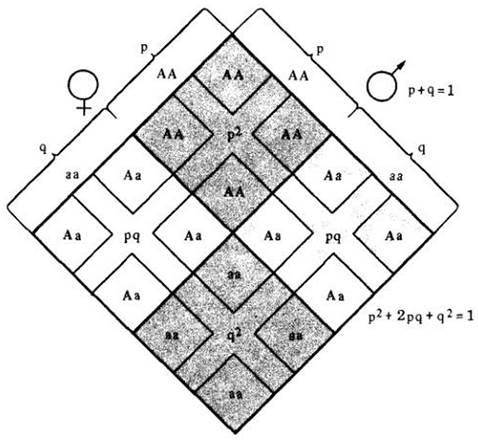
How then do we determine the relative proportions of AA, Aa, and aa individuals? These proportions can be calculated by multiplying the frequency of male A Gametes by female A gametes [$A^2$]; male A by female a [$Aa$]; male a by female A [$Aa$]; and male a by female a [$a^2$], or in algebraic form: $p^2 + 2pq + q^2$. This equation represents the expansion of the binomial $(p + q)^2$, and since $p + q = 1$, $(p + q)^2 = 1$. Thus, if half (0.50) of the gene pool consists of A and half of a, the proportion of AA will be 0.25, the proportion of Aa will be 0.50, and the proportion of aa will be 0.25. This is entirely consistent with Mendelian principles, simply expressed in mathematical terms:
$A^2 + 2Aa + a^2 = (0.50)^2 + 2(0.50)(0.50) + (0.50)^2 = 0.25 + 2(0.25) + 0.25 = 0.25 + 0.50 + 0.25 = 1$.
What will happen in subsequent generations? As can be seen from Fig. 28-4, genotype frequencies remain constant. Similarly, gene frequencies remain constant when p(A) = 0.5 and q(a) = 0.5. Thus, we can say that the Hardy–Weinberg law predicts a state of "genetic equilibrium".
Fig. 28-4. Possible gamete combinations in a population consisting of individuals with genotypes AA, Aa, and aa, illustrating the Hardy–Weinberg law
Population size. The Hardy–Weinberg law holds true only in large populations. In small populations, random losses of one or more individual genotypes—if, for example, mating does not take place—can lead to the elimination of one or more alleles from the population.
Migration. Further disruptions are caused by migration into or out of a population. If individuals with specific genetic traits leave a population or enter another with a different ratio of these traits, the frequencies of individual alleles and genotypes in both populations will change. Migration is characteristic of both animals and plants, in the latter case through mechanisms such as seed dispersal, for example.
Mutation. If a single gene mutates into another allelic form at a frequency exceeding that of the reverse process, the frequency of such alleles in the population will change.
Selection. Selection is a term used to denote the non-random reproduction of genotypes. In any variable population, some individuals leave more offspring than others. As a result, certain alleles become more prevalent in the population, while others become less so. Selection is the primary factor causing deviations from Hardy–Weinberg equilibrium; it is also the ROOT cause of evolutionary change. Mutations, of course, underlie organismal variability, but changes in populations occur as a result of selection acting on mutation-driven variability.
Although selection is sometimes considered a creative force, It is important to remember that it is merely a record of events that have already occurred. When the proportion of certain alleles is higher in a given generation than in the preceding one, and there is no other explanation for this, selection is said to have taken place. In reality, selection does not cause the changes occurring under a given set of conditions. By continually eliminating certain alleles from a population, selection directs the course of phenotypic changes that originated through mutation and recombination. Consequently, subsequent generations will feature more individuals better suited to survive under the given conditions than those eliminated. Under unusual or extreme conditions, selection may increase the Abundance of genotypes that were less common in the main body of the population. As for deleterious recessive alleles—even those that lead to the death of the individual in the homozygous state—the lower their frequency in the population, the weaker The Effect of selection upon them. This relationship exists because the proportion of recessive alleles in the homozygous state drops sharply as the allele frequency in the population decreases. In short, the lower the frequency of a recessive allele, the less accessible its homozygous form is to the action of selection. As the frequency of a recessive allele declines, the probability of its removal from the population diminishes.
Response to Selection
Genetic Factors
A population's response to selection proceeds on The basis of genetic laws (as discussed in Chapter 9). In principle, only the phenotype is selected, and the interaction between the phenotype and the environment determines an organism's reproductive success. Because nearly all traits in natural populations are determined by the interaction of many genes, phenotypically similar individuals may possess vastly different genotypes. When a particular trait, such as tall height, is subjected to strong selection, there is typically an accumulation of alleles responsible for the expression of that trait and an elimination of alleles that hinder it.
However, selection for a polygenic trait is not simply the accumulation of one set of alleles and the elimination of another. Gene interactions, such as epistasis or pleiotropy (see Chapter 9), largely determine how selection will proceed in a population. Certain effects of one allele on another may be beneficial to the individual or contribute to The formation of a trait favored by selection. Others, conversely, may prove harmful or work against the trait under selection. Due to genetic interactions, the phenotypic effects of individual alleles can only be evaluated within a specific genetic Background. Selection for specific alleles alters the expression pattern of other alleles in the population, with the mutual influences of selected alleles gradually changing. Thus, The Significance of alleles in determining individual traits or the fitness of the organism as a whole also changes.
Another important aspect of selective change is the necessity of producing a "working" organism. Strong selection for a single trait may fail because it leads to the accumulation of so many side effects that the organism becomes incapable of survival and reproduction. Data from fruit fly breeding experiments, presented in Fig. 28-5, indicate that as a result of selection, a population reaches a new internal genetic balance. This can lead to The Emergence of fertile and otherwise normal individuals with 42 abdominal bristles instead of 36. This balance, which can be viewed as a measure of a population's resilience to genetic change, was termed genetic Homeostasis by I. Lerner of the University of California at Berkeley. In physics, homeostasis is a kind of dynamic equilibrium, i.e., resistance to change. Genetic homeostasis tends to preserve The population as a whole by generating a high proportion of individuals well-adapted to the given conditions.
Fig. 28-5. An experiment in which the number of abdominal bristles in the fly Drosophila melanogaster was subjected to artificial selection. In the two parental lines, the average number of bristles on the ventral surface of the abdomen was 36. In one breeding group, selection was directed toward increasing the bristle number, while in the other, it was directed toward decreasing it. In the first case, the bristle number reached 56 within 21 generations, but sterility soon ensued. Selection was paused after the 21st generation and resumed after the 25th. The previously high bristle number was then restored without any loss of fertility. In the second case, it was impossible to achieve a new genetic balance, and that group perished due to sterility. Selection for a single "neutral" trait, along with the genes upon which the expression of that trait depends, undoubtedly exerted a profound influence on the genetic Structure OF THE organisms

Phenotypic Factors
A different kind of constraint on selection stems from the fact that organisms must cope with conflicting demands. For example, the long, brightly colored tail of a male peacock contributes to the bird's mating success. Therefore, possessing long and maximally colorful plumage is a distinct advantage for him. On the other hand, the bird must protect itself from predators, a goal hardly aided by showy tail feathers. Natural selection strikes a balance between these two selective pressures, and peacocks with overly short and dull plumage, or overly long and bright plumage, will not leave as many offspring as birds with a tail that is "convenient" in every respect.
Consider another similar example. In harsh alpine environments, plants must grow and photosynthesize rapidly to store enough CARBOHYDRATES for the long and difficult winter. Therefore, in spring, they must react to the earliest growth-favorable conditions by resuming metabolic activity. However, if this response is so sensitive that plants react even to temporary mid-winter thaws, they will be eliminated from the population. Desert plants face a similar predicament: their seeds must not germinate until conditions favorable for seedling survival arrive.
An interesting evolutionary strategy was observed by D. Janzen of the University of Pennsylvania among tropical tree species of the legume family (Fabaceae). In Central America, he discovered two groups of species: some produced a few large seeds, while others produced many small seeds. These plants could allocate only a limited amount of stored reserves each year to seed production, thus forming either many small seeds or a few large ones. Why did some species follow the first path while others took the second?
Large seeds provide seedlings with a more abundant food supply. Since each parent tree or shrub is, on average, replaced by only one tree or shrub, it would seem more advantageous for them to produce a few large seeds with rich nutrient reserves. In the tropics, however, this is not always possible due to the intense predation of legume seeds by insects, particularly bruchid beetles of the family Bruchidae. Adult beetles lay their eggs inside the fruits, and their larvae complete their development within the seeds. These beetles are often so numerous that they effectively destroy the entire annual seed crop of certain legume species, except for the few seeds that managed, for instance, to be carried away by birds before the beetles discovered and attacked the fruits. Janzen studied the distribution of bruchid beetles among large-seeded and small-seeded legume groups. To his surprise, he found that small-seeded species were more heavily attacked by beetles, leaving very few viable seeds, whereas almost all large-seeded species remained untouched. He then discovered that it is precisely the large seeds, rather than the small ones, that contain chemical compounds which apparently protect them from beetles.
Based on these findings, it becomes clear that legumes faced an evolutionary choice between two possibilities: either produce a very large number of small seeds with relatively limited nutrient reserves for seedlings, but with a high probability that some seeds will escape beetle predation; or produce fewer large seeds with robust seedling provisioning. However, the latter alternative will only succeed if the seeds are somehow protected against beetle consumption. This is an example of an evolutionary trade-off, which is frequently encountered in nature.
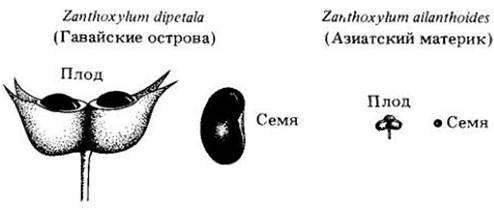
In light of Janzen's rational explanation of the situation with tropical legumes, it becomes interesting that the seeds and fruits of plants on oceanic islands are often larger than those of related mainland species (Fig. 28-6). Pest species that damage mainland plants are frequently absent on islands. It is entirely probable that this provides plants with a favorable opportunity to produce larger fruits and seeds, which create better conditions for early seedling development because they contain more stored reserves. Such isolation from pests (much like the biochemical defense of large-seeded legumes in tropical America) is a factor that has allowed selection for large-seededness, operating on a different basis, to achieve greater success here than anywhere else.
Fig. 28-6. Island species, isolated from their natural enemies, can produce larger fruits and seeds. The fruits and seeds shown here belong to two related species of Zanthoxylum from the rue family (Rutaceae); one is found in Hawaii and the other on the Asian mainland
Changes in Natural Populations
In recent years, considerable research has been dedicated to studying trait variations in natural populations. Climate changes and natural disasters have been constant phenomena throughout the world's history, and organism populations in early historical epochs reacted to these changes much like they do today. The Nature and rate of certain changes are such that we can refer to them as “evolution in action.” It is hardly surprising that many of the relatively rapid shifts observed over the past century or so are driven by human activity, as human enterprise has become an ecologically dominant factor in recent centuries—unprecedented in The history of life on Earth.
Some of the most striking evolutionary changes have occurred in bacterial populations, which possess only a single chromosome (i.e., they are haploid). Bacterial mutations immediately manifest in the phenotype and are thus directly exposed to selection. All haploid organisms feature rapid generation turnover, which is likely crucial for successful adaptation since they lack a reservoir of variability for recombination, unlike diploid organisms.
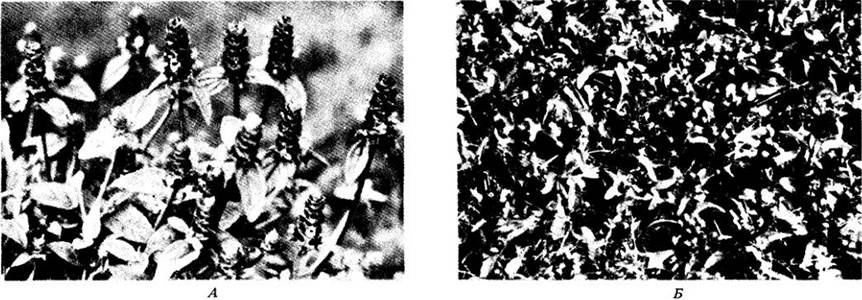
In plants, strong selection drives rapid changes in natural populations. For example, in Maryland, plants from the grazed portion of a pasture were much shorter than those from the ungrazed section. This was initially thought to be a direct consequence of foraging damage. To test this hypothesis, the shorter plants were transplanted to different conditions. It was assumed that in the absence of grazing, they would soon grow tall, matching the plants from the ungrazed pasture area. While this proved true for some species, white clover (Trifolium repens), Kentucky bluegrass (Poa pratensis), and orchard grass (Dactylis glomerata) remained short, indicating that these populations had undergone genetic changes under the selective pressure of livestock grazing. A similar example is presented in Fig. 28-7.
Fig. 28-7. Prunella vulgaris is a member of the mint family (Lamiaceae) widely distributed in forests, meadows, and lawns across temperate zones. Most populations consist of erect plants (A) that grow in open, often damp, and grassy places throughout cool-climate regions. However, lawn populations are invariably represented by prostrate forms (B), such as those growing in Berkeley, California. Erect Prunella vulgaris plants cannot survive on lawns because they are damaged by trampling and lack The ability to regenerate from lower branches, which is essential for survival. When lawn-dwelling plants are grown in experimental plots, some remain prostrate while others grow upright. The prostrate growth habit is genetically determined in the former case and environmentally induced in the latter.
In Wales, the spoil heaps surrounding abandoned lead mines are rich in lead and nearly devoid of vegetation. A single grass species (Agrostis tenuis) has colonized the soils near these mines, which can contain up to 1% lead and 0.03% zinc. An experiment was conducted in which groups of Agrostis tenuis from the mine spoils and from adjacent pastures were grown side by side in ordinary soil and in soil collected near the mine. In ordinary soil, the A. tenuis plants previously growing near the mine grew markedly slower and remained smaller than the pasture plants. However, in the mine soil, they grew normally, whereas the pasture plants failed to grow altogether. Half of the pasture plants died within three months, developing deformed roots that rarely reached 2 mm in length. Nevertheless, a few pasture plants (3 out of 60) exhibited some tolerance to the lead-rich soil. These undoubtedly resembled the plants that originally gave rise to the lead-tolerant A. tenuis Lineage. The mine was less than 100 years old, meaning the lead-tolerant race evolved over a relatively short period. Plants were selected from the genetically diverse populations of neighboring habitats, and through natural selection, a distinct race emerged.
Asexual Reproduction and Evolution
In asexual reproduction, offspring are identical to their single parent. Plants employ numerous modes of asexual reproduction, ranging from The Development of unfertilized egg Cells to the fragmentation of the parent organism into separate parts. In all cases, however, new plants are formed via mitosis and are therefore genetically identical to the parent.
Plants frequently reproduce both sexually and asexually, hedging their evolutionary bets (Fig. 28-8), though many species reproduce exclusively through asexual means. Even in the latter case, it is evident that their ancestors were capable of sexual reproduction. Thus, vegetative propagation represents an alternative “choice” forged under selection pressure when population uniformity was favored. This strategy severely limits a population's ability to adapt to changing environments. Nevertheless, across diverse habitats, one can encounter various asexual populations of the same species. Maintaining constant traits, they may differ sharply from one another while being ideally suited for growth under specific conditions.
Fig. 28-8. Violets reproduce both sexually and asexually. Larger flowers are cross-pollinated by insects, and seeds may be dispersed over distances by wind or water. Smaller, ground-hugging flowers are self-pollinated and never open. Seeds from these flowers drop close to the parent plant, giving rise to violets genetically similar to the parent organism. It is presumed that growing near the maternal plant offers certain advantages. Both aforementioned modes of reproduction are sexual, involving recombination. Asexual reproduction in violets occurs via creeping horizontal shoots—stolons or rhizomes—which give rise to new, genetically identical plants.

Population Divergence
The geographic distribution of individual plant and animal species is never entirely continuous. Species habitats are inevitably fragmented by lakes and streams, mountain peaks, sunlit forest clearings, or patches of specific soil composition. Consequently, the movement of alleles from one isolated population to another is more or less restricted, allowing populations to respond differently to selective pressures in accordance with their specific environmental conditions. Even if normal gene flow (i.e., the migration-mediated transfer of alleles between populations) could supply a source of variability to distant populations, it would still be insufficient to completely override local selective pressures.
The actual degree of isolation between populations of the same species depends on the dispersal distances of the plants in question, though these distances are frequently very short. For certain insect-pollinated plants in temperate regions, 300 meters may suffice to effectively isolate two populations. Rarely does more than 1% of the pollen landing on a given plant originate from afar. Under normal conditions, wind-pollinated plants disperse very little pollen beyond 50 meters from the parent plant. The probability of such pollen reaching the receptive stigma of a distantly located plant decreases sharply as the distance increases. This is not to say that two pine trees separated by 50 meters lack genetic contact; rather, it means that the progeny will be influenced far more by local environmental demands than by alleles arriving from afar.
Any pair of isolated populations will diverge in their traits due to differing selective pressures. If contact between them is eventually reestablished, they will either intermix or the accumulated differences will result in a degree of reproductive isolation. Genetic, or reproductive, isolation occurs via various mechanisms, as discussed below.
Ecotypic and Clinal Variation
Developmental plasticity refers to the tendency of organisms to change over time in response to shifting environmental conditions (whereby certain differences may arise even among genetically uniform organisms). Such plasticity is more pronounced in plants than in animals because the open growth habit characteristic of plants is far more readily modified, resulting in striking morphological differences among individual plants.
Every gardener knows that environmental factors can induce profound phenotypic changes across various plant species. Leaves developing in shade are thinner and broader; they possess larger air spaces, a thinner palisade tissue layer, and fewer Stomata than leaves of the same plant developing in full sun (see p. 60). Leaf shape can also be influenced by day length—that is, the fraction of the 24-hour cycle during which the plant is exposed to light. In Kalanchoe, for example, plants grown under short-day conditions (8 hours of light) develop small, succulent leaves with smooth margins, whereas those grown under long-day conditions (16 hours of light) produce broad, thin leaves with notched margins. In light of these observations, it is hardly surprising that until around 1930, many scientists assumed that much of the variability observed in nature was the direct result of environmental influences and lacked a genetic basis.
How are the differences among plant races inhabiting different localities controlled—genetically or environmentally? The first definitive answer to this question was provided in the 1920s by the Swedish botanist Göte Turesson. Among many plant species native to southern Sweden, he discovered distinct regional races, individual specimens of which he transplanted to his experimental plots. In total, Turesson studied 31 species. In the majority of cases, the naturally observed differences were under Genetic control; in very few instances were they the direct result of environmental conditions. Traits such as growth habit, flowering time, leaf color, and others were typically genetically determined. Turesson designated these locally adapted races as ecotypes.
A particularly significant contribution to The Study of ecotypes was made by J. Clausen, D. Keck, and W. Hiesey under the auspices of the Carnegie Institution of Washington, stationed at the Department of Plant Biology of Stanford University, California. These researchers experimented with several plant species native to the western United States. They established transplant gardens at three elevations in California (Stanford, Mather, and Timberline; Fig. 28-9). Expanding upon Turesson's work, they focused primarily on plants capable of asexual reproduction, ensuring that genetically identical individuals could be cultivated across all three sites.
The natural environments of the western states are characterized by sharp contrasts, so it is unsurprising that many plant species there are represented by well-defined ecotypes. One species studied by the Carnegie Institution team was the perennial herb *Potentilla glandulosa*, closely related to strawberries (*Fragaria*). It occurs across various climatic zones in California, and natural populations can be found in the vicinity of each of the three aforementioned experimental stations. When *P. glandulosa* plants of diverse ecological origins were grown side by side in the transplant nurseries established by the Carnegie researchers, a series of distinct physiological differences emerged among the ancestral lines. Four clear ecotypes of *P. glandulosa* could be identified, with the morphological traits of each corresponding strictly to the physiological adaptations critical for survival in their respective native habitats.
Fig. 28-9. Carnegie Institution transplant gardens in California. A — Stanford, near sea level; B — Mather, in the central Sierra Nevada mountains at an elevation of approximately 1,400 m; C — Timberline, at an elevation of 3,050 m.

For instance, the Coast Range ecotype is represented by plants that thrived during both summer and winter at Stanford. They also survived at Mather, where they experienced winter freezes for nearly five months. At this site, these plants entered winter dormancy, yet accumulated sufficient nutrient reserves during the growing season to survive the prolonged harsh period. At Timberline, plants of this ecotype almost invariably perished during their first winter; the short growing season at this high altitude prevented them from accumulating adequate reserves. Plants from the California Coast Range belonging to other species formed ecotypes with remarkably similar physiological responses. Indeed, it is frequently observed that lineages of entirely different species growing together under the same local conditions are physiologically more similar to one another than to populations of their own species from elsewhere.
The physiological and morphological traits of ecotypes typically possess a highly complex genetic architecture involving dozens (and in some cases likely hundreds) of genes. Distinct ecotypes are characteristic of regions where habitats are likewise sharply demarcated. Conversely, when environmental conditions change gradually without abrupt transitions, the traits of neighboring plant populations may shift in an equally smooth, continuous manner. This type of gradual character gradient is termed a cline.
Clines are frequently found among organisms inhabiting marine regions where water Temperature gradually increases or decreases with latitude. They are also characteristic of organisms inhabiting areas such as the eastern United States, where precipitation gradients can stretch across thousands of kilometers. When plant samples from adjacent populations are collected along a cline, variations are often proportional to the distance between populations. Plant populations themselves change in a similar manner, though on a smaller scale—either gradually or abruptly depending on local conditions.
Physiological Differentiation
To understand why ecotypes thrive in a given Location, one must understand the Physiological Basis of their ecotypic differentiation. For example, Scandinavian strains of goldenrod (Solidago virgaurea) from shaded and open habitats exhibit experimental differences in their photosynthetic response to light intensity during growth. Plants from shaded sites grow rapidly under low light, whereas their growth rate drops noticeably under high light conditions; conversely, plants from open habitats grow rapidly under high light and perform much worse under low light.
Another experiment examined strains of arctic and alpine populations of the herbaceous plant Oxyria digyna, which has a broad latitudinal distribution ranging from Greenland and Alaska in the north to California and Colorado in the south. Northern populations contained more chlorophyll and showed higher Respiration rates under all temperature conditions compared to southern plants. High-altitude plants from sites near the southern Limits of the species' range exhibited more intense Photosynthesis under high experimental light levels than lowland plants from the Far North. Thus, each given race is optimized to function best in its own habitat, regardless of whether those conditions involve high light levels in alpine regions or low levels in the Far North, and so on. The distribution of Oxyria digyna across such a vast range and wide spectrum of environmental conditions has been made possible, in part, because the populations comprising the species vary in their metabolic potential.
Reproductive Isolation
The genetic system of a plant population responds to selection as a cohesive unit. As individual populations begin to diverge increasingly from one another, traits that previously did not hinder interbreeding may shift alongside traits whose adaptive benefits are immediate—such as those enabling these populations to thrive in different locales. For this reason, plants from highly divergent populations may lose the ability to form hybrids (i.e., offspring of genetically dissimilar parents), or if hybrids are produced, they are frequently sterile. In general, the greater the differences between two populations, the lower the probability that they will be capable of producing hybrid offspring.
Once two populations become reproductively isolated (i.e., incapable of producing hybrid seeds/fruits), they cease to influence each other's evolution, at least in a genetic sense. Therefore, such isolation represents one of the most critical turning points in the evolutionary divergence of populations and speciation.
Reproductive isolation is the primary criterion of a species. However, it is not always applicable, because in some plant groups—particularly long-lived plants like trees and shrubs—externally and ecologically distinct species can sometimes produce fertile hybrids. Conversely, hybrids between herbaceous plant species are often sterile or formed with difficulty; such differentiation frequently occurs even among populations of short-lived plants. Hybrids between such populations may be fully or partially sterile. Because genetic distinctions exist among species designated within various plant groups, difficulties arise in defining METABOLISM/2.html">THE CONCEPT OF a species. Clearly, relying on a single criterion is insufficient for determining the most appropriate Classification of a given group of organisms; rather, a range of factors must be considered.
Under equivalent selection pressure, annual plant populations apparently evolve faster than perennial ones. This is not only because annuals have a shorter life cycle, but also because their survival depends on annual reproduction via seeds, which in itself is a factor accelerating the effect of natural selection. Consequently, such populations diverge more rapidly. In regions where annuals successfully flourish—such as deserts or areas with dry summers, like California—they may account for a third or more of the total species present there. Overall, these species are much younger (measured from the time of their origin) than the trees, shrubs, and perennial herbs that share their community.
Aside from hybrid sterility or the inability to produce hybrid offspring, A number of other factors contribute to the distinct demarcation of species when they grow sympatrically. Foremost among these are mechanisms that prevent hybrid formation. For example, plants of two species capable of producing fertile hybrids may occur in the same geographic range but in different microhabitats. In the eastern United States, the scarlet oak (Quercus coccinea) shares an extensive range with the black oak (Q. velutina). Both species are wind-pollinated and readily form fertile hybrids under artificial conditions. Despite this, natural intergroup hybrids are rarely found. The reason is that the former oak occurs in relatively wet, low-lying areas with acidic soils, whereas the latter inhabits dry, well-drained soils. Hybrids appear more frequently only where habitats have been altered by fires or logging, which can be explained by their ability to adapt better to the newly created conditions than either parent.
Among other mechanisms preventing Hybridization between sympatric species, seasonal differences in flowering time play an important role. If two species do not bloom simultaneously in nature, they will not hybridize, even when growing side by side. Photoperiodic mechanisms, discussed in Chapter 25, can further contribute to species segregation. Additionally, two sympatric species may differ in their pollination systems (which we will discuss in detail in the next chapter). If two species are visited and pollinated by different insects, a hybrid will only form if an insect mistakenly visits the "wrong" flower.
Groups of Related Species
The Evolutionary Processes we have examined lead to the formation of groups of related species across various geographic regions. Such animal groups on the Galápagos Islands—especially the aforementioned tortoises, as well as the finches—have become famous due to the role they played in Darwin's formulation of the theory of evolution. This type of speciation is termed adaptive radiation (see Appendix). Insular differentiation is particularly striking because, in the absence of competition, forms highly unusual compared to their continental relatives apparently arise more easily. Evidently, island environments favor significant evolutionary changes akin to those preceding the emergence of new genera and families. In such locations, plant and animal traits can evolve more rapidly than on the mainland, and characteristics never seen elsewhere may arise. Naturally, such species groups can also arise within continental ranges, displaying unexpected levels of differentiation. They are an inevitable consequence of the evolutionary processes under Discussion.
The Role of Hybridization in Evolution
Even when intergroup hybrids are rare in nature, they can be valuable for the ways in which they combine parental traits. Environmental conditions can change rapidly, and hybrid individuals, thanks to novel gene combinations, often prove better adapted to new conditions and capable of colonizing habitats where parental organisms could never have survived. In cases where the habitats of parental species overlap geographically but differ drastically (as with the scarlet and black oaks), hybridization is unlikely. Conversely, where habitats are contiguous or disturbed, the situation may unfold differently. Here, the recombination of genetic material originally characterizing two distinct species can yield offspring better adapted than those resulting from changes within a single population (Fig. 28-10). Hybrid traits may become stabilized if the hybrids prove better suited to new habitats than either parental organism.
Fig. 28-10. Plane trees (Platanus) form distinct populations that retain the capacity for hybridization.
Modern species of this genus diverged about 50 million years ago in geographically distant habitats. One of them—the Oriental plane tree (P. orientalis) — ranges from the eastern Mediterranean to the Himalayas. This tree has been widely cultivated in Southern Europe since ancient Roman times, but cannot grow in Northern Europe far from the moderating Influence of the sea. Following the Discovery of the New World, one of the North American species (P. occidentalis) was acclimatized in the colder regions of Northern Europe, where it flourished. Around 1670 in England, where these distinct species were planted together, spontaneous hybridization occurred, yielding fertile plane trees with intermediate traits (Platanus × hybrida). These hybrids are capable of growing in regions with cold winters and are now used for urban landscaping in temperate zones.

Interspecific hybridization is a vital evolutionary mechanism in many plant groups. In some genera, the recombination of genetic material appears to be the primary mode of generating new species capable of colonizing novel habitats. These genera consist mainly of trees or shrubs, such as Eucalyptus, Quercus, Arctostaphylos, and Ceanothus (Fig. 28-11). Groups of related species are more common on islands or in ecologically diverse regions, such as California and neighboring states. Another example, this time involving pollinators, is shown in Fig. 28-12.
Fig. 28-11. The formation of hybrid populations is a major evolutionary mechanism in many woody plant groups, including the genus Ceanothus. A — Map of central California (note San Francisco Bay at the bottom), a geologically complex region. Two relatively widespread and distinct species: the coastal C. gloriosus and the interior C. cuneatus, whose distribution extends far to the east beyond the mapped area. These species form Three types of hybrid populations; each is variable yet stabilized and able to grow better than either parental species in areas of sympatry. Characteristic leaves of the various populations are shown on the map. B — Segregation in the progeny of an artificial cross between morphologically distinct parental species; some intermediate forms resemble the aforementioned intermediate populations shown on the left side of the map. C — Flowering branch of C. gloriosus. D — Flowering branch of C. cuneatus.

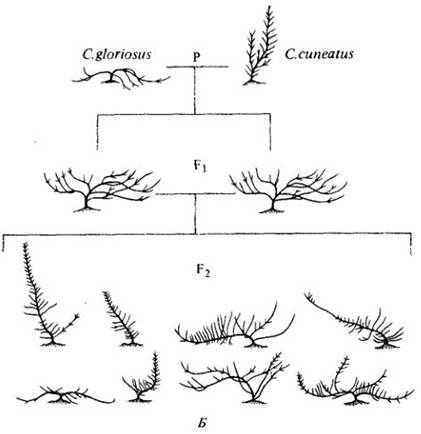

Fig. 28-12. Richard Straw of California State University, Los Angeles, suggested that Penstemon spectabilis, found in the mountains of southern California, is of hybrid origin. One of the parental species (P. grinnellii) features large, bilabiate, pale blue flowers typically pollinated by large bees, such as carpenter bees. The other species, P. centranthifolius, bears long, slender red flowers visited primarily by hummingbirds. The putative hybrid P. spectabilis, shown here, occupies an intermediate morphological and ecological position and produces pinkish-red flowers. They are pollinated by specialized wasps that collect pollen—wasps that do not visit the flowers of either parental species.

The emergence and stabilization of hybrid populations depend on hybrid fertility. However, even if hybrids are sterile, they can still reproduce either asexually or by restoring their fertility through polyploidization.
Asexual Reproduction in Hybrids
Sterile hybrids are capable of vegetative propagation. Systems in which Vegetative Reproduction predominates, but outcrossing (i.e., cross-Fertilization between different lines) occasionally occurs, are the most flexible. Outcrossing can result in hybridization between isolated races or species, which in turn may lead to novel allele combinations that prove advantageous under given conditions.
A clear example of such a system is Kentucky bluegrass (Poa pratensis), which is widely distributed across the Northern Hemisphere in various forms. Accidental hybridization within a group of related species has given rise to hundreds of apomictic races well adapted to the ecological peculiarities of specific habitats. In such flexible systems, new genotypes are continually generated through hybridization, while the best ones are preserved via apomixis. Apomictic plants, including Poa, are exceptionally well-suited to Arctic conditions because they can dispense with insect pollination, which is hindered by the short growing season and harsh climate. Furthermore, more stable genotypes may hold a greater advantage in challenging Arctic environments than genotypes formed through recombination (i.e., sexual processes). Thus, populations arising from vegetative propagation or self-pollination can enjoy a dual advantage.
Hundreds of hawthorn (Crataegus) and blackberry (Rubus) species in the eastern United States represent apomictic derivatives of species groups among which hybridization occurred sporadically. In all these cases, widespread anthropogenic disturbance of natural habitats has led to a great diversity of novel genotypes that never previously existed in the primeval forests of these regions.
Polyploidy
Cells or individuals possessing more than two sets of Chromosomes are referred to as polyploids. Polyploid cells arise at a low frequency as a result of mitotic "errors," when chromosomes divide without subsequent cytokinesis. This process can produce cells with a doubled chromosome number. If these cells undergo interphase and subsequently divide, they can give rise (sexually or asexually) to new individuals whose cells possess twice the chromosome number of their parents. Polyploid plants can also be induced artificially using colchicine, an alkaloid that suppresses mitotic spindle formation by disrupting microtubule assembly.
Variability in polyploids is frequently much narrower than in their diploid relatives, since each gene is represented at least in duplicate. During segregation in the progeny, individuals homozygous for any recessive gene will account for only 1/16 instead of 1/4 as in diploids. (In both cases, the frequency of recessive alleles is assumed to be 0.50.) Polyploids are prone to self-pollination, which further reduces their variability, even though their diploid relatives are predominantly cross-pollinated. Some polyploids are better adapted to dry habitats or lower temperatures than the ancestral diploid forms, whereas others are better suited to specialized soil types. Consequently, they can colonize extreme environments where their diploid ancestors would likely perish.
Polyploids occur at a low frequency in many natural populations. They hybridize with unrelated forms more readily than their diploid counterparts do, which can immediately yield fertile hybrids. Less frequently, polyploids of hybrid origin are formed by chromosome doubling in sterile diploid hybrids; this represents one of the pathways for restoring fertility.
It was precisely this less common pathway that gave rise to polyploid hybrids between the radish (Raphanus sativus) and cabbage (Brassica oleracea). This was the first well-documented case of polyploidy1. Both genera belong to the mustard family (Brassicaceae) and are closely related. The somatic cells of both species contain 18 chromosomes, and 9 pairs of chromosomes are invariably observed at the first metaphase of Meiosis. With some difficulty, a hybrid between these plants was obtained. In meiosis, it possessed 18 unpaired chromosomes (9 from the radish and 9 from the cabbage) and was completely sterile. Among these hybrid plants, a polyploid arose spontaneously, possessing 36 somatic chromosomes and regularly forming 18 pairs during meiosis. In other words, the polyploid hybrid retained all 18 chromosomes from both the radish and the cabbage, and they functioned normally. This polyploid hybrid was quite fertile.
1The fertile intergeneric radish-cabbage hybrid was produced by the Soviet geneticist G. D. Karpechenko, a pioneer in overcoming the sterility of wide hybrids via polyploidization and, consequently, the discoverer of a previously unknown pathway of speciation. — Trans. note.
Some polyploids have arisen as weeds in human-altered habitats and have occasionally achieved remarkable success. A well-known example includes the salt marsh inhabitants of the genus Spartina. One species, S. maritima, occurs in marshes along the coasts of Europe and Africa. Another species, S. alterniflora, was introduced to Great Britain from eastern North America around 1800 and subsequently spread widely, forming large local colonies.
In Britain, plants of the native species S. maritima are short, whereas S. alterniflora is much taller, frequently reaching 0.5 m and sometimes 1 m or more in height. Near Southampton, both species (native and introduced) grew sympatrically throughout the 19th century. In 1870, botanists discovered a sterile hybrid between the two species that propagated successfully via rhizomes. One of the parental species, S. maritima, has a diploid chromosome number of 60 (2n = 60), while the other, S. alterniflora, has 62 (2n = 62); the hybrid also has 2n = 62, likely due to minor meiotic irregularities. This sterile hybrid, named Spartina × townsendii, still exists today. Around 1890, a robust fertile polyploid arose from it naturally. It has a diploid chromosome number of 2n = 122 (one chromosome pair having evidently been lost) and has spread rapidly along the coasts of Great Britain and northwestern France. It is frequently planted for salt marsh stabilization, which facilitates its even broader dissemination.
One of the most important polyploid plant groups is the genus Triticum (wheat). The world's most widely cultivated cereal crop, bread wheat (T. aestivum), has 2n = 42. Bread wheat originated at least 8,000 years ago, probably in Central Europe, through natural hybridization between a cultivated wheat with 2n = 28 and a wild grass of the same genus with 2n = 14. The wild grass likely grew as a weed among wheat crops. The hybridization that gave rise to bread wheat may have occurred between polyploids that occasionally appeared within the populations of both parental species.
It is highly probable that as soon as the 42-chromosome wheat with its useful traits appeared in the fields of early farmers, they immediately noticed it and selected it for further cultivation. One of its parental forms, the 28-chromosome cultivated wheat, in turn originated from the hybridization of two wild 14-chromosome species from the Middle East. Wheat species with 2n = 28 continue to be cultivated alongside the 42-chromosome forms. Such 28-chromosome wheats serve as a primary grain source for pasta production due to the high tenacity of their gluten.
Recent research has demonstrated that novel lines derived via hybridization can enhance agricultural production. Especially promising is Triticosecale1, a group of man-made hybrids between wheat (Triticum) and rye (Secale). Some of these, combining the yield capacity of wheat with the hardiness of rye, exhibit high resistance to stem rust, a disease that causes severe agricultural damage (see Fig. 13-37). These traits are particularly vital in high-altitude tropical and subtropical regions, where rust is the primary limiting factor for wheat cultivation. Triticosecale is now grown on a large scale and has gained wide popularity in France and other countries (see p. 242). The best-known form is the 42-chromosome line of this cereal crop, which was produced by doubling the chromosome number following the hybridization of a 28-chromosome wheat with a 14-chromosome rye.
1 In Soviet literature, a different name for this hybrid—triticale (Triticale)—is more commonly used. — Trans. note.
In nature, polyploids are selected under the Influence of Environmental conditions rather than human activity. Polyploidy is one of the most crucial evolutionary mechanisms. The phenomena mentioned above (see, for example, THE ORIGIN OF wheats) must have occurred more than 100,000 times to account for the abundance of polyploids present in the modern world flora (over half of all plant species). Among them are many of our most vital agricultural crops—not only wheat, but also cotton, sugarcane, banana, potato, and sunflower. To this list can be added most garden ornamental flowers, such as chrysanthemums, pansies, and dahlias.
Fig. 28-13. Polyploidy has been intensively studied in cordgrasses of the genus Spartina, which grow in salt marshes along the coasts of North America and Europe. A. Such a marsh on the coast of Great Britain. B. A Spartina hybrid. C. Spartina maritima, a native European salt marsh species (2n = 60), showing chromosomes at anaphase I of meiosis. D. Spartina alterniflora, a North American species, 2n = 62 (showing 30 bivalents and 2 univalents at metaphase I of meiosis). This plant was first discovered in Europe in the tidal pools near Southampton in 1839, but the time of its Introduction remains unknown. Artificial crosses between these two species have never been performed, but their sterile hybrids—Spartina × townsendii—were found in these localities in 1870. E. The robust polyploid S. anglica arose spontaneously from this sterile hybrid and was first discovered in the early 1890s. The polyploid has 2n = 122; its Cell at the first anaphase of meiosis is shown here. This hybrid has now spread to all salt marshes in Great Britain and other temperate regions.
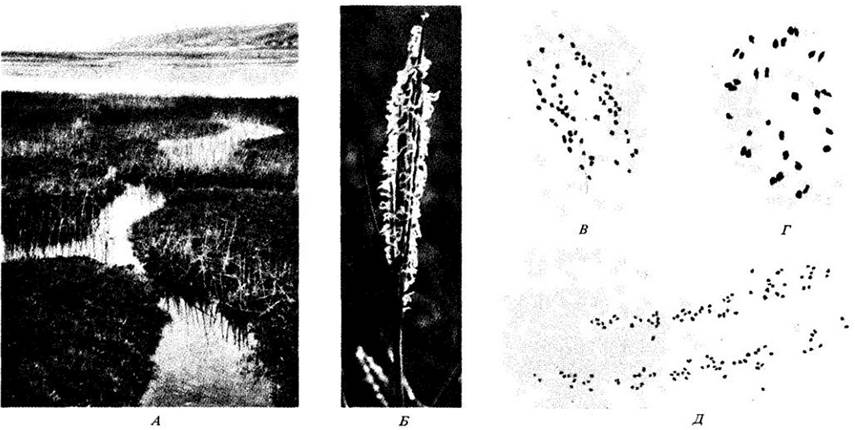
Fig. 28-14. One of the most widespread and largest horsetails (see Fig. 26-3, B) in North America—Equisetum × ferrissii—is a completely sterile hybrid between E. hyemale and E. laevigatum. Horsetails readily propagate via subterranean stem fragments, and the hybrid maintains its existence throughout its vast range through vegetative reproduction. A. Stems of E. × ferrissii with strobili. B. Distribution ranges of E. × ferrissii and its parental species.

Origin of Higher-Rank Taxa
As knowledge regarding the pathways of speciation became more comprehensive, scientists turned to the question of how genera and other higher-level taxa originate. The appendix dedicated to the flora of the Hawaiian Islands indicates that the same processes responsible for species formation are also responsible for the generation of genera. If a particular species is well adapted to habitats that differ markedly from those of its ancestral form, it will likely diverge significantly from the ancestor and may give rise to new species and establish a new evolutionary lineage. In time, this lineage may be designated as a new genus, family, or even class of organisms. No mechanisms other than habitat discontinuity and lifestyle shifts are required for the emergence of supraspecific taxa.
Recently, much has been written on whether evolution is invariably a gradual process or proceeds in punctuated steps—that is, whether prolonged periods of gradual change (or stasis) are interrupted by bursts of rapid change. The latter model of evolution is termed punctuated equilibrium. Some proponents of this model argue that macroevolution, i.e., the process of supraspecific taxon formation, is governed by principles distinct from the gradual changes characteristic of microevolution, which has been the primary focus of this chapter. However, higher-level taxa are distinguished by the same kinds of features that separate certain species, suggesting that the evolutionary process is fundamentally unified.
Natural selection is the process whereby organisms possessing traits best suited to particular environmental conditions leave more viable offspring. It is driven by genetically determined variability among individuals in natural populations. Selection comes into play when organisms begin to colonize new habitats. Reproductive success (fitness) is never absolute, but manifests itself only under the specific conditions of a population's habitat.
The foundation of population genetics is the Hardy—Weinberg law. It states that in large populations with random mating and the absence of factors affecting allele frequencies, The ratio of dominant to recessive alleles remains constant from generation to generation.
Changes in allele frequencies and deviations from Hardy—Weinberg equilibrium can be caused by four primary factors: population size, migration, mutation, and selection. Among these, selection is the most important. It is defined as the non-random reproduction of genotypes, wherein certain individuals gain an advantage over others under their specific environmental conditions.
Recessive alleles in diploid organisms are largely inaccessible to selection. The lower their frequency drops, the greater the proportion of these alleles that exists in a heterozygous state, remaining phenotypically unexpressed (masked).
The response of populations to selection pressure is complex for several reasons. Selection acts only on phenotypes, yet similar phenotypes can result from vastly different combinations of alleles. Due to epistasis and pleiotropy, alleles cannot be selected individually; selection operates exclusively on The genotype as a whole.
Populations adapt to specific conditions and form distinct ecotypes if environmental conditions are sharply demarcated. Conversely, when conditions change gradually, plant populations may form clines in traits corresponding to those environmental gradients.
Changes occurring within populations also affect their capacity for successful interbreeding. Following a period of isolation, two populations may become incompatible or produce exclusively sterile hybrids. Related species of relatively long-lived plants, such as trees and shrubs, are less susceptible to reproductive isolation than related species of annuals or other short-lived plants.
Hybrid populations originating from two species are a common phenomenon, particularly among trees and shrubs. They are most characteristic of regions with low species diversity where adaptation to diverse local conditions is especially crucial (such as oceanic islands), as well as areas where climatic and other environmental conditions have sharp boundaries, as seen in California.
Even if hybrids between two species are sterile, they can reproduce apomictically or vegetatively; restoration of fertility is possible through chromosome doubling (polyploidy).
Appendix 1. Vegetative Reproduction: Selected Methods and Prospects
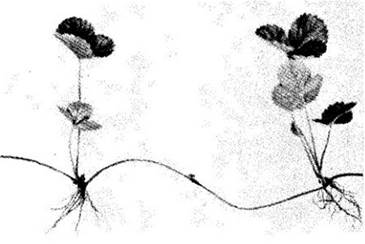
Methods of vegetative plant reproduction are numerous and diverse. Some plants propagate via runners, or stolons—long, slender shoots that creep along the ground. In cultivated strawberries (Fragaria ananassa), for instance, leaves, flowers, and roots develop at each node of such a SHOOT. Just beyond the second node, the tip turns upward and thickens. The first adventitious roots form on this thickened section, followed by a new shoot that produces yet another runner.
In many cases, rhizomes serve as reproductive Organs, particularly in grasses and sedges. Rhizomes "colonize" the space surrounding the parent plant, with each node capable of producing a new flowering shoot. Many noxious weeds propagate in this manner, making them notoriously difficult to eradicate, whereas certain garden plants, such as irises, reproduce almost exclusively via rhizomes. Tubers and bulbs are adapted for both reproduction and nutrient storage. Potatoes are artificially propagated using tuber pieces containing one or more "eyes." It is the eye of the seed potato that gives rise to the new plant.
The roots of certain plants—such as cherries, apples, raspberries, and blackberries—produce "root suckers" or root sprouts, which give rise to new plants. Commercial banana varieties do not produce seeds and are propagated using root suckers originating from buds on underground stems. If a dandelion root is severed, as frequently happens during weeding, each root fragment is capable of generating a new plant (see the end of Ch. 22).
Several plant species are capable of foliar reproduction. A case in point is the houseplant Kalanchoe daigremontiana, referred to in some countries as the "mother of thousands." This common name derives from the fact that numerous tiny plantlets develop from meristematic tissue within the notches along the leaf margins. The species is typically propagated using these "plantlets" which, upon reaching a certain stage of development, detach, fall to the ground, and root. Another example is the walking fern (Asplénium rhizophyllum), in which young plants form wherever the fronds Touch the soil.
In a number of plants, including lemons, certain grasses (such as Kentucky bluegrass, Poa pratensis), and dandelions, embryos within the seeds are produced asexually. This mode of vegetative propagation is termed apomixis. Individuals developing from the seeds of apomictic plants are genetically identical to the maternal plants1).
1 Currently, the majority of researchers do not classify apomixis as a form of vegetative reproduction, since it involves certain sexual structures and elements of the sexual process, thereby retaining some potential for genetic diversity. — Transl. note
Herbarium specimen of the walking fern (Asplénium rhizophyllum). The rooting of fronds and the formation of new plantlets are clearly visible. Through this mechanism, the fern can establish extensive colonies of genetically uniform plants

Kalanchoe daigremontiana with tiny plantlets sprouted in the notches along the leaf margins

The strawberry (Fragaria ananassa) reproduces asexually via runners. It is also capable of sexual reproduction by producing flowers
Overall, as a result of asexual reproduction, the offspring precisely replicate the parent organism, which is well adapted to specific environmental conditions or habitats. Adaptation may rely on traits that are desirable to confer upon cultivated crops or that promote survival under a particular combination of environmental factors.
Appendix 2. Adaptive Radiation of Hawaiian Mfdinae
The Hawaiian Islands are home to fascinating groups of endemic plants. The main islands of this archipelago emerged from the ocean independently millions of years ago. The habitats of the plants and animals that colonized the islands are remarkably diverse. They are separated by vast distances from the continental source areas from which their ancestors once migrated. Organisms reaching the Hawaiian archipelago often underwent dramatic transformations as they exploited new, vacant niches suited to them. The evolutionary processes driving such changes are known as adaptive radiation.
A striking example of adaptive radiation is a group of 28 Hawaiian plant species belonging to three closely related genera of the family Asteraceae, specifically within the subtribe Madiinae. Most of its representatives are found in California and adjacent regions. The genus Argyroxiphium is very close to two other genera found exclusively in the Hawaiian Islands: Dubautia and Wilkesia. The morphological diversity among their species is vast, ranging from small, mat-forming shrubs and rosette plants to large trees and lianas. They grow in A wide variety of habitats, including fresh lava flows, dry shrublands and open woodlands, wet forests, and bogs. Annual precipitation in these environments ranges from less than 40 cm to over 1,230 cm, placing some of these locations among the wettest places on Earth.
Such diverse conditions are accompanied by significant variability in leaf shape and size. For instance, Dubautia species growing in well-lit, dry habitats typically have very small leaves, whereas those in the shaded understory of rainforests have much larger ones. A representative of another genus, Argyroxiphium sandwicense, which grows on the dry alpine slopes of the Haleakalā crater on Maui, has leaves covered in a dense layer of silvery hairs. These hairs presumably protect the leaves from intense solar radiation and help conserve moisture. In contrast, the leaves of the closely related A. grayanum, which is also native to Maui but inhabits wet forests and bogs, lack pubescence and are thus able to maintain higher turgor pressure during dry spells (and correspondingly higher levels of metabolic activity).
Leaf outlines of six Dubautia species from dry and wet habitats, varying in shape and size

Argyroxiphium sandwicense is a remarkable plant thriving on the open, ash-covered slopes of the Haleakalā crater on Maui under conditions of intense solar radiation and low humidity

Dubautia reticulata; species of the genus Dubautia—which encompasses 21 of the 28 Hawaiian species of the subtribe Madiinae—include trees and shrubs on the one hand, and lianas and small, scarcely woody, mat-forming plants on the other. Dubautia reticulata grows in the wet forests of Maui, reaching heights of eight meters or more with a trunk diameter of about 0,5 m

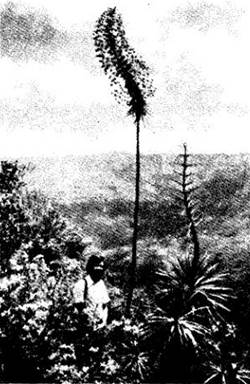
Wilkesia gymnoxiphium. This bizarre, yucca-like plant is found exclusively on the island of Kauai, where its distribution is restricted to dry, brushy slopes along the rim of Waimea Canyon. Kauai is the oldest of the main Hawaiian islands. Robert Robichaux, photographed next to this plant, studies the physiological ecology of this fascinating plant group
Dubautia scabra. Low, mat-forming herbaceous representatives of this species are found across the Hawaiian archipelago in high-humidity habitats. Several other species on younger islands of the archipelago are believed to have evolved from this lineage

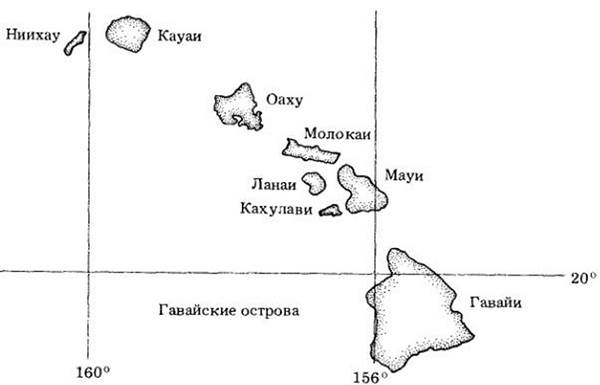
Hawaiian Madiinae, inhabiting a remarkably diverse range of environments, also exhibit significant physiological differences. Robert Robichaux of the University of California, Berkeley, has demonstrated, for example, that Dubautia species from arid habitats tolerate water stress much better than congeners from wet and waterlogged environments. This turns out to be because the resilient species have cells with more elastic walls in their leaves. The Hawaiian Islands. On the oldest of the main islands, Kauai, some rock formations date back 6 million years, while the youngest island is still forming. The Hawaiian archipelago is slowly drifting northwestward along with the Pacific tectonic plate, with the oldest islands gradually eroding beneath the sea while the newest ones continue to form, presumably as they pass over a hotspot—a plume of the Earth's crust through which magma erupts. This indicates that islands existed roughly where Hawaii is now more than 6 million years ago
Despite their morphological heterogeneity and diverse habitats, all 28 species belonging to the three genera are closely related. Any two genera, as far as we know, are capable of hybridization, and all hybrids are at least partially fertile. Research into these relationships is being conducted by Gerald Carr of the University of Hawaii and Donald Kyhos of the University of California, Davis. This entire three-genus group evolved in total isolation in the Hawaiian Islands, descending from a single ancestral plant brought to the archipelago from the west coast of North America.
Last update: 07/08/2026
Editorial and Educational Adaptation: This material has been compiled based on the primary/original source text. The project team performed an editorial review, corrected technical inaccuracies, structured sections, and adapted the content for an educational format.
What was processed:
- elimination of formatting defects (OCR errors, structural breaks, corrupted characters);
- editorial organization of content;
- standardization of terminology in accordance with academic sources;
- verification of factual statements against the original source text.
All mentions of the author, publication year, and origin of the primary text have been preserved in accordance with the source.