BOTANY VOLUME 1 - CELL BIOLOGY. ANATOMY. MORPHOLOGY - 2007
2. CELL STRUCTURE AND ULTRASTRUCTURE
2.4. Symbiogenesis Theory and the Hydrogen Hypothesis
Plastids and Cell/35.html">Mitochondria occupy a unique position in Eukaryotic Cells: they are permanently separated from the Cytoplasm by a double-membrane envelope and fuse (to the greatest extent possible) only with their own kind. They possess their own circular DNA, as well as distinct molecular machinery for METABOLISM/31.html">Transcription and Translation that exhibit bacterial characteristics (see below). Their mode of division also resembles that of Bacteria. The theory of symbiogenesis explained these features by proposing that Mitochondria and Plastids originated from bacteria that, during the Cytology/cytology/16.html">Early stages of life's evolution on Earth, invaded primitive eukaryotic cells as intracellular symbionts (endosymbionts)1. Contemporary Examples of endosymbiosis allow us to test this theory regarding THE ORIGIN OF plastids and mitochondria.
1 The endosymbiotic theory was first proposed by the Russian scientist M.D. Mereschkowsky and was further developed in the works of the American researcher Lynn Margulis. — Editor's note.
2.4.1. Endosymbiosis
Many protists, Fungi, and plants harbor endosymbionts that function as Organelles within their host cells. For example, bacteria of the genera Rhizobium and Bradyrhizobium, when residing within the ROOT nodule cells of legumes, fix atmospheric nitrogen, thereby rendering their host plant independent of soil nitrogen or nitrogen fertilizers (see 2.2.1). In madreporarian corals, endosymbiotic dinoflagellates (zooxanthellae) (see Fig. 11.69) carry out Photosynthesis, accelerating the growth of the animal host roughly tenfold. Among amoebae, various Ciliates, fungi, and freshwater hydras, there are forms in which unicellular endosymbiotic green Algae perform photosynthesis, allowing these hosts to become partially or entirely photoautotrophic. The establishment of stable endosymbioses is, in any case, a widespread and ecologically significant phenomenon among modern organisms (see 9.2).
Some endosymbionts can survive independently of their hosts. In other cases, the mutual interdependence of the symbiotic partners is so absolute that in nature they are found exclusively together. An extreme example of this is cyanelles (or glaucophytes), in which unicellular cyanobacteria live as permanent intracellular symbionts (Fig. 2.99). These endosymbiotic cyanobacteria function as Chloroplasts and are termed cyanelles (from the Greek kyanos — dark blue). Cyanelles are incapable of surviving outside their hosts. Their DNA accounts for only about 1/10 of the length and, correspondingly, the informational capacity of The Genome of free-living cyanobacteria. Most of the Proteins specific to cyanelles are not encoded by this organellar DNA, but rather by the nuclear DNA of the host cell. In these cyanelles, which still retain remnants of a Introduction/4.html">Prokaryotic Cell wall, a genetic situation has thus been achieved that closely mirrors that of true plastids.
Class="center">Fig. 2.99. Syncyanoses: A — Glaucocystis nostochinearum with elongated cyanelles; arrows indicate cell nuclei (900x); B — Glaucosphaera vacuolata with rounded cyanelles, in which the peripheral chromatoplasm and unpigmented centroplasm are clearly distinguishable; in the center of the sessile cells is The Nucleus with a nucleolus (900x); C, D — the flagellate Cyanophora paradoxa with cyanelles at various stages of division (1700x)

2.4.2. Origin of Plastids and Mitochondria via Symbiogenesis
As already mentioned, the theory of symbiogenesis is based primarily on A number of distinct features shared by plastids, mitochondria, and bacteria:
✵ circular DNA lacking highly repetitive sequences, concentrated in nucleoids, and lacking Histones and consequently nucleosomes;
✵ Replication independent of the S-phase timing of the Cell Cycle;
✵ sequence similarities (e.g., mitochondrial rRNA shows affinity to α-purple bacteria, and plastid rRNA to cyanobacteria);
✵ a single rifampicin-sensitive RNA polymerase (in contrast, the Cell Nucleus contains three, which exhibit varying degrees of sensitivity to amanitin);
✵ mRNA features: no 5'-capping and no 3'-poly(A) tail (see 7.2.2.2);
✵ Ribosomes that correspond, inter alia in size and inhibitor sensitivity, to the bacterial 70S type;
✵ Translation initiation starting with formylmethionine (rather than Methionine, as in cytoplasmic 80S ribosomes).
Beyond these features, there are clear indications of an evolutionary relationship between organelles and bacteria. For instance, The inner mitochondrial membrane contains cardiolipin, a lipid otherwise found exclusively in bacteria, while lacking the sterol Lipids typically characteristic of eukaryotic membranes (Fig. 2.100). The uptake of endosymbionts postulated by the symbiogenesis theory likely occurred via phagocytosis—a mechanism for particulate uptake widespread among protists (as well as granulocytes and macrophages in mammals and humans) (Fig. 2.101). Phagocytosis inevitably results in the compartmentalization observed in plastids and mitochondria: cells engulfed via phagocytosis become enclosed within a double-membrane envelope inside the host cell, where the inner membrane corresponds to The Plasma Membrane of the captured cell, whereas the outer membrane derives from the phagosome (endosome) membrane, which in turn originated from the plasma membrane of the host cell. Following phagocytosis, the ingested (food) particle is typically digested by Lysosomes (see Fig. 2.56, A). However, this does not happen when endosymbioses are established—here, the engulfed unicellular organisms survive within the host cell as symbionts or parasites, as is also supported by analogous cases among extant organisms (see above).
Fig. 2.100. Cardiolipin (A)—a phospholipid found in free-living bacteria. In eukaryotic cells, it is localized exclusively in the inner mitochondrial membrane. Conversely, sterol lipids such as Cholesterol (B) are found only in eukaryotic membranes and are absent in free-living bacteria and the inner mitochondrial membrane.
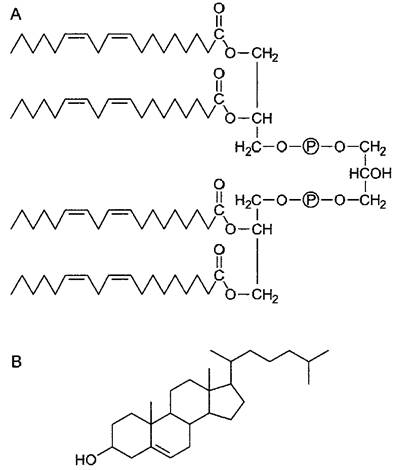
Fig. 2.101. Phagocytosis and endosymbiosis. A eukaryotic phagocyte (such as an amoeba) is capable of exchanging small particles and molecules with the environment via exocytosis and endocytosis (A, B), and can also engulf entire cells (highlighted), forming initial folds of the outer membrane during phagocytosis (C) and subsequently digestive vacuoles (phagosomes). Upon fusion with primary lysosomes, the captured cells within the vacuoles are digested. If the invading cell survives, a stable Symbiosis (D) with the host cell may be established, allowing the proliferation of the engulfed cells functioning as symbionts (or parasites).

Hypothetical organisms whose cells incorporated the putative ancestors of DNA-containing organelles are termed protoeukaryotes. In fact, even today there are known protists that lack mitochondria and exhibit primitive DNA sequence characteristics. Such archezoa correspond to these hypothetical protoeukaryotes and include the taxonomic groups Metamonada, Microsporidia, and Parabasalia. Recent findings indicate that the nuclear DNA of archezoa contains sequence segments that could only have originated from mitochondria. These parasitic unicellular organisms may have originally possessed mitochondria and subsequently lost them secondarily.
An alternative hypothesis is also currently under Structure/133.html">Discussion—the so-called hydrogen hypothesis. It is based on the premise that protoeukaryotes as an independent evolutionary Lineage never actually existed in the early stages of life on Earth; instead, the first eukaryotic cells were already the product of a symbiosis between methanogenic archaebacteria and α-proteobacteria. Under oxygen-deficient conditions, proteobacteria produce hydrogen, which the archaebacteria require to synthesize methane. Thus, this symbiosis could have rendered the archaebacteria independent of abiotic sources of H2. Through overgrowth, the archaebacteria could have subsequently fully engulfed their partners. In turn, as evolution progressed, these partners either developed into hydrogenosomes (the mitochondrial equivalents in anaerobic Unicellular Eukaryotes) or—when O2 became available—into mitochondria. According to the hydrogen hypothesis, the cells of primitive eukaryotes must have incorporated α-proteobacteria. Unlike the theory of symbiogenesis, the hydrogen hypothesis does not assume the internalization of symbionts via phagocytosis. Among other things, the hydrogen hypothesis is supported by the fact that methanogenic archaebacteria (like eukaryotes) contain histones and form nucleosomes.
An important general implication of the theory of symbiogenesis is that organisms of a new type arose during evolution not through mutation, genetic recombination, or Horizontal Gene Transfer, but via The formation of stable intracellular symbioses. Novel meta-organisms that emerged through such interspecific combination represent cellular and genetic chimeras. (In Greek mythology, a chimera is a monster with a lion's HEAD, a goat's body, and a dragon's tail. In biology, a chimera refers to a genetically heterogeneous Organism.) Modern Eukaryotic cells are mosaic cells composed of cells originating from different kingdoms (empires) of organisms. Through a very long co-Evolution of the host cells and endocytobionts—referred to as symbiogenesis—the symbionts gradually transformed into the organelles observed in modern eukaryotes. These alterations include, among other things, the loss of The Cell wall; the synchronization of reproduction with the specific metabolic needs of the host cell; The Development of translocator systems within envelope membranes to facilitate intensive substance exchange, up to The ability to export ATP or triose phosphates across these membranes; and, finally, The transfer of Genetic information from the symbionts/organelles to the host nucleus, combined with the specific import of proteins (and tRNAs) from the cytoplasm into the organelles.
Last update: 07/08/2026
Editorial and Educational Adaptation: This material has been compiled based on the primary/original source text. The project team performed an editorial review, corrected technical inaccuracies, structured sections, and adapted the content for an educational format.
What was processed:
- elimination of formatting defects (OCR errors, structural breaks, corrupted characters);
- editorial organization of content;
- standardization of terminology in accordance with academic sources;
- verification of factual statements against the original source text.
All mentions of the author, publication year, and origin of the primary text have been preserved in accordance with the source.