Protein Chemistry – Part 2 – Selected Chapters in Special Protein Chemistry - Ashmarin, I. P. 1968
Histones
Specificity of histones. Potential mechanisms of repression and derepression
The question of histone Specificity arose as soon as the hypothesis concerning their genetic function was formulated. Indeed, if histones selectively block various DNA regions in Cells of different Tissues and species, they should exhibit tissue and species specificity. However, the data accumulated on this issue are rather contradictory and do not allow for a definitive Conclusion.
On the one hand, numerous studies by Butler, Jones, Hnilica, and other researchers have demonstrated that the Amino Acid Composition of histones from tissues differing in the degree of differentiation and metabolic activity does not exhibit any significant variations. The electrophoretic Separation patterns in starch and polyacrylamide gels were also quite similar. The number of bands and their electrophoretic mobility proved to be practically identical for total histones from calf and rat Thymus, mouse ascites tumor and sea urchin sperm, chicken Liver and four-day-old chicken embryos, and for histones from.
The liver, Kidneys, and Brain of certain mammalian species (mouse, rat, rabbit, pig). At the same time, studies by Bonner et al. showed that the tissues of widely divergent animal species (trout liver and calf thymus) or animals and plants (calf thymus and pea seedlings) contain approximately equal amounts of the same histone fractions, which show almost no differences in amino acid composition, N-terminal groups, and gel electrophoretic separation patterns.
Even clearer results were obtained when studying individual histone fractions from various sources. For instance, Hnilica discovered a high degree of similarity among f2b histones from calf and rat thymus, rat Skin and Spleen, Walker 256 carcinosarcoma, and chicken erythrocytes. This similarity was observed in terms of amino acid composition, N-terminal group content, electrophoretic separation patterns, carboxypeptidase Digestion kinetics, peptide maps of tryptic hydrolyzates, and The amino acid composition of A number of Peptides. Based on these data, Hnilica concluded that the f2b fraction is completely identical across all investigated tissues.
Finally, the elucidation of the Amino Acid Sequence of the Arginine- and Glycine-rich histone molecule (histone IV) revealed an almost complete identity of these Proteins in calf thymus and pea cotyledons. Out of 102 Amino Acids in the polypeptide chain, so-called conservative substitutions—which do not affect the Introduction/11.html">Secondary Structure of the protein—were found in only two positions. Specifically, in the pea histone, valine at position 60 is replaced by isoleucine, and Lysine at position 77 by arginine. Such a close similarity between histones from species that diverged so widely in the course of evolution led a number of authors to conclude that the minor differences detected are the result of the accumulation of disparate single Mutations. The complete set of histones now found in various mammalian species was apparently already present in the evolutionary Lineage and has remained unchanged.
On the other hand, a number of facts of the opposite character are known. True, all these facts can be subdivided into three unequal groups.
The first group comprises cases of quantitative rather than qualitative Changes in the major histone fractions. Such shifts in The ratio of histone fractions were observed in the early Embryogenesis of sea urchins and chars, in chicken embryo tissues at various developmental stages, in the regenerating liver nuclei of young and old rats, in the cells of various differentiated Tissues of the same animal (skin, liver, regenerating liver, and Novikoff hepatoma of rats), and in the tissues of various animal and plant species. However, PLANT AND ANIMAL histone fractions analogous to one another were themselves similar in amino acid composition, electrophoretic properties, N-terminal groups, and sometimes even in Primary Structure as a whole. According to Hnilica and Goodwin, these changes in the ratio of individual histone fractions can influence Gene Expression. Direct experimental confirmation of this conclusion is currently available. It has been shown that during The Development of sea urchins and chars, the transition from the blastula to the gastrula stage is accompanied by a significant decrease in the content of arginine-rich histones and an increase in lysine-rich ones. During the same period, a sharp surge in nuclear RNA Synthesis also occurs, with these changes primarily affecting the mRNA population.
The second group includes rare cases of qualitative changes in histones from various tissues. Studies by Bustin and Cole, Nelson, and Jenis demonstrated that the quantity and quality (amino acid composition and the composition of tryptic hydrolyzates) of individual subfractions of lysine-rich histones differ between rabbit thymus and mammary gland tissues, calf and hamster liver and thymus, and chicken and frog liver and erythrocytes. Another example of histone tissue specificity is the replacement of certain histone fractions by others during spermiogenesis. In mammals, these changes reduce to the replacement of lysine-rich histones with arginine-rich ones; in fish and Mollusks, this process goes further, with arginine-rich histones being replaced by protamines. Such qualitative changes can apparently be associated with The process of Chromatin Condensation and the almost complete suppression of The Genome in mature spermatozoa.
Finally, the third group comprises isolated instances of species specificity of histones. These were identified for histones of the sea mussel Mytilus edulis and for lysine-rich histones from the spleen of four animal species. In the first case, two fractions with an unusually high basic amino acid content (35 mol.%) were discovered within the histones. In the second case, it was shown that lysine-rich histones from the spleen of calves, rats, cats, and chickens differ in the number of subfractions resolved by Chromatography on Amberlite IRC-50. One of the f1 histone subfractions from rat spleen differed in electrophoretic mobility in polyacrylamide gel and contained significant amounts of Methionine. This is the only known instance of methionine being detected in lysine-rich histones.
Summarizing the above, one can conclude that instances of species and tissue specificity of histones are extremely rare and are known only for the lysine-rich fraction of these proteins. As a rule, different tissues in various species of higher organisms contain qualitatively identical types of histones that may occur in varying ratios. This conclusion appears quite justified also because histones are associated with those genes that remain repressed throughout the entire lifetime of cells of a given lineage and which constitute the bulk of the genome. On the other hand, to encode a protein consisting of approximately 500 amino acids (molecular weight on the order of 55,000), a structural gene containing 1,500 NUCLEOTIDES is required. Such a structural gene will correspond to a segment of a single DNA molecule strand with a Molecular Weight of about 465,000 or a double-strand segment with a molecular weight of 930,000. Assuming the histone-to-DNA ratio in nucleohistone is 1.2 and the molecular weight of histone is 18,000, it can be calculated that about 60 histone molecules are required to bind to such a gene. Therefore, any specificity here is highly unlikely.
Thus, plant and animal tissues contain a limited number of histone types for which tissue and species specificity has not been proven. The types of histones in diffuse chromatin are similar to those in condensed chromatin. This implies that histones, acting as an essential structural element of chromatin, perform the function of general rather than specific repressors. At the same time, it is known that the arrangement of histones relative to chromatin DNA, as well as the suppression of the template activity of this DNA, is of a specific nature. How is the necessary repressor specificity achieved? In the case of lysine-rich histones, such specificity may be due to their enhanced affinity for AT Base Pairs of DNA. However, for other histones, no such affinity for specific DNA regions has been detected. Therefore, many authors believe that the characteristic distribution of histones in DNP is mediated by chromosomal RNA.
This new type of ribonucleic acid has now been found in the chromatin of pea cotyledons and seedlings, chicken embryos, rat liver and ascites tumor, and calf thymus. The Characteristic Features of chromosomal RNA are its short chain length (40–50 nucleotides) and a somewhat unusual nucleotide composition, which includes about 27% dihydrouridylic acid. The latter possesses The ability to undergo reversible cyclization and is linked via an amide bond to an acidic protein:
Class="center">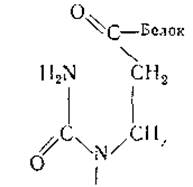
In turn, this RNA-associated protein is linked by Hydrogen Bonds to several histone molecules. As a result, complexes are formed that, on the whole, are likely bound to chromatin DNA. This is evidenced by the fact that the RNA of the complex becomes accessible to the action of RNase only after the removal of DNA from it.
Such a STRUCTURE OF THE complex may be of fundamental importance. Because histones in the complex are associated into large units, the latter can have a size quite sufficient to complex with the DNA of one or more genes. On the other hand, histone-bound RNA can locate its complementary operator gene, which in turn facilitates the interaction of histones with the DNA of the adjacent structural gene (or genes). A number of facts support this hypothesis. For instance, Bonner et al. isolated such complexes of RNA, acidic protein, and histones from pea seedling chromatin by cesium chloride density gradient centrifugation. It turned out that chromosomal RNA can hybridize with DNA when it is free of protein. As these experiments demonstrated, chromosomal RNA in various tissues is represented by distinct populations of molecules that are extremely heterogeneous in base sequence. In the presence of this RNA, a specific reassociation of chromatin takes place, the template properties of which turn out to be identical to those of native chromatin. RNAs synthesized on such a chromatin template were similar to nuclear RNA in their ability to form molecular hybrids with DNA. If, however, chromosomal RNA was pre-treated with zinc nitrate, the specificity of chromatin reassociation was disrupted.
Thus, all these data indicate that chromosomal RNA is the detector by means of which histones locate the corresponding DNA regions. Therefore, such RNA is frequently referred to as vector RNA. It is possible that vector RNAs are assembled on regulator genes, and their quantity corresponds to the number of operator genes. Meanwhile, the number of distinct histone types may be significantly smaller than the number of operators, and a limited number of genes is entirely sufficient for their synthesis. As a result, the number of effector substances, corresponding to the number of histone types, may also be much smaller than the number of operator genes.
How can one envision the mechanisms of DNA derepression? First, via the unmasking of a certain region of the DNA molecule as a result of the "removal" of the histone from it or through the weakening of the DNA–histone bond. Such histone removal can occur under METABOLISM/18.html">The Influence of various intranuclear polyanions, among which RNA should be named first and foremost. It has been shown that the RNA content in diffuse chromatin is five times higher than in condensed chromatin, and that total nuclear RNA can serve as an efficient DNA derepressor. On the other hand, it is known that both types of chromatin contain approximately equal amounts of the same types of histones. Based on these data, Frenster suggested that histones suppress DNA activity as non-specific repressors, whereas RNA acts as a DNA-specific derepressor. According to Frenster's model, RNA undergoes simple association with a complementary region of one of the strands of double-stranded DNA and recruits the histones that were originally bound to DNA. As a result, specific Regions of the second DNA strand become accessible for the RNA polymerase reaction (Fig. 24).
Other polyanions that weaken the DNA–histone bond include acidic proteins, Phospholipids, Phosphoproteins, and polyphosphates. It is known that active chromatin contains twice as much acidic protein, five times as much phospholipid, and nearly four times as much phosphoprotein phosphorus as condensed chromatin. Furthermore, studies by I. P. Ashmarin and A. I. Komkova, Langen, and Smith demonstrated that phosphoproteins and polyphosphates significantly reduce the inhibitory effect of histones on RNA synthesis. In the presence of these compounds, three-component soluble DNA–histone–polyphosphate (phosphoprotein) complexes are formed, which exhibit template activity even when histones are present in a substantial excess over DNA. The important role of non-histone proteins is also supported by other facts. For example, experiments by Paul and Gilmour showed that the reassociation of histones and chromosomal DNA yields a complex that is inactive as a template. If, however, histones are reassociated with the DNA–acidic protein complex, chromatin similar to the original in template activity is restored. The addition of acidic proteins to chromatin can restore its activity after it has been suppressed by histones. If acidic proteins are added to chromatin prior to the introduction of histones into the system, the inhibitory effect of the latter is not observed at all. All these data indicate that polyanions, by partially neutralizing histones, can weaken the strength of their binding to DNA, alter The structure of the DNA–histone complex, and consequently serve as derepressors of the DNA template function.
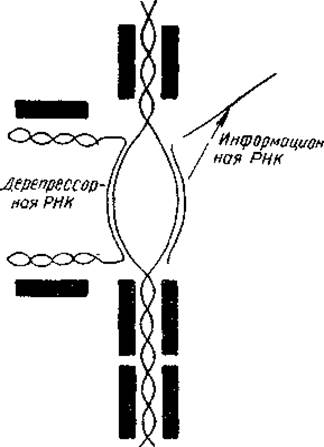
Fig. 24. Model of specific depression of RNA synthesis in active chromatin (Frenster, 1965). Black blocks represent repressor histone molecules.
A third pathway of derepression is the chemical modification of specific regions within the histone molecule. As already mentioned, this pathway involves the Acetylation, methylation, and phosphorylation of histones, as well as changes in the number of disulfide cross-links in their molecule. Thus, as early as 1964, Allfrey et al. showed that histone acetylation takes place in thymus nuclei independently of Protein Synthesis (the incorporation of C14-acetate continued even when protein synthesis was blocked by puromycin) and most intensively modifies the arginine-rich histone fraction. These findings prompted experiments in which chemically acetylated arginine-rich histones and C14-ATP or C14-GTP were added to a thymus or E. coli RNA polymerase system. It turned out that even minor acetylation of the f3 fraction, which had virtually no effect on its electrophoretic mobility, significantly stimulated RNA synthesis (reaching 80% of The amount of RNA synthesized in the absence of histones). At the same time, acetylation did not alter the Fundamental properties of histones, and the latter retained the ability to combine with DNA.
Analysis of condensed and diffuse chromatin revealed that histones from diffuse chromatin contain almost twice as many acetyl groups as histones from dense chromatin. When comparing these two chromatin fractions in terms of their ability to acetylate histones, it was found that this process, much like RNA synthesis, proceeds more intensively in the diffuse chromatin fraction. This indicated that a definite relationship may exist between histone acetylation and The rate of RNA synthesis in chromatin. Experiments conducted on human lymphocytes and regenerating rat liver proved the existence of this relationship.
It is known that the addition of phytohemagglutinin (PHA) to a tissue culture of lymphocytes leads to an increase in Cell size, their overall metabolic activity, and the rates of RNA and Protein synthesis; some of the cells thereupon begin to divide. Incubation of such transformed cells with Me-H3-acetate and 2-C14-uridine showed that PHA stimulates not only RNA synthesis in lymphocytes but also the acetylation of their arginine-rich histones (Fig. 25). Moreover, the increase in the rate of histone acetylation slightly outpaced the rise in the intensity of RNA synthesis, and the Chromatin Structure underwent certain changes. This was indicated by a more intensive and time-dependent binding of acridine orange by the chromatin of PHA-treated cells. A direct link between histone acetylation and enhanced RNA synthesis in PHA-stimulated lymphocytes was also proved by autoradiography Methods. Using a double label and double-layer emulsion autoradiography, Darzynkiewicz et al. demonstrated that the proportion of lymphocytes exhibiting increased C14-acetate incorporation is the same as that of cells showing enhanced RNA synthesis. Thus, all these results confirm the close connection between the PHA-stimulated induction of RNA synthesis and the increased rate of histone acetylation. Conversely, in cases where PHA causes a suppression of Transcription processes (granulocytes, polymorphonuclear leukocytes), a decrease in C14-acetate incorporation into histones is also observed.
Similar results were obtained in experiments on regenerating rat liver. It is known that following partial hepatectomy, the remaining cells begin to divide intensively and that this process is accompanied by an increase in RNA synthesis. Using competitive Hybridization, it was shown that the mRNA population of the regenerating liver differs from the normal one and contains RNAs characteristic of embryonic liver. Obviously, THE SPECTRUM OF active genes changes during regeneration, and previously repressed loci are uncovered. As Pogo et al. demonstrated, these processes are accompanied by significant alterations in histone acetylation. It turned out that in the regenerating liver as well, histone acetylation proceeds independently of their synthesis, with the arginine-rich histones f2a1 and f3 being acetylated first and most strongly. The incorporation of (Me–H3)-acetate into these proteins reaches a maximum 3–4 hours after hepatectomy, whereas the peak intensity of RNA synthesis is observed 6 hours post-surgery. Clearly, the acetylation of arginine-rich histones precedes the increase in RNA synthesis. Furthermore, deacetylation processes in the regenerating liver are slowed down, and the acetate label persists in histones for a prolonged period. All of this led Allfrey et al. to conclude that the synthesis of new RNAs on previously repressed genes requires structural changes in chromatin that are caused by, or coincide with, histone acetylation. However, this conclusion must be treated with a certain degree of caution. It is known that histone acetylation and deacetylation are enzymatic processes that are themselves regulated. On the other hand, it has been shown that when lymphocytes are treated with PHA preparations lacking mitogenic activity yet capable of increasing RNA synthesis, the intensity of histone acetylation decreases rather than increases. The enhanced RNA synthesis induced by PHA can be brought back to its previous level by hydrocortisone, while a high level of acetylation is maintained. In addition, a body of data indicates that genome activation is a complex, multi-step process and that histone acetylation represents merely one of its stages. For instance, studies by Riegler, Killander, and other researchers showed that alterations in lymphocyte DNP structure caused by PHA occur at the very earliest stages of activation in all investigated cells. The subsequent increase in histone acetylation is observed in only a fraction of the lymphocytes. At the same time, the changes in DNP structure occurring During the first stage of activation significantly exceed those taking place during histone acetylation. Apparently, histone acetylation, although participating in genome activation, is neither its first step nor does it play The Role of a regulatory mechanism.
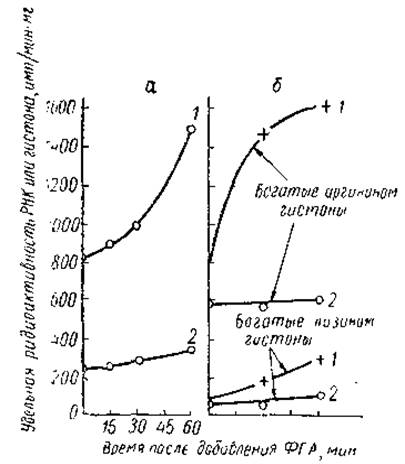
Fig. 25. Comparison of histone acetylation levels and RNA synthesis rates in resting lymphocytes (2) and in cells stimulated with phytohemagglutinin (1) (Allfrey et al., 1966). a — 2-C14-uridine incorporation, b — Me-H3-acetate incorporation.
The Modification of the interaction between histones and DNA can also occur as a result of histone phosphorylation. Work by Kleinschmidt, Allfrey, Ord, Stevely, and other researchers has demonstrated that histone phosphorylation is likewise independent of their synthesis, and that it is mediated by nuclear rather than mitochondrial phosphorylation. This process is energy-dependent (all agents that block nuclear Glycolysis or ATP synthesis disrupt the incorporation of P32-orthophosphate into Nuclear Proteins), with the terminal phosphate of ATP and other nucleoside triphosphates serving as its direct phosphorus source. Phosphate is present in histones in the form of phosphoserine (85%) and phosphothreonine (15%), with the phosphoserine content in the f1 fraction being three times that in the f3 fraction. Histone phosphorylation appears to be closely linked to changes in genome activity. It has been shown that the phosphorus content in the f1 fraction is significantly higher in mitotically active tissues (embryonic and regenerating liver, ascites tumor cells in the logarithmic phase) and that its amount in diffuse chromatin histones is several times greater than in compact chromatin. During trout sperm maturation and the concomitant decrease in RNA synthesis, the content of phosphorylated residues in histones also drops markedly. During lymphocyte "transformation" by PHA, a sharp increase in the rate of histone phosphorylation was observed alongside an increase in the intensity of RNA synthesis. Finally, experiments using an RNA polymerase system for lysine-rich histones revealed a direct proportionality between the rate of RNA synthesis and the phosphorus content in the histone.
The repressive effect of histones on RNA synthesis may apparently also depend on the ratio of thiol and disulfide groups within them. Studies by Jallomme, Ord, Stocken, and Hilton showed that the reduction or blocking of SH groups in arginine-rich histones with $n$-chloromercuriphenylsulfonate did not affect their ability to suppress DNA-dependent RNA synthesis. However, The oxidation of SH groups to disulfides or their "cross-linking" of the R—S—R—S—R type (where R = Hg) led to an enhanced repressive effect of histones on the RNA polymerase reaction. The latter is in good agreement with the higher content of SH groups in diffuse chromatin and disulfide groups in dense chromatin.
Finally, it is highly likely that derepression is carried out with the active participation of HORMONES. As numerous studies have demonstrated, hormones exhibit organ specificity and selectivity, stimulating the synthesis of mRNA and corresponding Enzymes in a variety of animal, insect, and plant tissues. At the same time, hormones are intriguing because in several cases the same hormone stimulates the synthesis of multiple mRNAs and enzymes (for example, the ecdysone hormone controls the synthesis of molting and pupation enzymes in insects). This Supports the previously expressed hypothesis that the number of effector substances may be significantly smaller than the number of operator genes, and that the same effector can participate in the derepression of various genes.
What can be said at present about the Mechanism of hormone Action? Since hormones stimulate RNA synthesis in their "target" tissues, possibly via the derepression of specific genes, this stimulation must be associated with changes in the template activity of chromatin. As mentioned above, the template activity of rat liver chromatin is 1/5 of The activity of DNA from the same chromatin. In adrenalectomized rats, this value dropped to 1/7 of the DNA activity. Upon administration of hydrocortisone to such animals, the template activity of chromatin increased by 30%. However, the addition of the hormone to chromatin *in vitro* does not cause any increase in RNA synthesis. Consequently, hormones do not exert a direct effect on chromatin activity. Therefore, many authors believe that hormone action is mediated through an intermediate protein substance. This protein, designated as the target protein, presumably forms a complex with the hormone, and this complex strips the histone from the corresponding gene (Fig. 26). The presence of such proteins has been demonstrated for certain Plant Hormones (Auxins); they have been shown to possess tissue specificity and the ability to bind to chromatin in the presence of the hormone. At the same time, hormone action may also proceed via the modification of histone structure or an increase in the synthesis of non-histone proteins. It has been shown, for instance, that The stimulation of RNA synthesis in the liver by hydrocortisone, Glucagon, and Insulin is accompanied by enhanced phosphorus incorporation into histones, particularly into fraction II. Upon administering hydrocortisone to adrenalectomized rats, one observes not only an increase in the rate of RNA synthesis, but also an elevation in the degree of chromatin histone acetylation. Finally, the estrogen-induced enhancement of RNA synthesis in the mammalian Uterus correlates with an increase in the synthesis of acidic chromatin proteins.
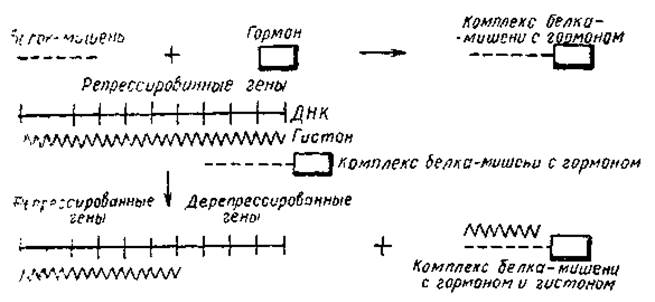
Fig. 26. Possible mechanism of gene activity regulation by hormones (Butler, 1966)
It is possible that the putative existence of multiple derepression mechanisms is closely interrelated with the presence of several histone types. Each of these histone types apparently performs both structural and regulatory Functions, as currently available data do not allow for their strict delineation. However, each histone type probably performs these regulatory functions in a distinct manner. Obviously, in a higher Organism, the same gene must exhibit varying reactivity in different cells. In the simplest case, a gene may be repressed in one cell and "turned on" in another. For this type of regulation, a single histone type and a certain number of diverse vector RNAs are quite sufficient. However, repression must take many different forms: a gene repressed in one cell is capable of being activated by a specific signal, whereas the derepression of the same gene in another cell requires an entirely different kind of signal. It is likely that the existence of different histone types serves precisely to create such differences in the reactivity of the same genes. Lysine-rich histones, for example, could repress a specific gene without hindering its activation via phosphorylation, whereas in a different cell type, the same gene would be suppressed by arginine-rich histones and reactivated upon their acetylation (interaction with a protein-hormone complex, etc.). As a result, the distribution of diverse histones among genomic DNA molecules would constitute the program of gene activity that determines organismal development to a certain extent.
Naturally, a program of this kind is in great need of targeted mechanisms for Histone-DNA Interaction and derepression. At the same time, it implies that gene derepression should increase with development and specialization. Since the majority of genes are inactive in any cell type, these changes will probably not significantly affect the overall histone composition. We have already discussed the existence of a special class of vector RNAs above. There are also other data supporting these Conclusions. Thus, studies by Allfrey, Pogo, Ord, Stocken, and other researchers showed that the content of acetate, phosphate, and disulfide groups in histone fractions from various tissues is not uniform. The rates of acetylation and phosphorylation processes, as well as the content of phosphoproteins, also varied among them. On the other hand, it is known that the turnover rate of histones is many times lower than that of acidic proteins. Apparently, histones are formed only once, specifically during chromatin Replication. Finally, recent work has shown that the content of non-histone (acidic) proteins in chromatin, as well as the rate of histone acetylation, increases as the embryo develops.
However, these results only indirectly indicate the targeted nature of derepression. The role of vector RNA has also not been sufficiently proven. Thus, while in pea nucleohistone there were about 100 RNA-histone nucleotides per every 1000 DNA nucleotides, only 2 were found in liver and intestinal mucosa nucleohistone. Therefore, all the hypotheses put forward above are largely speculative. In addition, one must bear in mind that in polychromosomal cells of a differentiated organism, there are several diverse levels of genetic activity regulation (by operons, by structural chromosome regions, interchromosomal, cytoplasmic-chromosomal, etc.), the interaction of which cannot be ensured by histones alone.
Last update: 06/08/2026
Editorial and Educational Adaptation: This material has been compiled based on the primary/original source text. The project team performed an editorial review, corrected technical inaccuracies, structured sections, and adapted the content for an educational format.
What was processed:
- elimination of formatting defects (OCR errors, structural breaks, corrupted characters);
- editorial organization of content;
- standardization of terminology in accordance with academic sources;
- verification of factual statements against the original source text.
All mentions of the author, publication year, and origin of the primary text have been preserved in accordance with the source.