IMMUNOLOGY - Roitt I. - Mir 2000
Chapter 28. Autoimmune Processes and Autoimmune Diseases
THE SPECTRUM OF AUTOIMMUNE DISEASES
Antibodies characteristic of Hashimoto's thyroiditis and primary Myxedema react exclusively with thyroid tissue components, making the resulting pathological process strictly localized. In contrast, in conditions such as systemic lupus erythematosus (SLE), the serum reacts with components of many, if not all, body Tissues. One of the MAIN TYPES OF antibodies characteristic of SLE interacts with the Cell Nucleus (Fig. 28.2). These two conditions form the opposite ends of the autoimmune disease spectrum (Fig. 28.3).
Class="center">
Fig. 28.2. Thyroid autoantibodies. Unfixed sections of normal human Thyroid Gland were treated with patient serum, followed by fluorescein-conjugated rabbit anti-human Ig antibodies. Follicular epithelial Cells are stained As a result of the interaction between components of their Cytoplasm (but not The Nucleus) and antibodies from a patient with Hashimoto's thyroiditis (1). In contrast, serum from a patient with systemic lupus erythematosus (SLE) contains antibodies that react exclusively with the nuclei of follicular epithelial cells, leaving the cytoplasm unstained (2). (Photographs kindly provided by Mr. G. Swana.)
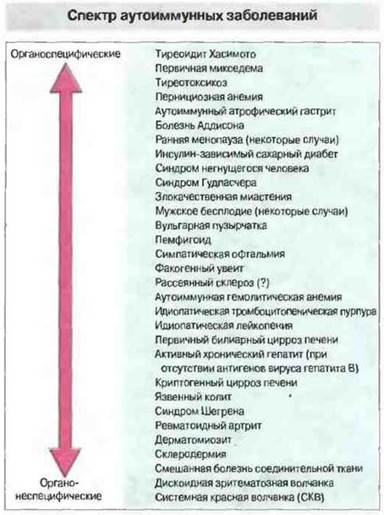
Fig. 28.3. Autoimmune diseases can be divided into organ-specific and non-organ-specific depending on whether they react primarily with cellular Antigens of a single organ or of many Organs.
The target organs in organ-specific diseases are frequently The Thyroid Gland, Adrenal Glands, Stomach, and Pancreas. In non-organ-specific diseases, including rheumatological disorders, lesions typically affect the Skin, Kidneys, joints, and Muscles (Fig. 28.4).

Fig. 28.4. Although non-organ-specific diseases typically present with simultaneous symptoms involving the skin, joints, kidneys, and muscles, one system is usually affected to a greater extent, such as The Kidneys in systemic lupus erythematosus (SLE) or the joints in rheumatoid Arthritis.
An individual may have multiple autoimmune diseases simultaneously
Characteristically, autoimmune diseases located at the same end of the spectrum frequently occur together. Patients with pernicious anemia (involving autoimmune gastritis) often exhibit thyroid antibodies, and autoimmune thyroid diseases are more prevalent among such patients than in the general population. Similarly, patients with autoimmune thyroid diseases frequently possess gastric tissue autoantibodies and (albeit somewhat less frequently) clinical manifestations of pernicious anemia.
Located at the opposite end of the spectrum, rheumatological disorders also tend to co-occur. For instance, features of rheumatoid arthritis often accompany the clinical manifestations of SLE. These conditions involve systemic deposition of immune complexes, most prominently in the kidneys, joints, and skin, which leads to dysfunction in multiple organs. Conversely, diseases originating from opposite ends of the spectrum co-occur relatively rarely (Fig. 28.5).

Fig. 28.5. Organ-specific autoantibodies to thyroid and gastric tissue components are frequently present simultaneously in the same individual, but are rarely found together with non-organ-specific antibodies (such as antibodies to DNA and Nucleoproteins).
The mechanisms of tissue damage in autoimmune diseases vary and depend on the condition's position within the spectrum. When the antigen is localized to a single organ, type II hypersensitivity and cell-mediated reactions are of primary importance (see Chapters 24 and 26). In non-organ-specific autoimmune diseases, the predominant role is played by immune complex deposition, which ultimately leads to inflammation via mechanisms including Complement activation and phagocytosis (see Chapter 25).
Last update: 13/08/2026
Editorial and Educational Adaptation: This material has been compiled based on the primary/original source text. The project team performed an editorial review, corrected technical inaccuracies, structured sections, and adapted the content for an educational format.
What was processed:
- elimination of formatting defects (OCR errors, structural breaks, corrupted characters);
- editorial organization of content;
- standardization of terminology in accordance with academic sources;
- verification of factual statements against the original source text.
All mentions of the author, publication year, and origin of the primary text have been preserved in accordance with the source.