BIOCHEMISTRY FOR TEACHERS - F. F. BOYECHKO - 1985
MAJOR CHEMICAL COMPONENTS OF CELLS
ENZYMES – CATALYSTS OF VITAL PROCESSES
One of the fundamental features of living systems is METABOLISM, which constantly ensures their self-renewal. Metabolic processes occur in the body exclusively due to the presence of specific protein substances known as Enzymes, which act as biological catalysts.
Enzymes are widely distributed in nature. They are synthesized within living Cells and facilitate the complex PHYSIOLOGICAL AND BIOCHEMICAL processes necessary for development, growth, and reproduction.
Without enzymes, organisms would be unable to utilize nutrients, nor could they break down or synthesize their primary components—Proteins, fats, and CARBOHYDRATES. Outside the body, The breakdown of these substances requires prolonged boiling with mineral acids. In contrast, within living organisms, these processes proceed at high rates and under much milder conditions, notably at normal body Temperature.
It is worth noting that enzymes retain their activity even outside a living Organism. They can be isolated in a pure crystalline state without losing their properties, catalytic activity, or Cell/13.html">Protein Structure.
Humans have utilized enzymes in practical activities since antiquity. Today, not only have numerous enzymes been discovered, their protein nature investigated, and optimal conditions for their catalytic action established, but an entire field of science—enzymology—has been established. The Mechanisms of action for a significant number of enzymes have been elucidated, leading to The Development of industrial production technologies for various enzyme preparations and Methods for their application in diverse sectors of the national economy and practical medicine.
Enzymes are also proteins
Studies of The chemical composition of enzymes have established that all of them are proteinaceous substances. Like proteins, enzymes exist in solutions in a colloidal state, exhibit amphoteric properties, are inactivated by high temperatures, undergo hydrolytic Cleavage in the presence of Proteolytic Enzymes, possess high relative molecular weights, and share many other characteristics common to proteins.
All known enzymes are divided into two major groups: simple enzymes (protein enzymes) and complex enzymes (conjugated or proteid enzymes).
The molecules of simple enzymes consist solely of protein. Chemically, they belong to albumins (such as Liver esterase), globulins (Trypsin and urease), and A number of other simple protein groups. Simple enzymes also include gastrointestinal Hydrolases, notably trypsin, Chymotrypsin, RNase, and DNase, among others.
Complex enzymes consist of a simple protein and a non-protein moiety. The protein component of conjugated enzymes is frequently referred to as the apoenzyme, while the non-protein component is called the prosthetic group—if it is firmly and permanently bound to the protein part—or the coenzyme (co-factor), if the non-protein part is loosely bound to the protein and can be easily dissociated.
Examples of enzymes in which the protein part is permanently and tightly bound to the non-protein moiety include catalase and peroxidase. In such enzyme groups as dehydrogenases (e.g., glucose-6-phosphate dehydrogenase, Alcohol dehydrogenase), the non-protein component Functions as a typical coenzyme.
Numerous studies have demonstrated that the non-protein moiety in conjugated enzymes is served by various Vitamins AND THEIR derivatives, Peptides, NUCLEOTIDES, metal-containing complexes, as well as Iron and copper atoms.
When examining the Chemical Nature of conjugated enzymes, it must be emphasized that neither the protein nor the non-protein part alone exhibits significant enzymatic activity. Such activity is observed only when the protein and non-protein moieties are united. It is believed that the non-protein group enhances the Stability of the protein component, whereas the latter determines the Specificity of the enzyme's catalytic action. Furthermore, the same non-protein group, when attached to different proteins, can catalyze entirely different processes.
The Active Site of enzymes and The Mechanism of their catalytic action
Investigations into The Role of various functional groups in enzyme catalysis have shown that activity is not associated with the entire enzyme molecule, but rather with a specific region known as the active or catalytic site.
In simple enzymes, the active site is formed by amino acid residues, including Cysteine, Serine, Arginine, aspartic acid, glutamic acid, Histidine, Tyrosine, and Tryptophan. Among these, the HS-groups of cysteine, HO-groups of serine, and the imidazole ring of histidine are of particular importance, while the carboxyl groups of aspartic and glutamic acids, as well as the indole group of tryptophan, play a somewhat lesser role. Characteristically, The amino acid residues comprising the active site are located at varying distances from one another along the polypeptide chain. They are brought into close proximity to form the active site only through the folding of the enzyme's native structure. Consequently, specific alterations in the enzyme's structure are invariably accompanied by A change in its catalytic activity. For instance, during Denaturation, when the protein structure is deformed, enzymes sharply decrease or completely lose their catalytic properties. The amino acid residues that make up the active site can sometimes be divided into three functional types.
The first type comprises groups that interact directly with the substrate during catalysis; the second includes groups responsible for establishing contact between the enzyme and the substrate; and the third type consists of Amino Acids with groups that perform a purely structural function, maintaining the enzyme's proper spatial conformation. Certain enzymes possess not just one, but two or more active sites.
In conjugated enzymes, the active site is represented by the non-protein group and the adjacent amino acid residues.
In addition to the active site, enzymes feature two other functional regions: the substrate-binding site and the allosteric site.
It is believed that the substrate-binding site represents the region of the enzyme molecule responsible for attaching the substance (substrate) that is to undergo transformation. This site can be compared to an anchor onto which the substrate ship docks, which is why it is often referred to as the anchoring platform. Studies of the interaction between the substrate and this site have shown that it occurs via the amino group of a Lysine residue or the carboxyl group of a glutamic acid residue on the substrate. The substrate may also bind to this site through the sulfhydryl group of a cysteine residue, indicating that The Nature of the substrate-binding site varies among different enzymes.
The allosteric site is a region of the enzyme molecule that, upon binding a low-molecular-weight compound, induces a conformational (tertiary structure) change in the enzyme. This, in turn, alters the configuration of the active site, thereby modifying catalytic activity—either enhancing or reducing it. This process forms The basis of allosteric REGULATION OF ENZYMATIC Activity. However, The concepts of active, substrate-binding, and allosteric sites should not be absolutized. In some enzymes, the substrate-binding site may coincide with the active site, and Conformational Changes in the protein molecule can occur not only through the allosteric site, but also at the very moment the substrate binds to the substrate-binding site. Thus, the Functions of the substrate-binding and allosteric sites are closely intertwined and mutually overlapping.
A crucial problem in enzymology is elucidating the Mechanism of enzyme Action. Enzymes are unique catalysts capable of accelerating Chemical Reactions with high efficiency that are otherwise extremely difficult to perform under laboratory conditions. Therefore, understanding their MECHANISM OF ACTION is of profound interest to both chemists and biologists.
Existing theories explaining the mechanism of enzyme action are based on the fact that enzymes significantly lower the activation energy of corresponding reactions—that is, the energy required for a specific reaction to take place. The following examples illustrate this phenomenon. The activation energy for the decomposition of hydrogen peroxide into oxygen and Water without a catalyst is 75.6 kJ/mol (F1), in the presence of colloidal platinum it is 49.1 kJ/mol (F2), and in the presence of the enzyme catalase it drops to 21.1 kJ/mol (F3). These data clearly show that enzymes lower the activation energy, and they do so more effectively than inorganic catalysts, which indicates their higher catalytic efficiency. Most researchers believe that the catalytic action of enzymes involves The formation of enzyme-substrate complexes. It has been established that this process occurs in several stages. In The First stage of Enzymatic Catalysis, the substrate binds to the enzyme; In the second, the substrate is activated and modified to form one or more activated complexes; and in The final stage, the reaction products are released from the enzyme. These stages can be schematically represented as follows:
Class="center">
where E is the enzyme, S is the substrate, ES is the primary enzyme-substrate complex, ES* is the activated complex, and P is the reaction product.
It should be noted that the reaction proceeds most rapidly During the first stage.
The properties of enzymes stem from their protein nature. In addition, like other biological catalysts, enzymes possess certain specific characteristics. These include thermolability, dependence on the pH of the medium, and catalytic specificity.
Enzymes are highly sensitive to temperature changes, meaning they are thermolabile substances. Unlike other chemical reactions, enzymatic processes cannot proceed at temperatures above 70–80 °C. High temperatures destroy the structure and active center of the enzyme, leading to a complete loss of its catalytic activity. At sub-zero temperatures, they also lose enzymatic activity, but their structure is not destroyed; therefore, once the low temperature is removed, enzymes regain their activity.
There is a specific temperature optimum for enzymes, which is the temperature at which they exhibit maximum activity. For most enzymes isolated from animal organisms, the temperature optimum lies within the range of 35–45 °C. Up to this limit, a 10 °C increase in temperature roughly doubles the Rate of Enzymatic reactions. Above the temperature optimum, catalytic activity decreases, and at temperatures that cause Protein Denaturation, it ceases completely.
Certain enzymes are characterized by high thermostability. Examples include Papain, myokinase, and trypsin.
Effect of pH on enzyme activity. Enzyme activity is highly sensitive to Changes in the pH of the medium. For every enzyme or group of enzymes, there is an optimal pH value at which they are maximally active. For instance, Pepsin, an enzyme found in gastric juice, functions best in an acidic environment (pH 1.5–2.5), whereas trypsin, present in the duodenum, reaches peak activity at pH 7–8. Most enzymes exhibit maximum activity in mildly acidic, neutral, or mildly alkaline environments. Any decrease or increase in pH relative to the optimum leads to a drop in enzyme activity. This is because the Functional groups of the enzyme that interact with the substrate carry a specific charge only at the optimal pH. A shift in the reaction medium alters the ionization state of these functional groups, preventing the enzyme from interacting with the substrate. Furthermore, hydrogen ion concentration affects The ionization of the substrate, the enzyme-substrate complex, and the reaction products.
Catalytic specificity. One of the Fundamental properties of enzymes, Setting them apart from other catalysts, is their high degree of specificity. This is demonstrated by the fact that each enzyme can catalyze only a single chemical reaction or a few closely related ones. Specificity is based on the precise structural complementarity between the substrate and the enzyme's active center. As Emil Fischer metaphorically put it, the enzyme must fit the substrate like a lock and key.
Several types of specificity are recognized: absolute, absolute group, relative group, and stereochemical (or optical).
Absolute specificity is characteristic of enzymes that act on only one strictly defined substrate. Examples of such enzymes include urease and arginase. For instance, urease catalyzes the hydrolytic cleavage of urea into ammonia and carbon dioxide:
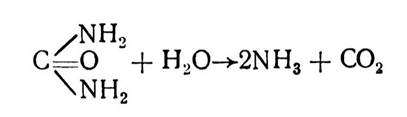
Replacing even a single hydrogen atom in the amino group with a methyl radical, or forming any other urea derivative, renders urease completely inactive toward such a compound.
Absolute group specificity implies that an enzyme can act on a series of closely related substrates built upon a common structural principle. Here, not only the type of chemical bond is critical, but also the chemical nature and STRUCTURE OF THE adjacent radicals. Examples of such enzymes include Carboxypeptidases and glucosidases.
Relative group specificity occurs when an enzyme acts on various substrates sharing the same type of bond. This group includes proteolytic enzymes such as pepsin, trypsin, and chymotrypsin, which catalyze the hydrolytic cleavage of peptide bonds in various proteins. Esterases and several Other Enzymes also exhibit relative specificity.
Stereochemical specificity means that an enzyme acts exclusively on one spatial stereoisomer. For example, α-glucosidase cleaves only methyl-α-D-glucoside and has no effect on its stereoisomer, methyl-β-glucoside. Stereochemical specificity is characteristic not only of catabolic enzymes that break down substances, but also of those involved in synthesis.
Reversibility of enzyme action. Studies on enzyme action have shown that, depending on the conditions, enzymes can catalyze both forward and reverse reactions. For instance, glucosephosphate isomerase, a glycolytic enzyme, catalyzes The conversion of glucose-6-phosphate into fructose-6-phosphate. Under certain conditions, it can also catalyze the reverse process—the conversion of fructose-6-phosphate into glucose-6-phosphate. The reversibility of enzymatic action was first discovered in 1888 by the Russian scientist O. Ya. Danilevsky while studying the Breakdown of Proteins by gastric juice enzymes.
It should be emphasized that reversibility is not a property of all enzymes. A number of Synthesis and degradation pathways involving the same compound are catalyzed by entirely different enzymes.
Effect of activators and inhibitors on enzymes. Enzyme activity is frequently modulated by the presence of various chemical compounds in solution. Some of these enhance enzyme activity, while others suppress it. The former are termed activators, and the latter inhibitors (or poisons).
Substances that act as enzyme activators include metal cations and certain anions. Cations of magnesium, potassium, calcium, manganese, sodium, zinc, and cobalt, as well as chloride anions, are particularly common activators. For instance, Muscle adenosine triphosphatase, which catalyzes the breakdown of ATP into ADP and orthophosphoric acid, is activated by Calcium Ions, whereas cellular membrane adenosine triphosphatase is activated by sodium and potassium cations. Salivary and pancreatic amylases are activated by chloride ions. In many cases, metal cations (such as iron, magnesium, zinc, and others) form part of the enzyme's prosthetic group, facilitating the Formation of the enzyme-substrate complex. In other instances, Metal Ions assist in attaching the non-protein moiety to the apoenzyme or ensure the formation of The quaternary structure of the enzyme.
Organic substances can also function as enzyme activators. For example, lipase activity is enhanced by Bile acids, and tissue proteases increase their activity in the presence of sulfhydryl-containing compounds such as cysteine and Glutathione.
Inhibitors cause the suppression of enzymatic processes. The mechanisms of inhibitor action vary considerably, but they generally fall into two main categories: Competitive and non-competitive inhibition.
In competitive inhibition, the inhibitor has a structure structurally similar to the substrate, leading to direct competition between them for binding to the enzyme's active center. Because the inhibitor is a structural analog of the substrate, it binds to the active site, reducing the formation of the enzyme-substrate complex and thereby lowering enzymatic activity. However, this type of inhibition is reversible; once the inhibitor is removed, the enzyme regains its ability to interact with the substrate. A quantitative balance exists between the substrate and the inhibitor. If the inhibitor concentration exceeds that of the substrate (I>S), the inhibitor binds to the enzyme, putting it out of action so that the substrate cannot be cleaved. Conversely, if the Substrate Concentration exceeds that of the inhibitor (S>I), the substrate will preferentially bind to the enzyme and subsequently break down into reaction products. Consequently, The Effect of Competitive Inhibitors can be mitigated or entirely overcome by increasing the concentration of the substrate in the medium.
An example of such an inhibitor is malonic acid (HOOC—CH2—COOH). It acts as a competitive inhibitor of succinate dehydrogenase, whereas its substrate is succinic acid (HOOC—CH2—CH2—COOH).
During non-competitive inhibition, the inhibitor interacts with essential functional groups of the enzyme, which in most cases are located within the allosteric site. This causes a conformational change in the active site, preventing the substrate from binding and effectively inactivating the enzyme. This type of catalytic inhibition is also referred to as allosteric inhibition.
Allosteric Introduction/15.html">Regulation of enzyme Activity. The core principle of this regulatory mechanism is that specific substances bind to the allosteric site, which, depending on the nature of these molecules, induces structural changes in the active site. In some cases, these changes lead to the destruction of the active site and, consequently, Enzyme inactivation. In other instances, structural alterations may arise that enhance enzyme function (Fig. 19).
Regulatory effects on enzymes via allosteric sites can be exerted by Hormones, metabolic intermediates, Neurotransmitters, and Other Compounds, collectively known as allosteric effectors. For example, an elevated concentration of lactic acid—the end product of Glycolysis—leads to a decrease in The activity of hexokinase, the enzyme that catalyzes glucose phosphorylation. This, in turn, inhibits the subsequent key steps of glycolysis that lead to The production of lactic acid. Once the lactic acid concentration drops back to normal, hexokinase activity is restored. In this case, the regulatory influence of lactic acid operates via a feedback mechanism.
It is well established that cellular metabolites are products of a series of consecutive reactions. To halt the production of a specific substance, it is sufficient to block just a single step in this pathway. This indicates that multi-step pathways typically feature one or a few enzymes with allosteric properties, commonly referred to as regulatory enzymes. These typically catalyze the initial reactions of major biochemical pathways or key junction points where multiple pathways intersect. As we can see, regulatory enzymes are far fewer in number than standard enzymes. Research has shown that regulatory enzymes are predominantly complex quaternary structures composed of multiple subunits, where one subunit contains the catalytic center and another houses the allosteric site.

Fig. 19. Allosteric Regulation of enzyme activity.
(adapted from O. D. Brown and M. D. Fadeyeva).
An allosteric effector (All. eff.) binds to the allosteric site (All. s.) of the enzyme (E), inducing a conformational change in the enzyme molecule. 1 — As a result of allosteric effector binding, a catalytic center (Cat. c.) is formed in the enzyme molecule, granting the enzyme The ability to specifically interact with the substrate (Sub.), i.e., activating it. 2 — upon binding of the allosteric effector to the enzyme molecule, structural changes occur that result in the loss of enzyme activity.
Applications of enzymes
As our knowledge of enzymes expands, their applications across various sectors of the national economy grow increasingly broad. Notably, enzyme-based manufacturing does not require complex equipment or significant capital investment in machinery. Furthermore, enzymes offer the distinct advantage of being non-toxic and entirely harmless to Human and Animal organisms.
Enzymes are widely utilized in the food industry. For instance, Yeasts rely on their native enzymes to convert (ferment) carbohydrates into ethanol, a microbial capability harnessed in industrial alcohol production.
Yeast enzymes catalyze the breakdown of starch into dextrins, making them essential in baking and the production of flour-based goods.
Lactic acid Bacteria convert sugars into lactic acid. This type of Fermentation is widely applied in the dairy industry to manufacture various products such as kefir and sour milk, as well as in the ensiling of fodder. Driven by bacterial enzymes, the readily fermentable sugars in green fodder are converted into lactic acid. Once the concentration of lactic acid reaches 2% by mass, the METABOLIC ACTIVITY OF all microorganisms ceases, effectively preserving the fodder under anaerobic conditions.
In recent years, purified enzymes isolated from diverse biological sources have gained widespread use. For example, chymosin, extracted from the mucous membrane of the abomasum, coagulates milk proteins and is extensively used in cheesemaking.
Proteolytic enzymes, which break down proteins, are extracted from Fungi and other microorganisms. These enzymes are utilized in the food industry to tenderize meat and fish and to clarify beer, preventing turbidity.
An industrial method was recently developed to produce glucose oxidase, an enzyme with antibacterial properties. In the presence of oxygen, it oxidizes glucose to yield d-gluconolactone and hydrogen peroxide, both of which exhibit bacteriostatic and bactericidal activity.
Because the glucose oxidase-catalyzed oxidation of glucose consumes oxygen, the enzyme is employed wherever oxygen removal is necessary to prevent The oxidation of sensitive substances. This application is widely used in the food industry to extend the shelf life of perishable goods.
A number of isolated enzymes and enzyme preparations are used in animal husbandry. For instance, supplementing the diet of piglets aged 2–4 months with just 3 g of pepsin per day increases average daily weight gain by 18% and reduces feed consumption per unit of weight gain by 15%. For feeding calves, piglets, and lambs, various enzyme preparations (such as avamorin, orysin, and tyrosin) possessing proteolytic and amylolytic activity are utilized. These additives boost animal productivity by 8–15%. It is generally considered expedient to feed enzymes exclusively to young animals, whose gastric digestive enzyme systems are not yet fully developed.
In clinical practice, enzyme preparations are employed as supportive (non-specific) agents in the Treatment of various pathologies—primarily for the clearance of non-viable tissue, the lysis of thrombi and various exudates, and the correction of pathological states caused by enzymatic deficiencies.
Today, dozens of enzymatic drugs are utilized in medical therapy. Among them, thrombolytic and lytic enzymes—such as fibrinolysin, streptodornase, trypsin, and chymotrypsin—are most frequently applied. A valuable property of these enzymes is their selective degradation of non-viable, denatured proteins while leaving living Tissues virtually unaffected.
Significant clinical experience has already been accumulated regarding the successful application of proteolytic enzymes in surgical practice for wound debridement, the treatment of chronic, non-healing ulcers, the Management of chronic Osteomyelitis, and other conditions that respond poorly to conventional treatments.
Proteolytic enzymes are used to dissolve Blood clots in patients with vascular thrombosis, particularly thrombophlebitis. Thrombosis is often accompanied by a depression of the natural anticoagulant mechanisms, leading to suppressed blood fibrinolytic activity. To enhance Fibrinolysis, clinicians administer the blood proteolytic enzyme fibrinolysin (plasmin) or activators that convert the inactive precursor profibrinolysin into active fibrinolysin. Enzymes such as streptokinase and urokinase possess these activation properties.
Enzymes are also instrumental in the Diagnostics of various diseases. An elevation or reduction of enzyme activity in the blood compared to baseline norms serves as an objective indicator of pathological changes in the body. Enzymatic diagnostics exhibit high specificity, enabling the detection of abnormalities at Cytology/cytology/16.html">Early stages of disease.
At the same time, It is important to note that the ROOT cause of numerous pathologies lies in impaired synthesis or abnormal activity of enzymes—so-called enzymopathies. These include a multitude of hereditary disorders, such as galactosemia, Various Forms of hemolytic anemia, Glycogen Storage Diseases, and hereditary coagulation disorders, among others.
Enzymopathies can be of toxic or alimentary origin. In the first case, enzyme activity is impaired due to the action of specific poisons or toxins. Alimentary enzymopathy may occur when the body is inadequately supplied with substances necessary for the synthesis and functioning of enzymes. Such substances include proteins, vitamins, minerals, and others.
Thus, enzymes are essential substances in the body's metabolic processes. In addition, they are widely used in the food industry, agriculture, and medicine.
Last update: 06/08/2026
Editorial and Educational Adaptation: This material has been compiled based on the primary/original source text. The project team performed an editorial review, corrected technical inaccuracies, structured sections, and adapted the content for an educational format.
What was processed:
- elimination of formatting defects (OCR errors, structural breaks, corrupted characters);
- editorial organization of content;
- standardization of terminology in accordance with academic sources;
- verification of factual statements against the original source text.
All mentions of the author, publication year, and origin of the primary text have been preserved in accordance with the source.