Biological Chemistry - Berezov T. T., Korovkin B. F. 1998
Blood
Anticoagulant Blood System
Fibrinolysis
The body contains a powerful fibrinolytic system that ensures the dissolution (fibrinolysis) of formed Blood clots, or thrombi (Fig. 17.9).
In humans and animals, the retracted fibrin clot undergoes gradual resorption under METABOLISM/18.html">The Influence of plasmin, a proteolytic enzyme of Blood Plasma, resulting in The formation of Water-soluble Hydrolysis products known as Peptides. Under normal conditions, plasmin circulates in the blood as an inactive precursor, plasminogen. The conversion of plasminogen to plasmin involves the Cleavage of 25% of The amino acid residues from the polypeptide chain. This reaction is catalyzed by both blood and tissue activators*. Blood activators play a leading role in this process. Normally, The activity of blood plasminogen activators is very low, meaning they exist primarily as proactivators. The rapid conversion of blood proactivators into plasminogen activators is triggered by tissue lysokinases and streptokinase. Streptokinase is produced by hemolytic streptococci and is absent from the blood under normal conditions. However, during a streptococcal infection, large amounts of streptokinase may be produced, sometimes leading to enhanced fibrinolysis and The Development of hemorrhagic diathesis.
It is also important to bear in mind that alongside the human BLOOD FIBRINOLYTIC SYSTEM, an antifibrinolytic system also exists. It comprises various antikinases, antiplasmin, and other anti-activators.
* Tissue plasminogen activators are found in the Lungs, Uterus, and Prostate Gland. During surgeries on these Organs, the release of a significant amount of tissue activator into the bloodstream can trigger acute fibrinolysis.
Class="center">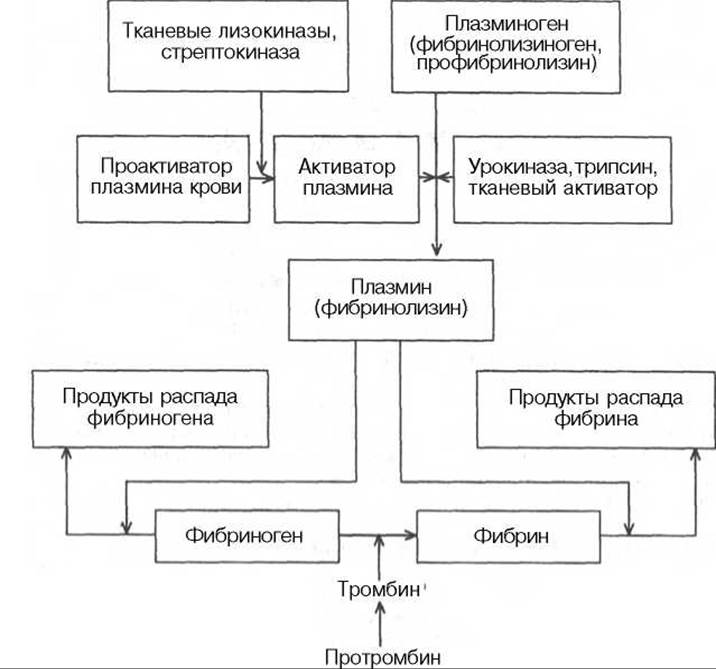
Fig. 17.9. Schematic diagram of fibrinolysis.
In clinical practice, enzyme preparations and their inhibitors are widely used to treat Disorders of the Blood Coagulation and anticoagulation systems. For instance, in thromboembolic disease, Enzymes are administered to either promote the lysis of an existing thrombus or reduce elevated blood coagulability. Conversely, in conditions accompanied by excessive fibrinolysis, Enzyme Inhibitors are utilized.
Recent studies suggest that administering plasmin combined with heparin (antithrombin) can be effective not only in treating Pulmonary Embolism and thrombophlebitis but also in managing myocardial infarction, provided these agents are administered within the first few hours after the onset of the disease. Plasminogen activators such as urokinase and streptokinase can also be used as fibrinolytic agents in myocardial infarction.
A promising new approach involves the USE OF IMMOBILIZED enzymes (such as streptodecase). These enzyme formulations fully retain their catalytic activity, exhibit a more prolonged action in the body, and display reduced antigenicity.
It should be noted that thrombolytic therapy requires rigorous laboratory monitoring. Because the proteolytic action of plasmin is not strictly specific to fibrin—the main component of a thrombus—administering plasmin can cause the undesired cleavage of many essential blood clotting factors. This, in turn, can lead to severe complications, notably the development of hemorrhagic diathesis.
Last update: 06/08/2026
Editorial and Educational Adaptation: This material has been compiled based on the primary/original source text. The project team performed an editorial review, corrected technical inaccuracies, structured sections, and adapted the content for an educational format.
What was processed:
- elimination of formatting defects (OCR errors, structural breaks, corrupted characters);
- editorial organization of content;
- standardization of terminology in accordance with academic sources;
- verification of factual statements against the original source text.
All mentions of the author, publication year, and origin of the primary text have been preserved in accordance with the source.