BIOCHEMISTRY - L. Stryer - 1984
VOLUME 1
PART I. CONFORMATION AND DYNAMICS
CHAPTER 2. INTRODUCTION TO PROTEIN STRUCTURE AND FUNCTION
2.4. Proteins consist of one or more polypeptide chains
Many Proteins, such as Myoglobin, consist of a single polypeptide chain; others contain two or more chains, which may be identical or different. For example, the Hemoglobin molecule is composed of two chains of one type and two of another; these four chains are held together by noncovalent interactions. In some multichain proteins, The polypeptide chains are linked by Disulfide Bonds. In Insulin, for instance, its two constituent chains are joined by two disulfide bonds.
2.5. Proteins can be purified by a variety of methods
To understand how a protein works, it must be isolated in pure form. Currently, several thousand proteins have been purified. During Isolation and Purification, a protein is separated from other proteins and non-protein compounds based on properties such as molecular size, solubility, charge, and specific binding affinity. Typically, several different purification Methods are applied, and their effectiveness is compared by monitoring a specific property of the protein of interest. For example, Enzymes are assayed by their specific catalytic activity. The total amount of protein is also measured, allowing the degree of purification to be determined at each step of the isolation process.
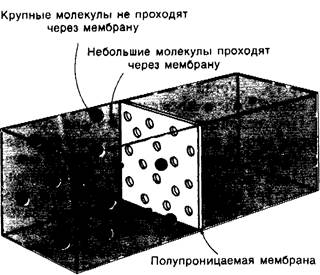
Proteins are separated from low-molecular-weight substances by dialysis through a semipermeable membrane (Fig. 2.21). Proteins with a molecular mass greater than 15 kilodaltons (kDa) remain inside a standard dialysis bag, whereas smaller molecules and ions pass through the pores of the dialysis membrane and escape into the dialysate.
Class="center">Fig. 2.21. Separation of molecules by size using dialysis
A dalton (Da) is a unit of mass nearly equal to the mass of a hydrogen atom (i.e., 1.0000 on the atomic mass scale). The terms "dalton" and "molecular weight" are used interchangeably; for example, a 20,000-dalton protein has a Molecular Weight of 20,000. It is named in honor of John Dalton (1766–1844), who developed the atomic theory of matter.
A kilodalton (kDa) is a unit of mass equal to 1,000 daltons. The mass of most proteins ranges from 10 to 100 kDa.
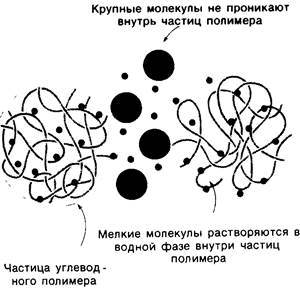
Proteins can also be separated by size using gel-filtration chromatography (Fig. 2.22). In this method, the sample is applied to a Column of an insoluble but highly hydrated carbohydrate polymer consisting of small beads, typically about 0.1 mm in diameter. Commercially available Sephadex is commonly used. Small molecules penetrate the interior of the polymer beads, whereas large ones cannot. Consequently, low-molecular-weight substances occupy the aqueous solution both inside and between the beads, while high-molecular-weight substances are restricted to the aqueous solution between the beads. As a result, high-molecular-weight substances, occupying a relatively smaller volume, travel through the column more rapidly and are eluted first.
Fig. 2.22. Separation of molecules by size using gel-filtration chromatography
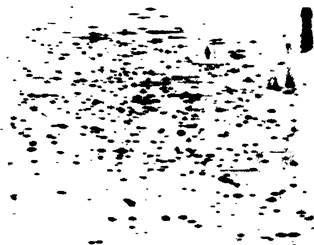
Proteins can be separated on The basis of their net charge by Ion-exchange chromatography. If a protein has a net positive charge at pH 7, it will usually bind to a column containing negatively charged carboxyl groups, whereas a negatively charged protein will not. The bound, positively charged protein can then be eluted from the column by adding sodium chloride or another salt to the eluting buffer. Sodium ions compete with the positively charged groups of the protein for binding sites on the column. Proteins with a lower density of net positive charge are eluted first, followed by those with a higher charge density. In addition to net charge, other factors can influence The behavior of proteins during ion-exchange chromatography. The net charge of a protein also determines its rate of migration in an electric field. This principle underlies Electrophoresis, which will be discussed in more detail in a subsequent chapter (Section 5.3). It is worth noting here the high resolving power of electrophoresis. For instance, using two-dimensional electrophoresis, more than 1,000 different protein spots can be resolved in a single Separation of proteins from a simple Organism like the bacterium E. coli (Fig. 2.23).
Fig. 2.23. Two-dimensional electrophoresis of E. coli proteins. This method can resolve more than 1,000 different proteins from this bacterium. Separation is based on differences in isoelectric point (horizontal direction) and molecular weight (vertical direction)
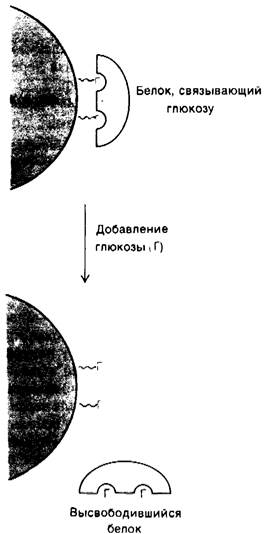
Another highly powerful and versatile method for Protein Purification is Affinity Chromatography. This technique is based on the high affinity of many proteins for specific chemical groups. For example, the plant protein concanavalin A can be isolated from a crude extract by passing it through a column containing covalently attached glucose. Concanavalin A, which has an affinity for glucose, binds to the column, whereas other proteins generally do not. The bound concanavalin A is then eluted from the column with a concentrated solution of glucose. In this process, the glucose molecules in solution displace the column-bound glucose residues from the binding sites on the concanavalin A molecules (Fig. 2.24). Thus, affinity chromatography can be used to isolate proteins that recognize a specific group X by: 1) covalently attaching X or its derivative to a column; 2) applying the protein mixture to the column and washing away unbound proteins with buffer; and 3) eluting the desired protein by adding a high concentration of X in solution.
Fig. 2.24. Affinity chromatography of concanavalin A (shown in yellow) on a column containing covalently attached glucose residues (G)
Last update: 06/08/2026
Editorial and Educational Adaptation: This material has been compiled based on the primary/original source text. The project team performed an editorial review, corrected technical inaccuracies, structured sections, and adapted the content for an educational format.
What was processed:
- elimination of formatting defects (OCR errors, structural breaks, corrupted characters);
- editorial organization of content;
- standardization of terminology in accordance with academic sources;
- verification of factual statements against the original source text.
All mentions of the author, publication year, and origin of the primary text have been preserved in accordance with the source.