GENERAL MICROBIOLOGY - T.P. Pyrog - 2004
11. FUNDAMENTAL MECHANISMS OF METABOLISM AND ENERGY CONVERSION IN MICROORGANISMS
11.6. ELECTRON TRANSPORT CHAIN AND PHOSPHORYLATION (ATP SYNTHESIS) DURING ELECTRON TRANSFER
11.6.1. Components of the Electron Transport Chain
The core components of the Electron Transport Chain are Enzymes featuring tightly bound, low-molecular-weight prosthetic groups. The most important among these are Flavoproteins, iron-sulfur Proteins, Quinones, and Cytochromes.
Flavoproteins. These are enzymes containing either flavin mononucleotide (FMN) or flavin adenine dinucleotide (FAD) as a prosthetic group. These enzymes function as hydrogen carriers. The active group of flavoproteins is the isoalloxazine system (Fig. 11.9, a), which acts as a reversible redox system. Two nitrogen atoms serve as the reactive centers, each capable of binding a single proton. This binding can occur in two steps via a semiquinone intermediate. Due to their ability to transfer either one or two protons, flavoproteins can act as intermediaries between Different types of hydrogen-transfer processes.
Class="center">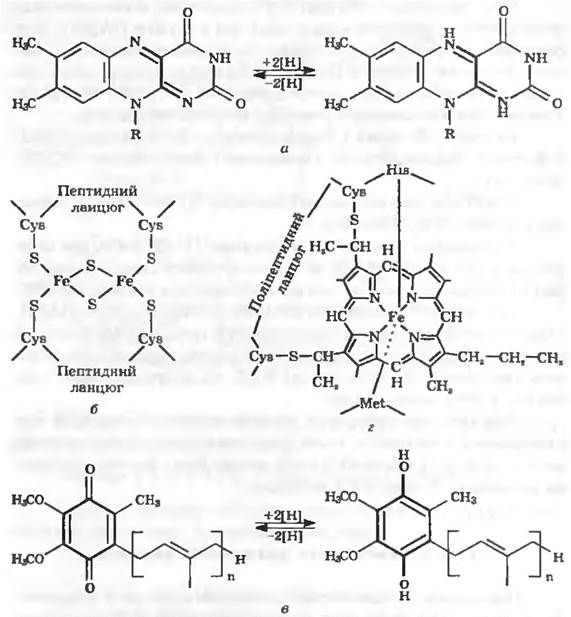
Fig. 11.9. Structural formulas of some Key Components of The electron transport chain
Iron-sulfur proteins. These are redox systems involved in electron transfer. They contain iron atoms coordinated, on the one hand, with the sulfur of Cysteine residues and, on the other, with inorganic sulfide sulfur (Fig. 11.9, b). Inorganic sulfide sulfur is readily released as hydrogen sulfide upon acidification. Cysteine residues are integrated into The polypeptide chains. Fe-S centers can be regarded as prosthetic groups of the polypeptide. The [2Fe + 2S] centers function as electron transport chain components capable of transferring a single electron.
In addition to electron transport, these proteins participate in MOLECULAR Nitrogen Fixation, sulfate and nitrite reduction, Photosynthesis, and other processes. A typical example of an iron-sulfur protein is ferredoxin, which is involved in Pyruvate oxidation in anaerobic Bacteria.
Quinones. Ubiquinone (coenzyme Q, Fig. 11.9, c) is found in The inner mitochondrial membrane and in Gram-negative bacteria, whereas naphthoquinones are present in Gram-positive bacteria, and plastoquinones in METABOLISM/14.html">Chloroplasts. Quinones are localized within the lipid phase of the membrane and are capable of carrying either hydrogen or electrons. This transfer can occur in two steps via a semiquinone intermediate. Compared to Other components of the electron transport chain, quinones are present in a 10- to 15-fold excess. They act as hydrogen "collectors" that gather hydrogen supplied by various Coenzymes and prosthetic groups within the electron transport chain and deliver it to cytochromes.
Cytochromes. Cytochromes are redox systems that exclusively transfer electrons; they do not transport hydrogen. Electrons are supplied to cytochromes from the quinone pool. During electron transfer, an equivalent amount of protons is released into solution. Cytochromes contain a heme group as their prosthetic group (Fig. 11.9, d). The central iron atom of the heme ring participates in electron transfer by changing its valence state. Cytochromes are pigmented proteins, distinguished from one another by their Absorption Spectra and redox potentials. Common types include cytochromes a, a2, b, c, o, among others.
Cytochromes are also involved in the final transfer of electrons to oxygen. Cytochrome oxidase (cytochrome aa3) is a terminal oxidase that reacts with oxygen and transfers four electrons to it:

Cytochrome o, which is frequently found in bacteria, can also react with molecular oxygen. This terminal oxidase is susceptible to inhibition by cyanide or carbon monoxide.
For a long time, the presence of cytochromes was considered a hallmark of aerobic organisms or phototrophs. The discovery of cytochrome c3 in the anaerobic bacterium Desulfovibrio initially came as a surprise, but it soon became clear that sulfate reduction in these sulfate-reducing bacteria enables them to carry out Oxidative Phosphorylation under anaerobic conditions, meaning that sulfate reduction functionally corresponds to Respiration.
Last update: 12/08/2026
Editorial and Educational Adaptation: This material has been compiled based on the primary/original source text. The project team performed an editorial review, corrected technical inaccuracies, structured sections, and adapted the content for an educational format.
What was processed:
- elimination of formatting defects (OCR errors, structural breaks, corrupted characters);
- editorial organization of content;
- standardization of terminology in accordance with academic sources;
- verification of factual statements against the original source text.
All mentions of the author, publication year, and origin of the primary text have been preserved in accordance with the source.