Pharmacognosy with the Basics of Plant Biochemistry - Kovalyov V. M. 2004
Special Part
Phenolic Compounds
Quinones
Quinones are cyclic diketones whose molecules contain keto groups integrated into a system of conjugated bonds. Benzoquinones, naphthoquinones, and anthraquinones are of the greatest practical importance.
BENZOQUINONES
Benzoquinones exist as two isomers: 1,2-benzoquinone and 1,4-benzoquinone.
Class="center">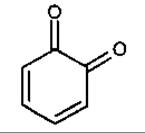
1,2-Benzoquinone
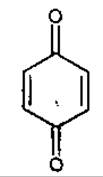
1,4-Benzoquinone
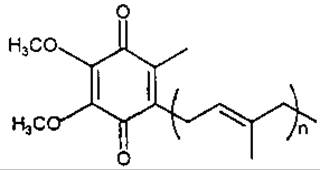
General formula of ubiquinones
Substituted 1,4-benzoquinones act as oxidizing agents that undergo reversible reduction to hydroquinones. They participate in electron transport during cellular Respiration. Ubiquinone belongs to this group.
Ubiquinone (coenzyme Q, KoQn, 2,3-dimethoxy-6-methyl-5-polyprenylbenzoquinones). The number of polyprenyl residues (n) can range from 1 to 15. In nature, Q6–Q10 are the most common. The Human Body primarily utilizes Q10.
Ubiquinones play a vital role in the Bioenergetics of most prokaryotes and all eukaryotes. Their primary function is The transport of electrons and protons from various substrates to Cytochromes during respiration and Oxidative Phosphorylation. Additionally, ubiquinones—mainly in their reduced form as ubiquinols—function as antioxidants.
For the industrial extraction of KoQ, microbial biomass (Bacteria, Yeast, Fungi) is utilized. Efficient biotechnological Methods for obtaining Q9 and Q10 have been developed.
Ubiquinone Q10 is used abroad in dietary supplements under the name coenzyme Q10 or Co Q10. As an oxygen carrier, ubiquinone reduces hypoxic Damage caused by oxygen deprivation in cardiovascular diseases, making it recommended for the Prevention of cardiovascular disorders. Due to its low toxicity, coenzyme Q10 is effective in chronic conditions, in pediatric Treatment, and for mitigating the cardiotoxic effects of antitumor drugs. Ko Q10 also exhibits immunomodulatory properties. It enhances the body's tolerance to overload and stress, strengthens The Immune System, and supplies Cells with energy.
NAPHTHOQUINONES
Naphthoquinone derivatives are predominantly found in plants of the families Juglandaceae, Plumbaginaceae, Droseraceae, etc.; they have also been isolated from bacteria and serve as structural fragments of numerous natural substances. Certain naphthoquinones exhibit high biological activity. Phylloquinone (vitamin K1) is a naphthoquinone involved in Photosynthesis. Derivatives of 1,4-naphthoquinone—such as juglone, shikonin, and droserone—play a significant role in the pharmacological activity of walnut leaves, gromwell herb and roots, sundew herb, and other plants.
Last update: 06/08/2026
Editorial and Educational Adaptation: This material has been compiled based on the primary/original source text. The project team performed an editorial review, corrected technical inaccuracies, structured sections, and adapted the content for an educational format.
What was processed:
- elimination of formatting defects (OCR errors, structural breaks, corrupted characters);
- editorial organization of content;
- standardization of terminology in accordance with academic sources;
- verification of factual statements against the original source text.
All mentions of the author, publication year, and origin of the primary text have been preserved in accordance with the source.