Special Histology and Embryology: Practical Course - V. K. Naphpanyuk 2001
Digestive System
Anterior Segment of the Digestive System
Lips
The lip (labium) is a Structure that guards the entrance to the Oral Cavity and is primarily composed of Cytology/practical/58.html">Striated Skeletal Muscle tissue.
The lip consists of three distinct regions: 1) the cutaneous region (pars cutanea); 2) the transitional region (pars intermedia); 3) the mucosal region (pars mucosa).
The cutaneous (outer) region of the lip has the structural characteristics of typical Skin. It is covered by keratinized stratified squamous epithelium and contains Sebaceous Glands, Sweat Glands, and Hair follicles. The epithelium rests on a basement membrane, beneath which lies loose Connective Tissue forming dermal papillae that project into the epithelium.
The transitional region (also known as the red margin or vermilion border) comprises two zones:
1) the outer (smooth) zone, where the keratinized layer is retained, though it is thinner and more transparent; hair follicles and sweat glands are absent, and only sebaceous glands remain;
2) the inner (villous) zone, where the epithelial layer is 3–4 times thicker than in the outer zone, while the keratinized layer and sebaceous glands are generally absent. The underlying loose connective tissue forms very tall papillae rich in numerous capillaries that project upward into the epithelium. The circulating Blood within these capillaries gives the lip its characteristic red color. Because these papillae contain numerous nerve endings, the red margin of the lip is extremely sensitive.
The mucosal (inner) region of the lip is lined by non-keratinized stratified squamous epithelium, although isolated keratin granules can occasionally be detected in the Cells of the superficial layer. The epithelial layer of the mucosal region is thicker than that of the cutaneous region.
The lamina propria of the mucous membrane forms connective tissue papillae, though they are lower than those found in the transitional region. There is no muscularis mucosae.
The submucosa contains the secretory units of the labial Salivary Glands (glandulae labiales). Structurally, these are branched tubuloalveolar glands, and according to their secretory product, they are mixed mucoserous glands.
Slides for Examination
Slide 1. Human lip (Fig. 35).
Low power. Examine and make a drawing of the slide. Pay attention to the structural differences among the cutaneous, transitional, and mucosal Regions of the lip. Observe the keratinized stratified squamous epithelium of the cutaneous region, the non-keratinized stratified squamous epithelium of the transitional and mucosal regions, the lamina propria of the mucous membrane, the striated Muscles of the lip, as well as the sebaceous and sweat glands.
Label the following structures on the drawing: 1) cutaneous region; 2) transitional region; 3) mucosal region; 4) Cross section of striated muscle bundles; 5) epidermis; 6) dermis; 7) hair follicle sections; 8) sebaceous glands; 9) connective tissue papillae; 10) blood capillaries; 11) lamina propria of the mucous membrane; 12) adipose tissue; 13) salivary gland; 14) salivary gland duct; 15) Blood Vessels; 16) submucosa.
Class="center">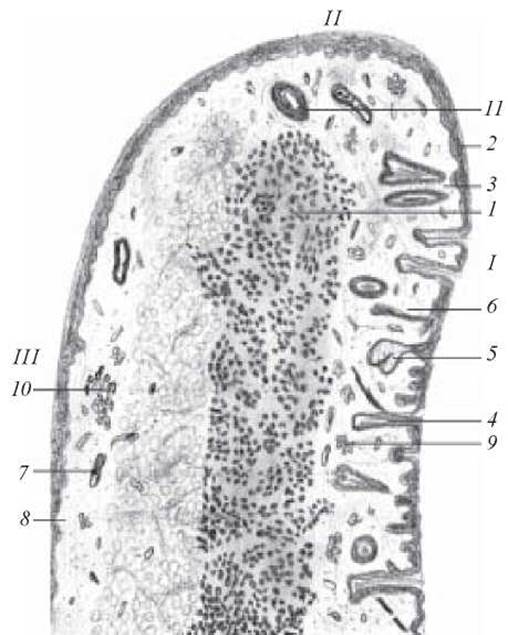
Fig. 35. Human lip. Hematoxylin and eosin stain. × 40:
I. Cutaneous region. II. Transitional region. III. Mucosal region.
1 — cross section of striated muscle bundles; 2 — epidermis; 3 — dermis; 4 — hair follicle sections; 5 — sebaceous glands; 6 — connective tissue papillae; 7 — blood capillaries; 8 — lamina propria of the mucous membrane; 9 — adipose tissue; 10 — salivary gland; 11 — blood vessels
Last update: 10/08/2026
Editorial and Educational Adaptation: This material has been compiled based on the primary/original source text. The project team performed an editorial review, corrected technical inaccuracies, structured sections, and adapted the content for an educational format.
What was processed:
- elimination of formatting defects (OCR errors, structural breaks, corrupted characters);
- editorial organization of content;
- standardization of terminology in accordance with academic sources;
- verification of factual statements against the original source text.
All mentions of the author, publication year, and origin of the primary text have been preserved in accordance with the source.