MODERN BOTANY - P. RAVEN - 1990
SECTION VII. UPTAKE AND TRANSPORT OF SUBSTANCES IN PLANTS
CHAPTER 26. PLANT NUTRITION AND THE SOIL
General Nutritional Requirements
Plants must acquire from their environment certain substances that are involved in complex biochemical reactions maintaining Cell Structure and growth. In addition to light, higher plants require Water and specific chemical elements for METABOLISM and growth. Many evolutionary adaptations in plants are associated with specialized Structural and functional mechanisms for efficiently absorbing these substances and distributing them to the living Cells throughout their bodies.
Like plants, animals need water and certain chemical elements, but they must also obtain from external sources sugars or Other Compounds that can serve as an energy source, as well as specific Amino Acids and Vitamins. Compared to animals, the Nutritional Requirements of plants are relatively simple. Under favorable environmental conditions, most green plants can use light energy to convert СО2 and Н2О into Organic compounds that serve as an energy source. Plants are also capable of synthesizing all necessary amino acids and vitamins using inorganic nutrients taken up from their environment.
Particularly striking is the self-sufficiency of nitrogen-fixing cyanobacteria. Through Nitrogen Fixation, they convert atmospheric nitrogen into forms that can be utilized for the synthesis of Amino Acids and Proteins. In addition, cyanobacteria exhibit photosynthetic activity.
Plant Nutrition encompasses the uptake from the environment of all precursor substances necessary for biochemical reactions, the distribution of these substances throughout the plant, and their utilization in metabolic and growth processes.
Essential Inorganic Nutrients
By 1800, chemists and biologists had already established that certain chemical elements are absorbed by plants from their environment. However, opinions differed as to whether the absorbed elements were merely contaminants or components essential for normal functioning. By the mid-1800s, it became clear that at least 10 chemical elements present in plants are required for normal growth. In the absence of any of these, plants exhibit characteristic growth abnormalities or symptoms of damage, and often fail to reproduce normally. These ten elements—carbon, hydrogen, oxygen, potassium, calcium, magnesium, nitrogen, phosphorus, sulfur, and iron—were identified as essential for plant growth. Consequently, they are classified as essential mineral, or essential inorganic nutrients.
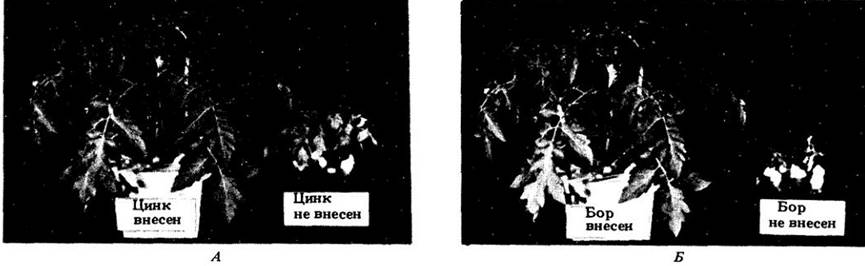
At the beginning of the twentieth century, manganese was also recognized as an essential element. Over the next 50 years, thanks to improved techniques for purifying nutrient solutions from impurities, five more elements were added to the list of essentials: zinc, copper, chlorine, boron, and molybdenum, with chlorine being included in this group only in 1954. Currently, these 16 elements are considered essential for the normal development of most plants (Fig. 26-2).
Class="center">Fig. 26-2. The deficiency of one or more essential inorganic nutrient elements leads to impaired Plant GROWTH AND DEVELOPMENT. The effects of zinc and boron deficiency on tomatoes are shown (A and B, respectively). A control plant is placed on the left in each photograph.
Nutrient Concentrations in Plants
A standard approach for determining the relative amounts of various elements required for the normal growth of different plant species is the chemical analysis of inorganic content. Typical results of such studies are presented in Table 26-1. They are particularly important for agriculture, as they indicate the nutrient status of crops and the potential need for Fertilization. Inorganic analysis can also predict potential nutritional disorders in livestock that consume specific plants.
Table 26-1. Examples of Inorganic Element Analysis in Plants (Dry Weight Basis)

Individual elements are known to occur in plants at varying concentrations. Based on this, major inorganic substances are divided into two broad groups: Macronutrients and micronutrients. Macronutrients are required by plants in large quantities, whereas micronutrients (Trace Elements) are needed in very small, trace amounts (Table 26-2).
After Carbon and Oxygen, potassium reaches the highest concentrations in plants. When its levels in the soil are high, potassium can account for up to 10% of a plant's dry weight.
Table 26-2. Functions of Inorganic Nutrients in Plants
Element |
Main form in which the element is absorbed |
Typical concentration in a healthy plant (dry weight basis) |
Principal functions |
Macronutrients |
|||
Carbon |
СО2 |
-44% |
Component of organic compounds |
Oxygen |
Н2O or О2 |
-44% |
Component of organic compounds |
Hydrogen |
H2O |
-6% |
Component of organic compounds |
Nitrogen |
NO-3 or NH+4 |
1-4% |
Component of amino acids, proteins, NUCLEOTIDES, Nucleic Acids, chlorophyll, and Coenzymes |
Potassium |
К+ |
0,5 — 6% |
Enzyme and amino acid structure; Protein Synthesis; activator of numerous Enzymes; stomatal opening and closing |
Calcium |
Са2+ |
0,2 — 3,5% |
Component of cell walls; enzyme cofactor; cell permeability; component of calmodulin, a regulator of membrane and enzyme function |
Phosphorus |
Н2РО-4 or НРО2-4 |
0,1 — 0,8% |
Formation of high-energy phosphate compounds (ATP to ADP), sugar phosphorylation; component of nucleic acids, several key coenzymes, and Phospholipids |
Magnesium |
Mg2+ |
0,1 — 0,8% |
Component of the chlorophyll molecule; activator of many enzymes |
Sulfur |
SO2- |
0,5 — 1% |
Component of Certain amino acids, proteins, and coenzyme A |
Micronutrients |
|||
Iron |
Fe2+ or Fe3+ |
25 — 300 ppm |
Chlorophyll synthesis; component of Cytochromes and Nitrogenase |
Chlorine |
СI |
100-1000 ppm |
Osmosis and ionic balance; apparently required for photosynthetic oxygen-evolving reactions |
Copper |
Cu2+ |
4 — 30 ppm |
Activator of certain enzymes |
Manganese |
Mn2+ |
15 — 800 ppm |
Activator of certain enzymes |
Zinc |
Zn2+ |
15 — 100 ppm |
Activator of many enzymes |
Molybdenum |
MoO2-4 |
0.1 — 5,0 ppm |
Nitrogen Fixation and nitrate reduction |
Boron |
ВО-3 or B4O2-7 |
5 — 75 ppm |
Affects Са2+ utilization; functions not fully known |
Elements essential for certain plants or other organisms |
|||
Cobalt |
Co2+ |
Trace |
Required by nitrogen-fixing microorganisms |
Sodium |
Na+ |
Trace |
Osmosis and ionic balance, but only in certain plants. Required by some species in deserts and saline soils, and possibly by all C4 plants |
Certain species or taxonomic groups are characterized by unusually high or low concentrations of specific elements (Fig. 26-3). Even when grown in the same nutrient solution, plants can differ dramatically in their mineral concentrations. Compare the analytical results for maize (a monocot) and alfalfa (a dicot) shown in Table 26-1. Dicotyledonous plants generally require considerably more calcium and boron than monocots.
Research has shown that some elements are essential only for particular plants or for plants growing under specific conditions. Alfalfa (Medicago sativa) and other legumes respond favorably to cobalt supplementation. However, cobalt is required not by the alfalfa plant itself, but by the symbiotic nitrogen-fixing Bacteria residing in its ROOT nodules. As indicated in Table 26-1, certain plants contain relatively high amounts of sodium. It has long been established that sodium can partially substitute for potassium requirements in some species. More recently, sodium has been shown to be strictly essential for A number of other plants, such as halophytes (plants adapted to saline soils). It was also recently discovered that in the absence of nickel, soybean plants exhibit stunted growth and develop necrotic spots on their leaves where urea accumulates to toxic levels. Adding nickel to the nutrient medium prevents these symptoms, confirming that this element is essential for soybeans.
Table 26-1 includes data on two elements, sodium and cobalt, which are not considered essential for all agricultural crops. Nevertheless, these elements are required by herbivorous animals that feed on these plants. For instance, if the cobalt concentration in forage plants drops below 0.1 ppm, animals grazing on them develop deficiency symptoms.
Functions of Inorganic Nutrients in the Plant
Inorganic substances are essential for Plant Growth and metabolism for various reasons. Table 26-2 lists the elements required by most plants, the forms in which they are typically absorbed from the environment, their typical concentrations, and some of their functions.
Specific and Nonspecific Functions
Inorganic ions influence osmotic pressure (Chapter 4) and thus help regulate water balance. Because some of these ions are interchangeable in this role, a plant's requirement for them can be considered nonspecific. On the other hand, an inorganic component may function as part of an indispensable biological molecule. In this case, the requirement for it is highly specific. For example, a specific function is performed by magnesium, which is part of the chlorophyll molecule (see Fig. 7-8). Some inorganic substances are constituents of cell membranes, while others control their permeability. A number of elements are obligate components of enzyme systems that catalyze biological reactions within The Cell. Others create the specific ionic environment necessary for biological reactions to take place.
Because inorganic nutrients are necessary to meet an Organism's basic needs and are involved in fundamental processes, their deficiency causes a wide range of structural and functional changes in plants.
Catalysts
The Role of inorganic nutrients as catalysts for certain enzymatic reactions in plant cells is critically important. In some cases, they serve as an essential constituent (the "prosthetic group") of enzymes. In others, they act as enzyme activators or regulators. For instance, potassium, which influences The activity of 50 or 60 enzymes, is thought to regulate the conformation of some of them. As a result of this change in the enzyme molecule's configuration, its Active Site becomes more or less accessible for substrate binding (see Fig. 3-18).
Electron Transport
Many biochemical processes, including Photosynthesis and Respiration, constitute a system of oxidation-reduction reactions. In these reactions, electrons are transferred to molecules that function as acceptors. Electron carriers include cytochromes, which contain iron (see Fig. 6-9).
Structural Components
Some mineral elements are part of various cellular components, including physical structures (see Fig. 26-3, B) and chemical structures involved in metabolism. Calcium combines with pectic acid in the middle lamella of The Cell wall. Phosphorus is incorporated into the "backbone" of DNA and RNA helices and is also a component of cell membrane phospholipids. Nitrogen is an essential component of amino acids, chlorophyll, and nucleotides. Sulfur is present in several amino acids, thus serving as an important structural element for many proteins.
Fig. 26-3. A. Brassicaceae plants, such as yellow cress (Barbarea vulgaris), use sulfur to synthesize mustard oils, which give them their characteristic bitter taste. B. Horsetails (Equisetum) incorporate silicon into their cell walls, rendering them inedible to most herbivores yet useful for scouring pots and pans, a practice common in colonial North America.

Osmosis
The Movement of water into and out of a plant cell, as discussed in Chapter 4, largely depends on the concentration of solutes inside the cell and in the surrounding environment. Consequently, the uptake of ions by plant cells may be accompanied by the influx of water. The resulting turgor pressure exerted against the cell wall leads to the expansion and subsequent growth of immature cells, as well as the maintenance of turgor in mature ones (see Chapter 4). This exemplifies The conversion of one form of energy into another by a living system: the chemical energy (ATP) expended on the active uptake of ions by plant cells is transformed into the physical energy of water movement.
Effect on Cell Permeability
Calcium has a direct impact on the Physical Properties of cell membranes. A deficiency in calcium causes membranes to lose their integrity, leading to the leakage of solutes out of the cells.
Soil
Soil serves as the primary growth medium for plants. It continually provides them not only with physical support, but also with essential minerals and water, while maintaining an adequate gaseous environment for their root systems. Understanding THE ORIGIN OF different soils, their chemical and physical properties, and their capacity to meet plant requirements is crucial for planning crop nutrition regimes.
Weathering of the Earth's Crust
All inorganic nutrients utilized by plants originate either from the atmosphere or from the products of rock weathering. The Earth's crust is composed of approximately 92 natural elements, which frequently occur in the form of minerals. Minerals are defined as inorganic natural compounds typically consisting of two or more elements combined in specific mass ratios. Examples of minerals include quartz (SiO2) and calcite (CaCO3).
Rocks generally consist of several different minerals and are divided into three main groups based on their origin and structure. Igneous rocks, such as granite, derived directly from molten material and typically formed during the times when the Earth was cooling and solidifying. Through weathering, igneous rocks break down and disintegrate into soluble and insoluble components. Transported by water, wind, or glaciers, these Materials form sediments—usually in aquatic environments—which eventually compact and harden into sedimentary rocks such as shale, sandstone, or limestone. Although sedimentary rocks make up only about 5% of the Earth's crust, they are of immense importance because they are widely distributed near or at the Earth's surface. Under conditions of extreme Temperature and immense pressure deep within the Earth, sedimentary and igneous rocks are transformed into a third type of rock: metamorphic. For instance, sandstone becomes quartzite, shale transforms into schist, and limestone turns into marble.
Weathering, which results in the physical disintegration and chemical breakdown of minerals and rocks, produces the inorganic materials from which soil is formed. Weathering processes include the freezing and thawing, as well as the heating and cracking, of rocks. Water and wind frequently transport rock fragments over long distances, grinding them down into smaller particles in the process. Water leaches soluble substances from them. Rainwater mixed with carbon dioxide and certain atmospheric impurities, such as sulfur dioxide or nitrogen oxides, forms dilute acids that facilitate the dissolution of substances poorly soluble in pure water. Soil develops either in situ at the weathering site or wherever gravity, wind, water, or glaciers redeposit the parent material. Soil also contains organic matter. Whenever light and temperature permit, bacteria, Fungi, Algae, Lichens, mosses, and small vascular plants colonize the weathering rocks and minerals. Growing roots further break down the rock, while decaying PLANT AND ANIMAL remains contribute to the accumulation of organic matter. Subsequently, larger plants appear, stabilizing the soil with their root systems and establishing a new community (Fig. 26-4).
Fig. 26-4. The fibrous root systems of grasses bind and stabilize the prairie soil.

A vertical soil profile (Fig. 26-5) reveals variations in color, The amount of living and dead organic matter, porosity, structure, and degree of weathering. These variations distinctly delineate individual layers known to soil scientists as horizons. At least three distinct horizons are recognized.
Fig. 26-5. Three main horizons, or soil layers, distinguished in a typical soil profile

Horizon A is the top layer with the highest physical, chemical, and biological activity. It contains most of the soil's organic material, both living and dead, including abundant fallen and decaying leaves and other plant debris, a large population of insects and other small Arthropods, earthworms, Protozoa, nematodes, and various other decomposer organisms (Fig. 26-6).
Fig. 26-6. In addition to plants, the soil is home to a vast array of living organisms—ranging from microbes to small mammals such as moles, shrews, and chipmunks. The mass of burrowing creatures, among which ants and earthworms play a particularly prominent role, aerates the soil and enhances its water-absorbing capacity. Earthworms, which Aristotle called "the intestines of the earth," improve the soil by passing it through their digestive tract. This processed soil is then deposited On the surface. In a single year, earthworms working together can process up to 500 tons of soil per hectare. This soil is highly fertile and contains, compared to surrounding soil, 5 times more nitrogen, 7 times more phosphorus, 11 times more potassium, 3 times more magnesium, and twice as much calcium. Bacteria and fungi are the primary decomposers of organic matter in the soil

Horizon B is the zone of accumulation. It retains iron oxides, alumina particles, and a certain amount of organic matter that leach down from Horizon A via percolating water. Horizon B contains significantly less organic matter and is less weathered compared to the overlying horizon.
Horizon C consists of weathered parent rock fragments and minerals from which the upper soil horizons are ultimately formed.
Soil Composition
Soil consists of solid material and pore space (the spaces between soil particles). Depending on moisture conditions, pore space is filled with air and water in varying proportions. A significant portion of soil water exists as a thin film on The surface of soil particles.
Rock and mineral fragments in the soil vary in size from sand grains visible to the naked eye to clay particles too small to be seen under a low-power Microscope. Below is one Classification of soil particles (also called fractions) according to their size:

Soils contain a mixture of particles of various sizes and are classified into textural classes based on the quantitative ratio of these particles. For example, soils containing 35% or more clay and 45% or more sand are called sandy clay; those containing 40% or more clay and 40% or more silt are termed silty clay. Loamy soils contain sand, silt, and clay in proportions that make these soils ideal for agriculture.
The solid material of different soils consists of inorganic and organic components in varying proportions. Organic components contain remains of organisms at various stages of decomposition, as well as A wide variety of living plants and animals. While large structures such as tree roots may be part of the living phase of the soil, fungi, bacteria, and other microorganisms predominate.
Cation Exchange
Inorganic nutrients absorbed by plant roots exist in the soil solution as ions. Most metals form positively charged ions—cations, such as Ca2+, K+, and Na+. Clay particles act as a reservoir of cations for plants. At various points in their crystal lattice, there is an excess of negative charge where cations bind and are thus retained, resisting the leaching action of water percolating through the soil.
Cations bound to clay particles can be replaced by other ions through The process of cation exchange and enter the soil solution, becoming available to plants. This is one of the reasons why clay particles are an essential component of fertile soil.
The principal negatively charged ions (anions) found in the soil are NO-3, SO2-4, HCO-3, and OH-. Anions leach from the soil faster than cations because they do not bind to clay particles. An exception is phosphate, which is resistant to leaching because it forms insoluble precipitates and is selectively adsorbed or held by compounds containing iron, aluminum, and calcium.
The availability of inorganic nutrients to plants is also determined by soil acidity or alkalinity. The pH range of various soils is quite broad, yet many plants tolerate only minor changes in pH. In alkaline soils, certain cations form insoluble compounds, rendering elements such as iron, magnesium, copper, and zinc unavailable to plants.
Soil and Water
About 50% of the total soil volume is occupied by pore space, filled with air and water in various proportions depending on moisture conditions. When water fills no more than half of the pore space, plant roots are adequately supplied with oxygen.
Following a heavy rain or irrigation, soil retains a certain amount of water and remains moist even after gravity has drained away the loosely bound gravitational water. If the soil fragments are large, the pores and all the spaces between the fragments are likewise large. In this case, water drains rapidly through the soil, leaving relatively little in Horizons A and B. Due to their smaller pores, clay soils lose much less water under the force of gravity. Consequently, clay soils can retain 3 to 6 times more water than sandy soils of the same volume. The percentage of water retained by soil against the pull of gravity is called field capacity.
If a plant is grown in a limited volume of soil and left unwatered, it will eventually become unable to extract water from the soil, wilt, and droop. In cases of severe wilting, the plant cannot recover even when placed in a humid chamber. The percentage of water remaining in the soil when permanent wilting of the plant occurs is termed the permanent wilting point for that soil.
Fig. 26-7 illustrates the relationship between water content and water-retention potential in a sandy loam soil. The forces holding water in the soil can be expressed in the same units (in this case, water potential) as the forces governing water uptake by Cells and Tissues (see Chapter 4). Soil water potential progressively decreases as moisture content drops below field capacity. When the water content falls to the permanent wilting point (about -15 bar), a sharp drop in soil water potential occurs.
Fig. 26-7. Relationship between water potential and water content in a sandy loam soil

Nutrient Cycling
Soil organic matter is formed primarily from fallen leaves and other plant parts, as well as from decomposing animal bodies. Organic debris is mixed with inorganic soil particles, and this mixture is inhabited by a staggering number of micro-organisms that spend all or part of their lives beneath the soil surface. A single teaspoon of soil may contain 5 billion bacteria, 20 million small filamentous fungi, and 1 million protists. Soil animals and micro-organisms (see Fig. 26-6) decompose organic matter, releasing its Inorganic Components, which are subsequently reused by plants. Thus, despite the fact that nutrients are leached from the soil, washed into watercourses, and deposited as sediment on the ocean floor, they eventually find their way back into the soil. Macro- and micronutrients undergo a continuous cycle through plant and animal organisms, return to the soil, and are reabsorbed by plants. Each element has its own specific cycle involving various organisms and different enzyme systems. The ultimate result, however, is the same: a significant amount of the element is continually returned to the soil and made available to plants.
Nitrogen and The Nitrogen Cycle
Soil nitrogen originates from the atmosphere. Although the atmosphere is 78% nitrogen, most organisms cannot use it to synthesize proteins and other organic molecules. Unlike carbon and oxygen, nitrogen is chemically inert. Only certain bacteria possess the highly specialized ability to convert atmospheric nitrogen into a form that living cells can assimilate. This unique process, known as nitrogen fixation, will be outlined here only in broad terms.
Available nitrogen is universally a primary limiting nutrient for the growth of agricultural crops. The processes by which nitrogen circulates from the atmosphere through plants and soil with the participation of living organisms constitute the nitrogen cycle, as illustrated in Fig. 26-8.
Fig. 26-8. The nitrogen cycle

Ammonification
Most nitrogen enters the soil from dead organic material, which consists of complex organic compounds such as proteins, amino acids, nucleic acids, and nucleotides. These nitrogenous compounds are generally broken down rapidly into simpler ones by soil-dwelling putrefactive bacteria and various fungi, which incorporate the nitrogen into amino acids and proteins while releasing the excess in the form of the ammonium ion (NН+4); this process is called ammonification. Nitrogen may also be released as ammonia (NH3), but this typically occurs only during the decomposition of large quantities of nitrogen-rich material, such as in manure or compost heaps. As a rule, the ammonia produced during ammonification dissolves in soil water, where it combines with protons to form ammonium ions.
Nitrification
Certain species of soil bacteria are capable of oxidizing ammonia or ammonium ions. The Oxidation of ammonia, or nitrification, is an energy-yielding process. The energy released is used by these bacteria to reduce carbon dioxide in much the same way that photosynthetic autotrophs use light energy for this purpose. Such organisms are termed chemosynthetic autotrophs (as opposed to photosynthetic autotrophs). For example, the chemosynthetic nitrifying bacterium Nitrosomonas oxidizes ammonia to nitrites (NO-2):
2NН3 + 3O2 —> 2NO-2 + 2Н+ + 2Н2O.
Nitrites are toxic to higher plants, but they rarely accumulate in the soil. Another genus of bacteria, Nitrobacter, oxidizes nitrites to nitrates (NO-3), again releasing energy:
2NO-2 + О2 —> 2NО-3.
Practically all nitrogen is absorbed by plants in the form of nitrates.
Some plant species can utilize animal proteins as a source of nitrogen. These carnivorous plants (Fig. 26-9) possess specialized adaptations for attracting and capturing insects and other very small animals. The plants digest the captured organisms and absorb the nitrogenous compounds contained within them, along with other organic and mineral products such as potassium and phosphates. Most carnivorous plants worldwide grow in bogs, where the substrate is too acidic and therefore unsuitable for the habitat of nitrifying bacteria.
Fig. 26-9. Carnivorous plants capture their prey in various ways. A. The common bladderwort (Utricularia vulgaris) is a free-floating aquatic plant. Its traps are small, flattened, pear-shaped bladders. Each bladder features a "Mouth" covered by a hanging "door." The trapping mechanism consists of four rigid bristles located at the free lower edge of the door. When a small animal brushes against the bristles, the hairs deflect the lower end of the door, causing it to open. Water rushes into the bladder, carrying the animal with it, and the door snaps shut behind it. Enzymes secreted by the inner surface of the bladder and by resident bacteria digest the prey, and the resulting mineral and organic substances are absorbed by the trap's cell walls. Undigested exoskeletons remain inside the bladders. B. The oblong-leaved sundew (Drosera intermedia)—a small plant typically reaching a few centimeters across—bears club-shaped hairs on the upper surface of its leaf. The tips of these glandular hairs secrete a transparent, sticky mucilage that attracts insects. When an insect becomes trapped in the mucilage, the hairs bend toward the prey, and the leaf gradually curls around it. These hairs are known to secrete at least six enzymes which, together with bacterial enzymes, digest the insect. Chitinase is of particular importance in this process. The resulting nutrients from the mucilage are absorbed by the same glands that produce the digestive enzymes (see also Appendix 3).

Nitrogen Assimilation
Once nitrates enter a plant cell, they are reduced to ammonium ions. Unlike nitrification, which involves The oxidation of NH+4 and the release of energy, the reduction process requires an input of energy. The ammonium ions resulting from this reduction are transferred to carbon-containing compounds to form amino acids and other nitrogenous organic molecules. This process is called amination. The incorporation of nitrogen into organic compounds occurs primarily in young, growing root cells. Thus, the Initial Stages of Nitrogen metabolism take place in the root—almost all the nitrogen ascending the stem via the xylem is already incorporated into organic compounds, predominantly amino acid molecules.
Amino acids are synthesized from ammonium ions and keto acids, which are typically products of the metabolic breakdown of sugars. The primary amino acid formed in this manner is glutamic acid, the main nitrogen carrier within the plant. From The amino acid produced via the amination of a keto acid, Other Amino Acids are synthesized through Transamination—The transfer of an amino group (–NH2) from one amino acid to a keto acid to form a new amino acid.
Through amination or transamination, plants can synthesize all the amino acids they require using inorganic nitrogen. Animals synthesize only some of the necessary amino acids and must obtain the rest from their diet. Consequently, animals are entirely dependent on plants, which supply them not only with CARBOHYDRATES but also with proteins.
Other Nitrogen-Containing Compounds
Important nitrogen-containing organic compounds include nucleotides (such as ATP, ADP, NAD, and NADP), chlorophyll and other organic molecules with porphyrin ring structures, as well as the nucleic acids DNA and RNA. Many vitamins, such as B-complex vitamins, also contain nitrogen. All of these, much like amino acids, can be synthesized by plants, whereas animals must obtain them by consuming plant matter.
Nitrogen Loss
As previously noted, nitrogen-containing compounds within plants return to the soil upon the death of the plants (or of animals that fed on them) and are broken down by soil organisms. Nitrates dissolved in soil water are then absorbed by plants and converted back into organic compounds. In this cycle, a certain amount of nitrogen is invariably "lost," meaning it becomes unavailable to plants in certain ecosystems.
The primary source of nitrogen loss in certain ecosystems is the removal of plants from the soil. Cultivated soils frequently exhibit a steady decline in nitrogen content. Nitrogen is also lost when the topsoil is eroded or damaged by fire. Furthermore, nitrogen loss occurs through leaching. As anions, nitrates and nitrites are readily washed out of the root zone by water percolating through the soil.
Under anaerobic conditions, nitrates are frequently reduced to gaseous forms—molecular nitrogen (N2) and nitrous oxide (N2О)—which return to the atmosphere. This reduction process, known as denitrification, is carried out by numerous microorganisms. Low oxygen levels, a prerequisite for denitrification, are typical of waterlogged soils and biotopes such as marshes. The availability of readily degradable organic material provides denitrifying bacteria with an energy source and, under otherwise favorable conditions, promotes denitrification.
Nitrogen Fixation
If the nitrogen removed from the soil were not continually replenished, life on Earth would gradually cease. The soil's nitrogen reserve is maintained through nitrogen fixation.
Nitrogen fixation is the process by which N2 is reduced to NH+4 and made available for amination reactions. The survival of All living organisms currently depends on nitrogen fixation—which to a large extent can be carried out only by certain bacteria—in much the same way that the survival of most organisms depends on photosynthesis as an energy source.
Among the various classes of nitrogen-fixing organisms, symbiotic bacteria hold a special place regarding the amount of nitrogen fixed. The most widespread nitrogen-fixing bacterium is Rhizobium, which colonizes the roots of legumes such as alfalfa (Medicago sativa), clover (Trifolium), peas (Pisum sativum), soybeans (Glycine mах), beans (Phaseolus), and others (Figs. 26-1 and 26-10).
Fig. 26-10. A. Nitrogen-fixing nodules on the roots of soybean (Glycine mах), formed as a result of a symbiotic relationship between the root
cells of this legume and bacteria of the genus Rhizobium. B and C. Scanning Cytology/cytology/93.html">ELECTRON MICROGRAPHS OF root nodules of white clover (Trifolium repens)

The beneficial effects of legumes on soil have been known since antiquity. Theophrastus, who lived in the 3rd century BCE, wrote that the Greeks cultivated beans (Vicia faba) to enrich the soil. Where legumes grow, a certain "excess" of nitrogen may be released into the soil, becoming available to other plants. In modern agriculture, crop rotation alternating cereals, such as corn (Zea mays), with legumes, such as alfalfa, is standard practice. The legumes are typically mowed, leaving their nitrogen-rich roots in the soil, or better yet, the plants are simply plowed under. A plowed alfalfa crop can add 300 to 350 kg of nitrogen per hectare of soil. Conservative estimates suggest that such biological systems contribute between 150 and 200 million tons of nitrogen to the earth annually.
An industrial method for the chemical Fixation of Atmospheric nitrogen was developed in 1914. Since then, the commercial production of fixed nitrogen has steadily increased, reaching current levels of approximately 50 million tons per year. The bulk of this nitrogen is used as fertilizer. Unfortunately, industrial fixation is highly energy-intensive.
Small amounts of nitrogen are fixed by lightning discharges and brought down to Earth by precipitation. Rainwater sometimes delivers ammonia and nitrogen oxides scavenged from the atmosphere. Measurements conducted at an experimental station in England over a period of more than five years showed that 7.1 kg of nitrogen per hectare is deposited annually in the soil via rainwater.
Nitrogen-Fixing Symbioses
In the symbiotic association between bacteria of the genus Rhizobium and members of the legume family, the plants supply the bacteria with carbon compounds—serving as an energy source for nitrogen fixation and other metabolic reactions—while also providing a protected habitat. In return, the plants receive nitrogen in a form usable for protein synthesis.
Bacteria of the genus Rhizobium (rhizobia, Fig. 26-11, A) infect the root hairs of legumes at the seedling stage. The symbiotic relationship between Rhizobium japonicum and soybean (Glycine mах) begins with the attachment of rhizobia to growing root hairs (Fig. 26-12, A). Many of these root hairs become deformed and distorted. Following attachment, the rhizobia penetrate the cell walls of the root Hair. Degradation of the cell wall at the site of entry is likely mediated by enzymes secreted by the bacteria.
Fig. 26-11. Rhizobium. A. Free-living form of the bacteria. B. Bacteroid form of rhizobia inside root cells
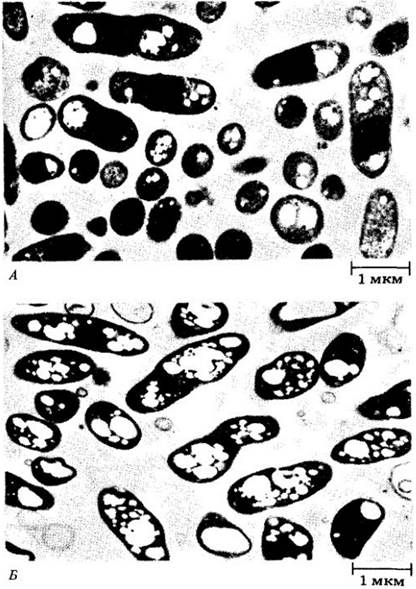
As the bacterial cell penetrates the root hair, elongation ceases and growth resumes at the site of entry, where additional cell wall material is deposited. Through the inward directed growth of this material, a tubular structure known as an infection thread is formed (Fig. 26-12, B). Multiple rhizobia may infect a single root hair. Once inside, the bacteria advance along the infection threads, first toward the Base of the root hair and subsequently through the cell walls into the cortical Cells of the root. The bacterial symbiont induces Cell Division in specific Regions of the cortex reached through the growth and branching of infection threads (Fig. 26-12, B, D, and 26-13). The release of rhizobia from the infection threads into pockets formed by The Plasma Membrane of the host plant's root hair, combined with the continued division of bacteroids (enlarged rhizobia located inside root cells, Fig. 26-11, C) and root cortical cells, leads to The formation of tumor-like nodules (see Fig. 26-10). The processes of infection and nodule formation on the roots of other legumes are generally similar to those in soybean.
Fig. 26-12. Early stages of soybean infection by Rhizobium japonicum. A. Scanning electron micrograph showing bacteria (indicated by arrows) attached to a newly emerged root hair. B. Differential Interference contrast micrograph showing a short, curved root hair containing numerous infection threads (indicated by arrows). C. Cross section of an infected root illustrating an early stage of nodule meristem development. At this stage, most cell divisions in the cortex are anticlinal (at right angles to the surface). In the nodule meristem adjacent to the infected root hair, cells also divide in other directions. D. Higher-magnification cross section showing the infected root hair and adjacent nodule meristem. Infection threads (indicated by arrows) are visible within both the root hair and the meristem

Fig. 26-13. Transmission electron micrograph of a branched infection thread containing bacteroids within an infected soybean nodule cell

Root nodules consist partly of enlarged cells infected with rhizobia and partly of numerous smaller, uninfected cells interspersed between them (Fig. 26-14). Until recently, uninfected cells were thought to play no significant role in the metabolism of newly fixed nitrogen, serving merely a structural support function within the nodule. Currently, however, it is clear that in soybeans these uninfected cells play a major role in the synthesis of ureides (urea derivatives) from the nitrogen fixed by the infected cells.
Fig. 26-14. Electron micrograph of a mature soybean root nodule. Vacuolated uninfected cells are visible among the dark infected regions

Legumes can be divided into several groups based on The Nature of the nitrogen-containing compounds transported from the nodules to the aerial PARTS OF THE plant. For instance, vetch, lupine, and peas belong to plants in which fixed nitrogen is translocated primarily in the form of the amino acid asparagine. Beans, cowpeas, and broad beans, on the other hand, form a group of plants that utilize ureides for nitrogen export from the nodules. Their synthesis begins in the infected cells and is completed in the uninfected ones.
Large Microbodies (Peroxisomes) and an abundant tubular Endoplasmic reticulum are formed in the uninfected, rhizobia-free cells of the nodule (Fig. 26-15). These cellular Organelles presumably contain the enzymes involved in the final stages of ureide formation.
Fig. 26-15. Electron micrograph of a soybean nodule section showing an uninfected cell (in the center) adjacent to infected regions (top and left). The infected regions contain numerous bacteroids. Numerous microbodies are visible in the uninfected cell (indicated by arrows). The number of Mitochondria in the infected regions is four times greater than in the uninfected cells, apparently due to the enormous ATP demand of the bacteroids

The Symbiosis between Rhizobium species and legumes is remarkably specific; for example, bacteria that induce root nodule formation in clover do not form nodules on the roots of beans. Today, specific laboratory-cultivated strains of Rhizobium are commercially available. By adding specific bacteria to seeds during sowing, farmers can ensure the establishment of efficient nitrogen-fixing associations in legume crops. The Mechanism of interaction between Rhizobium bacteria and the roots of specific legume species is currently under investigation. Bacteria and plants can recognize each other through a plant protein called lectin, located on the root surface. Lectin binds to Polysaccharides on the cell surface of its "own" Rhizobium species and does not interact with the polysaccharides of a "foreign" species.
Legumes represent the largest group of plants that form a nitrogen-fixing "partnership" with symbiotic bacteria. However, several other nitrogen-fixing symbioses involve different plants. For example, actinomycetes rather than Rhizobium colonize the roots of alder and induce nodule formation. Sweet gale (Myrica gale) and members of the genera Comptonia and Ceanothus also enter into symbiotic relationships with actinomycetes (see Ch. 11).
In some parts of the world, another symbiotic association is of great practical importance: Azolla, a small floating fern, and Anabaena, a nitrogen-fixing cyanobacteria that lives in cavities on its leaves (Fig. 26-16). Azolla infected with the cyanobacterium can yield up to 50 kg of nitrogen per hectare. For instance, in the Far East, Azolla-Anabaena growths are allowed to develop in rice paddies (see also Fig. 26-12, B). Eventually, the rice plants shade out the Azolla, the fern dies off, and the released nitrogen is utilized by the rice.
Fig. 26-16. A. Azolla caroliniana, an aquatic fern growing in symbiosis with the cyanobacterium Anabaena. B. The Azolla-Anabaena symbiosis is unique among
nitrogen-fixing symbioses because the relationship is maintained throughout the entire host life cycle. Here, Anabaena filaments can be seen
associated with the female gametophyte (megagametophyte), which developed from a germinated megaspore

Free-Living Nitrogen-Fixing Microorganisms
Non-symbiotic bacteria of the genera Azotobacter and Clostridium are capable of fixing nitrogen. Azotobacter is an aerobe, Clostridium is an anaerobe, and both are soil saprotrophs. It is estimated that they add about 7 kg of nitrogen per hectare of soil per year. Another important group includes many photosynthetic microorganisms, such as cyanobacteria.
The distinctions between Nitrogen fixation by free-living bacteria and those existing in symbiotic associations are not always sharp. For example, the aerobic nitrogen-fixing bacterium Azotobacter typically concentrates around the roots of certain grasses, such as sugarcane (Saccharum officinarum), and plays a significant role in supplying the plants with nitrogen. Grasses (and other plants) likely excrete organic substances that serve as Energy Sources for these "free-living" bacteria. Thus, the association partially corresponds to a symbiotic one.
The enzyme that catalyzes nitrogen fixation is called nitrogenase. Nitrogenase contains molybdenum, iron, and sulfide prosthetic groups, which is why these elements are essential for biological systems to carry out nitrogen fixation. Nitrogenase also consumes a large amount of ATP as an energy source, making the metabolic process of nitrogen fixation energetically costly.
In addition to reducing N2 to NH+4, nitrogenase converts acetylene—a molecule with a triple bond—into Ethylene, a molecule with a double bond. The conversion of acetylene to ethylene is an example of enzyme substrate substitution and serves as a common assay for nitrogenase activity.
Although plants, as noted above, do not require cobalt as a micronutrient, cobalt is essential for nitrogen-fixing microorganisms. Therefore, even though cobalt is not a structural component of nitrogenase, it is required for symbiotic nitrogen fixation.
The Phosphorus Cycle
The phosphorus cycle (Fig. 26-17) is simpler than the nitrogen cycle because it involves fewer steps and lacks stages dependent on specific groups of microorganisms. Unlike the nitrogen cycle, the primary reservoir for phosphorus is not the atmosphere, but the Earth's crust. As previously noted, the bulk of phosphorus enters the soil solution through the prolonged weathering of rocks and minerals.
Compared to nitrogen, the amount of phosphorus required by plants is relatively small (see Tables 26-1 and 26-2). Nevertheless, among elements whose primary reservoir is the Earth's crust, phosphorus is typically the one that limits plant growth. In Australia, for instance, where soils are intensely weathered and phosphorus-deficient, the distribution and boundaries of natural plant communities are frequently determined by the availability of soil phosphates.
Phosphorus circulates from plants to animals and returns to the soil in the form of organic debris and waste. Organic phosphorus compounds are converted into inorganic phosphates, thus becoming available to plants once again (Fig. 26-17).
Fig. 26-17. The phosphorus cycle

As a result of erosion, pollution, and wastewater runoff, a significant amount of phosphorus enters rivers and streams. Ultimately, this phosphorus reaches the ocean, where it settles on the bottom as sediment. (A substantial amount of phosphorus is also deposited through the decomposition of dead organisms.) In the past, The Use of guano (seabird droppings) as fertilizer returned some phosphorus from the ocean back to terrestrial ecosystems. However, most of the phosphorus locked in ocean sediments will only become available again as a result of major seabed uplifts. To compensate for these losses, phosphate-rock deposits are mined on a large scale to produce fertilizers.
Human Impact on Nutrient Cycles
A normal cycle of phosphorus, nitrogen, and other substances requires a continuous transport of elements from one stage of the cycle to the next to prevent any accumulation or loss at any single stage. For millions of years, organisms obtained the required amounts of essential inorganic nutrients through these balanced natural cycles. Recently, however, human activity has profoundly altered the cycling of certain substances, sometimes leading to their excessive accumulation or depletion at specific stages. For example, soil erosion accelerates the loss of phosphorus from soils. Furthermore, wastewater enters waterways faster than the phosphorus it contains can be integrated into the natural cycle, ultimately washing into the ocean and becoming lost.
For the nitrogen cycle to function properly, a balance must be maintained between fixation processes—which remove nitrogen from the atmospheric reservoir—and denitrification reactions, which return nitrogen to the atmosphere. In recent years, massive amounts of fixed nitrogen (nitrates) have been released into the environment due to the intensive use of fertilizers. Because nitrate nitrogen leaches easily from the soil, contamination of groundwater, lakes, and streams with nitrogen compounds has increased. This problem is exacerbated by the alarming rate at which wetlands and flooded soils—where denitrification is most active—are being destroyed and converted into development sites, agricultural lands, or landfills.
To reduce nitrate losses in soils, a promising approach has been proposed that could become a widespread agricultural practice. It involves the application of a special organic compound that selectively inhibits the activity of the nitrifying bacterium Nitrosomonas for a specific period before breaking down in the soil. This technique would help retain most of the fertilizer nitrogen in the ammonium form until it can be assimilated by plants. However, as is often the case with human intervention in natural processes, undesirable consequences are possible. For instance, high concentrations of ammonia can be quite toxic to certain crops.
Soil and Agriculture
Under natural conditions, elements present in the soil are recycled and made available to plants once again. As noted previously, negatively charged clay particles can bind positively charged ions such as Ca2+ and K+. These ions are absorbed by plant roots either directly or after dissolving into the soil solution. Typically, fertile soil contains an Abundance of required cations, and the amount removed with a single harvest is small. However, when crops are harvested year after year and essential elements are continually withdrawn from the cycle, the levels of certain cations (most commonly potassium) can drop so low that the application of fertilizers containing the deficient element becomes necessary.
Programs for supplying agricultural and horticultural plants with supplemental nutrients must meticulously account for the quantities of nutrients required to yield a specific crop and the amounts of those nutrients available to the plant from all sources. Often, soil and plant residues cannot provide all the necessary mineral nutrients in adequate amounts, making it necessary to Supplement them through the application of mineral fertilizers, organic matter (such as compost), or combinations thereof.
Nitrogen, phosphorus, and potassium are the three elements most commonly included in chemical fertilizers. Fertilizers are typically designated by formulas indicating the percentage of each of these elements. For example, 10–5–5 means that the fertilizer contains 10% nitrogen (N), 5% phosphorus pentoxide (P2O5), and 5% potassium oxide (K2O).
Other essential inorganic nutrients, although required in only trace amounts, sometimes become limiting factors in soils where crops are grown.
Research in Plant Nutrition
The Study of the mineral elements essential for crops—particularly determining the quantities required for high yields and investigating the capacity of various soils to supply these elements—is of paramount practical importance for agronomy and horticulture. Given humanity's ever-growing demand for food, research of this kind will undoubtedly remain crucial in the future.
Soil Depletion and Toxicity
Soil improvement measures—such as adding nutrient fertilizers, increasing pH through liming, or washing away excess salts with water—do not exhaust the Methods used to increase and secure yields in infertile soils. Applying the theory and Methods of Plant breeding and nutritional physiology makes it possible to develop crop varieties that are better adapted to growing under nutrient-deficient conditions. The fruitfulness of this research direction is confirmed by the existence of wild plants thriving on soils vastly different from those where typical crops grow. Examples include acidic sphagnum bogs with a pH below 4.0 or mine tailings, which often contain high concentrations of potentially toxic metals such as zinc and nickel.
Recent research has focused on breeding varieties of the common bean (Phaseolus vulgaris) that are resistant to potassium deficiency. Bean samples collected from around the world were grown in nutrient solutions containing less potassium than required for optimal growth, while all other nutrients were kept at optimal concentrations. Extreme examples of the bean's response to potassium-stress are shown in Fig. 26-18. Line 58 (left) grows almost normally; line 63 (right) exhibits symptoms of severe potassium deficiency. Outstanding success in this relatively new field of research has been achieved by E. Epstein and his colleagues at the University of California, Davis, who isolated lines of barley (Hordeum sativum) tolerant to high salt concentrations. The most tolerant lines grew quite well even when irrigated with seawater.
Fig. 26-18. Comparison of potassium deficiency symptoms in experimental common bean (Phaseolus vulgaris) samples. Left: a potassium-deficiency-tolerant line; right: a clearly susceptible line.

Efficiency of Nitrogen Fixation
Interfering with Biological Nitrogen Fixation holds enormous potential for improving the efficiency of its use. One research avenue involves optimizing the Rhizobium-legume association, for example, through the genetic Selection of plants and bacteria to identify combinations that enhance fixation under specific environmental conditions. This could potentially be achieved by increasing the photosynthetic efficiency of legumes, which would supply more carbohydrates for bacterial nitrogen fixation and plant growth. It must be noted, however, that nitrogen fixation is a high-energy process, and any increase in fixation will come at the expense of SHOOT productivity.
Another approach involves establishing new and more efficient associations between free-living nitrogen-fixing bacteria and higher plants. In Brazil in the early 1970s, several types of nitrogen-fixing bacteria were discovered living in association with the roots of certain tropical grasses. For instance, the grass Digitaria Supports populations of the bacterium Azospirillum. Similar associations have been found in major crops such as corn and sugarcane. Although the potential practical benefits are immense, the efficiency of nitrogen-fixing bacterial associations with cereal crops like corn remains undetermined.
Among research approaches employing the most sophisticated molecular biology techniques, the most successful appears to be genetic modification and the transfer of nitrogen-fixation genes from one organism to another. The transfer of these relevant genes has already been accomplished. The Gene cluster responsible for nitrogen fixation was transferred from the bacterium Klebsiella pneumoniae into Escherichia coli. The gene transplant was carried out by incorporating the genes into a plasmid (see p. 248) and introducing this plasmid into an E. coli cell (Fig. 26-19). Under specific conditions, the genetically engineered E. coli fixed nitrogen.
Theoretically, nitrogen-fixation genes could be transplanted into non-nitrogen-fixing species, such as corn, but this presents numerous challenges, such as protecting the nitrogen-fixing enzyme from oxygen, which inhibits the fixation process. Therefore, researchers in this field are by no means certain that such an effective operation can be easily implemented.
Fig. 26-19. Transfer of nitrogen-fixation genes (nif genes, from nitrogen-fixation) from a nitrogen-fixing bacterium to another organism. The nif genes from Klebsiella pneumoniae were inserted into a plasmid and subsequently transferred into Escherichia coli, a bacterium naturally incapable of fixing nitrogen. Despite this successful first step, gene transfer does not yet guarantee that the recipient will fix nitrogen. For example, the genetically modified E. coli produced The Nitrogenase Enzyme required for nitrogen fixation, but it could only fix nitrogen under experimental conditions where the enzyme was protected from oxygen. In other words, the "new" capabilities of the bacteria lacked The ability to protect the key enzyme from oxidation. Theoretically, nitrogen-fixing capacity could be conferred upon non-fixing plants using Plasmids.

Impact of Pollution
The Toxic effects of various inorganic environmental pollutants are drawing increasing attention from contemporary researchers. Agricultural crops, for instance, can be adversely affected by heavy metals such as copper and cadmium. Aquatic ecosystems are especially vulnerable, as they receive industrial and municipal waste discharges. The influx of nitrogen and phosphorus—the primary drivers of eutrophication—into freshwater ecosystems triggers rapid proliferation of algae and aquatic angiosperms, significantly diminishing the recreational value of lakes and rivers.
Damage to terrestrial and, particularly, aquatic ecosystems caused by acid rain is widespread. Acid rain results from the interaction of sulfur dioxide and nitrogen oxides—the combustion by-products of fossil fuels—with atmospheric moisture, producing sulfuric and nitric acids. These acids are responsible for the high acidity of precipitation. In parts of Scandinavia, the northeastern and Midwestern United States, and southeastern Canada, rainwater typically has a pH ranging from 4.0 to 4.5, and occasionally drops below 4.0. At the same time, the pH of rainwater,
when in equilibrium with carbon dioxide in an unpolluted atmosphere, is approximately 5.6. Acid rain negatively impacts vegetation, accelerates the weathering of rocks and minerals, alters the solubility of potentially hazardous metals, and poses risks to human health. Hundreds of soft-water lakes in Scandinavia, Canada, and the United States have been severely affected. These lakes lack the bicarbonate and carbonate buffer systems that neutralize acidity in hard-water waters. Soft water is characteristic of high-elevation lakes, such as those in the Adirondack Mountains of northwestern Sweden and other regions where thin soils overlie igneous bedrock. The progressive acidification currently occurring in such lakes can severely disrupt fish reproduction (see Appendix to Chapter 22).
Most plants require a total of 16 chemical elements for normal growth. Of these, carbon, hydrogen, and oxygen are acquired from the air and water, while the remaining elements are absorbed by the roots as ions. These 16 elements are classified into macronutrients and micronutrients based on the quantities required by the plant. Macronutrients include carbon, oxygen, hydrogen, nitrogen, potassium, calcium, phosphorus, magnesium, and sulfur. The micronutrient group comprises iron, chlorine, copper, manganese, zinc, molybdenum, and boron. Certain elements, such as sodium and cobalt, are essential only for specific organisms (see Table 26-1).
Inorganic nutrients perform vital cellular functions. They regulate osmotic balance and influence membrane permeability. Several of these elements serve as Structural components of the cell, constituents of key metabolic compounds, enzyme activators, and coenzymes (see Table 26-2).
The chemical and physical properties of soils determine their capacity to supply inorganic nutrients and water, as well as to provide other conditions necessary for maximum crop productivity. The weathering of rocks and minerals generates the mineral particles that form the inorganic matrix of soil. All nutrient elements except nitrogen originate from weathering processes. In addition, soil contains organic matter and pore spaces filled with varying proportions of water and gases. In cultivated soils, nitrogen, phosphorus, and potassium are most commonly the limiting factors for plant growth and are therefore supplied through fertilization.
Each essential nutrient circulates through a complex cycle between organisms within an ecosystem and between those organisms and environmental reservoirs. The Circulation of nitrogen through the soil, plant and animal tissues, and back into the soil is known as the nitrogen cycle. Nitrogen enters the soil primarily in the form of organic matter of plant and animal origin, which is subsequently decomposed by soil organisms. Ammonification—the release of ammonium ions (NH+4) from nitrogenous compounds—is carried out by soil bacteria and fungi. Nitrification involves the oxidation of ammonia or ammonium ions to nitrites and nitrates; specific bacteria oxidize ammonia to nitrites, while others are responsible for oxidizing nitrites to nitrates. Plants absorb nitrogen almost exclusively as nitrates, which are subsequently reduced within the plant tissues to ammonium ions. Amino acids are synthesized either via amination, leading to the formation of glutamic acid, or through transamination, in which an amino group is transferred from an amino acid to a ketoacid, converting it into another amino acid. Ultimately, these organic molecules return to the soil, completing the nitrogen cycle.
Soil loses nitrogen through harvesting, erosion, fires, leaching, and the activity of denitrifying bacteria. Soil nitrogen reserves are replenished via nitrogen fixation, a process that incorporates molecular nitrogen into organic compounds. Biological nitrogen fixation is performed exclusively by bacteria, including Rhizobium species living in symbiosis with legumes, as well as free-living bacteria and actinomycetes that form symbiotic associations with plants of other families. Agricultural practices remove crops from the soil, thereby withdrawing nitrogen and other elements from the natural nutrient cycle and necessitating their replenishment via organic or mineral fertilizers.
Appendix 1. The Water Cycle
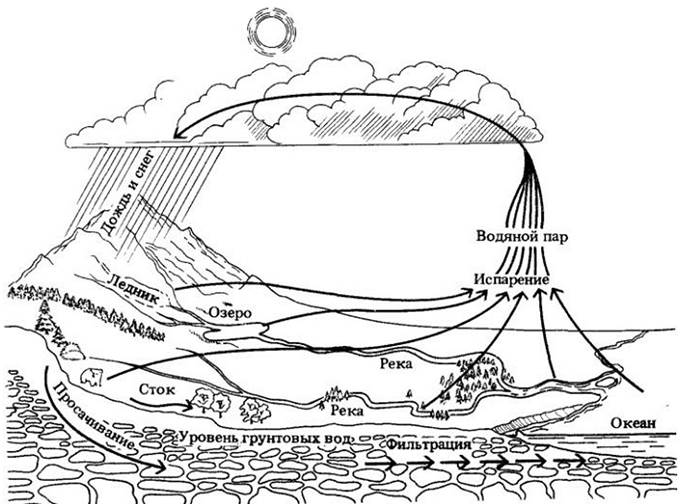
Earth's water supply is finite and circulates continuously. The vast majority of water (98%) is contained within oceans, lakes, and streams. The remaining 2% is distributed among polar ice caps and glaciers, soil moisture, atmospheric water vapor, and water incorporated within living organisms.
Driven by solar radiation, water evaporates from oceans, lakes, rivers, and streams, as well as from moist soil surfaces and living organisms, entering the atmosphere and eventually returning to Earth as precipitation. This continuous movement of water between the Earth's surface and the atmosphere is known as the hydrologic cycle, which is entirely powered by solar energy.
A portion of the precipitation reaching the land surface infiltrates the soil and percolates downward to the zone of saturation, where all pores and fractures in the bedrock are filled with water. Below the zone of saturation lie impermeable strata through which water cannot penetrate. The upper boundary of this saturated zone is defined as the water table.
Appendix 2. Mycorrhizae and Plant Nutrition
In most vascular plants, the uptake of soil nutrients is dramatically enhanced when their roots are colonized by mycorrhizal fungi (see Chapter 16). Mycorrhizae play an especially crucial role in the acquisition and translocation of phosphorus. Furthermore, they have been shown to facilitate plant uptake of zinc, manganese, and copper. Because these elements exhibit low mobility in soil, depletion zones rapidly form around root hairs and roots. The hyphal network of mycorrhizal fungi extends several centimeters outward from each colonized root, effectively expanding the volume of soil exploited by the plant. The capacity of mycorrhizae to absorb and transport soil phosphorus was demonstrated in experiments utilizing radioactive 32P (A). Beyond expanding the root absorptive surface, mycorrhizal fungi are valuable because they can extract phosphorus from more dilute soil solutions and utilize phosphorus sources that are typically unavailable to plants.
The enhancement of phosphorus uptake mediated by mycorrhizae can be demonstrated by cultivating mycorrhizal and non-mycorrhizal plants under varying soil phosphorus levels (B). In the experimental example shown, mycorrhizal citrus seedlings receiving no phosphorus fertilizer achieved growth comparable to non-mycorrhizal seedlings supplied with fertilizer at a rate of 560 kg of phosphorus per hectare. In this instance, mycorrhizae effectively substituted for phosphate fertilizers, substantially reducing the energy inputs and financial costs of crop production.
A. Translocation of 32P by mycorrhizae. Mycorrhizal onion plants were grown in specially designed chambers featuring small apertures (indicated by arrows) that allowed fungal hyphae, but not plant roots, to grow into a separate soil compartment. Subsequently, 32P was introduced into the soil at varying distances from the root. The isotope was detected in the roots and shoots of the mycorrhizal plants. In non-mycorrhizal onions, or when connections to the hyphae were severed, 32P was not transported. The vast majority of mycorrhizal hyphae were found within 2 to 5 mm of the host root. B. Growth response of mycorrhizal and non-mycorrhizal citrus seedlings to varying phosphorus amendments.
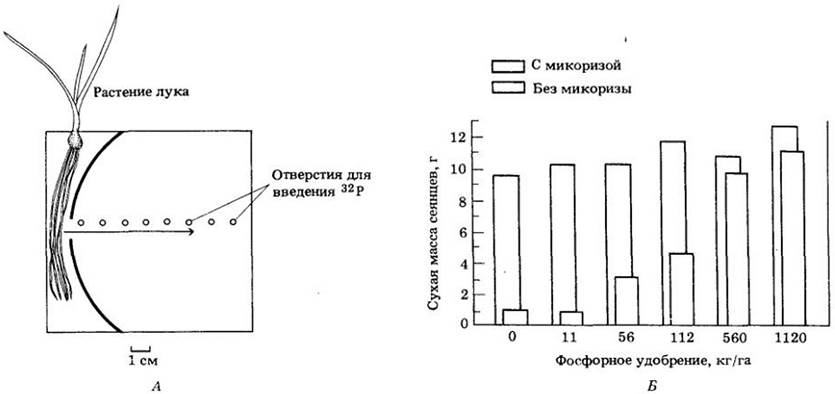
Different plant species rely on mycorrhizal fungi to varying degrees. For certain plants, such as citrus, phosphorus nutrition is so heavily dependent on mycorrhizae that, in their absence, the plants can only thrive under very high soil phosphorus concentrations (B). Growth enhancement percentages in the presence of mycorrhizae have been determined for numerous species, with notable figures recorded for wheat (220%), corn (122%), onions (3155%), strawberries (250%), and arborvitae (962%). At extremely high concentrations of soluble phosphorus resulting from heavy fertilizer application, mycorrhizae no longer stimulate plant growth. Moreover, excess fertilization frequently suppresses mycorrhizal development.
Although mycorrhizal fungi are present in most plant communities, their populations can be depleted or eradicated by severe soil disturbance, such as mining operations. Indiscriminate agricultural or forestry use of fungicides targeting pathogenic fungi can also destroy mycorrhizae, leading to stunted plant growth or mortality. Consequently, chemically treated soils should ideally be reinoculated with mycorrhizal fungi. Ectomycorrhizal fungi can be cultured in vitro, and the resulting vegetative mycelium can be incorporated into soil mixes or nursery beds. In the southeastern United States and the Pacific Northwest, conifer seedlings are frequently inoculated with specific ectomycorrhizal fungi to improve growth on nutrient-deficient soils. Because vesicular-arbuscular endomycorrhizal fungi have not yet been successfully grown in pure culture, producing their inoculum requires the use of host plant "pot cultures." Fungal spores or roots colonized by the fungus, harvested from pot cultures, are used to inoculate soils in greenhouses and nurseries. Due to The complexity of mass-producing such fungi, their commercial application remains quite limited. During land reclamation at mining sites, native plant species are inoculated in nurseries prior to planting to enhance growth and survival. Endomycorrhizal inoculation is also utilized in citrus nurseries in southern California and hardwood nurseries in the southeastern United States. While large-scale inoculation is generally impractical for broad-acre field crops, mycorrhizal fungi can be highly beneficial for high-value crops and nursery-grown plants, promoting robust growth without The Need for expensive phosphate fertilizers.
In addition to their well-documented role in enhancing phosphorus uptake in nutrient-poor soils, mycorrhizae confer other benefits that promote plant growth. These include increased resistance to soil-borne pathogens, extreme soil acidity, and drought stress.
Appendix 3. Carnivorous Plants
Carnivorous plants acquire mineral nutrients, including fixed nitrogen, from captured prey. Some species, such as the butterwort Pinguicula grandiflora, possess leaves whose surfaces trap flies and other small insects (A). Prey capture is facilitated by numerous stalked glands distributed across the leaf surface. Scanning Electron Microscopy reveals that each gland bears a glistening droplet of sticky secretion (B), rendering The Leaf as adhesive as flypaper. When insects contact these secretion droplets, the liquid stretches into durable strands that can be seen encangling an ant in the micrograph (C). The more the insect struggles, the more glands it contacts, binding it ever more tightly to the leaf surface. Interspersed among the stalked glands are sessile glands (B) that remain inactive until stimulated by a captured prey. Following such stimulation, these sessile glands secrete enzyme-containing fluids that rapidly pool around the insect. The enzymes digest the prey, and the breakdown products accumulate within the liquid secretion. Once Digestion is complete, the fluid is absorbed by the leaf, and the nutrients are distributed to actively growing plant regions.


Digestive enzymes are synthesized in sessile glands. Prior to stimulation, the enzymes are stored in enlarged vacuoles and cell walls, where they can be detected using appropriate cytochemical methods. For example, the localization of the enzyme acid phosphatase within the walls of the glandular HEAD cells is revealed by the Distribution of a dark reaction product (G). Enzyme secretion occurs as a result of water expulsion through the glandular head. This process is driven by the pumping of chloride ions from the underlying reservoir cell. "Ion pumps" are embedded in the membranes of an intermediate, endodermis-like cell; they remain inactive in the resting gland, but are rapidly activated by a stimulus originating from the prey.
Similar secretory mechanisms have been discovered in other carnivorous plants, including the Venus flytrap (Dionaea muscipula) (see Fig. 25-22) and sundew (Drosera) (see Fig. 26-9).
Appendix 4. Compost
Composting—a practice as old as agriculture itself—is attracting renewed interest as a method of utilizing organic waste by converting it into fertilizer. The starting material consists of a quantity of organic matter—leaves, kitchen scraps, manure, straw, grass, sewage sludge, sawdust—along with a population of bacteria and other common microorganisms. The only environmental requirements are the presence of oxygen and moisture. Shredding the organic material is not strictly necessary, but it increases the surface area, expanding the operational field for microorganisms and thereby accelerating the process.
Within the compost pile, microorganisms multiply rapidly, generating heat, much of which is retained because the upper layers of organic matter act as insulation. In the interior of a large pile (e.g., 2 x 2 x 1.5 m), temperatures can rise to 70° C, whereas in a smaller one they typically reach up to 40° C. As the temperature increases, the community of decomposers shifts, with thermophilic and thermotolerant forms replacing the mesophilic ones. As the original microbial forms die off, their organic matter becomes part of the resulting product. A secondary benefit of the elevated temperature is the destruction of common pathogenic bacteria (which may be present, for example, in sewage sludge), as well as cysts, eggs, and other immature stages of plant and animal parasites.
Over time, the pH of the compost pile also changes. Its initial value is around 6, which is comparable to the slightly acidic liquid medium of most plant material. The Production of organic acids during early stages of decomposition causes further acidification, dropping the pH to 4.5 — 5.0. However, as the temperature rises, the pH also increases, and the final product becomes slightly alkaline (pH 7.5 — 8.5).
An important factor in composting (as in any biological process involving growth) is the carbon-to-nitrogen ratio. A ratio of 30 to 1 (by weight) is optimal. If carbon is in excess, Microbial growth slows down. If nitrogen is in excess, ammonia is released. If the compost is too acidic, limestone (calcium carbonate) can be added to raise the pH, though an excess of it will lead to a loss of nitrogen.
A study of municipal compost piles in Berkeley, California, demonstrated that with proper moisture and aeration of large piles, composting can be completed in as little as 2 weeks. Typically, however, the process takes three or more winter months. If compost is applied to the soil before the composting process is complete, it may temporarily deplete the soil of available nitrogen.
Due to the dramatic reduction in the volume of plant residues during composting, it serves as a highly convenient method for waste disposal. In Scarsdale (New York), for instance, leaves composted at the municipal dump were reduced to 1/5 of their original volume. Furthermore, they yielded a soil amendment that improves aeration and water-retention capacity. Chemical analysis shows that nutrient-rich compost contains, on a dry-mass basis, only about 1.5 — 3.5% nitrogen, 0.5 — 1.0% phosphorus, and 1.0 — 2.0% potassium—significantly less than artificial fertilizers. Unlike chemical fertilizers, however, compost can serve as a source of almost all known essential plant nutrients. Compost provides a sustained and balanced supply of nutrients, which are gradually released as it decomposes in the soil.
As mineral fertilizers become increasingly expensive and less accessible, and water bodies suffer heavier pollution from them and organic residues, composting is rapidly emerging as a highly attractive alternative.
Each leaf lobe of the Venus flytrap is equipped with three sensitive trigger hairs. When an insect lands on one of the leaves, attracted by nectar secreted on its surface, it brushes against the hairs, thereby triggering the trap-closing mechanism. The serrated edges snap shut, the leaf halves gradually press together, and the insect is forced against the digestive glands located on the trap surface (Fig. 25-22).
Fig. 25-23. A. Leaves of the desert lupine (Lupinus arizonicus) tracking the sun. This phenomenon is known as heliotropism. B. Heliotropism in the sunflower

Last update: 07/08/2026
Editorial and Educational Adaptation: This material has been compiled based on the primary/original source text. The project team performed an editorial review, corrected technical inaccuracies, structured sections, and adapted the content for an educational format.
What was processed:
- elimination of formatting defects (OCR errors, structural breaks, corrupted characters);
- editorial organization of content;
- standardization of terminology in accordance with academic sources;
- verification of factual statements against the original source text.
All mentions of the author, publication year, and origin of the primary text have been preserved in accordance with the source.