Principles of Biochemistry Volume 1 - A. Lehninger 1985
Biomolecules
Cells
On the surface of many animal cells, there are also "antennae"
On the outer side of Cell/30.html">The Plasma Membrane, many Cells in animal Tissues feature a thin, flexible cell coat. It contains A large number of diverse polysaccharide, lipid, and protein molecules located on the exterior surface of the plasma membrane. The Cell surface hosts numerous molecular structures that receive and recognize external signals. These include cell-recognition sites, which enable Cells of the same type to recognize one another and adhere, forming tissue-specific structures. The surface of many animal cells also contains receptor sites that bind various Hormones. Hormones are chemical messengers secreted into the bloodstream by specific cells; they regulate The activity of other cells elsewhere in the Organism. By binding to receptor sites on the surface of a target cell, hormone molecules trigger specific aspects of cellular activity. Other specific sites on the surface of animal cells can recognize and bind certain Proteins foreign to those cells. The binding of foreign proteins to such sites triggers cellular responses that manifest as allergic reactions. These same specific sites are responsible for the rejection of foreign tissues and Organs following surgical transplantation. Thus, the surface of many animal cells is truly a complex mosaic composed of various sensitive molecular "antennas" through which cells communicate with the outside world and respond to specific agents present in their environment.
Class="center">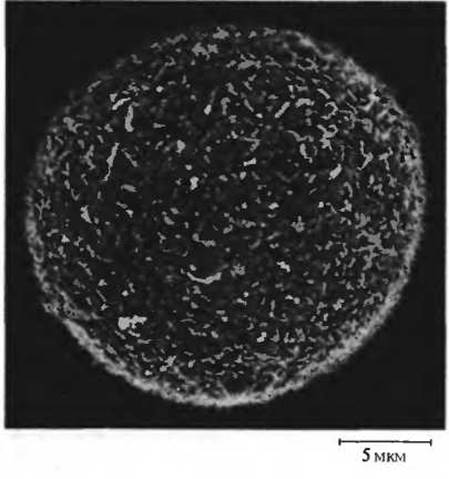
Fig. 2-20. Scanning electron micrograph of the surface of an isolated rat Liver cell. The cell surface area is seen to be greatly expanded by microvilli, whose shape and arrangement are constantly changing.
Last update: 06/08/2026
Editorial and Educational Adaptation: This material has been compiled based on the primary/original source text. The project team performed an editorial review, corrected technical inaccuracies, structured sections, and adapted the content for an educational format.
What was processed:
- elimination of formatting defects (OCR errors, structural breaks, corrupted characters);
- editorial organization of content;
- standardization of terminology in accordance with academic sources;
- verification of factual statements against the original source text.
All mentions of the author, publication year, and origin of the primary text have been preserved in accordance with the source.