Plant Physiology - Musienko, M. M. 2001
Plant Physiology and Biotechnology: Achievements and Development Prospects
Biological Nitrogen Fixation and Genetic Engineering
Industrial ammonia synthesis accounts for 1/4 of global Nitrogen Fixation, while biological synthesis accounts for the remaining 3/4. In recent years, nitrogen replenishment in Ukrainian soils has still not exceeded 75%, and for cereal crops, it stands at only 60–63% of the amount removed with the harvest. Overcoming this nitrogen deficit, particularly during the last decade of the 20th century, has faced significant energy, environmental, and economic challenges.
Evidence suggests that the application of large amounts of mineral nitrogen (150–300 kg/ha) is associated with the toxicity of NO3- and NH4+ ions. Specifically, under these conditions, plant Tissues exhibit elevated levels of non-protein nitrogen and non-protein Amino Acids, alongside Alterations in hormonal status, decreased assimilate outflow, and impaired membrane permeability. All of this disrupts nitrogen and Carbohydrate METABOLISM, ultimately affecting the quantitative and qualitative composition of photosynthetic products. For this reason, many countries in Western Europe and the United States are seeking to replace conventional farming practices with more rational biodynamic systems.
When addressing the nitrogen problem through biological means, the most effective approach is The Use of legume-rhizobial systems, which are the most economically advantageous, fixing between 40 and 300 kg of nitrogen per hectare annually. Studies on the genetics of ROOT-nodule Bacteria and molecular-genetic research into nitrogen fixation genes pave the way for the targeted design of commercially valuable rhizobial strains, with the ultimate prospect of establishing novel nitrogen-fixing symbioses with various crops.
The most practical and efficient way to enhance symbiotic nitrogen fixation in legumes is the application of the bacterial inoculant rhizotrophin (nitragin).
Yield increases resulting from nitragin application range from 10 to 15%, and can reach up to 100% for crops newly introduced to a given region that lack native nodule bacteria. The benefits of nitragin extend beyond yield, as it also significantly improves product quality, particularly protein and fat content.
A primary objective in enhancing the efficacy of nitragin inoculation is the isolation of highly active, virulent strains that are resistant to antagonists and capable of competing with the resident soil microflora, particularly ineffective root-nodule bacteria.
Recent studies have demonstrated that key symbiotic traits in most bacteria are localized on a large sym plasmid with a Molecular Weight of 85–260 megadaltons. This opens up possibilities for improving the agronomically valuable traits of root-nodule bacteria through plasmid transfer. Advances in molecular-genetic research on rhizobia have established the conditions necessary to manipulate symbiotic genes using Introduction/32.html">Genetic Engineering techniques.
Symbiotic nitrogen fixation in root-nodule bacteria is governed by Symbiosis genes (nod or sym genes), which control bacterial host Specificity toward particular legume species, root infection, and nodule formation. Additionally, these bacteria possess their own nitrogen fixation genes (nif or fix genes), which encode a complex of Enzymes headed by Nitrogenase. Finally, a third group of genes is indirectly involved in nitrogen fixation (fulfilling regulatory Functions, supplying energy, etc.).
In the near future, research will focus on the targeted design of promising root-nodule bacterial strains. A recombinant p-plasmid, designated pRD1 and carrying a Gene from Klebsiella pneumoniae, has already been constructed. It was used to confer nitrogen-fixing ability to 14 species of microorganisms, with the expression of nitrogen-fixing genes successfully detected in eight of them. Successful Experiments on the transfer of nitrogen fixation genes (nif genes) from E. coli and their expression in a new host have demonstrated the feasibility of intergeneric nitrogen-fixation gene transfer (Fig. 214).
Class="center">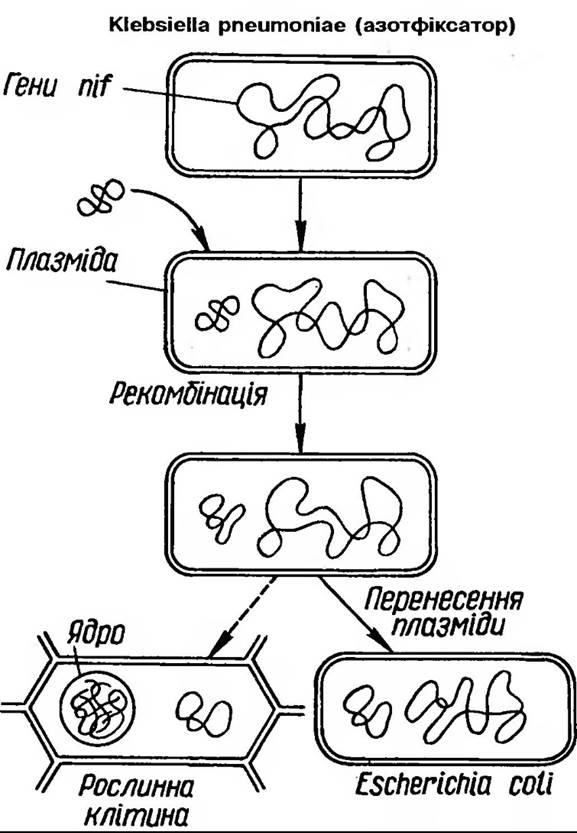
Fig. 214. Transfer of genes responsible for nitrogen fixation into a plant Cell
At the Institute of Plant Physiology and Genetics of the National Academy of Sciences of Ukraine, in Yu.P. Starchenkov’s laboratory, intergeneric conjugation between E. coli carrying the pRD1 plasmid and root-nodule bacteria yielded over 70 transconjugants of clover, alfalfa, and mung bean rhizobia. These transconjugants were found to exhibit varying stability in Antibiotic Resistance, and differed from the parent strain as well as from one another in certain physiological, biochemical, and symbiotic properties. These findings indicate considerable heterogeneity among the obtained transconjugants and highlight the potential for using transconjugants with enhanced nitrogen-fixing activity and efficiency as source material for the Selection of commercial bacterial strains.
The design and selection of promising root-nodule bacterial strains should primarily aim to improve the energetic efficiency of symbiotic nitrogen fixation. The reason is that during nitrogen fixation, alongside the reduction of N2, the nitrogenase complex also catalyzes the ATP-dependent reduction of protons to produce H2. The amount of hydrogen evolved depends on its recycling—that is, the presence of an H2-uptake Hydrogenase in bacteroids that ensures the re-utilization of the hydrogen released by
nitrogenase. Because hydrogen uptake leads to ATP generation, it plays a vital role in the Energy balance of nitrogen fixation. Consequently, symbiotic systems lacking H2-uptake hydrogenase fix 14–31% less molecular nitrogen than those in which bacteroids utilize this enzyme. As it turns out, hydrogen-uptake hydrogenase is far from universally present across all species and strains of root-nodule bacteria.
Intensive research is currently underway to study the biochemical and genetic Features of the interplay between nitrogenase and H2-oxidizing hydrogenase activities, with the goal of identifying the conditions under which legume H2-uptake hydrogenase exhibits maximal activity.
Certain strains of root-nodule bacteria possess so-called Hyp genes (derived from hydrogen uptake), which encode the hydrogenase enzyme. Therefore, incorporating Hyp genes into the bacterial genome must become a central focus when engineering advanced bacterial strains.
Plant Genetic Engineering and nitrogen fixation. It is plausible that transferring gene clusters smaller than an entire Ti-plasmid region is entirely feasible. Plant Viruses can serve as vectors; for instance, cauliflower mosaic virus—a deoxyribovirus—whose DNA can be integrated with specific nif genes, allowing them to be incorporated into the plant genome or transcribed within The plant cell simultaneously with Viral DNA Replication. Another potential vector is the pathogenic bacterium Agrobacterium tumefaciens, which harbors a large Ti plasmid responsible for inducing tumors (crown gall) in plant tissues.
A specific segment of the Ti plasmid, known as T-DNA (transferred DNA), can integrate into the plant genome. T-DNA has a molecular weight of (10–15) × 106 daltons and comprises at least three functional units. The nucleotide sequences located at the ends of T-DNA bear striking similarities to sequences in certain regions of untransformed cellular DNA, meaning that recombination between these two DNA molecules results in the integration of T-DNA into the plant genome and the transformation of infected tissues.
Thus, tumor formation in plant tissues caused by the Ti plasmid of Agrobacterium tumefaciens is induced by The transfer of a bacterial DNA segment (from a Prokaryotic Cell) and its integration into The Genome of Eukaryotic Cells. Fully viable plants containing T-DNA in their cells have been successfully regenerated from such tumors. Special genes can likewise be incorporated into T-DNA to produce plants that stably inherit and house these genes within their cells.
To increase THE CONTRIBUTION OF biological nitrogen fixation to agriculture, introducing genes that confer the nitrogen-fixing symbiosis characteristic of legumes into non-leguminous plant cells is of great interest. This may represent one of the few viable avenues for establishing novel nitrogen-fixing symbioses, with the Agrobacterium T-DNA system playing a pivotal role.
It should be noted, however, that because Agrobacterium tumefaciens naturally infects only dicotyledonous plants, utilizing the Ti plasmid to transfer specific genes into the cells of monocots—particularly cereal crops—will not be a simple task.
Furthermore, using agrobacteria as vectors introduces new challenges related to The regulation of nif gene expression, such as protecting The Nitrogenase Enzyme from O2 inactivation. Nevertheless, recombinant DNA and nucleic acid manipulation techniques have established the prerequisites for gene transfer into PLANT CELLS AND their subsequent expression. Nif genes can also be transferred into endotrophic mycorrhizae, as gene transfer into fungal cells is technically even more straightforward.
Regardless of the Methods used to transfer nif genes, their expression—namely, Transcription into mRNA and subsequent Translation into protein—must take place within the plant cell. If localized in the chromosome, nif gene expression requires fusion with a eukaryotic promoter (in the case of agrobacteria, the promoter region of the Ti plasmid T-DNA may prove useful for this purpose). After all, the mechanisms of Gene Expression IN Chloroplasts and Prokaryotic Cells share considerable similarities.
It must be kept in mind that the capacity for nitrogen fixation depends not only on the presence of nif genes, but also on genes responsible for synthesizing electron carriers and other factors required for the proper functioning of nitrogenase. For this reason, engineering plants capable of fixing nitrogen independently of symbiotic microorganisms remains a formidable challenge. More immediate success is likely to be achieved by studying the factors that trigger symbiosis in order to enhance its overall efficiency.
Research in plant physiological genetics will make a substantial contribution to the selection of more efficient host plants. Somatic Hybridization may make it possible to obtain novel plant cultivars capable of symbiotic nitrogen fixation. It is also quite likely that the genome of microorganisms forming the rhizosphere with non-leguminous plants will be modified to boost the efficiency of such associations.
Therefore, fundamental research into the transfer of nitrogen fixation genes into higher plant cells and their expression holds a very promising outlook. The obtained results have already reached a level where the construction of promising strains using molecular biology and Genetic engineering METHODS has become feasible. Conditions have been established for plant genetic engineering based on bacterial oncogenic Plasmids. Initial results have been obtained demonstrating the feasibility and practicality of combining research in nitrogen fixation Genetic Engineering and plant genetic engineering.
Last update: 07/08/2026
Editorial and Educational Adaptation: This material has been compiled based on the primary/original source text. The project team performed an editorial review, corrected technical inaccuracies, structured sections, and adapted the content for an educational format.
What was processed:
- elimination of formatting defects (OCR errors, structural breaks, corrupted characters);
- editorial organization of content;
- standardization of terminology in accordance with academic sources;
- verification of factual statements against the original source text.
All mentions of the author, publication year, and origin of the primary text have been preserved in accordance with the source.