Plant Physiology - Musiyenko, M. M. 2001
Photosynthesis: Physiological, Biochemical and Ecological Aspects
The Leaf as an Organ of Photosynthesis
The morphological, anatomical, and physiological Features of the leaf fully ensure the performance of its main function—Photosynthesis (Fig. 33). Leaves are mostly thin
Class="center">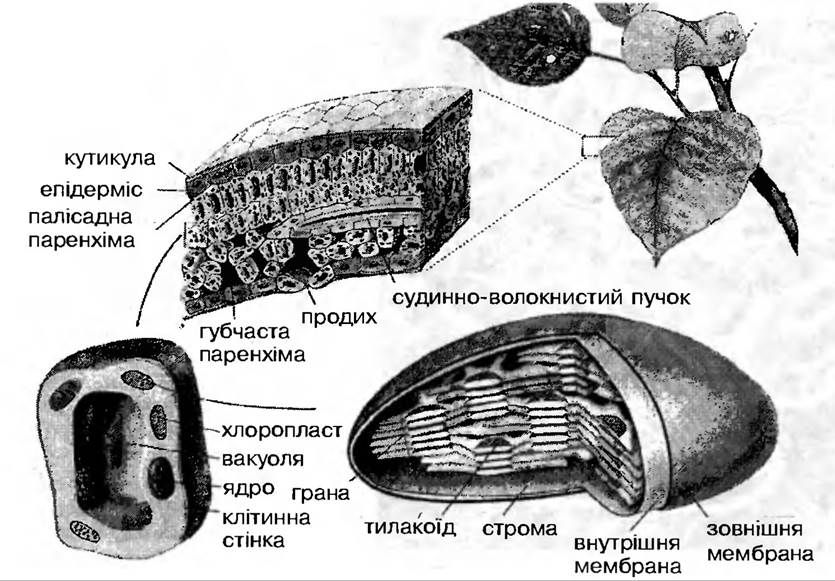
Fig. 33. The leaf as an organ of photosynthesis
and possess a maximum surface area per unit mass. The total leaf surface area of temperate-zone plants located on 1 ha of arable land exceeds the land area by almost 5 times, and in southern regions with normal moisture conditions—by 10–15 times.
Their diverse shape, arrangement on the stem, and phototropic response ensure the performance of a crucial function—the absorption of light rays. Like all physical bodies, a leaf reflects, absorbs, and transmits the rays falling upon it (Fig. 34).
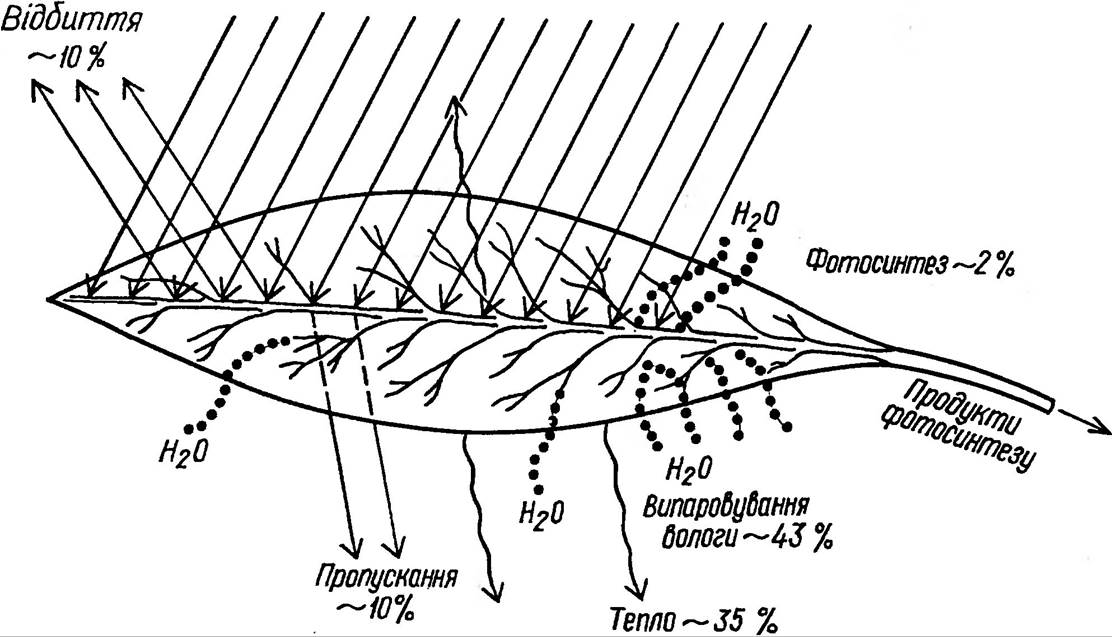
Fig. 34. Energy balance of the leaf
The leaf surface is covered with an epidermis. The Cells of the lower and upper epidermis, with the exception of those forming the stomatal apparatus, lack METABOLISM/14.html">Chloroplasts. They merely transmit light rays and, therefore, do not take direct part in photosynthesis.
A characteristic feature of the leaf protective tissue is the presence of Stomata, the area of which does not exceed 1% of the total leaf surface. The guard cells of the stomata have thin outer and thick inner Cell walls. When turgor changes, these walls stretch unevenly, which facilitates their opening or, conversely, closing (Fig. 35). For The process of photosynthesis to proceed normally, carbon dioxide must enter the cells to reach the green Plastids. Its amount in the atmospheric air is about 0.03%. Throughout the day, a plant assimilates The amount of СО2 contained in approximately a 30–60 meter layer of air. To form 1 g of carb-
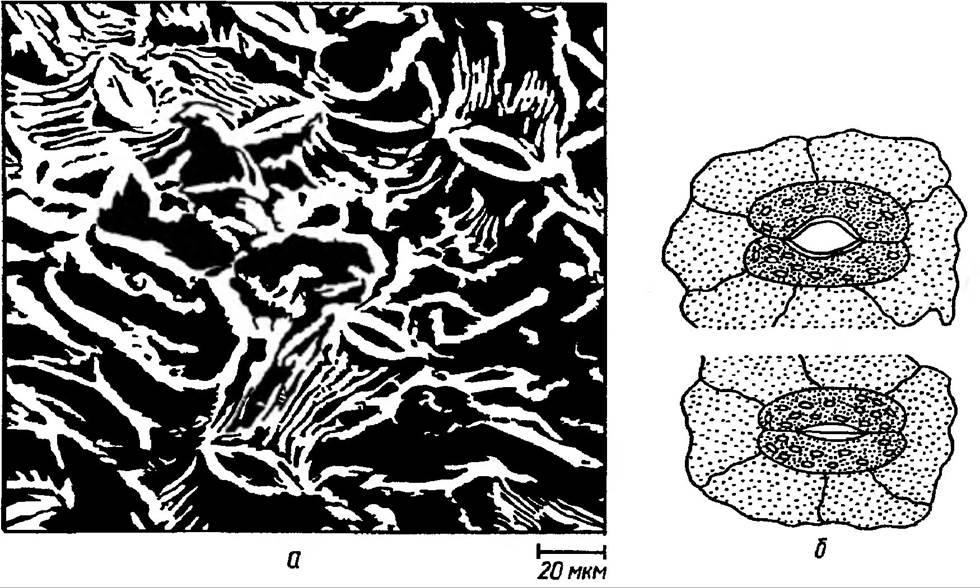
Fig. 35. Stomatal apparatus of the leaf:
a — scanning electron micrograph, b — diagram of an open and closed stoma
ohydrates, about 1.47 g of СО2 is required (this amount is contained in almost 2500 L of air). This is made possible by the continuous turbulent movement of air masses around the leaves, caused by their uneven heating by solar rays and the wind.
The amount of Water expended on photosynthesis constitutes a very insignificant fraction of the amount absorbed and transpired by the plant Organism. Water deficit reduces The rate of photosynthesis, because the closure of stomata cuts off the access of carbon dioxide to the leaf mesophyll.
In addition, the oxygen released during the photosynthetic reactions of water photolysis also enters the environment through the stomata. Therefore, the closing of stomata halts gas exchange with the atmosphere, although neither photosynthesis nor Respiration stops. Being locked in a closed cycle inside the leaf, they Complement each other, supplying oxygen and carbon dioxide for the respective reactions.
Thus, the functioning of stomata regulates the intake of carbon dioxide, the release of oxygen, and the evaporation of water. As a rule, there are more stomata on the lower side of the leaf, which is shielded from direct sunlight. On the upper side, there are significantly fewer of them, which reduces water evaporation under the action of those same rays. The main tissue of the leaf is occupied by the mesophyll, which is of two types: spongy and palisade (Fig. 36).
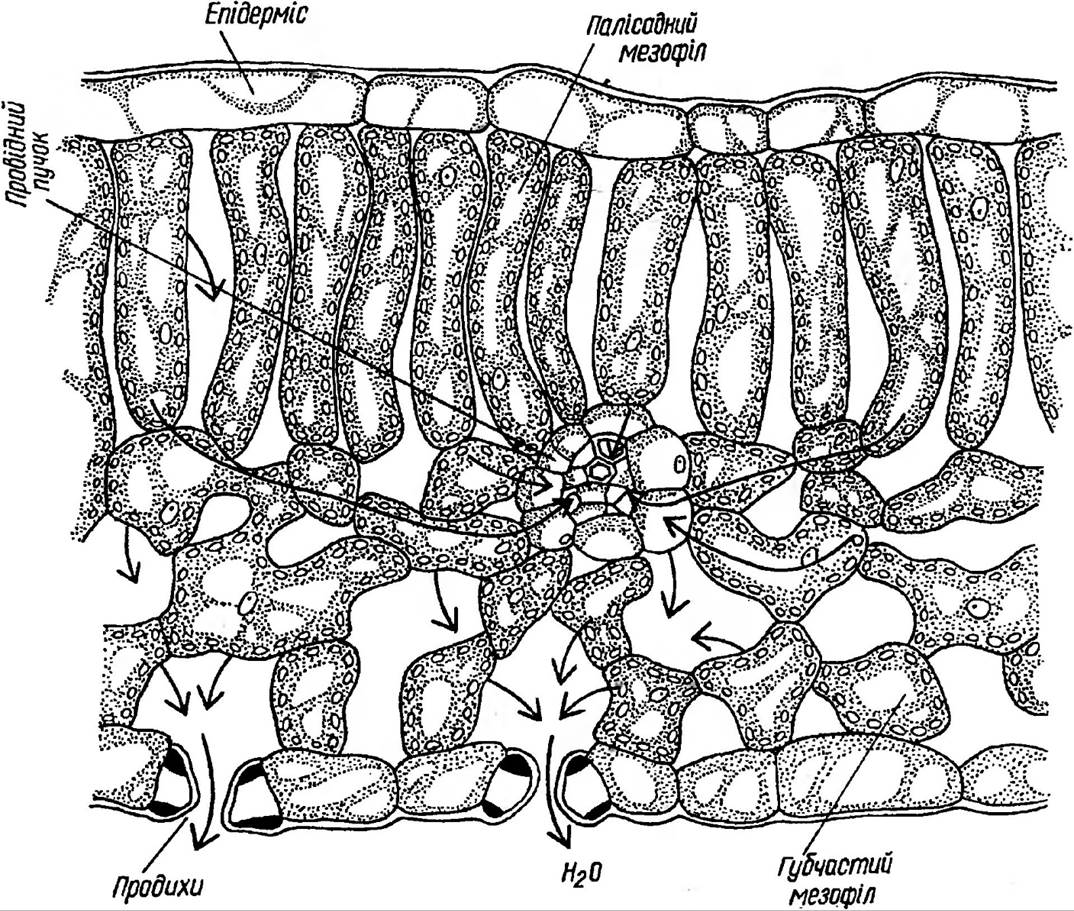
Fig. 36. Anatomical Structure of the leaf
The cells of the palisade (or columnar) parenchyma contain the largest number of chloroplasts (several dozen per cell). These cells fit tightly against one another, unlike the loosely arranged cells of the spongy mesophyll. From 15 to 20% of the total leaf volume consists of intercellular spaces, the presence of which is characteristic primarily of spongy Tissues. Due to intercellular spaces, the internal surface of the leaf increases significantly (it is 7–10 times larger than the external surface of the leaf), and a specific gas composition is established that differs from the atmospheric one, even though they communicate through the stomata. It is precisely through the intercellular space that the constant influx of СО2 from the atmosphere is carried out, because the spongy tissue of the mesophyll is located near the lower epidermis, where numerous stomata are situated.
The leaf mesophyll is permeated by a dense network of vascular bundles, which include xylem, supplying water and mineral nutrients, and phloem, through which the outflow of photosynthetic products takes place.
Characteristically, there is no direct contact between them and every single cell. This indicates that the internal transport of everything necessary for photosynthesis, as well as the short-distance outflow of its products, is also carried out via the symplast and apoplast.
Thus, for photosynthesis to occur at an optimal rate, the leaf must receive a sufficient amount of light energy, water, and carbon dioxide.
Chloroplasts. Photosynthesis is carried out with the continuous influx of light energy in significant amounts into strictly defined areas of the cells. Therefore, in the course of plant evolution, specialized structures—chloroplasts—arose in The Cell (Fig. 37). The size of chloroplasts ranges from 4 to 10 µm.
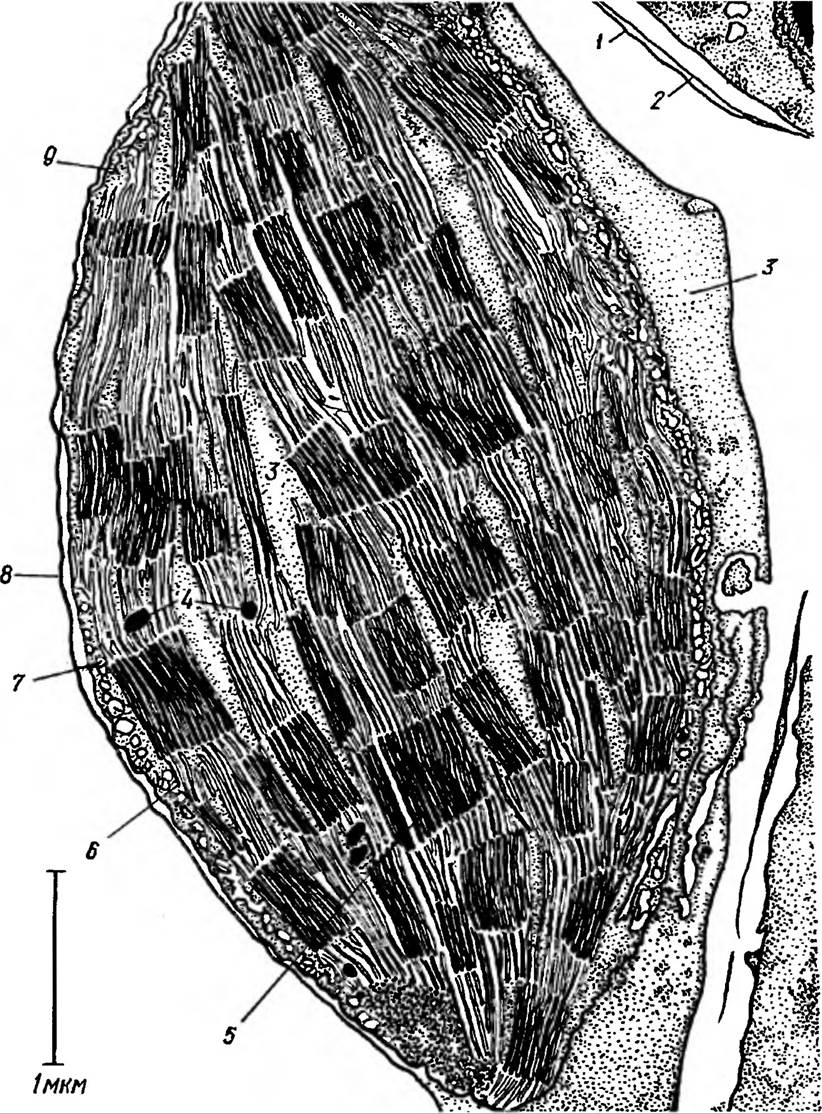
Fig. 37. STRUCTURE OF THE chloroplast:
1 — outer chloroplast membrane, 2 — inner chloroplast membrane, 3 — stroma, 4 — lipid droplets, 5 — granum, 6 — stromal thylakoids, 7 — starch grains, 8 — chloroplast envelope, 9 — Ribosomes
The number of chloroplasts per cell can range from one to 100 or more. Their total combined surface area exceeds the leaf area by tens or even hundreds of times.
Chloroplasts are a semi-autonomous, self-regulating plant cell system that relies for its development and functioning on Genetic information from both its own and nuclear, and possibly Mitochondrial Genomes. In 1960, Japanese biochemist Iwamura discovered Two Types of DNA in the unicellular alga Chlorella — nuclear and chloroplast DNA. It became evident that the eukaryotic genetic material is not only localized in The Nucleus, which serves as the primary repository of hereditary information, but is also dispersed throughout the cell within its subcellular structures.
Chloroplast DNA forms a double helix with linear, circular, and loop-like structures. The total amount of DNA in a chloroplast varies by species from 20-10 to 10-15 g, with a Molecular Weight of 84-104 megadaltons (MDa). The contour length of circular chloroplast DNA molecules in higher plants reaches 43-55 µm. It is estimated that such DNA contains about 2-107 nucleotide pairs, corresponding to several thousand genes.
However, the genetic information of plastids is quite limited. Therefore, many plastid components are synthesized under the control of both chloroplast and nuclear DNA. Chloroplasts contain their own ribosomal rRNA, and potentially a full set of tRNAs involved in the expression of the organism's genome. The chloroplast stroma houses small ribosomes with a sedimentation coefficient of 70S. Possessing its own hereditary apparatus and protein-synthesizing system, the chloroplast can control the Synthesis of specific Polypeptides.
In terms of chemical composition, the bulk of chloroplasts consists of (% of dry weight): Proteins (30-60), Lipids (20-40), chlorophylls (5-9), carotenoids (4-5), DNA (0.01-0.02), RNA (0.5-3.5), and Mineral Substances (6-10).
They concentrate up to 80% of all iron in The plant cell, 65-70% of all zinc, and about 50% of copper. Chloroplasts contain various Enzymes that drive the ENZYMATIC REACTIONS OF photosynthesis. They harbor all the enzymes involved in photosynthesis (ribulose-1,5-bisphosphate carboxylase-oxygenase, redox enzymes, synthetases, Hydrolases, and others).
One of the most critical Components of the photosynthetic apparatus is the pigment complex. Prokaryotes lack specialized photosynthetic Organelles; their pigment apparatus is represented by individual membranes diffusely scattered throughout the cell. All other eukaryotes possess specialized organelles — chloroplasts — where the entire pigment complex is concentrated. As it turns out, the PHYSICOCHEMICAL PROPERTIES OF pigments are best realized precisely within chloroplasts.
Last update: 07/08/2026
Editorial and Educational Adaptation: This material has been compiled based on the primary/original source text. The project team performed an editorial review, corrected technical inaccuracies, structured sections, and adapted the content for an educational format.
What was processed:
- elimination of formatting defects (OCR errors, structural breaks, corrupted characters);
- editorial organization of content;
- standardization of terminology in accordance with academic sources;
- verification of factual statements against the original source text.
All mentions of the author, publication year, and origin of the primary text have been preserved in accordance with the source.