ECOLOGICAL BIOCHEMISTRY - Study Guide - V. M. Isaenko 2005
Chapter 8. RESISTANCE AND ADAPTATION OF PLANTS AND ANIMALS
8.3. Resistance and Adaptation of Animals to Environmental Conditions
8.3.3. Prevention of Hypothermia and Hyperthermia
Active life processes in most animals are possible only within a relatively narrow Temperature range—from a few degrees above the freezing point of pure Water (0 °C) to approximately 50 °C. Temperature conditions suitable for animal life exist in aquatic environments and across most land areas, at least during certain times of the year. At the same time, Fungi and numerous Arctic and Antarctic invertebrates are capable of living in water where the temperature remains around -1.8 °C year-round. Some organisms inhabit hot springs at temperatures of 50 °C and even higher. Thermophilic Bacteria can thrive at even higher temperatures, close to the boiling point of water (100 °C). Certain animals exposed to temperatures outside their active life range manage to survive by entering a state of suspended animation. Some of them can even withstand the temperature of liquid helium (-269 °C). Animal resistance to high temperatures is generally less pronounced, but some species exhibit significant thermophily while in a dormant state. For example, bacterial spores can survive at +120 °C and even higher.
In mammals and birds, body temperature is nearly constant and changes very little even under significant fluctuations in ambient temperature; by contrast, in most other animals, body temperature closely mirrors the environmental temperature. However, there are certain lower invertebrates and vertebrates capable of maintaining a substantial difference between their BODY TEMPERATURE AND the ambient temperature for some time.
Mammals and birds are typically classified as warm-blooded, while all other animals are considered cold-blooded. Yet, cold-blooded animals are not always cold (possessing a low temperature). For instance, the body temperature of tropical fish, desert lizards, or basking insects can actually be higher than that of mammals. Conversely, some mammals and birds are capable of entering hibernation or torpor, during which their body temperature drops significantly.
The traditional terms poikilotherms (from Greek *poikilos* — varied, and *therme* — heat) instead of "cold-blooded", and homoeotherms (from Greek *homoios* — similar) instead of "warm-blooded" are also imprecise. By definition, poikilotherms change their body temperature along with environmental fluctuations. Therefore, fish should theoretically share the exact temperature of the water layers they inhabit. However, deep-sea fish live in water layers where the temperature is nearly constant, meaning their body temperature does not fluctuate. Such fish would be more accurately described as homoeothermic, yet this term is reserved exclusively for mammals and birds, whose body temperature may vary within a few degrees, or drop almost to 0 °C in hibernating species.
Animals whose body temperature is maintained at a high level necessary to sustain active life only during specific periods, while depending on ambient temperature at other times, are called heterotherms (from Greek *heteros* — different).
To describe the mechanisms of heat production and body temperature regulation, the terms "ectothermic" and "endothermic" animals are used. Endotherms refer to animals (mammals and birds) in which high body temperature is maintained via internal (metabolic) heat, whereas ectotherms rely primarily on external heat sources, above all sunlight. Like previous terminology, these terms are not entirely flawless. For example, the Muscle temperature in tuna can be 10–15 °C higher than the surrounding water due to active metabolic processes. Yet, these fish cannot be considered endothermic animals in the same sense as mammals and birds. Most insects are neither strictly ectothermic nor endothermic. When an insect basks in the sun, for instance, its body temperature is determined by a combination of solar radiation and the intensity of muscle contractions. Similarly, some mammals and birds occasionally harness solar heat to reduce their own endogenous thermogenesis.
MANIFESTATION OF BASIC TEMPERATURE EFFECTS IN ANIMALS AT THE BIOCHEMICAL LEVEL. Atoms and molecules in constant motion possess energy, which determines the system's temperature and serves as a measure of heat intensity. Changes in an Organism's temperature affect, first, The rate of Chemical Reactions that govern METABOLISM and Energy transformation, and second, alter molecular structures held together by so-called weak forces or weak interactions—such as Hydrogen Bonds, Structure/103.html">Van der Waals forces, ionic bonds, and hydrophobic interactions. These bonds possess low energy. Therefore, unlike covalent ("strong") bonds, they are readily broken and formed under the Influence of the kinetic energy of atoms and molecules without requiring Enzymatic Catalysis. Under physiological temperatures, "weak" bonds constantly break and reform. As temperature rises, the number of disrupted "weak" bonds increases, and upon reaching the upper limit of an organism's thermal tolerance, the molecules responsible for vital physiological Functions undergo disorganization, leading to death. The main structures and processes dependent on "weak" chemical bonds include: 1) The structure of water; 2) Tertiary and Quaternary protein structures; 3) enzyme-Ligand complexes; 4) lipid interactions; 5) interactions between nucleic acid strands; 6) nucleic acid interactions; 7) nucleic acid-Protein Interactions; 8) hormone binding by protein receptors, etc.
Unlike "weak" bonds, covalent bonds remain stable at physiological temperatures and are broken or formed through enzymatic action. They lower the activation energy (the energy threshold) of chemical reactions. Under normal physiological conditions, the Rate of Enzymatic reactions is 108–1012 times higher than that of identical uncatalyzed reactions.
The functioning of enzymatic systems is, in turn, heavily dependent on "weak" interactions, as these forces drive The formation of enzyme-substrate complexes and, following the reaction, facilitate the return of enzyme Proteins to their original conformation. The binding of activity regulators that direct the course of enzymatic reactions is likewise governed by weak forces. It is precisely these forces that impart structural "flexibility" to Enzymes, rendering these catalysts sensitive to temperature fluctuations.
When temperature drops, metabolic reactions can slow down to such an extent that vital physiological processes can no longer proceed at the necessary rate. Conversely, an elevation in temperature may accelerate metabolic processes so drastically that the organism becomes unable to supply sufficient metabolites in a timely manner.
Over the course of evolution, most organisms have developed The ability to maintain a steady metabolic rate regardless of their body temperature, while others mitigate thermal impacts through appropriate biochemical regulation.
To quantify temperature effects, the temperature coefficient Q10 is widely used, which characterizes the rate of a given process when the temperature is increased by 10 °C. Thus, if the reaction rate doubles, Q10 = 2; if it triples, Q10 = 3, and so forth.
It is well established that the frequency of reactive molecules as a function of temperature is described by the Arrhenius equation:
Class="center">
where K is the rate constant; T1 is the initial temperature, T2 is the final temperature; Ea is the activation energy; R is the universal gas constant.
The ratio of two reaction rates for a temperature difference of 10 °C (Q10), derived from the Arrhenius equation, is defined as
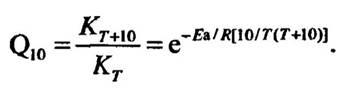
Consequently, Q10 is a function of temperature, and its value decreases as temperature rises.
Effect of temperature on Cell/13.html">Protein Structure. The primary factor stabilizing the tertiary structure (the overall spatial arrangement and packing of domains and individual Amino Acids into a polypeptide chain) and quaternary structure (the formation of aggregates comprising two or more polypeptide chains) of proteins—alongside peptide and Disulfide Bonds—is weak interaction. Hydrogen bonds also play a critical role in stabilizing Secondary structure (such as α-helical segments), which dictates the spatial conformation of the protein molecule.
Modifications in the Tertiary Structure of proteins induced by temperature are generally reversible, occur over a wide
temperature range, and in most cases do not result in the loss of basic protein functionality. Alterations in quaternary structure, however, are typically accompanied by a loss of functional activity. At low temperatures, only a select few enzymes from cold-blooded animals preserve their quaternary structure. Among all "weak" bonds, hydrophobic interactions—which directly participate in stabilizing aggregates of polypeptide chains—exhibit the highest sensitivity to low temperatures. In many instances, the disruption of quaternary structure is preceded by alterations in tertiary structure, which in turn promote the degradation of protein subunits.
Temperature changes also affect the Structural and functional properties of macromolecular Protein Complexes formed through the aggregation of various proteins, each exhibiting all four LEVELS OF STRUCTURAL Organization. The structure of Membrane Lipids and Lipid-Protein Interactions are likewise temperature-dependent. The conformation of the polypeptide chain synthesized by the polyribosome complex is particularly temperature-sensitive. A polypeptide that has not yet attained its final conformation may be even more susceptible to temperature fluctuations than a fully formed polypeptide chain.
The formation of complexes between enzyme proteins and substrates, as well as regulators of their activity—driven by "weak" interactions—is also temperature-dependent.
The Effect of temperature on nucleic acid structure. The disruption of "weak" chemical bonds in Nucleic Acids can lead to the impairment of their secondary structure. A classic example is the loss of structure in a DNA molecule, where the two strands are held together by hydrogen bonds between Base Pairs—guanine-cytosine (G-C) and adenine-thymine (A-T)—as well as hydrophobic interactions that force the ring structures of Purines and Pyrimidines into the inner, anhydrous region of the molecule. In this configuration, the charged phosphate groups remain in contact with water.
Elevating the temperature to a level that promotes the Cleavage of "weak" bonds, particularly hydrogen bonds, can trigger the loss of the secondary Structure of Nucleic Acids. The disruption of the double-stranded Introduction/20.html">DNA Structure due to elevated temperatures—known as the DNA melting temperature—is further accelerated by ultraviolet radiation, owing to the exposed conformation of the purine and pyrimidine ring structures.
The "melting" temperature of double-stranded DNA is proportional to the G-C content within the molecule. Each G-C pair is stabilized by three hydrogen bonds, whereas an A-T pair is stabilized by two. Consequently, double-stranded DNAs with a higher proportion of G-C pairs exhibit greater thermal stability.
The "melting" temperatures of double-stranded DNAs are generally much higher than the temperatures at which the organism itself can survive. Therefore, the thermal disruption of DNA secondary structure evidently holds little direct biological significance. However, Changes in the tertiary Structure of Transfer RNA (tRNA) at elevated temperatures are crucial for this nucleic acid to perform its function. Such alterations disrupt The process of amino acid attachment to the corresponding tRNA. This process is catalyzed by Aminoacyl-tRNA synthetases in the presence of ATP. Each amino acid corresponds to a specific aminoacyl-tRNA synthetase and a specific tRNA acceptor (sometimes multiple tRNAs may exist for a single amino acid). The enzyme's surface features specific binding pockets that accommodate a given amino acid, its specific tRNA, and ATP. The loss of this capability and the failure of substrate binding by aminoacyl-tRNA synthetase lead to impaired Protein Synthesis. Experiments with the bacterium Micrococcus criophilus demonstrated that enzymes from heat-adapted bacteria can "recognize" the tRNA conformation induced by high temperatures, whereas cold-adapted enzymes recognize only the "low-temperature" tRNA conformation. It has also been established that in thermophilic bacteria, temperature deviations from the optimal level can reduce the translational fidelity of the mRNA-dependent stage of protein synthesis.
It should be noted that all Components of the protein-synthesizing system (tRNA molecules, mRNA, corresponding enzymes, and Ribosomes) are prone to temperature-induced conformational changes that can adversely affect organismal viability.
Gene Expression regulation, determined by "weak" interactions between Nucleic Acids and Proteins, is also temperature-dependent. Temperature shifts can, for instance, prevent the activation or repression of specific genes. Furthermore, certain temperatures can directly trigger the activation of genes that encode precisely those proteins or RNAs required to cope with thermal stress.
The effect of temperature on membrane lipids and membrane-bound enzyme activity. Lipids play a vital role in determining the structural and Functional Properties of Biological Membranes. They not only maintain Membrane Structure and participate in material transport, but also regulate The activity of membrane-bound proteins, particularly enzymes. This regulatory effect is rooted in hydrophobic interactions between the nonpolar fatty acid chains and hydrophobic amino acid residues exposed On the surface of membrane-bound proteins. Protein molecules associated with the membrane surface (peripheral proteins) are maintained by ionic interactions between charged groups on the protein surface and the charged (polar) "HEAD groups" of membrane Phospholipids.
As noted previously, temperature variations disrupt the "weak" forces that govern protein-lipid interactions within membranes.
Temperature fluctuations alter the physical state of membranes, primarily affecting their microviscosity, which is predominantly determined by the degree of lipid saturation. The higher the degree of lipid unsaturation—meaning a greater number of double bonds between carbon atoms in the fatty acid chains—the lower the lipid "melting" point. These double bonds introduce kinks into the aliphatic chains, hindering crystallization. Only at low temperatures do the "weak" bonds stabilizing interactions between lipid molecules become sufficiently strong for highly unsaturated lipids to solidify.
It has been established that organisms adapted to cold environments exhibit a reduced level of fatty acid saturation. In turn, Unsaturated Fatty acids act as activators of membrane-bound lipoprotein enzymes. Consequently, a decrease in the saturation degree of membrane lipids under low-temperature conditions can lead to a compensatory shift in the activity of membrane-bound enzymes.
BIOCHEMICAL RESISTANCE OF ANIMALS TO HIGH AND LOW TEMPERATURES. As previously discussed, animals vary widely in their optimal temperature ranges. Some can survive only within a narrow ambient temperature span, whereas others tolerate much broader ranges. Furthermore, a degree of adaptation to extreme temperatures is possible: following prolonged exposure to conditions near the limit of thermal survival, this threshold can shift. It is worth noting that the lethal temperature for a given organism depends on the duration of exposure—an animal may withstand a certain temperature for a limited time, but perishes if the exposure is prolonged.
Resistance to high temperatures. As noted earlier, animals are generally unable to complete their entire life cycle at temperatures exceeding 50 °C, yet during specific developmental stages, they can endure significantly higher temperatures. For instance, larvae of the midge Polypedilum, when desiccated in a dehydrated state, survive temperatures of 102 °C for a minute, after which they are capable of resuming growth and undergoing metamorphosis. Another example is the eggs of the freshwater crustacean Triops, which remain viable in dry mud at 80 °C and in water under normal conditions at 99 °C (just 1 °C below the boiling point of water).
Although the upper limit of active life processes in organisms is close to 50 °C, many animals perish at considerably lower temperatures, particularly aquatic organisms. Even in tropical seas, water temperature rarely reaches 30 °C, though it may be higher in shallow, enclosed bays and lagoons.
Gastropod Mollusks inhabiting the upper intertidal (littoral) zone, which are exposed to air for extended periods, are more resistant to elevated temperatures than those residing in the lower intertidal zone, where temperatures remain close to the minimum. For example, Tectarius vilis inhabits the intertidal zone and can withstand temperatures up to 48.5 °C for an hour, whereas Tegula lischkeana, inhabiting the lower part of the same intertidal zone, can tolerate temperatures no higher than 39 °C for the same duration.
Among fish, pupfishes are arguably the most heat-resistant. For instance, Cyprinodon diabolus can thrive in water temperatures reaching 33.9 °C. The upper temperature limit for adult specimens of these fish, weighing about 200 mg, is approximately 43 °C.
Key factors contributing to the disruption of animal vital activity under high temperatures include: 1) Protein Denaturation and heat coagulation; 2) thermal Enzyme inactivation occurring at a rate exceeding their synthesis; 3) oxygen deficiency; 4) differences in the temperature coefficient (such as $Q_{10}$) for interrelated metabolic processes; and 5) alterations in membrane structure.
At the same time, for the previously mentioned Trematomus Fishes, it is difficult to imagine that a lethal temperature above 6 °C could trigger thermal protein denaturation, which typically occurs at 45–55 °C. The same applies to thermal enzyme inactivation. Oxygen deprivation under conditions where metabolic oxygen demand increases with temperature is not the primary cause of organismal death. For instance, cold-water fish placed in warm water perished even when oxygen levels were artificially multiplied several times through oxygen aeration.
The primary causes of animal mortality under elevated temperatures are evidently disparities in the thermal sensitivity of numerous enzymes involved in metabolism and energy conversion, alongside structural modifications in membranes that lead to widespread protein conformational defects, disrupted protein-lipid interactions, and related cellular dysfunction.
Resistance to low temperatures. Animals inhabiting temperate and cold climates withstand prolonged exposure to temperatures well below the freezing point of pure water (0 °C). They prevent cold injury through two primary mechanisms: supercooling (lowering the temperature of Body Fluids below their freezing point without ice formation) and freezing tolerance (the ability to endure ice formation and freezing of water within the body). The probability of freezing in supercooled water depends on temperature, the presence of ice-nucleating agents, and time. In the absence of foreign particles acting as crystallization centers, the freezing point of pure water can be depressed to -20 °C, and occasionally even to -40 °C.
The capacity for supercooling is crucial for animal survival, particularly during sudden cold snaps. Some reptiles, whose body fluid freezing point is around -0.6 °C, can withstand supercooling down to -8 °C without freezing.
Intracellular ice formation results in cell death due to the destruction of cellular ultrastructure. Conversely, many organisms can withstand extracellular ice formation. As extracellular water turns to ice, dissolved solutes become concentrated within the remaining liquid. This generates a steep osmotic gradient that draws water out of Cells, potentially causing cellular dehydration. In most organisms, cells perish once approximately two-thirds of the intracellular water has shifted to the extracellular space.
Nevertheless, certain animals survive extracellular ice formation. For instance, larvae of the midge Chironomus endure repeated freezing down to -25 °C and subsequent thawing. Most animals possess adaptive mechanisms to circumvent the destructive consequences of ice formation, the primary ones being: 1) lowering the freezing point of body fluids; 2) enhancing the supercooling capacity of these fluids without ice formation; and 3) if ice formation in extracellular fluids is inevitable, mitigating cellular damage by restricting the osmotic efflux of water into the extracellular space.
It is worth noting that the duration of low-temperature exposure also affects the freezing susceptibility of organismal body fluids. For instance, in larvae of the wheat stem sawfly Cephus cinctus, ice does not form at -15 °C, but these larvae freeze at lower temperatures. At -30 °C, this occurs in just 1.2 seconds, whereas at -17 °C, 50% of the individuals freeze over the course of a year.
Invertebrates inhabiting the tidal zones of subpolar regions are capable of withstanding extreme temperature fluctuations well below and above the freezing point of water. During low tide, these animals freeze to the extent that most of the water in their bodies turns into ice. They can survive for six hours or more at -30 °C, a temperature at which 90% of their body water freezes. In the remaining liquid water, the concentration of solutes increases manifold, preventing it from freezing completely. The cells of such animals lose a portion of their water and shrink, yet intracellular freezing is prevented thanks to the high solute concentration.
The blue mussel Mytilus edulis can tolerate temperatures down to -10 °C. This resilience is partly due to the osmotic properties of its intracellular fluids. In this mollusk, about 20% of the cellular water cannot be extracted during the formation of intracellular ice. Presumably, the cells of these organisms contain substances whose osmotic effect is far more pronounced than could be accounted for by soluble Inorganic Compounds and small organic molecules (such as Amino Acids and sugars). These substances include glycerol, as well as the antifreeze Glycoproteins found in Antarctic and Arctic fish.
Glycerol lowers the freezing point and supercooling limit of animal body fluids through the interaction of its hydroxyl groups with polar water molecules via hydrogen bonding. This compound is present in relatively high concentrations in certain insects, helping to minimize ice formation during supercooling and protecting ice-damaged Tissues. In some insects, glycerol concentrations surge before the onset of winter. For instance, in the parasitic wasp Bracon cephi, The amount of glycerol increases by nearly 30% prior to winter, reaching 5 moles per 1 kg of water. As a result, the freezing point of its hemolymph drops to -17.5 °C, and the larva can be supercooled (without ice formation) down to -47.2 °C.
Insect cold tolerance cannot be explained solely by elevated glycerol levels in their hemolymph. There are insects in which the concentration of this compound does not exceed 3%, or where glycerol is entirely absent. Nevertheless, these insects remain protected against freeze injury. Furthermore, in most Arctic beetles, such as Pterostichus brevicomis, the supercooling point drops in late summer even before the organism's glycerol content increases. Moreover, in the middle of winter, glycerol levels decline while the degree of freeze tolerance remains unabated.
Thus, aside from glycerol, other hemolymph components protect insects from the damaging effects of freezing.
Glycoproteins have been discovered in certain Antarctic and Arctic fish, with their primary function being the lowering of the freezing point of biological fluids. Much like glycerol, these glycoproteins—often referred to as "antifreeze" proteins—possess hydroxyl groups that form hydrogen bonds with water molecules. Blocking these groups, for instance
through Acetylation, leads to a complete loss of their antifreeze capability. In this modified state, they lower the freezing point of water no more than ordinary solutes (such as amino acids, glucose, and sucrose).
Fish of the family Nototheniidae contain antifreeze glycoproteins. The structure of one such glycoprotein, with a Molecular Weight of approximately 10,500 Da, is shown in Fig. 8.3.

Fig. 8.3. STRUCTURE OF THE main repeating unit of antifreeze glycoproteins in Nototheniidae fish
Note. Ala — Alanine, Thr — Threonine, Gal — galactose, N-AcGal — N-acetylgalactosamine.
Other antifreeze glycoproteins have also been found in fish of this family, notably with molecular weights of 3,500 and 2,600 Da. Unlike the glycoprotein shown in Fig. 8.3, these molecules have alanine residues replaced by Proline residues at specific positions in the polypeptide chain.
In the Blood of Antarctic fish of the genus Trematomus, the concentration of antifreeze glycoproteins is directly proportional to its freeze-resistance capacity. Levels are highest in Trematomus borchgrevinki, a pelagic fish inhabiting zones with platelet ice that forms beneath solid sea ice, descending deeper only to feed on plankton.
In the blood of Trematomus, the antifreeze glycoprotein exists in three forms with molecular weights of 10,500, 17,000, and 21,500 Da. Like the antifreeze glycoprotein of Nototheniidae, it consists of a repeating unit (Fig. 8.3) containing Two amino acids—alanine (23%) and threonine (16%)—along with a galactose derivative attached to the threonine.
In terms of their MECHANISM OF ACTION, antifreeze glycoproteins not only structure water by forming hydrogen bonds with their hydroxyl groups, but they also inhibit the growth of newly formed ice crystals through surface adsorption, preventing additional water molecules from joining the crystal lattice. The glycoprotein sheath formed around tiny ice crystals can weaken the ice structure to such an extent that it melts.
Discussions of cold hardiness and freeze tolerance typically focus on ice formation and its physiological consequences. However, ice formation is only one potential manifestation of low-temperature stress. Other detrimental effects on organisms include alterations in protein tertiary and quaternary structure caused by the disruption of hydrophobic interactions. Certain substances, such as glycerol, are capable not only of lowering the freezing point of water but also of stabilizing these hydrophobic interactions in proteins, including enzymes.
It is worth noting that beyond biochemical adaptations to low temperatures, some animals prevent freezing through behavioral, anatomical, and physiological mechanisms. Many animals migrate before winter from regions where freezing poses a threat. These Migrations can span thousands of kilometers or occur within their usual geographic range. For instance, animals that undergo hibernation may burrow into the ground to escape the cold. Some marine fish, such as the Arctic char Salvelinus alpinus, migrate during the winter from marine waters—where temperatures can drop below the freezing point of their body fluids—into freshwater rivers and lakes, where natural thermal layers remain at or above 4 °C. Certain fish inhabiting shallow coastal waters overwinter in deeper thermal layers to avoid contact with floating surface ice.
Often, the limits of temperature resistance in animals differ between winter and summer. In winter, these animals remain active at temperatures that would be fatal in summer; conversely, high-temperature tolerance is lower in winter than in summer. Thus, animals are capable of acclimatizing to temperature fluctuations, exhibiting both geographic and seasonal adaptation and acclimatization. For example, in the wood frog Rana sylvatica, the optimal water temperature during the breeding period is 10 °C, with the lower temperature limit for egg development at 2.5 °C and the upper limit at 24 °C.
Lower lethal temperatures also vary seasonally. For example, when Pterostichus brevicomis beetles from Alaska are frozen in summer at -6.6 °C, they die. In winter, however, these same beetles survive temperatures below -35 °C.
Consequently, animals possess genetically determined resistance linked to their geographic distribution and seasonal changes.
BODY TEMPERATURE REGULATION. The temperature of any body remains constant only when heat gain and heat loss are balanced. As previously noted, under conditions of low temperatures, an animal's thermal balance is stabilized by both reducing heat loss and increasing heat production (thermogenesis). Most mammals and birds can maintain the stable body temperature necessary for vital activity. However, under certain conditions, the body temperature of some species drops drastically, leading to torpor or hibernation. Even in these states, body temperature regulation does not completely cease.
When ambient temperatures rise, the organism must actively counteract the heat to maintain a stable body temperature.
Heat exchange between an organism and its environment occurs through three primary pathways: 1) thermal conduction (involving the direct transfer of molecular kinetic energy); 2) radiation; and 3) evaporation. These processes depend on various external factors, with temperature being the most crucial. As ambient temperature decreases, heat loss increases; as it rises, heat loss diminishes. If the external temperature exceeds the surface temperature of the body, Heat transfer via conduction and radiation occurs from the environment into the organism. In this case, the total heat influx consists of heat absorbed from the environment plus metabolic heat production. To maintain a constant body temperature under these conditions, evaporative cooling must increase to dissipate all excess heat.
Body temperature regulation in mammals and birds. Heat produced by an animal's body can be released into the environment, but it must first be transported to the body surface. Therefore, the surface temperature must be lower than that of the Internal Organs; otherwise, heat transfer cannot take place.
Heat production by various organs and Organ Systems in mammals is uneven. For instance, in humans, the internal Organs of the thoracic and abdominal cavities account for only 6% of body mass yet generate up to 56% of the body's total heat production. The Brain produces up to 16% of human body heat, while the Skin and Muscles generate no more than 18%. During physical exertion, metabolic intensification causes heat production to rise sharply. To keep the internal temperature stable during physiological stress, heat transfer to the body surface must increase compared to the resting state.
Mammalian organs that produce more heat may be warmer than others, despite being cooled by blood (venous blood flowing away from the organs is warmer than arterial blood). This temperature difference can reach up to 0,5 °С.
In humans with a balanced heat exchange, the temperature of the body surface is lower than the internal temperature. This means that venous blood flowing from surface tissues is colder than arterial blood, serving as one of the main pathways for cooling internal organs. Depending on environmental temperature conditions, skin temperature is subject to significant fluctuations.
The core temperature of humans, other mammals, and birds undergoes daily fluctuations, typically within 1—2 °С. In diurnal animals, it is highest during the day and lowest at night, while in nocturnal animals, the opposite is true. This circadian rhythm is not directly related to changes in activity and rest states, as it persists even when an animal remains in a state of complete rest. In many mammals and birds, daily body temperature fluctuations correspond to the light and dark periods of the day.
Therefore, to ensure accurate measurement of body temperature in mammals and birds, it is necessary to take into account the animal's active state, time of day, body temperature cycle, and other related factors.
If we disregard a 1—2 °С difference, we can assume that each group of warm-blooded vertebrates has a constant, "normal" temperature characteristic of them. As a rule, the body temperature of most birds is 40 ± 2 °С, of placental mammals is 38 ± 2°С, of marsupials is 36 ± 2 °С, and of higher mammals is 36 ± 2 °С. The lethal temperature is approximately 6 °С higher than the "normal" body temperature.
It is worth noting that mammals and birds living in the low-temperature conditions of the Arctic and Antarctic maintain their body temperature at the same level characteristic of their respective classes as a whole, despite inhabiting cold regions.
Thermoregulation under low-temperature conditions in mammals. To maintain a constant body temperature under The Influence of cold, heat production through metabolism, as noted previously, must be balanced by heat loss and can be calculated using the formula:

where H is the amount of heat produced in metabolic processes; Q is heat loss, C is a proportionality coefficient serving as an index of thermal conductivity, Tt is body temperature, and Tg is ambient temperature.
In the given equation, Tg (ambient temperature) does not depend on the animal unless it moves to a different environment. To adapt to an unfavorable external temperature, an animal must alter other variables — its individual heat production (H), thermal conductivity (Q), or body temperature (Tt). Since Tt must be kept constant, the animal's remaining options are to change its own heat production or thermal conductivity. Changes in the body temperature of animals that enter hibernation or torpor will be discussed below.
An increase in heat production (metabolic rate) can be utilized within a wide range. The main mechanisms for increasing heat production include: 1) muscular activity; 2) involuntary muscle contractions in which ATP is split by the Actin-Myosin ATPase system without performing mechanical work (shivering); 3) non-shivering thermogenesis (metabolic increase without Muscle contraction). One mechanism of the latter process, activated by THYROID Hormones, involves The conversion of ATP energy into heat via the Na+, K+-ATPase system in heat-producing (calorigenic) tissues — the Liver, skeletal muscles, and Kidneys.
At low ambient temperatures, the metabolic rate must increase to keep body temperature constant. It has been established that for most mammals, at temperatures below a certain point known as the lower critical temperature (Tlc), the metabolic rate increases linearly as the temperature drops. Above this critical temperature, heat production remains constant because it cannot fall below the resting level. For most tropical mammals, the lower critical temperature lies within 20 — 30 °С, and at temperatures below this critical point, the metabolic rate rises rapidly with decreasing temperature. These animals are characterized by high thermal conductivity, causing their metabolism to increase sharply even with moderate drops in temperature.
Arctic and Antarctic mammals are characterized by a low critical temperature. For instance, in the arctic fox, the metabolic rate increases moderately only at air temperatures below -40 °С. Arctic animals feature low thermal conductivity. Arctic mammals have a much wider thermoneutral zone (the temperature range over which metabolic rate is independent of temperature), and their metabolic response to cold exposure is significantly smaller than that of tropical animals.
Thermal conductivity (the heat flow per unit time through a unit area per 1 °С of temperature difference) is broadly a measure of heat flow from the animal to the environment under low-temperature conditions. This also encompasses The transfer of heat from internal organs to the skin surface and from the skin through fur coats (if present) to the environment. Low thermal conductivity corresponds to high thermal insulation, and vice versa.
One of the primary means of enhancing thermoregulation is the presence of fur. The thermal insulation properties of fur increase with its thickness, reaching a maximum in relatively large animals such as the arctic fox. In small animals, There is a correlation between fur thickness (its insulating properties) and body size. To maintain rapid locomotion, small animals must have thin, lightweight fur. This fully applies to the smallest mammals, particularly mice-like rodents and shrews. Due to their relatively poor thermal insulation, these animals must seek out required climatic microenvironments (such as living in burrows) or undergo hibernation during low temperatures to avoid the need to sustain a high temperature.
It is well known that animal fur density depends on the season: winter fur is denser and retains heat better than lighter summer fur. Seasonal changes are most pronounced in large animals, whereas in small rodents they are less marked. In the black bear, for example, the thermal insulation properties of summer fur are approximately 52 % lower than those in winter.
In seals, which possess relatively thin fur, a thick layer of subcutaneous fat provides additional thermal insulation. Consequently, the difference in the skin's thermal insulation properties in air and in water for a seal is quite small.
Seals and whales are similar to other warm-blooded animals, maintaining a body temperature typically between 36 — 38 °С. In most of these animals, the metabolic rate remains nearly unchanged even when water temperatures drop to the freezing point. Therefore, their primary adaptation to low temperatures is effective thermal insulation provided by a thick layer of subcutaneous fat that prevents heat loss. The surface skin temperature of these animals is close to that of the cold water. In seals, at a subcutaneous fat depth of about 50 mm, the temperature corresponds to the internal body temperature.
Most terrestrial arctic mammals exhibit a different temperature gradient: the skin surface beneath the fur is only a few degrees colder than the internal body regions, meaning the skin is externally protected by an insulating layer. In the polar bear, as previously mentioned, the fur provides low thermal insulation, making subcutaneous fat the primary insulating material.
During warming or when metabolic rates accelerate during fast swimming, seals, whales, and similar animals avoid overheating by increasing Blood flow through the subcutaneous fat to the superficial skin layer via a vascular network. This system allows them to regulate the amount of heat reaching the skin surface and dissipating into the environment for a relatively long period.
A distinctive feature of aquatic mammals is that their insulating layer (subcutaneous fat) is located deeper than the surface through which heat dissipation occurs. Consequently, blood can reach this surface by bypassing the insulation layer, allowing heat to be dissipated outside this layer in warm water or during heavy physical exertion. Terrestrial mammals, whose insulating layer is located on the outside of the skin surface, cannot regulate heat loss across the entire skin surface as effectively and must rely on Other Methods of heat dissipation.
Fur-covered animals of the Arctic and Antarctic protect different parts of their body against the cold to varying degrees, as certain exposed surface areas must remain available for heat dissipation, particularly during physical exertion. This is likely why terrestrial animals possess body regions with weak thermal insulation (such as the muzzle and paws). For example, in the South American guanaco (Lama guanicoe), approximately 40 % of the body is covered with a thick layer of fur, while 20 % is nearly devoid of a fur coat, enabling the animal to regulate heat dissipation across a wide range.
Some animals regulate heat dissipation by altering their posture. When guanacos straighten their limbs, they can dissipate nearly 50 % of their excess body heat into the environment through the limb surface. Conversely, when a guanaco lies down or stands with its limbs tucked in, the surface area available for heat loss is nearly halved. If the animal lies down and curls up to cover all uninsulated areas as much as possible, heat loss drops to about 1-5th of that of an animal standing upright.
The flippers and tail flukes of seals and whales lack a subcutaneous fat layer. Instead, they feature a well-developed network of Blood Vessels capable of losing large amounts of heat via the blood. However, due to the specialized structure of the vascular network in these organs, which functions as a heat exchanger, this excessive heat loss is prevented. In the flippers and flukes of seals and whales, each artery is surrounded by Veins, allowing arterial blood to be cooled by the surrounding venous blood. As a result, arterial blood reaches the peripheral regions in a cooled state, transferring very little heat to the cold water. Concurrently, the venous blood is warmed before returning to the internal organs.
When cetaceans swim in warm water, the need arises to dissipate heat. In this scenario, an increase in blood flow and arterial pressure causes the central artery to dilate and compress the surrounding veins. Under these conditions, venous blood flows through alternative veins and returns to the internal body regions without prior pre-warming, which facilitates body cooling.
Heat exchangers are not unique to cetaceans. For instance, they are also found in manatees, which inhabit tropical and subtropical regions. Because these animals have a relatively low metabolic rate, minimizing heat loss is crucial for them. Similar adaptations
are characteristic of certain tropical animals, notably sloths. In sloths, the main artery running parallel to the limbs branches out into a network of fine Arteries that lie in close contact with an equal number of veins. In rainy and windy weather, this mechanism helps sleeping sloths reduce internal organ heat loss.
In humans, a specific heat exchange occurs in the hands and feet between the main arteries and adjacent veins located deep within the tissues. In response to cold, the majority of venous blood returns through these deep veins, whereas in warm conditions, venous blood flows through superficial veins beneath the skin, thereby avoiding heat exchange with arterial blood.
Fever is one of the mechanisms that elevates body temperature in mammals, birds, fish, and amphibians. It is triggered by bacterial or VIRAL INFECTIONS AND is associated with The production of substances known as pyrogens. During a fever, thermoregulation remains fully intact, but body temperature is defended at a higher set point. Under certain conditions, such as hypothermia, fever apparently exerts a beneficial effect.
Thermal insulation in birds exposed to low temperatures. Most birds possess the same heat regulation mechanisms as mammals, showing a similar dependence of metabolic rate on ambient temperature. However, birds exhibit certain distinct differences. Notably, their thermal conductivity decreases as the external temperature drops.
As is well known, bird plumage serves as a barrier against heat loss. One way to reduce thermal conductivity is by fluffing the feathers, tucking in the legs, and ruffling up. Another method is cooling the peripheral tissues while maintaining a constant core body temperature, which is achieved by reducing blood flow. A decrease in the thickness of the peripheral insulation layer leads to a reduction in local heat production. Although each of these processes contributes to lowering heat loss and reducing metabolic intensity, together they maintain a constant core body temperature.
Heat exchange in the feet plays a significant role in maintaining body temperature in birds, especially those that stand or swim in cold water. This heat exchange mechanism is identical to that of mammals—warm arterial blood is cooled by the surrounding venous blood. If the blood flowing to the thinly-skinned surface of the feet did not pass through this countercurrent heat exchanger, heat losses would be substantial, whereas this system reduces them to a minimum. For example, in a gull whose feet were kept in ice water for 2 hours, heat loss through the skin accounted for roughly 1.5% of the organism's total heat production. In birds, heat loss in the feet remains minimal until the threat of frostbite arises, but in freezing conditions, this loss increases in proportion to the drop in ambient temperature. Increased heat dissipation necessitates augmented heat production driven by accelerated metabolic processes.
One of the ways birds reduce heat loss is by huddling (mutual warming). This behavior is most characteristic of Antarctic penguins, particularly the large emperor penguins Aptenodytes forsteri, which inhabit the harshest environments and raise their chicks during the winter.
As winter approaches, these penguins leave the open water and head toward their traditional breeding grounds on the ice shelf, located 50–100 km away from the open sea. The female lays a egg, which the male places on his feet and incubates, remaining in the exact same spot until the chick hatches. The female then returns to the open water to feed. The male stands on the ice for over two months in freezing conditions with temperatures plunging to -30 °C or even -40 °C amidst fierce winds. The female returns with a full Stomach just as the chick hatches to feed it, after which the male travels to the open water to forage.
During prolonged fasting, penguins maintain a normal body temperature of 38 °C. They sustain their vital functions by drawing upon extensive subcutaneous fat reserves. A large male emperor penguin weighs approximately 35 kg before migrating to the breeding grounds and loses about 15 kg during the fast.
In terms of thermal conductivity, penguins do not differ from other birds; their lower critical temperature is -10 °C, which is considerably higher than typical Antarctic winter temperatures.
What allows standing male penguins to survive extreme cold is that they huddle together in a dense crowd. When contacting animal bodies share the same temperature, no net heat transfer occurs. Consequently, huddling helps penguins conserve energy and prevents them from freezing.
Besides penguins, many other animals also huddle together. This behavior reduces the exposed surface area, thereby mitigating The impact of cold and lowering the energy cost of thermogenesis. It is of particular importance for nestlings and newborn mammals living in litters, enabling them to retain body heat in the temporary absence of their parents. Furthermore, reducing energy spent on heat production promotes accelerated growth.
Hibernation and torpor. Some mammals and birds enter a state of dormancy, or hibernation (from Latin hibernus — winter), during the winter months. This allows them to drastically reduce their energy expenditures during this period. During hibernation, an animal's body temperature drops close to the ambient temperature, accompanied by a sharp decline in metabolic rate, respiration, and Heart rate. The animal enters a lethargic state and responds only weakly to external stimuli. Preparations for hibernation involve accumulating fat reserves, which serve as an energetic fuel store.
Hibernation is primarily practiced by small animals whose high basal metabolic rate demands constant, intensive feeding. These include rodents (such as hamsters, ground squirrels, and dormice), insectivores (like hedgehogs), bats, certain marsupials, and even some birds, such as hummingbirds, swifts, and nightjars.
Some animals, notably bears, undergo a winter Sleep rather than true hibernation, during which their body temperature drops by only a few degrees and their metabolic rate and physiological parameters decrease only slightly; females frequently give birth to young during this period. This state is distinct from true hibernation.
In addition to hibernation, certain animals (such as bats and echidnas) can enter a state of torpor—a short-term reduction in body temperature and metabolic rate lasting for just a few hours. Interestingly, bats are capable of both seasonal hibernation and daily torpor.
The transition into torpor is triggered by the suspension of thermoregulatory heat production when ambient temperature falls below a critical threshold. Limiting metabolism to a resting level causes body temperature to drop. In turn, once body temperature begins to decline, metabolic intensity is further suppressed, plunging the animal into torpor.
Hibernation and torpor are processes regulated not merely by the need to conserve energy and food availability. Annual cycles are coordinated by the season, whereas daily cycles are governed by photoperiod. In these states, certain physiological functions (such as respiration) remain coordinated, albeit suppressed. Should ambient temperature drop below the level required to coordinate these vital functions, the hibernating animal will perish. One way to prevent this is to arouse from hibernation or halt the drop in body temperature by increasing heat production.
The rise in body temperature during arousal from hibernation or torpor entails the greatest Energy Expenditure compared to any other phase of such animals' life cycle. During this period, the animal exhibits intense shivering (shivering thermogenesis).
A specialized type of adipose tissue—brown adipose tissue (brown fat)—plays a crucial role in the rewarming process. The primary biological function of this tissue is heat generation. It serves as a vital heat source not only during arousal from hibernation but also during cold acclimation in the early postnatal period. This tissue surrounds vital organs and lies directly in the path of the blood flowing to them.
Brown fat accounts for no more than 1–2% of total body mass. Yet, it is capable of boosting organismal heat production to such an extent that it can account for up to one-third of all heat generated by the body. When stimulated by the sympathetic Nervous system, brown fat can produce up to 400 W of heat per kg of tissue, which is orders of magnitude greater than the normal thermogenic capacity of mammalian tissues (a resting human produces roughly 1 W of heat per kg of body mass).
The bulk of brown fat is located in the upper back, close to the neck, where it surrounds the blood vessels supplying blood to the brain.
Brown fat owes its color to a rich supply of blood vessels. The cells of this tissue contain a high density of Mitochondria. Their inner membranes house respiratory chains whose main biological function is to generate energy in the form of a proton electrochemical gradient (ΔpH+) during redox reactions. In the mitochondria of other tissues, energy stored as ΔpH+ is utilized primarily by H+-ATP synthase to synthesize ATP from ADP and inorganic phosphate (Pi):

In The inner mitochondrial membrane of brown adipose tissue, the content of Respiratory Chain enzymes significantly exceeds that of H+-ATP synthase. Additionally, this membrane contains a specialized protein called thermogenin, which acts as an H+ carrier (protonophore). Its content accounts for 10—15 % of the total mitochondrial protein in brown fat cells. Its primary function is to uncouple oxidation processes in the respiratory chain—which generates energy in the form of ΔpH+—from ATP synthesis. In activated brown adipose tissue, the energy from the redox Reactions of the mitochondrial respiratory chain is mainly expended not on synthesizing ATP from ADP and Pi, but is dissipated as heat. This mechanism is short-term and lasts approximately 15 minutes. The functioning of brown Adipose tissue is accompanied by an increased uptake of oxygen.
Upon emerging from hibernation, during the Initial Stages of arousal, the upper part of the body—where vital organs such as The Heart and brain are located—warms up first, followed by the rear part. Elevating the heart's temperature must be The First stage of arousal, as it ensures Blood Circulation and its delivery to all other organs. For this reason, the bulk of brown adipose tissue is concentrated in the front part of the body.
Brown adipose tissue is characteristic of mammals that undergo winter hibernation. At the same time, it is absent in birds that regularly enter torpor, such as hummingbirds, swifts, and nightjars. In these birds, arousal occurs through the intensification of other metabolic processes coordinated by temperature, day length, and other environmental cues.
Regulation of body temperature in aquatic ectothermic animals. The body temperature of most ectothermic aquatic animals, like terrestrial ones, depends primarily on ambient temperature. However, in some of these animals, it can be maintained at a higher level than the water temperature. This can occur through increased heat production or reduced heat loss from the body.
Compared to air, water has high thermal conductivity and heat capacity. Therefore, small animals rapidly lose heat and cannot raise their body temperature significantly above that of the surrounding water. To substantially increase heat production, such animals need to raise their oxygen consumption. However, this requires a large gill surface area. At the same time, blood flowing through the gills would cool down to the water temperature, because the gill membrane is thin enough to allow oxygen diffusion and offers almost no resistance to heat loss.
In fast-swimming fish (such as tunas and sharks), a heat exchange system exists between the gills and body tissues, similar to that found in seal flippers and whale tail flukes. Along the sides of the body beneath the skin of these fish lie blood vessels that supply blood to the Muscles responsible for fast swimming. Many thin arteries and veins branch off from the main vessels, forming a dense plexus and carrying blood in opposite directions, thus forming a counter-current heat exchanger. Arterial blood flowing from the gills matches the water temperature. As this blood is transported through arteries surrounded by veins, it absorbs heat from the venous blood returning from the muscles. The venous blood collected in the large vessels under the skin is already cooled, as its heat has been transferred back to the muscles via the warmed arterial blood. As a result, the temperature difference between the tuna's muscles and the water can reach up to 14 °C.
Muscle warming provides such an advantage that tuna can swim at high speeds regardless of water temperature (within a certain range). Furthermore, thanks to the heat exchanger, tuna maintain an elevated temperature not only in their muscles but also in other organs, particularly The Liver and the gastrointestinal tract, which accelerates Digestion and nutrient absorption. Some tuna species also maintain an elevated brain temperature.
Some sharks possess a heat exchanger similar to that of tuna, which ensures the maintenance of high muscle temperatures.
Thermoregulation in reptiles. To raise their body temperature, terrestrial animals must reduce evaporation and heat loss via thermal conductivity, as well as increase their own heat production and radiation absorption. As a rule, it is more advantageous for animals to acquire heat from the environment rather than expend their own metabolic resources.
Solar heat is intensively utilized by reptiles, as well as insects. The absorption of solar rays is facilitated by the animals' coloration and their orientation relative to the Sun. Many reptiles are able to change their color by concentrating or dispersing pigments within specialized skin cells. Black coloration minimizes the reflection of sunlight across the visible spectrum.
To increase the exposed surface area, animals position their bodies at a right angle to the sun's rays, flatten themselves, and extend their limbs. Reptiles can also warm up by pressing against warm environmental objects, such as sun-warmed rocks.
Liolaemus lizards remain active even at a temperature of 2 °C. If such a lizard is placed in the sun, for instance at an ambient temperature of 1.5 °C, its cloacal body temperature can rise from 2.5 °C to 33 °C within an hour and remain at that level even when the air temperature rises further.
Reptiles share the following characteristic: during warming, the heart rate is high and increases with rising body temperature, whereas during cooling, it decreases. This alters blood circulation and enables them to adapt to varying environmental temperatures.
Not only lizards but also other reptiles—such as turtles, snakes, and crocodiles—bask in the sun.
Reptiles are also capable of increasing their own heat production to raise their body temperature. For instance, females of certain snake species employ this method during the period when they warm their eggs by coiling around them. During incubation, these females consume more oxygen as the temperature drops, which enhances metabolism and raises their body temperature 4–5 °C above the ambient temperature.
Thermoregulation in flying insects. Most insects become sluggish at low temperatures and are incapable of flight. However, some of them can warm up their flight muscles and remain active in cold air. Located in the Thorax, these muscles can generate heat through a process similar to shivering in mammals. Such pre-flight muscle warm-up is characteristic primarily of large insects—such as locusts, moths, bumblebees, wasps, and bees—which are capable of rapid and sustained flight. For example, the bumblebee Bombus vagus, through continuous shivering of its thoracic region, can maintain a temperature of 32–33 °C when the ambient temperature ranges from 9 °C to 24 °C.
High activity of fructose diphosphatase and Phosphofructokinase has been detected in the flight muscles of various bumblebee species. Fructose diphosphatase is typically inhibited by AMP, while phosphofructokinase is activated by it. However, unlike in other organisms, the bumblebee fructose diphosphatase is insensitive to AMP. Consequently, these insects can simultaneously utilize both enzymes, leading to the production of an increased amount of ATP, The breakdown of which generates heat:

Bumblebees raise their body temperature not only before flight but also by warming their brood. In this case, the queen holds her abdomen pressed against the comb, as the abdominal temperature is maintained at 31–35 °C. Even at an air temperature of 5 °C, the bumblebee queen keeps the temperature within the comb at around 20 °C.
Honey bees (Apis mellifera) regulate not only their own body temperature but also that of the entire colony. The optimal hive temperature for brood development is approximately 35 °C with minor deviations. If the hive becomes excessively warm during the summer, the bees sprinkle water over the combs; the evaporation of this water is facilitated by air currents generated by bees positioned at intervals, who beat their wings.
At low temperatures, bees typically cluster together, which helps reduce their own heat loss. Across a wide range of air temperatures from -17 °C to 11 °C, the temperature inside the hive is maintained at 18–32 °C. In this respect, the bee colony acts as a single organism and maintains a high internal temperature under conditions that would prove fatal to an individual.
Another example of insect adaptation to low temperatures is heat generation by flight muscles, as seen in the hawkmoth Manduca sexta. This insect is nocturnal and frequently flies at low temperatures. Like a hummingbird, it feeds on nectar and hovers in front of flowers. Before flight, hawkmoths warm up their thoracic flight muscles through shivering; the thorax is covered with long, dense scales that help retain heat during the warm-up phase. During flight, the thoracic temperature is maintained at 40–41 °C across a wide range of ambient temperatures.
To prevent thoracic overheating during flight, the hawkmoth enhances heat dissipation via blood exchange between the thorax and the abdomen. This heat loss is facilitated by the relatively large surface area of the abdomen and its poor thermal insulation.
Thermoregulation in animals under high-temperature conditions. When animals experience an excess of internal heat, it must be dissipated into the environment. This can be achieved through the following mechanisms: 1) increasing blood flow to the skin, which accelerates heat transfer from the body's internal regions to the surface; 2) exposing body surfaces, especially those with sparse or no fur/feather cover.
When the ambient temperature exceeds body temperature—which occurs, for example, in deserts—heat is transferred from the environment to the animal's organism: via thermal conduction from the heated air, and through the absorption of radiation from the heated ground and the Sun. Under these conditions, the excess heat produced by metabolic processes and absorbed from the environment must be dissipated. Because external heat enters through the body surface, the heat load is proportional to this surface area.
Smaller animals have a higher surface-area-to-volume ratio. When exposed to elevated temperatures, larger animals have a distinct advantage over smaller ones because they absorb less external radiant heat per unit of mass. However, in sufficiently large animals, any further increase in body size provides no significant advantage.
Let us examine thermoregulation under high ambient temperatures in a large animal, using the camel as an example. When drinking water is readily available, a camel's body temperature fluctuates within 36-38 °C throughout the day. However, when water is scarce, daily body temperature variations can be much more pronounced. In the morning, the temperature may drop to 34 °C, rising to nearly 41 °C by the end of the day. During the cool night, the accumulated heat can be dissipated via radiation without any water expenditure. Maintaining a high body temperature during the day not only allows the animal to store heat, but also reduces the temperature gradient between its body and the environment. Both this reduction in heat influx and heat storage help conserve water that would otherwise be expended on evaporative body cooling.
The camel's thick coat, which possesses high thermal insulation properties, reduces the influx of external heat into the body. Another adaptation of the camel to high temperatures is its ability to withstand dehydration to a much greater extent than many other animals and humans. For instance, a water loss of 10–12% of body mass can be fatal to a human, whereas a camel can tolerate twice that amount of water loss.
Due to their small size and relatively large surface-area-to-volume ratio, small animals should theoretically be incapable of maintaining an active lifestyle during the hottest hours of the day. Nevertheless, some species thrive under these conditions, such as South American ground squirrels. These small animals, weighing 100–200 g, actively scurry from place to place, darting in and out of their burrows during the day. Much like camels, they can store heat and tolerate high temperatures. While ground squirrels perish at 43 °C, they tolerate 42.4 °C quite well. As soon as a squirrel begins to overheat in the sun, it immediately retreats into its relatively cool burrow to drop its core temperature. By frequently darting into the cool burrow and back out, the ground squirrel rapidly accumulates and sheds heat without expending water through evaporation. This strategy enables the squirrel to remain active throughout the day.
As already noted, water evaporation is one of the primary mechanisms for shedding excess heat at high ambient temperatures. The amount of heat required to evaporate 1 liter of water is 2426 kJ. The main pathways for enhancing water evaporation in animals are: 1) sweating; 2) panting (rapid breathing); 3) saliva evaporation via licking the fur or paws.
In humans, increased moisture evaporation through sweating is the primary mechanism for maintaining body temperature during overheating. Some animals, even those covered in fur and of large size (e.g., cattle, antelopes, camels), also possess Sweat Glands. Although the camel has a very dense coat, this does not hinder sweat evaporation because the desert air is extremely dry.
At the same time, smaller animals (such as sheep and goats) almost entirely lack sweat glands; instead, moisture evaporation is amplified through rapid, shallow breathing—panting. This is also true for dogs, which additionally enhance moisture evaporation from The surface of their protruding tongues.
Unlike sweating animals, an animal that pants actively generates an airflow over a moist surface. Another distinction between panting and sweating is that sweat contains numerous salts, meaning heavy sweating can lead to a severe salt deficit. In contrast, panting animals do not lose salts (unless saliva drips from the Mouth). One of the main advantages of panting is the Prevention of brain overheating during sudden thermal stress. This can occur, for example, when an animal flees from a predator, leading to a sharp
increase in metabolism and, consequently, body temperature. In ungulates, most of the blood reaches the brain via the Internal Carotid Artery, which divides near the Base of the Skull into a network of fine arteries before recombining into a single trunk just before entering the brain. These tiny arteries pass through a large venous sinus filled with cooled blood returning from the Nasal cavity, which is chilled especially during panting. Consequently, the blood in the fine arteries is cooled before it ever reaches the brain. For instance, when an African gazelle runs at 40 km/h for 5 minutes, its arterial blood temperature rises from 39 °C to 44 °C, yet its brain temperature remains below 41 °C at a safe level.
It is worth noting that intensified muscle activity during panting could theoretically generate additional heat; however, this does not happen because muscular activity—and thus heat production—is strongly minimized due to the Elastic properties of the Respiratory system. During inhalation, a significant portion of muscular work is expended on stretching the elastic elements of the respiratory system, which then recoil passively during exhalation. Much like other elastic systems, the respiratory system has a natural resonant frequency. Maintaining its oscillations at this natural rhythm (resonant frequency) requires minimal muscular effort, resulting in negligible heat production.
Another method of increasing moisture evaporation is saliva-spreading and licking. This behavior is characteristic of many marsupials, including large kangaroos, as well as several rodents. This method is not particularly efficient and is evidently used as an emergency measure when body temperature approaches lethal limits.
Certain reptiles exposed to overheating begin to breathe rapidly with an open mouth, resembling the panting seen in mammals. This type of respiration increases moisture evaporation in the respiratory tract and, similarly to mammals, can help cool the brain. For example, in the desert lizard, while the general body temperature is close to 44.1 °C, the brain temperature remains at 42.3 °C. In this lizard, the carotid arteries pass very close to the surface of the Pharynx, allowing the arterial blood to be cooled before reaching the brain.
Unlike most mammals, birds lack sweat glands. Enhanced moisture evaporation in birds is achieved through panting or rapid oscillations of the Oral Cavity and upper pharynx, known as gular fluttering. For cooling purposes, they can switch to a resonant breathing frequency, just like mammals. Evidently, these two pathways of enhanced moisture evaporation serve as highly efficient cooling mechanisms for birds.
Last update: 06/08/2026
Editorial and Educational Adaptation: This material has been compiled based on the primary/original source text. The project team performed an editorial review, corrected technical inaccuracies, structured sections, and adapted the content for an educational format.
What was processed:
- elimination of formatting defects (OCR errors, structural breaks, corrupted characters);
- editorial organization of content;
- standardization of terminology in accordance with academic sources;
- verification of factual statements against the original source text.
All mentions of the author, publication year, and origin of the primary text have been preserved in accordance with the source.