ECOLOGICAL BIOCHEMISTRY - Study Guide - V. M. Isaienko 2005
Chapter 8. RESISTANCE AND ADAPTATION OF PLANTS AND ANIMALS
8.3. Resistance and adaptation of animals to environmental conditions
8.3.2. Osmoregulation
Optimal functioning of living organisms requires a specific and relatively constant composition of Body Fluids. Living organisms are capable of maintaining the concentrations of dissolved substances necessary for vital activity. Water is of paramount importance to the Organism. According to the prevailing view, life originated precisely in the waters of coastal lagoons. The Role of water in biological systems is determined by its ability to dissolve substances, stabilize biologically important molecules, its weak ionization, high latent heat of vaporization, surface tension, and its function as a substrate in the synthesis and Hydrolysis of numerous compounds, among other properties. It determines the Physical Properties of Cells—their volume and intracellular pressure (turgor). Water is the primary medium in which all metabolic processes take place. Its content in most living organisms ranges from 65–75% of total mass, and in some (such as jellyfish) reaches up to 98%.
Water forms a shell around certain compounds (e.g., Proteins), which prevents their interaction. This is known as bound (structured) water, and its fraction accounts for 4–5% of the total water in the body. The remaining part of water (94–95%) is so-called free water.
The required water content in the organism is maintained through external intake (approximately 2 L per day for humans) and a small amount of metabolic water (0.3 L per day) produced during Catabolism.
Water consists of two hydrogen atoms bonded to a single oxygen atom via single covalent bonds. Electrons in a water molecule are distributed asymmetrically, and the angle between the H-O-H bonds is 104.5°. As a result, water exhibits polar properties, and the molecule itself acts as a dipole. The oxygen atom in the water molecule attracts electrons from the hydrogen atom. Consequently, the hydrogen atom becomes electropositive, and the oxygen atom becomes electronegative. Hydrogen Bonds form between the oxygen and hydrogen atoms of adjacent molecules, facilitating The formation of aggregates (associates)—each water molecule can bind four neighboring ones, resulting in pentanolic structures.
Based on their solubility in water, organic and Inorganic Compounds are divided into water-soluble—hydrophilic (from Greek hydro – water and phileo – to love), or polar—and water-insoluble—hydrophobic (from Greek phobos – fear), or non-polar.
Most crystalline salts, such as sodium chloride, belong to hydrophilic compounds. The opposite electrical charges of hydrogen and oxygen atoms attract Na+ and Cl- ions, pulling them out of the crystal lattice. Water also dissolves many compounds capable of ionization. These substances include Organic compounds containing, for example, carbonyl groups (aldehydes, ketones), hydroxyl groups (alcohols), and others.
Most carbohydrate compounds are insoluble in water. This is because hydrophobic interactions arise between water and these compounds—non-polar molecules are surrounded by the closest water molecules, forming water-enveloped structures. Hydrophobic interaction is essential for the Structuring of Biomembranes and the stabilization of proteins and Nucleic Acids.
A significant number of substances are amphipathic, containing both polar and non-polar groups. In an aqueous medium, the presence of such groups induces a hydrophobic effect—non-polar PARTS OF THE molecule tend to aggregate, while water molecules are repelled. This leads to the formation of micelles.
Maintaining proper concentrations of dissolved substances in animal body fluids is the foundation of Homeostasis (from Greek homios – similar and stasis – standing/state)—the set of ADAPTIVE REACTIONS OF the organism aimed at overcoming or maximally limiting The impact of various environmental or internal factors that can disrupt the relative constancy of the internal environment. Depending on the external environment, the concentration of water and dissolved compounds can vary, making the habitat of organisms—marine, freshwater, or terrestrial—fundamentally important.
The aquatic environment. Water covers 71% of the Earth's surface, predominantly as ocean water. Freshwater accounts for approximately 0.01% of the volume of seawater. All water contains dissolved salts, gases, minor amounts of organic compounds, and various impurities. Table 8.6 shows the ionic composition of marine water, as well as inland river, hard river, and saline waters.
Class="center">Table 8.6
IONIC COMPOSITION OF SEAWATER AND FRESHWATER (g/kg of water)
ION |
Seawater |
Inland water |
||
river |
hard |
saline |
||
Sodium |
10,933 |
0,39 |
6,13 |
640 |
Magnesium |
1,317 |
0,21 |
0,66 |
6 |
Calcium |
0,414 |
0,52 |
5,01 |
32 |
Potassium |
0,394 |
0.04 |
0,1 1 |
16 |
Chlorine |
19,658 |
0,23 |
13,44 |
630 |
Sulfate |
2,744 |
0,21 |
1,40 |
54 |
Bicarbonate |
0,145 |
1,11 |
1,39 |
3 |
Seawater contains 3.5% salts. The ions are predominantly sodium and chlorine, with significant amounts of magnesium, sulfate, and calcium. Salt concentration depends on geographical Location,
freshwater inflow into coastal areas, etc. However, the relative proportions of dissolved ions in the World Ocean remain constant.
In freshwater, unlike seawater, the concentration of dissolved salts can vary. Salts enter rainwater from the ocean—sea spray evaporates, and salt particles are carried by air currents to land, reaching the soil via precipitation. When water flows over hard, insoluble rock, it picks up almost no dissolved substances and is referred to as soft water. When water percolates through porous limestone, it dissolves a relatively large amount of calcium salts, and such water is termed hard water.
In some locations, inland water bodies contain high salt concentrations, forming so-called saline water. Brackish waters occur in coastal areas where seawater mixes with freshwater.
Salt Tolerance of halophilic Bacteria. In bacteria, the Cytosol and their external environment share the same salt concentration over a wide range of salinity. Bacteria adapted to high salt concentrations are not merely capable of functioning under such conditions, but actually require these salt levels for their vital activity. Among the most salt-tolerant organisms are halophilic (from Greek halos – salt and philos – to love) bacteria. Table 8.7 lists the concentrations of Na+ and K+ in non-halophilic and halophilic bacteria.
Table 8.7
INTRACELLULAR SALT CONCENTRATION IN VARIOUS BACTERIA
(after Hochachka, Somero, 1977, modified)
Bacteria |
Concentration in culture medium, mol · L-1 |
Intracellular concentration, mEq / kg of Cell water |
||
NaCl |
KCl |
Na+ |
K+ |
|
Non-halophiles: Staphylococcus aureus |
0.15 |
0.025 |
98 |
680 |
Salmonella typhi |
0.15 |
0.025 |
131 |
239 |
Moderate halophiles: Micrococcus halogenitrificans |
1.0 |
0.004 |
311 |
474 |
Vibrio costicolus |
1.0 |
0.004 |
684 |
221 |
Extreme halophiles: |
||||
Sarcina morrhuae |
4.0 |
0.032 |
3170 |
2030 |
Halobacterium salinarium |
4.0 |
0.032 |
1370 |
4570 |
It should be noted that halophilic bacteria share essentially the same physiological metabolic pathways as non-halophiles, including ATP synthesis, Gene Replication, and Protein Synthesis. However, their biological reactions proceed in adaptation to the environmental conditions inhabited by these extreme organisms. For instance, NADP+-isocitrate dehydrogenase catalyzes the reaction:

This enzyme system of halophilic bacteria exhibits maximum activity at a Na+ or K+ concentration of 1.0 mol/L.
Aspartate transcarbamylase catalyzes the reaction that represents the first step of pyrimidine Biosynthesis:

Halophiles require a salt concentration of 3.0–5.0 for this enzyme to exhibit activity.
In halophilic organisms, the functioning of cellular Organelles depends on an optimal high salt concentration. For example, the 30S and 50S ribosomal subunits are stable at a NaCl or KCl concentration of 1.0 mol/L, whereas the Formation of the 70S subunit occurs at 3.0–4.0 mol/L KCl. The Amino Acid Composition of Ribosomes in halophilic microorganisms differs from that of other bacteria and Eukaryotic cells by an exceptionally high content of acidic Amino Acids.
It has been established that the Proteins of the Cell wall and Plasma Membrane of halophilic bacteria are acidic in nature. Like ribosomes, their stabilization also requires high salt concentrations. In general, studies show that the majority of proteins (up to 89%) in halophilic bacteria are acidic. Consequently, high cation concentrations are required to neutralize the negative charges on their surface.
MAIN MECHANISMS OF osmoregulation. In many marine and euryhaline (from Greek eurys, broad, and halos, salt) invertebrates capable of tolerating wide fluctuations in water salinity, the Blood is hyperosmotic, with the degree of hyperosmolality varying among different species. In these animals, a decrease in the salinity of the habitat is accompanied by a drop in the concentration of osmotically active units (inorganic ions, amino acids, etc.) in the blood, and vice versa—an increase in environmental salinity causes a rise in their blood concentration.
Research has shown that one of the mechanisms of osmotic adaptation is the adjustment of Intracellular Amino Acid concentrations. For instance, in crustaceans (Cypridina), the predominant Amino acids are Glycine, Alanine, Proline, and glutamic acid, although the relative contribution of each varies among species. In starfish (phylum Echinodermata), glycine and taurine participate in osmoregulation, whereas in the segmented worm Arenicola, glycine, alanine, and glutamic acid are involved. The adaptive Changes in the levels of these amino acids result in cell volume constancy, which is determined by the quantity of osmotically active substances.
Glutamate dehydrogenase plays a crucial role in the Initial Stages of cell Volume Regulation by catalyzing the reaction:

Glutamate dehydrogenase is activated by inorganic ions. This reaction serves as the primary pathway for the formation of α-amino groups from NH4+. The amination of α-keto acids using glutamate as an α-amino group donor leads to the Synthesis of Other amino acids, including glycine, alanine, and proline.
Active Transport (requiring energy, specifically ATP) mediated by membrane-bound transport "pumps"—such as Na+,K+-ATPase, Ca2+-ATPase, H+-ATPase, and others—plays a vital role in osmoregulation. Secondary active transport is driven by the membrane Electrochemical Potential.
The regulation of intracellular Na+ concentration largely relies on The Plasma Membrane-localized Na+,K+-ATPase, which pumps 3 Na+ ions out of and 2 K+ ions into The Cell. The activity of this enzyme depends on membrane Phospholipids, which are capable of converting the enzyme from an inactive to an active form. In the salt gland of birds, through which excess Na+ is excreted, Na+,K+-ATPase activity increases with a higher content of sulfatide—a lipid composed of sphingosine, 2-oxytetracosanoic acid, and galactose esterified with sulfuric acid (Fig. 8.1).
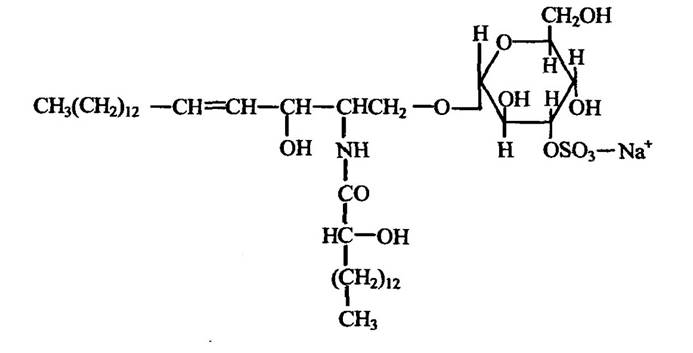
Fig. 8.1. Structure of sulfatide from the duck salt gland
Na+,K+-ATPase activity is highest in tissues whose primary function involves electrolyte transport. It is also present in other body tissues, albeit in smaller amounts. In the intestine, this enzyme transports Na+ across the intestinal wall; in the Kidneys, it participates in Na+ reabsorption; and in Nervous Tissue, it contributes to membrane repolarization following the propagation of an electrical impulse, among other Functions.
In addition to K+, other ions such as NH4+ and H+ may also participate in the Regulation of Na+ concentration.
FEATURES OF ANIMAL ADAPTATION TO WATER SALINITY. To maintain relative ionic constancy in their body fluids, animals must regulate both the uptake and excretion of salts. Organisms capable of this are termed osmoregulators and possess specialized osmoregulatory systems. Conversely, osmoconformers are organisms whose body fluid composition matches that of their surrounding aquatic environment.
Aquatic invertebrates. As a rule, marine invertebrates are osmoconformers, yet the concentration of certain substances dissolved in their body fluids differs from that of seawater. The concentrations of key ions in the blood of several invertebrates are presented in Table 8.8.
Table 8.8
ION CONCENTRATIONS IN SEAWATER AND BODY FLUIDS OF SELECTED MARINE ANIMALS
(after Schmidt-Nielsen, 1982)
Water or organism |
Ions, mmol/kg of water |
|||||
Na+ |
Mg2+ |
Ca2+ |
K+ |
Cl- |
SO42- |
|
Seawater |
478 |
54.3 |
10.5 |
10.1 |
558.4 |
28.8 |
Jellyfish (Aurelia) |
474 |
53.0 |
10.0 |
10.7 |
580 |
15.8 |
Polychaete (Aphrodite) |
476 |
54.0 |
10.5 |
10.5 |
557 |
26.5 |
Sea urchin (Echinus) |
474 |
53.5 |
10.6 |
10.1 |
557 |
28.7 |
Mussel (Mytilus) |
474 |
52.6 |
П,9 |
12.0 |
553 |
28.9 |
Squid (Loligo) |
456 |
55.4 |
10.6 |
22.2 |
578 |
8.1 |
Isopod (Ligia) |
566 |
20.2 |
34.9 |
13.3 |
629 |
4.0 |
Spider crab (Maja) |
488 |
44.1 |
13.6 |
12.4 |
554 |
14.5 |
Green crab (Carcinus) |
531 |
19.5 |
13.3 |
12.3 |
557 |
16.5 |
Lobster (Nephrops) |
541 |
9.3 |
И,9 |
7.8 |
552 |
19.8 |
Hagfish (Мухіпе) |
537 |
18.0 |
5.9 |
9.1 |
542 |
6.3 |
Echinoderms show no significant regulation of ionic content in their body fluids. Cnidarians regulate the concentration of only certain ions; notably, the jellyfish Aurelia regulates sulfate. Among Arthropods capable of rapid movement, blood magnesium levels are low (in the crab Pachygrapsus and the lobster Nephrops), whereas slow-moving species (such as the spider crab Maja) maintain high magnesium concentrations. At the same time, fast-moving species like the cuttlefish Sepia and the scallop Pecten also exhibit high magnesium content in their body fluids. Consequently, there is no direct correlation between the body fluid magnesium content—which can inhibit neuromuscular signal transmission—and the swimming speed of marine invertebrates.
When marine invertebrates are transferred into diluted seawater, some osmoregulators (such as starfish and oysters) match the ionic content of their body fluids to that of the external medium. However, this occurs only within certain limits of seawater dilution. For instance, the shore crab Carcinus cannot survive in brackish water if the salt concentration drops below 30% of normal seawater. Conversely, the Chinese mitten crab Eriocheir tolerates significantly greater dilution and can invade freshwater habitats, though it must return to the sea to reproduce. Echinoderms and cephalopods (squids and octopuses) cannot survive in freshwater.
The prawns Palaemonetes and Leander are hypotonic in seawater—their body fluids have a lower salt concentration than the surrounding environment. Maintaining this state requires active osmoregulation. Such hyporegulation in these prawns likely evolved because their ancestors inhabited freshwater before migrating to the marine environment later on. As a result, they retained a body fluid salt concentration lower than that of seawater.
The water of certain hypersaline bodies contains more salt than regular seawater. Under these conditions, the hyporegulation of salt content by organisms becomes critically important. The brine shrimp Artemia can thrive in water that is 10 times less saline than the ocean, as well as in brine where salt is actively crystallizing (300 g of salt per liter of water). In such concentrated saline solutions, this crustacean remains hypotonic through active osmoregulation.
The larvae of certain mosquitoes, particularly Aedes campestris, can inhabit both fresh and saline water thanks to possessing an active salt-regulation system.
Aquatic vertebrates. Based on osmoregulation, marine vertebrates can be divided into two groups: 1) those in which the salt concentration in body fluids matches or slightly exceeds that of seawater (hagfish, elasmobranchs, the coelacanth Latimeria, the crab-eating frog, etc.); and 2) those in which the body fluid salt concentration is nearly three times lower than that of seawater (lampreys, teleost fish, etc.).
Cyclostomes have an eel-like body shape and include lampreys and hagfish. Lampreys can inhabit both marine and freshwater environments, whereas hagfish are exclusively marine. In hagfish, the salt concentration of body fluids is similar to that of seawater, with sodium levels even slightly higher. Nevertheless, hagfish are capable of ionic regulation. In other marine vertebrates, salt concentrations are lower than those in the environment. Even the sea lamprey Petromyzon marinus is an anadromous organism (from the Greek ana, meaning upward, and dromos, meaning running), migrating from the sea into rivers to spawn.
Almost all elasmobranchs (sharks and rays) are marine animals. They maintain a body fluid salt concentration roughly three times lower than that of seawater while still preserving osmotic equilibrium. This is achieved by accumulating organic solutes in their body fluids, principally urea, which raises the total osmotic concentration of the blood to equal or even slightly exceed that of seawater.
Urea is the end product of Protein METABOLISM in mammals and certain other vertebrates. In mammals, it is excreted in the urine, but in sharks, the kidneys reabsorb urea, allowing it to be retained in the blood.
In addition to urea, the blood of elasmobranchs may contain trimethylamine oxide (Fig. 8.2), a compound commonly found in many marine animals.
Despite their ability to maintain isooسمotic conditions, elasmobranchs can regulate the ionic composition of their body fluids. For example, sodium concentration is maintained at approximately half that of seawater. Excess sodium is eliminated via the kidneys and the rectal gland. The latter opens into the rectum and secretes a fluid with a high concentration of sodium and chloride—exceeding that of seawater.
Certain elasmobranchs can venture into freshwater and even establish permanent residence there. Such animals exhibit low levels of dissolved solutes in their blood, lower even than those found in mammals.
Marine teleost fish, as previously noted, maintain a salt concentration three times lower than that of seawater, making them hypoosmotic. To compensate for osmotic water loss, they drink seawater, which results in the uptake of large amounts of salts. Additionally, seawater enters the teleost body across the gills, with a small fraction penetrating the body surface. Excess salts are eliminated primarily through active Transport Across the gills, as the urine of these fish is typically more dilute than their body fluids. However, the kidneys play a role in excreting magnesium and sulfate ions (Mg2+, SO42-), which account for roughly one-tenth of all salts in seawater. These ions are not excreted via the gills.
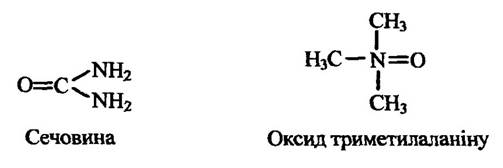
Fig. 8.2. Structure of urea and trimethylamine oxide
In freshwater teleost fish, the salt concentration is higher than that in the surrounding water, which leads to an osmotic influx of water. Excess water is eliminated as urine. Water-soluble solutes are taken up actively across the gills and, presumably, to a minor extent across the body surface.
Teleost fish have a limited capacity to transition between fresh and salt water. However, some species—such as lampreys, eels, and salmon—possess this ability. When moving between freshwater and seawater, these fish reverse not only the direction of osmotic water influx but also The active transport of salts in their gills.
Most amphibians are semiaquatic animals. They lay their eggs in water, and their larvae are aquatic and breathe through gills. Adults transition to pulmonary Respiration. However, certain tailed amphibians retain gill breathing throughout adulthood and remain strictly aquatic.
Almost all amphibians are freshwater animals. In adults, the Skin serves as the primary osmoregulatory organ. When submerged in water, they experience osmotic water uptake, the excess of which is eliminated primarily in the urine. The loss of certain salts along with the excreted water is compensated by active transport of ions across the skin.
One particular frog, the crab-eating frog Rana cancerivora, inhabits marine waters. To maintain the salt concentration of its body fluids, it employs the same strategy as elasmobranchs: it accumulates a high concentration of urea in its body fluids, which is necessary for normal Muscle contraction. Unlike sharks, which reabsorb urea in their kidneys, the crab-eating frog builds up urea by reducing urine volume while in seawater. In crab-eating frog tadpoles, osmoregulation resembles that of teleost fish, with excess salts being actively excreted through the gills.
Fertilization and metamorphosis in the crab-eating frog take place in low-salinity water, specifically in coastal areas diluted by freshwater runoff and rainfall.
Terrestrial animals with moist skin. Water evaporation from the body surface increases with Temperature and occurs more rapidly in dry air than in humid air. The earthworm burrows in soil where the air is saturated with moisture and where its body contacts soil particles coated with a thin film of water.
Adult amphibians with moist skin inhabit areas near water and damp environments where evaporation is minimal. Some species (such as the frog Chiroleptes) have adapted to life even in deserts. They retreat into burrows, spending the entire dry season in estivation. During the rains, these desert frogs emerge from their burrows, restore their normal body water content, and spawn in newly formed temporary water bodies. The tadpoles complete metamorphosis before these pools dry up. When the desert frog prepares for estivation again, its bladder fills with dilute water and urine, which serves as its primary water reserve and is gradually consumed throughout dormancy.
Desert frogs that spend the dry season in burrows are functionally similar in this regard to lungfishes that burrow into mud.
Some frogs do not require a moist environment. The skin of Phyllomedusa contains specialized glands that secrete a waxy substance, which apparently makes the skin waterproof. Chiro- mantis lacks such glands, but this frog's skin is likewise impermeable to water due to its unique structural Organization.
Slugs also possess moist skin from which water can evaporate. Naked slugs inhabit humid environments, with their activity peaking at night following a rainfall. An inactive land slug protects itself against water loss by withdrawing into its shell and sealing the aperture with a dried mucous membrane (epiphragma). This adaptation enables certain slugs (such as Sphincterochila) to thrive in desert habitats. Throughout the arid season, slugs remain in a state of estivation. With the onset of rains, they resume an active lifestyle.
Arthropods. Insects and arachnids (spiders, mites, scorpions, etc.) are predominantly terrestrial animals. Only a few of them have secondarily colonized fresh water. Among arthropods, millipedes (Diplopoda) and centipedes (Chilopoda) are also terrestrial. Unlike arthropods, the majority of crustaceans are aquatic animals, as are merostomes (Xiphosura), represented by the horseshoe crab Limulus.
Most crustaceans inhabit aquatic environments, but some belong to terrestrial animals. Such terrestrial crustaceans live predominantly in humid places and near water. At the same time, certain woodlice are capable of living in deserts.
Terrestrial and semi-terrestrial crabs are capable of hyper- and hyporegulation of their water balance. The land crabs Cardisoma and Gecarcinus can absorb water from sand even when no visible moisture is present. Some terrestrial crabs can submerge themselves in seawater (specifically, Ocypode rotundata). Fiddler crabs (Uca) dig deep burrows on the shore near or above the high-tide line, though they frequently return to the water.
Isopods (woodlice) typically inhabit damp localities. Occasionally they may encounter dry air, resulting in increased water evaporation. To replenish their water supply, they generally feed on moist plant debris. These woodlice are also capable of drinking water and absorbing it through the anus. In addition, the cuticle of woodlice is generally permeable to water.
The desert-dwelling woodlouse Hemilepistus breathes through gills. It digs vertical burrows up to Z0 cm deep, where it spends the hottest hours of the day. Humidity in these burrows reaches 95%. The cuticle of Hemilepistus is somewhat less permeable to water than that of other woodlice, which reduces water evaporation through the body surface.
Insects and arachnids replenish water deficits by drinking, with food, through absorption from water or air across the body surface, and by utilizing metabolic water produced during oxidation processes.
Water intake in animals occurs primarily through drinking. However, in arid habitats, free water is occasionally unavailable. In such cases, animals must obtain water through alternative means. One of these is dietary water. Insects that feed on specific plant parts (leaves, fruits, etc.) receive an adequate amount of water with their food. If water is present in excess within the food, it is eliminated with the excrement.
Insects inhabiting very dry environments (such as the mealworm) extract water from the Contents of the hindgut until the fecal pellets become completely dry.
In certain insects (e.g., cockroaches), excretory products are not eliminated as urine but are stored within the body. In this case, water is not expended on their excretion. One such strategy is the deposition of uric acid in the body, which has low water solubility. In some insects, it is stored in the fat body, while in others, it is deposited in the cuticle. Uric acid is apparently reclaimed from the cuticle, whereas in the fat body, it can serve as a source of metabolic nitrogen.
In aquatic insects, water enters the body mainly through the body surface. Terrestrial insects (such as the desert cockroach Arenivaga) are capable of absorbing water directly from atmospheric air.
Animals inhabiting anhydrous environments obtain the water generated within the body during The oxidation of organic com-
pounds—metabolic water. The amount of water produced during the oxidation of various organic compounds is listed in Table 8.9.
Table 8.9
AMOUNT OF WATER PRODUCED IN THE ORGANISM DURING THE OXIDATION OF CERTAIN ORGANIC COMPOUNDS
Substance |
Water production, gH2O/g substance |
Fat |
1.07 |
Glucose |
0.60 |
Starch |
0.56 |
Protein: |
|
upon urea excretion |
0.39 |
upon uric acid excretion |
0.50 |
Reptiles. The life of crocodiles is permanently linked to water, whereas that of snakes, lizards, and turtles is primarily terrestrial, although aquatic and semi-aquatic forms occur among them. All aquatic reptiles breathe with Lungs. The skin of reptiles is dry and may bear scales. Water evaporation in these animals can occur from the moist surface of the respiratory tract and, in most cases, through the skin as well. For instance, in the grass snake Natrix, nearly 90% of all water evaporates from the body surface, whereas in the desert lizard Sauromalus, it reaches up to 65%.
In addition to Water Loss via evaporation, water is eliminated from the body through urine. In most reptiles, the main end product of protein metabolism is uric acid, which has low solubility, so very little water is required for its excretion. The primary source of water for terrestrial reptiles is food and the metabolic water of oxidation processes. Marine reptiles inhabit salt-enriched water, and a significant portion of their diet contains high salt concentrations. Sea snakes are entirely independent of land. Among sea turtles, only females come ashore to lay eggs. Crocodiles apparently lack truly marine representatives. The saltwater crocodile Crocodylus porosus inhabits brackish water, feeds primarily on fish, and cannot survive for long periods in true seawater.
The kidneys of marine reptiles are incapable of excreting excess salts. This function is performed by specialized salt-glands located in the HEAD. They secrete a fluid heavily enriched primarily with sodium and chloride. Unlike the kidneys, these glands do not function continuously, but rather respond exclusively to a salt load.
In marine lizards, the salt-glands open into the anterior part of the Nasal cavity, and upon a sharp exhalation, the fluid is forcefully expelled from the nostrils as a fine spray.
Sea turtles possess salt-glands located in the orbits of both eyes, whereas in sea snakes, their ducts open into the Oral Cavity, from which the secretion is discharged outward.
Terrestrial reptiles also possess nasal glands that secrete a fluid with a very high salt concentration. A characteristic feature of the salt-glands in terrestrial reptiles is that their secretion depends on The Nature of the salt load: if sodium is in excess, then sodium is excreted outwardly, whereas if potassium is present, potassium appears in the secretion of the salt-glands.
Birds. The primary sources of water for terrestrial birds are drinking water, dietary water, and the metabolic water of oxidation processes. The elimination of excess salts occurs primarily via urine. They also possess salt-excreting glands, though these are small in comparison to those of marine birds.
Quite a few birds live at sea or above it. Many birds inhabit coastal areas. All marine birds feature well-developed paired salt-secreting glands connected to the nasal cavity.
Salt-gland secretions in birds are typically located on the upper surface of the Skull, above the lower eye Orbit, within a shallow bone depression. Unlike the continuous activity of the kidneys, these glands function exclusively in response to excess salt within the body. The salt concentration in the secretions of marine birds varies among different species. For instance, sodium concentration in the secretions of seabirds ranges from 400 to 1100 mmol/L. The fluid secreted by the salt glands of marine birds contains high amounts of sodium and very little potassium.
Mammals. In deserts, free-flowing water appears only during rains, except in oases. Small mammals, particularly rodents, inhabit these arid regions. Their primary source of water intake is food. Dew plays a negligible role as a water source for desert animals. At the same time, some desert rodents feed on dry seeds and other desiccated plant material, receiving minimal amounts of free water. Their main water source is metabolic water, generated through oxidation processes. Furthermore, such animals (with the kangaroo rat being a prime example) are capable of minimizing water loss through urine and feces. As exhaled air passes through the Nose, it is cooled, which reduces respiratory water evaporation.
Representatives of the orders Pinnipedia, Cetacea, and Sirenia (manatees and dugongs) are considered marine mammals in the sense that they spend nearly all their lives in the sea. Pinnipeds briefly return to land to give birth and nurse their young, whereas cetaceans and sirenians even give birth in the water.
The diet of marine mammals varies significantly in its salt content. For example, seals that feed primarily on fish consume little salt yet high amounts of protein. Conversely, the Antarctic crabeater seal and the walrus (which feed mainly on bivalve Mollusks) ingest large quantities of salt with their food. Baleen whales consume salt-rich planktonic invertebrates. If seawater is swallowed along with food, it further increases the salt load. Manatees and dugongs feed on marine plants, which contain high concentrations of salts.
The primary pathway for eliminating excess salt in marine mammals is The excretion of urine that is more concentrated than seawater.
Female mammals nourish their young with milk, which requires a large amount of water. This water loss can be mitigated by concentrating the milk. The milk of seals and whales has a very high fat content and a higher protein concentration than cow's milk. The offspring of these animals must develop rapidly and obtain substantial fat reserves to accumulate subcutaneous insulation. At the same time, the high fat content in seal milk can be viewed as an adaptation to the mother's limited water resources. Seals nurse their pups with minimal water expenditure.
It is well known that seawater is toxic to humans and accelerates dehydration when consumed. Human kidneys are incapable of excreting the quantities of salt present in seawater: the maximum salt concentration in human urine is lower than that in seawater. Additionally, dehydration is exacerbated by the high levels of magnesium and sulfates in seawater, which induce diarrhea and consequently increase water loss.
Last update: 06/08/2026
Editorial and Educational Adaptation: This material has been compiled based on the primary/original source text. The project team performed an editorial review, corrected technical inaccuracies, structured sections, and adapted the content for an educational format.
What was processed:
- elimination of formatting defects (OCR errors, structural breaks, corrupted characters);
- editorial organization of content;
- standardization of terminology in accordance with academic sources;
- verification of factual statements against the original source text.
All mentions of the author, publication year, and origin of the primary text have been preserved in accordance with the source.