Review of Medical Physiology - William F. Ganong 2002
Urine Formation and Excretion
Regulation of the Composition and Volume of Extracellular Fluid
Volume Regulation
The ECF volume depends primarily on the total content of osmotically active solutes in the ECF. The composition of ECF is discussed in Chapter 1. Since Na+ and Cl are the most important osmotically active solutes in ECF, and changes in Cl concentration are largely secondary to Na+ content, it is clear that the Na+ ion is the primary factor determining ECF volume. Consequently, the mechanisms governing Na+ balance are simultaneously the principal mechanisms regulating ECF volume. However, The rate of Water excretion also depends on volume: an expansion of ECF volume inhibits vasopressin secretion, whereas a reduction, conversely, stimulates the release of this hormone. The volume factor plays an even more significant role in regulating vasopressin secretion than osmotic factors. Angiotensin II stimulates the secretion of aldosterone and vasopressin, induces thirst and vasoconstriction, thereby maintaining ARTERIAL Blood PRESSURE Homeostasis. Thus, angiotensin II plays a pivotal role in the body's response to hypovolemia (Fig. 39-2). Furthermore, an increase in ECF volume leads to enhanced secretion of ANP and BNP by The Heart, resulting in diuresis and urinary Na+ excretion (see Chapter 24). In various pathological conditions, fluid loss (dehydration) leads to a minor decrease in ECF volume because fluid shifts from both the intracellular and extracellular compartments. However, the loss of Na+ via stool (diarrhea), urine (severe acidosis, adrenal insufficiency), or sweat (heat stroke) causes a substantial reduction in ECF volume and ultimately leads to Shock. Therapeutic measures to combat shock must focus primarily on restoring intravascular fluid volume (see Chapter 33), though they also impact Na+ balance. In adrenal insufficiency, the reduction in ECF volume occurs not only due to renal Na+ losses but also As a result of Na+ shifting intracellularly (see Chapter 20).
Class="center">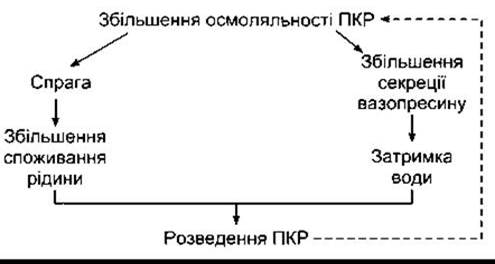
Fig. 39-1. Mechanisms regulating ECF osmotic pressure. Dashed lines indicate inhibitory processes (reproduced with permission from J. Fitzsimmons).
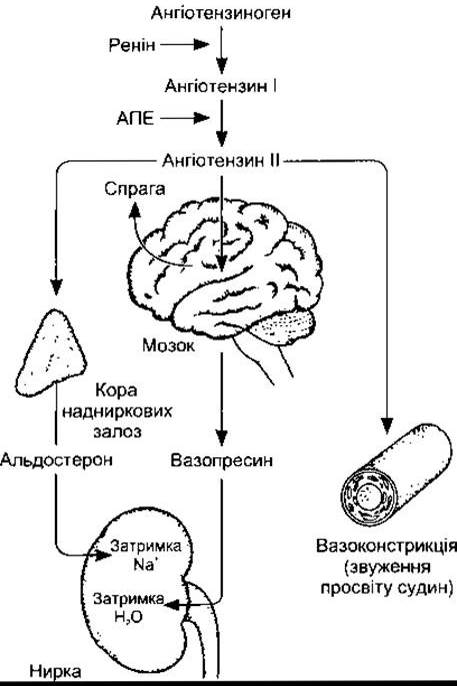
Fig. 39-2. Regulation of ECF volume by angiotensin II; ACE - angiotensin-converting enzyme.
Since Na+ plays a critical role in maintaining ECF volume homeostasis, it is understandable that The excretion of this ion is regulated by numerous mechanisms. Renal filtration and reabsorption of Na+ and their impact on Na+ excretion are discussed in Chapter 38. When ECF volume decreases, arterial blood pressure drops. This leads to a reduction in glomerular capillary pressure, which in turn decreases GFR and, consequently, Na+ filtration. On the other hand, tubular reabsorption of Na+ increases, notably driven by elevated aldosterone secretion. Aldosterone secretion is regulated via feedback mechanisms, such that increased secretion of this hormone is achieved in response to a drop in mean intravascular pressure (see Chapters 20 and 24). Other changes in Na+ excretion occur too rapidly to be driven solely by alterations in aldosterone secretion. For instance, moving from a supine to an upright position triggers increased aldosterone secretion. Yet, Na+ excretion decreases within minutes; this rapid shift in Na+ excretion is also observed in individuals who have undergone adrenalectomy (Adrenal gland removal) for various reasons. The likely causes for this are hemodynamic alterations and reduced ANP secretion.
Last update: 10/08/2026
Editorial and Educational Adaptation: This material has been compiled based on the primary/original source text. The project team performed an editorial review, corrected technical inaccuracies, structured sections, and adapted the content for an educational format.
What was processed:
- elimination of formatting defects (OCR errors, structural breaks, corrupted characters);
- editorial organization of content;
- standardization of terminology in accordance with academic sources;
- verification of factual statements against the original source text.
All mentions of the author, publication year, and origin of the primary text have been preserved in accordance with the source.