Vertebrate Zoology: A Study Guide - T. A. Dauda 2014
Multicellular Organisms
Class Mammalia
The Class Mammalia unites more than 4,000 species of the most highly organized vertebrate animals. The evolutionary advancement of their Organization is manifested in the high Development of the Central Nervous system, particularly the Cerebral Cortex of the Forebrain—the center of Higher Nervous Activity; in adaptation to viviparity and the feeding of offspring with a maternal secretion, milk, which enables these animals to reproduce in A wide variety of living conditions; and in a well-developed capacity for thermoregulation, which determines a relatively constant body Temperature. Fur plays a tremendously important role in regulating heat loss, as does the subcutaneous adipose layer in some species.
In addition to those listed, mammals possess several other characteristic structural features. Among the most important are the following: the presence of a Hair coat (its absence in certain species is secondary); cutaneous glands, among which Mammary Glands are particularly notable; Articulation of the Skull with the spinal Column via two occipital condyles; three auditory ossicles in the Middle ear; a lower jaw consisting of a single dentary bone; typically heterodont, differentiated Teeth (incisors, canines, etc.) set in the alveoli of the jaws; alveolar Lungs; a four-chambered Heart; anucleated erythrocytes; and a thoracic cavity separated from the Abdominal cavity by a Diaphragm.
The high level of general organization has enabled mammals to widely colonize the globe. They are absent only in the central part of Antarctica. They have inhabited the most diverse ecological niches. In addition to terrestrial species, mammals include flying, semi-aquatic, aquatic, and, finally, fossorial (burrowing) inhabitants.
Structural Features of Mammals
The external appearance of mammals varies considerably, depending on environmental conditions and lifestyle. The most common type is that of terrestrial quadrupedal beasts with long limbs positioned beneath the trunk rather than at the sides, as in reptiles. The elbow joint points backward and the knee forward (rather than sideways, as in reptiles). The cervical region is well developed, whereas the tail region, by contrast, represents only a small appendage of the body.
In soil-dwelling inhabitants, the trunk is elongated, and the cervical region is very short and usually externally inconspicuous. The tail and limbs are heavily shortened. Aquatic beasts possess a fish-like body shape and limbs modified into flippers or fins.
Despite differences in the external appearance of representatives from various environments, the mammalian body consists of the same regions, including the HEAD, neck, trunk with two pairs of limbs, and tail. The head bears the oral opening, Lips, eyes, eyelids, external ears, and nostrils. The genital, anal, and urinary openings open onto the trunk.

Fig. 50 Structure of mammalian Skin:
1 — outer layer of the cornified epidermis, the Cells of which are shed periodically; 2 — Deep Layer of the epidermis containing living cells; 3 — true skin (cutis/dermis); 4 — sweat gland; 5 — opening of its duct; 6 — hair; 7 — sebaceous gland; 8 — Blood Vessels; 9 — nerves; 10 — subcutaneous fat deposits.
The integument of mammals consists of two layers: the outer epidermis and the inner cutis (dermis). The epidermis gives rise to numerous skin derivatives, the main ones being hair, Nails, claws, hooves, horns (except for those of deer), scales, and various glands.
The true skin, or cutis, is very well developed in mammals. The lower part of the cutis consists of loose fibrous tissue in which fat is deposited. This layer is known as the subcutaneous adipose tissue (hypodermis). The thickness of mammalian skin is permeated by blood vessels (Fig. 50).
The hair coat, as well as the subcutaneous layer of fat in aquatic mammals (whales, seals), protects the body against excessive heat loss. The network of blood vessels located within the skin plays a major role in thermoregulation. The lumen diameter of these vessels is regulated neuro-reflexively and can vary within very wide limits. When skin vessels dilate, heat loss increases; conversely, when they constrict, heat loss drops sharply. Evaporation of moisture and sweat from the skin surface is also of definite importance in cooling the Organism.
The hair coat of mammals consists of various types of hair. The principal ones are: down hair, or underfur; guard hair, or overhair; and tactile hair, or vibrissae. In most species, The basis of the fur coat is formed by dense, short down or undercoat. Interspersed among the down hairs are longer, thicker, and stiffer guard hairs.
A mammalian hair consists of a shaft projecting above the skin and a ROOT embedded within it. In its lower portion, the root expands and terminates in a bulbous Swelling—the hair bulb—which caps the cutis outgrowth known as the hair papilla. Blood vessels entering this papilla supply nutrients to the Cells of the hair bulb. Hair formation and growth proceed through the development and modification of bulb cells. The hair shaft is a dead cornified structure incapable of growth or shape change.
The hair coat is periodically replaced. This shedding of hair, or molting, occurs in spring and autumn in some beasts, such as the squirrel, fox, arctic fox, and mole. Others, such as susliks (ground squirrels), molt only once a year. In the spring, they shed their old coat, and in the summer, a new one develops, which reaches full maturity only by autumn.
Bristles and spines are modifications of hair. The scales of beasts are similar in Cytology/cytology/67.html">Development and Structure to reptilian scales. Among mammals, scales are developed in only a few forms. Only in pangolins do they cover the entire body. In A number of other beasts, scales are restricted to certain areas of the body—for example, on the feet of many mouse-like rodents, and on the tail of a significant number of marsupials, rodents, and insectivores.
The terminal Phalanges of the digits in the vast majority of beasts bear cornified appendages in the form of nails, claws, and hooves. Climbing mammals have sharp, curved claws on their digits; burrowing mammals typically possess somewhat flattened and widened claws; and large, fast-running mammals have hooves. Hollow horns found in cattle, antelopes, goats, and sheep are also cornified structures. They develop from the epidermis and are anchored to bony cores. Deer antlers, by contrast, develop from the cutis and consist of osseous tissue.
Mammalian skin is rich in various types of glands. The primary ones are sweat, sebaceous, scent, and mammary glands. Sweat Glands secrete sweat, which consists mainly of Water with dissolved urea and salts. These products are not synthesized by the gland cells themselves but are derived from the blood vessels. The function of sweat glands is to cool the body via the evaporation of water released onto the skin surface and to excrete Metabolic waste products.
Sebaceous Glands almost always empty into the hair follicle. The fatty secretion of these glands lubricates the hairs and the superficial epidermal layer of the skin, protecting them against wetting and wear.
Scent glands are modified sweat or sebaceous glands, or sometimes a combination of both. They serve primarily for defense against pursuing predators and are developed in most mammals across various Regions of the body.
Mammary glands originated as modifications of tubular sweat glands. Such glands are found in platypuses, echidnas, and others. In marsupial and placental mammals, mammary glands have a raceme-like (botryoidal) structure. Their ducts open onto nipples (teats). The arrangement of glands and nipples varies. The number of nipples ranges from 2 (the minimum) to 10–24 (the maximum).
The Muscular System is highly differentiated and characterized by the presence of A large number (several hundred) of variously arranged Muscles. A notable feature is the presence of a dome-shaped Muscle—the diaphragm—which separates the thoracic cavity from the abdominal cavity.

Fig. 51 Skeleton of a mammal (rabbit):
1 — cervical vertebrae; 2 — thoracic vertebrae; 3 — lumbar vertebrae; 4 — sacrum; 5 — caudal vertebrae; 6 — Ribs; 7 — Sternum; 8 — scapula; 9 — acromion process; 10 — coracoid process; 11-13 — pelvis; 14 — pelvic outlet; 15 — humerus; 16 — ulna; 17 — radius; 18 — carpus; 19 — metacarpus; 20 — Femur; 21 — Patella; 22 — Tibia; 23 — Fibula; 24 — calcaneus; 25 — talus; 26 — tarsus.
The mammalian skeleton consists of the skull, Vertebral Column, limb girdles, and the Skeleton of the limbs themselves (Fig. 51).
The skull features a relatively large braincase, which is associated with the large size of the brain. The number of individual bones in the mammalian skull is smaller than in lower vertebrate groups due to the fusion of several bones. Sutures between individual bones close relatively late, allowing for the expansion of the cranial cavity as the animal grows. The occipital region is formed by a single Occipital bone, which bears two condyles for articulation with the atlas.
The mammalian vertebral column is composed of vertebrae that typically have flat articular surfaces, with cartilaginous discs (menisci) located between them. The spine is clearly divided into distinct regions: cervical, thoracic, lumbar, sacral, and caudal.
Mammals have 7 cervical vertebrae (with very rare exceptions). Thus, the length of the neck in mammals is determined not by the number of cervical vertebrae, but by the length of their centra.
The thoracic region most commonly consists of 12-15 vertebrae. Typically, the first seven vertebrae articulate with ribs connected to the sternum; these are true ribs. The remaining thoracic vertebrae bear ribs that do not reach the sternum, known as false ribs. The sternum is a bony plate terminating in an elongated Cartilage—the xiphisternum (or xiphoid process).
In the lumbar region of mammals, the number of vertebrae varies from 2 to 9. These are the largest vertebrae in the body. The sacral region generally consists of four fused vertebrae.
The Pectoral Girdle, or shoulder girdle, is structurally simple in mammals. Its primary component is the scapula, to which a rudimentary coracoid is fused. Clavicles are present in mammals whose forelimbs perform diverse, complex movements (e.g., primates). In animals that move their forelimbs primarily in a plane parallel to the body axis, the clavicles are either rudimentary or absent (e.g., ungulates).
The Pelvic Girdle consists of three paired bones characteristic of terrestrial vertebrates: the ilium, ischium, and pubis. In many species, these bones fuse into a single innominate bone. The skeleton of the paired limbs retains all the primary structural Features of the typical pentadactyl limb.
The digestive Organs are notable for their complexity, manifested by a general lengthening of the digestive tract, its greater differentiation, and the advanced development of digestive glands (Fig. 52). The digestive tract begins with the oral vestibule, located between the fleshy lips, Cheeks, and jaws. The Oral Cavity lies behind the jaws. The ducts of four pairs of Salivary Glands open into this cavity.

Fig. 52 Internal anatomy of a mammal (rabbit):
1 — Esophagus; 2 — Stomach; 3 — Liver; 4 — Pancreas;
5 — Small Intestine; 6 — cecum; 7 — vermiform Appendix; 8 — Large Intestine; 9 — rectum; 10 — anus; 11 — Spleen; 12 — Trachea; 13 — lungs; 14 — heart; 15 — aorta; 16-18 — Subclavian Artery; 19 — External Jugular Vein; 20 — posterior vena cava; 21 — diaphragm; 22 — Kidneys; 23 — Urinary Bladder; 24 — Ovaries; 25 — oviducts; 26 — Uterus; 27 — Vagina; 28 — urogenital sinus; 29 — urethral orifice; 30 — gall bladder.
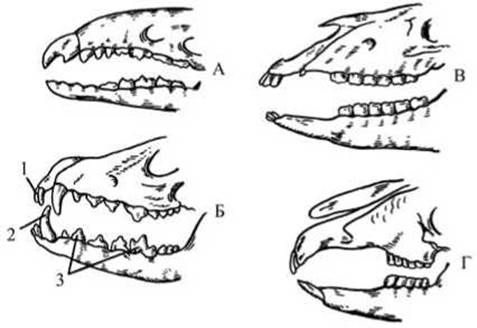
Fig. 53 Dentition in various mammals:
A — insectivore (shrew); B — carnivore (dog); C — perissodactyl (horse); D — lagomorph (rabbit); 1 — incisors; 2 — canines; 3 — premolars and molars.
Teeth are located on the jaws, set within sockets (alveoli) of the jaw bones. They are differentiated into canines, incisors, premolars (false molars), and true molars. The structure and shape of the teeth are closely correlated with the animal's diet (Fig. 53).
Incisors are most commonly chisel-shaped, while canines are conical. In carnivores, the cheek teeth are laterally compressed and cusp-pointed, whereas in herbivores they feature a flattened surface with enamel folds of various configurations or blunt cusps, which facilitates the grinding of food.
The total number of teeth and their distribution among groups for each mammalian species are quite specific and are expressed by a dental formula. Taking into account the symmetrical arrangement of teeth, their number in the upper and lower jaws is recorded for one side only. Incisors (incisivi) are designated by the letter "i", canines (canini) by "c", premolars (praemolares) by "pm", and true molars (molares) by "m". For example, the dental formula of a pig is: i 3/3, c 1/1, pm 4/4, m 3/3 = 11 / 11 2 = 44.

Fig. 54 Stomach structure in various mammals:
A — dog; B — rat; C — mouse; D — camel; E — cow; A-C — simple stomach; D, E — complex stomach; 1 — rumen; 2 — reticulum; 3 — omasum; 4 — abomasum.
The muscular Tongue is located between the rami of the lower jaw. The Pharynx lies posterior to the oral cavity. On its ventral surface is an opening leading to the Larynx. The pharynx transitions into a well-defined esophagus, which opens into The Stomach. The stomach walls contain glands that secrete gastric juice, which primarily acts upon dietary Proteins. In most mammals, the stomach is simple (single-chambered), but some animals (such as ruminants) possess multi-chambered stomachs consisting of four compartments: the rumen, reticulum, omasum, and abomasum (Fig. 54). Food moistened with saliva, but poorly chewed, enters the rumen, where it swells, softens, and undergoes Fermentation driven by numerous Protozoa and Bacteria. From the rumen, the food mass passes via peristaltic movements into the reticulum. From there, through regurgitation, it returns to the Mouth, where it is further ground by the teeth and thoroughly mixed with saliva.
The resulting mass is swallowed a second time and enters the omasum, between the leaves of which it undergoes further Processing and partial dehydration. Next, the food passes into the abomasum, where it is finally digested.
The intestine itself is divided into the small, large, and rectum sections. The cecum is located at the border of the small and large intestines. The Liver and pancreas are well developed.
The main respiratory organ of mammals is the lungs. Only 1% of oxygen is absorbed through the skin. Mammals are characterized by a more complex upper larynx, which forms the vocal apparatus. The Trachea and Bronchi are well developed. The smallest branches—bronchioles—terminate in honeycomb-like air sacs called alveoli (Fig. 55). Blood vessels, or capillaries, branch within them. The Development of alveoli creates a huge surface area for gas exchange.
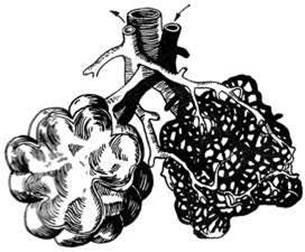
Fig. 55 Structure of pulmonary alveoli (right: a dissected alveolus with a capillary network)
The breathing mechanism in mammals is twofold. In so-called costal Respiration, the volume of the chest cavity changes through the action of the intercostal muscles; in diaphragmatic respiration, this same volume changes as the muscular thoracoabdominal partition—the diaphragm—moves up and down. Both mechanisms function in various combinations in all mammals.
The mammalian heart is four-chambered. The Circulatory system OF mammals, as in birds, features completely separated SYSTEMIC AND PULMONARY circuits. A single left aortic arch extends from the left ventricle of the four-chambered heart. The dorsal aorta, a continuation of the left arch, branches into vessels supplying the muscles and Internal Organs (Fig. 56).
Hematopoietic organs are specialized. The Bone Marrow produces erythrocytes, granulocytes, and platelets; the spleen and Lymph Nodes produce lymphocytes; the reticuloendothelial system produces monocytes.
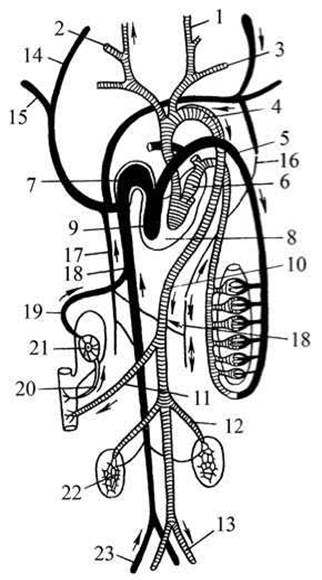
Fig. 56 Diagram of the mammalian circulatory system:
1 — External Carotid Artery; 2 — Internal Carotid Artery; 3 — subclavian artery; 4 — aortic arch; 5 — pulmonary artery; 6 — left atrium; 7 — right atrium; 8 — left ventricle of The Heart; 9 — right ventricle of the heart; 10 — dorsal aorta; 11 — celiac artery; 12 — renal artery; 13 — iliac artery; 14 — jugular vein; 15 — subclavian vein; 16 — left hemiazygos vein; 17 — right azygos vein; 18 — posterior vena cava; 19 — hepatic vein; 20 — HEPATIC PORTAL VEIN; 21 — liver; 22 — kidneys; 23 — iliac vein.
The small erythrocytes of mammals are nucleated, which increases the efficiency of Oxygen transport, as they consume 9–13 times less oxygen for their own respiration than bird erythrocytes and 17–19 times less than amphibian erythrocytes. The blood volume in mammals is close to that of birds. The relative heart size is larger in more active mammals. The heart rate per minute is 600 in mice, 140 in dogs, and 24 in bulls and elephants.

Fig. 57 Mammalian brain:
A — rabbit; B — chimpanzee; 1 — cerebral hemispheres; 2 — olfactory lobes; 3 — Pineal Gland; 4 — Midbrain; 5 — Cerebellum; 6 — Medulla Oblongata; 7 — cerebral convolutions (sulci and gyri).
The mammalian brain is large (Fig. 57). Its increased volume is associated with the expansion of the CEREBRAL CORTEX AND the cerebellum. In most species, the cerebral cortex is covered with numerous sulci and gyri that increase its surface area. The cerebellum is differentiated into several sections, which is associated with the highly complex nature of mammalian locomotion.
In mammals, the organs of Touch, smell, Vision, and hearing are well developed, though to varying degrees across different species.
Among the Senses, vision takes precedence in inhabitants of open spaces, whereas smell and hearing are paramount for nocturnal and crepuscular animals living in forest and shrub biotopes.
Mammalian Olfaction is more efficient than that of other terrestrial vertebrates. The olfactory organs are located in the upper posterior part of the Nasal cavity and have a complex structure.
Hearing plays a vital role in the life of mammals. This is reflected in the complex STRUCTURE OF THE vocal apparatus, which produces a wide variety of sounds. Hearing and acoustic signaling mediate critical life activities: searching for food, detecting danger, recognizing members of one's own and other species, parent-offspring interactions, and much more.

Fig. 58 Diagram of The structure of the mammalian organ of Hearing and Equilibrium:
1 — utricle; 2 — semicircular canal; 3 — endolymphatic duct; 4 — saccule; 5 — cochlea; 6 — perilymphatic space; 7 — round window; 8 — middle ear cavity; 9 — Eustachian tube; 10 — stapes; 11 — incus; 12 — malleus; 13 — tympanic membrane; 14 — external auditory meatus; 15 — external auditory pore; 16 — auricle (pinna); 17 — petrous bone; 18 — squamous bone.
The mammalian Organ of Hearing consists of three parts: the outer, middle, and Inner ear (Fig. 58). The outer
ear (pinna) and the external auditory meatus act as an acoustic filter-antenna capable of selecting and amplifying sounds biologically important to the species while dampening Background noise.
The same function is performed by the middle ear, where three auditory ossicles (the malleus, incus, and stapes) form a lever system that transmits the vibrations of the tympanic membrane to the membrane of the inner ear.
Vision is one of the primary senses in mammals (Fig. 59). Many mammals have The ability to distinguish colors, though presumably less acutely than birds. At the same time, mammals readily recognize the shapes of objects or their parts, as well as movement, posture, and facial expressions.

Fig. 59 Diagram of the mammalian eye structure:
1 — visual axis; 2 — cornea; 3 — iris; 4 — ciliary muscle; 5 — lens; 6 — vitreous body; 7 — retina; 8 — ora serrata; 9 — pigmented layer; 10 — choroid; 11 — sclera; 12 — macula lutea; 13 — Optic nerve.
Cutaneous sensitivity in mammals is mediated by heat and cold receptors (thermoreception), as well as pressure and touch receptors (tactile sensation). On areas of the body that frequently come into contact with the environment, mammals possess especially long and stiff hairs known as vibrissae; these are particularly well-developed on the muzzle.
The excretory organs are represented by bean-shaped metanephric kidneys located in the lumbar region of the body cavity. Each Kidney consists of two layers: an outer cortical layer and an inner medullar layer. The removal of excess water and metabolic waste from the blood occurs in Bowman's capsules, which enclose capillary glomeruli. From Bowman's capsules, waste products pass through convoluted tubules located in the renal cortex into the renal pelvis, and from there via the Ureters into the urinary bladder and out of the body.
The reproductive organs of mammals are more complex than those of other amniotes. They are located in the posterior part of the abdominal cavity or have descended into the Scrotum—a cutaneous pouch communicating with the body cavity via the Inguinal Canal. The Male Reproductive System begins with paired Testes. The sperm they produce is transported out of the body through the vas deferens via the copulatory organ. The Seminal Vesicles and Prostate Gland secrete fluid that forms the liquid portion of the ejaculate and activates the spermatozoa. The FEMALE REPRODUCTIVE ORGANS comprise paired ovaries, oviducts with Fallopian tubes, the uterus, and the vagina.
Fertilization in mammals is internal. Most species are viviparous; only egg-laying monotremes lay eggs. In marsupials, the young are born underdeveloped, and their subsequent GROWTH AND DEVELOPMENT take place in the mother's pouch. In all other mammals, the embryo receives nutrients and oxygen from the maternal organism through a specialized organ—the Placenta. It is formed from the embryonic membranes and the uterine mucosa. Within the placenta, the Blood vessels of the offspring and the mother intertwine closely without fusing, thereby establishing a functional connection between the embryonic and maternal circulatory systems.
Mammals exhibit a high degree of parental care throughout all stages of offspring development. They are characterized by intrauterine development, during which the embryo grows at the expense of the mother's bodily resources, supplied via the placenta. In all mammals, the material connection with the mother does not cease at birth, as the offspring is nourished by her milk. The bonds between parents and offspring generally persist for some time even after weaning, which enables the training of the young—the transmission of the parents' accumulated individual experience to the next generation.
Animal behavior. A highly organized nervous system and well-developed Sense Organs provide for the complex behavior characteristic of most mammals. They stand out among other animals for their rich working memory; consequently, the adaptive nature of complex mammalian behavior is enhanced by so-called imprinting. Imprinting is a stable, typically lifelong effect of early childhood "impressions" on all subsequent behavior, serving to fine-tune and adapt the organism's functional systems to the specific conditions of its habitat. Therefore, mammalian nervous activity is distinguished by a high degree of plasticity, a rich and complex array of environmental interactions, and a subtle adaptation to local conditions.
The Significance of mammals. In terrestrial and marine biocenoses across virtually the entire globe, mammals occupy ecological niches as both primary consumers of plant matter and carnivores. The stability of these biocenoses is closely linked to mammalian activity.
Mammals are also of great importance to humanity, encompassing numerous and diverse beneficial species. Among long-domesticated animals, they account for over 60% (15 species). To these should be added fur-bearing animals raised in captivity, as well as numerous laboratory animals (rats, mice, guinea pigs, etc.). Breeding in captivity is accompanied by the DEVELOPMENT OF NEW breeds. To improve existing breeds and obtain new ones, Hybridization of domestic animals with wild species is employed. Game and fur-harvesting animals yield substantial revenues. The harvesting of sable, marten, squirrel, arctic fox, red fox, and other fur-bearing animals, combined with the captive breeding of the most valuable fur species, meets the nation's demand for furs. Wild ungulates serve as an essential source of meat and hides (reindeer, moose, saiga antelope). Marine mammal hunting (fur seals, seals, whales) occupies a distinct and significant place.
The list of harmful mammals includes predators that attack livestock and humans, pests of forests and agricultural crops, and reservoirs and vectors of diseases affecting humans and domestic animals.
The class Mammalia is divided into two subclasses: Prototheria and Theria, which comprise 19 extant orders. The Phylogenetic relationships among placental mammal orders remain insufficiently clarified. The Order Insectivora is closest to the ancestral forms, having given rise to dermopterans, chiropterans, primates, xenarthrans, pangolins, and possibly rodents and lagomorphs.
Last update: 13/08/2026
Editorial and Educational Adaptation: This material has been compiled based on the primary/original source text. The project team performed an editorial review, corrected technical inaccuracies, structured sections, and adapted the content for an educational format.
What was processed:
- elimination of formatting defects (OCR errors, structural breaks, corrupted characters);
- editorial organization of content;
- standardization of terminology in accordance with academic sources;
- verification of factual statements against the original source text.
All mentions of the author, publication year, and origin of the primary text have been preserved in accordance with the source.