MEDICAL BOTANY - A.G. Serbin - 2003
SECTION 1. ANATOMY
THE PLANT CELL
Protoplast Metabolic Products
Cell wall
The Cell wall, or wall, of a plant cell limits and protects the protoplast, and participates in the uptake, transport, and secretion of substances. In a dividing cell, a cell plate is formed first, which turns into the middle lamella, and then the primary wall is formed. It is thin and elastic, consisting mainly of pectic substances (calcium and magnesium pectates), Cellulose, and hemicelluloses. As certain Cells grow and specialize, their wall thickens through apposition and The formation of a secondary wall. It may remain cellulosic and elastic, or undergo chemical changes, lose elasticity, and acquire additional properties. As a result, the cell wall consists of Primary and secondary walls. The structural and supporting units of the secondary cell wall are cellulose molecules grouped into chains called micelles (Fig. 1.4). Micelle bundles form microfibrils, which are assembled into fibrous fibrils. The orientation of the fibers in each fibril layer is perpendicular to the preceding one, imparting exceptional strength to the wall. The spaces between micelles are filled with a plastic matrix composed of polysaccharide substances — pectates and hemicelluloses.
Class="center">Fig. 1.4. Structure OF THE cell wall: 1 — middle lamella; 2 — pit canal; 3 — secondary three-layered cell wall; 4 — primary cell wall; 5 — fibril; 6 — microfibril; 7 — micelle; 8 — cellulose molecules; 9 — structural and spatial model of the cellulose molecule

Cellulose, or plant fiber (С6Н10О5)n, is a polymer highly resistant to alkalis, acids, and Enzymes, consisting of β-D-glucopyranose residues. Cellulose is insoluble in Water and ordinary Solvents, but it decomposes in an ammoniacal solution of copper hydroxide (Schweitzer's reagent) and in a concentrated zinc chloride solution. When heated with mineral acids, cellulose undergoes stepwise Hydrolysis to form amyloid, cellobiose, and glucose.
In Microscopy, Specific Reagents for cellulose include chlorophenol iodine (or chlor-zinc-iodine solution), which stains the walls blue or violet, and acid fuchsin, which turns them red.
Animal organisms lack enzymes that hydrolyze cellulose, and its breakdown is carried out solely by Microorganisms in the Large Intestine. Although cellulose is not assimilated by the animal Organism, it is a necessary dietary component.
The raw Materials for obtaining cellulose include wood, agricultural industrial waste, certain grasses, and Algae. Cellulose is used in The production of paper, cardboard, dressings, collodion, pyroxylin explosives, artificial fibers, and cellophane. Through acid hydrolysis of cellulose (e.g., from cotton), microcrystalline cellulose is obtained, which is used as a filler for tablets and emulsions, as a stabilizer, catalyst, extraction accelerator, clarifying agent for plant juices, and more. Cellulose and its derivatives serve as raw materials for the food and pharmaceutical industries. Cellulose-based preparations normalize Digestion, ensure the adsorption of substances, and inactivate toxins.
Pectic substances, or Pectins, are Polysaccharides based on polygalacturonic (pectic) acid. Upon interaction with water, pectins form gels, and when combined with sucrose in the presence of organic acids, they form jellies. The hydrophilic colloids of cell walls and intercellular spaces retain water, thereby ensuring cellular turgor. Pectic substances include insoluble protopectins (part of primary walls and intercellular substance), soluble pectic acids and their salts (pectinates), as well as pectic acids and their salts (pectates). The pectic substances of the middle lamellae cement cells together, cushioning their mutual pressure without hindering cell growth. The breakdown of the intercellular substance leading to cell Separation is called maceration. It occurs naturally when protopectin turns into pectin during the ripening of succulent fruits. Artificial maceration is induced by boiling objects in alkalis or Schulze's mixture (nitric acid with potassium chlorate).
On an industrial scale, pectic substances are obtained from fruits (apples, grapes, citrus fruits), vegetables (beets, carrots), and algae (Fucus, Laminaria). Pectins are used in the food industry to make jellies, marmalade, marshmallows, and other confections. In pharmacy, they serve as an ointment base, emulsifier, stabilizer, component that prolongs the action of active substances, and a binder of toxins and radionuclides. Some pectic substances exhibit anti-ulcer properties.
Hemicellulose, or hemicellulose complex, is a group of polysaccharides including xylans, arabinans, galactans, and Mannans. The cell can utilize them as nutrients. Hemicelluloses are readily soluble in alkalis and easily hydrolyzed by acid solutions. The hydrolysis of hemicelluloses yields D-galactose, D-xylose, D-arabinose, uronic acids, D-mannose, and D-glucose. Significant amounts (up to 30%) of hemicellulose are found in the lignified parts of plants (corn cob cores, cereal straw).
All cell wall polysaccharides are used in the production of culinary and confectionery products, improve METABOLISM and gastrointestinal function, and help eliminate heavy Metal Ions from the body. Dietary fibers, which include a complex of cellulose, pectic substances, hemicelluloses, inulin, Lignin, and Gums, are part of food products, biosorbents, and dietary supplements. Plant fibers normalize bowel motility and microflora, suppress appetite, reduce intestinal fat absorption, and lower Blood Cholesterol levels, among other benefits.
The incorporation of Mineral Substances and other chemical modifiers into the cell wall leads to secondary changes in its chemical, mechanical, plastic, and other properties.
Lignification is the impregnation of the cell wall with lignin. This phenolic substance is yellow, insoluble in water and ordinary solvents, and possesses antiseptic and preserving properties. Lignification leads to the death of the protoplast, reduces cell wall elasticity, increases hardness, strength, and durability, and fixes its shape. Lignin is detected using qualitative micro-reactions: aniline sulfate stains lignified walls yellow, while phloroglucinol with Hydrochloric acid produces a pink coloration.
Suberization is the impregnation of the cell wall with suberin, a high-molecular-weight lipid-like substance. In this process, cells die, lose their elasticity, become impermeable to water and gases, resistant to decay, and insoluble even in sulfuric acid. A qualitative confirmation of suberin presence is the pink-orange staining of the wall with Sudan III or Sudan IV. A concentrated solution of potassium hydroxide causes suberized walls to yellow and swell.
Cutinization is The process of secreting cutin, a lipid-like substance, into the outer wall of epidermal cells, as well as the formation of an outer wax-like layer called the cuticle. Cutinized cells are living; their walls are poorly permeable to water and gases, providing reliable protection against overheating, hypothermia, penetration of microorganisms, etc. Like suberin, cutin turns pink-orange upon Treatment with Sudan III and Sudan IV. A chlor-zinc-iodine solution stains the cuticle yellow.
Mineralization of the cell wall is caused by amorphous or crystalline mineral substances, most commonly silica (in the stems and leaves of grasses, sedges, and horsetails), and occasionally carbonates. Mineralized walls become hard and rigid, yet brittle and fragile. Silica in the wall can be detected using phenol, which produces a pink coloration, as well as by examining the siliceous Skeleton remaining after incineration.
Mucilaginization is a process associated with the isomeric transformations of wall polysaccharides, leading to the formation of mucus. Mucilaginization is characteristic of ROOT hairs and the seed epidermis of certain plants (flax, mustard, plantain, quince), which AIDS in moisture retention, thermal protection, and anchoring in the substrate. In underground Organs (marshmallow), leaves (aloe), and fruits (persimmon), mucilages are stored as nutrient reserves.
In medicine, medicinal plant mucilages are used as enveloping, emollient, laxative, expectorant, anti-inflammatory, and analgesic agents.
Qualitative detection of mucilages is performed using India ink, as mucilage cells remain bright against a dark Background. Methylene blue, which imparts a light blue or dark blue color, is also used.
Gummosis, or gum flow, is a pathological post-traumatic mucilaginization of wood or pith cells, in which the cell walls and contents are transformed into gums. These are complex polysaccharides containing calcium and magnesium salts of uronic acids and esterified neutral Monosaccharides. They vary in solubility and acidity, appearing as sticky, transparent, yellowish exudates on the trunks and branches of trees (apricot, plum, cherry, tragacanth astragalus).
Gums are used as emulsifiers and enveloping agents, help soothe Skin irritation, and prolong the Introduction/43.html">Action of Certain BIOLOGICALLY ACTIVE SUBSTANCES. They are widely applied in the food industry as well as in pharmacy to increase viscosity, stickiness, thickness, and stability of various dosage forms and preparations.
As a rule, vegetative cell walls thicken inward, whereas the walls of spores and pollen grains grow outward to form spines, ridges, etc. (Fig. 1.5).
Fig. 1.5. Cell wall thickenings: 1, 2, 3 — internal thickenings in stone cells, bast fibers, and vessels; 4, 5 — external thickenings of spore and pollen walls

Primary cell walls usually thicken unevenly, and there are always thin, unthickened areas known as pits (Fig. 1.6) or through-holes called perforations. Depending on their FORMATION AND STRUCTURE, pits can be simple or branched (complex). Simple pits, consisting of a pit aperture and a pit canal, include straight, oblique, slit-like, and branched pits. Bordered and half-bordered pits of conducting Tissues have a more complex structure (Fig. 1.6). Plasmodesmata—ultrathin cytoplasmic strands that connect cell protoplasts and facilitate metabolism—pass through the wall pits, which always align in adjacent cells.
Fig. 1.6. Different types of pits in cell walls: A — pair of straight pits; B, C — pair of bordered pits; D — half-bordered pits (combination of a straight and a bordered pit); 1 — middle lamella; 2 — primary wall; 3 — secondary wall; 4 — closing membrane of the pit with pit fields; 5 — aperture or pit opening; 6 — pit canal or chamber; E, F, G — straight pits in the cell walls of chamomile achenes, iris root bark, and the inner epidermis of sweet pepper pericarp; H — slit-like and branched pits in stone cells of pear fruit pulp; I — bordered pits in tracheids and vessels (surface view and in section)

Cell Inclusions
These are substances temporarily removed from metabolic processes or final products of metabolism. They can be solid or liquid, located in vacuoles or in the Cytoplasm. Solid or crystalline inclusions are subdivided into reserve inclusions (starch and aleurone grains) and excretory ones—waste end-products (crystals of oxalates, carbonates, silicates, etc.). Liquid inclusions include soluble CARBOHYDRATES of the vacuolar cell sap (mono-, di-, and polysaccharides), fats, Essential Oils, Alkaloids, Glycosides, polyphenols, and other biologically active substances.
Reserve Inclusions
As reserve or storage substances, plants accumulate compounds that release a significant amount of energy upon breaking down into simple, soluble, readily utilized compounds. Such substances include carbohydrates, Proteins, and fats.
Carbohydrates. Starch (С6Н12О5)n is the most widespread reserve substance in the plant world. It forms and is stored in Plastids as colorless solid grains of various shapes, ranging from 2 to 25 µm in size. Upon reaction with iodine-containing reagents, starch grains turn dark violet.
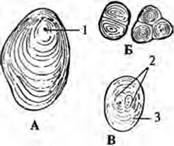
Depending on the mode of formation, Two Types of starch are distinguished: primary (or assimilation) starch and secondary starch. Primary starch is formed during Photosynthesis in Chloroplasts, exists temporarily, and is hydrolyzed by the enzyme diastase into glucose, which is transported to all PARTS OF THE plant. Secondary starch is synthesized from the hydrolysis products of primary starch. It is subdivided into transitory, reserve, and protected starch. Transitory (or transitional) starch is formed and broken down along the PATHWAYS OF GLUCOSE solution transport. Protected starch accumulates in the root cap and endodermis, contributing to organ growth and tropism; its amount remains more or less constant. Reserve starch is deposited in the amyloplasts of storage tissues in roots, rhizomes, tubers, fruits, and seeds, and to a lesser extent in other organs. Reserve starch grains are formed by establishing a formation center and layering dense, dark daytime layers and hydrated, light nighttime layers of starch around it (Fig. 1.7). Starch grains can be concentric (where the formation and geometric centers coincide) or eccentric (where the formation center is displaced); simple (with a single center), compound (with multiple centers and stratification around them); semi-compound (with multiple centers having both individual and common layers); and compound-semi-compound (a combination of simple and semi-compound grains).
Fig. 1.7. Potato starch grains: A — simple eccentric; B — compound; C — semi-compound; 1 — formation center; 2 — individual starch layers (dark — daytime, light — nighttime); 3 — common starch layers
The shape, size, grain type, nature of stratification and formation center, and the number of grainlets in a compound grain are species-specific plant traits (Fig. 1.8, A).
Fig. 1.8. Plant cell reserve products: A — starch grains of: 1 — wheat; 2 — buckwheat; 3 — arrowroot; 4 — corn; 5 — oats; 6 — rice; 7 — bean; 8 — spurge; 9 — mango; B — inulin spherocrystals; C, D — simple and compound aleurone grains: 10 — protein coat; 11 — amorphous protein; 12 — globoid; 13 — crystalloid
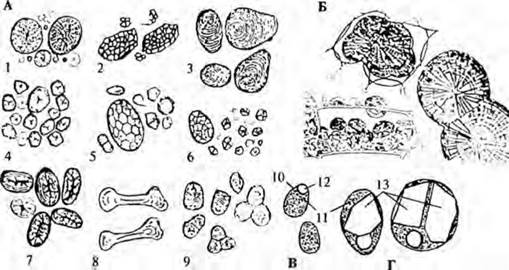
Inulin (С6Н10О5)n is a soluble polysaccharide that breaks down into fructose within the plant. It is stored in the cell sap of certain plants instead of or alongside starch, serving as an osmoregulator and antifreeze. Iodine-containing reagents do not stain inulin. It is detected by a violet coloration with α-naphthol or the action of 96% ethanol, which results in the formation of spherocrystals (Fig. 1.8, B).
In industry, inulin is extracted from elecampane, echinacea, dandelion, chicory, burdock, Jerusalem artichoke, and other Asteraceae. It is used to normalize carbohydrate and Lipid Metabolism and immune status, and as an enterosorbent. Inulin is a component of Dietary Supplements and exhibits bifidogenic activity.
Glycogen (animal starch) (С6Н10О5)n is a reserve substance found in the cells of Fungi, cyanobacteria, and animals.
Proteins serving as reserve products should not be confused with complex constitutional proteins that form part of Biological Membranes, hyaloplasm, and nucleoplasm. Simple, soluble proteins (proteins proper) are stored by The Cell as crystalline hydrates or amorphous substances in the hyaloplasm and plastids. They also form aleurone grains (Fig. 1.8, C), which are dehydrated vacuoles rich in proteins. Based on their structure, aleurone or protein grains are divided into simple and compound ones. Simple aleurone grains consist of a protein coat and amorphous protein, occasionally including a globoid—a calcium-magnesium salt of phosphoric acid. In compound aleurone grains, a protein crystal hydrate (crystalloid) is formed in addition. The ability to form crystalloids within an aleurone grain is characteristic of certain taxa (castor bean, flax, poppy, pumpkin, etc.). Reserve Proteins are most abundant in the nutritive tissues of seeds (endosperm, perisperm), the seed embryo, certain fruits, and less commonly in underground organs and other plant parts.
Fats belong to the non-constitutional, reserve components of PLANT CELLS AND are liquid substances, which is why they are called fatty oils (with the exception of solid fats from the cacao tree and coconut palm). Chemically, plant oils are triglycerides of high-molecular-weight Fatty acids. They typically accumulate in the spherosomes of the hyaloplasm as lipid droplets or are synthesized in oleoplasts. Fats are the most energy-dense reserve substances. Unlike essential oils, they are much less aromatic, non-volatile, leave greasy spots on paper, and are saponified by alkalis. Like other fat-like substances, fatty oil droplets stain pinkish-orange with Sudan III.
Excretory Inclusions (Waste Products)
Calcium oxalate crystals are crystalline hydrates of the calcium salt of oxalic acid (СаС2O4 • nН2O). This is the most universal end-product generated through metabolic processes. Crystals accumulate in vacuoles and exhibit specific shapes depending on the number of crystallization water molecules (Fig. 1.9).
Fig. 1.9. Types of calcium oxalate crystals: A — solitary; B — twin, or crossed; C — druses; D — raphides; E — styloid; F — crystal sand

Solitary crystals (monohydrates) typically occur as rhombohedrons, octahedrons, or prisms. Druses (dihydrates) are star-shaped clusters of pyramidal crystals. Certain plants form Rosanoff druses, which are connected to the cell wall by cytoplasmic strands. Rraphides (dihydrates) are needle-like crystals bundled inside specialized, enlarged idioblast cells. When these cells are damaged, the raphides break apart and are expelled. Raphides are most commonly found in monocots. Styloids (dihydrates) are elongated, narrow, prismatic crystals with pointed ends, more characteristic of monocots than dicots. Typically, a single crystal occupies a narrow idioblast cell. Crystal sand refers to microscopic crystals that fill the cavity of an idioblast or a crystal-bearing sac (such as in the leaves of belladonna, tomato, and elderberry).
Waste products accumulate in plant organs and tissues that are periodically shed or discarded, such as leaves, bark, pericarp, and seed coats. As cells age, the crystal content generally increases.
Specific plant species are characterized by distinct forms of calcium oxalate crystals. This serves as an important diagnostic feature in the microscopic analysis of plants and herbal medicinal raw materials.
A cystolith is an internal outgrowth of the lithocyst cell wall, consisting of a cellulosic stalk and a body composed of calcium carbonate crystal hydrates or silica. The body of a cystolith is typically botryoid, club-shaped, or tuberculate, with a rounded, oval, or elongated shape (Fig. 1.10).
Fig. 1.10. Cystoliths in leaves: A — ficus; B — nettle; C — mulberry; D — fig; E — hop; F — hemp: 1 — cystolith stalk (cell wall outgrowth); 2 — cystolith body (СаСО3); 3 — lithocyst cell; 4 — epidermal trichomes with a cystolith

The presence of cystoliths, their localization sites, shape, dimensions, and structural composition serve as key diagnostic and taxonomic features.
Vacuoles
A vacuole is a space within the cytoplasm, separated from it by the tonoplast and filled with cell sap. Young cells typically possess dense cytoplasm devoid of vacuoles; however, as they grow, numerous small cavities emerge between the layers of The Endoplasmic reticulum. These cavities are formed through THE CONTRIBUTION OF dictyosomes, Golgi vesicles, cisternae, and agranular vesicles of the endoplasmic reticulum. In mature cells, these vacuoles fuse into a single central vacuole that displaces the protoplast toward the cell wall.
The cell sap contained within vacuoles is synthesized by the cytoplasm. It is more viscous than water and lacks any internal structure, making it optically homogeneous. The composition and concentration of cell sap vary depending on cell age, type, function, physiological state, environmental conditions, and plant species. Cell sap consists of approximately 90% water, in which various mineral and Organic compounds are dissolved: carbohydrates (sugars, polysaccharides, mucilages, gums), organic acids (citric, malic, oxalic, succinic, etc.) and their salts, Amino Acids, proteins, pigments (anthocyanins, anthochlor, Flavonoids), glycosides, Tannins, alkaloids, Vitamins, saponins, and others. These substances exist as true or colloidal solutions, or less frequently as structured inclusions (aleurone grains, calcium oxalate crystal hydrates) or droplets (essential oils). Mineral acid salts are dissociated into ions. Salts of organic acids and mineral ions play a crucial role in the osmotic processes of the cell. Several compounds in the cell sap interact with Dyes, facilitating their visualization in micropreparations. The reaction of the cell sap is slightly acidic or neutral, and rarely alkaline.
Mineral substances act as factors that alter the physicochemical state of colloids, thereby directly influencing the internal architecture of the cell. Metals and non-metals exert both toxic and antitoxic effects on living tissues and organs, function as catalysts for biochemical reactions, and play a role in maintaining cell turgor and permeability. They serve as centers of electrical and radioactive phenomena within the cell. The physiological importance of mineral elements, particularly micro- and ultramicronutrients (Мn, Fе, Со, Сu, В, А1, V, Мо, I), stems from their incorporation into highly active complex compounds known as chelates, which participate in plant metabolism. For normal vital activity, a plant requires 19 essential nutrient elements, 16 of which are minerals. Sulfur, potassium, iron, manganese, copper, molybdenum, and cobalt are constituent parts of enzymes or Coenzymes. Molybdenum and cobalt are involved in atmospheric Nitrogen Fixation, and cobalt is an essential component of vitamin В12. Chlorine is essential for oxygen evolution during photosynthesis, whereas manganese regulates the breakdown of water. Phosphorus is a component of ATP, and magnesium is a central part of chlorophyll.
The Functions of vacuoles include the storage of reserve and excretory substances, and, most importantly, water, which determines osmotic pressure and the maintenance of cell turgor. This enables succulent plant parts to retain their shape and spatial orientation, resist mechanical stress, and ensures cold and heat tolerance, among other benefits. The concentration of ions and sugars in the cell sap is higher than that in the cell wall. The tonoplast slows down the diffusion of these substances out of the vacuole, but is freely permeable to water. Consequently, once the cell wall is sufficiently saturated, water enters the vacuole via diffusion. This unidirectional Movement of water across a membrane that is semipermeable to solutes is termed osmosis. Water entering the vacuole exerts pressure on the peripheral protoplast, which in turn presses against the cell wall, generating a tense, elastic state known as cell turgor. If a cell is immersed in a hypertonic salt or sugar solution, osmotic water efflux from the vacuole occurs, its volume decreases, the parietal cytoplasm detaches from the cell wall, turgor is lost, and the cell undergoes plasmolysis. The addition of water induces deplasmolysis, a process reverse to plasmolysis.
Last update: 07/08/2026
Editorial and Educational Adaptation: This material has been compiled based on the primary/original source text. The project team performed an editorial review, corrected technical inaccuracies, structured sections, and adapted the content for an educational format.
What was processed:
- elimination of formatting defects (OCR errors, structural breaks, corrupted characters);
- editorial organization of content;
- standardization of terminology in accordance with academic sources;
- verification of factual statements against the original source text.
All mentions of the author, publication year, and origin of the primary text have been preserved in accordance with the source.