Fundamentals of Biochemistry - Filippovich, Yu. B. 1999
Introduction
Biological chemistry is the science that studies the qualitative composition, quantitative content, and transformations of the compounds that make up living matter during life processes.
Biochemistry emerged as an independent scientific discipline In the second latter half of the 19th century, when departments of biochemistry were established in A number of universities, textbooks were written, scientific journals began to be published, and the biochemistry course became a mandatory part of the curricula for training biologists and physicians. The Emergence of biochemistry as a separate science was driven by significant advances made by organic chemistry in studying numerous natural compounds, and by physiology in exploring the processes occurring in animal and plant organisms (which is why at the dawn of its inception, biochemistry was called physiological chemistry). Furthermore, The Development of biochemistry is intimately linked with practical needs in medicine, agriculture, and industry.
The last few decades have been characterized by a particularly rapid development of biochemistry. This has been facilitated primarily by the progressive application of new Physicochemical Methods in biochemical research. An exceptional role in expanding the horizons of scientific inquiry in biochemistry was played by the Introduction of X-Ray Diffraction Analysis, Electron Cell/15.html">Microscopy, gas, liquid, gel, and capillary Chromatography, the radioactive tracer method, infrared and ultraviolet spectrophotometry, fluorescent and polarographic analysis, Electrophoresis, the molecular sieve method, mass spectrometry, the Separation of substances in a gravitational field by ultracentrifugation, methods of magneto-optical rotary dispersion, magnetic circular dichroism, electron paramagnetic Resonance, and nuclear magnetic resonance, among others.
The Introduction of new methodological techniques has continually elevated biochemical science to a higher level of understanding the patterns of organismal activity, unlocking new levels of living systems research. A distinctive feature of the recent period in the development of biochemistry is the widespread use of high-speed Analytical Methods combined with automated control, which greatly facilitates and accelerates the execution of planned research programs. At present, the following Procedures are fully automated: the Quantitative determination of certain compounds, such as Amino Acids in protein hydrolysates, and mono- and Disaccharides in biological fluids (Blood, urine, etc.); the elucidation of the Primary Structure of Peptides, Proteins, and Nucleic Acids; The Study of the Kinetics of Enzymatic catalysis and serial determinations of enzymatic activity; the elemental analysis of natural compounds; the synthesis of peptides, oligonucleotides, and proteins; chromatographic and gel-filtration fractionation procedures for natural compounds; the densitometry of chromatograms, electrophoretograms, and autoradiograms coupled with computer systems; and the Assessment of the incorporation rates of radioactive precursors into various compounds of the metabolic pool. High-Class liquid and gas chromatographs, sequenators, mass spectrometers, and X-ray diffractometers have been developed domestically, and computers are utilized to control automated analysis systems and process the resulting data.
Branches of modern biochemistry. Modern biological chemistry encompasses a vast domain of human knowledge. Due to the enormous volume of empirical data and The Diversity of theoretical generalizations, biochemistry is divided into several branches, each possessing independent significance. Depending on the approach to studying living matter, biochemistry is subdivided into static, dynamic, and functional biochemistry. Static biochemistry investigates The chemical composition of organisms. Here, METABOLISM/2.html">THE CONCEPT OF chemical composition encompasses both the qualitative composition (and structure) of compounds and their quantitative content in various biological objects. Dynamic biochemistry examines the transformations of chemical compounds and their interrelated energy conversions during the vital activity of organic forms. Functional biochemistry elucidates the relationships between the Chemical Structure of compounds and their modification processes on the one hand, and the Functions of subcellular particles in specialized Cells, Tissues, or Organs containing these substances on the other.
This division is largely conventional. In practice, all three branches are closely intertwined during biochemical research, because in a living Organism, the Composition and Structure of substances are inseparable from their transformations, just as they are from the Functions of the structures, organs, and tissues in which these substances reside.
Depending on the research object or focus, modern biochemistry is divided into several independent branches.
General biochemistry examines the patterns of structure, content, and transformation during the vital activity of organisms for those chemical compounds that are common to living matter as a whole.
Bioorganic chemistry elucidates the physicochemical foundations of the functioning of major living cell systems, utilizing the concepts, methods, and techniques of chemistry, including structural and stereochemical analysis, partial and total synthesis of natural compounds and their analogues, and the development of preparative and technological methods for obtaining natural substances and their chemical modification in direct connection with the biological function of these compounds.
Bioinorganic chemistry investigates the Structure and Functional activity of complexes formed by inorganic ions with organic molecules (ligands), as well as their involvement in life processes, extending to the exploration of coordination compounds as models of biological systems.
Animal biochemistry studies the composition of animal organisms and the transformations of matter and energy within them.
Plant biochemistry investigates the composition of plant organisms and the transformations of matter and energy within them.
Microbial biochemistry addresses the same questions as the two preceding branches of biochemistry, but focuses specifically on microorganisms as the research objects.
Medical biochemistry investigates the composition and metabolism of matter and energy in The Human Body under both normal and pathological conditions.
Veterinary biochemistry studies these same phenomena in animals.
Technical biochemistry elucidates the composition of major food products, studies the transformations occurring during their production and storage, and develops methods for applying biochemical processes in industry.
Comparative biochemistry contrasts the composition and Metabolic pathways of substances across organisms of various taxonomic groups, including from an evolutionary perspective (evolutionary biochemistry).
Radiation biochemistry studies changes in body composition and metabolism under The Influence of ionizing radiation and develops methods for biochemical radioprotection.
Quantum biochemistry correlates the properties, functions, and metabolic pathways of biologically significant compounds in the organism with their electronic characteristics obtained via quantum-chemical calculations.
Space biochemistry deals with the investigation of biochemical Problems associated with human space exploration.
The fundamental importance of biochemistry for a number of related sciences has grown to such an extent that defining its boundaries is no longer straightforward. An original attempt to do so was recently undertaken by the editorial board of the journal "Biochemistry" (1989, vol. 54, no. 1), based on the level of complexity of the research object, its biological function, and the methodological approach, as clearly illustrated in Fig. 1. From this perspective, modern biochemistry should be defined as the science that uncovers the regularities of vital activity at the level of molecules, subcellular particles, cells, organisms, biological communities, and the biosphere using physical, chemical, and biological Research Methods.
The Significance of biochemistry in biology, medicine, agriculture, and industry. From the far-from-exhaustive Overview of the main branches of modern biochemistry given above, its immense theoretical and practical significance is evident. Biochemistry is acquiring an increasingly fundamental role in biology, since penetrating the deepest essence of life phenomena and regulating the vital activity of humans, animals, plants, and microorganisms can only be achieved once biochemical science is able to adequately decipher the set, structure, and Properties of the chemical compounds that make up all living things, and to elucidate the laws governing their transformations in The process of living matter's existence.
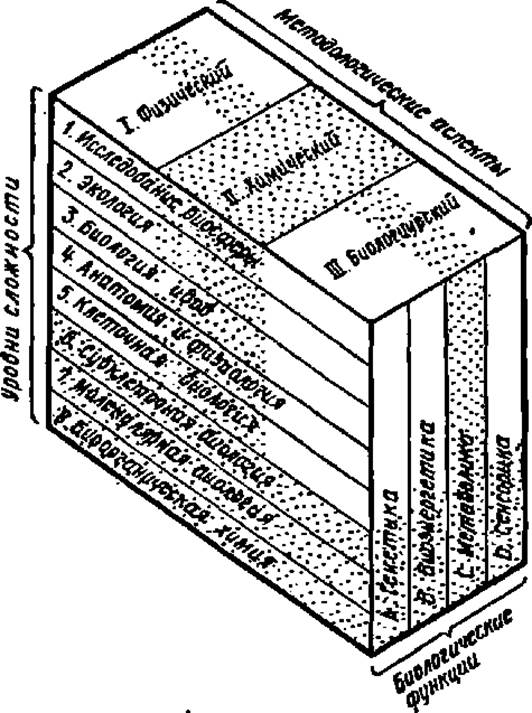
Fig. 1. The relationship between modern biochemistry and related branches of fundamental biology:
the shaded part of the parallelepiped represents branches belonging to biochemistry
At the same time, even at this stage of its development, biochemistry serves as a foundational basis for addressing numerous issues in biology, medicine, animal husbandry, crop production, microbiological synthesis, the food industry, and many other fields.
Deep within biochemistry—at the crossroads of biology, chemistry, physics, mathematics, and cybernetics—emerged molecular biology, the science dedicated to the structural features and properties of molecules that sustain the biological form of the movement of matter. The strides made by this young science are so rapid that they sometimes outpace imagination: the foundations for understanding The Mechanism of biological catalysis—and consequently, The regulation of life processes—have been established, fundamental Regularities of the specific Biosynthesis of macromolecules have been uncovered, and Genetic Engineering research is gaining ever-wider momentum. As a result of investigating nucleic acid transformations under the influence of physical factors and chemical agents, fundamentally new approaches to understanding the phenomena of variation and heredity in nature have been discovered.
Advances in elucidating The structure of proteins and nucleic acids laid a robust foundation for the development of biochemical systematics, molecular evolution, and biochemical genetics, increasingly shifting the descriptive Nature of the biological sciences toward understanding the very essence of biological phenomena. New domains of the biological sciences have emerged, such as chemical phylogenetically-oriented studies, ecological biochemistry, chemical zoology, and phytochemical ecology. Investigating the growth, development, and differentiation of PLANT AND ANIMAL forms is no longer conceivable without knowing the molecular underpinnings of these processes. Even such seemingly distant areas of biology as population analysis and the autoregulation of population density are now explained at THE MOLECULAR LEVEL.
The era of chemical biology has arrived.
In medicine, the successes of biochemistry dictate the strategy for developing and applying pharmaceutical agents, provide a source of novel diagnostic methods for diseases, and form the basis for remarkable discoveries regarding the causes of various pathological processes within the organism. Specifically, it has been found that many hereditary disorders arise from disruptions in specific links of protein, carbohydrate, lipid, nucleic acid, and hormone metabolism, among others. This prompted the establishment of a distinct branch of medicine focused on the molecular foundations of pathology—specifically enzymopathies, which are enzyme functional disorders leading to disease development. Deep penetration into viral biochemistry, the elucidation of the structure and self-Replication conditions of many Viruses, the deciphering of the interaction mechanism between viral and cellular genomes, and the interdependence of viral particle metabolism and host cell subcellular structures have made it possible in many cases to devise effective therapies against viral diseases.
The discovery over the past decade of a new class of biologically active peptides—endorphins and enkephalins—has shed new light on the problems of psychotherapy and the management of behavioral responses in animals and humans, rendering the social consequences of biochemical advancements a matter of utmost urgency.
Finally, the Implementation of the state scientific and technical program to determine the complete primary DNA sequence of The Human Genome, represented by 3 billion nucleotide residues, unlocks inexhaustible and as yet unpredictable Prospects for truly revolutionary breakthroughs in eradicating Hereditary diseases.
The application of numerous and diverse chemical preparations in animal husbandry and crop production, grounded in biochemical and physiological data, contributes to enhanced productivity across these agricultural sectors and boosts labor productivity. Especially vital is fully meeting agriculture's needs for microelements, Vitamins, protein supplements (in the form of fodder Yeast and protein-vitamin concentrates), synthetic amino acids (Threonine, Tryptophan, Lysine), and feed Antibiotics, as well as producing highly efficient and environmentally safe plant protection agents. This includes 3rd- and 4th-generation insecticides created through the study of insect growth regulators—Hormones (ecdysone and juvenile hormones) and antihormones.
Alongside its aforementioned practical significance for agriculture, biochemistry is increasingly becoming its theoretical foundation. This is manifested in the development of methods for early forecasting of livestock productivity based on biochemical tests (the structural state of DNA, characterization of protein and enzyme polymorphism degrees, etc.), biochemical certification of the Gene pool for selecting breeding pairs when developing high-yielding plant varieties and animal breeds, and utilizing data on multiple enzyme forms in parents to obtain highly heterotic offspring and monitor the completion of the breeding process. As a result of fundamental biochemical research, concepts regarding the regulation of plant and animal GROWTH AND DEVELOPMENT through targeted genotype modification are continually enriched, and prospects are emerging for creating forms with unique, pre-designed qualities via genetic and cellular engineering. One of the most striking Examples of such fundamental research is the work on transferring genes that ensure MOLECULAR Nitrogen Fixation into higher plant cells.
Comprehensive studies of microbial biochemistry and the broad prospects for their practical use thus unveiled led to the establishment of a microbiological synthesis industry in place of disparate Fermentation processes. Its products include fodder protein (and in the future, food protein), amino acids, virtually all antibiotics (both feed and medical grade), many vitamins, and practically all hormones and Enzymes. In the coming years, the assortment and production volume of complex chemical compounds obtained via microbiological synthesis will expand. This is guaranteed by the broad scope and rapid pace of biochemical research into microbial life, as well as the employment of genetic and cellular engineering methods to create superproducer microorganisms for the aforementioned substances. It is precisely in this manner that superproducer strains of Bacillus subtilis, Escherichia coli, and Brevibacterium flavum have been derived, accumulating up to 10 g of tryptophan, 20 g of threonine, and 80 g of lysine per liter of culture medium, respectively.
The achievements of technical biochemistry are widely applied across many industrial sectors. This applies primarily to the food industry: baking, winemaking, cheesemaking, food preservation, tea production, the Processing of plant and animal fats and oils, dairy and meat processing, and so forth are continually being refined through the introduction of new technological schemes based on increasingly profound insights into the biochemical processes that occur during The conversion of raw Materials into finished products. In the leather, textile, starch-syrup, and meat industries, a variety of enzyme preparations have found widespread application.
Many more examples can be cited to illustrate the immense significance of biochemical science in both theory and practice. The application of chemical transformations characteristic of natural processes is increasingly becoming the driving force transforming the chemical industry. These include biological catalysis, the template principle of biosynthesis, mechanochemical phenomena, light energy capture during Photosynthesis, the storage and transmission of information in biological systems, and the energetics of Biological Oxidation.
It is therefore entirely logical that a promising scientific and technical discipline has taken shape: biotechnology, which develops the scientific foundations of production processes utilizing the principles of chemical transformations inherent to biological objects. It encompasses technical biochemistry, microbiology, genetic engineering, The Use of animal and plant cell cultures, as well as immobilized enzymes (enzyme engineering). Biotechnology aims to achieve industrial PRODUCTION OF Insulin, Growth Hormone, interferon, Prostaglandins, sugar syrups from Cellulose and starch, and plant proteins as substitutes for animal proteins, among others, as well as to dramatically ramp up The production of enzymes, Essential Amino Acids, nutritional supplements for feed mixtures, and the like. Corresponding specific materials will be presented in subsequent chapters of the textbook when examining individual branches of biochemistry.
History of the development of domestic biochemistry. Russian scientists have made a major contribution to the advancement of biochemistry. A. Ya. Danilevsky (1839–1923) is rightfully regarded as the founder of domestic biochemistry; he headed the first Department of Biochemistry in Russia at Kazan University and established the first Russian school of biochemists. A. Ya. Danilevsky made a number of major discoveries. He developed an original method for purifying enzymes through adsorption followed by elution. He was the first to propose the reversibility of the action of biological catalysts—enzymes—and, based on this, synthesized protein-like substances known as plasteins. While studying proteins, A. Ya. Danilevsky hypothesized that their constituent structural units are linked to one another by —CO—NH— bonds, which were subsequently named peptide bonds. According to modern concepts, a protein molecule is constructed from amino acid residues joined by peptide bonds.
Great merits in the development of domestic biochemistry belong to M. V. Nencki (1847–1901). In 1891, he established Russia's first biochemical laboratory at the Institute of Experimental Medicine in St. Petersburg. M. V. Nencki, along with a number of coworkers (L. Marchlewski, S. Salaskin, V. Gulewitsch, et al.), carried out numerous biochemical studies. These include works on the Chemical composition of chlorophyll and hemin, elucidating the mechanism of urea biosynthesis, and addressing various questions of Protein metabolism.
Among the outstanding discoveries in biochemistry made by Russian scientists and their schools, mention should be made of the discovery of vitamins (N. I. Lunin, 1880) and proenzymes (I. P. Pavlov and N. P. Shepovalnikov, 1899), the Development of the chromatographic method for separating pigments and other structurally related natural substances (M. S. Tsvet, 1903), research into the process of photosynthesis (K. A. Timiryazev), and the study of Nitrogen metabolism patterns in plants (D. N. Pryanishnikov), among others.
In 1921, A. N. Bakh organized the Research Institute of Biochemistry of the People's Commissariat of Public Health in Moscow, and in 1935 he headed the Institute of Biochemistry of the USSR Academy of Sciences, transferred from Leningrad to Moscow, which was later named in his honor. A. N. Bakh is renowned as an outstanding biochemist who laid the foundations of The Theory of Respiration and put forward the hypothesis regarding the participation of peroxides in The oxidation of Organic compounds.
A tremendous contribution to the development of biochemistry was made by such preeminent scientists as N. N. Ivanov (author of the 8-volume work *Biochemistry of Cultivated Plants*); A. R. Kizel, known for his work in protein metabolism and as the author of a practical guide to plant biochemistry; N. Ya. Demyanov, who developed methods for analyzing plant raw materials; Ya. O. Parnas, who worked fruitfully in medical biochemistry and proposed a series of original biochemical analysis methods; S. Ya. Kaplansky, who studied the pathology of Amino acid metabolism; N. M. Sisakyan, who dedicated much of his work to philosophical questions of biochemistry, elucidating the mechanism of Protein Biosynthesis in plants, and studying the biochemistry of subcellular structures; B. N. Stepanenko, who made a major contribution to the chemistry and Biochemistry of CARBOHYDRATES; V. A. Bukin, who resolved several major problems in vitamin science; A. N. Belozersky, author of classical works on the Biochemistry of Nucleic Acids; I. V. Berezin, who founded the school of enzyme engineering; Yu. A. Ovchinnikov, who laid the groundwork for research on the ionic permeability of Biological Membranes; V. S. Ilyin, who advanced fundamentally new ideas in Metabolic Regulation; and many other biochemists who significantly contributed to the advancement of biochemical science.
Major biochemical centers. Currently, our country boasts several major biochemical centers. First and foremost is the A. N. Bakh Institute of Biochemistry of the RAS, which for several decades was headed by Academician A. I. Oparin (1894–1980), author of the theory of THE ORIGIN OF life on Earth, a series of works on technical biochemistry, and numerous experimental studies on the biochemistry of systems modeling the simplest forms of life. At the Bakh Institute of Biochemistry, extensive research is conducted to elucidate the STRUCTURE AND FUNCTIONS of the photosynthetic apparatus in plants and to investigate plant nitrogen metabolism (headed for decades by Academician A. A. Krasnovsky and Corresponding Member of the RAS V. L. Kretovich), as well as studying the regularities of biological structure self-assembly (B. F. Poglazov), enzyme engineering (B. I. Kurganov), the isolation and properties of protein Enzyme Inhibitors (V. V. Mosolov), Bioenergetics, cellular membrane architecture, and various other problems.
Another major biochemical center is the Institute of Medical and biological Chemistry of the Academy of Medical Sciences. Here, Academician V. N. Orekhovich first discovered procollagen, initiating an extensive series of works on protein precursors in global science. In 1937, also here, Academician A. E. Braunshtein (together with M. G. Kretzmann) first discovered the Transamination reaction of amino acids with keto acids, inaugurating a new chapter in the biochemistry of protein metabolism and the study of pyridoxal catalysis.
Fundamental research in biochemistry is carried out at the Faculty of Biology of Lomonosov Moscow State University, where the Department of Animal Biochemistry was headed by Academician S. E. Severin—a scientist of versatile knowledge and broad erudition—while the Department of Molecular Biology is headed by Academician A. S. Spirin, who pioneered research in protein biosynthesis. Furthermore, at the A. N. Belozersky Institute of Physico-Chemical Biology, headed by Academician V. P. Skulachev, a range of promising problems in biochemistry and molecular biology are being intensively studied.
In 1959, the Institute of Molecular Biology of the USSR Academy of Sciences was founded, bearing the name of Academician V. A. Engelhardt, who discovered (along with M. N. Lyubimova) the enzymatic properties of Muscle protein, investigated novel pathways of carbohydrate breakdown, and first proposed the concept of Oxidative Phosphorylation. V. A. Engelhardt was a pioneer in studying biological phenomena at the molecular level, and his work on muscle mechanochemistry essentially inaugurated the era of molecular biology. The core problems of this nascent science currently occupy the focus of the institute's team, which has achieved significant success in deciphering the structure and MECHANISM OF ACTION of enzymes (A. E. Braunshtein), the structure and functions of transfer Ribonucleic Acids (A. A. Bayev), the regulation of genome activity, the nucleosomal Organization of Chromatin, and several other directions.
A major biochemical center is represented by the Institute of Molecular Genetics of the RAS, which conducts research on biopolymer physics, PROTEIN AND NUCLEIC acid biosynthesis, and other investigations. Here, researchers intensively explore those features of DNA Structure and properties that may play a role in fulfilling its biological functions, study the process of RNA biosynthesis using DNA AS A template alongside the regulation of this biosynthesis, and develop matters of biochemical genetics.
Many fundamental biochemical problems are resolved at the M. M. Shemyakin and Yu. A. Ovchinnikov Institute of Bioorganic Chemistry of the RAS, which carries out research into the primary structure of peptides, proteins, and nucleic acids, Membrane Structure and permeability, Enzymatic Catalysis, Protein-Nucleic Acid Interactions, and numerous other areas.
The center for research on plant Nucleic Acid Biochemistry was established in the 1970s within the Department of Biochemistry and Cytochemistry of the N. I. Vavilov All-Russian Institute of Plant Genetic Resources (VIR), where under the guidance of Academician V. G. Konarev, studies are conducted on nuclear chromatin Structure and function, the structural state of DNA, and the species Specificity of proteins, among other topics.
The mechanism of protein biosynthesis in all its aspects is studied at the Institute of Protein Research of the Russian Academy of Sciences (biological research center in Pushchino-on-Oka, Moscow Region), the Biochemical Mechanisms of mutagenesis at the Siberian Branch of the RAS (Novosibirsk), the Application of Enzymes for the Treatment of certain types of leukemias at the Department of Biochemistry of the Peoples' Friendship University of Russia, the use of enzymes for Diagnostics at the Institute of Enzymology of the Academy of Medical Sciences, the mechanism of blood protein coagulation and the structure and function of cardioactive peptides at the Cardiology Center (Moscow); the problems of insect biochemistry at the Department of Organic and Biological Chemistry of the Moscow Pedagogical State University (MPSU), and so forth.
Thus, dozens of large and small research teams are addressing many pressing issues in biochemical science. Their efforts are united by the Russian Biochemical Society.
New directions in the development of domestic biochemistry. A significant role in the development of biochemical science in our country was played by research programs and organizational measures, as well as the resolution of various logistical and technical issues. These made it not only possible to achieve substantial progress in fundamental and applied biochemistry, but also to create modern technical facilities for conducting subtle biochemical research that are on par with, and in some cases surpass, foreign equivalents. This was greatly facilitated by the establishment of several new research organizations, among which the Institute of Gene Biology of the RAS and the Problem Research Laboratory for Plant Virus Diagnostics at Lomonosov Moscow State University deserve special mention. All of them have already made a substantial contribution to the development of biochemistry and closely related sciences. Of no less importance was the organization during the same period of the Scientific and Production Center for Medical Biotechnology of the Ministry of Health and the Bioengineering Engineering Center under the Intersectoral Scientific and Technical Complex "Biotechnology", whose activities are aimed at introducing the achievements of biochemistry and its inextricably linked field, molecular biology, into medicine and agriculture.
Participation of Russian scientists in the development of global biochemistry. This predetermined the rise of domestic biochemistry to the forefront of world biochemical science, where the All-Union Biochemical Society held a strong position in the International Union of Biochemistry, founded on January 6, 1955. Recognition of the major contribution of Russian scientists to the development of biochemistry was marked by the election of Academician A. A. Baev as President of the International Union of Biochemistry for the period from 1976 to 1979; until his passing in 1995, he served as Vice-President of this supreme forum of biochemists worldwide. Furthermore, Academician Yu. A. Ovchinnikov served as President of the Federation of European Biochemical Societies (FEBS) from 1984 to 1986. There were 6 All-Union Biochemical Congresses held (the last one in 1991 in St. Petersburg), 9 symposia on the structure and function of the Cell Nucleus, 9 on Carbohydrate Biochemistry, 6 on the biochemistry of Cyclic NUCLEOTIDES, 10 joint symposia of the biochemical societies of the USSR and France, 18 of the USSR and Germany, and 6 of the USSR and Italy. Since the founding of the International Union of Biochemistry, 16 International Congresses of Biochemistry have been held (the last in 1994 in Stockholm, Sweden), and since the inception of FEBS, 23 FEBS Conferences (the last in 1995 in Basel, Switzerland). At all of these domestic and international forums, the research of our scientists spanning all branches of biochemistry was extensively represented.
Major periodicals in biochemistry. Since 1936, the journal "Biochemistry" has been published in our country, alongside several other biochemically oriented journals such as "Molecular Biology", "Applied Biochemistry and Microbiology", and others. Starting in 1950, the yearbook "Advances in Biological Chemistry" has been published (by 1996, 36 volumes had been issued); since 1966, a series of monographs under the general title "Biological Chemistry" has featured reviews on the most important areas of modern biochemistry (the 39th volume was published in 1991); and since 1972, a monograph series titled "Molecular Biology" has been issued (with the 29th volume published in 1991).
Methods of biochemistry. Like any science, biochemistry employs Specific methods of scientific research. Their common feature is that when studying metabolism, the chemical compound or set of specific compounds under investigation is introduced into systems possessing The properties of living matter, and their transformations are examined. Such systems include either whole organisms, surviving organs, tissue slices, tissue and cell cultures, tissue homogenates, extracts, as well as specific subcellular structures isolated from cell contents. To trace The Fate of compounds added to a given system, biochemistry utilizes a variety of chemical analytical methods and the various physicochemical methods listed above. At the same time, for studying the structure and functions of Biopolymers—especially from a comparative biochemical perspective—immunochemical and radioimmunoassay methods, the targeted reagent method, DNA-DNA, DNA-protein, and DNA-RNA Hybridization methods, nucleic acid reassociation kinetics, neutron scattering, specific Methods for Investigating The kinetics of enzyme action, and many others are being increasingly adopted. Some of these methodological approaches will be discussed below in the relevant chapters of the textbook.
Last update: 06/08/2026
Editorial and Educational Adaptation: This material has been compiled based on the primary/original source text. The project team performed an editorial review, corrected technical inaccuracies, structured sections, and adapted the content for an educational format.
What was processed:
- elimination of formatting defects (OCR errors, structural breaks, corrupted characters);
- editorial organization of content;
- standardization of terminology in accordance with academic sources;
- verification of factual statements against the original source text.
All mentions of the author, publication year, and origin of the primary text have been preserved in accordance with the source.