BIOTECHNOLOGY - V. H. Gerasymenko - 2006
Part I. General Biotechnology
Chapter 3. FUNDAMENTALS OF MOLECULAR BIOLOGY
3.1. NUCLEIC ACIDS
3.1.1. Chemical composition of nucleic acids
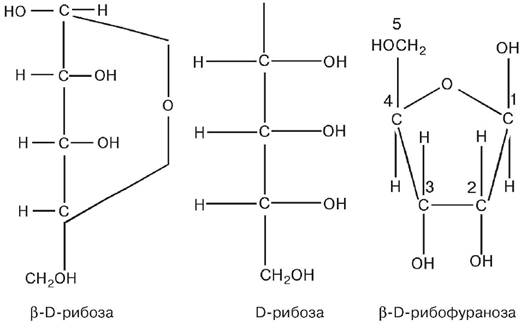
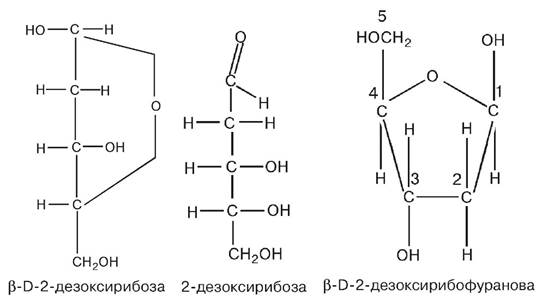
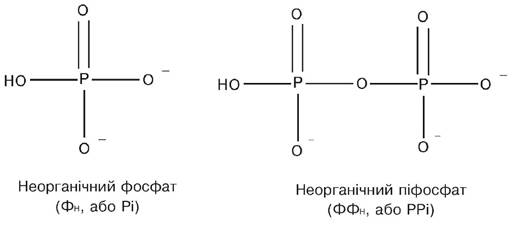
Nucleic acid (NA) molecules contain atoms of nitrogen (15–16 %), phosphorus (8–10 %), carbon, oxygen, and hydrogen. To identify and quantify the components of NAs, DNA and RNA are subjected to enzymatic or, more commonly, acid Hydrolysis. This reveals purine bases (in the purine molecule, a six-membered pyrimidine ring and a five-membered imidazole heterocycle are fused, forming a bicyclic derivative) — namely adenine and guanine — and pyrimidine nitrogenous bases — thymine, cytosine, and uracil — along with Monosaccharides (pentoses: ribose and deoxyribose) and phosphoric acid:
Class="center">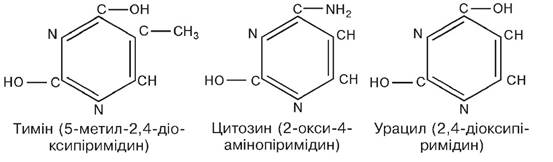
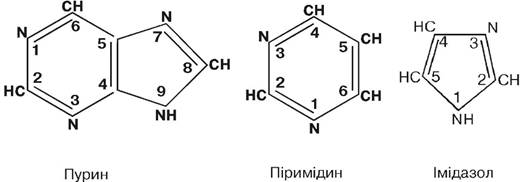
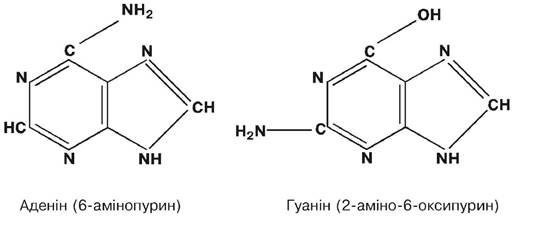
In addition to these purine and pyrimidine derivatives, NA hydrolysates contain several dozen other bases (1-methyladenine, 1-methylguanine, N2-dimethylguanine, N6-dimethyladenine, N7-methylguanine, 5-methylcytosine, 5-hydroxymethylcytosine, 4-thiouracil, dihydrouracil, etc.) which, due to their low Abundance, are referred to as exotic or minor components. Their biological role apparently comes down to protecting NAs from the destructive action of Enzymes. Minor bases are particularly abundant in tRNA (about 60).
Nitrogenous bases containing OH groups (guanine, cytosine, thymine, and uracil) are capable of keto-enol tautomeric transformations and, depending on the pH of the medium, can exist in the enol (lactim) or keto (lactam) form:
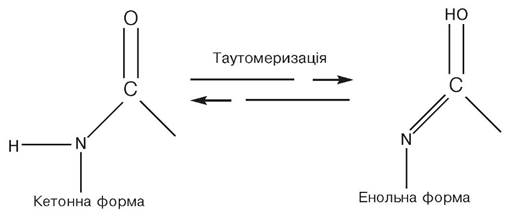
Under physiological conditions, keto structures are more stable; nitrogenous bases are incorporated into Nucleic Acids in the keto form.
Of the five aforementioned purine and pyrimidine nitrogenous bases, DNA contains adenine, guanine, cytosine, and thymine. These are also found in RNA, except that uracil replaces thymine. The name of the NA depends on the pentose it contains: in DNA, the carbohydrate component is represented by deoxyribose, and in RNA, by ribose. This structural difference between ribose and deoxyribose (the replacement of the OH group with H at the second carbon atom of ribose) strengthens the bond between the second and third carbon atoms and creates favorable conditions for the compact packaging of the DNA molecule.
Enzymatic hydrolysis of NAs yields products consisting of nitrogenous base residues, ribose or deoxyribose components, and phosphoric acid:
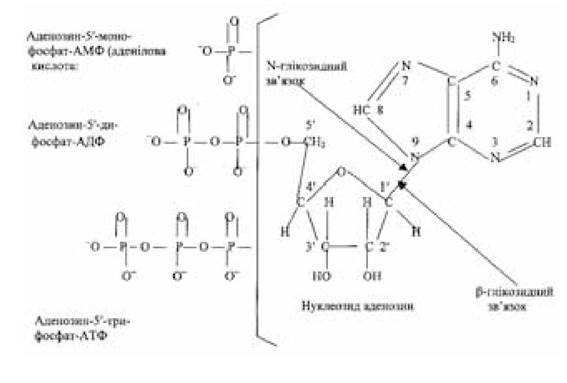
The carbon atoms of the pentose are designated with primed numbers to distinguish them from the carbon atoms belonging to the purine or pyrimidine heterocycles.
Compounds consisting of a nitrogenous base residue, a pentose component (ribose or deoxyribose), and phosphoric acid are called NUCLEOTIDES. They serve as the monomeric units of oligonucleotides and polynucleotide NA structures. The Cleavage of phosphoric acid from a nucleotide results in The formation of the corresponding nucleoside. Phosphorylation products of nucleosides, particularly nucleoside triphosphates, are used for The Biosynthesis of DNA and RNA. Nucleosides and Nucleotides are named after their constituent nitrogenous bases. If the carbohydrate component of a nucleoside is deoxyribose, the prefix "deoxy" is added to the name of the corresponding nucleotide, for example, deoxyguanosine-5'-triphosphate (dGTP). Data on the nomenclature of nucleotides, nucleosides, and nitrogenous bases are presented in Table 3.1.
Table 3.1.
Nomenclature of nitrogenous bases, nucleosides, and nucleotides
Nitrogenous bases |
Nucleosides |
Nucleotides |
||
Full name |
Abbreviated name |
|||
Ukrainian |
International |
|||
Adenine |
Adenosine |
Adenylic acid (adenosine monophosphate) |
АМФ (А) |
AMP (A) |
Guanine |
Guanosine |
Guanylic acid (guanosine monophosphate) |
ГМФ (Г) |
GMP (G) |
Cytosine |
Cytidine |
Cytidylic acid (cytidine monophosphate) |
ЦМФ (Ц) |
CMP (C) |
Thymine |
Thymidine |
Thymidylic acid (thymidine monophosphate) |
ТМФ (Т) |
TMP (T) |
Uracil |
Uridine |
Uridylic acid (uridine monophosphate) |
УМФ (У) |
UMP (U) |
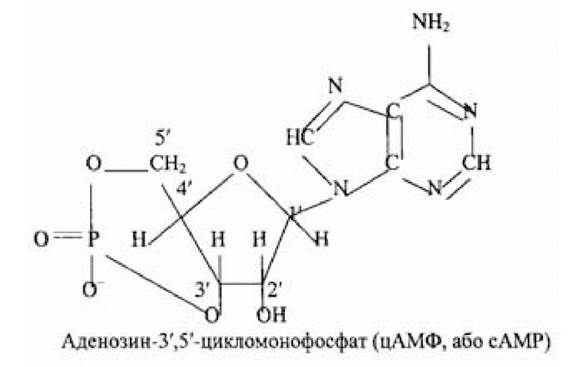
There are nucleotides with a cyclic Structure. These primarily include cyclic adenosine monophosphates (cAMP), guanosine monophosphates (cGMP), and cytidine monophosphates (cCMP). Cyclic AMP and GMP are formed from their respective nucleoside triphosphates under the action of the enzymes adenylate cyclase and guanylate cyclase. The Biological Significance of cAMP lies in its control over enzyme activity (as a secondary messenger); the primary regulator role is performed by adrenaline, which activates adenylate cyclase. The MECHANISM OF ACTION of cGMP and cAMP is similar, but when acting on the same enzyme, cGMP exerts an opposite effect, i.e., it acts as an enzyme inhibitor. Little data is currently available regarding the biological activity of cCMP:
Last update: 11/08/2026
Editorial and Educational Adaptation: This material has been compiled based on the primary/original source text. The project team performed an editorial review, corrected technical inaccuracies, structured sections, and adapted the content for an educational format.
What was processed:
- elimination of formatting defects (OCR errors, structural breaks, corrupted characters);
- editorial organization of content;
- standardization of terminology in accordance with academic sources;
- verification of factual statements against the original source text.
All mentions of the author, publication year, and origin of the primary text have been preserved in accordance with the source.