Biological Membranes - A. N. Ogurtsov 2012
Electrogenesis of Biomembranes
Intracellular Signaling
cAMP
Another intracellular messenger is cyclic adenosine monophosphate (cAMP) (Figure 144(a)). It is utilized in numerous Eukaryotic Cells, such as olfactory Neurons. The Cell body of such a neuron is located in the Nose, while multiple dendrites extend into the nasal mucosa. GPCR protein receptors, specific to "scent molecules," are embedded within the dendrite membranes, and the neuron's axon extends into the Brain.
Class="center">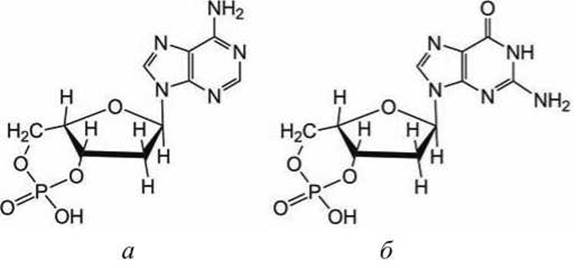
Figure 144 - Diagrams of cyclic purine nucleoside monophosphates: a - cAMP; b - cGMP
When an odorant molecule binds to the receptor (Figure 145), the receptor—much like in the case of ADP sensitivity—acts as a guanine nucleotide exchange factor (GEF) for the trimeric Gs protein, which is functionally similar to the trimeric Gq protein (Figure 139).
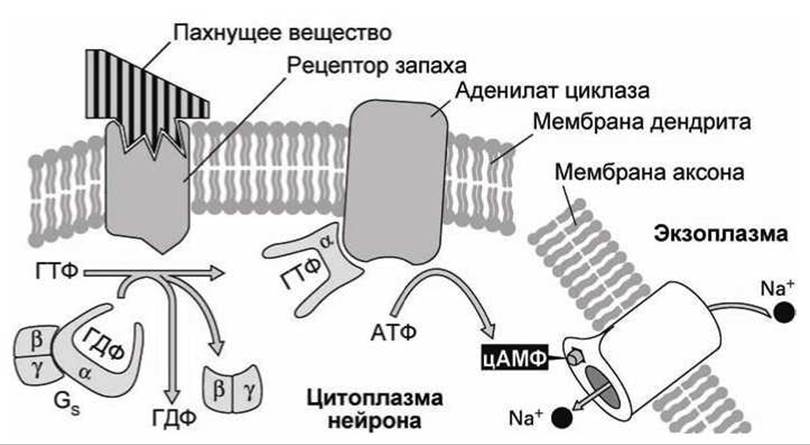
Figure 145 - Diagram of the Molecular Mechanism of Olfaction
The GTP-bound alpha subunit of the Gs protein, in turn, activates the membrane-bound enzyme adenylyl cyclase, which converts ATP into cAMP. The cAMP then diffuses through the neuronal Cytosol to cAMP-gated channels in the axon membrane. Binding to a cAMP molecule opens this channel, allowing potassium and sodium ions to cross the membrane. The electrochemical gradient drives a massive influx of sodium ions into the cell, triggering membrane depolarization. This opens Voltage-Gated Sodium Channels, generating an Action Potential that propagates along the axon to the brain, signaling the presence of an odorant. While the Gs protein and adenylyl cyclase are found in many cell types, only olfactory sensory neurons possess odorant receptors. Other cells utilize intracellular cAMP signaling to respond to extracellular chemical signals for which they express specific Membrane Receptors. Once the external chemical signal ceases, cAMP concentration drops back to baseline. The enzyme cAMP phosphodiesterase hydrolyzes cAMP into AMP, thereby inactivating cAMP-gated channels and other cAMP-sensitive Proteins.
The pathogenic mechanism of the cholera bacterium Vibrio cholerae is directly linked to the functioning of cAMP signaling pathways. The toxin secreted by this bacterium is an enzyme that enters the cytosol of intestinal epithelial cells and attaches ADP to Gs, thereby blocking the Hydrolysis of GTP to GDP. As a result, Gs becomes locked in its active state and continuously stimulates adenylyl cyclase. This leads to a surge in cytosolic cAMP concentration, opening all cAMP-gated channels and causing a massive efflux of ions and osmotically coupled Water molecules from the cells, ultimately resulting in severe dehydration of the body.
Last update: 13/08/2026
Editorial and Educational Adaptation: This material has been compiled based on the primary/original source text. The project team performed an editorial review, corrected technical inaccuracies, structured sections, and adapted the content for an educational format.
What was processed:
- elimination of formatting defects (OCR errors, structural breaks, corrupted characters);
- editorial organization of content;
- standardization of terminology in accordance with academic sources;
- verification of factual statements against the original source text.
All mentions of the author, publication year, and origin of the primary text have been preserved in accordance with the source.