Practical Protein Chemistry - A. Darbre 1989
X-Ray Crystallography and Electron Microscopy
X-Ray Diffraction
Model Building
The Processing and analysis of experimental data culminate in the calculation of an electron density map within the crystal unit Cell, which is stored in computer memory. While such a map makes it possible to trace the path of the molecule's polypeptide chain, it does not yet reveal the Structure at atomic resolution. Achieving atomic resolution requires building a model that "fits" the polypeptide chain into the electron density map, taking into account known stereochemical data for the polypeptide backbone and the side chains of its constituent Amino Acids. To accomplish this, a computer is used to calculate a series of electron density map sections, which are then reproduced at a suitable scale onto transparent film. When stacked together, these sheets recreate the three-dimensional distribution of electron density within the crystal unit cell. However, visual Analysis of the structure is difficult without special devices. Therefore, the sections, or selected regions thereof, are mounted in a vertical frame and illuminated from the back and side. A semi-transparent mirror is positioned in front of the frame. The atomic model of the molecule is assembled in front of the mirror in such a way that its reflection coincides with the electron density map [11] (Fig. 20.10).
Class="center">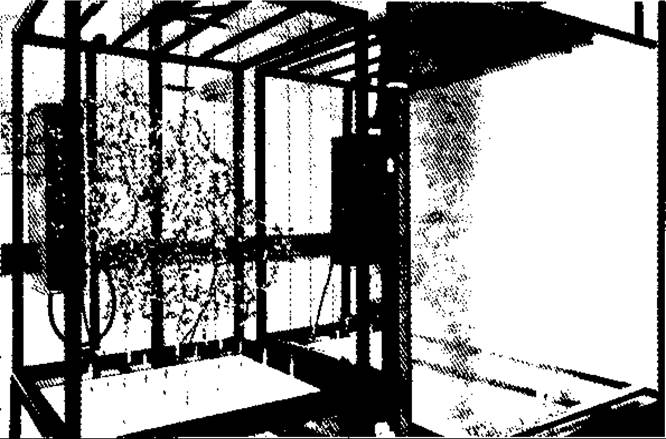
FIG. 20.10. Apparatus for constructing a wire model of a protein molecule superimposed onto its electron density map via reflection. The semi-transparent mirror located in the middle of the device (between the model and the map) has been removed so that the electron density map is visible in the photograph.
Last update: 06/08/2026
Editorial and Educational Adaptation: This material has been compiled based on the primary/original source text. The project team performed an editorial review, corrected technical inaccuracies, structured sections, and adapted the content for an educational format.
What was processed:
- elimination of formatting defects (OCR errors, structural breaks, corrupted characters);
- editorial organization of content;
- standardization of terminology in accordance with academic sources;
- verification of factual statements against the original source text.
All mentions of the author, publication year, and origin of the primary text have been preserved in accordance with the source.