Biochemistry - The Chemical Reactions of Living Cells, Volume 2 - D. Metzler 1980
Biosynthesis; how new molecules are formed
Special aspects of fatty acid metabolism
Prostaglandins
As early as 1930, it was discovered that seminal fluid contains substances capable of inducing uterine contractions. These biologically active compounds—prostaglandins—were successfully obtained in crystalline form in 1960 and identified shortly thereafter. Prostaglandins exist as an entire family, with 14 of them present in human seminal fluid, making it one of the richest sources of these compounds. The total prostaglandin concentration in seminal fluid reaches ~1 mM, whereas their biological effect on smooth Muscle becomes apparent at concentrations as low as 10-9 M.
The structures of individual prostaglandins and their biosynthetic pathways are illustrated in Fig. 12-7. Prostaglandins are generally designated by the letters PG, followed by an additional letter indicating the structural type, along with a subscript number on the right. For example, type E represents ß-hydroxyketones, type F represents 1,3-diols, and type A represents a,ß-unsaturated ketones. Prostaglandins of the series denoted by the number 2 are derivatives of arachidonic acid, whereas those belonging to series 1 and 3 are formed from Fatty acids containing, respectively, one fewer or one more double bond than arachidonic acid (Fig. 12-7). Prostaglandins with other structures are also known [51–56].
The Biosynthesis of prostaglandins begins with the release of a 20-carbon polyenoic acid precursor, generated through the action of phospholipase A on Phospholipids (phosphatidylinositol or phosphatidylcholine). In experiments using tritium-stereospecifically labeled precursor fatty acids, it was established that the next step in synthesis involves the removal of the pro-S-proton at C-13 of the fatty acid (reaction a, Fig. 12-7). Cyclooxygenase, which catalyzes this process only in the presence of O2, is similar to lipoxygenase [Equation (10-48)] [54]. The reaction product is a peroxy acid, likely in the form of a peroxy radical, as shown in Fig. 12-7. This radical (or peroxide anion) undergoes cyclization accompanied by the simultaneous attack of an additional O2 molecule at C-15 (Fig. 12-7, reaction b), resulting in The formation of the endoperoxide PGG. The reduction of the latter with the formation of an OH group yields PGH, the further transformation of which can proceed via two pathways—yielding either type E or type F prostaglandins. During the synthesis of type E prostaglandins, a proton is removed from C-9 (reaction d), as indicated in Fig. 12-7 by the small arrows on the PGH2 Structure. Type F prostaglandins are formed via the reductive Cleavage of the endoperoxide. Other prostaglandins, including those of type A, are synthesized through additional reactions, one of which is depicted in Fig. 12-7. In certain Tissues (such as the Lungs and Blood Platelets), PGH is converted into A number of non-prostaglandin compounds.
Class="center">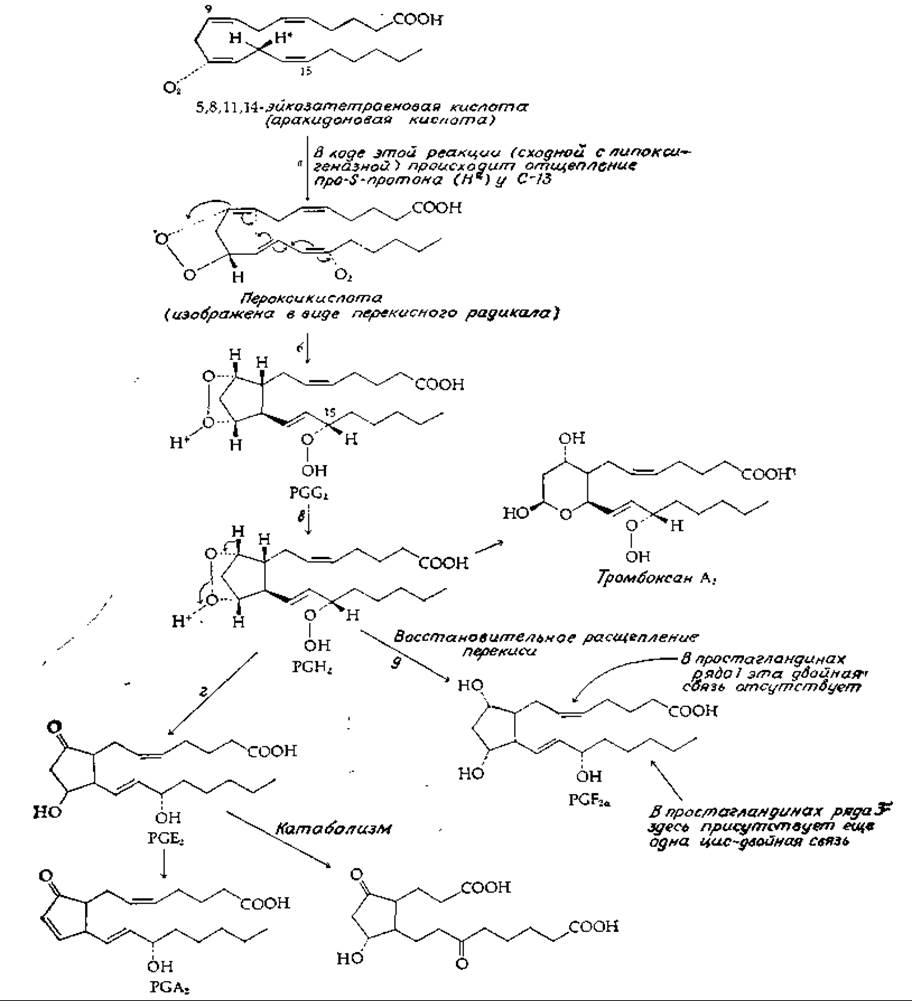
FIG. 12-7. Biosynthesis of prostaglandins and some of their degradation reactions.
[51, 55, 56]. The latter include the labile hemiacetal derivative thromboxane A (Fig. 12-7), which is subsequently converted into thromboxane B, containing an OH group at C-15.
From a biochemical standpoint, prostaglandins are characterized by a high rate of degradation. The compound depicted at the bottom right of Fig. 12-7 is formed by The oxidation of the 15-OH group into a carbonyl group, a process that subsequently enables the reduction of the adjacent trans-double bond. Furthermore, the Formation of the dicarboxylic acid shown requires two stages of ß-Oxidation as well as ω-oxidation. Overall, the picture is even more complex. The composition and relative proportions of prostaglandin degradation products vary depending on the animal species. Prostaglandin-degrading enzymatic activity is highest in lung tissue; thus, any prostaglandins entering the bloodstream disappear after a single passage through the lungs. Consequently, prostaglandins cannot be regarded as Hormones in the classical sense of the term. However, it is quite likely that they exert local effects, being released from one organ and acting upon another organ or adjacent tissue. On the other hand, it is also possible that the primary effect of prostaglandins is manifested within the very Cells where they are synthesized.
The Physiological effects of prostaglandins are extremely diverse, yet the chemical basis of this phenomenon remains unclear. It has been noted repeatedly that certain prostaglandins, notably PGE1, exert effects on cells identical to those of cAMP. This served as the basis for the hypothesis that prostaglandins promote increased cAMP synthesis through interaction with The Cell membrane. In this case, the prostaglandin likely Functions as a true second messenger that traverses the membrane and causes the allosteric activation of adenylate cyclase [57]. However, PGE2 appears to function somewhat differently, as the BIOLOGICAL EFFECTS OF PGE2 and PGE1 are frequently antagonistic.
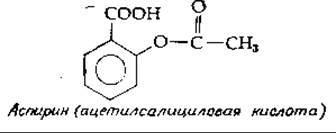
Prostaglandins are of special interest in relation to inflammation and allergy [58]. The medical significance of these issues is highlighted by the following data: 5 million Americans suffer from rheumatoid Arthritis, an inflammatory condition, and there are approximately as many patients suffering from asthma and other allergic disorders. Aspirin, our most widespread medication, is an anti-inflammatory agent:
Both inflammatory and immunological responses are normal Components of the body's defense mechanisms; at the same time, however, both responses are potentially hazardous, and their regulation appears to be impaired in asthma and rheumatoid arthritis.
Prostaglandins are involved in both the induction and the resolution of the inflammatory process. Inflammation is accompanied by the dilation of small Blood Vessels and the leakage of fluid and Proteins into the interstitial space, leading to the characteristic Swelling associated with inflammation. Polymorphonuclear leukocytes migrate to the site of inflammation (Chap. 1, Sec. D,2,b), where they phagocytose necrotic tissue and Bacteria. During this process, phospholipase A is released from leukocyte Lysosomes; it hydrolyzes phospholipids and liberates polyunsaturated fatty acids, which serve as prostaglandin precursors. It remains unknown whether prostaglandins belong to the category of substances that initiate inflammation. If they do, however, their effect may be amplified by the release of polyunsaturated fatty acids. It has also been established that cAMP inhibits the inflammatory process and that PGE2 apparently exerts a similar effect. Finally, while F prostaglandins induce allergic reactions, the inhalation of small amounts of E prostaglandins alleviates asthmatic symptoms.
Aspirin inhibits prostaglandin synthesis, presumably by acetylating cyclooxygenase, and this is evidently the primary mechanism of its action [55, 59]. It is to be hoped that further research on prostaglandins will yield means for regulating inflammatory and allergic reactions. Since PGE1 is among the potent pyrogens (i.e., substances that raise body Temperature), aspirin's ability to alleviate fever finds a logical explanation. PGE1 and parathyroid hormone stimulate the release of lysosomal Enzymes from Bone tissue cells, which then resorb bone (Supplementary Note 5-D). Aspirin prevents the release of these enzymes [60].
The antagonistic effects of prostaglandins are also manifested in reproductive function: on the one hand, prostaglandins facilitate Fertilization, whereas on the other hand, extremely minute amounts of them can induce abortion.
Last update: 06/08/2026
Editorial and Educational Adaptation: This material has been compiled based on the primary/original source text. The project team performed an editorial review, corrected technical inaccuracies, structured sections, and adapted the content for an educational format.
What was processed:
- elimination of formatting defects (OCR errors, structural breaks, corrupted characters);
- editorial organization of content;
- standardization of terminology in accordance with academic sources;
- verification of factual statements against the original source text.
All mentions of the author, publication year, and origin of the primary text have been preserved in accordance with the source.