Biochemistry - Chemical Reactions in Living Cells, Volume 2 - D. Metzler 1980
Biosynthesis; how new molecules are formed
Metabolism of triglycerides, phospholipids, and glycolipids
The reduction of dihydroxyacetone phosphate yields sn-glycerol-3-phosphate, the precursor for the synthesis of glycerol-containing Lipids (Fig. 12-8, reaction a). The transfer of two acyl groups from CoA to the hydroxyl groups of this compound (reactions b and c) leads to The formation of 1,2-diglyceride-3-phosphate (phosphatidic acid). Alternatively, another pathway for phosphatidic acid synthesis is possible (which has been studied in Liver tissue), namely the transfer of a single acyl group to dihydroxyacetone phosphate, followed by the reduction of the keto group and subsequent attachment of a second acyl group [equation (12-18)]:
Class="center">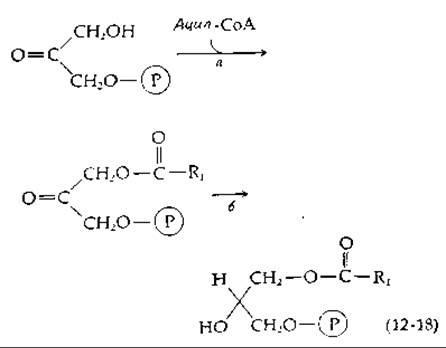
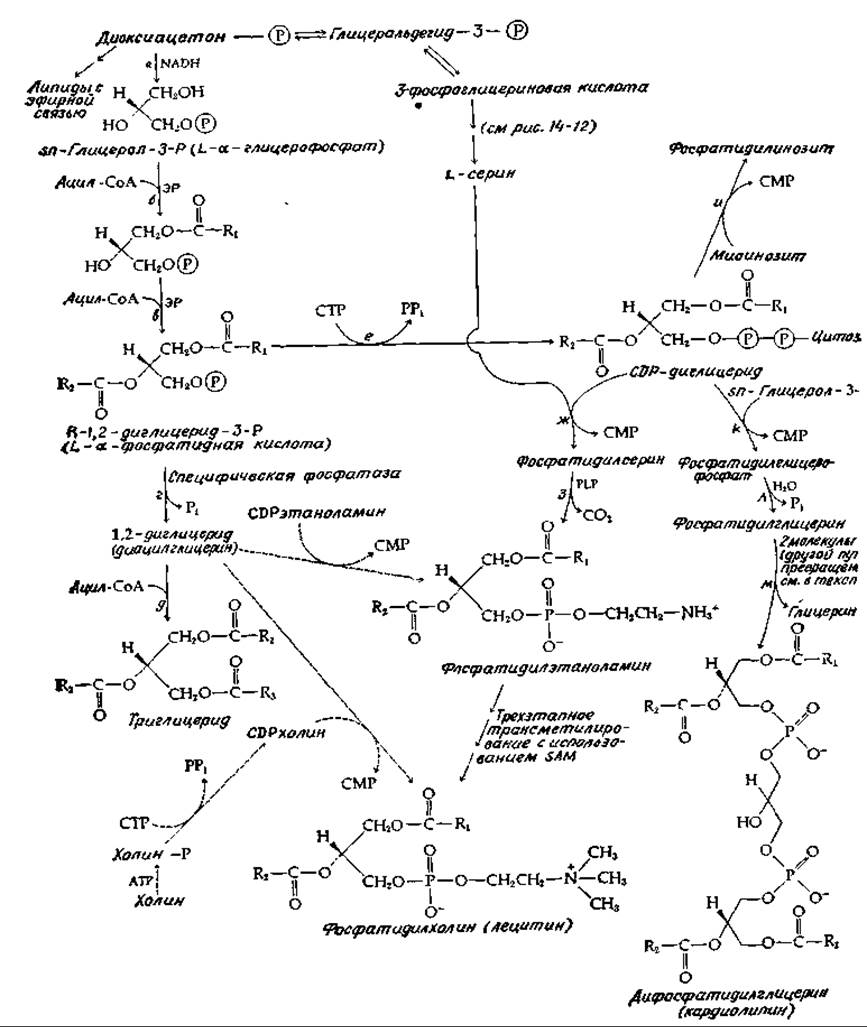
FIG. 12-8. Biosynthesis of Triglycerides and Phospholipids.
Phosphatidic acid lies at a metabolic crossroads. On the one hand, Cleavage of the phosphate group by a specific phosphatase (reaction d) followed by The addition of an additional acyl group (typically containing an unsaturated bond) to the resulting diglyceride yields triglycerides (reaction e). On the other hand, phosphatidic acid can react with CTP to synthesize CDP-diglyceride (reaction f); this process, analogous to the interaction of CTP with phosphorylated sugars [equations (11-24)] or Choline phosphate [equation (11-26)], serves as the initial step in phospholipid synthesis in Bacteria.
The pathway of triglyceride formation shown in Fig. 12-8 predominates in adipose tissue, whereas in the intestinal epithelium, 2-monoglycerides absorbed from dietary intake are directly esterified into triglycerides through interaction with two molecules of acyl-CoA [44].
Last update: 06/08/2026
Editorial and Educational Adaptation: This material has been compiled based on the primary/original source text. The project team performed an editorial review, corrected technical inaccuracies, structured sections, and adapted the content for an educational format.
What was processed:
- elimination of formatting defects (OCR errors, structural breaks, corrupted characters);
- editorial organization of content;
- standardization of terminology in accordance with academic sources;
- verification of factual statements against the original source text.
All mentions of the author, publication year, and origin of the primary text have been preserved in accordance with the source.