Intensive Care of Acute Poisoning - A. V. Hovenko 2010
Main types of acute poisonings and their treatment
Chemical poisoning
Alcohol poisoning
One of the most widespread groups of technical and household substances used by humans consists of alcohols and alcohol-containing mixtures. In clinical practice, poisonings caused by substances of this group are classified as alcohol surrogate poisonings. All alcohol surrogates are divided into two main categories: those based on ethyl alcohol and those that do not contain it.
The first category comprises various solutions and liquids manufactured on The basis of ethyl alcohol or containing a significant amount of it (true alcohol surrogates). Liquids and solutions belonging to this group cause intoxication with clinical manifestations similar to those of Alcohol poisoning. The basis of these substances is technical-grade alcohol containing a high concentration of fusel oils along with various specific additives such as Essential Oils, acetone, colorants, etc. These include: Hydrolysis and sulfite alcohols (obtained from wood via hydrolysis); synthetic ethyl alcohols (obtained through Ethylene Hydration, used primarily for industrial purposes); crude ethyl alcohol (produced from food raw Materials, used for The production of rectified food alcohol and for industrial purposes); denatured alcohol (technical alcohol with minor admixtures of methyl alcohol and aldehydes); cosmetic and perfumery products such as colognes and lotions (50–60% solutions of food-grade or technical ethyl alcohol with added Water/23.html">Essential oils and other ingredients); BF glue based on technical ethyl alcohol, phenol-formaldehyde resin, polyvinyl acetate, and acetone; wood polish (a mixture of technical ethyl alcohol with acetone, butyl, and amyl alcohols); medicinal plant alcohol tinctures (tinctures of hawthorn, wild Manchurian vine, hellebore, etc.), water-alcohol plant extracts (extracts of pink ROOT, eleutherococcus, etc.), and alcohol plant juices (aloe, kalanchoe juices, etc.); as well as other solutions containing a significant amount of ethyl alcohol.
The second category includes liquids that do not contain ethyl alcohol, but resemble ethanol in their organoleptic properties or their ability to exert psychoactive effects. The Clinical presentation of poisoning caused by these liquids often differs significantly from that of ethanol poisoning. The most common are poisonings by aliphatic monohydric alcohols: methanol, propyl alcohols (n-propanol, isopropanol), butyl alcohols (n-butanol, sec-butanol), amyl alcohol and its isomers, as well as the dihydric alcohol ethylene glycol (a component of automotive brake fluids), ethylene glycol ethers, and tetrahydrofurfuryl alcohol. Liquids of this type are also referred to as false alcohol surrogates.
Alcohols can enter The Human Body via all known routes, although acute poisonings most frequently occur following oral ingestion. Alcohols are rapidly absorbed into the bloodstream and distributed relatively evenly across Tissues. The METABOLISM of alcohols takes place predominantly in the Liver According to the pathway: alcohol → aldehyde → acid. The First stage of this process is catalyzed by Alcohol dehydrogenase (ADH) and, to a much lesser extent, by Other Enzymes such as catalase and the microsomal ethanol-oxidizing system (MEOS). These enzymes belong to the monooxygenase system, whose primary component is cytochrome P-450.
In the second stage, the body eliminates the aldehyde by oxidizing it into an acid with the help of another enzyme, aldehyde dehydrogenase (ALDH). The oxidation occurs most rapidly in the case of propanol, while methanol is oxidized more slowly than others. Alcohols are excreted from the body via urine and exhaled air. Lower aliphatic alcohols are not concentrated in the urine, whereas for dihydric alcohols, The ratio of their concentration in urine to that in Blood is 3–5:1.
All alcohols exhibit narcotic (neurotoxic) properties to varying degrees. For monohydric alcohols, the potency of the narcotic effect initially increases, but decreases in alcohols containing six or more carbon atoms due to reduced water solubility. Narcotic effects are less pronounced in dihydric alcohols. During the biotransformation of alcohols, more toxic metabolites are frequently formed (toxification), which determine the specific Clinical Features of poisoning by a particular toxicant. For instance, toxic damage to the visual system is caused by certain primary alcohols—methyl, hexyl, heptylic, and others—with methanol exhibiting the most pronounced toxic effect. Some alcohols possess a marked damaging effect on parenchymal Organs, such as The Liver and Kidneys.
5.4.1.1. Ethyl Alcohol Poisoning
Among poisonings that lead to severe consequences for the victim's body and frequently result in death, ethyl alcohol poisoning holds one of the leading places. Ethyl alcohol ($C_2H_5OH$, wine spirit, ethanol) is a colorless liquid with a characteristic odor. It mixes with water in any proportion and dissolves well in organic Solvents. It Burns with a blue flame. Its relative density is $0.816\text{ g/cm}^3$, and its boiling point is $+78.6\,^{\circ}\text{C}$.
Ethanol is used as a solvent, a component of special fuels, for the Synthesis of Other compounds, and is included in certain antifreezes, cosmetics, wood polishes, adhesives, etc. The so-called hydrolysis and sulfate alcohols, along with denatured alcohol, contain admixtures of methanol, aldehydes, and higher alcohols In addition to ethanol.
Ethyl alcohol is also widely used in its pure form for the production of various alcoholic beverages (vodka, tinctures, liqueurs, etc.).
The ongoing rise in alcohol consumption among the population of Ukraine should currently be viewed as more than just a biomedical issue. There are compelling reasons to believe that ethanol abuse poses a serious threat to the Ukrainian Gene pool and the country's national security as a whole. In Ukraine, approximately 40,000 people die annually due to alcohol consumption. Most alarmingly, 70% of the 700,000 registered alcoholics in Ukraine are individuals under the age of 35, and 40% of children begin consuming alcoholic beverages during their school years. According to literature, Ukraine ranks first in Europe in terms of pediatric alcoholism. The per capita consumption rate of alcoholic beverages in our country is about 12 liters per person per year—1.5 times higher than the level deemed hazardous to human health by the WHO (Narodna Armiya, no. 6, Feb. 9, 2008).
Acute alcohol poisonings are typically associated with the ingestion of ethyl alcohol or beverages containing more than 12% ethanol. The lethal single dose of ethanol largely depends on individual sensitivity and ranges from 4 to 12 g/kg of body weight (on average, 300 ml of 96% ethanol in the absence of acquired tolerance). Alcoholic coma develops when blood ethanol concentrations exceed 3 g/L (3‰) (Table 5.3).
Class="center">Table 5.3 Correlation between the degree of intoxication and blood ethanol concentration (according to V.N. Kryukov et al.)
|
Blood ethyl alcohol concentration (‰) |
Degree of intoxication |
|
1 |
2 |
|
Less than 0.3 |
No alcohol effect |
|
From 0.3 to 0.5 |
Slight alcohol effect |
|
From 0.5 to 1.5 |
Mild intoxication |
|
From 1.5 to 2.5 |
Moderate intoxication |
|
From 2.5 to 3.0 |
Pronounced intoxication |
|
From 3.0 to 5.0 |
Severe alcohol poisoning, fatalities possible |
|
Over 5.0 |
Lethal poisoning |
Various impurities present in alcoholic beverages deserve special attention, as they can significantly alter the toxicological characteristics of ethanol.
Aldehydes (acetaldehyde, propionaldehyde, butyraldehyde, etc.) are formed in significant quantities during the distillation of wine into cognac spirit As a result of oxidation processes. Unsaturated aldehydes (acrolein, crotonaldehyde) impart a pungent taste and bitterness to alcoholic beverages. At the same time, their combination creates the unique bouquet of wines and cognacs. The toxicity of aldehydes is low. They are actively broken down in the lumen of the Small Intestine upon contact with the mucosa. Their content does not exceed 8 mg/L in rectified alcohol, 30–50 mg/L in cognacs, 10–50 mg/L in wines, and up to 250 mg/L or more in sherry.
Fusel oils are a mixture of higher ($C_3–C_5$) aliphatic monohydric alcohols, esters, and Other Compounds (about 40 substances) formed during the rectification of crude alcohol. In terms of toxicity, fusel oils significantly surpass ethanol and substantially enhance its adverse effects. The content of fusel oils ranges from 250–650 mg/L in wines to 1000–4000 mg/L in rum, brandy, and whiskey.
Methanol is one of the most toxic components of alcoholic beverages. Eliminating it during rectification presents a major technological challenge. The lowest methanol concentration is found in white grape wine (up to 240 mg/L), whereas red wine contains up to 3000 mg/L, cognacs up to 1000 mg/L, and fruit and berry wines up to 6000 mg/L.
Esters (diethyl ether, ethyl formate, ethyl acetate, etc.) are formed through the interaction of alcohols with organic acids. Esters have a negligible effect on ethanol toxicity, yet they can alter its organoleptic properties. For example, diethyl ether intensifies the aroma of ethanol, while ethyl acetate diminishes it.
In fatal poisonings caused by alcoholic beverages, the total dose of the aforementioned impurities generally does not exceed 0.01 of their $LD_{50}$. This also applies to low-grade alcoholic beverages. Consequently, death is more frequently attributable to the toxic action of ethanol itself.
MECHANISM OF ACTION and Pathogenesis.
In toxicokinetics, Two phases of ethanol distribution are distinguished: resorption (absorption) and elimination (excretion). During the resorption phase, the saturation of organs and tissues with ethanol occurs much more rapidly than its biotransformation and excretion, leading to a sharp rise in blood ethanol concentration. Ethanol is rapidly absorbed in The Stomach (20%) and the small intestine (80%), reaching its peak blood concentration on average within 1 to 1.5 hours. Alcoholic beverages with an ABV of up to 30% are absorbed more quickly. Carbonated drinks containing dissolved carbon dioxide dramatically accelerate alcohol absorption. Food masses in the stomach slow down alcohol absorption due to their sorptive properties. When alcohol is consumed on an empty stomach, repeatedly, or by individuals with stomach disorders (gastritis, PEPTIC ULCER DISEASE), The rate of resorption is significantly higher. Up to 10% of ethanol is eliminated from the body within 12 hours via exhaled air and urine. The bulk of the alcohol undergoes metabolism at an average rate of 4–12 g/h (0.1 g/kg per hour).
Determining the aforementioned phases of ethanol distribution is of great diagnostic and forensic medical significance. To this end, the ratio of its concentrations in urine and blood is calculated. During the resorption phase, this ratio is less than unity. In the elimination phase, this ratio is always greater than unity.
Ethanol belongs to neurotropic and neurotoxic substances of the alcohol-barbiturate group. Several leading factors are distinguished in the pathogenesis of poisoning. Its action is exerted at the level of Brain Cell membranes. It has been established that under The Influence of ethanol, the fluidity of the lipid matrix of membrane structures increases and their Functions are disrupted, which is manifested by altered ion fluxes, biophysical receptor characteristics, The activity of membrane-bound enzyme systems, and the uptake of certain substances. The membrane-Toxic effects of ethanol are promoted by ethanol-induced Lipid Peroxidation.
A significant role in ethanol poisoning is played by processes associated with its metabolism.
At least 80% of ethanol is oxidized in the liver involving alcohol dehydrogenase (ADH) and aldehyde dehydrogenase (ALDH). Both enzymes utilize oxidized nicotinamide adenine dinucleotide as a hydrogen acceptor:
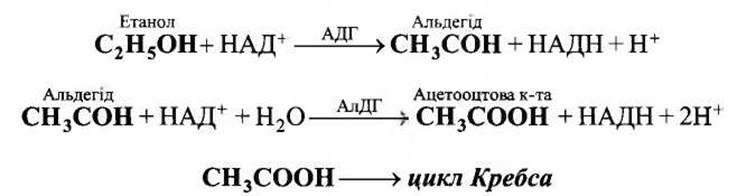
The oxidation of ethanol results in the accumulation of reduced NAD and a corresponding decrease in the concentration of its oxidized form. Given that most oxidative processes in the liver rely on NAD+ (such as the metabolism of triglycerides, Fatty acids, and Hormones), severe impairment of hepatocyte function may occur. Furthermore, the resulting acetaldehyde tends to bind to Biomolecules (Amino Acids, Proteins, catecholamines, etc.), disrupting their function and exacerbating metabolic alterations in organs.
A significantly smaller amount of ethanol is metabolized via the hepatic microsomal ethanol-oxidizing system (MEOS):

The Significance of these latter two ethanol biotransformation pathways gradually increases in cases of chronic alcoholism.
It is well established that ethanol oxidation is accompanied by the release of a substantial amount of energy (7.1 kcal/g). This energy is actively utilized by tissues. Concurrently, energy supply processes relying on fats and CARBOHYDRATES are disrupted, as ethanol successfully competes with them, surpassing them in bioavailability. Individuals suffering from chronic alcoholism may derive up to 50% of their daily caloric intake from ethanol. This phenomenon is referred to as the "calorigenic" effect.
Thus, the toxic action of ethanol is mediated through several mechanisms:
- damage to Introduction/36.html">Biological Membranes;
- depletion of the oxidized nicotinamide adenine dinucleotide (NADH) pool;
- formation of acetaldehyde and its adverse effects;
- the "calorigenic" effect.
The narcotic effect of ethanol in the initial stage of poisoning is associated with the impairment of inhibitory processes in the higher Divisions of the Central Nervous system and the disinhibition of subcortical structures. This manifests as euphoria, agitation, impaired motor coordination, and similar symptoms. Following the ingestion of large doses of the toxin, general depression of brain functions occurs, accompanied by loss of consciousness, suppression of the respiratory center, and thermoregulatory disorders.
Respiratory failure in ethanol poisoning is caused by depression of the respiratory center and aspiration-obstructive complications. The genesis of hemodynamic disorders in ethanol poisoning is complex. In addition to the central action of the toxin, a significant role in their development is played by the direct vasodilating effect of acetaldehyde, as well as its ability to weaken myocardial contraction (myocardiotoxic effect). Clinically, these disorders manifest as a collapse-like state, Cardiac Arrhythmias, and pulmonary edema. The prolonged comatose state developing from poisoning with ethanol and its surrogates may, under certain conditions, lead to the compression of large Muscle masses, resulting in compartment syndrome (positional compression syndrome), and—at low temperatures—hypothermia. Metabolic Disorders, Hypoxia, acidosis, and circulatory disturbances that routinely develop in severe ethanol poisoning can lead to cerebral edema and contribute to The formation of diffuse degenerative changes in organs and tissues, impairing their functions.
Clinical Presentation.
Alcohol intoxication and alcohol coma are distinguished. Alcohol intoxication presents as a temporary impairment of bodily functions from which the patient recovers independently without any medical assistance. The external manifestations of alcohol intoxication depend on the individual's personality traits and individual physiological response to alcohol (the presence of acquired tolerance). The clinical picture of intoxication is characterized by two distinct effects of alcohol: euphoric and narcotic.
Alcohol coma has two stages: superficial and deep, with each stage potentially occurring in uncomplicated or complicated forms. Superficial coma is manifested by loss of consciousness, diminished corneal and pupillary Reflexes, and reduced pain sensitivity. Patients exhibit inconsistent neurological signs: preserved or hyperactive tendon reflexes, jaw muscle trismus, muscle rigidity, myofibrillation; motor agitation, meningeal signs, and seizures may occur. Ocular signs are typically inconsistent («dancing pupils», primarily manifesting as miosis, or less frequently, mydriasis in response to pain or medical manipulation; roving Eye Movements, transient anisocoria). Findings include flushed facial Skin, tachypnea, tachycardia, and Hypertension. In some cases, asphyxia develops due to glossoptosis (backward Displacement of the Tongue) or aspiration of vomit.
Deep coma is characterized by profound suppression of all types of reflex activity, ophthalmoplegia, meningeal irritation signs, and the appearance of pathological plantar reflexes. The patient's skin is pale-cyanotic, cold, and covered in cold, sticky sweat. The core body Temperature is lowered to 36–35 °C.
Impaired Respiration manifests as various obstructive-aspiration complications, such as glossoptosis, hypersalivation, bronchorrhea, laryngospasm or bronchospasm, and aspiration of vomitus, leading to Pulmonary Atelectasis or Mendelson's syndrome. Central-type respiratory failure is a rarer complication, occurring exclusively in deep coma.
Cardiovascular system disorders are nonspecific. They manifest as tachycardia, and as the coma deepens, they tend toward a reduction in vascular tone, causing a drop in blood pressure down to vascular collapse. Microcirculatory disorders are observed, clinically manifested by skin pallor and mottling, acrocyanosis, and conjunctival injection.
Recovery from alcohol coma occurs gradually, accompanied by the restoration of reflexes, muscle tone, the appearance of myofibrillations, and shivering-like hyperkinesia. In most poisoned individuals, the restoration of consciousness is preceded by psychomotor agitation with episodic illusions and hallucinations, alternating with periods of Sleep. Epileptiform seizures are possible. Less commonly, emergence from alcohol coma occurs without psychomotor agitation and is characterized by somnolence and adynamia.
The diagnosis of alcohol intoxication is generally straightforward. However, alcohol intoxication is frequently combined with other pathological conditions that can significantly worsen the prognosis: traumatic brain injury, hypothermia, ingestion of sedative-hypnotic drugs, stroke, Diabetes Mellitus, etc. The dynamics of the patient's condition are of critical diagnostic importance. The absence of noticeable improvement despite intensive Treatment for alcohol intoxication over 3 to 5 hours indicates undiagnosed complications—primarily cerebral—or a non-alcoholic Etiology of the coma.
Treatment.
Management of patients in a state of alcohol coma should begin with the restoration of adequate pulmonary ventilation. In cases of aspiration-obstructive respiratory disorders, the oropharynx is cleared, followed by the insertion of an airway or a laryngeal mask. To reduce salivation and bronchorrhea, atropine (0.5–1.0 ml of a 0.1% solution) is administered parenterally or intratracheally. For central-type respiratory disorders, endotracheal intubation followed by airway suctioning is indicated. Subsequently, Oxygen therapy, postural drainage, and chest vibration massage are performed. If endotracheal intubation has not been performed, the patient must be transported in a fixed lateral (recovery) position.
Severe hemodynamic disturbances must be corrected prior to gastric lavage. To this end, infusion therapy is administered, including 5% glucose, isotonic sodium chloride solution, polyionic solutions, and sodium bicarbonate solution. The Use of high doses of analeptics (such as caffeine, cordiamine, and others) in cases of deep coma is inappropriate, as they increase the brain's oxygen demand and provoke generalized seizures. Once acute respiratory and hemodynamic disorders have been addressed in a deeply comatose patient, tracheal intubation is performed, followed by gastric lavage.
Gastric lavage is performed via a gastric tube with the patient lying on their left side, using 300 ml portions of water until the washout water is completely clear. Special attention should be paid to the most complete removal of the final portion of the lavage fluid, which is achieved by varying the insertion depth of the tube and applying moderate pressure to the patient's epigastric region.
Activated charcoal exhibits poor adsorption of ethanol. Its administration is indicated only when ethanol intoxication is combined with other poisons.
To eliminate absorbed poison, Forced diuresis is employed. In severe cases, particularly with combined poisonings, early hemodialysis is indicated (within up to 6 hours from the moment of poisoning).
To correct metabolic acidosis, a 4% sodium bicarbonate solution is administered intravenously. To accelerate alcohol oxidation, intravenous infusions of glucose with Insulin, sodium thiosulfate, and a vitamin complex (C, B1, B6, nicotinic acid) are given. Intravenous administration of cytoflavin and mexidol solutions is also recommended whenever possible.
For psychomotor agitation, seizures, and withdrawal syndrome, benzodiazepines, barbiturates, and magnesium sulfate are prescribed. The administration of barbiturates requires caution due to their suppressive effect on the respiratory center.
Stage-by-stage treatment.
Initial medical care: Management of acute respiratory and cardiovascular disorders — Oral Cavity clearance; insertion of an airway or laryngeal mask; oxygen therapy, tracheal intubation, and mechanical ventilation (in cases of respiratory failure and coma); administration of glucose (40% — 40 ml) with ascorbic acid (5% — 5-10 ml) or 200 ml of a 5% glucose solution with 10 ml of cytoflavin intravenously (drop by drop); gastric lavage via a tube followed by the administration of magnesium sulfate (30 g); rewarming in case of hypothermia. Transport in a fixed lateral position.
Advanced medical care: alongside the initial medical measures, tracheal intubation and mechanical ventilation are performed as needed, along with infusion therapy using sodium bicarbonate solution (4% — 200-400 ml), glucose (10% — 400 ml), isotonic sodium chloride solution, sodium thiosulfate (30% — 50 ml), euphylline (2.4% — 10 ml), as well as glucocorticoids and a vitamin complex; forced diuresis; dehydration therapy for cerebral and pulmonary edema; Antibiotics; and in cases of agitation — seduxen (0.5% — 4-6 ml) or barbiturates.
Specialized care: Structure/175.html">Implementation of the full range of measures specified in the section on ethanol poisoning. In severe cases, particularly with combined poisonings — hemodialysis.
5.4.1.2. Methanol Poisoning
Methyl alcohol (CH3OH, methanol, carbinol, wood alcohol) is a colorless, odorless liquid with a taste resembling ethanol. It is readily miscible with water, ether, ethyl alcohol, and other alcohols. Its density is 0.81 g/cm3, and its boiling point is +66 °C. It is used as a solvent, a component of motor and rocket fuels, and for the production of formaldehyde and certain Dyes.
Acute poisonings mostly occur as a result of accidental (unintentional) ingestion of methyl alcohol. Inhalation and percutaneous intoxications are possible only under specific conditions (spilling a large body surface area without prompt decontamination, prolonged exposure to an atmosphere containing high concentrations of the poison). Severe percutaneous poisonings in infants have been documented when methanol was used for alcohol compresses.
According to literature data, the lethal dose of methyl alcohol for adults upon ingestion varies widely. In some cases, victims die after consuming 10-30 ml of the poison, whereas in others, 250-300 ml or more is required. On average, the lethal dose of methyl alcohol is considered to be 100 ml. In group poisonings, mortality can reach 30-40%.
Mechanism of action and pathogenesis.
Following ingestion, methanol is rapidly absorbed and distributed throughout biological fluids in a characteristic manner. Average lethal plasma concentrations of the poison are 1 g/L in adults and 0.4 g/L in children. Methanol is predominantly metabolized in the liver (94%), with 5% excreted unchanged by the kidneys and 1% expired through the Lungs. The half-life (T0.5) of methanol ingested in small doses ranges from 14 to 27 hours, increasing up to 30 hours following the ingestion of large doses.
The metabolism of methanol has been studied in considerable detail (Fig. 3). The primary metabolites of methanol are formaldehyde and formic acid (formate); the transformation of formaldehyde into formate occurs rapidly, whereas The breakdown of formic acid into carbon dioxide and water is very slow. As a result, a significant amount of formate accumulates in biological fluids.

Fig. 3. Pathway of methyl alcohol metabolism involving alcohol dehydrogenase (ADH) and aldehyde dehydrogenase (ALDH)
The biological action of the unchanged methanol molecule is limited to a narcotic effect. The toxicity of methyl alcohol is attributable to formaldehyde and formic acid. These metabolites exert a primary and multifaceted effect on the body's biochemical systems. The Morphology/3.html">MAIN DIRECTIONS OF this action include:
- inhibition of Oxidative Phosphorylation AND development of ATP deficiency;
- metabolic acidosis (resulting both from impaired oxidation and the accumulation of formate);
- decreased reduced Glutathione levels and sulfhydryl group deficiency;
- formation of conjugates with BIOLOGICALLY ACTIVE SUBSTANCES — amines, vasoactive compounds, Neurotransmitters, NUCLEOTIDES, etc.
Methanol is a potent neurovascular poison. Its primary targets are the brain, the retina, and the Optic nerve, which are the most sensitive to ATP deficiency. Oculotoxic manifestations appear at various intervals following ingestion of the poison (ranging from 40 minutes to 72 hours). Ophthalmoscopy reveals optic disc edema developing as a consequence of demyelination. The underlying cause of visual organ damage is the disruption of phosphorylation processes within the cytochrome oxidase system (cytochrome a). Consequently, energy production is impaired, leading to altered mass Transport of substances across the axolemma, which results in demyelination and overall Atrophy of the optic nerve. These lesions are exacerbated by metabolic acidosis, disturbances in the metabolism of vasoactive substances and neurotransmitters, disorders of systemic and cerebral hemodynamics, increased membrane permeability, and fluid redistribution leading to cerebral edema. General cerebral disorders accompanied by vital function impairments are the primary cause of death in victims of methanol poisoning.
Clinical presentation.
The Development of methanol poisoning is characterized by a specific staged progression. The following periods of intoxication are distinguished: initial, latent, pronounced manifestations, recovery, and sequelae. According to severity, poisonings are classified into mild, moderate (ophthalmic), and severe (generalized) forms.
Some time after ingestion of the poison, a state of intoxication occurs, lasting up to several hours. Characteristically, the degree of intoxication is usually less than would be expected from consuming an equivalent amount of ethanol. The euphoric component is less pronounced; lethargy, headache, and nausea are often observed even in this early stage. Intoxication caused exclusively by methanol typically does not reach a profound level with a rapid onset of the narcotic phase, although drowsiness is a very characteristic sign in these patients.
Immediately following intoxication comes the latent period, the duration of which averages 12-16 hours, though it can shorten to 2-5 hours or extend to 1-4 days. A prolonged latent period does not indicate mild poisoning.
The severity of intoxication is determined by the prominence of symptoms in the subsequent stage, which is characterized by encephalopathic disorders, visual impairments, and gastrointestinal syndrome.
In mild poisoning, patients complain of general weakness, headache, dizziness, a sensation of fog, a grid-like veil, or flickering before the eyes, abdominal pain, nausea, and vomiting. Objective Examination reveals moderate pupillary dilation with a sluggish reaction to light. The duration of these symptoms usually does not exceed 3-4 days, and signs of asthenization persist for a week. Vision recovers completely, and no long-term sequelae are observed.
Moderate poisonings initially present with the same symptomatology as mild intoxications, but in a more pronounced form. Subsequently, symptoms originating from the visual organs come to the forefront—specifically, a progressive decrease in visual acuity up to complete blindness. In some cases, following a sharp drop in visual acuity, sight may temporarily recover after 3–4 days, only for a new deterioration to occur 1-2 weeks later, which is generally irreversible. Methanol poisoning is typically characterized by a combination of these visual disturbances with pupillary dilation and unresponsiveness to light.
Early ophthalmoscopy reveals edema of the retina and the optic disc, venous engorgement, and occasionally small hemorrhages; later on, pallor of the optic disc, arterial narrowing, and signs of acute optic neuritis and optic atrophy are observed.
In the acute stage of moderate poisoning, the development of other complications is possible—myocardial dystrophy, Pneumonia, pancreatitis, and peripheral neuritis. Severe abdominal pain observed in some patients may prompt an unnecessary exploratory laparotomy. Asthenization persists for 2-3 weeks following the intoxication. The most serious sequela is blindness or varying degrees of visual acuity reduction that cannot be corrected with optical AIDS.
The severe form of poisoning is characterized by the rapid and turbulent development of symptoms. Following the latent period, there is sudden weakness, severe headaches, abdominal pain, calf muscle pain, repeated vomiting, and visual disturbances. Psychomotor agitation is observed, followed by sopor and coma. The skin of the face and neck turns purplish-cyanotic. The pupils are markedly dilated and do not react to light. Respiration is frequent and noisy (acidotic). Muscle rigidity, signs of meningeal irritation, and centrally mediated respiratory and circulatory disturbances are observed. In the acute stage, severe changes in vital organs and systems may manifest—myocardial dystrophy with cardiac arrhythmias, pneumonia and pulmonary edema, pancreatitis, as well as hepatopathy and nephropathy. However, liver and Kidney damage, even in severe methanol poisonings, remains moderately expressed, and acute hepatic and renal failure generally does not have time to develop.
Death in affected individuals typically occurs on days 1–2 as a result of centrally mediated respiratory and Circulatory Disorders. In a more favorable course, consciousness gradually returns, while visual disturbances and symptoms of organ and system complications come to the forefront. Asthenization persists the longest, frequently combined with signs of micro-organic brain damage and persistent visual impairments.
Diagnosis.
The diagnosis of methanol poisoning takes into account Anamnesis data, the staged progression of the disorder, the presence of a methanol odor on the breath, early visual disturbances combined with pupillary dilation and a sluggish light reflex, symptoms of metabolic acidosis, the detection of methanol in biological fluids, and the results of chemical-toxicological Analysis of the remnants of the consumed liquid.
As a rapid screening test for poison residues, the glowing copper wire test can be used; when immersed in methanol, a characteristic formaldehyde odor is emitted. The primary method of chemical-toxicological investigation is Gas-Liquid Chromatography. The detection of methyl alcohol in biological fluids is possible for 3–5 and even up to 7 days from the moment the poison was ingested.
Treatment.
In acute oral methanol poisonings, unabsorbed poison must be removed from the gastrointestinal tract as quickly as possible. For this purpose, vomiting is induced, tube-free followed by tube gastric lavage is performed, saline laxatives are administered, and the bowels are cleansed. Gastric lavage is carried out using a 1-2% sodium bicarbonate solution or a weak potassium permanganate solution. Administering activated charcoal orally is inexpedient, as it does not adsorb methanol. Over the course of 2-3 days, repeated washings or continuous gastric irrigation with a soda solution are indicated to remove methanol eliminated by the mucous membrane.
The specific antidote for methyl alcohol is ethanol, which competes with methanol for alcohol dehydrogenase and other alcohol metabolism enzymes, thereby preventing the formation of formaldehyde. Ethanol is administered orally; the initial single dose is 100-150 ml of a 30% solution, after which ethyl alcohol is given at a rate of 50-100 ml of the aforementioned solution every 3-4 hours for 3-4 days. The daily dose of ethanol is 1.5-2 ml per 1 kg of body weight. In addition to oral administration, ethanol is administered intravenously (into a peripheral vein as a 5-10% solution diluted in 5% glucose; a 30% solution can be used for central venous administration) at a daily dose of 1-1.5 ml/kg. Regular repeated administrations of ethyl alcohol are crucial to maintain its blood concentration at a level of 1 g/L (corresponding to mild intoxication). This ensures its effective competition with methanol. If the ethanol content in biological fluids drops below this specified level, the toxicity of methyl alcohol resumes. It should be noted that antidote therapy must be initiated no later than 18 hours after poisoning.
To neutralize the metabolites of the poison, high doses of Folic acid are prescribed at a daily dose of 1-1.5 mg/kg for 2-3 days.
Pyrazole derivatives (4-methylpyrazole, 4-bromopyrazole), which act as alcohol dehydrogenase inhibitors, can be used as antidotes.
To eliminate the absorbed poison and its metabolites from the body, forced diuresis with alkalinization, hemodialysis, and peritoneal dialysis are employed. Hemodialysis is the most effective method, providing a methanol blood clearance of up to 140 ml/min. During hemodialysis, the dose of ethanol must be doubled. The optimal timeframe for these measures is the 1st–2nd day. Hemoperfusion is ineffective in methanol poisonings.
Pathogenetic and symptomatic therapy should begin with the correction of metabolic acidosis. For this purpose, sodium bicarbonate is prescribed (3-5 g orally every 2-3 hours or 100-150 ml of a 4% solution intravenously) under the control of blood acid-base balance parameters or until the urine reaction becomes alkaline. In the event of cerebral edema, which is frequently observed in severe methanol poisonings, dehydration therapy is performed (administration of oral glycerin, intravenous Diuretics, craniocerebral hypothermia, and therapeutic lumbar punctures). To combat hypoxia, circulatory disorders, and metabolic disturbances, oxygen therapy, infusions of plasma expanders and glucocorticoids, as well as solutions of piracetam and aminophylline are used; complexes of Vitamins (C, B1, B6, PP, B12), ATP, cardiovascular medications, and antibiotics are administered.
For progressive visual disturbances, retrobulbar injections of atropine, prednisolone, etc., are indicated. The treatment of patients with methanol poisoning must be carried out in collaboration with an ophthalmologist and a neurologist. All affected individuals must be hospitalized in specialized centers or departments.
Staged treatment.
First-line medical aid: tube gastric lavage followed by the introduction of sodium bicarbonate (5-6 g), a saline laxative (30 g), ethyl alcohol (30% 150 ml), and folic acid (20-30 mg) through the tube; oxygen inhalation. Urgent evacuation from the poisoning site adhering to safety rules and equipment (gas masks, protective masks, etc.).
Qualified care: repeated tube gastric lavage, administration of ethyl alcohol (50-100 ml of a 30% solution orally every 4 hours or 300-500 ml of a 5% solution in 5% glucose intravenously); folic acid (20-30 mg); implementation of forced diuresis with alkalinization (sometimes up to 1 L of 4% sodium bicarbonate is administered intravenously). Glucose (40% 40-60 ml), aminophylline (2.4% 10 ml), prednisolone (60-90 mg), vitamins (C, B1, B6, PP, B12), and ATP (1% 2-4 ml) are continued. Oxygen therapy, cardiovascular medications, antibiotics, and dehydration measures in case of cerebral edema are also applied. Evacuation to a specialized center.
Specialized care: implementation of the measures specified in the previous section, administration of hemodialysis, retrobulbar injection of medications, measures for the Prevention and treatment of complications, and rehabilitation measures.
Last update: 08/08/2026
Editorial and Educational Adaptation: This material has been compiled based on the primary/original source text. The project team performed an editorial review, corrected technical inaccuracies, structured sections, and adapted the content for an educational format.
What was processed:
- elimination of formatting defects (OCR errors, structural breaks, corrupted characters);
- editorial organization of content;
- standardization of terminology in accordance with academic sources;
- verification of factual statements against the original source text.
All mentions of the author, publication year, and origin of the primary text have been preserved in accordance with the source.