BOTANY, VOLUME 2 - PLANT PHYSIOLOGY - 2007
6. METABOLIC PHYSIOLOGY
6.16. Secondary Metabolism
Processes occurring within an Organism that are not part of primary METABOLISM, yet are a consequence of it, are collectively termed Secondary Metabolism, and the substances produced through these processes are known as secondary metabolites. Such compounds, which vary greatly in chemical Structure (over 200,000 structures are already known), are often found only in specific plant groups and are of significance in biochemical systematics. Each species is characterized by its own distinct spectrum of various secondary metabolites, many of which are synthesized continuously, whereas the synthesis of others is induced only after exposure to specific biotic or abiotic environmental factors.
Secondary metabolites perform a vast array of ecophysiological Functions (see ch. 9; 13.8). They act as attractants or deterrents, prevent animals from feeding on plants, exhibit bactericidal properties, or serve as growth inhibitors against competing plants (allelopathy, see 9.5). The vast majority of secondary metabolites form a unique chemical shield behind which the plant successfully hides from a countless multitude of enemies—herbivores and pathogenic microorganisms (Viroids, Viruses, Bacteria, Fungi). When considering the number of potential plant enemies (two-thirds of all animal species are herbivores, 30% of all fungal species, 10–15% of all bacterial species, 45% of viruses, and all viroids without exception are phytopathogenic), the predominantly invulnerable or lowly vulnerable plant kingdom demonstrates remarkable efficiency in its defense mechanisms (quantitatively). Alongside plant metabolites, these include mechanical barriers (thorns, spines, Cell walls, cuticles, etc.). It is hardly surprising that quite a few secondary metabolites are toxic (Table 6.24): overall, over 17,000 toxins have been isolated from plants, many of which are poisonous to humans. Over centuries of selective breeding of crops intended for human consumption, their agricultural utility was generally determined by reducing the content of toxins and bitter compounds that are harmful to humans but essential to the plant as defensive substances (through elimination from Selection). Precisely for this reason, agricultural plants rendered relatively defenseless against herbivores and pathogens were selected as monocultures, and the threat of epiphytotics became inevitable. For example, the potato epiphytotic caused by the fungus Phytophthora infestans in Ireland in 1845–1846 caused a famine that claimed the lives of nearly a million people and forced a significant portion of the population (1.5 million) to emigrate (mostly to the USA). Only when natural defense mechanisms, lacking in cultivated plants, were largely replaced in the 20th century by chemical plant protection agents did food supply reach a high level with the intensification of agriculture.
Class="center">Table 6.24. Main groups of plant poisons
Class of substance |
Approximate number of known compounds |
Example |
Source |
10000 |
Senecionine |
Senecio jacobaea |
|
Cardiac Glycosides |
200 |
Digitoxin |
Digitalis purpurea |
Cyanogenic glycosides |
60 |
Amygdalin |
Prunus amygdalus |
Glucosinolates |
150 |
Sinigrin |
Brassica oleracea |
Furanocoumarins |
400 |
Xanthotoxin |
Pastinaca sativa |
250 |
Aucubin |
Aucuba japonica |
|
Isoflavonoids |
1000 |
Rotenone |
Derris elliptica |
Non-protein Amino acids |
400 |
β-Cyanoalanine |
Vicia sativa |
Polyacetylenes |
650 |
Oenanthotoxin |
Oenanthe crocata |
800 |
Hypericin |
Hypericum perforatum |
|
Saponins |
600 |
Lemmatoxin |
Phytolacca dodecandra |
Sesquiterpene lactones |
3 000 |
Hymenoxin |
Hymenoxis odorata |
50 |
Viscotoxin |
Viscum album |
|
100 |
Abrin |
Abrus precatorius |
The diverse effects that plant secondary metabolites exert on The Human Body (such as toxic, analgesic, anti-inflammatory, and narcotic effects) were discovered and utilized at very Cytology/cytology/16.html">Early stages of Human Evolution. Pharmacology presumably arose even earlier than agriculture. To this day, secondary metabolites remain an inexhaustible source of medicinal raw Materials—for instance, the cardiac glycoside vinblastine, used to treat Heart Failure; taxol, employed in combating certain forms of Cancer; codeine, an expectorant; and morphine as an analgesic.
Next, using a small number of compounds as Examples, we will examine the STRUCTURE AND FUNCTIONS of certain secondary metabolites. Among them, phenols, terpenoids, and alkaloids are the most abundantly represented.
Phenols share a common structural feature: at least one aromatic ring substituted with one or more OH groups. These groups, in turn, may also undergo substitution (e.g., —OCH3, a methoxy group). Phenols are derived via Various metabolic pathways. The most significant of these are:
✵ the shikimate pathway and metabolic pathways originating from it;
✵ the acetate-malonate pathway;
✵ the terpenoid Biosynthesis pathway (see 6.12.2);
✵ combinations of all pathways.
Examples of phenols synthesized via the shikimate pathway are shown in Fig. 6.114. These include electron carriers in Photosynthesis—plastoquinone and phylloquinone (see Fig. 6.56)—as well as ubiquinone, a component of the Respiratory Chain redox system (see Fig. 6.95), and α-tocopherol, which is present in plastid membranes and protects Membrane Lipids from oxidation. Juglone is a naphthoquinone found in the fruits and leaves of the walnut (Juglans regia), which accounts for their allelopathic and antimicrobial properties (see 9.5, Fig. 9.23).
Fig. 6.114. The shikimate pathway for the synthesis of some common groups of Phenolic Compounds. The residue R represents all substituents without exception. For clarity, THE ORIGIN OF certain carbon atoms from corresponding substances is indicated by a dot in the figure

An important role in phenol metabolism is played by the family of cinnamic acids and its numerous derivatives. A small subset of this family is shown in Fig. 6.114. Cinnamic acid is synthesized in Plastids from phenylalanine (phenylalanine ammonia-lyase reaction, PAL reaction, Fig. 6.115). PAL is a key enzyme in phenylpropanoid metabolism and is regulated by multiple factors (e.g., light, wounding, pathogen infection). Phenylpropanoids are characterized by the presence of a single benzene ring and a linear C3 side chain, as seen in cinnamic acid. This term is also frequently used to designate derivatives and metabolites of this acid. Enzyme Inhibitors, such as 2-aminoindan-2-phosphonic acid (AIP), have greatly facilitated The Study of PAL and phenylpropanoid functions.
Characteristic substitutions yield cinnamic acid derivatives (see Fig. 6.115) that, together with the parent acid, form the cinnamic acid family. The variation of the basic structure through substitution gives rise to a multitude of plant secondary metabolites. Coumarins are secondary metabolites formed from cinnamic acid; they exert a deterrent effect on herbivores due to their bitter taste (found, for example, in sweet clover and woodruff). The biosynthesis of coumarins is illustrated in Fig. 6.116. Bitter compounds are released only upon tissue damage, whereas in the intact cell they are stored in vacuoles as precursors.
Fig. 6.115. Synthesis and substitution of trans-cinnamic acid. 2-Aminoindan-2-phosphonic acid is a potent competitive inhibitor of phenylalanine ammonia-lyase

Fig. 6.116. Biosynthesis of coumarin. Other members of the cinnamic acid family react in a similar manner to yield the corresponding substituted coumarins (see Fig. 6.115)

Through β-oxidation, cinnamic acids are converted into phenolic carboxylic acids. Thus, cinnamic acid itself yields benzoic acid, which upon ortho-hydroxylation gives salicylic acid, a phenol with bactericidal properties. At the same time, its potential additional function as a signaling molecule during the induction of systemic acquired resistance (SAR1, see 9.3.1, 9.3.4) is under Discussion. Cinnamyl alcohols are produced from cinnamic acids via reduction and serve as the monomeric structural units of Lignin. The biosynthesis of lignin is discussed in Section 6.17.2.
1 From English Systemic Acquired Resistance. — Editor's note.
Flavonoids and their derivatives (the basic structure is shown in Fig. 6.114, subsequent structures in Fig. 6.117) represent a large group of secondary metabolites with diverse functions. They are predominantly found in angiosperms and have not yet been detected in Algae, fungi, liverworts, and mosses. Based on The structure of the oxygen-containing heterocycle, flavonoids are subdivided into various groups whose biosynthetic relationships are shown in Fig. 6.117. Common to all of them is a flavan base moiety. Biosynthesis begins with "activated" p-coumaric acid, p-coumaroyl-coenzyme A. Three molecules of malonyl-CoA are successively attached to this initial molecule via the enzyme chalcone synthase, followed by carboxylation and Cleavage of coenzyme A. This yields a ketone intermediate, which cyclizes into a chalcone with the elimination of a fourth coenzyme A molecule. Stepwise via The formation of flavanone, dihydroflavanol, and flavan-3,4-diol, the anthocyanidin group is ultimately formed, in which the $\pi$-electron systems of aromatic rings A and B are conjugated with each other through an unsaturated heterocycle. Consequently, anthocyanidins absorb visible light. Depending on the type of substituent, their solutions range in color from soft pink to dark blue, whereas the other flavonoid groups presented here absorb ultraviolet light.
Fig. 6.117. Biosynthesis of certain groups of flavonoids from p-coumaroyl-CoA and malonyl-CoA. The names of the corresponding substances are given in parentheses beneath the names of the flavonoid groups. Flavonoids are typically stored in vacuoles as glycosides (see text). Further substitutions in the B-ring (-OH, -OCH3 groups) occur at the stage of formation of various flavonoid groups. Along with this, instead of the biosynthesis of p-coumaroyl-CoA, the synthesis of one of the highly substituted cinnamic acids may take place (rather than cinnamic acid itself). Flavanone 3-hydroxylase and anthocyanidin synthase belong to the group of Fe2+- and ascorbate-dependent Dioxygenases, which oxidize 2-oxoglutarate as an additional cosubstrate. For the reaction chemistry, see Fig. 7.53.

The basic flavonoid structures vary depending on the substituents of the B-ring (for substitution patterns, see Fig. 6.115) as well as the glycosylation at various positions (the OH groups of the A-ring and the heterocycle, and less frequently of the B-ring), resulting in a remarkable structural diversity. Flavonoid
glycosides are stored in vacuoles. They act as pigments that protect Cells against UV radiation (found in high concentrations in epidermal cells!), while anthocyanins (anthocyanidin glycosides) serve as Water-soluble vacuolar pigments in flowers (e.g., roses, larkspur, corn cockle, begonia), leaves (e.g., red cabbage), and fruits (e.g., apples), and less commonly in roots (balsam). Their colors range across the entire spectrum from pale pink to dark blue and violet, depending on the type of substituent, pH level, and cation interactions within the vacuolar sap. Some anthocyanins form high-molecular-weight complexes incorporating Metal Ions, sugars, and other metabolites. Flavonoids are also thought to possess antioxidant properties. Catechol-type flavonoids (featuring two adjacent OH groups on the B-ring) are exuded from roots as siderophores. Bacteria of the genera Rhizobium (ROOT nodule symbionts) and Agrobacterium (the crown gall pathogen) use root-exuded flavonoids as signaling molecules to recognize their host plants (see 9.2.1, Box 9.2).
Isoflavones are formed from flavonoids via the isomerization of the B-ring (Fig. 6.118). The isoflavone genistein, isolated from Genista tinctoria and soybeans, acts as a Tyrosine kinase inhibitor used in the Treatment of leukemia. Daidzein, another isoflavone, serves as a precursor to pterocarpanes (such as glyceollin found in soybeans, Glycine max). These compounds function as phytoalexins. Broadly speaking, they are antimicrobial secondary metabolites synthesized by plants in response to pathogen attack (i.e., induced by pathogens—see 9.3.4). Pterocarpanes and isoflavones, predominantly occurring in legumes, exhibit both fungicidal and bactericidal properties.
Fig. 6.118. Formation of isoflavones through the oxidative isomerization of flavanones and the subsequent synthesis of pterocarpanes from isoflavones (atoms belonging to the isoflavone precursors are highlighted in grey).

Alongside the shikimate pathway for synthesizing the A-ring of flavonoid derivatives, we have examined a second pathway for aromatic ring biosynthesis in plant cells, known as the acetate-malonate pathway (where malonyl-CoA is produced via the carboxylation of acetyl-CoA, see Fig. 6.102). Because repeated Condensation of acetate units in these reactions does not involve reduction steps (unlike FATTY ACID BIOSYNTHESIS), it yields reactive intermediates that do not occur in a free state, known as Polyketides. These intermediates undergo cyclization to form hydroxylated benzene rings. Substances generated through such polyketide aromatization are termed acetogenins. This biosynthetic pathway in plants and microorganisms—particularly in fungi and bacteria—leads to the synthesis of numerous benzoic acid derivatives, including anthraquinones, various Antibiotics (such as Tetracyclines in Streptomyces species or griseofulvin in Penicillium species), and diverse lichen acids. Polyketide synthases are multifunctional Enzymes that are now produced recombinantly and utilized in Streptomyces cultures for the biotechnological synthesis of antibiotics. An example of simple acetogenin biosynthesis is shown in Fig. 6.119. Plumbagin, a naphthoquinone, is accumulated in high concentrations in the leaves of Drosophyllum lusitanicum, a member of the sundew family. It possesses bactericidal activity, which is believed to protect the mucilaginous leaf Organs of these carnivorous plants from fungal and bacterial infections. It is worth noting that juglone, a compound structurally very similar to plumbagin, is synthesized via an entirely different pathway (see Fig. 6.114): structural resemblance does not always imply A common biosynthetic origin!
Fig. 6.119. Biosynthesis of plumbagin in Drosophyllum lusitanicum via the acetate-malonate pathway. The intermediate polyketo compound does not exist as a free reaction product.

A third pathway for the synthesis of aromatic rings is provided by the biosynthesis of terpenoids, which is discussed in the next section (see 6.16.2).
Terpenoids (or Isoprenoids) comprise all compounds that can formally be broken down into discrete isoprene units and whose biosynthesis originates from isopentenyl pyrophosphate (Fig. 6.120). Based on the number of structural C5 units, terpenoids are classified into groups (Table 6.25) that encompass a multitude of representatives fulfilling A wide variety of functions, including ecological and chemical roles.
Fig. 6.120. Formation of the terpenoid precursor isopentenyl pyrophosphate via the cytoplasmic acetate-mevalonate pathway and the plastidial 1-deoxy-D-xylulose-5-phosphate pathway. For the distribution of both pathways among lower plants and prokaryotes, see the text

It has recently been established that plants can synthesize the C5 unit—isopentenyl pyrophosphate—via two distinct pathways (see Fig. 6.120). Thus, there are:
✵ cytoplasmic biosynthesis, which begins with acetyl-CoA via mevalonic acid as an intermediate;
✵ plastidial biosynthesis, starting from Pyruvate and D-3-phosphoglyceraldehyde via 1-deoxy-D-xylulose-5-phosphate as an intermediate.
The deoxy-D-xylulose-5-phosphate pathway is found in cyanobacteria and certain other bacteria, whereas other bacteria utilize the acetate-mevalonate pathway. Green algae presumably rely exclusively on the deoxy-D-xylulose-5-phosphate pathway, although in Euglena gracilis both cytoplasmic and plastidial isoprenoids are synthesized via the acetate-mevalonate pathway.
The derivation of various classes of higher plant terpenoids from these respective pathways—to the extent currently understood—is illustrated in Fig. 6.121; Fig. 6.122 clearly demonstrates THE PRINCIPLE OF linear C5 unit condensation and the biosynthesis of tri- and tetraterpene precursors.
Fig. 6.121. Compartmentation of terpenoid biosynthesis in higher plants. It remains unclear to what extent synthesized isopentenyl pyrophosphate is exported into the Cytoplasm. DMAPP, dimethylallyl pyrophosphate; FPP, farnesyl pyrophosphate; GGPP, geranylgeranyl pyrophosphate; GPP, geranyl pyrophosphate; IPP, isopentenyl pyrophosphate

Isopentenyl pyrophosphate exists in equilibrium with its isomer, dimethylallyl pyrophosphate. Monoterpenes (C10) are formed when a carbocation—generated from dimethylallyl pyrophosphate following the Enzymatic cleavage of the C—O bond—attacks C1 of isopentenyl pyrophosphate (IPP) (HEAD-to-tail monomer addition to the growing chain). In a similar manner, sesquiterpenes (C15) are formed from geranyl pyrophosphate and IPP, and Diterpenes (C20) from farnesyl pyrophosphate and IPP (Fig. 6.122). The enzymes catalyzing these reactions are termed prenyltransferases. The linear molecules of geranyl pyrophosphate (C10), farnesyl pyrophosphate (C15), and geranylgeranyl pyrophosphate (C20) serve as precursors for a diverse array of transformations yielding various mono-, sesqui-, and diterpenes (see Table 6.25, Figs. 6.122, 6.123). Currently, approximately 1,000 sesquiterpenes and diterpenes have been identified in members of the Asteraceae family alone.
Fig. 6.122. Modular principle of terpenoid synthesis. Head-to-tail condensation yields precursors for mono-, sesqui-, and diterpenes (as well as oligo- and polyterpenes, not shown here) at a preliminary stage; head-to-head condensation of two farnesyl pyrophosphate molecules yields the C30 triterpene precursor squalene, while a similar combination of two geranyl pyrophosphate molecules yields the C40 tetraterpene precursor phytoene

Table 6.25. Overview of terpene classes and some typical representatives
Number of C5 units |
Class |
Example |
Function(s) of the substance(s) |
1 |
Hemiterpenes |
Isoprene |
Membrane protection against high temperatures (?) |
Prenyl residue in Cytokinins |
Phytohormones |
||
Prenyl residue in pterocarpanes |
Phytoalexins |
||
2 |
Monoterpenes |
Thymol, menthol, camphor |
Arthropod deterrents1 |
1,8-Cineole |
Allelopathic agent |
||
3 |
Sesquiterpenes |
Sirenin |
Gamete attractant in Allomyces |
Capsidiol |
Phytoalexin |
||
4 |
Diterpenes |
Phytol |
Anchoring chlorophyll molecules in proteins |
Phytohormones |
|||
Taxol |
Fungicide, Cell Division inhibitor |
||
6 (2 × 3) |
Triterpenes |
Phytosterols (e.g., sitosterol) |
Structural membrane components |
Cardiac glycosides (cardenolides) |
Toxins acting on The Heart and Nervous system |
||
Saponins (e.g., digitonin) |
Bactericidal substances with detergent action |
||
Brassinosteroids |
Growth regulators |
||
8 (2 × 4) |
Tetraterpenes |
Carotenoids (carotenes, xanthophylls) |
Accessory Photosynthetic Pigments, coloring pigments |
6-10 |
Oligoterpenes |
Prenyl residues of plastoquinone, ubiquinone |
Anchoring redox systems in thylakoid or mitochondrial membranes2 |
15 |
Oligoterpenes |
Dolichol |
Oligosaccharide acceptor for glycoprotein biosynthesis, anchored in the ER |
>500 - 100 |
Polyterpenes |
Rubber (all-cis isomer) |
Plant defense substance against herbivory (in milky juice) |
Gutta-percha (all-trans isomer) |
Plant defense substance against herbivory (in milky juice) |
||
Sporopollenins |
Structural polymer of the pollen exine |
1 At low concentrations, monoterpenes attract pollinators and serve as the Main Components of Essential Oils (e.g., rose, geranium, etc.), imparting fragrance to plants and exhibiting bactericidal properties. — Ed. note.
2 This same function is performed by chlorophyll phytol, which consists of 4 isoprene units. — Ed. note.
Hemiterpenes, which typically involve the attachment of one or more prenyl residues to non-terpenoid molecules, include pterocarpanes (glyceollin, see Fig. 6.118) and cytokinins (see 7.6.2), a group of phytohormones. During extreme heat, certain plants, particularly trees (mostly Quercus and Populus species), synthesize isoprene from dimethylallyl pyrophosphate, which is released into the atmosphere. It is quite possible (though not yet proven) that isoprene protects photosynthetic membranes from thermal damage. Isoprene production can be substantial, ultimately leading to a 15–50% loss of fixed carbon. The blue haze observed over forests during hot weather is a consequence of isoprene emission. Pyrethrins (in Chrysanthemum species) are hemiterpenes in which two C5 units are bonded to each other and to a cyclopropane ring (see Fig. 6.123). They are highly potent natural insecticides that are also produced commercially.
Fig. 6.123. Examples of structures of characteristic representatives of various terpenoid classes

• Monoterpenes are found in large quantities in Essential oils and can perform both attractive and deterrent functions (the latter primarily directed against Arthropods). Camphor and 1,8-cineole are components of volatile allelopathic agents produced by Salvia leucophylla in Californian chaparral; their vapors spread 1–2 m around the sagebrush bushes and strongly inhibit the growth of other plants (see 9.5).
An example of a sesquiterpene is juvabione in the wood of balsam fir (Abies balsamea), which inhibits insect development due to functions similar to juvenile Hormones. Another sesquiterpene, sirenin, serves as a gamete attractant (gamone) in the aquatic mold Allomyces (see 8.2.1.1).
Examples of diterpenes include phytol, which anchors chlorophyll to chlorophyll-binding proteins (see 6.4.2), and gibberellins, a class of phytohormones (see 7.6.3). Taxol from the Pacific yew (Taxus brevifolia) is a highly substituted diterpene stored in the bark, which is believed to exert toxic effects on fungi. Taxol binds to the microtubules of the mitotic spindle (see Box 2.2) and prevents their depolymerization, leading to Cell Cycle arrest in mitosis. This mechanism underlies the cytostatic action of taxol, which is currently used in tumor therapy (effective, for example, in the treatment of breast cancer).
Triterpenes are formed via tail-to-tail dimerization of two C15 units (farnesyl pyrophosphates) (see Fig. 6.122). The synthesized squalene undergoes cyclization to form the sterane Skeleton and serves as the precursor for the biosynthesis of Steroids (e.g., phytosterols, saponins, brassinosteroids) and other terpene classes.
Steroid glycosides include the widely distributed saponins. They occur particularly in the seed coats of many plants, as well as in roots and rhizomes, and serve to protect against bacterial infection. The Toxic Effect of saponins targets membranes: saponins act as detergents (hence the name!)1. Diosgenin, the aglycone of diosgenin glycoside (the sugar-free portion of the glycoside), was for many years extracted from the rhizomes of Central American tropical vines of the genus Dioscorea and used in Pharmaceuticals as a precursor for semisynthetic steroids (e.g., corticosteroids, ovulation inhibitors). However, the rapid depletion of wild populations soon led to an export ban. Today, animal Bile acids supplied by slaughterhouses are used as precursors instead2.
1 From Greek sapo meaning soap. — Ed. note.
2 Methods for the biotechnological production of steroid glycosides from Diosgora cell cultures have been developed in our country. — Ed. note.
Certain strains of the fungus Gaeumannomyces graminis are capable of infecting Avena sativa roots after degrading the saponin (avenacin A-1) located in the root epidermis using their own enzyme. Strains lacking this specific enzyme can only infect Avena species that lack saponin (e.g., Avena longiglumis).
Steroids also include cardiac drugs—cardenolides (cardiac glycosides), such as strophanthidin and digitalis glycosides, specifically digitoxin and digoxin. The latter are primarily used to treat heart failure. In precisely measured doses, they slow the heart rate, but at high concentrations, they are highly toxic to mammals. The toxic action of cardiac glycosides is based on the disruption of nervous system excitability (inhibition of Na+/K+-ATPase). Monarch butterfly caterpillars (Danaus plexippus) feed on milkweed (Asclepias curassavica) and sequester cardiac glycosides in their abdomens. As a result, adult butterflies become unpalatable to their main predators, birds, because the cardiac glycosides induce severe vomiting. Young birds quickly learn to avoid eating monarch butterflies, a behavior reinforced by the butterfly's conspicuous warning coloration.
Similar to triterpenes, tetraterpenes (geranylgeranyl pyrophosphate) arise through tail-to-tail dimerization of two C20 units leading to the formation of phytoene (see Fig. 6.122). Phytoene serves as the precursor for carotenoid biosynthesis (see Fig. 6.50), which we previously mentioned as accessory photosynthetic pigments. Carotenoids impart color to flowers (e.g., violaxanthin in Viola)1 and fruits (the red tomato pigment lycopene is an acyclic carotenoid). Carotenoids are also found in other organs, such as β-carotene in the root vegetables of carrot, Daucus carota. These plasmachromatic (membrane-bound) pigments accumulate in plastids (Chloroplasts, chromoplasts).
1 Carotenoid-based coloration is extremely rare in violets. The typical violet color is imparted by anthocyanins. — Ed. note.
Oligoterpenes consist of 5–15 C5 units. They are found as lipophilic groups in membrane lipids, such as in ubiquinone, plastoquinone, and phylloquinone (see Figs. 6.56; 6.95). Dolichol pyrophosphate (C75) acts as an oligosaccharide donor in glycoprotein biosynthesis within The Endoplasmic reticulum.
Polyterpenes such as rubber (found, for example, in the milky juice of Hevea brasiliensis and Parthenium argentatum) and gutta-percha (from Palaquium palaht, Sapotaceae) also form through the sequential condensation of C5 units, with up to 5,000 units present in rubber. The polymers present in the milky juice protect plants against herbivory. Rubber (the all-cis isomer of polyisoprene) is used to manufacture natural rubber, while gutta-percha (the all-trans isomer of polyisoprene) was formerly used for electrical insulation. Sporopollenin of the pollen grain exine appears to have a similar structure (see Fig. 11.174). Chicle, a rubber-like polyterpene from the sapodilla tree, is used in the manufacture of natural chewing gum.
This group, arguably the largest among secondary metabolites, currently encompasses some 10,000 known substances (see Table 6.24) with highly diverse and sometimes extremely complex structures, found in lower fungi and higher plants alike (Fig. 6.124). Alkaloid-rich families include the Solanaceae, Papaveraceae, Ranunculaceae, and Apocynaceae, whereas plants rich in Terpenes, such as Lamiaceae and Asteraceae, are generally poor in alkaloids.
Fig. 6.124. Examples of structures of typical alkaloid representatives
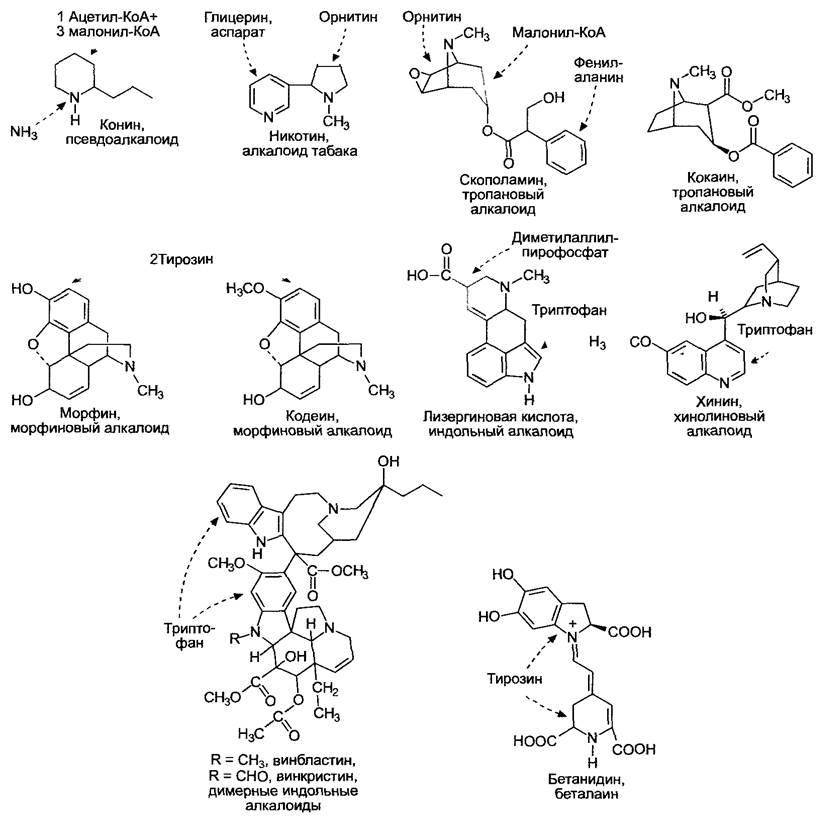
The term alkaloids properly groups together all substances containing heterocyclic nitrogen (which gives them an alkaline reaction); their biosynthesis originates from amino acids. Alkaloids often exert a specific physiological effect on The Nervous System of vertebrates. True alkaloids are contrasted with pseudoalkaloids, whose nitrogen is derived from a non-amino acid source (for example, coniine, the poison of hemlock, Conium maculatum, see Fig. 6.124, where ammonia serves as the nitrogen source). Protoalkaloids are defined as alkaloids formed from amino acids whose nitrogen is not incorporated into a heterocycle (for example, mescaline in Lophophora williamsii, Fig. 6.125).
Fig. 6.125. Biosynthesis of mescaline from L-tyrosine

Alkaloids are most often bitter-tasting compounds or toxins that protect plants from being consumed by herbivores; some are synthesized in elevated amounts during pathogen infection and thus function as bactericidal and fungicidal phytoalexins (e.g., the benzophenanthridine alkaloid macarpine in the California poppy, Eschscholzia californica). The protective action of alkaloids is effective not only against vertebrates but also against invertebrates: tobacco nicotine (Nicotiana tabacum) is a potent insecticide.
Betalains, which are classed among alkaloids, are water-soluble pigments comprising yellow betaxanthins and red-to-violet betacyanins. They occur as floral pigments in the Caryophyllales (e.g., Cactaceae, Amaranthaceae, and the former Chenopodiaceae family — see 11.2). Betalains never co-occur with anthocyanins. The characteristic pigment of the red beet (Beta vulgaris) is betanidin (see Fig. 6.124), a betalain of the betacyanin group. The pigment of the fly agaric cap (Amanita muscaria) is also a betalain. The biosynthetic pathway of betalains appears to have evolved independently at least twice.
The action of alkaloids on the Central Nervous System can induce narcotic dependence on these psychoactive substances. Examples include morphine from the opium poppy (Papaver somniferum), mescaline from the peyote cactus, cocaine from the coca plant (Erythroxylum coca), and ergot lysergic acid alkaloids (Claviceps purpurea), which were already known in ancient times and played a significant role in the cult of the goddess Demeter. Scopolamine, a tropane alkaloid found in certain Solanaceae, served as the primary active ingredient in medieval witches' ointments and, in large doses, induced hallucinations accompanied by the sensation of flight.
However, many alkaloids are more of a blessing than a curse, remaining indispensable as pharmaceuticals. Notable examples include the dimeric indole alkaloids vinblastine and vincristine from the Madagascar periwinkle (Catharanthus roseus), which are used in leukemia therapy; quinine from the cinchona tree (Cinchona), used for malaria prophylaxis; and codeine, a morphine-like substance from the opium poppy that acts as an effective antitussive.
While a detailed overview of the highly complex biosynthesis of all alkaloid types is beyond our scope here, the formation of the protoalkaloid mescaline is illustrated in Fig. 6.125 as a simple representative example.
6.16.4. Glucosinolates and Cyanogenic Glycosides
Due to their widespread occurrence, cyanogenic glycosides and glucosinolates are important secondary metabolites that protect plants against herbivory (furthermore, their occurrence is mutually exclusive). Approximately 60 different cyanogenic glycosides and 150 different glucosinolates are known. Over 2,500 cyanogenic plant species belonging to various families have been described. Glucosinolates are found predominantly in the families of the order Capparales
(e.g., Brassicaceae, Capparidaceae, Tropaeolaceae). Thale cress (Arabidopsis thaliana, Brassicaceae) contains more than 25 different glucosinolates.
Glucosinolates and cyanogenic glycosides are derived from Amino Acids and share early steps in their biosynthetic pathway (via the synthesis of an intermediate aldoxime, Fig. 6.126). A further similarity lies in the storage of their end products as glycosides within vacuoles, where they accumulate in high concentrations as precursors protecting the plant against pathogens and herbivores. Upon tissue disruption, these glycosides are cleaved by enzymes that, in the intact cell, are spatially separated by membranes from their respective substrates (Fig. 6.127).
Fig. 6.126. Biosynthesis and examples of cyanogenic glycosides and glucosinolates. Although the initial biosynthetic steps are identical up to the formation of the aldoxime and both classes of substances originate from amino acids, cyanogenic glycosides and glucosinolates have never been found to co-occur. The cyanogenic glycosides shown here contain glucose as their sugar component. Other sugars also occur alongside glucose, such as gentiobiose in amygdalin (with an aglycone such as prunasin).

Fig. 6.127. Storage and breakdown of cyanogenic glycosides and glucosinolates. Cyanogenic glycosides (A) and glucosinolates (B) represent toxin precursors from which the active toxin (hydrogen cyanide, isothiocyanate, nitrile) is released only after disruption of the cellular structure, for instance, following herbivore damage. In intact cells, substrates and enzymes are segregated through compartmentalization. In sorghum (Sorghum bicolor), for example, the cyanogenic glycoside dhurrin accumulates in the vacuoles of epidermal cells, while β-glucosidase is localized in the chloroplasts and hydroxylase in the cytoplasm of the underlying mesophyll. The glucosinolate sinigrin in horseradish (Armoracia rusticana) is located in the vacuoles, whereas myrosinase resides in the cytoplasm of the same cells.

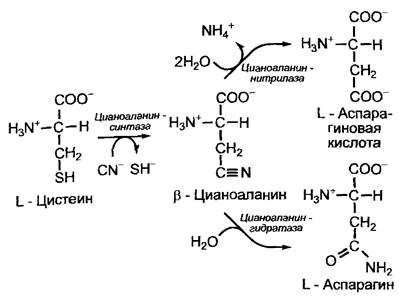
Cleavage of cyanogenic glycosides yields a sugar (frequently glucose or gentiobiose) and an cyanohydrin, which is further split by hydroxynitrile lyases into an aldehyde and hydrogen cyanide (HCN). Hydrogen cyanide is a potent inhibitor of cytochrome c oxidase, thus disrupting mitochondrial Respiration (see 6.10.3.3). Plants detoxify hydrogen cyanide — which is also continuously produced in small amounts during Ethylene biosynthesis — with the aid of β-cyanoalanine synthase and the subsequent conversion of β-cyanoalanine into asparagine and aspartic acid (Fig. 6.128).
Fig. 6.128. Detoxification of cyanide (CN-) in higher plants
Enzymatic breakdown of glucosinolates by myrosinase yields glucose along with an unstable aglycone, which spontaneously degrades into various products, predominantly isothiocyanates (mustard oils) and nitriles, whose formation is likewise enzyme-regulated (see Fig. 6.127). Mustard oils have a pungent odor and a sharp taste (think of horseradish!) and irritate mucous membranes. They disrupt cell membranes, thereby exerting toxic effects on bacteria and fungi. The metabolic fate of thiocyanates within the plant remains unknown. Nitriles formed in this process are degraded by nitrilases into ammonia and the corresponding carboxylic acids. It is hypothesized that indole-3-acetonitrile, derived from glucobrassicin, serves at least during certain developmental stages (such as germination) as a precursor for the plant Growth Hormone indole-3-acetic acid (see 7.6.1.2).
Both glucosinolates and cyanogenic glycosides undergo continuous Synthesis and degradation, meaning they can function as dynamic reserve pools of defensive compounds. It is quite likely that, at least under specific physiological conditions, they also serve as storage reservoirs for nitrogen and sulfur (in the case of glucosinolates), particularly in roots and seeds, where high concentrations of these substances are found. During seed germination, for instance, glucosinolate levels drop sharply.
It is well established that plant secondary metabolites constitute a vital component of plant defense against herbivores and pathogens (see 9.3, 9.4). The deployment of numerous distinct defensive strategies, encompassing a broad spectrum of secondary metabolites (with hundreds of different compounds potentially present within a single plant), provides a robust, broad-spectrum yet non-specific defense mechanism1. Nevertheless, through chemical coevolution, specialized herbivorous animals and pathogens have adapted to specific plant hosts and successfully circumvented their chemical defenses.
1 In Russian literature, the term "horizontal resistance" is used to denote non-specific resistance against a wide range of pathogens. — Ed. note.
Sometimes they even use plant defense compounds for their own purposes. For instance, many glucosinolates are potent deterrents that suppress the appetite of most animals feeding on large white caterpillars (Pieris brassicae), which contain glucosinolates (such as sinigrin). As mentioned earlier, monarch butterfly caterpillars sequester dietary cardiac glycosides (from their host plant genus Asclepias; see 6.16.2). These compounds are passed on to the adult butterfly, protecting the insect from predators, primarily birds.
Lupin alkaloids are highly toxic to most animals. It took a great deal of effort and plant breeding to develop alkaloid-free (sweet) lupins for use as forage crops. In mixed stands of sweet lupins and alkaloid-containing lupins, the sweet lupins quickly disappear due to the grazing activity of herbivores, whereas their poisonous relatives survive. The toxicity of Scotch broom (Cytisus scoparius) is similarly based on the presence of lupin alkaloids (such as sparteine). However, sparteine attracts the aphid Acyrthrosiphon spartii, allowing it to occupy an ecological niche on its host plant that is inaccessible to other animals.
The chemical ecology of pyrrolizidine alkaloids has been studied in particular detail (Fig. 6.129). These alkaloids occur in genera of the Asteraceae family (e.g., Senecio, Eupatorium), as well as in Boraginaceae, the genus Crotalaria (Fabaceae), and the genus Phalaenopsis (Orchidaceae), and occasionally in other families. Pyrrolizidine alkaloids (such as senecionine) are present in plants as polar, water-soluble $N$-oxides and act as bitter, toxic, and mitogenic (cell division-inducing) agents for insects, thus protecting the plant from being eaten by animals. Upon entering the gut, the $N$-oxides are reduced to lipophilic tertiary amines, which readily diffuse into cells, where they are oxidized by cytochrome P450-containing Monooxygenases into pyrroline derivatives. These compounds are strongly hepatotoxic, toxic to the respiratory tract, and act as potent alkylating agents. Larvae of the cinnabar moth Tyria jacobaea (Arctiidae) acquire pyrrolizidine alkaloids from their host plant Senecio jacobaea and retain them through all stages of metamorphosis; pyrrolizidine alkaloids from the Arctiidae species Utetheisa ornatrix (which feeds on the host plant genus Crotalaria, Fabaceae) are even transferred from the parent organism to the eggs. The lack of Toxic effects of these alkaloids in adapted species is due to the fact that the lipophilic tertiary amines entering body cells from the gut are re-oxidized into polar, salt-forming $N$-oxides (see Fig. 6.129). Thanks to the sequestered alkaloids, Arctiid larvae and adults, as well as their eggs, are effectively protected against predators (such as ants). The conspicuous warning coloration of the caterpillars and adults contributes to this defense.
Fig. 6.129. Chemical ecology of pyrrolizidine alkaloids. Following ingestion by a herbivore, the polar alkaloid in the form of an $N$-oxide is reduced in the gut, and the lipophilic tertiary amine enters cells, where it is oxidized to a toxic pyrroline derivative. Adapted insects (such as Arctiid larvae) detoxify the tertiary amines by converting them back into polar $N$-oxides and accumulating them in cells. Some insect species synthesize male sex attractants, such as hydroxydanaidal, from consumed pyrrolizidine alkaloids.
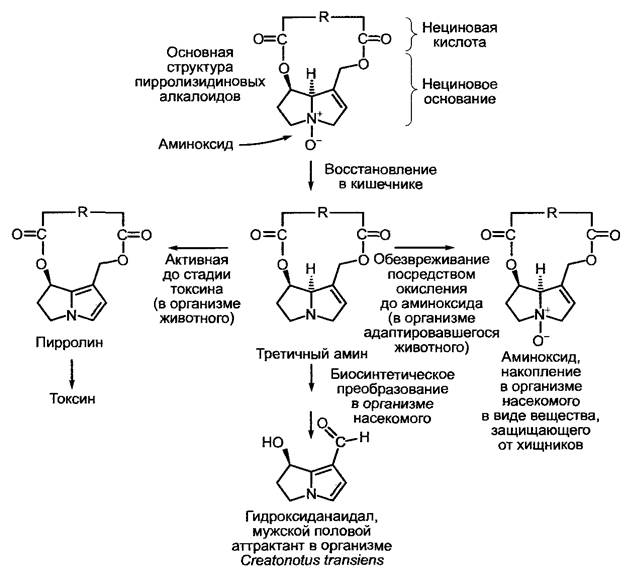
Butterflies of the subfamilies Danainae (e.g., species of the genus Danaus) and Ithomiinae are attracted to pyrrolizidine alkaloids, which are consumed exclusively by the adults—for instance, with nectar. Very often, however, they extract alkaloids from other plant parts by secreting a special liquid from their proboscis and then re-ingesting it with the dissolved alkaloids. Since the plant is not consumed as food, this phenomenon is termed pharmacophagy. Alkaloids can account for 2–20% of the animal's dry weight. Some butterflies that sequester pyrrolizidine alkaloids (such as Danaus plexippus and the Arctiid Creatonotos transiens) synthesize male sex attractants (sex pheromones, e.g., hydroxydanaidal in Creatonotos) from them.
Last update: 07/08/2026
Editorial and Educational Adaptation: This material has been compiled based on the primary/original source text. The project team performed an editorial review, corrected technical inaccuracies, structured sections, and adapted the content for an educational format.
What was processed:
- elimination of formatting defects (OCR errors, structural breaks, corrupted characters);
- editorial organization of content;
- standardization of terminology in accordance with academic sources;
- verification of factual statements against the original source text.
All mentions of the author, publication year, and origin of the primary text have been preserved in accordance with the source.