Biological Membranes - A. N. Ogurtsov 2012
Structure and Functions of Biomembranes
Cellular Membrane Structures
Main Components of Cell Architecture
Introduction/36.html">Biological Membranes originated at the dawn of life, when the primordial "Organism" first separated from its environment. They serve as the barriers that isolate Cells from the external world and divide the interior of a Cell into various Organelles and compartments.
At the same time, The phenomenon of life itself is possible only due to the non-equilibrium Nature of the processes occurring within a living system. All mass and energy transport processes that accompany and sustain the vitality of any organism take place across Biomembranes and with the direct involvement of membrane structures. Indeed, it is the presence and maintenance of chemical, electrochemical, electrical, and thermal gradients across biological membranes that distinguish living matter from non-living. All metabolic processes are directly or indirectly linked to these gradients; consequently, harnessing the laws of biogenesis for industrial purposes is impossible without a thorough understanding of the Structure AND Functions of biological membranes.
The success of any modern biotechnology—ranging from industrial, environmental, and agricultural to pharmaceutical and molecular—is directly determined by how effectively we can utilize and manipulate the vast array of interdependent phenomena and processes that occur within organisms via biological membranes.
Prokaryotes, which feature the simplest cellular architecture, are surrounded by a single Plasma Membrane and lack any internal compartments. Although their DNA is concentrated in a central region of these unicellular organisms (the nucleoid), most Enzymes and metabolites diffuse freely within a single internal aqueous compartment, where certain metabolic reactions—such as Protein Synthesis AND anaerobic Glycolysis—take place. Other processes, such as METABOLISM/36.html">DNA Replication and ATP synthesis, occur at The Plasma Membrane.
Eukaryotes, whose cells are much larger, overcome the diffusion limitations on biochemical reaction rates by partitioning The Cell's interior into compartmentalized organelles.
Each organelle is enclosed by one or more biomembranes, and each organelle type contains a unique set of Proteins, both embedded within these membranes and functioning within the internal aqueous space of the organelle, known as the lumen.
The unique protein composition of an organelle determines the Specificity of the reactions taking place within it, and thus dictates the functional specificity of the organelle inside the cell.
The Cytoplasm is defined as all cellular contents situated between the outer membrane of the Cell Nucleus and the outer plasma membrane of the cell.
The Cytosol refers to the aqueous component of the cytoplasm located between the organelles.
All biomembranes form closed surfaces that separate the lumen of a given organelle from the cytosol, sharing a similar bilayer structure.
Biomembranes control the movement of molecules both into and out of the cell, as well as into the lumen of a given organelle and out from the lumen into the cytosol of a Eukaryotic Cell.
The total surface area of internal eukaryotic membranes is tenfold greater than the area of the plasma membrane (Figure 1).
Class="center">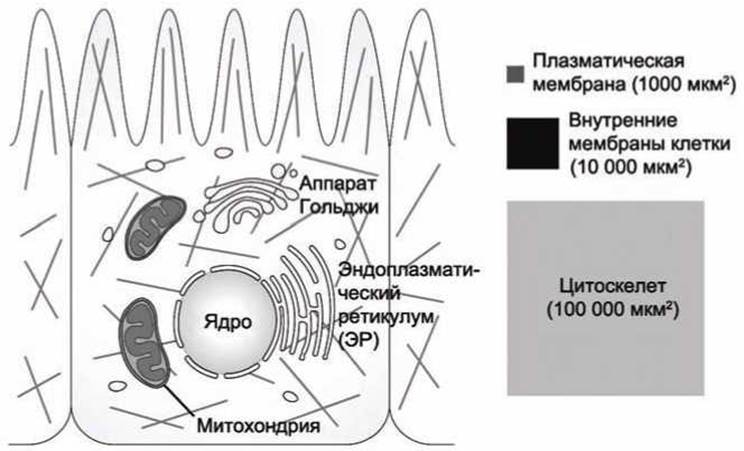
Figure 1 - Schematic diagram of core cellular architecture components
Although membranes, organelles, and cytosol are the primary architectural elements of Eukaryotic cells, each cell type possesses a specific Morphology dictated by the intracellular arrangement of its organelles.
The structural foundation of this specific design in every cell type is the Cytoskeleton—a robust framework of Three types of protein filaments located in the cytosol that mechanically Supports the cellular membranes.
Cytoskeletal proteins are among the most abundant in the cell, and the surface area of the cytoskeleton—which is ten times larger than the total surface area of all organelle membranes (Figure 1)—serves as an anchoring site for specific proteins, a platform for numerous cellular processes, and a means of tethering cellular membranes.
The Lipids that assemble to form biomembranes not only determine their shape and physicochemical properties, but also participate in attaching proteins to membranes, regulating membrane protein activity, and mediating Transmembrane Signal Transduction.
Membranes participate in the interactions between the compartments they separate in two ways:
1) via the physical transport of ions or molecules across the membrane (into or out of a compartment)
2) via the transmission of information through Conformational changes induced in membrane components.
In addition, numerous cellular enzymes are associated with membranes.
Some of these catalyze transmembrane reactions when reactants are located on opposite sides of the membrane, or when the catalytic event is coupled with molecular transport.
Other Enzymes act upon membrane-bound substrates, thereby participating in membrane Biosynthesis.
Most vital cellular functions rely to some extent on membranes; for instance, such diverse processes as prokaryotic DNA replication, Protein Biosynthesis and secretion, bioenergetic pathways, and the functioning of hormonal response systems all take place with the active participation of membranes.
We can conditionally distinguish the following six main groups of functions associated with biomembranes (Figure 2).
1. Compartmentalization and isolation of cells and organelles. The isolation of cells from the intercellular environment is provided by the plasma membrane, which protects cells from mechanical and chemical influences. The plasma membrane also maintains the concentration gradients of metabolites and inorganic ions between the intracellular and extracellular environments.
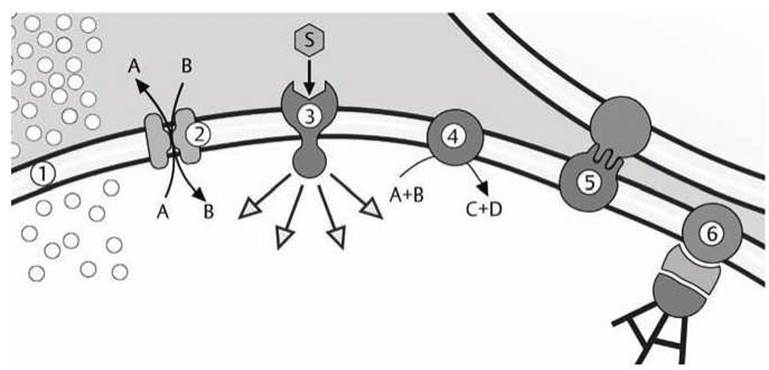
Figure 2 - Main Functions of biomembranes
2. Controlled transport of metabolites and ions. This function maintains the necessary COMPOSITION OF THE intracellular environment, which is essential for Homeostasis—that is, maintaining a constant concentration of metabolites, inorganic ions, and other physiological parameters. Regulated and selective transport of metabolites and inorganic ions through pores and via carriers is made possible by the isolation of cells and organelles using membrane systems.
3. Perception of extracellular signals and their transduction into the cell, as well as signal initiation.
4. Enzymatic Catalysis. Enzymes are localized in membranes at the interface between the lipid and aqueous phases. It is here that reactions with nonpolar substrates take place. Examples include lipid Biosynthesis and the metabolism of nonpolar xenobiotics. The most important Energy Metabolism reactions, such as Oxidative Phosphorylation (the Respiratory Chain) and Photosynthesis, are localized in membranes.
5. Contact interaction with the Extracellular matrix and interaction with other cells during Cell Fusion and tissue formation.
6. Anchoring of the cytoskeleton, ensuring the maintenance of cell and organelle shape and cellular motility.
Last update: 13/08/2026
Editorial and Educational Adaptation: This material has been compiled based on the primary/original source text. The project team performed an editorial review, corrected technical inaccuracies, structured sections, and adapted the content for an educational format.
What was processed:
- elimination of formatting defects (OCR errors, structural breaks, corrupted characters);
- editorial organization of content;
- standardization of terminology in accordance with academic sources;
- verification of factual statements against the original source text.
All mentions of the author, publication year, and origin of the primary text have been preserved in accordance with the source.