Fundamentals of Molecular Biology - V. I. Rezyapkin 2009
Genome Rearrangements
Transduction
Transduction is The transfer of bacterial genes from one Cell to another mediated by Bacteriophages, which leads to alterations in the genetic Properties of the cell. The transferred genetic material may either integrate into the bacterial chromosome or remain part of the phage DNA.
Two Types of transduction are distinguished: generalized and specialized. Generalized transduction
Once the phage DNA enters the bacterial cell, its Replication and the synthesis of virus-specific Proteins take place, forming phage particles. These typically contain the phage DNA. However, during the assembly of certain phage particles, fragments of cellular DNA generated by its degradation may be packaged inside them (Fig. 9.18). As a result, transducing phage particles are formed, which, upon infecting other bacterial Cells, transfer the donor cell DNA to them. Recombination can occur between the introduced DNA and the chromosome of the recipient cell, potentially allowing the donor DNA to integrate into the chromosome. Thus, the bacterial cell acquires new genes and alters its genotype.
Class="center">
Fig. 9.18. Diagram illustrating The Mechanism of generalized transduction
Specialized transduction
Specialized transduction is characteristic of phages capable of integrating into the bacterial chromosome (Fig. 9.19). Bacteria with a phage genome incorporated into their chromosome are termed lysogenic bacteria. In such bacteria, as noted above, the phage genomes replicate along with the chromosome. This state can persist indefinitely. Under certain conditions, the lysogenic state may be disrupted, and the phage genome is excised from the bacterial chromosome. In some instances, this excision is imprecise, and bacterial genes are incorporated into the progeny phage genomes. Phages with an altered genome are capable of infecting other bacterial cells. Consequently, genes from the recipient cell enter the new host cell as part of the phage genome. Following the Integration of the phage DNA into the chromosome, the recipient cell acquires the genetic material of the phage's previous host. Thus, phages are capable of transferring genetic material from one cell to another.
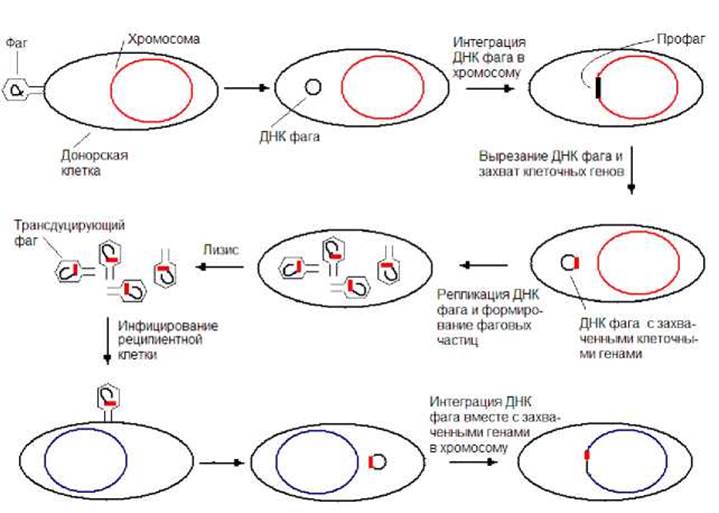
Fig. 9.19. Diagram illustrating the mechanism of specialized transduction
In summary, it should be noted that living cells can undergo various rearrangements of their genetic material. In some cases, these rearrangements are reversible, while in others they are irreversible. Furthermore, they may be programmed or induced. As a result of genome reorganization, The Cell acquires new genetically determined traits that enable it to perform new specific Functions.
Last update: 12/08/2026
Editorial and Educational Adaptation: This material has been compiled based on the primary/original source text. The project team performed an editorial review, corrected technical inaccuracies, structured sections, and adapted the content for an educational format.
What was processed:
- elimination of formatting defects (OCR errors, structural breaks, corrupted characters);
- editorial organization of content;
- standardization of terminology in accordance with academic sources;
- verification of factual statements against the original source text.
All mentions of the author, publication year, and origin of the primary text have been preserved in accordance with the source.