Pharmacognosy with the Basics of Plant Biochemistry - Kovalyov V. M. 2004
Special Part
Phenolic Compounds
Iridoids
Iridoids are a group of plant-derived monoterpenoid compounds featuring a partially hydrogenated cyclopentanopyran system in their Structure.
The term "iridoids" was proposed by Briggs in 1963 to replace such vague concepts as "pseudoindicans", "acid-sensitive Glycosides", and "aucubin glycosides". This name reflects the structural and biogenetic relationship between the aglycone of iridoid glycosides and iridodial, a substance first isolated from ants.
When treated with mineral acids, iridoid glycosides form colored blue or blue-violet solutions, which subsequently precipitate a violet-black sediment. Based on these color reactions, these glycosides were termed pseudoindicans.
Class="center">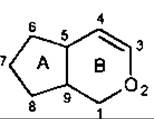
Cyclopentanopyran
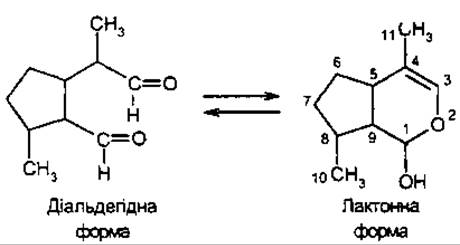
Iridodial
In plants, iridoids most commonly occur as glycosides, and less frequently in a free state. The sugar moiety of these glycosides is represented by glucose, xylose, rhamnose, and galactose. Iridoids are readily oxidized by atmospheric oxygen.
Pseudoindicans are volatile components of Water/23.html">Essential Oils and constitute the non-amine moiety of complex indole Alkaloids.
Iridoid compounds are divided into four main groups: cyclopentane iridoids, secoiridoids, valerian iridoids (valepotriates), and complex iridoid-alkaloids. Dimeric iridoids are also known to occur in plants.
Cyclopentane iridoids. Based on the number of carbon atoms in the aglycone Skeleton, iridoid glycosides are classified into four types: С8, C10, and С14.
The С8-type of iridoid glycosides is small, comprising only two compounds—unedoside and stilbericoside, which are 10,11-dinor derivatives of iridodial.
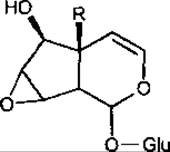
R=H — Unedoside
R=OH— Stilbericoside
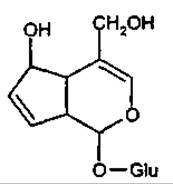
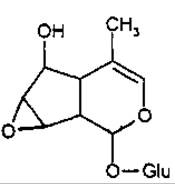
The C9-type of glycosides can be divided into two groups: C-10-nor and C-11-nor iridoids. Depending on the presence and position of the double bond and the epoxy ring in the cyclopentane moiety, C-11-nor glycosides are subdivided into the aucubin, catalpol, and harpagide subgroups, whereas C-10-nor glycosides are subdivided into the decaloside, deutioside, and deutiol subgroups.
Aucubin (aucuboside) is widely distributed in the plant kingdom, having been identified in plants of about 90 genera belonging to the families Scrophulariaceae (Euphrasia, Veronica, Verbascum, etc.), Plantaginaceae, and others. This glycoside exhibits bacteriostatic, anti-inflammatory, and antispasmodic properties, and evidence suggests it acts as an antidote to fungal toxins from Amanita species.
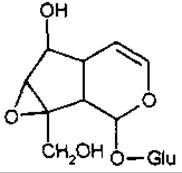
Catalpol
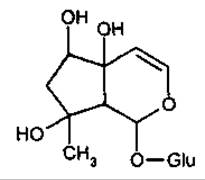
Harpagide
Harpagide is a glycoside featuring an epoxy bridge and an ester linkage with p-hydroxybenzoic acid, which exhibits diuretic activity. These compounds are found in plants of the genera Plantago and Verbascum.
Unlike other C-11-nor glycosides, iridoids of the decaloside subgroup possess a double bond at the C-7 — C-8 position of the aglycone.
Decaloside
Deutzioside (mentzeloside)
Deutziol
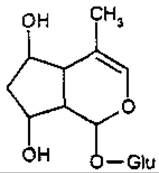
C10-type iridoids are subdivided into the loganin, monotropein, asperuloside, and C-11-O-glycoside subgroups, which differ by having a carbohydrate residue at the C-11 position instead of C-1.
Loganin is a bitter-tasting glycoside first isolated from the seeds of Strychnos nux-vomica (Loganiaceae). It was later identified in other plants (Menyanthes, Verbena). It serves as an important intermediate in The Biosynthesis of indole alkaloids and exhibits anti-inflammatory activity.
Asperuloside is a glycoside featuring a double bond between C-7 and C-8. It is widely distributed in the families Rubiaceae (Asperula, Rubia, Galium) and Ericaceae (Vaccinium). Enzymatic Hydrolysis of asperuloside yields an aglycone that causes harvested leaves to blacken.
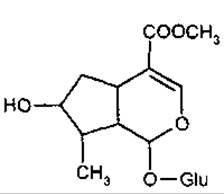
Loganin
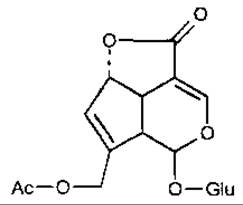
Asperuloside
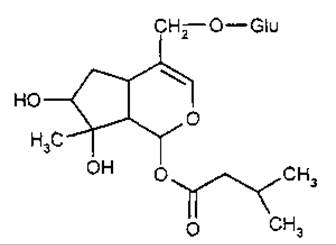
Valerosidate
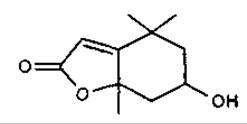
Loliolide
A representative C-11-O-glycoside is valerosidate. A non-glycolytic iridoid lactone of the C10-type is loliolide, which has been isolated from numerous plants, including species of Arnica, Plantago, Digitalis, Lolium, and Menyanthes trifoliata. Pharmacological studies have demonstrated that this compound exhibits cytotoxic activity.
C14-type iridoid glycosides possess an aglycone moiety with four more carbon atoms than monoterpenes; however, the presence of a tetrahydrocyclopentanopyran ring system in their structure and their biogenetic relationship to iridoids allow these substances to be classified as iridoids. Examples of this subgroup include plumiericin and plumieride.
Secoiridoids. Unlike typical iridoids, secoiridoids lack the bond between the C-7 and C-8 positions; they are practically insoluble in water. Secoiridoids are divided into three groups: simple secologanin-type iridoids
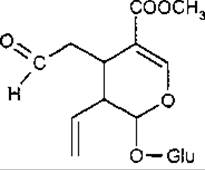
Secologanin
Secoiridoids of the oleuropein group contain a double bond between C-8 and C-9.
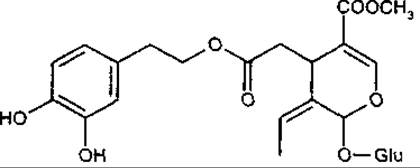
Oleuropein
Oleuropein was first isolated from the leaves and fruits of the olive tree (Olea europaea). This substance exhibits hypotensive activity and helps prevent Cholesterol deposition.
Secoiridoids of the gentiopicroside group are widespread in plants of the families Gentianaceae, Menyanthaceae, Loganiaceae, Apocynaceae, Caprifoliaceae, and Oleaceae.
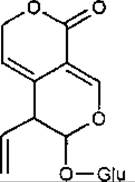
Gentiopicroside (gentiopicrin)
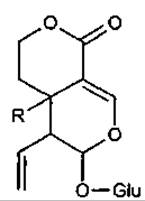
R = H — Sweroside
R = OH — Swertiamarin (erythrocentaurin)
Iridoids of the Valerianaceae family are represented by valepotriates. Iridoid compounds isolated from plants of the valerian family contain five or six hydroxyl groups in the iridoid skeleton, two of which form an epoxide (cyclic ether), while the others are esterified. Because of this structure, these compounds were named valepotriates (Valeriana — epoxy-triester).
Depending on the degree of saturation of the bond at C-5, valepotriates are divided into two groups: valtrates and dihydrovaltrates. In the formulas, R1 = R2 represents an isovaleric acid residue.
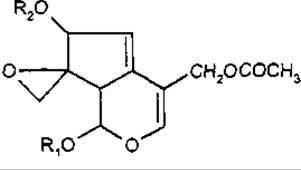
Valtrate
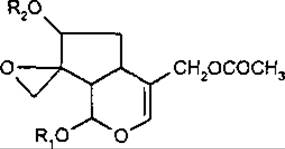
Dihydrovaltrate
Valepotriates are unstable compounds. During the drying of plant Materials, enzymatic processes convert valepotriates into baldrinal and homobaldrinal, releasing free acids (isovaleric acid and its analogs), which gives the raw material its characteristic valerian odor.
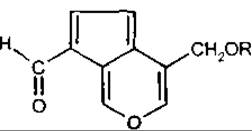
R = isovaleryl — Homobaldrinal
R = acetyl — Baldrinal
Biosynthesis
There are several hypotheses regarding the biosynthesis of iridoids in plants. The precursor of iridoid compounds is mevalonic acid, which is converted during biosynthesis into geranyl pyrophosphate; an intermediate of this pathway then forms the iridoid skeleton:
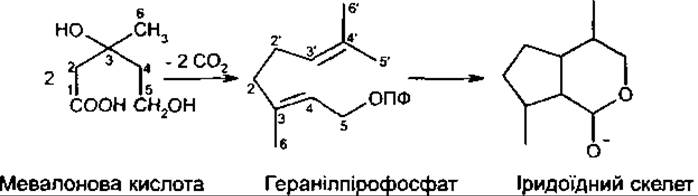
Some researchers suggest that 10-hydroxygeraniol serves as the intermediate product, which subsequently forms iridodial:
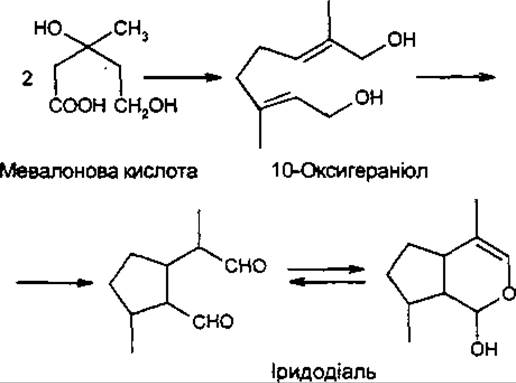
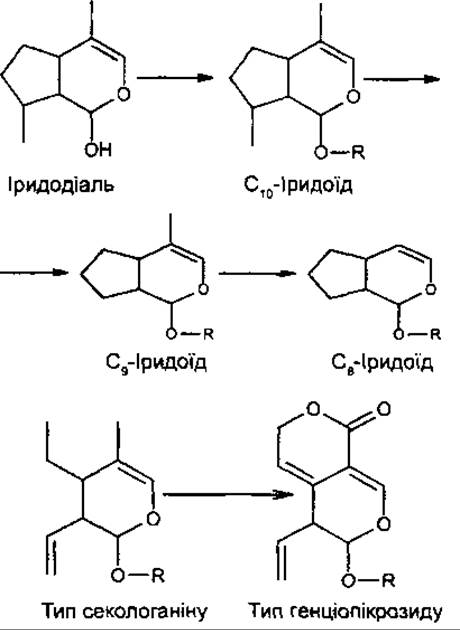
In various plant species, iridodial can give rise to iridoids with a reduced number of carbon atoms, specifically C8 and C9 types. Cleavage of the five-membered ring may also occur, leading to The formation of secoiridoids.
Types of Iridoids and Secoiridoids
Distribution
Iridoid compounds are most widely distributed in plants of the families Gentianaceae, Menyanthaceae, Loganiaceae (secoiridoids), Oleaceae, Verbenaceae, Plantaginaceae, Scrophulariaceae (including the aucubin type), Lamiaceae, and Valerianaceae (harpagide type, valepotriates). To date, more than 250 individual substances have been isolated. Secoiridoids of the oleuropein group are characteristic of the olive family (Oleaceae). Complex iridoid alkaloids have been found in plants of the Rubiaceae and Apocynaceae families.
Isolation and Investigation
The iridoid content in certain plants is about 1%. The isolation of iridoid glycosides from plant materials is complicated by their sensitivity to Enzymes, acids, and, in the case of acylated glycosides, to alkalis as well. This limits the application of conventional Methods for their extraction.
Iridoids are extracted using water, aqueous-alcoholic solutions, or a 25% aqueous sodium chloride solution. The extract is purified from lipophilic substances by extraction with water-immiscible Solvents, and from concomitant Phenolic Compounds by filtration through a layer of neutral aluminum oxide. Sugar impurities are washed out with water after adsorbing the iridoid glycosides onto activated charcoal. Desorption of the compounds is carried out using aqueous-alcoholic mixtures, which are then evaporated under reduced pressure in a neutral medium.
The Separation of purified fractions into individual glycosides is performed using Column Chromatography on polyamide sorbent, silica gel, or Cellulose, as well as preparative Thin-Layer Chromatography and preparative High-Performance Liquid Chromatography.
The belonging of compounds to the iridoid class can be determined by the Trim-Hill reaction (a mixture of acetic acid, concentrated Hydrochloric acid, and a 0.2% aqueous copper sulfate solution in a 20:1:2 ratio), upon which the solution turns blue, followed by the precipitation of a violet-black sediment.
Biological Activity
The aglycone is the carrier of biological activity. As a rule, the aglycone moiety surpasses the glycoside in its activity.
Secoiridoids of the gentiopicroside type increase appetite, stimulate Digestion, and enhance the secretion of gastric juice. Due to their bitter taste, they stimulate the taste receptors of the Tongue and reflexively affect the digestive Organs.
In medicine, bitter substances from plants of the genera Gentiana, Menyanthes, and Centaurium have found application. By their chemical structure, bitters (Amara) originate from various classes of natural substances, information on which is given in Table 12.
Table 12
Medicinal plant raw materials with a bitter taste used in medicine
Raw material |
Class of BIOLOGICALLY ACTIVE SUBSTANCES |
Substance name |
Folia Menyanіhidis |
Iridoids |
Loganin, sweroside, foliaminthin, etc. |
Radices Centianae |
—»— |
Gentiopicroside and its isomers |
Herba Centaurii |
—»— |
Erythrocentaurin |
Herba Absinthu |
Sesquiterpenoids |
Absinthin, anabsinthin, artabsin |
Radices Taraxaci |
Sesquiterpene lactones |
Eudesmanolides and germacranolides |
in the form of aglycones and glycosides |
||
Radices Cichorii |
—»— |
Lactucin, lactucopicrin |
Folia Cynarae |
—»— |
Cynaropicrin |
Folia Salviae |
Diterpenoids |
Carnosol, picrosalvin |
Cortex Сhinае |
Alkaloids |
Quinine |
The choleretic activity of such iridoids as aucubin, harpagide, acetylharpagide, and ajugol has been revealed. From plants of the genus Stachys (Stachys spp., Lamiaceae), a substance representing a mixture of harpagide, acetylharpagide, and ajugol has been proposed for the Treatment of Liver and biliary Tract Diseases. A laxative activity is characteristic of many iridoids. Valepotriates of valerian exhibit sedative effects.
Most iridoid compounds are characterized by antibiotic and antimicrobial activity against gram-positive and gram-negative microorganisms. High antimicrobial activity is exhibited by aucubin and its aglycone—aucubigenin, nepetalactone, and genipodic acid; antileukemic activity by plumericin, plumerid, and adamantine; while a cancerolytic effect is exerted by the components of valerian ROOT—valtrate and dihydrovaltrate.
Harpagide possesses anti-inflammatory and analgesic properties. Catalpol and catalposide increase diuresis, and aucubin stimulates The excretion of uric acid by the Kidneys. Verbenalin is similar in activity to ergotamine.
Odontoside and aucubin increase the body's resistance to stress and physical performance.
Thus, due to their broad spectrum of biological activity, iridoid glycosides represent a promising class of natural c
Iridoids
Iridoids are a group of plant-derived monoterpene compounds containing a partially hydrogenated cyclopentanopyran system in their structure.
The name "iridoids" was proposed by Briggs in 1963 to replace the vague concepts of "pseudoindicans", "acid-sensitive glycosides", and "aucubin glycosides". This name reflects the structural and biogenetic affinity of the aglycone of iridoid glycosides with iridodial—a substance first isolated from ants.
Upon treatment with mineral acids, iridoid glycosides form colored blue or blue-violet solutions, followed by the precipitation of a violet-black sediment. Based on these color reactions, these glycosides were termed pseudoindicans.
Cyclopentanopyran
Iridodial
In plants, iridoids most commonly occur as glycosides, and occasionally in a free state. The sugar moiety of these glycosides is represented by glucose, xylose, rhamnose, and galactose. Iridoids are readily oxidized by atmospheric oxygen.
Pseudoindicans are volatile components of essential oils and constitute the non-amine portion of complex indole alkaloids.
Classification
Iridoid compounds are divided into four main groups: cyclopentane iridoids; secoiridoids; valepotriates (iridoids of the Valerianaceae family); and complex iridoid-alkaloids. Dimeric iridoids are also known to occur in plants.
Cyclopentane iridoids. Based on the number of carbon atoms in the aglycone skeleton, iridoid glycosides are divided into three main types: С8, C10, and С14.
The С8-type of iridoid glycosides is sparse, comprising only two compounds—unedoside and stilbericoside, which are 10,11-dinor derivatives of iridodial.
R=H — Unedoside
R=OH— Stilbericoside
С9-type glycosides can be divided into two groups: С-10-nor and С-11-nor iridoids. According to the presence and position of the double bond and the epoxide ring in the cyclopentane moiety, С-11-nor glycosides are subdivided into the aucubin, catalpol, and harpagide subgroups, whereas C-10-nor glycosides are categorized into the decaloside, deutioside, and deutiol subgroups.
Aucubin (aucuboside) is widely distributed in the plant kingdom, having been identified in plants from approximately 90 genera of the families Scrophulariaceae (Euphrasia, Veronica, Verbascum, etc.), Plantaginaceae, and others. This glycoside exhibits bacteriostatic, anti-inflammatory, and spasmolytic properties, and evidence suggests it acts as an antidote against mushroom toxins from the genus *Amanita* spp.
Catalpol
Harpagide
Harpagide is a glycoside featuring an epoxide bridge and an ester linkage with *p*-hydroxybenzoic acid, which exhibits diuretic activity. These compounds are found in plants of the genera *Plantago* and *Verbascum*.
Unlike other С-11-nor glycosides, iridoids of the decaloside subgroup possess a double bond at the C-7 — C-8 position of the aglycone.
Decaloside
Deutioside (mentzeloside)
Deutiol
С10-type iridoids are subdivided into the loganin, monotropein, and asperuloside subgroups, as well as the group of C-11-O-glycosides, which are distinguished by having the carbohydrate residue attached at the C-11 position rather than C-1.
Loganin is a bitter glycoside first isolated from the seeds of Strychnos nux-vomica, Loganiaceae. It was later identified in other plants (Menyanthes, Verbena). It is a key intermediate in the biosynthesis of indole alkaloids and exhibits anti-inflammatory activity.
Asperuloside is a glycoside with a double bond at C-7 — C-8. It is widely distributed in the families Rubiaceae (Asperula, Rubia, Galium) and Ericaceae (Vaccinium). Enzymatic hydrolysis yields an aglycone that causes harvested leaves to blacken.
Loganin
Asperuloside
Valerosidate
Loliolide
A representative of C-11-O-glycosides is valerosidate. A non-glycosidic iridoid lactone of the C10-type is loliolide, which has been isolated from numerous plants, including species of Arnica, Plantago, Digitalis, Lolium, and Menyanthes trifoliata. Pharmacological studies have shown this compound to possess cytotoxic activity.
C14-type iridoid glycosides have an aglycone moiety with four more carbon atoms than monoterpenes; however, the presence of a tetrahydrocyclopenta[c]pyran system in their structure and their biogenetic relationship with iridoids allow these substances to be classified as iridoids. Examples belonging to this sub果然 group include plumericin and plumerid.
Secoiridoids. Unlike typical iridoids, secoiridoids lack a bond between the C-7 and C-8 positions; they are poorly soluble in water. Secoiridoids are divided into three groups: simple iridoids of the secologanin type
Secologanin
Secoiridoids of the oleuropein group possess a double bond between C-8 and C-9.
Oleuropein
Oleuropein was first isolated from the leaves and fruit of the olive tree (Olea europaea). The substance exhibits hypotensive activity and helps prevent cholesterol deposition.
Secoiridoids of the gentiopicroside group are widespread in plants of the families Gentianaceae, Menyanthaceae, Loganiaceae, Apocynaceae, Caprifoliaceae, and Oleaceae.
Gentiopicroside (gentiopicrin)
R = H — Sweroside
R = OH — Swertiamarin (erythrocentaurin)
Iridoids of the Valerianaceae family: valepotriates. Iridoid compounds isolated from plants of the valerian family contain five or six hydroxyl groups in their iridoid skeleton, two of which form an epoxide (cyclic ether), while the others are esterified. As a result, these compounds were named valepotriates (valerian — epoxy-triester).
Depending on the degree of bond saturation at C-5, valepotriates are divided into two groups: valtrates and dihydrovaltrates. In the formulas, R1 = R2 are isovaleric acid residues.
Valtrate
Dihydrovaltrate
Valepotriates are unstable compounds. During the drying of plant materials, enzymatic action converts valepotriates into baldrinal and homobaldrinal, releasing free acids (isovaleric acid and its analogs) and giving the raw material its characteristic valerian odor.
R = isovalerianyl — Homobaldrinal
R = acetyl — Baldrinal
Biosynthesis
There are several views regarding the biosynthesis of iridoids in plants. The precursor of iridoid compounds is mevalonic acid, which during biosynthesis forms geranyl pyrophosphate, from whose intermediate product the iridoid skeleton is formed:
Some researchers believe that 10-oxygeraniol is the intermediate product, from which iridodial is formed:
In various plants, iridoids with a smaller number of carbon atoms, specifically C8 and C9 types, can be formed from iridodial. The cleavage of the five-membered ring can also occur, leading to the formation of secoiridoids.
Types of iridoids and secoiridoids
Distribution
Iridoid compounds are most widely distributed in plants of the families Gentianaceae, Menyanthaceae, Loganiaceae (secoiridoids), Oleaceae, Verbenaceae, Plantaginaceae, Scrophulariaceae (aucubin type), Lamiaceae, and Valerianaceae (harpagide type, valepotriates). To date, over 250 individual substances have been isolated. Secoiridoids of the oleuropein group are characteristic of the olive family (Oleaceae). Complex iridoid alkaloids have been found in plants of the Rubiaceae and Apocynaceae families.
Isolation and Investigation
The iridoid content in certain plants is about 1%. The isolation of iridoid glycosides from plant material is complicated by their sensitivity to enzymes and acids, and, in the case of acylated glycosides, to alkalis as well. This limits the application of conventional extraction methods.
Iridoids are extracted using water, aqueous-alcoholic solutions, or a 25% aqueous sodium chloride solution. The extract is purified from lipophilic substances by extraction with water-immiscible solvents, and from concomitant phenolic compounds by filtration through a layer of neutral aluminum oxide. Sugar impurities are washed out with water after adsorbing the iridoid glycosides onto activated charcoal. Desorption of the compounds is carried out using aqueous-alcoholic mixtures, which are subsequently evaporated under reduced pressure in a neutral medium.
The separation of purified fractions into individual glycosides is performed using column chromatography on polyamide sorbent, silica gel, or cellulose, as well as preparative thin-layer chromatography and preparative high-performance liquid chromatography.
The belonging of compounds to the iridoid class can be determined using the Trim-Hill reaction (a mixture of acetic acid, concentrated hydrochloric acid, and a 0.2% aqueous copper sulfate solution in a 20:1:2 ratio). Upon this reaction, the solution turns blue, followed by the precipitation of a purple-black sediment.
Biological activity
The aglycone is the carrier of biological activity. As a rule, the aglycone moiety exhibits higher activity than the corresponding glycoside.
Gentiopicroside-type secoiridoids stimulate appetite and digestion, and enhance gastric juice secretion. Owing to their bitter taste, they stimulate the taste receptors of the tongue and reflexively affect the digestive organs.
In medicine, bitter substances derived from plants of the genera Gentiana, Menyanthes, and Centaurium are widely used. Chemically, bitters (Amara) belong to various classes of natural compounds, as detailed in Table 12.
Table 12
Medicinal plant raw materials with a bitter taste used in medicine
Raw material |
Class of BAS |
Name of substance |
Folia Menyanіhidis |
Iridoids |
Loganin, sweroside, foliamenthin, etc. |
Radices Centianae |
—»— |
Gentiopicroside and its isomers |
Herba Centaurii |
—»— |
Erythrocentaurin |
Herba Absinthu |
Sesquiterpenoids |
Absinthin, anabsinthin, artabsin |
Radices Taraxaci |
Sesquiterpene lactones |
Eudesmanolides and germacranolides |
in the form of aglycones and glycosides |
||
Radices Cichorii |
—»— |
Lactucin, lactucopicrin |
Folia Cynarae |
—»— |
Cynaropicrin |
Folia Salviae |
Diterpenoids |
Carnosol, picrosalvin |
Cortex Сhinае |
Alkaloids |
Quinine |
Choleretic activity has been detected for such iridoids as aucubin, harpagide, acetylharpagide, and ajugol. A substance representing a mixture of harpagide, acetylharpagide, and ajugol has been proposed from plants of the genus Stachys (Stachys spp., Lamiaceae) for the treatment of liver and biliary tract disorders. Laxative activity is characteristic of many iridoids. Valepotriates from valerian exhibit sedative effects.
Most iridoid compounds are characterized by antibiotic and antimicrobial activity against gram-positive and gram-negative microorganisms. High antimicrobial activity is exhibited by aucubin and its aglycone—aucubigenin, nepetalactone, and geniposic acid; antileukemic activity by plumericin, plumieride, and adamantine; while valtrate and dihydrovaltrate, components of valerian root, exert a cancerolytic effect.
Harpagide possesses anti-inflammatory and analgesic properties. Catalpol and catalposide increase diuresis, whereas aucubin stimulates the excretion of uric acid by the kidneys. Verbenalin is similar in activity to ergotamine.
Odontoside and aucubin increase the body's resistance to stress and physical performance.
Thus, owing to their wide spectrum of biological activity, iridoid glycosides represent a promising class of natural compounds for The Development of new drugs. Information on some of them is presented in Table 12 of the Appendices.
pounds for the DEVELOPMENT OF NEW drugs. Information on some of them is presented in Table 12 of the Appendices.
Last update: 06/08/2026
Editorial and Educational Adaptation: This material has been compiled based on the primary/original source text. The project team performed an editorial review, corrected technical inaccuracies, structured sections, and adapted the content for an educational format.
What was processed:
- elimination of formatting defects (OCR errors, structural breaks, corrupted characters);
- editorial organization of content;
- standardization of terminology in accordance with academic sources;
- verification of factual statements against the original source text.
All mentions of the author, publication year, and origin of the primary text have been preserved in accordance with the source.