Pharmacognosy with the Basics of Plant Biochemistry - Kovalyov V. M. 2004
Special Part
Phenolic Compounds
Isoprenoids
Isoprenoids are a widespread group of natural compounds with a regular carbon Skeleton Structure containing isopentane units (saturated or unsaturated C5 units).
Class="center">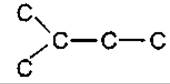
The Study of terpenoids is closely intertwined with the research of Essential Oils. In the 19th century, it was established that the volatile fractions of essential oils consist of a series of Hydrocarbons built from two isoprene molecules (C5H8)2. These compounds were named Terpenes. The term "terpene" originates from the French "terebinthine" or German "terpentin" — the names for turpentine, the bulk of which is represented by hydrocarbons of similar composition. With the subsequent discovery of oxygen-containing terpene derivatives (alcohols, aldehydes, ketones, etc.), the word "terpene," which originally meant "hydrocarbon," lost its specific meaning and was replaced by the broader term "terpenoid" (isoprenoid).
Table 11 lists the known classes of terpenes.
Table 11
Classification of Isoprenoids
(Selection/23.html">Homologous Series of currently known terpenes)
Class of terpenes |
Number of carbon atoms |
Occurrence in nature |
Hemiterpenes |
С5 |
Essential oils |
Monoterpenes |
С10 |
|
Sesquiterpenes |
С15 |
Essential oils, alkaloids |
С20 |
Resins, alkaloids, chlorophyll, group K Vitamins, Gibberellins (plant growth stimulants) |
|
Sesterterpenes |
С25 |
Ophiobolanes produced exclusively by Fungi |
Triterpenes, Steroids |
С30 |
Saponins, cardiotonic Glycosides, alkaloids, Ecdysteroids, etc. |
Tetraterpenes |
С40 |
Carotenoids |
Polyterpenes |
(С5) |
Polyprenols, rubber, gutta-percha |
As a result of oxidation, cyclization, elimination, or removal of radicals, molecules can be formed in which the number of carbon atoms is not a multiple of five, such as iridoids or steroids.
Mixed terpenoids also exist in nature, where an isoprenoid chain constitutes a part of the molecule. Primarily, these are purine derivatives that exist in a free state and as part of RNA. Another example of such compounds is the coumarin osthol.

Biosynthesis. Isoprenoids are formed in living organisms from acetic acid (acetyl-CoA) via intermediate mevalonic acid. In 1887, Wallach proposed the fundamental "isoprene rule." It was later refined by Ruzicka, who designated the precursor of all terpenes as "active isoprene." The structure of the substance corresponding to isopentenyl pyrophosphate (IPP) was investigated by Lynen. In 1956, Folkers proved that mevalonic acid is the precursor to IPP.
A significant contribution to the Study of the biosynthesis and structure of terpenoids was made by B. N. Rutovsky, G. V. Pigulevsky, and M. I. Goryaev. Thus, research by both foreign and domestic scientists has made it possible to establish the MAIN STAGES OF terpene biosynthesis (scheme).
Isopentenyl pyrophosphate is converted into all known natural terpenes and their derivatives—terpenoids. The primary reaction of "active isoprene" is the polymerization of C5 units into C10, C15, C20, C30, C40 compounds, and so on. The branched end of the isoprene unit is considered the "HEAD," and the unbranched end is the "tail." Head-to-tail linkage is the most common, but during The formation of triterpenes (C30) and tetraterpenes (C40), dimerization proceeds via a tail-to-tail type.
Biosynthesis of various classes of terpenes and terpenoids

Occurrence and biological Functions in plants. Terpenoids are widely distributed among plant BIOLOGICALLY ACTIVE SUBSTANCES. Over 10,000 compounds belonging to various terpene classes are known. They are considered secondary metabolites, a significant amount of which is synthesized in plants. Some terpene representatives exhibit high physiological activity, such as phytohormonal activity (steroids, Cytokinins, gibberellins, xanthotoxins, etc.), yet it remains unknown why plants produce a multitude of related substances that are apparently unnecessary for METABOLISM.
The only free hemiterpene that is widespread is isoprene, but its amount in plants is extremely small. Hemiterpenes bound to non-terpenoid components as mixed terpenoids are frequently isolated from plant raw Materials.
Hemi-, mono-, and sesquiterpenoids are constituents of Water/23.html">Essential oils and alkaloids. Derivatives of monoterpenoids also include iridoids (pseudoindicans), which encompass many bitter glycosides (Amara); valepotriates from valerian; monoterpene alkaloids, and others. Structurally, aromatic bitters are mainly sesquiterpene lactones. Among them, alkaloids and phytohormones are known, such as Abscisic acid. Mono- and sesquiterpenes are attributed an allelopathic role (allelopathy being the detrimental effect of one plant upon another).
Diterpenoids are represented by derivatives of hydrocarbons, resin acids, and resin alcohols. The latter are components of resins and balsams. An important representative of resin acids is abietic acid, which is part of the non-volatile fraction of oleoresin (colophony). Diterpenoids also include gibberellins, the sweet-tasting substance stevioside, the high-molecular-weight aliphatic alcohol phytol (which forms the terpene moiety of compounds such as chlorophyll and vitamin K (phylloquinone)), and alkaloids of plants belonging to the genera Aconitum and Delphinium.
Sesterterpenoids represent a newer group of terpenoids. Six structural types of the ophiobolan group are known, along with A large number of derivatives, including many oxidized forms.
Triterpenoids are very common in the plant kingdom, with squalene serving as their precursor. Triterpenoids include sapogenins and the recently discovered triterpene alkaloids.
An important group of isoprenoids consists of steroids: sterols, steroidal sapogenins, cardiotonic glycosides, Steroid Hormones, ecdysteroids, steroidal alkaloids, etc. Sterols are localized in plant Cell membranes and play a role analogous to Cholesterol in animal cell membranes. The function of the side alkyl chains in plant membrane sterols remains unknown. There is a theory that sterols stabilize membranes and control their permeability. Furthermore, there is no confirmation that endogenous sterols perform a hormonal function in plants.
Tetraterpenes in nature are represented by plant pigments—carotenoids of both cyclic and acyclic structures. They participate in the formation of photosensitive compounds that facilitate Light absorption during Photosynthesis. Additionally, carotenoids protect Cells from photodynamic damage.
Certain mixed terpenes play a key role in plant metabolism. If chlorophyll is deprived of its side chain, which is the residue of the isoprenoid alcohol phytol, it loses its activity. The mixed lipid ubiquinone features a benzoquinone core with a long isoprenoid side chain and participates in cellular Respiration (oxidation of complex molecules and proton transport).
Polyterpenoids (polyprenols) are linear polymers. They include gutta-percha, which contains approximately 100 C5 units, and rubber, which has a chain of 500–5000 isoprene residues. Rubber and gutta-percha differ in the configuration of their double bonds. The former has a cis- and the latter a trans-configuration, which determines their physicochemical properties. Rubber is elastic at room Temperature, whereas gutta-percha is plastic. Polyprenols accumulate predominantly in tropical plants and are also found in the milky sap of the fig tree (Ficus carica), eucommia (Eucommia ulmoides), spurge (Euphorbia spp.), and others.
Last update: 06/08/2026
Editorial and Educational Adaptation: This material has been compiled based on the primary/original source text. The project team performed an editorial review, corrected technical inaccuracies, structured sections, and adapted the content for an educational format.
What was processed:
- elimination of formatting defects (OCR errors, structural breaks, corrupted characters);
- editorial organization of content;
- standardization of terminology in accordance with academic sources;
- verification of factual statements against the original source text.
All mentions of the author, publication year, and origin of the primary text have been preserved in accordance with the source.