THEORETICAL FOUNDATIONS OF FISH FARMING - I.M. Sherman - 2011
2.THEORETICAL FOUNDATIONS FOR THE FORMATION AND UTILIZATION OF PRODUCTIVE TRAITS IN FISH
2.3.Regularities of sex differentiation and development of sexual products in fish
The high modern diversity of fish species has formed over a long phylogenetic process, developing A number of specific adaptations within their distribution ranges. Consequently, of considerable theoretical interest is The system of concepts regarding intraspecific biological groups of fish, which constitute a vital component in The formation of sex and sexual products in fish.
The spawning period in various fish species varies significantly and is synchronized with different seasons of the year. Commercial fish species of temperate and high latitudes are divided into two groups according to their spawning seasons.
The first group spawns between March and July, while the second spawns between September and January. In both groups, the hatching of pre-larvae coincides with spring and summer, when Water bodies experience an intensive development of food plankton, serving as the primary food source for all fish species during their early developmental stages. Different calendar schedules for spawning are also characteristic of individuals within the same species and even the same population.
Anadromous fish migrate upstream to spawn at different times of the year and with varying degrees of gonad maturity. Some of these fish spawn shortly after entering the river, whereas others do not spawn until the following year. Observing this phenomenon, L.S. Berg concluded that certain salmonid and sturgeon species comprise spring and winter races. Spring fish migrate from the sea into rivers, spawning in the same year. Winter fish migrate from the sea into rivers, but spawn only in the following year.
Having studied the reproductive CHARACTERISTICS OF THE Kura and Volga sturgeons, researchers N.A. Gerbilsky, B.N. Kazansky, and I.A. Barannikova established the existence of biological groups within their populations, which further deepened L.S. Berg's theory of seasonal races. It was determined that the sturgeon migrating from the Caspian Sea into the Volga River comprises four biological groups: early spring sturgeon, late spring sturgeon, summer-run winter sturgeon, and autumn-run winter sturgeon.
The early spring sturgeon enters the Volga in early spring with Gonads close to or at the completed stage IV of maturity, spawning shortly after ascending the river once water temperatures reach optimal spawning levels, typically from mid-May to early June. The late spring sturgeon enters the Volga in spring and summer with gonads at an incomplete stage IV of maturity and spawns during the same vegetative season after high summer temperatures subside, specifically in July and August.
The summer-run winter sturgeon migrates into the Volga between May and July with underdeveloped sexual products—Ovaries at stages III–IV and Testes at stages II–III of maturity—and spawns in the early spring of the following year, spanning from late April to May. The autumn-run winter sturgeon migrates into the Volga in August and September with gonads close to the completed stage IV of maturity and spawns, much like the summer-run winter sturgeon, in the early spring of the following year, occurring in late April and May.
All specified migrant ecotypes, with the exception of the late spring sturgeon, belong to the Russian sturgeon. The late spring sturgeon is primarily represented by individuals of another species—the Persian sturgeon. Besides the Kura and Volga sturgeons, intrapopulational differentiation is observed in sturgeons across several other rivers as well. Distinct biological groups also exist within populations of stellate sturgeon (sevryuga) and beluga sturgeon in the basins of the Caspian and Azov Seas.
Winter forms of sturgeons, possessing ovaries at stage IV of maturity where oocytes have reached definitive sizes—marking the end of trophoblastic growth—enter the river and overwinter there. The oocytes of these fish remain in this state until spring. Upon the onset of favorable ecological conditions for spawning, oogenesis is completed under the Influence of the pituitary gonadotropic hormone. This type of adaptation, facilitated by arresting oocytes at the stage of completed protoplasmic growth, depends on the function of meso-adenohypophyseal Cells that produce the gonadotropic hormone. In autumn, the concentration of this hormone in the Pituitary Gland of winter sturgeons is half that of spring and summer sturgeons.
Of great importance in the adaptation of certain salmonid populations, specifically the Atlantic salmon (semyozhga), to reproductive conditions is The Emergence of dwarf males within the population, which permanently reside in the river and participate in spawning with migratory females.
The spawning grounds of winter fish are located in the upper reaches of rivers, whereas those of spring fish are situated in the lower reaches. This intraspecific differentiation of anadromous fish regarding spawning sites is also adaptive in nature, allowing for the utilization of spawning grounds distributed across various sections over a vast length of the river, thereby ensuring favorable conditions for progeny survival. After spawning, adult anadromous fish and their juveniles migrate from the rivers back to the sea.
The presence of biological groups within a population is governed by habitat conditions. Intrapopulational fish differentiation does not manifest in the absence of necessary environmental prerequisites.
Thus, differentiation within a population represents an adaptation of fish to reproductive and developmental conditions. Intraspecific differentiation is a crucial species-level adaptation to habitat conditions, leading to the fullest possible utilization of its potentials.
Knowledge of intrapopulational differentiation enables not only a scientifically sound approach to regulating fisheries and limiting the catch of valuable commercial anadromous fish, but also facilitates the optimal siting and capacity determination of fish-breeding facilities. This makes it possible to schedule seasonal breeding operations for various biological groups in the required quantities and ratios, thereby preserving the genetic and ecological Structure of populations while increasing their Abundance.
Preserving intrapopulational differentiation in fish is particularly critical under modern fluctuating conditions driven by negative natural and anthropogenic factors, which include the reduction of spawning areas, the overlap of spawning sites among multiple biological groups, disruptions in the migration dynamics of spawners, and the deterioration of their physiological condition. Consequently, further intensification of fish farming is necessary, involving the Introduction of new techniques and Methods for managing biological processes into production.
Understanding intrapopulational relationships in fish has enabled the scientific justification and development of methods for regulating the sexual cycle and maturation of sturgeon spawners, which in turn has allowed for the commercial-scale breeding of all biological groups within these species. The Implementation of this method into production practices permits the rational management of sturgeon fisheries in southern seas and holds significant value for acclimatization and re-acclimatization efforts.
Artificial fish propagation is essentially a technology whose components involve the Regulation of the fish sexual cycle.
In commercial fish farming, logical planning and the Organization of efforts to maintain and increase the abundance of
a given population are of paramount importance, taking into account its historically established structure, which serves as a vital adaptive trait of the species for the optimal utilization of feeding and spawning grounds within its range. Therefore, commercial fish farming must maintain a specific ratio among various biological groups within each fish population, as required for species progression and desired by humans.
Thanks to extensive research conducted by numerous scientists, this issue is being successfully addressed in salmon and sturgeon aquaculture. In recent years, the Ecological and Physiological foundations for managing the sexual cycle of sturgeons have been theoretically developed and implemented in industrial practice. Fish hatcheries are now capable of controlling the maturation of spawners across different sturgeon biological groups. Consequently, corresponding protocols have been devised for holding various biological groups of sturgeons in specially constructed basins at sturgeon hatcheries.
- Holding early spring sturgeon spawners, whose gonads are at stage IV of maturity, for several days in basins with regulated water exchange and natural river water temperatures without shifting their sexual cycle.
- Holding late spring sturgeon spawners for 1.5–2 months, and winter sturgeon forms for 7–8 months, until they reach the pre-spawning state (specifically, stage IV of gonad maturity) in basins with regulated water exchange and natural river water temperatures without altering their sexual cycle.
- Under optimal spawning temperatures, broodstock of spring-run sturgeon—whose gonads are at maturity stage IV and which have been pre-conditioned at the hatchery for 7–8 months—can be reserved in the river for up to 2–3 months, alongside broodstock of summer- and autumn-run winter sturgeon whose ovaries and testes are also at maturity stage IV. Keeping these broodstock in tanks with a controlled water Temperature gradually lowered to 2–4o C and a specific water exchange rate makes it possible to shift the sexual cycle to later dates by
delaying it at maturity stage IV of gonad development. When the fish farm requires these broodstock, the water temperature in the tanks is gradually raised to the spawning level. Thus, by holding sturgeon broodstock in tanks at regulated water temperatures and a specific water exchange rate, it is possible to arrest gonad development at maturity stage IV, at which the fish reach the pre-spawning state. This ensures a desired shift in the sexual cycle of the sturgeon broodstock.
In all variants, the final maturation of the sex products of sturgeon broodstock from various biological groups, whose gonads are at maturity stage IV, occurs—as in other sturgeon species—within 1–2 days through the administration of pituitary gonadotropic hormone or preparations with a similar effect.
Thus, according to A.P. Ivanov, fish farmers can obtain mature broodstock of various biological groups of sturgeon by applying one or another method of managing their sexual cycle.
Alongside eco-technological components and physiological-biochemical factors, the Genetic foundations of fish Sex Determination are of crucial importance in shaping modern technologies.
Like all species-specific traits, the sex structure of a population and its changes in response to alterations in living conditions are linked not only to the chromosome set, but also represent an adaptive reaction to environmental conditions. Previously, the prevailing view was that the sex ratio changes exclusively As a result of natural Selection, without accounting for environmental influences on these processes. Numerous studies have established that the sex ratio in a population can be altered by modifying temperature, water salinity, stocking density, and the intensity and character of METABOLISM, as well as by treating developing eggs with Sex Hormones. Using these principles, fish farmers can regulate the sex COMPOSITION OF THE cultured fish stock at their discretion, depending on their objectives.
Planning the relevant Components of the technological process requires acquiring knowledge about the patterns of fish fecundity dynamics and variations, which are viewed as an adaptive population response to changes in food availability. Indeed, it is well known that with improved food availability, population fecundity increases, whereas with a decrease, it conversely declines. Hence, it is vital to understand the patterns of development of fish sex products, as the success of obtaining high-quality eggs and milt depends directly on this.
The Development of the gonad is a process that does not occur in isolation, but rather in The Unity of external and internal factors, depending both on the previous state and on the conditions the Organism experiences during gonad maturation. The Development of the latter, as is well known, is inextricably linked to general metabolism. Given this, by regulating metabolism, it is possible to control the course of gonad development within certain limits.
It is also necessary to take into account that gametogenesis is quite specific in different fish species, a factor that must be considered alongside the conditions required for each phase of oogenesis and Spermatogenesis.
The success of technological measures presupposes possessing relevant knowledge that reveals the patterns of variation in the quality of sex products. Like fecundity, the quality of sex products is developed as an adaptation to living conditions and changes alongside them. For instance, in roach under a specific feeding regime, the highest yolk reserve in eggs is observed in five-year-old females. By altering the feeding regime, eggs with the maximum yolk reserve can be obtained from either older or younger fish. The eggs of fatter fish, which are typically more fecund, generally contain a somewhat lower yolk reserve. It logically follows from the above that by regulating the feeding regime, one can control both the age of sexual maturation in fish and their potential fecundity.
Artificial fish reproduction requires an understanding of the size-sex STRUCTURE OF THE population. The overall sex ratio in the populations of many fish species is close to 1:1, but the sex ratio across different age and size groups can vary significantly. The predominance of males is observed in younger age groups, which is associated with their earlier sexual maturation compared to females, as well as their earlier entry into the spawning stock and shorter lifespan. In North Sea plaice, males account for 63% of two-year-olds, after which their proportion gradually decreases to 50–51% at ages 5–6, and drops below 13% at age 9. Examining specific spawning populations, it can be stated that The phenomenon of small males predominating in the spawning stock is by no means characteristic of all fish species. In some catfish species, females are smaller than males and their percentage is higher among small fish in the spawning population.
Based on The Nature of the sex ratio among individuals of different sizes, three groups are distinguished. In Representatives of the first group, which includes the oceanic herring, no significant difference is found between males and females in growth rate, age of sexual maturation, and lifespan.
The second type of sex ratio variation with size and age is typical of sturgeons, most cyprinids, many salmonids, and perches. In fish with this type of sex ratio, males mature earlier than females and generally die sooner. Consequently, among small, young, sexually mature fish, males predominate, whereas large individuals are predominantly female. The predominance of females among large fish is also observed within the same age group. This population structure—where females are larger than males—ensures higher stock fecundity, as large individuals spawn more eggs. At the same time, because males are smaller than females, a high population density is maintained under a given food base while preserving reproductive capacity. In most species of this group, several smaller males spawn with a larger female.
The third group of fish comprises species in which males are larger than females and predominate among larger-sized individuals. In some cases, the sex ratio by age may appear reversed. Greater size and older age of males compared to females are observed in species where males guard the eggs, which is characteristic of catfishes, wrasses, gobies, and certain others. In anadromous salmonids, the larger size of males is evidently related to the need to overcome high water currents for a more prolonged period, which stems from a single male participating in spawning with multiple females.
In many fish species, alongside large males that sometimes exceed females in size, there are small dwarf male forms, as noted above, which are typical of salmonids. In some cases, males in the population are represented exclusively by dwarf forms, as is characteristic of deep-sea anglerfishes.
In many anadromous fish, the percentage of females in the migrating portion of the population is much higher than that of males, a fact observed in many salmonids, chars, and the Aral barbel. In some years, the proportion of females reaches 80%. Given that the eggs of large females are fertilized mainly by dwarf males, the sperm of dwarf males can also replace that of anadromous males in fish hatcheries, which makes practical technological sense.
In some cases, a population may be represented by two groups of fish of both sexes: dwarf males and females, and large anadromous males and females. Spawning of large and dwarf fish occurs simultaneously, but anadromous salmon males typically die after spawning, whereas dwarf males spawn multiple times in their lifetime.
Dioecious species predominate within the ichthyofauna, but Hermaphroditism is characteristic of many species.
This phenomenon is inherent to many teleost Fishes. Among hermaphrodites, there are groups of functional (or synchronous) and non-functional hermaphrodites.
In the gonads of the functional hermaphrodite group, ovarian and testicular parts can be distinguished. At any given time, both mature eggs and sperm may be present in the gonads of these fish. Meanwhile, self-Fertilization generally does not occur in these species, and each individual alternately Functions as a female and a male. It is believed that self-fertilization in natural conditions is prevented by, evidently, physiological barriers that remain unstudied to this day.
In fish belonging to the group of non-functional hermaphrodites, two parts—ovarian and testicular—can also be distinguished within the gonad. However, unlike functional hermaphrodites, in non-functional hermaphrodites both parts do not function simultaneously. In some fish species at a young age, the ovarian part achieves maximum development while the testicular part remains inactive, and such individuals function as females. After one or several spawnings, the Ovary of these fish undergoes reduction, oocytes are resorbed, and the Testis achieves maximal development; this phenomenon of sex reversal is termed protogyny.
Simultaneously, within the ichthyofauna there exist species exhibiting the opposite pattern: at a young age, they function as males, and in older age groups, they transform into females. This sex change is termed protandry.
Some fish species (Diplodus annularis) contain both dioecious individuals and hermaphrodites, with the percentage of hermaphroditic individuals decreasing with age. Among four-year-old fish, females comprise 60%, males 20%, and hermaphrodites 20%, whereas among six-year-old fish, the proportion of hermaphrodites is about 3%.
There is a third group of fish: hermaphrodites that possess an ovary at a younger age and function as females, but after some time undergo sex reversal, and older age groups are represented exclusively by males. These fish also exhibit protogyny; however, unlike the protogyny of non-functional hermaphrodites, fish with potential hermaphroditism do not display a distinct testicular portion in the female gonad. Among oocytes, there are only undifferentiated Germ Cells—gonia—whose further development forms a testis instead of an ovary.
The Biological essence of hermaphroditism has not yet been fully established. Nevertheless, there is no doubt about the adaptive significance of this phenomenon. Protogyny and a sex ratio skewed toward a predominance of females among younger fish broodstock can be viewed as an adaptation to maximize reproductive rate under extremely unfavorable conditions. For instance, in Monopterus albus cultivated in the rice fields of Java, the breeding period is quite short. Therefore, this species has adapted to the unstable conditions of rice paddies. Following the dry period, a rapid population recovery occurs because all trophic resources are utilized primarily to sustain the life processes of individuals functioning as females, which leads to a sharp increase in population size. Individuals that survive the unfavorable period become males; they are larger, produce more sperm, and are capable of spawning with multiple females.
Thus, protogyny is an adaptation that ensures population growth by utilizing the aquatic food resources through individuals functioning as females. It is hypothesized that protogyny is typical of fish species inhabiting water bodies or biotopes with unstable environmental conditions or an unpredictable food base.
Protandry is significantly less common. It is believed to be triggered by a shortage of food resources required for females to mature at a younger age, while successfully serving for male maturation. However, after some time, these grown males transform into larger and, consequently, more fecund females.
An important advantage of hermaphroditism in fish is that synchronous hermaphrodites ensure the possibility of population recovery even when only a few isolated individuals survive.
As for the Mechanisms of Sex change in hermaphroditic fish, they are not yet fully understood. There are only hypotheses suggesting that sex reversal occurs under hormonal influence. Indeed, it has been proven that the sex of fish is largely determined by sex hormones, and any agent or environmental factor leading to a decrease in hormone secretion induces sex transformation. Sex reversal may also be observed in older age groups of fish due to the attenuation of reproductive function associated with age-related metabolic changes.
Working in this chosen field, one must have a professional perspective on the adaptive significance of sex ratio shifts and The regulatory mechanisms governing the population sex structure.
The sex structure of a population is of paramount importance for the Reproduction of a species or population. In fish, as in other animals, specific mechanisms evolve to regulate the sex composition of a group in response to changing living conditions, particularly variations in food availability. Since an individual's food supply is closely tied to population density, changes in abundance should reflect to some extent on the sex ratio of the population, thereby altering its reproductive capacity. Literature sources indicate a close link between sex ratio shifts and population density in cyclostomes and fish. Specifically, it has been established that in years of higher population density, the percentage of males exceeds that of females in the freshwater form of the sea lamprey and several other fish species. In sparse spawning groups of pink salmon, females outnumbered males for many years, whereas in years of relatively high abundance, conversely, males were noticeably more numerous than females.
The primary causes of shifts in the sex ratio of fish are their food supply and, evidently, its quality. Under better feeding conditions, the ratio shifts toward females; under poorer conditions, toward males.
An increase in the proportion of males is associated with a poor food base, which is insufficient for the maturation of A large number of females.
However, in some fish species, a decrease in food availability leads, conversely, to the appearance of a large number of small, early-maturing females capable of maintaining high abundance even under unfavorable environmental conditions. It is hypothesized that in certain cases, shifts in the sex ratio, such as in perch, are caused by selective fishing practices. Nevertheless, it is generally believed that the primary cause of these changes in perch is varying food availability. Under poor feeding conditions, two forms of perch emerge—fast-growing and slow-growing—along with numerous small, stunted females that serve as food for larger females.
Data also indicate that the proportion of females in a population increases at high stocking densities. It turns out that in the offspring of fish living at high stocking densities, females may also outnumber males.
Changes in the sex ratio are also observed during the formation of reservoirs. In the first year after the flooding of the Mozhaisk Reservoir, feeding conditions for fish improved significantly, accelerating the development of their gonads. In the second year of flooding, during the spawning period of the roach population, the proportion of males maturing earlier than females increased more than twofold, reaching 59% compared to 23.7% previously.
Sometimes a situation arises where changes in population density alter The rate of sexual maturation. If the shift in the age of sexual maturity is similar in both sexes, the sex ratio across various size and age categories does not change significantly. When the rates of sexual development in males and females differ, this affects the size-sex structure of the population. Thus, in the crucian carp, under exceptionally favorable growth conditions, the difference in maturation timing between males and females is leveled out, although under normal conditions males mature slightly earlier than females, which does not preclude simultaneous sexual maturation. Under these conditions, the relative abundance of males among
younger age groups decreases, while among older groups, it increases correspondingly. The sex ratio within the spawning portion of the stock may change significantly as a result of females skipping spawning due to unfavorable environmental or feeding conditions.
Consequently, the population responds to changes in food supply by altering its sex ratio and size-sex structure. These changes can occur either through sex transformation in fish, differences in the timing of sexual maturation between males and females, or the omission of the spawning season—typically by females—when food availability deteriorates.
In Practical Applications, there is considerable interest in the sex ratio of females to males in natural populations and under aquaculture conditions for certain fish species, highlighting The Importance of understanding the Theoretical Aspects of sex regulation methods in fish.
Scientists and practitioners in the field of fish farming have accumulated substantial experience regarding the mechanisms and principles governing the sex structure of fish populations. The shift in the population sex ratio in accordance with changes in food availability clearly indicates that this ratio is regulated via metabolic pathways. The primary mechanisms of sex determination can be represented by the following scheme:
Class="center">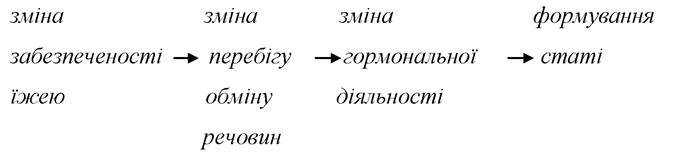
This is considered to be the main mechanism regulating the sex structure of a population. Obviously, changes in the age of sexual maturity and maximum lifespan in relation to food availability are of substantial significance.
From the foregoing, insights emerge regarding the determination and ESTABLISHMENT OF THE development of a given sex. There are several viewpoints on this issue. For instance, some researchers believe that the leading role belongs to sex Chromosomes or sex Chromatin, which has been discovered in
certain animals. However, sex chromosomes are reliably known in only two fish species. Proponents of the chromosomal theory attempt to prove genetic Sex determination in some fish species through Hybridization studies.
Other researchers, proceeding from the unity of the organism and its environment, view the sex structure and its potential changes as an adaptive process regulated through metabolism and the endocrine activity of the organism. The chromosomal complex undoubtedly plays a role in sex determination, but not in isolation—rather, within the system of general metabolism. Thus, the sex of a fish organism is formed during development through interaction with the environment, as a result of metabolic reorganization and The regulation of hormonal activity.
A significant body of research is devoted to the problems of sex regulation in fish offspring using hormonal preparations. Special attention is merited by the studies of the Japanese researcher Yamamoto, who conducted work on the medaka (rice fish). He added methyltestosterone to the feed of rice fish larvae, resulting in the transformation of females into males. By adding estrone or stilbestrol to the feed, the scientist induced the transformation of males into females. He successfully obtained offspring from these sex-reversed fish.
By introducing testosterone or estrogen into the water containing freshly fertilized eggs, or into the water where fertilization took place, the American researcher Barrow obtained males in one case and females in chinook salmon in another.
To regulate sex, some researchers subcutaneously administered erugon and testosterone preparations to sexually mature swordtail fish, which resulted in the transformation of mature females into fertile males. Feeding fish with estrogen also led to a shift in the sex ratio toward an increased number of females. Studies have also established that in males, the female sex hormone either induces the formation of mixed gonads (testis-ova), inhibits testis development, or prolongs the juvenile female stage. Sex hormones represented by androgenic substances can accelerate testis development in males, but in females they either induce sex reversal, inhibit development, or have no effect at all.
Overall, hormones significantly alter the metabolic balance within the fish organism. However, the biological efficacy of hormones is determined by their dosage. Moderate doses of the female sex hormone cause male guppies to transform into females, whereas high doses lead to castration. Since food availability depends not only on the quantity of food but also on the conditions of its consumption and assimilation, influencing water temperature—which affects metabolic processes—makes it possible to modulate the sex ratio in fish.
Temperature is a crucial factor significantly influencing the GROWTH AND DEVELOPMENT of fish. It is well established that fish reproduction occurs within a specific temperature range. Optimal temperatures for a given fish species ensure the normal development of eggs. Conversely, temperatures lower than optimal delay embryonic development and hatching, whereas higher temperatures accelerate development and lead to earlier hatching. Temperature manipulation has also been successfully used to regulate sex ratios in fish. By exposing two-month-old Xiphophorus helleri fry to elevated temperatures, researchers achieved a male-biased sex ratio of 5:1. The scientist Therian attributed this phenomenon to the destructive effect of high temperatures on the ovaries, causing them to transform into testes. Other researchers, studying The impact of temperature and other aquatic environmental factors on sex ratios, have noted a general trend toward an increased proportion of females when eggs are incubated at higher water temperatures.
Water salinity also exerts a certain influence on sex ratios. Lindsay observed that when three-spined stickleback fry developed in fresh water, the sex ratio was 1:1; however, in a mixture of fresh and salt water, the ratio yielded 7 females and 3 males, while a 1:3 mix of fresh and salt water resulted in 3 females and 6 males.
Alterations in offspring sex ratios can likewise be triggered by the overripening of unfertilized eggs. Significant overripening of eggs can increase the proportion of males up to 100%. It has been shown that retaining eggs in the female body cavity for varying periods initially leads to a slight predominance of females in the resulting offspring, followed by an increase in males. It is believed that a retention period of 4 to 7 days is part of normal egg maturation and thus does not increase the proportion of males. Overripening for more than 21 days is practically difficult to achieve because females tolerate such prolonged retention poorly, resulting in low egg fertilization rates. Nevertheless, overripening can be induced more rapidly by keeping females at higher temperatures and under conditions of dissolved oxygen deficiency.
As noted previously, the Variability and heritability of body mass and length, age at sexual maturity, and fecundity in fish are of exceptional importance for understanding the processes and phenomena that largely determine the efficiency of aquaculture technologies. Growth rate variability is characteristic of all fish species. Numerous genes influence fish growth, as any alterations in body structure or organ function can directly or indirectly affect food intake and assimilation. Furthermore, numerous aquatic environmental factors can substantially alter the intensity and direction of metabolic processes, and consequently, the growth rate of fish.
The Environmental Impact on fish growth can manifest as early as the oocyte development stage within the female ovary; depending on their Location, different oocytes may receive varying nutrient supplies, causing them to grow at different rates and accumulate different amounts of nutrient reserves. Unequal oocyte growth at the moment of ovulation is even more significant. Following ovulation and fertilization, the environment exerts an additional differentiating effect on the embryos developing within the eggs. During egg incubation, considerable differences are also observed in oxygen availability, temperature, and light regimes among individual eggs.
Superimposed on pre-ovulation differences, these environmental inhomogeneities accelerate the development of some embryos while slowing down others, resulting in a progressive asynchrony of Embryogenesis.
The hatching of pre-larvae from a single batch of eggs typically spans many hours. The heritability of hatching time in rainbow trout is low, whereas in common carp, the coefficient of variation generally does not exceed 5-6%.
Large pre-larvae, especially those that hatch earlier, transition to independent feeding faster and outgrow their peers. In such cases, variation among growing fry increases, a variability that can be further amplified by food competition.
Somewhat later, provided there is an adequate food supply, the IMPACT OF ENVIRONMENTAL factors begins to level off, leading to a gradual secondary decrease in phenotypic variability indices. In carp, this process continues for a prolonged period.
Studies on the variability of fish body mass and length have revealed certain regularities. The distribution of fish within a genetically homogeneous population or group is either close to normal or exhibits greater or lesser positive skewness.
Keeping carp in polyculture under overly crowded conditions—where food is insufficient for all species sharing similar dietary niches—sometimes stimulates a sharply asymmetrical distribution. If the largest fish are removed from such population while food competition persists, the "champion" positions are quickly occupied by other specimens. Advantages in feeding gained by the largest individuals, who effectively deprive their peers of food, drive the variation curve to the right.
This increase in variability is promoted by a positive correlation between initial size and growth rate. In schooling fish species with a strong social structure where fry mimic each other and show little aggression during feeding, the coefficients of variation for body mass and length do not increase as dramatically, and the distribution remains close to normal. In domesticated fish species, selection leads to the accumulation of dominant genes that promote accelerated growth.
When identical progeny are reared separately versus communally, heritability coefficients are higher under communal rearing. Genetic differences increase primarily due to the heightened interaction between genotype and environment driven by food competition.
Fish growth rate is closely linked to fecundity and viability—the primary components of breeding value or individual reproductive performance. Traits determining breeding value—namely, the capacity to produce numerous and resilient offspring—are characterized by very low heritability across all animals. Continuous and intensive selection acts upon all such traits, building complex systems of interacting allelic and non-allelic genes, increasing The Influence of non-additive genetic variance, and consequently reducing heritability.
Significant growth acceleration is frequently associated with specific defects in gonad development, which cause delayed or arrested sexual maturation. Nevertheless, in most cases these are hereditary traits, and the accumulation of such "sterility Mutations" resulting from the selection of large fish can have adverse consequences for breeding programs.
Traits that directly determine the breeding value of fish include the timing of broodstock maturation and their fecundity. Special studies have shown that accelerated maturation in carp is governed by many genes, predominantly dominant ones, though the presence of anomalies in other fish species cannot be ruled out.
Simultaneously, it has been proven that the timing of maturation and spawning in rainbow trout depends heavily on the genotype, providing promising material for further research in this direction.
Establishing the developmental patterns of gonads in fish, as representatives of lower vertebrates, holds immense theoretical and practical significance related to the rates of individual development, systemogenesis, developmental stages, population dynamics, and other key areas.
The developmental rate of the Reproductive System in fish is closely tied to environmental conditions, while the age at sexual maturity influences the AGE AND SEX structure of spawning populations, thereby affecting reproductive output, stability, and the economic value of commercial catches. Changes in fish reproduction and The ratio of high-value to low-value species in commercial fisheries become particularly evident as a consequence of watershed reconstruction and anthropogenic economic activity.
It is generally accepted that sexual maturity begins with an individual's first reproduction and ends with the cessation of gonadal function in old age. Typically, sexual maturity in most fish species occurs during a period when somatic weight growth outpaces linear growth, once individuals reach a metabolic level capable of supporting the development and release of Gametes rich in nutrient reserves.
It must be emphasized that The Theory of developmental stages is understood as a theory of individual organismal development, where stages and periods are irreversible and sequentially succeed one another throughout entire ontogeny—from the onset of development to the death of the organism. Each stage is characterized by specific morphological, ecological, and physiological features of whole-organism development. For each species, the sequence and duration of individual stages and
periods correlate with one another, thereby forming an integrated life cycle.
Research by B. V. Koshelev has established that gonads begin to function at different periods and stages of individual development. Shifts in the timing of the first spawning (sexual maturity) lead to changes not only in the duration of individual developmental periods—such as the juvenile phase, adult organism, and old age—but also in the relative developmental rates of the whole organism and specific Organs, particularly the gonads. Consequently, direct correlations between mass accumulation and linear growth, individual age, and the developmental rate of the reproductive system are not always apparent under specific environmental conditions. Meanwhile, it has been observed that different conditions are often required for overall organismal growth versus gonadal growth and development. In some instances, environmental conditions favorable for overall organismal development, linear growth, and body mass accumulation are unfavorable for gonadal development, and vice versa.
A detailed study of fish growth patterns enabled V. V. Vasnetsov to demonstrate the adaptive significance of growth and the Specific characteristics of fish growth throughout their lifespan under varying environmental conditions. He noted that under changing environmental conditions, stage boundaries may shift, or more likely, the onset of sexual maturity shifts from one stage to another.
Furthermore, B. V. Koshelev introduced several additions to V. V. Vasnetsov's stage theory. He posited that The sequence of adaptogenesis is linked to the evolution of physiological adaptations—primarily ethology, metabolic level and pattern—followed by morphological changes, such as exterior traits, overall developmental rate, and differing degrees of early maturity. Only by accounting for metabolic specifics, along with The Nature and level of metabolism, can the close interrelation between individual organismal development and environmental conditions, as well as the Evolution of ontogeny, be fully understood.
Continuing the Analysis of the adaptive significance of fish growth and identifying the relationship between growth rate and the onset of sexual maturity, studies were conducted to establish the regularities of fish population dynamics in relation to food availability. Information regarding intraspecific patterns of maturation and fecundity dynamics in fish was generalized. Yu. E. Lapin and Yu. G. Yurovitsky (1959) focused primarily on fish population dynamics and the explanation of self-regulatory processes, which are based on two main provisions:
- The size of a fish stock is in relative correspondence with the food resources of the water body;
- Sexual maturation in fish is linked not to age, but rather to body size and weight, that is, to the rate of linear growth and mass accumulation.
The direct dependence of maturation on age is characteristic only of populations, rather than the species as a whole. The authors demonstrated four forms of relationships between growth rate and the rate of sexual maturation: 1 rapid growth and accelerated maturation; 2 slow growth and delayed maturation; 3 rapid growth and delayed maturation; 4 slow growth and accelerated maturation. At the same time, it is noted that a decrease in the food supply of a water body to certain limits causes a reduction in the population's ichthyomass while maintaining its previous qualitative state. A decrease in water body food supply below a certain threshold causes a qualitative change in the individuals: they become smaller, and their maturation occurs in a different ratio to growth. Evidence of this phenomenon is found in numerous observations on the biology of dwarf forms and various fish species, typical of roach, crucian carp, bream, trout, etc. The Study of various forms inhabiting the same water body shows that at a low growth rate, dwarf forms exhibit an earlier onset of sexual maturity. Furthermore, females of slow-growing forms are characterized by high relative fecundity and high reproductive capacity compared to individuals with an average growth rate within the same populations. Numerous data on the onset of sexual maturity in the same fish species across different water bodies convincingly show that sexual maturity can occur at various body lengths and ages.
Due to the varying ages at which sexual maturity is reached, The structure of the spawning part of the population changes, as does the lifespan of individuals, which significantly affects the reproduction rate of individual populations.
These regularities in the change of gonad development duration and the rate of sexual maturation represent one of the forms of organism adaptation to various environmental conditions.
The analysis of growth indicators in relation to the initiation of the reproductive system's functioning in individual fish species with early, intermediate, and late onset of sexual maturity deserves attention. In all cases, relatively low mass increment rates compared to fish length were noted. As individuals develop, a decrease in the rate of linear growth is observed, which becomes apparent when analyzing changes in absolute values and, even more clearly, in the indicators of fish length increment compared to the dynamics of its mass change. The absolute and relative mass of individuals gradually increases with age, and at the point when the percentage mass increment exceeds the relative linear increment of the fish, the reproductive system typically begins to function.
In various water bodies—with the bream serving as the research subject—different intensities of gross growth and rates of length increment decline are observed, resulting in a shift in the timing (age) when mass increment begins to prevail over linear growth. Research has established that in southern water bodies, the duration of this period is quite short. Following significant linear growth During the first year, a rapid decline in body length increment occurs thereafter, contrasted with an intensive increase in mass. The rapid decline in individual linear growth coupled with a relatively early and rapid increase in mass is associated with early maturity and the early attainment of the first spawning age by individuals of the given population. A slow decline in linear growth accompanied by a gradual and insignificant increase in relative mass increment is linked to late sexual maturation, which occurs at the age of 6–7 years (Lake Ilmen). At the northern limit of the bream's distribution range (Lake Syamozero), despite relatively high absolute mass increment rates, the relative increments of both length and mass are comparatively small, and the predominance of mass accumulation over linear growth in bream is observed quite late, at 8–9 years. At the same time, the first spawning occurs, marking the onset of sexual maturity in bream individuals within the studied populations.
The Analysis of certain biological growth indicators in fish with early sexual maturity, accompanied by the simultaneous maturation of males and females, shows that the rapid rate of length increment during the first years of life drops sharply after the onset of sexual maturity, while the mass increment of individuals quite rapidly begins to outweigh linear growth, which correlates with the timing of the first reproduction.
A comparison of the growth indicators of female and male round gobies in the Sea of Azov with the percentage ratio of age groups in commercial catches revealed that despite the higher growth rate of males, sexual maturity in them occurs one year later than in females. Due to the different ages of sexual maturation—two years for females and one year later for males—differences were found in both size, gross growth rate, and the rate of linear growth decline between the sexes. Due to these noted features in the growth and age of sexually mature males and females, a staggered approach of same-age individuals of one sex to the spawning grounds is observed, where intensive commercial fishing for the round goby takes place. This determines the unequal significance of individual age groups in the process; specifically, filtering fishing gear removes 74% of fast-growing males and about 64% of two-year-old females from the stock.
The analysis of literature sources regarding the specifics of fish growth convincingly shows that in many cases, the rate of sexual maturation has no direct correlation with age, length, or body mass. However, apparently, for individual populations under relatively stable food supplies and ecological conditions, a direct dependence between the growth rate and the timing of the first spawning may be observed. Only under relatively stable environmental conditions can the development conditions for individuals of a given population prove favorable for somatic and linear growth, as well as for the development of the reproductive system.
The generalization of multi-year research data on the natural ratios between individual growth rates and the speed of reaching the first spawning period shows that only in some cases is there a direct dependence between fish growth rate and the onset of sexual maturity. When the growth rate increases, individuals mature relatively early, whereas when the growth rate drops, a later onset of sexual maturity is observed. However, in many cases, despite a high development rate, late maturation of males and females is observed, while conversely, under a low growth rate, males and females exhibit an earlier onset of sexual maturity. Different growth rates with varying speeds of sexual maturity can be found in males and females of different fish species. In most cases, the growth rates of females and males are equal, and sexual maturity is observed at the same age. In some instances, the growth rates of females and males may differ. Sometimes, a high growth rate in females with an early onset of sexual maturity can be observed compared to males, which may have a low growth rate and late maturation. In a number of cases, despite a high development rate in males, their sexual maturity occurs at a later age than in females, which, despite a low growth rate, exhibit an early onset of sexual maturity.
Thus, a direct relationship between growth rate and the onset of sexual maturity in fish is observed only when the conditions
of population existence are relatively stable, do not exceed the limits typical for the species, and are favorable both for the development of the whole organism—in particular, linear and weight growth of individuals—and for the development rate of the reproductive system. Under other ecological conditions, which frequently deviate significantly from typical ones due to human economic activity and alterations in the historically established relationships between the organism and the aquatic environment in a number of freshwater fish species, the direct link between growth rate and the rate of sexual maturation may be disrupted. In such cases, the inverse relationship between these processes comes to the forefront as a form of population adaptation, where individuals mature faster despite a low growth rate. Such relationships have been noted in species with diverse ecologies—particularly regarding reproduction—and represent distinct forms of adaptogenesis. Under profound and irreversible changes in living conditions, as well as at the edges of a species' distribution range, among various ecological forms and in the presence of Sexual Dimorphism, a lack of synchrony in the development of individual organs—specifically the reproductive system—is observed. This is undoubtedly linked to metabolic changes in females and males and serves as an adaptation of individuals, ecological forms, and populations to varying living conditions.
Based on the reviewed concept, the components of sexual maturity and the maturation of sexual products are of direct theoretical and practical significance. Developing measures aimed at increasing the fish productivity of water bodies through the management of fish-farming processes requires deep knowledge of The life cycle of commercially valuable fish species. Management methods are largely based on optimizing fish reproduction processes.
It is known that reproduction is the link in the fish life cycle that, in interaction with other links, ensures population reproduction and species preservation. Each fish species is characterized by specific reproductive features caused by adaptation to certain ecological conditions of reproduction and the development of the juvenile cohort necessary to preserve the species and maintain its abundance. THE CONCEPT OF reproduction encompasses gonad development, spawning, insemination, fertilization, as well as embryonic and postembryonic development.
Commercially valuable fish species inhabiting specific water bodies are typically dioecious. The sexual glands of females are called ovaries, where mature sex cells—eggs (ova)—are formed. The sexual glands of males are called testes, where mature male sex cells—spermatozoa—are produced.
Sexual maturity in individual fish species occurs at different ages. The time of reaching sexual maturity in the same species can also vary. It ranges not only among different populations of the same species but even among fish within a single population within its natural range.
This phenomenon is viewed as an adaptation of the fish organism to environmental conditions in order to best ensure species reproduction.
Most cyprinid, percid, and salmonid fish reach sexual maturity at the age of 2–4 years. In some fish species, the period of sex Cell development extends over a longer timeframe. Sturgeons become sexually mature at the age of 6–12 years, with sexual maturity in males typically occurring 1–2 years earlier than in females.
The development of sex cells can accelerate or decelerate under the influence of aquatic environmental factors, and in some cases even halt. Bream inhabiting our southern water bodies largely reaches sexual maturity in its 3rd–4th year of life. In central water bodies, it matures in its 4th–5th year of life. In northern water bodies with comparatively low annual temperatures, sexual maturity in bream occurs in the 5th–7th year. A similar maturation rate of sex cells is observed in other fish species, representing a general regularity rather than an isolated phenomenon.
It has been established that low temperatures halt the final stages of sexual product maturation in sturgeon species. Inadequate feeding in fish restrains the maturation of sexual products. Meanwhile, physiologically complete Nutrition that fully provides the organism with nutrients accelerates their maturation. A reduction in fish population size under the influence of fishing leads to increased food availability, which is reflected in the accelerated sexual maturation of individuals.
Shifts in the timing of sexual maturity in fish can occur under the Influence of Environmental factors not only among different populations of the same species, but also within the same population; the Volga beluga reaches sexual maturity at ages ranging from 10 to 18 years.
The development of female sex cells (oogenesis) and male sex cells (spermatogenesis) is a rather lengthy and complex process. Each sex cell, before fully maturing, must necessarily undergo corresponding stages in its development. Two components are distinguished here: - the period leading up to sexual maturity, starting from the emergence of primordial germ cells and ending with the formation of mature sexual products; and - the periodic maturation of a certain portion of sexual products during the inter-spawning period after the attainment of sexual maturity.
The first period is longer compared to the second, and its duration varies among different fish species. The periodic maturation of sexual products in sexually mature individuals requires less time, though its duration also varies among species. Common carp, bream, pikeperch, and many other fish species typically reproduce annually, whereas sturgeons spawn only every 3–5 years, and individual specimens only every 9 years; Pacific salmon, which die after spawning, are an exception.
The stages of gonadal maturity can be determined using maturity scales specifically developed for each fish group, which reflect the unique Features of the gamete maturation process in that particular group.
O. F. Skakun and N. A. Butskol developed two universal scales for our commercial fish groups. The first scale illustrates the general progression of gamete maturation in females, and the second in males. These scales make it possible to determine the stages of gonadal maturity based on their external
appearance and histological structure. Building upon these two scales, a single universal scale of gonad maturity for both females and males was devised.
The preliminary information presented in the relevant section convincingly demonstrates the relative universality of the process under consideration; however, against the Background of general regularities, distinct species-specific features can be traced in various fish species, which must be taken into account when forming replacement and brood stocks.
The preliminary information convincingly indicates the existence of a clear correlation between the rate of sexual maturation and environmental conditions, age structure, and population dynamics.
It is well known that river flow regulation, the creation of thermal power plant cooling reservoirs, and the implementation of hydrobiont acclimatization measures lead to significant changes in the fauna of inland water bodies. These changes manifest as alterations in fish species composition, morphophysiological characteristics, growth rates, and the onset of sexual maturity. The consequence of all these measures and changes is the appearance of dwarf forms and "giant" fish in water bodies, characterized by varying rates of reproductive system development.
There are numerous factors that shift the timing of sexual maturity to different stages and periods of an organism's ontogeny. Cases have been detailed where salmon males frequently reach sexual maturity while still in the river, without migrating to the sea. They can produce mature gametes at a length of only 10 cm, bypassing the adult life-history stage. Meanwhile, females of the same length inhabiting the same river have completely underdeveloped ovaries.
Early-developing males of migratory fish species that do not leave their spawning rivers differ significantly from adult migratory males not only in size, but also in a whole range of morphological traits. In Far Eastern salmon, the jaws do not grow or become hooked, large Teeth do not develop, and the body coloration retains similarities to parr, becoming only slightly brighter. The integumentary Tissues undergo almost no changes, and the typical picture of intestinal degeneration observed in migratory
males is absent. Despite the delayed development of the organism as a whole, the reproductive system of dwarf males begins to function at around the parr stage; in other words, sexual maturation is shifted to an earlier period of individual development.
Analogous changes in the development of the reproductive system are observed in other fish species as well. Despite a slow growth rate and developmental delay in earlier Stages of Ontogeny, slow-growing crucian carp exhibit a relatively rapid development of the reproductive system. A certain shift in the onset of reproductive system functioning to earlier stages of individual development is a mechanism by which individuals of a given species adapt to varying environmental conditions. In bream inhabiting southern regions, sexual maturity occurs at an earlier age, accompanied by a distinctive exterior of spawners compared to individuals in populations inhabiting water bodies near the northern limit of the species' range. While northern bream populations reach sexual maturity at 9–10 years of age with a large body length and high-backed body shape, sexual maturity in southern bream occurs at the age of two with a body length of only 5.5 cm. A comparative analysis of the body shape of young bream with that of dwarf bream clearly indicates that exterior development in the dwarf form was delayed during early ontogeny. Although the reproductive system in the dwarf form develops at a rapid pace and individuals begin to reproduce quite early (at the age of 2–3 years), the lifespan in such populations is reduced to 5–6 years.
Thus, the onset of reproductive system functioning in fish can occur at various stages and periods of individual development. Naturally, such cases involve an uneven rate of development between the organism and the reproductive system, meaning that the age of sexual maturity in individuals from different populations will not correlate strictly with age, length, or body shape. These patterns of asynchronous development of the reproductive system and body shape across distinct stages and periods of individual development represent one of the pathways of organismal adaptation to changing environmental conditions—that is, a mechanism for expanding the species' range.
The renowned scientist I. I. Schmalhausen (1935) noted that The process of growth cannot be conceived as isolated from development, nor can a developing organism be detached from the environment in which the process takes place. The nature of development and growth is species-specific, and the potential for alterations in development and growth under changing environmental conditions exhibits varying degrees of variability, manifesting in different forms. Studying the growth characteristics of fish inhabiting different geographical latitudes, T. S. Rass (1948) noted that Specificity and development, even in closely related species, are directly linked to the varying duration of individual phases and stages throughout ontogeny. Studying the processes of onto- and phylogenesis, A. N. Severtsov (1949) pointed out, in particular, the relatively late Formation of the reproductive system in mammals, explaining this by the fact that the functioning of reproductive organs—which entails The production of and parental care for offspring—must occur at a life stage when, by the sum of biological conditions, the parents have reached their full strength and are capable of feeding and protecting their growing progeny.
In oviparous fish species, all Developmental Stages of which take place in the aquatic environment, ontogeny as well as gonado- and gametogenesis are tied to abiotic factors to a much greater extent than in warm-blooded animals. This is because their metabolic intensity and endocrine gland activity depend on water temperature and other environmental factors. Therefore, the neuroendocrine regulatory system acts as an "open system" whose activity is more directly dependent on environmental influences than in homeothermic animals. The fundamental biochemical and physiological processes associated with the development, growth, metabolism, and reproduction of fish are summarized and controlled to a greater or lesser extent by hormones.
However, the endocrine control of annually spawning fish must differ substantially from that of mammals, which possess a rather complex estrous or Menstrual cycle. Information exists indicating that to this day, no researcher has been able to achieve prolonged oocyte growth in poikilothermic animals from primary oocytes to fully developed eggs using follicle-stimulating hormone. Compared to other vertebrates, fish produce a vast number of germ cells. The gonadosomatic index, characterized by the percentage ratio of gonad mass to total body mass, averages around 20% in various fish species prior to spawning. Developing oocytes accumulate large amounts of nutrients. In species with autumn-winter accumulation of nutrients in oocytes, the gametogenesis process—and particularly the period of intensive vitellogenesis—spans a considerable duration of approximately six months. These Specific features of germ cell development in fish, associated with the accumulation of substantial nutrient reserves in developing oocytes, high fecundity, and a prolonged vitellogenesis period, adequately correspond to environmental conditions, namely predator pressure, cold-bloodedness, and the morpho-ecological traits of all ontogenetic periods. The duration of individual stages and periods of ontogeny, as well as the asynchrony in the development of organs, Organ Systems, and the organism as a whole, are closely linked to the ecology of individual species and the numerous environmental Factors influencing the course of these processes.
It has been established that numerous environmental factors—both abiotic and biotic components—can influence the specificity and intensity of metabolism in both females and males. Changes in metabolism, in turn, lead to shifts in the correlative ratios of development rates among individual organs, affecting the external features of individuals due to the asynchrony of organismal development, mass accumulation, and linear growth relative to the development rates of specific organs, primarily the gonads.
Thus, the onset of reproductive system functioning in fish shifts across various stages and periods of ontogeny and serves as one of the adaptive mechanisms of individuals to different environmental conditions. The initiation of gonadal function—that is, the time of the first spawning—typically occurs at the beginning of the adult life-history stage, though sexual maturity may shift to earlier or later stages and periods of individual development. Sometimes, gonads begin to function as early as the juvenile (fingerling) period. In certain cases, there is a delay in the rate of gonad development, and the onset of reproductive system functioning (i.e., first reproduction) is observed in the middle of the adult period; ultimately, sexual maturity may occur quite late. It should be noted that in individuals with a late onset of sexual maturity, the lifespan of spawners within populations is significantly extended compared to females and males with early sexual maturity and an earlier age at first spawning.
Thus, in most cases, fish populations of species with wide geographic ranges show no direct correlation between growth rate and individual age, nor between the rate of development and the onset of reproductive system functioning. Typically, most fish exhibit intensive linear growth during the juvenile period and intensive mass growth during the adult period. The stage of sexual maturity (the first spawning) occurs during the period when the relative increase in body mass outweighs linear growth—a phase where these two parameters seemingly "intersect." Meanwhile, the biological indicators of fish growth undergo significant variations both among individual species inhabiting different zones of their range (namely, the center versus its southern and northern boundaries) and among different ecological forms. All of this leads in many cases to asynchrony and divergence between body mass growth, linear growth, and the developmental rate of the reproductive system. The developmental rate of the reproductive system in fish is closely tied to the level and character of metabolism in individuals under varying environmental conditions.
Alterations in the character and level of metabolism induce a certain asynchrony in the development of the entire organism—its growth, body shape, and the rate of sexual maturation, which is linked to the onset of gonadal function, i.e., the first spawning.
Changes in the developmental rate of the reproductive system and the timing of sexual maturity are associated with the asynchrony in the development of the organism as a whole and its individual organs. Therefore, the initiation of gonadal function can be timed to various stages and periods of individual development.
At the same time, all these changes represent the organism's reaction to shifting environmental conditions and serve as one of the ways individuals adapt to diverse habitats. The age at sexual maturation exhibits considerable individual variability. In certain populations, under changing environmental conditions, the percentage of maturing females belonging to different generations undergoes slight fluctuations; in other words, varying rates of sexual maturation are observed. In early age groups, this significantly impacts the structure of the entire spawning stock by substantially altering the magnitude of recruitment and escapement. While all these variations in the rate of sexual maturation in individuals and populations under relatively stable environmental conditions have a certain range of variability—often showing a direct dependence of sexual maturity on living conditions connected to individual growth rates—at the species level as a whole, changes in the timing of sexual maturity are more complex, being linked to the specific developmental patterns of the entire organism and the reproductive system. Changes in the duration of gonadal development in females are associated with the elongation or shortening of Stage II of ovarian maturity, which is the period of protoplasmic oocyte growth whose final phases feature oocytes enclosed in a single-layered follicle. The acceleration or deceleration of gonadal development in females that have reached the age of first spawning
occurs primarily during the previtellogenesis period. Due to the varying pace at which sexual maturity is reached, the population structure also changes: under early sexual maturity, the spawning fraction of the population consists of younger age groups, and the maximum lifespan in such populations is short. In most cases, this corresponds to the second type of spawning population, where escapement is smaller than recruitment. Under late sexual maturity, the spawning fraction comprises a large number of multi-age cohorts—this is the third type of spawning population, where escapement exceeds recruitment. Individuals in such populations participate in reproduction multiple times throughout their lives. The maximum lifespan of spawners in such populations is quite long. Naturally, the rate of population renewal is significantly higher in populations with early sexual maturity (characterized by a short age range in the spawning fraction and a relatively short lifespan) than in populations with late sexual maturity (characterized by a protracted, multi-age spawning composition and a relatively long individual lifespan). Due to profound and irreversible changes in environmental conditions, populations of the first type prove to be less vulnerable and recover their numbers quite rapidly.
Populations of the second type, despite high resilience to short-term environmental fluctuations, recover their numbers very slowly and with great difficulty under prolonged unfavorable conditions, including those necessary for the completion of all links in the reproductive cycle.
The developmental features of oocytes in fish prior to their first spawning constitute a theoretical foundation that largely determines artificial propagation technology, which is a major component of fish farming.
Ichthyological literature contains widespread data regarding the variable timing of sexual maturity in fish. Variations in the duration of gonadal maturity stages in females during the period leading up to
first spawning are concentrated in the Cytology/cytology/16.html">Early stages of gonad development (stages I and II). It is also known that the duration of the juvenile period varies not only among different fish species, but is also subject to stable variations within the same species inhabiting water bodies across different latitudes with distinct hydrological regimes. Consequently, among freshwater teleost fishes, early-maturing and late-maturing populations of certain species can be distinguished. Based on this, the duration of this process can be manipulated in the interests of aquaculture.
Management of ontogenesis in fish for fisheries purposes is believed to rely essentially on creating optimal conditions for each developmental phase, as well as modifying the developmental trajectory by accelerating or decelerating it, extending or shortening particular phases, and consequently altering the pattern and character of the entire life cycle.
Therefore, investigating the specific progression of gonad maturation stages and the peculiarities of oocyte development in fish approaching their first spawning season is of paramount theoretical and practical importance.
Research by B. V. Koshelev has established that in various species of fish, changing environmental conditions lead to significant shifts in the duration of the protoplasmic growth phase of oocytes. These oocyte maturation phases correspond to stage II of gonad maturity. It is precisely during this period of germ cell development that the most pronounced changes occur in the nucleo-cytoplasmic ratios of the developing oocyte. These changes serve as precursors to the subsequent period associated with the accumulation of nutrient reserves in the oocytes.
During oogenesis and spermatogenesis, there are distinct periods marked by prolonged developmental arrests of the gonads in both males and females. In females, developmental arrests of germ cells have been observed following the anatomical Differentiation of the gonads, characterized by the completion of ovigerous lamellae formation, where oocytes remain at various maturation Phases of the protoplasmic growth period. It is during this pre-vitellogenesis phase, leading up to the onset of trophoplasmic oocyte growth, that prolonged arrests in the reproductive system are possible in female salmonids. In male salmonids, such arrests may occur during the phase of gonad development characterized by an increase in the number of germ cells within the testis, followed by anatomical differentiation, specifically the formation of ampullae prior to the cytological differentiation of the testis.
Sustained shifts in the reproductive cycles of fish typically occur during the protoplasmic growth phase of oocytes, both in individuals approaching their first spawning and in adult broodstock.
Variations in the rate of gonad development, associated with the duration of the protoplasmic growth phase (pre-vitellogenesis), lead to either an increase or a decrease in the age at sexual maturity, thereby giving rise to early-maturing or late-maturing forms.
Different rates of sexual maturation significantly influence the age structure of a population by altering the ratio of recruits to survivors, the onset of individual reproduction, life span, and the number of reproductive cycles. This, in turn, undeniably modulates (increases or decreases) the reproduction rate of individual populations. A comparative analysis of the specific progression of individual gonad maturation stages in fish reaching their first spawning versus those reproducing repeatedly demonstrated that the most prolonged variations in the duration of the protoplasmic growth period (i.e., stage II of gonad maturity) occur when individuals reach their first spawning age. In repeat-spawning broodstock (during their second, third, and subsequent spawnings), these variations in the duration of protoplasmic growth are subject to much smaller fluctuations. In general, the duration of stage II gonad maturity in repeat-spawning females is substantially reduced compared to that in individuals reaching their first spawning age.
Ensuring the normal and rhythmic functioning of the reproductive system also requires specific metabolic energy reserves within the organism, which can be mobilized in a timely manner to accumulate substantial nutrient reserves in developing oocytes. Individuals approaching their first spawning require significantly more time to accumulate these reserve nutrients than adult broodstock with an already established and fixed reproductive regime. Consequently, in individuals of the same species inhabiting water bodies across different latitudes within their range, more pronounced variations are observed in the duration of stage II gonad maturity—or, in other words, the duration of the pre-vitellogenesis period in juveniles, where this stage extends over several years—compared to repeat-spawning broodstock. For certain fish species with annual spawning, the duration of stage II increases by one or several months.
The Qualitative and quantitative criteria of metabolism in fish undoubtedly influence their growth and development. Accordingly, the relationship between metabolism and the rate of gonad development in fish is of considerable interest.
Gonad development is a unified process encompassing both external and internal factors, depending both on the prior physiological state and the environmental conditions experienced by the organism during gonad maturation—a process inextricably linked to the organism's general metabolism.
In this regard, when developing the THEORETICAL FOUNDATIONS OF fish farming, great attention is paid to studying metabolism and establishing correlations between metabolic patterns in fish and the onset of reproductive system functionality. Research has revealed dependencies between fecundity and the rate of ovary development, noted the physiological heterogeneity of individual generations affecting the maturation rate of individuals within populations, established a close correlation between broodstock age and the quality of gametes, and identified specific metabolic profiles in individual species as well as distinct metabolic traits in fish with varying life histories in relation to gonad development. All these and other studies broaden our understanding of the physiological mechanisms governing changes in the rate and sequence of individual developmental stages in fish, as well as the growth rates of particular organs throughout ontogenesis.
It should be noted that in fish, the period of nutrient reserve accumulation in oocytes is a fairly prolonged and demanding phase in the development of both the gonad and the organism as a whole, given that approximately 25% of body weight is "lost" with the eggs during spawning (objectively, gonad mass accounts for about 15–25% of total body weight). Since developing germ cells typically accumulate large amounts of nutrient reserves over a considerable period—roughly 4 to 6 months—it is natural that the vitellogenesis process requires substantial Energy Expenditure by the maternal organism. Consequently, the body must maintain appropriate reserves capable of supporting the development of a large number of oocytes within the gonad, particularly in individuals approaching their first spawning. In some fish species, as nutrients become available, the entire organism develops in parallel, accompanied by an increase in gonad mass and linear dimensions. Simultaneously, nutrients accumulate intensively within the egg cells. In other fish species, an intensive phase of linear and particularly mass growth of females occurs first, and only after sufficient energy reserves are accumulated does rapid oocyte development begin, associated with the trophoplasmic growth phase. If the level and rate of metabolism decline for any reason, reserve substances fail to accumulate in developing oocytes, leading to developmental arrest at the pre-vitellogenesis phase. However, high energy expenditures are demanded not only by oocyte development but also by the spawning process itself, especially in species undertaking pre-spawning Migrations far from their spawning grounds. In this context, observations of the spawning of the sea snail (ling) are quite fascinating: females remain quiescent for some time after spawning, followed by an intensive feeding period, after which they spawn another batch of ripe eggs. Unlike fish species with asynchronous oocyte growth and batch spawning, the prolonged spawning period in the sea snail is ensured not by simultaneous ovulation, but by the intermittent ovulation of a synchronously developing fraction of oocytes reaching the final and identical phases of the vitellogenesis period.
Thus, all changes in environmental conditions are closely tied to shifts in the physiological state of the organism—primarily alterations in metabolism—serving as an adaptive response to varying environmental factors. These patterns help elucidate changes occurring in the developmental rates of individual organs during ontogenesis, which may sometimes proceed at differing speeds, thereby modifying the process of systemogenesis.
Humanity's centuries-old experience regarding the relationship between the quality of broodstock and their progeny is well known. At the same time, the nature of this influence and the underlying mechanisms require interpretation and theoretical substantiation.
When forming commercial fish stocks and developing artificial propagation methods for valuable fish species, the relationship between parental quality and the quality of their offspring, as well as the impact of parental vitality on the formation of the next generation, is of critical importance. Data indicate that broodstock of intermediate age produce offspring of superior quality. Furthermore, it is known that female trout characterized by a High Metabolic Rate also produce offspring with optimal metabolic parameters and intensive growth, particularly during early life stages.
Meanwhile, it has been experimentally proven that roach and bream larvae exhibiting higher embryonic development rates showed lower viability. This is attributed to the fact that developmental rate reflects, to a certain extent, the embryonic metabolic rate and general life-support processes that determine progeny quality. Consequently, among unfed larvae, those with an accelerated developmental rate generally have a shorter lifespan. For four-year-old female roach characterized by the most intensive growth, starving larvae proved to have the lowest viability, whereas for seven-year-old female bream with modal growth, larvae with the lowest viability were also observed. It is suggested that these relationships imply that four-year-old fast-growing female roach and seven-year-old average-growing female bream possessed superior metabolism, which they passed on to their offspring. However, due to this intensive metabolism, the progeny both developed and exhausted their energy reserves under starvation conditions much faster than larvae that inherited a poorer metabolic profile.
Data regarding the influence of lipid content in Muscles and Internal Organs on larval viability deserve special attention. It was found that in female bream, as the lipid content in muscles and internal organs increased, the viability of feeding larvae increased on average. In roach, conversely, the viability of larvae from females with a relatively higher lipid content in muscles and internal organs was lower. However, it is noteworthy that the lipid content in female bream was 3 to 4 times higher than that in roach, indicating that Lipid Metabolism proceeds differently in these two fish species. It is believed that female bream need to store more reserve Lipids for the reproductive period than female roach. Therefore, lipid content in bream likely reflects the constitutional traits of the females, and consequently, larval viability is positively correlated with the maternal lipid content. Unlike in bream, a large residual lipid reserve in female roach following vitellogenesis and overwintering may indicate disrupted lipid metabolism, pointing to inferior constitutional traits of the female, which explains the low viability of larvae originating from such females.
Studies on The Effect of age on progeny quality have demonstrated that female age influences egg fertilization rates and embryonic survival. Optimal results are yielded by females in their prime reproductive years (4–6 years old), whereas younger 3-year-old females yield poorer results, and older 7–8-year-old females yield the poorest. Male age also affects egg fertilization and embryo survival, though this effect is less pronounced. Nevertheless, it was found that fertilization and embryo survival rates using mature 4–5-year-old males are superior to those using young (2–3-year-old) or old (6–7-year-old) males.
When pairing broodstock of various ages for Artificial Insemination and subsequent egg fertilization, the best results in terms of fertilization success and embryo survival are achieved by combining fully mature females and males of optimal age, while the worst results stem from pairing old broodstock with young ones or with each other. Utilizing mature broodstock in combination with younger or older individuals improves fertilization and embryo survival compared to suboptimal pairings.
At the same time, it has been demonstrated that under various age combinations of broodstock, as the offspring develop, the relative strength of parental age influence on progeny survival gradually diminishes under experimental conditions, accompanied by a relative increase in the impact of environmental factors.
In the chain of aquaculture operations, an essential component is the objective forecasting of the impact of broodstock growth rates on the survival and abundance of fish progeny.
In most fish species, egg quality indicators decline as female growth rate and fecundity increase. Nevertheless, egg size, mass, and lipid content are of decisive importance for the survival of fish generations, as they determine the magnitude of nutrient reserves during the most critical period of the life cycle—the mixed-feeding stage of the larvae. Consequently, the relationship between these egg quality parameters and progeny survival is highly significant.
Experiments have established that a prolonged survival period in starving larvae hatched from larger and heavier eggs does not always indicate that such eggs are of the highest quality. Regardless of the size of the eggs from which they originate, the lifespan of starving larvae is negatively correlated with their metabolic intensity. Individuals with superior metabolism perish sooner because they expend their body's energy reserves more rapidly in the absence of food. Larvae that die faster under starvation may actually prove to be of higher quality under normal feeding conditions than those that survive for extended periods without food.
A significantly stronger correlation was established between the survival of roach and bream larvae and the total nitrogen, carbohydrate, calcium, and lipid content in the eggs. As total nitrogen content in the eggs increased, the lifespan of starving larvae in both species decreased markedly, whereas increases in carbohydrate and calcium content generally led to an extended lifespan.
A nearly identical pattern was observed regarding egg lipid content. For feeding larvae, survival peaked at intermediate levels of total nitrogen, CARBOHYDRATES, and lipids in the eggs. A similar relationship was observed for roach larval survival relative to calcium content, whereas in bream, larval survival increased slightly with rising calcium levels.
There are differing views in the literature regarding The Significance of egg size for the survival of fish during early developmental stages. However, it is possible that in some studies showing higher survival rates among offspring from larger eggs, the latter were obtained from prime-age females, which are known to produce superior offspring. Other authors studying the effect of broodstock age on offspring survival in fish argue that egg size cannot serve as an indicator of viability. According to these scientists, viability depends on deeper intrinsic properties rather than simply (or perhaps primarily) on the energy and plastic reserves within the egg; rather, it is governed by the biochemical and physiological processes that support the metabolism and morphogenesis of the developing embryo. Meanwhile, the size, mass, and fat content of the eggs are merely weak reflections of these properties. Exceptions may occur in characteristic cases where these traits provide hydrostatic properties to the pelagic eggs of certain fish species.
To attribute decisive importance to the mass and fat content of eggs in the survival of a generation—determined during the mixed-feeding period—is to disregard the adaptive significance of broodstock growth rate and fecundity. After all, it is logical that an increase in female growth rate, coupled with higher fecundity, represents an adaptive response to improving environmental conditions. This should lead to an increase in population size and, consequently, to improved quality of gametes and enhanced offspring resilience. Nevertheless, experimental studies show that in many species of fish, as growth and fecundity increase, the size, mass, and fat content of the eggs actually decrease, along with the lifespan of larvae during starvation. In other words, if these egg characteristics were truly paramount for offspring survival, their changes in this scenario should lead to a decrease rather than an increase in population numbers. In reality, however, as the growth rate and fecundity of broodstock increase, there is a simultaneous improvement in gamete quality and an increase in offspring viability.
This is explained by numerous factors; first and foremost, it should be noted that the physiological traits of broodstock are transmitted to their offspring. It has been established that females of sturgeon, trout, carp, bream, roach (taran), marinka, and other species characterized by superior metabolism exhibited greater viability and survival rates. At the same time, metabolic intensity has been shown to increase with greater body growth. Indeed, experiments with carp have demonstrated that the growth rate of females is also inherited by their offspring. Long-term selective breeding of superior rainbow trout juveniles—derived from broodstock selected for rapid growth, high fecundity, and gamete quality—has led to a significant increase in fish growth rate, accelerated maturation, and enhanced fecundity and survival.
Let us examine in more detail the question of how the growth rate of fish broodstock affects the survival of their offspring during early post-embryonic development. Extensive data on this subject are available across numerous fish species. Eggs obtained from slow-growing bream females proved more sensitive to high temperatures during incubation and resulted in higher mortality compared to eggs from fast-growing females. Special experiments on taran showed that as female growth increments increased, the survival rate of feeding larvae rose, whereas the lifespan of starving larvae decreased—a phenomenon associated with a superior metabolic rate.
Zander females aged 3 to 5 years that were larger in size produced embryos with higher survival rates and faster growth intensity compared to slow-growing females of the same age.
Synthesizing these and numerous other findings, scientists have concluded that the survival rate of fry born from fast-growing females is higher than that of fry from slow-growing females.
Another important issue is the relationship between broodstock growth rate and the abundance of their offspring. Overall, it has been found that broodstock characterized by higher growth rates generally produced more offspring.
Last update: 08/08/2026
Editorial and Educational Adaptation: This material has been compiled based on the primary/original source text. The project team performed an editorial review, corrected technical inaccuracies, structured sections, and adapted the content for an educational format.
What was processed:
- elimination of formatting defects (OCR errors, structural breaks, corrupted characters);
- editorial organization of content;
- standardization of terminology in accordance with academic sources;
- verification of factual statements against the original source text.
All mentions of the author, publication year, and origin of the primary text have been preserved in accordance with the source.