MEDICINAL PLANTS - O.O. Annamukhammedova - 2014
I. Theoretical Part
Topic: Factors Influencing Pharmacological Effects
Objective: to introduce students to the key Factors affecting the interaction between drugs and the living Organism.
Outline
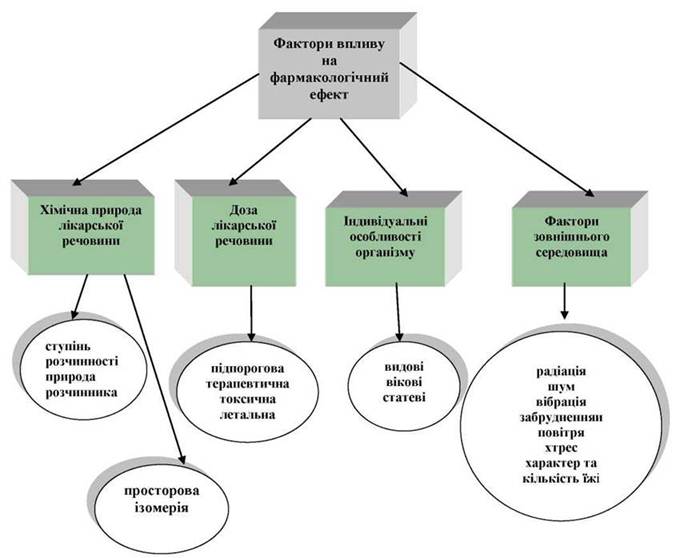
1. Interaction between the organism and drugs:
a) factors determined by the drug itself;
b) dependence of drug action on its Physical state and chemical Structure;
c) dependence of drug action on its dosage;
d) factors determined by the organism.
2. Impact of the external environment on the interaction between the organism and medications.
3. Absorption and excretion of drugs from the organism.
Key terms and concepts of the topic: pharmacological effect, conjugation, polar and neutral compounds, mimetics, idiosyncrasy
Questions for independent study:
1. Concept of pharmacokinetics. Drug METABOLISM in the Organism.
QUESTIONS FOR SELF-analysis and self-assessment:
1. WHAT IS A pharmacological effect?
2. How does a pharmacological effect form depending on the Chemical Nature of a drug?
3. How do hyper-, para-, and sigmoidal dose-response relationships manifest in drug-organism interactions?
4. How do age, species, and sex CHARACTERISTICS OF THE organism influence the pharmacological effect?
1. a) The action of any substances entering the organism is determined by specific changes in its physiological status.
The alteration in the function of Cells, Organs, and body systems caused by a drug is referred to as the pharmaceutical (pharmacological) effect.
Initial changes begin at THE CELLULAR LEVEL. Exactly which cellular structures are involved in this process? First, cytoplasmic Proteins, particularly Enzymes. By interacting with a drug, they are either activated or inhibited (slowing down the reaction). Second, interaction occurs with proteins and Nucleic Acids of the nuclear Chromatin. Third, drugs interact with the membrane elements of The Cell (proteins, glyco- and Phosphoproteins), altering its permeability. Thus, they modify cell excitability and other Functions. Such functionally significant cellular macromolecules that interact with drugs are called cytoreceptors.
b) In pharmacy, There is a saying: "bodies do not interact unless they are dissolved or dissolvable." That is, drugs can exhibit their biological activity only in a dissolved state.
It is known that one of the crucial factors of solubility, aside from the Chemical Structure of the solute, is The Nature of the solvent. Nonpolar compounds dissolve in nonpolar Solvents (alcohol, fats, chloroform, ether, etc.) and poorly in Water (unlike polar compounds). Conversely, polar compounds dissolve well in polar solutions upon substance ionization, for example, in the acidic environment of The Stomach (as in the case of Alkaloids).
The pharmacological activity of polar and nonpolar compounds differs. Unlike polar compounds, nonpolar ones dissolve easily in lipoids and therefore readily and freely penetrate physiological barriers: the Skin, mucous membranes, Blood-Brain barrier, and cytoplasmic membrane.
This factor is taken into account when preparing medicinal products from raw herbal Materials. It is well-known that Fat-soluble Vitamins are formulated as oil-based solutions (such as vitamins A and E).
The chemical structure of a drug substance—specifically The sequence of atoms within the molecule and their spatial arrangement—directly affects its pharmacological activity. For example, as the carbon chain increases, closes into a ring, or contains a greater number of multiple bonds, the substance's inhibitory effect on the Central Nervous system increases. This relationship is successfully utilized in producing synthetic analogues of natural medicinal substances, such as synthesizing the narcotic analgesic novocaine from cocaine. Structural analogues of metabolites may exhibit a similar pharmacological effect; these are known as mimetics or agonists. More frequently, however, they act as antagonists, such as Antivitamins. Adrenoceptor blockers and antihistamines function according to this principle.
The pharmacological effect also varies depending on spatial isomerism (optical, geometrical, or conformational). For instance, the dextrorotatory isomer of noradrenaline is four times weaker in constricting Blood Vessels and 15 times weaker in reducing vascular tone than the levorotatory isomer.
The pharmacological activity of narcotic hypnotics is related not to their chemical structure, but to the degree to which they saturate Cell Cytoplasm. This saturation, in turn, depends on specific physiological properties, notably their solubility in an oil-water system (The ratio of hydrophilic to hydrophobic groups).
Class="center">
c) The concentration of a drug substance in the blood and intercellular space depends on the dose. The probability of drug molecules interacting with cytoreceptors increases with their concentration on the cell surface or inside the cells. This depends on many factors: absorption, metabolism rate, and elimination from the body. Therefore, the pharmacological effect does not always depend directly on the dose; such a direct relationship exists for only a few substances. Hyper-, para-, and sigmoid-type dependencies are observed more frequently:

This indicates that changes in dosage can lead to not only quantitative but also qualitative shifts in the pharmacological effect. For example, some hypnotics act as sleeping AIDS within a certain dose range, induce anesthesia when the dose is increased, and prove fatal if that range is exceeded. Certain expectorants cause nausea at specific doses. Therapeutic, toxic, and lethal doses are thus distinguished.
2. The pharmacological effect is determined not only by the Nature of the substance, but also by the environment of assimilation—that is, by the individual characteristics of the organism, taking into account its heredity, level of development, and current functional state. Species, age, and sex characteristics of the organism are governed by the functional tuning of the central and peripheral nervous systems and the level of development. For example, horses, pigs, and cats become excited upon administration of morphine, whereas dogs, rabbits, and rats calm down. Humans react to morphine with general sedation. Administering morphine to two-week-old puppies with an immature Cerebral Cortex is accompanied by a suppression of bioelectrical activity. By three months of age and in adult dogs, morphine causes a sharp increase in the amplitude of cerebral cortex biopotential oscillations. The same pattern is observed in humans. Young children exhibit heightened sensitivity to morphine, which is why it is not prescribed to infants under 1 year of age. Conversely, children are more resistant to belladonna alkaloid preparations than adults, making belladonna poisoning less severe in adults. In general, children and the elderly are less resilient to many medications than adults.
Sex differences also play a role in drug reactions. It is well-documented that women are more sensitive to nicotine, strychnine, and hypnotics, yet more resistant to morphine, cocaine, and alcohol.
Hypersensitivity and perverted reactions to certain medicinal substances caused by hereditary traits are termed idiosyncrasy (from the Greek idios, meaning peculiar, and syncrasis, meaning mixture). Outwardly, idiosyncrasy manifests as flushing, sharp fluctuations in blood pressure, breathing difficulties, Swelling of the mucous membranes, and profound intoxication. An example is the violent, abnormal reaction of some people to the scent of hay (a condition known as hay fever). It should be remembered that in the presence of any pathology, pharmacological reactions proceed differently than in a normal state. For instance, individuals with myocardial pathology display a significantly higher sensitivity to cardiac Glycosides and camphor.
Dependence on drugs and other substances (addiction). According to the WHO Expert Committee, drug dependence is a psychic and sometimes physical state resulting from the interaction between a living organism and a drug, characterized by behavioral and other responses that always include a compulsion to take the drug on a continuous or periodic basis in order to experience its effects and to avoid the discomfort of its absence.
Addiction induces euphoria (from the Greek eu, meaning good or pleasant, and phero, meaning to bear) to elevate mood, improve well-being, and eliminate unpleasant experiences and sensations that arise when these substances are withdrawn. There is a distinction between psychological and physical drug dependence. Psychological dependence is "a condition in which a drug produces a feeling of satisfaction and a psychic drive that require periodic or continuous administration of the drug to obtain pleasure or to avoid discomfort"; physical dependence is "an adaptive state that manifests itself by intense physical disturbances when the administration of a drug is terminated. These disturbances—namely, the abstinence syndrome (from the Latin abstinentia, meaning restraint; withdrawal syndrome)—constitute a complex of specific signs of mental and physical disorders characteristic of a given narcotic analgesic."
The Mechanism of this phenomenon is as follows. Through systematic administration, the substance becomes integrated into metabolic processes. As a result, tissue metabolism and functioning change. The body gradually adapts to this state, establishing a new metabolic Homeostasis (equilibrium) that differs from the normal one. If the supply of the substance ceases, this biochemical equilibrium is disrupted. A severe condition—abstinence—arises, accompanied by diverse and often severe somatic disorders (death is possible). This state can be resolved only by resuming the administration of the substance. Brain cells are the most sensitive to these changes; consequently, dependence is triggered by substances affecting the central nervous system: narcotic analgesics, psychotropic drugs, hypnotics, nicotine, alcohol, and others. The systematic use of narcotic analgesics leading to dependence is termed drug addiction (substance use disorder). Alterations in brain function lead to the successive development of euphoric Sleep and abstinence states. As dependence intensifies, the euphoric phase shortens, the sleep phase virtually disappears, and the abstinence phase shifts and deepens.
Thus, while euphoria is the initial cause of dependence (addiction), it is subsequently succeeded by the withdrawal syndrome.
The most severe clinical picture develops when physical and psychological dependence are combined.
Environmental factors such as the negative impacts of radiation, noise, vibration, air pollution, various contaminants, as well as emotional overload and chronic stress conditions, all influence pharmacological reactions. For instance, vibration—whose Pathogenesis involves functional Disorders of the cerebral cortex—drastically alters the body's response to anesthesia. Ionizing radiation also exerts a unique influence on drug action; patients frequently exhibit a perverted reaction to caffeine following a course of radiotherapy.
Biological rhythms affect the pharmacological action of many drugs. Cardiac glycosides, Diuretics, and sleeping pills exert a stronger effect at night than in the morning.
The Nature and quantity of food intake represent a critical factor in shaping the body's reaction to foreign substances. Starvation leads to the suppression of drug biotransformation. During fasting, the absorption of medicinal substances accelerates, while their toxic effects are reduced (though Insulin exhibits toxic effects under starvation conditions). Various vitamin deficiencies occur during protein malnutrition because this is linked to the impaired Synthesis of the protein moiety of enzymes. A carbohydrate-rich diet also alters pharmacological effects, notably increasing the toxic impact of salicylic acid, which can provoke gastric ulcers. Why is the consumption of certain foods and alcohol frequently discouraged when prescribing specific medications? An example is the presence of monoamine oxidase inhibitors in food. If patients undergoing Treatment consume certain types of cheese, beer, or wine—foods rich in biogenic amines such as thiamine, tyramine, and Tryptophan—impaired deamination of these amines can result in headaches, nausea, vomiting, and potentially a hypertensive crisis.
3. Four Mechanisms of Substance transport across Introduction/36.html">Biological Membranes are distinguished: 1) diffusion along a concentration gradient, i.e., toward a lower concentration (so-called passive diffusion); 2) filtration through membrane pores, or accelerated diffusion (water, urea, and hydrated Na+ and K+ ions pass through unhindered); 3) Active Transport (both along and against the concentration gradient); 4) pinocytosis (crucial for nutrient transport). Only neutral, nonpolar molecules of fat-soluble substances readily penetrate via pinocytosis. However, a significant number of drug substances are either weak acids or weak bases; thus, their penetration depends on the environmental pH. The transport of highly ionized compounds occurs differently, as they form temporary neutral complexes with the elements of the mucous membrane.
Substances absorbed through the intestinal barrier do not immediately enter the general systemic Circulation. Most pass through the portal vein into the Liver, where they are inactivated. Fat-soluble substances enter lymphatic clefts rather than intestinal capillaries, passing through the Thoracic duct into the SUPERIOR VENA CAVA and subsequently into the general circulation. One of the Factors Determining the concentration of a drug in Tissues and organs is its binding to Plasma Proteins. In the blood, a drug exists in both free and bound states. The protein-drug complex cannot cross The cell membrane, and consequently, the drug cannot exert its pharmacological effect. However, this complex bond is most often reversible. A dynamic equilibrium is maintained between the free and bound forms of the drug, with the bound form acting as a reservoir for the medication.
From the blood, medicinal substances enter the tissues. Their distribution depends on the Blood supply to the tissue or organ and their ability to cross histohematic barriers. However, the site where a substance accumulates is not necessarily the ultimate site of its action. For instance, digitalis cardiac glycosides accumulate in the Adrenal Glands but act on the myocardium, whereas ether and alcohol accumulate in adipose tissue while acting on the central nervous system.
Drug metabolism refers to their biotransformation—that is, the alteration of their chemical structure. Once their biological activity is exhausted, the drug breaks down and is eliminated from the body as metabolites. The core purpose is the deactivation of the drug as a foreign entity. This process occurs via enzymatic reactions such as oxidation, reduction, and others. For example, nicotine undergoes hydroxylation in the same manner as Steroid Hormones. Dealkylation is a characteristic deactivation reaction for narcotic analgesics, while Oxidative Deamination is typical for biogenic amines.
Conjugation is one of the principal pathways of drug biotransformation. It involves a reaction wherein a medicinal substance is coupled with a substrate. Most frequently, the resulting substrate consists of glucuronic acid, Glycine, or acetyl and methyl radicals. Such a conjugate has low solubility and high polarity, which accelerates its excretion. Conjugation reactions take place in the Kidneys, liver, and gastrointestinal tract. Interestingly, the biotransformation of foreign compounds occurs 2-3 times more actively than that of endogenous compounds. It is hypothesized that the ratio of androgens to estrogens in the body determines this biotransforming activity. Elimination occurs primarily through the kidneys and Bile.
Last update: 07/08/2026
Editorial and Educational Adaptation: This material has been compiled based on the primary/original source text. The project team performed an editorial review, corrected technical inaccuracies, structured sections, and adapted the content for an educational format.
What was processed:
- elimination of formatting defects (OCR errors, structural breaks, corrupted characters);
- editorial organization of content;
- standardization of terminology in accordance with academic sources;
- verification of factual statements against the original source text.
All mentions of the author, publication year, and origin of the primary text have been preserved in accordance with the source.