BOTANY VOLUME 1 - CELL BIOLOGY. ANATOMY. MORPHOLOGY - 2007
Preface
Class="center">Preface TO THE 35th German Edition
The textbook "Botany" for higher education (35th edition) by Eduard Strasburger enters a new phase in its history of more than 100 years. Two co-authors, Hubert Ziegler and Friedrich Ehrendorfer, who actively contributed for more than twenty and thirty years respectively to the creation of this work, have retired from the Strasburger team due to age. We, as well as the large body of readers of the sections overseen by Ziegler and Ehrendorfer, are deeply grateful to them for their outstanding achievements. Younger experts have now taken over as authors of these sections. Part of the material on physiology has been revised and supplemented with a chapter on allelophysiology by Elmar W. Weiler (Bochum), who also updated the chapter on the molecular foundations in the structural part. The material in the field of evolution and the Methods of Systematics was revised by Joachim W. Kadereit (Mainz), who also took charge of the Overview of seed plants and plant history. Finally, the chapters on ecology (plant ecology, plants in the biosphere, population and vegetative ecology) have been largely rewritten by Christian Körner (Basel).
The new team has strived to meet the challenges of academic botany teaching—to present all the essential fundamentals of this subject at a high level, and to inform readers of reasonably reliable new research findings and their Applications (for example, Transgenic Plants or biomass and productivity). The goal has also remained unchanged: to worthily represent all branches of plant science and related fields. Accordingly, the textbook pays great attention not only to photoautotrophic, "green" organisms, but also to all those heterotrophic groups that originate from autotrophic ones or are important for understanding the phylogeny, physiology, and ecology of autotrophs (prokaryotes, Fungi). Furthermore, we sought to improve the already rich illustrative material (for instance, through four-color illustrations, the standardization of all chemical formulas), as well as The Structure of the textbook (for example, by using numerical subdivision, table-of-contents overviews at the beginning of each chapter, cross-References, insert boxes on important Special Topics, and finally, lists of inserts and tables in the Table of Contents). References to recent literature make it possible to delve deeper into the subject where more detailed Discussion goes beyond The Scope of the textbook. Numerous cross-references save the student time in consulting the index, but above all, they indicate the connections between disciplines and create a structured framework for material that is inherently presented in a linear fashion. Finally, Setting some material in a smaller font allows readers to skip sections whose content is less essential, particularly for beginners. Thus, the textbook is presented in two variants, as it were: one for lower-level undergraduates and another for advanced students.
We sincerely thank those who assisted us with constructive criticism and the provision of illustrations. (Their names are partially disclosed in the acknowledgments placed at the beginning of the text part and in the figure captions; illustrations whose authors are not named were prepared by us.) Dr. Andreas Buhl (Halle) provided us with substantial assistance in working on the book. Decisive help came from the exceptional engagement of editor Inga Eiken (Stuttgart) and Ms. Elke Littmann from the publishing house's production department. Spektrum Verlag, headed by Dr. Ulrich G. Moltmann, despite the pressure of increasingly fierce competition, not only fully supported the new design of this traditional work but also actively promoted it from their side. Updates in this area include package deals through which the book can be obtained in Germany together with the established brochure "Study Aid: Botany," as well as the "Dictionary of Botany" by G. Wagenitz (Göttingen) on CD-ROM and/or the poster "Systematics: Botany" by A. Bresinsky and J. W. Kadereit.
We wish all readers success in mastering this science with the help of the textbook "Botany," The Importance of which grows alongside its increasing complexity.
Freiburg, Bochum, Mainz, Regensburg, and Basel, February 2002
The Authors
Preface to the 1st German Edition
The authors of the textbook "Botany" have worked for many years as lecturers in botany at the University of Bonn. They constantly exchange scientific ideas and methodological suggestions. Now the authors attempt to jointly present in this book the scientific experience accumulated over a lifetime. The material of the textbook was distributed as follows: Eduard Strasburger took on the responsibility of writing the Introduction and Morphology, Fritz Noll the physiology, Heinrich Schenk the material on spore plants, and A. F. W. Schimper the seed plants.
Even though each author bears scientific responsibility only for the part written by them, the uniformity of all parts was ensured by constant coordination. Therefore, despite having multiple authors, the book can be considered a unified work.
The textbook "Botany" is intended for university students and is primarily designed to arouse their scientific interest, stimulate scientific knowledge, and foster critical thinking. At the same time, however, the authors pay attention to the practical requirements of education and meet the needs of medical and pharmaceutical students. Thus, a medical student can obtain information from the color illustrations about poisonous plants relevant to them, while a pharmacy student can find the necessary guidance on Medicinal Plants and drugs.
The numerous illustrations were prepared mainly by the authors of the textbook, with A number of illustrations contributed by other authors.
One cannot underestimate the kindness of the publisher, who spared no expense for color illustrations in the text and made every effort to give the book a polished appearance.
Bonn, July 1894
The Authors
Eduard Strasburger
01.02.1844, Warsaw — 19.05.1912, Bonn, founder of the higher education textbook "Botany"

After studying natural sciences in Paris, Bonn, and Jena, and writing his doctoral dissertation in Jena, Eduard Strasburger defended his doctorate in 1867 in Warsaw. In 1869, at the age of 25, he was appointed professor of botany at the University of Jena, and in 1881 at the University of Bonn. Under his leadership, the Botanical Institute at Poppelsdorf Castle became one of the international centers of botany. Here, E. Strasburger, together with his associates F. Noll, H. Schenk, and A. F. W. Schimper, authored the higher education textbook "Botany" in 1894 (formerly briefly called the "Bonn Textbook"). This textbook, along with the frequently published "Small Botanical Practical Course" and the more comprehensive "Botanical Practical Course," reflected the botanical and microscopical practices of that era in higher education. Strasburger's research work was of primary importance for the developmental history of Cytology. He established that nuclear division processes (formation, splitting, and movement of Chromosomes) in plants proceed in the same way as in animals, meaning identically across all organisms (1875). He was the first to observe the processes of Fertilization and the fusion of the male nucleus with the egg Cell Nucleus in flowering plants, concluding that The Cell nucleus is the most important bearer of hereditary structures (1884).
Authors of the Textbook "Botany"
The textbook "Botany" was written in 1894 by botanists working in Bonn: Eduard Strasburger, Fritz Noll, Heinrich Schenk, and A. F. Wilhelm Schimper. Subsequently, the publication of the textbook was continued by them as well as by the authors named below.
Introduction and Morphology, or Structure:
1st–11th editions (1894–1911)—Eduard Strasburger
12th–26th editions (1913–1954)—Hans Fitting
27th–32nd editions (1958–1983)—Dietrich von Denffer
33rd–35th editions (1991–2002)—Peter Sitte
Physiology:
1st–9th editions (1894–1908)—Fritz Noll
10th–16th editions (1909–1923)—Ludwig Jost
17th–21st editions (1928–1939)—Hermann Sierp
22nd–30th editions (1944–1971)—Walter Schumacher
31st–34th editions (1978–1998)—Hubert Ziegler
35th edition (2002)—Elmar
W. Weiler
Evolution and Systematics, General Principles:
30th–34th editions (1971–1998)—Friedrich Ehrendorfer
35th edition (2002)—Joachim
W. Kadereit
Lower Plants:
1st–16th editions (1894–1923)—Heinrich Schenck
17th–28th editions (1928–1962)—Richard Harder
29th–31st editions (1967–1978)—Karl Mägdefrau
32nd–35th editions (1983–2002)—Andreas Bresinsky
Seed Plants:
1st–5th editions (1894–1901)—A.F.W. Schimper
6th–19th editions (1904–1936)—Georg Karsten
20th–29th editions (1939–1967)—Franz Firbas
30th–34th editions (1971–1998)—Friedrich Ehrendorfer
35th edition (2002) — Joachim Kadereit
Plant Geography, Geobotany, or Ecology:
20th–29th editions (1939–1967) — Franz Firbas
30th–34th editions (1971–1998) — Friedrich Ehrendorfer
35th edition (2002) — Christian Körner
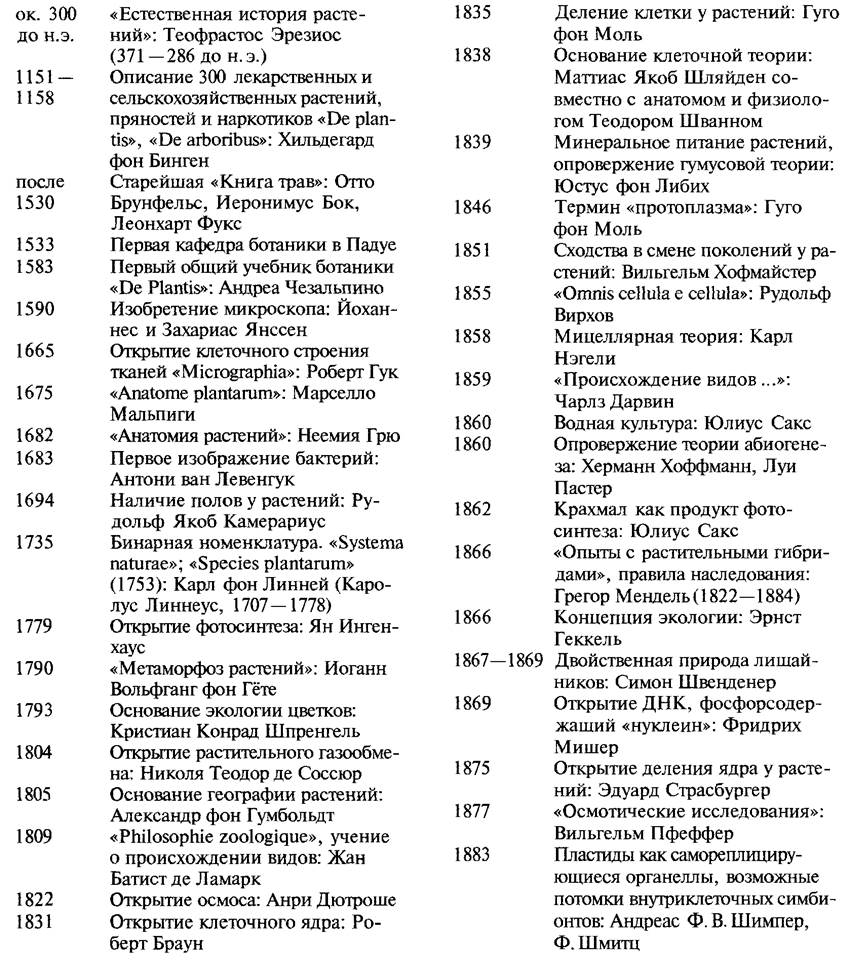
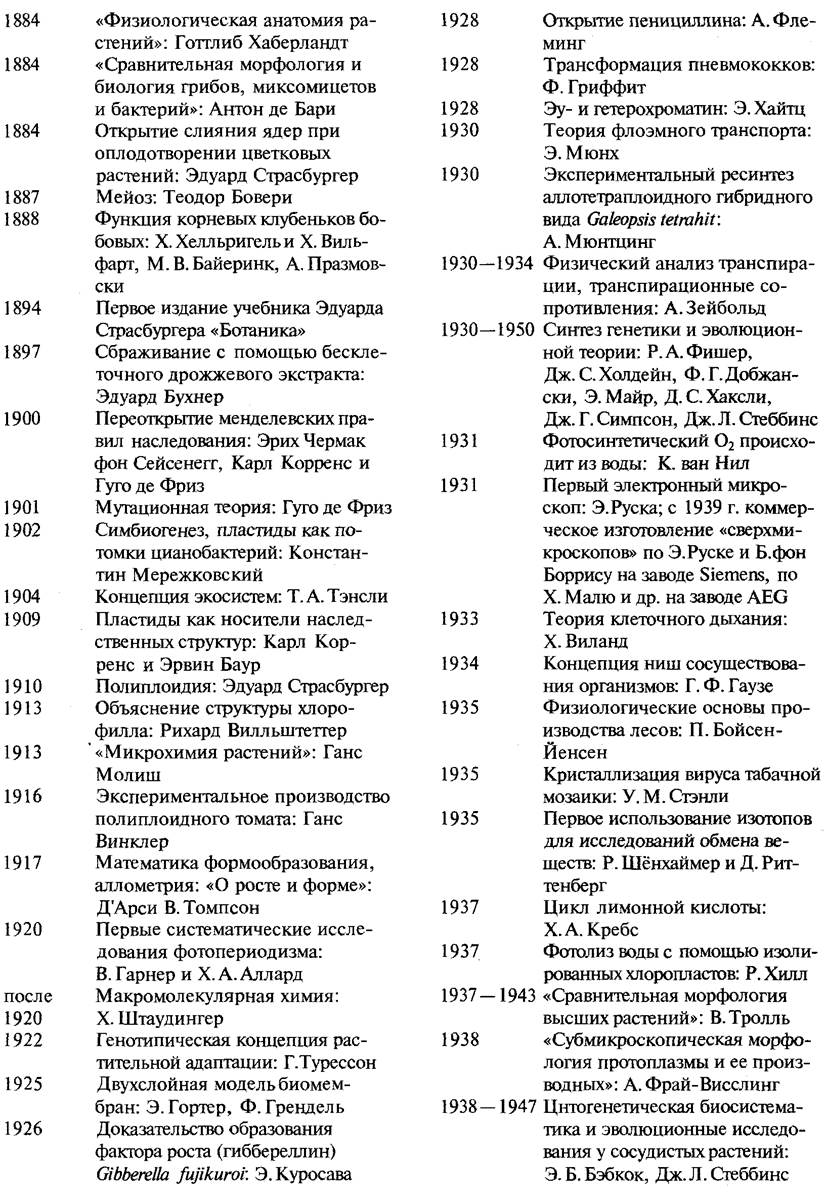


Foreword to the Russian Edition
E. Strasburger's textbook "Botany", presented here to the reader, was first published over 100 years ago and quickly gained worldwide recognition in the scientific community for its fundamental depth, comprehensive coverage, original and illustrative presentation, and accessible style, becoming a classic reference for many generations of researchers. Plant life in all The Diversity of its manifestations, along with The complexity of Structural and functional interrelations that determine The Role and place of plants in the biosphere, becomes much clearer and more intuitive after reading this book. Following E. Strasburger's passing, the republication of the work has been sustained by international teams of authoritative scientists who, while preserving the book's foundational structure, continuously update it with new empirical data and maintain a theoretical level appropriate to each new edition.
This continuous revision has given the publication an unusually long life. The present edition differs significantly from its previous iterations, with new authors contributing to the revision of four out of the six main sections. The Translation of the 35th edition of this truly original book—undoubtedly a classic compendium of botany—will serve as a useful and essential guide for Russian-speaking readers studying botany as an integrated life science. It should not be viewed merely as a standard textbook; rather, it is a valuable resource for anyone who has chosen the plant kingdom as an exciting subject of research and wishes to gain cutting-edge scientific insights into it. This makes it equally important for beginning botanists, experienced field naturalists, and, above all, undergraduate students, graduate students, and university faculty.
The book begins with a Description of the Structure and properties of Water and the biochemistry of plant cell polymers (Nucleic Acids, Proteins, Polysaccharides, and Lipids). This is a well-founded approach that provides a solid foundation for subsequent chapters—cytological, morphological, and anatomical—enabling a better grasp of the principles governing the functional Organization of both the cell and the plant Organism as a whole. The section on Cell Structure covers the methodology of its study and presents Modern views on cell biochemistry, physical chemistry, membrane function, compartmentalization, cellular compartments, and their evolution.
A substantial portion of the book is dedicated to the physiological Functions of the plant organism and their underlying metabolic systems, which sustain life and enable the organism to thrive in diverse environmental conditions. These metabolic systems engage in complex interactions with one another, and the coordination of their functioning across time and space is presented at a state-of-the-art level.
Metabolic reactions within the organism require a significant expenditure of energy, the source of which is provided by energy-Transduction processes that are universal to the Cells of Bacteria, as well as PLANT AND ANIMAL METABOLISM/14.html">Chloroplasts and Mitochondria. Across all these systems, light energy—or the energy derived from oxidized substrates—is utilized to drive electron Transport Across the membrane, coupled with the generation of a proton gradient that ultimately powers the synthesis of ATP molecules. Therefore, understanding the General principles of Electron Transport Chain organization in coupling membranes, along with the CHARACTERISTICS OF THE main components involved in electron transfer,
is essential and can be achieved through careful Study of the relevant chapters. Interactions between Mitochondria and chloroplasts play a vital role in plant life, establishing systems of direct and feedback loops between them. These interactions are crucial for maintaining The Cell as an integrated functional unit, allowing it to flexibly adjust its Respiration intensity in response to various endogenous and exogenous factors. A fundamental task in understanding The Essence of plant life processes is exploring MODERN CONCEPTS OF Photosynthesis as a physiological function that forms the bedrock of Bioenergetics. The fundamental processes of photosynthesis—the structural and functional ORGANIZATION OF THE photosynthetic apparatus, the Molecular structure and PHYSICOCHEMICAL PROPERTIES OF pigment systems, the mechanisms of primary energy-conversion processes, and current views on the Structure and function of reaction centers—have been thoroughly re-investigated in recent years, which is duly reflected in the respective chapters.
Plants are Key Components of the biosphere that perform immense geochemical work, driven primarily by their modes of mineral Nutrition and water relations. In recent years, our understanding of ion and water uptake by plants has changed significantly, and knowledge regarding the functions of mineral nutrient elements has expanded greatly. The book provides a wealth of material on the mechanisms of ion and water entry into the apoplast, their transmembrane transport systems, short- and long-distance Transport of substances, and their internal Circulation throughout the plant, all of which helps elucidate The Role of these processes in forming an integrated functional system.
Plant GROWTH AND DEVELOPMENT are integrated physiological functions that manifest the organism's genetic potential and secure the adaptive and reproductive capabilities of the species. Exploring the principles of hormonal, light, thermal, and Other types of regulation governing Plant Growth and development constitutes a vital branch of botany. A plant's life unfolds in constant interaction with both abiotic (Physical and Chemical) and biotic (other plants, animals, and microorganisms) environmental factors. These interactions can substantially modify plant development and reproductive potential. Noticeable structural changes in plant communities often stem from the overriding influence of these abiotic and biotic forces. Evolution has forged numerous mechanisms that enable plants to overcome adverse conditions and preserve their reproductive and dispersal potential. The impact of each stress factor is examined both from the perspective of its damaging effects and through the lens of the plant's active responses aimed at building adaptive mechanisms to withstand or evade unfavorable conditions.
Aside from the text, an undoubted strength of the book is its extensive use of numerous diagrams, tables, and diverse illustrations, including high-resolution drawings, micrographs, maps, and photographs of landscape vegetation. Particularly noteworthy is the substantial expansion of the "Ecology" section, which now incorporates all essential insights of modern plant cover science, alongside plant Taxonomy organized according to systems that reflect the latest molecular-genetic research on Phylogenetic relationships among various taxa. The approaches developed by botanists in recent years have substantially advanced our understanding of how plant organisms and plant communities function as integrated biological systems. This is vividly reflected in the present book and will undoubtedly captivate a wide readership.
Professor at Lomonosov Moscow State University
I. I. Ermakov
Foreword by the Scientific Editor
The opening chapters of E. Strasburger's textbook "Botany", presented in the first volume, are traditionally devoted to describing the STRUCTURE OF THE plant organism. The reader is led through a sequential "synthesis" of the plant, starting from lower Levels of organization up to the level of the intact organism.
Thus, Chapter 1 begins by outlining the primary Chemical Structure of Biopolymers and lipids, followed by an examination of molecular self-assembly, The Emergence of secondary and tertiary structures, the assembly of proteins into complexes with complex quaternary structure, and, ultimately, the integration of various molecules within membranes.
Chapter 2 details supramolecular structures—the essential "molecular machines" that ensure the mobility of various intracellular entities as well as the cell as a whole, the execution and accurate distribution of hereditary information, the segregation and exchange of metabolites between cellular compartments, the synthesis of extracellular components that form The Cell wall, and the bioenergetics of all life processes. The chapter concludes with An Overview of Prokaryotic Cell STRUCTURE, in which The plant cell is once again "synthesized" within the framework of the symbiogenetic theory. Therefore, the examination of the bacterial cell is not merely a tribute to centuries-old tradition, but a fully justified comparative analysis essential for understanding the evolutionary origin of Plastids and mitochondria.
Chapter 3 continues the systematic progression toward increasing structural complexity, moving from individual cells to the reconstruction of plant Tissues. The overview of tissue organization begins with Meristems, the primary sites of Cell Division in plants. It then guides the reader through The formation of dermal, mechanical, and Vascular Tissues from undifferentiated material, concluding with Examples of highly specialized tissues (such as laticifers, resin ducts, essential oil reservoirs, and glandular trichomes) that occur only in specific plants.
In Chapter 4, individual tissues are integrated into axial and Foliar Organs. The text presents traditional concepts of phyllotaxis, SHOOT branching patterns, inflorescence structures, and life forms. Building upon THE CONCEPT OF life forms, it examines anatomical differences in plant shoots, Primary and secondary thickening, and wood structural variations that often carry significant industrial importance. Moving from the external diversity of Leaf Morphology and internal anatomy, the authors discuss leaf series and modifications, introducing the concept of metamorphosis. The chapter concludes with a description of ROOT structure, highlighting the formation of lateral roots and Secondary Growth.
Chapter 5 largely adheres to traditional practice by covering the morphology of lower plants alongside higher plants within a single volume. It provides insights into the structure of unicellular and multicellular Algae, focusing on siphonal organization, the formation of filamentous and tissue-like thalli, and bryophyte anatomy. This section also incorporates material on fungal mycelial structure, although the Classification of fungi into a distinct kingdom is universally accepted today.
A defining characteristic of the textbook is its synthesis of classical concepts with contemporary data. Each chapter features a concise overview incorporating recent breakthroughs that typically exist only as scattered reports in primary scientific literature. Consequently, this new edition of Strasburger's Botany—and its translation—serves as an invaluable, comprehensive compendium of plant biology for undergraduate and graduate students, educators, and researchers seeking to broaden their expertise in related botanical fields. However, in striving for up-to-date coverage, certain interpretations may occasionally be incomplete, contentious, or non-standard. In such instances, we provide editorial commentary offering supplementary Perspectives or alternative hypotheses.
It should be noted that German terminology does not always align with standard Russian usage, and fully standardized terminology is often lacking in discussions of cutting-edge research. Even in the German original, the authors occasionally adopt literal translations of English terms from primary sources or include English equivalents in parentheses. While we sought to preserve the authors' terminology in complex cases, we have added editorial notes where our academic traditions diverge. Typically, this applies to terms that appear only once and hold little consequence for the subsequent text. In several instances, we took the liberty of spelling out English-language Abbreviations that sound similar in German but do not lend themselves to direct transliteration into Russian, particularly regarding abbreviated names of genes, proteins, polysaccharides, and other macromolecules.
Strasburger's Botany can rightly be regarded as a seminal German work that underscores the contributions of the German research school to various branches of botany—contributions that are undeniable. German scientists undoubtedly hold priority in practical microtechnique, staining methods, Cell Theory, and the foundational establishment of plant morphology as a science. Nevertheless, in preparing the Russian edition, we felt it important to acknowledge the achievements of Russian researchers. For instance, it is widely recognized that the symbiotic origin of plastids was first proposed by the Russian scientist M. Cereskowsky (M. D. Mereschkowsky); however, because this hypothesis was far ahead of its time, it was rejected by the scientific community of that era. Similarly, the discovery of mitosis is credited to M. D. Chistyakov; yet, working with substandard optics and no stains, he published his findings in a relatively obscure Italian journal. This partly explains why Chistyakov's discovery is frequently attributed in Europe to E. Strasburger. We have supplied historical context in relevant sections of the textbook, although such Background notes are kept to a minimum in the original text.
Supplementary material in the book is set in petit type. This includes detailed clarifications, in-depth theoretical analyses and calculations (Quantitative evaluation of hypotheses), and information on the Practical Applications OF discussed phenomena. Self-contained mini-sections addressing topics outside the main narrative are presented in dedicated boxes. This structure enables readers, on the one hand, to quickly grasp core concepts without getting bogged down in details (which is particularly helpful for exam preparation) and, on the other hand, to easily locate reference data that undoubtedly enhance the book's appeal.
All chapters of Botany are richly illustrated, allowing the textbook to function as a visual atlas of cell biology, plant anatomy, and morphology. A vital role is played by sections dedicated to research methodology (light and Electron Microscopy in cytology, Homology and analogy in morphological research). Furthermore, specialized boxes introduce readers to widely used experimental techniques. Throughout the text and in figure captions, the methods employed to obtain specific experimental results are generally specified. Because analyzing plant structure across various organizational levels requires an understanding of the functions performed by molecules, cells, tissues, and organs, brief excursions into plant physiology are inevitable. The textbook is equipped with a robust cross-referencing system, enabling readers to easily locate supplementary material on related topics in subsequent volumes.
Associate Professor, Lomonosov Moscow State University
V. V. Chub
Last update: 07/08/2026
Editorial and Educational Adaptation: This material has been compiled based on the primary/original source text. The project team performed an editorial review, corrected technical inaccuracies, structured sections, and adapted the content for an educational format.
What was processed:
- elimination of formatting defects (OCR errors, structural breaks, corrupted characters);
- editorial organization of content;
- standardization of terminology in accordance with academic sources;
- verification of factual statements against the original source text.
All mentions of the author, publication year, and origin of the primary text have been preserved in accordance with the source.