Human Anatomy - Kotsan I. Ya. 2009
History of the Development of Human Anatomy
Human Anatomy as a Science has travelled a long and intricate path throughout its historical development. Practical life needs played a primary role in its emergence and shaping. Anatomy developed unevenly, with periods of relative flourishing alternating with times of decline. The prevailing ideology of any given historical epoch has always exerted a profound influence on The Development of anatomy.
The roots of anatomical concepts trace back to antiquity. Among ancient peoples, ideas about the bodily Structure of animals and humans were formed through chance observations made during hunting, cooking, and ritual sacrifices. Cave paintings found in the dwellings of ancient humans indicate that they were already familiar with such Organs as The Heart, Lungs, and Liver. The advent of writing made it possible to record accumulated anatomical facts on papyri. For instance, the famous ancient Egyptian Ebers Papyrus (c. 2550 BC), entitled the «Book of the Physician's Secrets,» contains data on The structure of The Heart and Blood Vessels. Anatomical insights and illustrations are also found in the ancient Chinese medical treatise «Nei Ching» (11th–7th centuries BC) and the Indian text «Ayurveda» («The Knowledge of Life,» 9th–3rd centuries BC).
The most favorable conditions for the advancement of various sciences took shape in Ancient Greece, driven by its geographical, economic, and political position among the countries of the ancient world.
The Emergence of medicine as a science is associated with the name of the renowned Greek physician Hippocrates (460–377 BC). By the age of 20, Hippocrates was already a celebrated doctor, and he later gained such renown that legends grew up around his name. He was believed to be a descendant of Asclepius, the God of Medicine. At a time when diseases were thought to be caused by demons flying through the air, Hippocrates was the first to declare that illnesses have natural causes, which he sought to uncover. In doing so, he placed medicine firmly on a scientific path. The scholar considered experience and observation to be the foundation of the healing art, insisting that physicians treat the patient rather than the disease, while taking into account the individual CHARACTERISTICS OF THE human Organism and its relationship with the environment. Hippocrates formulated the moral norms of medical conduct in the text of the physician's oath that bears his name—the Hippocratic Oath. Owing to his outstanding medical authority, encyclopedic knowledge, and vast scientific legacy, Hippocrates has been hailed as the «Father of Medicine.» For more than two millennia, his ideas commanded unquestionable authority. He attached paramount importance to The Study of anatomy, physiology, and Embryology, viewing them as the bedrock of medicine. It was Hippocrates who gathered, systematized, and significantly expanded the knowledge of Human Body Structure in his treatise «On Ancient Medicine.» He authored such works as «On the Heart,» «On Glands,« «On Bone Fractures,« and «On Dislocations.» The scientist described certain cranial bones and their suture joints, as well as the STRUCTURE OF THE heart and blood vessels; he pointed out that the voice is produced in the windpipe and proposed the humoral theory of body composition.
Class="center">
However, Hippocrates was not without his errors. For instance, he believed that Arteries contain air, and that the human Brain has the consistency of mucus and produces semen, which travels through the Spinal Cord to the reproductive organs. Hippocrates failed to distinguish nerves from tendons, or Veins from arteries. He maintained that the organism is composed of four cardinal humors: blood (sanguis), phlegm (flegma), yellow Bile (chollae), and black bile (melena chollae). The predominance of one of these determines temperament: sanguine, phlegmatic, choleric, or melancholic. Based on these differences in temperament, Hippocrates identified and detailed four MAIN TYPES OF human constitution.
Great natural philosophers of their time were Plato and his pupil Aristotle.
Plato (427–347 BC) was a representative of ancient idealism. According to Plato, the human organism is controlled not by a material organ—the brain—but by Three types of «soul,» or «pneuma,» located in the three Morphology/4.html">MAIN ORGANS OF the body: the brain, the heart, and the liver (Plato's tripod). Through his studies in anatomy and embryology, Plato established that the brain of vertebrate animals develops from the anterior sections of the spinal cord.
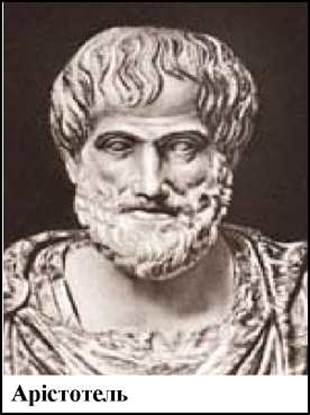
Aristotle (384–322 BC) was a great philosopher, scientist, encyclopedist, and natural historian of Ancient Greece who laid the foundations of descriptive and comparative anatomy, as well as embryology.
Aristotle's life coincided with the period of Alexander the Great's major wars and the struggle of slaves for liberation. As a teacher to the great commander, he used his position to request that military campaigns in foreign lands yield various specimens of animals for him to study. This enabled Aristotle to investigate them, gather and present valuable data on animal anatomy in his writings, and make an attempt at their Classification. By conducting experiments on animals, he compared animal and human body structures and noted common features between them. He advanced the idea that «every animal originates from an animal» and introduced the term «anthropology.»
He became the founder of such sciences as zoology and comparative anatomy and authored renowned books including «Historia Animalium,» «On the Parts of Animals,» and «On the Generation of Animals.»
Nevertheless, Aristotle's notions regarding body structure still contained numerous errors. He believed that blood vessels continued into tendons, with blood escaping outward through them as sweat; he distinguished only three chambers in the heart; and he considered nerves to be hollow tubes through which the «spirit of life,» generated in the brain, was distributed.
The Alexandrian school of physicians, which emerged in the 3rd century BC, exerted a profound influence on the development of anatomy and medicine. Physicians of this school were not only permitted to dissect human corpses for scientific purposes, but were also allowed to perform vivisection on condemned slaves and criminals. Two prominent scientists became especially famous during this period: Herophilus and Erasistratus.
Herophilus, a Greek from Chalcedon (c. 304 BC), already singled out anatomy as an independent science. He described the Meninges and venous sinuses, the cerebral ventricles and vascular plexuses, the Optic nerve and Eyeball, the choroid and retina, as well as the duodenum and Prostate Gland. Herophilus refuted Aristotle's erroneous view that the heart is The Organ of thought, firmly attributing this function to the brain, which he recognized as the center of the entire Nervous system.
Erasistratus (300–250 BC) was a younger contemporary of Herophilus. Possessing a broader outlook, he engaged in both anatomy and physiology. Erasistratus knew that arteries contain blood rather than air. He established The connection between nerves and the brain, studied the cerebral ventricles and the convolutions of the Cerebral Cortex, and provided a more complete Description of the liver, bile ducts, heart, and heart Valves. Erasistratus was already aware that blood flows from the lungs into the left atrium and then into the left ventricle of the heart, from where it is distributed to the organs via the arteries.
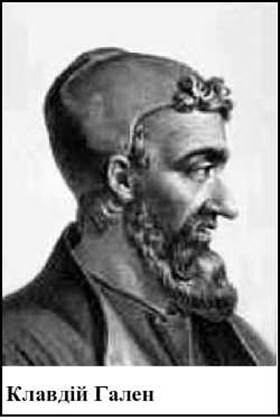
A major contribution to the advancement of the anatomical sciences was made by Claudius Galen (130–201 AD), an eminent philosopher, biologist, physician, anatomist, and physiologist of Ancient Rome. He gathered and synthesized the anatomical literature of Ancient Greece and Rome.
Galen attempted to explain the Structure and Functional purpose of every organ. He classified Bones and Their Joints, identified Bone Structure types that remain accepted in modern anatomy with almost no changes, introduced The concepts of the epiphysis and metaphysis, and described several joints. He authored the treatise «On the Anatomy of Muscles,» meticulously described the Structure and function of the digestive tract and respiratory pathways, and documented seven of the twelve pairs of Cranial Nerves. His findings regarding brain structure—which he considered the seat of bodily sensation and the source of voluntary movement—were exceptionally valuable. Galen expounded his anatomical views in the work «On The Use of Parts of The Human Body,» examining anatomical structures in inseparable connection with their Functions. A renowned physician among his contemporaries, Galen achieved his greatest scientific fame only after death. His principal work on anatomy is titled «On Anatomical Procedures,» and on physiology, «On the Usefulness of the PARTS OF THE Body.» Galen's authority was so immense that anatomy and medicine were studied primarily through his works for nearly 13 centuries. Because human dissection was prohibited during his lifetime, he was limited to dissecting the bodies of executed criminals and gladiators. His primary experiments were therefore conducted on animals, and the resulting insights were extrapolated to humans. Consequently, Galen's anatomical teachings contained numerous errors that were corrected only during the Renaissance. He held mistaken views on Blood Circulation (considering the liver to be the central organ), heart structure (believing the ventricles communicated through a hole in the septum), SYSTEMIC AND PULMONARY blood vessels, the body's «composition» from four «humors,» and the governance of the organism by three principal organs (liver, heart, and brain). Nonetheless, Galen also discovered many new anatomical facts. The Nervous System was the primary focus of his studies; he was the first to introduce experimental research into science, such as transecting the spinal cord of animals at various levels to observe the consequences, as well as ablating the cerebral hemispheres.
With Galen, the ancient period of scientific flourishing came to an end, giving way to the Middle Ages and a complete decline in science. Human dissections were strictly forbidden during this era under penalty of severe punishment and even death. Throughout the medieval period, Galen's anatomy and physiology formed The basis of medicine.
The unchallenged supremacy of the church during the early feudal era hindered scientific progress in Western Europe. In the East, however, free from the Influence of the Catholic Church, medicine continued to evolve. Although the Muslim religion also prohibited corpse dissection, anatomy was studied through the translated Arabic texts of Hippocrates, Aristotle, and Galen.
One of the most outstanding physician-scientists of this period was Abu Ali Ibn Sina (Avicenna, 980–1037 AD), a renowned philosopher, naturalist, and poet of Central Asia. He authored the encyclopedic work «The Canon of Medicine,» which systematized and expanded upon Anatomical and physiological data borrowed from the works of Hippocrates, Aristotle, and Galen. «The Canon of Medicine» was first translated into Latin in the 12th century by Gerard of Cremona and was republished more than 30 times following the invention of printing.
One of the chapters in the first book of «The Canon of Medicine» is devoted to human anatomy, providing a generalized description of the STRUCTURE AND FUNCTIONS of the human body alongside information on bones, joints, muscles, tendons, ligaments, Skull structure, Teeth, and cranial nerves. The Canon asserts that the brain transmits sensations and movements to other organs via the nerves. The terminology of descriptive bone anatomy used in the work closely resembles modern usage. Avicenna also made several anatomical discoveries: he was the first to point out that the retina is a light-sensitive structure, provided a detailed description of the extraocular muscles, and first noted their attachment points. Furthermore, Avicenna was among the first to draw attention to body constitutional types and their individuality, linking constitution types to bodily responses and advocating for personalized Treatment approaches. Among his therapeutic Methods, Avicenna utilized Physical Exercise.
For five centuries, «The Canon of Medicine» served as a handbook for physicians across many countries in Europe and Asia. A Russian Translation was published between 1954 and 1960, while a Ukrainian edition is yet to appear.
Towards the end of the Middle Ages, the feudal state structure gradually began to disintegrate. Advancements in technology, navigation, and trade spurred a general revival in state life. Alongside economic growth, the arts and sciences—including biology and medicine—experienced a turbulent development, providing a fresh impetus for the study of anatomy.
At the beginning of the second millennium, despite persecution by the church, anatomy continued to evolve, and the first medical schools began to emerge in Europe. One of them was the Schola Medica Salernitana in Italy, near Naples. The development of anatomy was also fostered by the ESTABLISHMENT OF THE first European universities during the 12th and 14th centuries. By the 13th century, medical faculties had already been established within them. Throughout the 14th and 15th centuries, anatomy began to be taught in Venice, Vienna, Bologna, Paris, Tübingen, and other cities.

In 1326, Mondino de' Luzzi (1275–1327) published a textbook on anatomy based on the dissection of two female corpses. During the 14th and 15th centuries, this textbook was republished 25 times. In the 14th and 15th centuries, universities were already permitted by special decree to dissect human corpses. Initially, one dissection was allowed every 5 years, later increasing to 1–2 corpses per year, and eventually, cadaver dissection became a mandatory part of anatomical studies. In 1594, Europe's first anatomical theatre was built in Padua.
During the Renaissance (15th–18th centuries), anatomy, like other sciences, made giant leaps forward. Scientists emerged who dismantled scholastic anatomy and laid the foundations of scientific anatomy.
Particularly great contributions to anatomy were made by Leonardo da Vinci, Andreas Vesalius, Michael Servetus, William Harvey, and Marcello Malpighi.
Leonardo da Vinci (1452–1519) was a brilliant Italian artist, mathematician, and engineer, and one of the most prominent cultural figures of the Renaissance. He studied Human and Animal anatomy throughout his life, both as an artist and as a scientist. Having dissected 30 corpses, he produced about 800 accurate and original drawings of bones, muscles, the heart, and other organs, accompanied by scientific descriptions. Leonardo da Vinci studied body proportions, classified muscles, and attempted to explain their function through the laws of mechanics, while also describing several physiological Features of the infant and elderly organisms. His drawings have not lost their significance to this day, as they represent the first anatomically correct depictions of the human body, its organs, and systems drawn from life.
His works on the Anatomy of the Locomotor System are of an exceptionally high standard. It is fair to say that Leonardo da Vinci was the first to study the functional Anatomy of The Musculoskeletal System. He is the founder of dynamic and plastic anatomy, and he was also keenly interested in comparative anatomy.

Andreas Vesalius (1514–1564), the founder of descriptive anatomy, was born in Belgium and studied in Paris under the renowned anatomist Jacobus Sylvius, who strictly adhered to Galen's texts in his teaching. Exceptionally gifted, Vesalius completed his education in the Italian city of Padua and, at the age of 22, was appointed chair of anatomy at the University of Padua. There, instead of lecturing from Galen's books, he taught his own concepts formed through human dissections. Vesalius's research was constrained by the availability of cadavers; corpses of executed criminals, which he managed to obtain only occasionally, were far too few for the work he envisioned. Therefore, he and his students were forced to secretly steal bodies buried in the Padua cemetery. At the age of 25, Andreas Vesalius received his doctorate in medicine, and by 28, he had completed and published his classical work, *De humani corporis fabrica* (On the Fabric of the Human Body). In it, he systematically described the Skeleton, ligaments, muscles, blood vessels, nerves, Internal Organs, brain, and Sense Organs. In his work, Vesalius boldly pointed out the structural errors of many anatomists and openly opposed Galen's erroneous views (correcting more than 200 of Galen's mistakes). The illustrations for the textbook were created by the artist Jan Stephen van Calcar from Titian's school. The publication of Vesalius's work sparked immense interest among scholars and his contemporaries on the one hand, and outrage and condemnation from reactionary anatomists seeking to defend Galen's authority on the other. These bold attacks by Vesalius on Galenical anatomy triggered severe persecution by the ruling circles and the Inquisition. Accused of crimes by the Inquisition, he barely escaped a death sentence thanks to the intervention of the Spanish king, whose son Vesalius had once cured when no other doctor could help. However, this did not save Vesalius from church persecution. The young doctor of medicine was subsequently forced to travel to Palestine, from which he never returned, dying on his return journey on a desolate island where he was buried by pilgrims. No precise records of the circumstances of his death have survived.
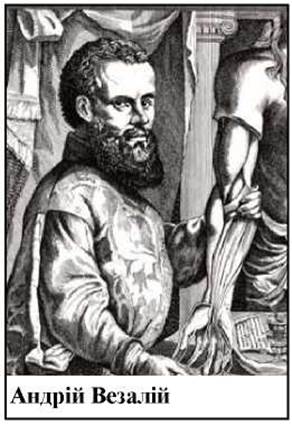
Vesalius's scientific legacy is immense. He described a multitude of new anatomical facts obtained through the study of human corpses and propelled anatomy onto a new, genuinely scientific path. His textbook *De humani corporis fabrica* retained its value for 200 years and was translated into Russian. Vesalius also created magnificent anatomical tables for the study of bones and muscles. Some of Vesalius's insights into the Functional Anatomy OF organs (such as The Liver and Kidneys) began to be developed only 100 years after his death. He died at the age of 50, at the peak of his powers and abilities.
Michael Servetus (1511–1553) was a Spanish Renaissance philosopher and naturalist. He was a jurist, astronomer, metrologist, geographer, physician, and geologist. Persecuted by the Inquisition, he fled Zaragoza for Paris, where from 1536 he studied medicine and attended Sylvius's lectures on anatomy. He was among the first to discover and describe the lesser (pulmonary) circulation in his treatise *Christianismi Restitutio* (The Restoration of Christianity). Defying Galen's teachings, he traced the flow of blood from the right ventricle to the left atrium through The system of pulmonary arteries and veins. He hypothesized the presence in the lungs of microscopic "Hair-like vessels" connecting the Branches of the pulmonary arteries and veins. He defined the physiological significance of blood circulation through the Vessels of the lesser circulation, noting that the blood is processed and acquires a brighter hue within them. Like A. Vesalius, and contrary to C. Galen's assertions, M. Servetus maintained that the interventricular septum of the heart is normally solid and devoid of apertures.
For his anatomical discoveries and materialist convictions, M. Servetus was burned at the stake along with his book, following a denunciation submitted to the Inquisition tribunal by his close childhood friend Calvin.

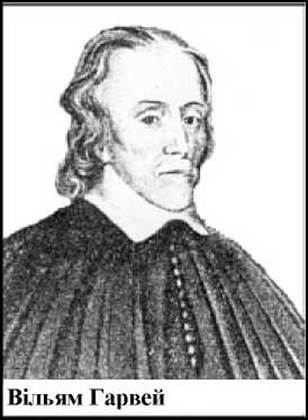
William Harvey (1578–1653) was a celebrated English Renaissance scientist, physician, physiologist, and one of the founders of comparative anatomy and embryology, as well as a professor of anatomy, physiology, and surgery in London. He clarified the Functional Significance of the heart chambers and major blood vessels, ultimately dismantling Galen's concept of blood circulation. Drawing on years of animal experiments, he formulated The Theory of blood circulation, discovered and described the systemic (greater) circulation, and supplemented the description of the pulmonary (lesser) circulation. He predicted the presence in organs and Tissues of microscopic anastomoses—capillaries bridging the arterial and venous vascular beds. Harvey brought upon himself both his greatest fame and his fiercest persecution with his book *Exercitatio Anatomica de Motu Cordis et Sanguinis in Animalibus* (Anatomical Exercise on the Motion of the Heart and Blood in Animals), published in 1628. The book provoked fierce debates and attacks. The campaign against Harvey was led by the prominent Paris professor Riolan. Harvey lost his entire extensive medical practice, his country house was ransacked, and he relocated to Rome, where he became the Pope's personal physician. Harvey's work gained recognition only toward the end of his life. Just a few years after Harvey's death, Malpighi discovered capillaries.
Marcello Malpighi (1628–1694) was an Italian physician and naturalist, and the founder of microscopic anatomy; he received his doctorate in medicine in 1653. Honored with the title "Master of Microscopic Technique," he discovered capillaries and "closed" the circulatory loop. In addition, Malpighi studied the microscopic structure of numerous organs (Skin, lungs, kidneys, Lymph Nodes, Spleen, and nerves), which rightfully earns him recognition as one of the founders of Histology (microscopic anatomy). He also spent many years working on various problems of embryology, enabling him to describe the blastoderm, the neural groove, optic vesicles, and somites. He expanded Harvey's maxim "every animal comes from an egg" into the broader principle "all life comes from an egg." Malpighi's name is commemorated by pulmonary alveoli, renal corpuscles and pyramids, and vascular capillary networks. However, the development of anatomy was hindered by A number of circumstances, chief among which were the Tatar yoke, endless wars, and the dominant position of the church.

Last update: 08/08/2026
Editorial and Educational Adaptation: This material has been compiled based on the primary/original source text. The project team performed an editorial review, corrected technical inaccuracies, structured sections, and adapted the content for an educational format.
What was processed:
- elimination of formatting defects (OCR errors, structural breaks, corrupted characters);
- editorial organization of content;
- standardization of terminology in accordance with academic sources;
- verification of factual statements against the original source text.
All mentions of the author, publication year, and origin of the primary text have been preserved in accordance with the source.