Lecture Notes in Human Anatomy - Hryhorieva O.A., Svitlytskyi A.O. 2020
Introduction to Human Anatomy
Anatomy as a Science
International Anatomical Nomenclature. Anatomical Axes and Planes. General Plan of Body Structure. Age Periodization of Human Ontogeny
METABOLISM/2.html">THE CONCEPT OF individual Variability, developmental variants, and anomalies.
Fundamentals of topography, concepts of syntopy, skeletotopy, and holotopy. Body regions and topographic lines.
Lecture outline.
1. International anatomical nomenclature.
2. Anatomical Axes and Planes.
3. General structural plan of the Organism.
4. Age periodicity of human ontogenesis.
Prerequisites for the creation of anatomical nomenclature:
1. Necessary for systematizing the vast number of terms in anatomy (currently around 7,500 terms).
2. Facilitates communication among scientists and physicians of different countries.
3. The origins of anatomical nomenclature—the scientifically grounded list of anatomical terms used in medicine and biology—date back to Hippocrates (460–377 BC), C. Galen (131–200 AD), and A. Vesalius (1514–1564).
4. International and national standards of anatomical nomenclature exist.
✵ The first anatomical terms (names of individual Organs) appeared about 3,000 years ago in Ancient Greece and were subsequently coined spontaneously, depending on the researcher's powers of observation and imagination. Ancient Greek physicians used about 700 anatomical names.
✵ The Romans adopted Greek Anatomical Terminology and enriched it with many new Latin terms. Many anatomical terms were proposed by Galen.
✵ As Latin terms spread across Northern and Central Europe, they assimilated the linguistic features of those countries. As a result, many hybrid words and barbarisms appeared among anatomical names.
✵ The first international anatomical nomenclature was adopted in Basel (1895) at the congress of the Anatomical Society under the chairmanship of R.A. Kölliker. It was named the Basle Nomina Anatomica (BNA).
Due to The Development of Morphology, anatomical terms required refinement and expansion. Therefore, the German Anatomical Society formed a commission that proposed a new list of terms for the second anatomical nomenclature. The list was approved at the society's congress (Jena, 1935) and was named the Jena Nomina Anatomica (JNA).
✵ In 1950, at the 5th International Congress of Anatomists, a decision was made to revise the anatomical nomenclature. The updated list of Latin terms was presented to the 4th International Federative Congress of Anatomists (Paris, 1955). Thus, the 3rd International Anatomical Nomenclature was adopted, known as the Paris Nomina Anatomica (PNA).
✵ Addressing the needs of modern medicine, the Federative Committee on Anatomical Terminology (abbreviated as FCAT) approved Terminologia Anatomica in August 1997 in São Paulo, Brazil—a new, modern, simplified, and universal anatomical nomenclature comprising 7,428 terms.
Class="center">
A Cell is a living, open system, the elementary unit of a living organism consisting of a Nucleus and Cytoplasm. A tissue is an association of Cells and Extracellular matrix united by a common origin, Structure, and function. There are four MAIN TYPES OF tissues:
- Epithelial Tissue ( epithelium) is a layer of cells resting on a basement membrane, beneath which lies loose Fibrous Connective Tissue. Epithelium covers the body surface (Skin) and lines mucous membranes, separating the organism from the external environment; it performs protective and covering Functions; it forms the tissue of endocrine and exocrine glands; epithelial tissue is characterized by a high cell density and a small amount of intercellular substance;
- connective tissue consists of a small number of cells and a significant amount of extracellular matrix; it performs supporting and protective functions (bone, Cartilage), as well as trophic functions (Blood, Lymph, loose fibrous and reticular, adipose, pigmented, and other Connective Tissues with specialized properties);
- Bone tissue consists of bone cells embedded in an intercellular matrix containing Collagen fibers and inorganic salts;
- cartilage tissue consists of chondrocytes and a ground substance (gel); it includes hyaline cartilage (articular cartilages, costal cartilages), fibrocartilage (annuli fibrosi of intervertebral discs, intra-articular discs, menisci), and elastic cartilage (certain laryngeal cartilages, auricle, cartilaginous part of the auditory tube);
- dense regular connective tissue serves a supportive function, consists of densely packed collagen fibres, and forms tendons, ligaments, joint capsules, internal organ capsules, Heart Valves, aponeuroses, the dermal layer of the skin, as well as cartilage and Bone Tissues;
- loose connective tissue contains A wide variety of cells (fibroblasts, macrophages), fibres, and ground substance; it forms the stroma of parenchymatous organs, is a component of subcutaneous adipose tissue, and surrounds blood Vessels and nerves;
- reticular connective tissue consists of reticular cells and reticular fibres, within the meshes of which Blood Cells are located; it forms the structural basis of the Bone Marrow, Thymus, Spleen, Lymph Nodes, and other organs, and has the potential to transform into adipose tissue;
- blood consists of an intercellular ground substance (plasma) and cells (formed elements);
- lymph consists of plasma and cells, lacks erythrocytes, and differs from Blood Plasma in having a lower protein content;
- Muscle tissue ensures body movement; it contains specialized structures known as myofibrils, and is subdivided into;
- smooth (non-striated) muscle tissue, which consists of mononuclear spindle-shaped cells and forms the walls of Blood Vessels and visceral organs;
- skeletal (striated) muscle tissue, which consists of striated muscle fibres and forms skeletal Muscles, as well as the Muscles of the Tongue, Pharynx, soft palate, and Larynx;
- Cytology/cytology/34.html">Cardiac muscle tissue, which consists of muscle cells (cardiomyocytes) and exhibits striation;
- Nervous Tissue consists of Nerve Cells (neurocytes or Neurons) and neuroglia; neurons perform the specific Functions of The Nervous system (receive stimuli, generate and transmit impulses), while neuroglia provides supportive, trophic, protective, and boundary functions. Neuroglial cells line the ventricles of the Brain and the central canal of the Spinal Cord (ependymocytes), form the supportive framework of the Central Nervous System (astrocytes), surround neuronal cell bodies and their processes (oligodendrocytes), and carry out phagocytosis (glial macrophages).
Organs are constructed from tissues.
An organ is a part of the body that possesses a definite shape and internal structure, occupies a specific position within the organism, and performs a specialized function. Various tissues participate in The formation of each organ, with one being primary (nervous tissue in the brain, muscle tissue in muscles, epithelial tissue in glands) and the others acting as auxiliary components.
An organ system is a group of organs that perform a common function and share a common embryonic origin (such as the digestive, respiratory, cardiovascular, and nervous systems).
An organ apparatus is a group of organs that perform a common function but have different embryonic origins (e.g., The Musculoskeletal System, the endocrine apparatus).
When describing body structure, establishing the Location of its individual parts, and determining the projections of bones, muscles, and Internal Organs, a standard reference posture (the anatomical position) is used.
The anatomical position is the standard upright posture of a person with the arms hanging loosely at the sides, palms facing forward, and thumbs pointing outward.
To describe the spatial relationships of organs, conventional planes and axes are utilized. The concepts of "plane," "axis," and "direction" are employed to determine THE POSITION OF an organ in space.
Three mutually perpendicular planes are passed through The Human Body: two vertical and one horizontal.
In the course of development, the human body adapts to its environment. As a result, a specific equilibrium between the organism and environmental conditions is achieved, which is known as adaptation.
✵ Norm — A state in which all organs and systems of the human body function and exist in a state of stable equilibrium.
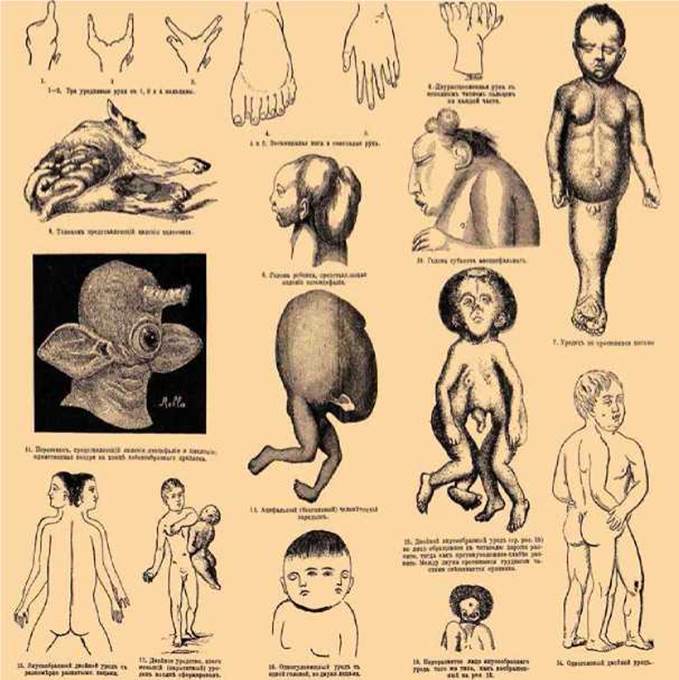
✵ The organism and its organs exhibit numerous variations in external structure, but if the function of the organ is not impaired, such features are termed variants of normal
✵ Deviations from the norm, which can vary in degree.
✵ Anomalies arise as a result of abnormal development.
Some of these do not impair the adaptation of the organism or the function of the organ (for instance, dextrocardia — the LOCATION OF THE heart on the right side, or situs inversus, where organs are positioned in a mirror-image arrangement).
Certain anomalies are accompanied by
✵ impairment of bodily functions or individual organs.
✵ disrupt the balance between the organism and the environment (e.g., cleft palate, absence of a limb or part of a limb, etc.),
✵ or they are incompatible with life (e.g., absence of The Heart, Acrania, etc.).
✵ gross developmental anomalies are referred to as malformations or deformities.
✵ the branch of anatomy and Embryology that studies Developmental Anomalies and malformations is teratology (from Greek teras - monster, and logos - science).
Vertical planes:
- frontal plane runs vertically, parallel to the forehead and at a right angle to the sagittal plane; this plane divides the human body into anterior (ventral) and posterior (dorsal) halves;
- sagittal plane (anteroposterior) is a plane running vertically from front to back, dividing the body into right and left parts; the sagittal plane passing through the middle of the human body and dividing it into two symmetrical halves (right and left) is called the median plane.
Horizontal plane divides the human body into upper (cranial) and lower (caudal) sections; it runs perpendicular to the first two planes and parallel to the supporting surface.
All planes are mutually perpendicular. Their intersection forms axes of Symmetry - one vertical and two horizontal:
- vertical axis is an axis running along the body from top to bottom or bottom to top, connecting the upper and lower points of the body or its parts; it is formed by the intersection of the sagittal and frontal planes, and has two directions - upper, or cranial, and lower, or caudal;
- horizontal axes:
- frontal, or transverse axis is formed by the intersection of the frontal and horizontal planes, running across the forehead from right to left or left to right, connecting symmetrical points of the right and left halves of the body, and has two directions: right and left; however, along the frontal axis there can also be a medial direction, which characterizes the position of an organ closer to the median plane, a lateral direction, which characterizes the position of an organ farther from the median plane, as well as a median direction, which indicates the position of an organ within the median plane;
- sagittal axis is formed by the intersection of the horizontal and sagittal planes, running in an anteroposterior or posteroanterior direction, connecting symmetrical points of the anterior and posterior halves of the body or its parts, and has two directions - anterior, or ventral, and posterior, or dorsal.
To determine the position of an organ in space, the following terms are also used: medial (medialis), median (medianus), middle (medius), anterior (anterior), lateral (lateralis), intermediate (intermedius), posterior (posterior), ventral (ventralis), dorsal (dorsalis), cranial (cranialis), caudal (caudalis), proximal (proximalis), distal (distalis), superficial (superficialis), deep (profundus), longitudinal (longitudinalis), transverse (transversalis), frontal (frontalis), sagittal (sagittalis), right (dexter), left (sinister), upper (superior), lower (inferior); supination - rotation of a limb or its part outward from the trunk; pronation - rotation of a limb or its part toward the trunk.

Age periodization of human ontogenesis.
✵ Infancy. Growth during this period is accompanied by an increase in body length and mass. For instance, a child's height increases by approximately one and a half to two times, averaging 23-25 cm, and body mass triples. At six months, primary Teeth begin to erupt, which complicates the infant's diet as complementary feeding is introduced. Significant changes occur in the child's Skeleton. In a newborn, a large part of the skeleton consists of cartilage tissue, which is gradually replaced by bone tissue over many years. Fontanelles are located between the bones of an infant's cranium; in these areas, the brain is protected only by soft connective tissue. This is why an infant's HEAD must be protected from bumps and jolts. By one year of age, the fontanelles close. Newborns do not yet have the spinal curves typical of humans. The child's skeleton develops alongside the muscular system. At 2.5-3 months of age, the Neck Muscles strengthen, and the infant begins to hold its head up independently. By five months, the trunk muscles develop sufficiently for the child to sit unassisted. By the end of the first year, the child stands on their feet, and the Formation of the lumbar spinal curve begins. By 1.5-2 years, all spinal curves are fully formed.
✵ Early childhood is characterized by independent locomotion and transitioning to adult foods. Speech develops rapidly, accompanied by the development of thinking. During this period, the growth rate slows down but remains high In the second year at 10-11 cm per year, and is approximately 8 cm per year in the third year. Teething is completed by age 2.
✵ First childhood. During this period, children receive a wealth of information about the surrounding world, increasingly distinguishing objects and their properties. Imagination also develops at this age. Children enjoy playing, role-playing adult situations, and develop a desire to learn. They grow 5-7 cm per year. Permanent teeth begin to appear at age 6.
✵ School age is a crucial period in human physical, mental, and spiritual development. It is divided into primary, middle (adolescent), and senior (youth) periods, each with its own distinctive features.
✵ Early school age is characterized by a slowdown in growth rates, with the child growing 4-5 cm per year. During this period, children begin formal schooling, mastering literacy, reading, and mathematics. Mental abilities develop actively through the learning process.
✵ Middle school (adolescent) period. During this period (starting at 11-12 years in girls and 13-14 in boys), There is a growth spurt (7-8 cm per year), an increase in body mass, and profound physiological restructuring associated with the onset of the Endocrine Function of the Gonads, which begins earlier in girls than in boys. Growth is driven by hormonal regulation, specifically Growth Hormone produced by the anterior Pituitary Gland. The cessation of its secretion coincides with Puberty. Internal organs also undergo certain changes during adolescence. A physiological characteristic of the adolescent Cardiovascular system is that heart growth outpaces the increase in blood vessel diameter. This can cause temporary Circulatory Disorders, resulting in dizziness, transient increases in blood pressure, and heart palpitations. Such cardiovascular fluctuations resolve with age, but they must be taken into account when planning work and rest schedules during adolescence.
✵ Senior school (youth) period coincides with puberty, which is accompanied by changes in endocrine gland activity. At this age, the GROWTH AND DEVELOPMENT of the organism are largely completed, and all Organ Systems practically reach maturity. One of the notable features of children's growth and development observed since the mid-20th century is acceleration.
✵ According to the accepted periodization, adulthood begins at 22 years of age for men and 21 for women. The first period of adulthood lasts until the age of 35. This is the most productive period in a person's life—a time when their abilities flourish and opportunities to apply them in a specific field of activity are fully realized. During this stage, individuals typically start families, as well as have and raise children.
✵ The second period of adulthood spans from 36 to 60 years for men and up to 55 years for women. During this stretch of life, individuals strive to fulfill their potential in their chosen profession. Changes that mark the onset of the Aging process take place throughout the fifth decade. Simultaneously, mechanisms are activated to help the body adapt to these changes. It is also during this period that both women and men experience Climacteric changes—the gradual decline of reproductive gland function and fertility.
✵ Elderly age begins at 61 for men and 56 for women. Many individuals maintain a sufficiently high level of professional capacity during this period. Senescence for both men and women begins at age 75. At this age, many people still retain a sharp mind and remain capable of creative work.
✵ Old age is The final stage of ontogeny—an age period characterized by significant structural, functional, and Biochemical changes in the body that limit its adaptive capabilities. Individuals aged 100 and older are referred to as centenarians; they are relatively few on Earth. Aging is a general biological regularity inherent to All living organisms. The science that studies the problems of human aging and uncovers its fundamental patterns—ranging from the MOLECULAR AND CELLULAR levels to the entire organism—is called gerontology. The primary mission of gerontology is to ensure that human lifespan aligns with the potential defined by nature for our biological species, and to extend it. Statistically, the average life expectancy for women is generally higher than that for men. To a certain extent, this is explained by social factors, such as the occupational risks and trauma associated with men's work, as well as harmful habits (alcohol consumption, smoking).
Last update: 08/08/2026
Editorial and Educational Adaptation: This material has been compiled based on the primary/original source text. The project team performed an editorial review, corrected technical inaccuracies, structured sections, and adapted the content for an educational format.
What was processed:
- elimination of formatting defects (OCR errors, structural breaks, corrupted characters);
- editorial organization of content;
- standardization of terminology in accordance with academic sources;
- verification of factual statements against the original source text.
All mentions of the author, publication year, and origin of the primary text have been preserved in accordance with the source.