BOTANY, VOLUME 2 - PLANT PHYSIOLOGY - 2007
7. DEVELOPMENTAL PHYSIOLOGY
7.7. Environmental Control of Development
Growth and differentiation, i.e., morphogenesis, are regulated not only by endogenous processes. On the contrary, development is profoundly influenced by environmental factors within the limits of a genetically determined reaction norm. Because plants are anchored to a substrate, unlike freely moving organisms, they are frequently exposed to significant fluctuations in environmental factors at their Location and must respond accordingly.
The realization of a species-specific plant form—that is, the manifestation of organizational and adaptive traits typical of the species—is endogenously regulated. However, these traits are modified by environmental conditions acting upon the individual. For example, the height and age at which a flowering plant irreversibly transitions from vegetative to reproductive development, as well as the number of flowers, pollen grains, and seeds it produces, depend largely on Water and nutrient supply, as well as on Temperature and light conditions. Depending on the causative factor, the resulting physiological effects are classified as hygromorphoses (humidity factor), trophomorphoses (nutrients), thermomorphoses (temperature), photomorphoses (light), and photoperiodically induced morphoses, which we will examine in detail in the following sections.
Here, the Structure/133.html">Discussion is restricted to processes in which environmental factors serve not only as sources of matter and/or energy, but also as causal signals—meaning they provide energy solely to initiate, rather than to drive, the induced physiological response (regarding signals as triggers of movement mechanisms, see 8.1).
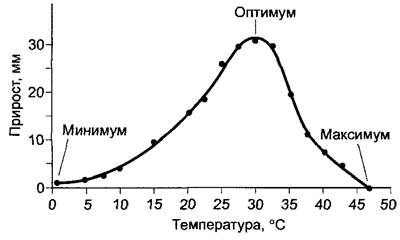
Cellular metabolic processes, like all Chemical Reactions, are temperature-dependent (see 6.1.6.4), and the temperature range within which an Organism grows is determined by biochemical, physiological, and morphological factors (see 13.3). The dependence of growth rate on temperature can be graphically represented by a characteristic curve featuring an optimum (Fig. 7.67).
Class="center">Fig. 7.67. ROOT elongation in Lupinus luteus over 24 h at various temperatures
7.7.1.1. Thermoperiodism and Thermomorphoses
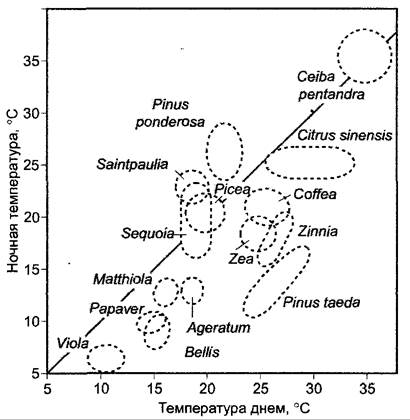
For optimal SHOOT growth, many plants require a temperature regime that changes with a daily periodicity; in other words, these plants are adapted to daily temperature fluctuations between day and night and develop optimally only under such regular temperature shifts (Figs. 7.68 and 7.69). This phenomenon is termed thermoperiodism.1
1 When a factor changes with a 24-hour periodicity, it is referred to as circadian rhythms (Lat. circum — around, dies — day). Thermoperiodism may also occur on an annual scale and be climate-driven. — Translator's Note.
Fig. 7.68. Daily shoot elongation in tomato plants at various constant daily temperatures (lower curve) versus temperatures of 26.5 °C during the day and varying night temperatures as indicated on the abscissa (upper curve)
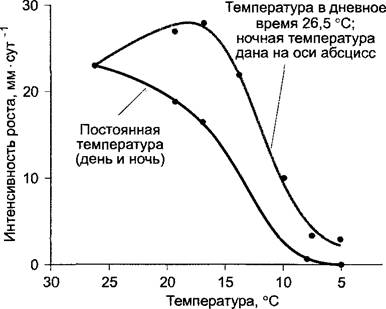
Fig. 7.69. Optimal temperature ranges for shoot growth in various plants
Developmental processes modified under METABOLISM/18.html">The Influence of specific temperatures are called thermomorphoses. A prime example is heterophilly in water crowfoot (Ranunculus aquatilis, see 11.2). Finely dissected submersed leaves develop at water temperatures around 8 — 18 °C. When the water temperature is experimentally raised to 23 — 28 °C (roughly corresponding to normal summer air temperatures), the Morphology of the submersed leaves resembles that of aerial leaves (lobed leaf blades). This process can also be triggered by adding Abscisic acid to the water. Thus, The formation of "aerial leaves" can be induced by two interrelated factors: air temperature relative to water temperature, and the loss of turgor resulting from Transpiration in "aerial leaves," which leads to the accumulation of abscisic acid within them (see 7.6.4.2).
Plant development frequently includes temperature-sensitive phases. For instance, in petunias, the color pattern of the resulting flowers is determined by the temperature prevailing during a specific, brief bud development phase. In the tropics, simultaneous mass flowering is frequently observed
in certain orchid species and other plants (e.g., coffee, bamboo species). This phenomenon apparently results from a brief cooling period triggered by heavy downpours following a dry season, which synchronizes the subsequent development of generative buds. Among all manifestations of temperature effects on plant development, breaking the dormancy of seeds and buds, as well as the induction of flowering, are of paramount importance.
7.7.1.2. Breaking Dormancy by Specific Temperature Treatments
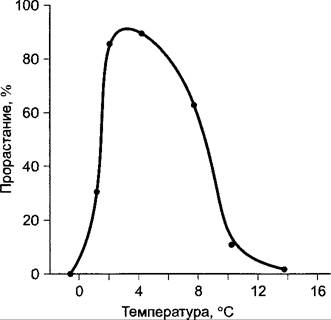
Breaking the dormancy of seeds and buds through exposure to specific (typically low) temperatures is known as stratification. Many herbaceous and woody plants require stratification; for most of them, effective temperatures are low positive temperatures close to freezing (0 — 5 °C), and only a few species (e.g., certain alpine plants) require negative temperatures1 (Fig. 7.70). The seeds of some plants (e.g., cotton, soybean, millet) require high temperatures for germination, whereas in others, germination is stimulated by daily temperature fluctuations (e.g., in Poa pratensis).
1 The original text uses the term Frostkeimer, which lacks a direct single-word equivalent in English (translatable as seeds that germinate only after frost Treatment). Analogously, the term Lichtkeimer refers to seeds that germinate only after preliminary illumination. — Translator's note.
However, dry seeds are not susceptible to stratification; only imbibed seeds undergoing active biochemical processes can perceive the cold treatment.
Some seeds germinate only after exposure to low temperatures (e.g., Fraxinus excelsior), whereas in other species, germination is merely accelerated by cold (e.g., in Pinus species).2
2 This refers to Two Types of reactions: Qualitative and quantitative. The qualitative reaction follows an "all-or-none" principle (no cold, no germination). The quantitative reaction can occur in principle without cold, but is accelerated by lower temperatures. — Ed. note
Fig. 7.70. Effect of an 85-day cold treatment at given temperatures on the germination of apple seeds
The required duration of cold treatment is also species-specific (most commonly several weeks). In some species, only the intact seed requires cold, whereas the isolated embryo can germinate without it (e.g., in Acer pseudoplatanus). In other species, the embryo excised from the seed requires stratification itself (e.g., in Sorbus aucuparia). Some seeds or fruits germinate only In the second spring after sowing (e.g., Crataegus or Cotoneaster); due to their hard, impermeable seed coats, the embryo does not imbibe During the first cold period and is therefore stratified only in the second winter, after microorganisms have broken down the coats over the summer. In some Convallariaceae (e.g., Convallaria, Polygonatum) and in Trillium, two cold periods are necessary for other reasons: the first breaks the dormancy of the embryonic root only, but not of the other PARTS OF THE embryo, and only the second stimulates epicotyl growth. In other plants (e.g., in apricot or Paeonia suffructicosa), the root can germinate without cold treatment, but epicotyl growth begins only after stratification.
Low temperatures break seed dormancy in various, often complex ways. Under the influence of cold, the seed coat becomes more permeable, seed maturation is accelerated, hormone or enzyme action is enhanced, or the content of inhibitors (e.g., abscisic acid) decreases. The Effect of cold can often be replaced by The addition of gibberellin (see 7.6.3.3); however, it is still unclear what exactly is stimulated by low temperatures: an increase in the endogenous gibberellin level or a reduction in the concentration of its antagonists (e.g., abscisic acid). Seed development beginning after stratification (germination and seedling development) has a temperature optimum within the range required for the vegetative growth of the species or ecotypes (see 13.3).
Low temperatures affect not only seed germination but also the buds of many plants, serving as a signal for the termination of internally controlled physiological dormancy. Here, temperatures of about 0–5 °C for several weeks are also necessary, with flower buds frequently requiring a somewhat longer cold treatment than seeds to break dormancy (not to be confused with the induction of their initiation, see below). In regions with mild winters, such as California or South Africa, insufficient cold action on buds can cause difficulties in cultivating certain fruit crops (e.g., peaches).
The buds themselves are sensitive to cold action. This process is likely driven by differential Gene regulation. The consequence is a decrease in the content of inhibitors (e.g., abscisic acid) and an increase in the concentration of Other Hormones. However, although buds can be induced to germinate by treatment with gibberellic acid before and after dormancy (but not during deep dormancy), the breaking of deep dormancy by cold cannot be reduced merely to an increased accumulation of this hormone.
Endospores of Bacteria of the genera Bacillus and Clostridium and spores of coprophilous Fungi frequently require heat Shock to break dormancy. Spores of coprophilous fungi are heated as they pass through the digestive tract of warm-blooded animals and, once activated, can germinate immediately on excrement, i.e., in their natural substrate. The Mechanism of heat-induced germination is still poorly understood. In many fungi, especially those whose life cycle is linked to that of higher plants (e.g., mycorrhizal fungi and phytopathogenic fungi, see 9.2.3, 9.3.2), spore dormancy is broken by cold, allowing them to germinate not in autumn, but only in spring.
7.7.1.3. Induction of Flowering by Specific Temperatures
The induction of Flower Formation by specific temperatures is called vernalization.1 In contrast to stratification, where temperature acts always locally—meaning that only the parts of the plant treated with a specific temperature (e.g., cold) respond—vernalization produces an as-yet-unknown factor or mixture of factors ("vernalin") that is systemically distributed throughout the shoot. It is sufficient to vernalize individual leaves to induce flowering in the entire plant.
1 In Russian-language publications, the synonymous term "yarovization" is more commonly used. — Ed. note
Apparently, all species that require cold for flower induction can be vernalized in the developed, leafy state, and some even as embryos within the seed. The latter—in which flower formation is generally only accelerated by cold, while flower initiation is also possible without it (facultative cold-requiring plants)—include white mustard (Sinapis alba) and beet (Beta vulgaris), as well as winter cereals (winter rye, winter wheat, and winter barley), in which the processes of vernalization have been studied in particular detail (Fig. 7.71).
Fig. 7.71. Dependence of The rate of flowering in winter rye (Petkuser rye variety) on the duration of grain cold treatment at 1–2 °C. The time to flowering after vernalization is plotted on the ordinate axis
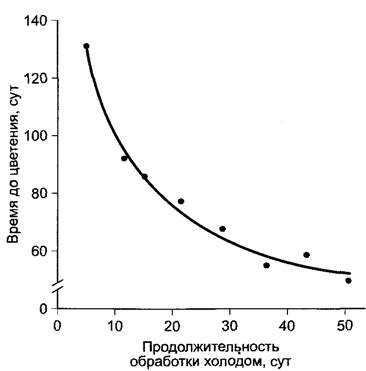
Among cereals, a distinction is made between spring forms, which are sown in spring and mature the same summer, and winter varieties, which first require a cold period and then long days for flower and fruit formation. Therefore, winter cereals are sown in autumn and harvested the following summer. Winter cereals are generally higher-yielding. The differences between spring and winter cereals are genetically fixed. The effective low temperatures for winter rye range from +1 to +9 °C. Since the effect manifests only in the presence of oxygen and is enhanced in cultured embryos by the addition of sugar, it can be stated that vernalization is an energy-requiring biochemical process. In winter rye, the reduced temperature must act on the embryo, which responds as early as 5 days after egg Cell Fertilization. The apical meristem of already germinated rye plants is particularly sensitive to cold stimulus. Increasing the duration of cold exposure up to 20 days leads to a shortening of the time between sowing and flowering. Consequently, vernalization in this facultatively cold-requiring plant appears to gradually achieve its maximum effect. This is also evidenced by the fact that high-temperature treatments (for rye, e.g., two days at 40 °C) can reverse the vernalization effect (devernalization) the more easily the shorter the preceding vernalization duration was; in fully vernalized plants, devernalization is no longer possible. Once a rye plant has been fully vernalized, it transmits this state without attenuation to all newly formed Tissues, including the growing points.
Species that require cold exposure to reach flowering are found among winter annuals, biennials, and perennials. Corresponding winter annuals include, alongside winter cereals, Erophila verna, Veronica agrestis, and Myosotis discolor. Biennial plants often form a basal rosette in the first year and develop an inflorescence only in the second year, following cold exposure and frequently precisely when long-day conditions arrive (see 1.12.2). These include, among others, beet (Beta vulgaris), celery (Apium graveolens), HEAD cabbage and other Brassica species, biennial races of black henbane (Hyoscyamus niger), and foxglove (Digitalis purpurea). In greenhouses or appropriate climatic zones, these species grow vegetatively throughout the year. The biennial race of Hyoscyamus niger has been studied in more detail than others. To reach flowering, it first requires a cold period followed by long days (in this sequence!). The floral stimulus induced by vernalization can pass from a vernalized scion of the biennial race of henbane to an uninduced rootstock of the same race and cause it to flower. The transmission of the floral stimulus in grafts can occur from scions of the annual race of Hyoscyamus niger with flowering induced by long days, as well as from scions of other nightshade species that have been vernalized or induced to flower by photoperiod. The substance generated during vernalization is designated as vernalin. It is debated (and rather unlikely) that vernalin is identical to the postulated flowering hormone (florigen, see 1.1.22). It is possible that vernalin consists of Gibberellins; in any case, in cold-requiring species, gibberellin can frequently replace the effect of cold1 (see 7.6.3.3). Conversely, it is certain that gibberellins cannot represent florigen (see 7.7.2.2)2.
1 However, in grasses, gibberellin does not induce vernalization, so this viewpoint remains controversial. — Ed. note
2 THE CONCEPT OF "florigen" was introduced by M.Kh. Chailakhyan (Russia), who originally considered florigen, like vernalin, to be a factor composed of at least two components. He proved that In addition to gibberellin, a hypothetical anthesin must act on the plant, the search for which is ongoing. German authors are scarcely familiar with Chailakhyan's theory. — Ed. note
Perennial species that flower only after cold periods include, for example, certain primroses, violets, wallflower species, and varieties of chrysanthemums, asters, carnations, as well as Lolium perenne (perennial ryegrass); they must be re-vernalized every winter. In Lolium perenne, flowers are initiated in winter As a result of vernalization, but the flower-bearing shoots elongate only under long days (>12 h in March; see 7.7.2.2)1. New lateral shoots formed in summer are initially incapable of flowering and are vernalized only the following winter. For certain perennial garden chrysanthemums to flower after a cold period2, a short day must follow, so they bloom accordingly in autumn. In these chrysanthemums, the cold-induced flowering impulse cannot be transferred from a vernalized scion to an uninduced rootstock, nor even from a locally vernalized vegetative meristem to another non-vernalized meristem of the same plant.
1 Data applicable to the climate of England and Western Europe. — Ed. note
2 The majority of chrysanthemums do not require cold for flowering. — Ed. note
Little is yet known about the biochemical processes involved in vernalization. It can be expected that The Study of the Genetic control of flower formation (see 7.4.3)—i.e., The process of switching development from a vegetative meristem to a floral meristem—will bring us closer to answering important questions.
Light triggers diverse effects in all lower and higher plants, regardless of their capacity for Photosynthesis. Thus, spatial orientation in both freely moving plants (such as unicellular Algae) and the Organs of sessile plants (see 8.3.1.1), and even of Organelles within Cells (chloroplast movement, see 8.2.2), is frequently regulated to a large extent by light. However, in this section, light is of interest as an inducer of developmental processes.
7.7.2.1. Photomorphogenesis and Skotomorphogenesis
Light-induced developmental processes are called photomorphoses, and the light-regulated development of an organism as a whole is termed photomorphogenesis (from Greek phos, light). While in lower plants, ferns, and many gymnosperms, development in the dark proceeds similarly to that in the light (e.g., chlorophyll Biosynthesis in the dark), in angiosperms, development in the light and in the dark differs markedly. When light-grown angiosperm plants are transferred to darkness, they lose their green coloration. This process is known as etiolation, and therefore angiosperm seedlings grown in the dark are also referred to as etiolated. Even brief illumination of etiolated plants triggers photomorphogenesis (de-etiolation).
The Development of angiosperms in the dark is called skotomorphogenesis (from Greek skotos, darkness). As experiments with mutants have shown, this involves the active repression of photomorphogenesis in the dark1. When Mutations damage the COP or DET genes in Arabidopsis thaliana, mutant plants develop in the dark just as they do in the light: they grow de-etiolated—in other words, they exhibit constitutive photomorphogenesis (COP from English constitutive photomorphogenesis; DET from English de-etiolated).
1 In practice, it is difficult to distinguish between skotomorphogenesis and etiolation. Stating that an active repression of photomorphogenesis occurs in the dark is not entirely correct; it is more accurate to view this as a competition between photomorphogenesis and skotomorphogenesis (two alternative developmental programs). — Editor's note.
Photomorphogenesis occurs in the majority of plants. In the flagellated alga Chlamydomonas, for example, gamete formation is light-regulated. When fern spores germinate in the dark or under red light, they form a filamentous cell strand (a protonema, as in mosses), and only form a prothallus under white or blue light. Fungi require blue light (or partially UV light) for normal morphogenesis. For instance, if illumination is discontinued, the fruiting body stipes of certain Basidiomycetes elongate while their "caps" become smaller. Various Examples of skotomorphogenesis and photomorphogenesis in higher plants will be examined by comparing etiolated seedlings with seedlings of the same age grown in the light (Fig. 7.72, Table 7.5).
Fig. 7.72. Vicia faba seedlings: 5-day-old dark-grown (A), 3-week-old dark-grown (B), and light-grown (C). Numbers indicate corresponding nodes. The apical hook can be observed only in very young etiolated seedlings; at stage B shown here, it has already disappeared (approx. 1/3×)
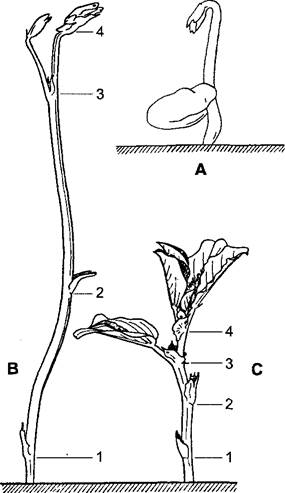
Table 7.5. Selected photomorphoses of white mustard seedlings, Sinapis alba
Photomorphoses
Inhibition of hypocotyl elongation
Inhibition of substance transport from cotyledons
Increase in cotyledon area
Unfolding of cotyledon blades
Formation of trichomes on the hypocotyl
Straightening of the apical hook
Development of primary cotyledonary leaves
Formation of the first true leaf primordia
Enhancement of hypocotyl negative gravitropism
Formation of xylem elements
Differentiation of Stomata in the cotyledon epidermis
Differentiation of Plastids in the cotyledon mesophyll
Change in cellular Respiration intensity
Anthocyanin synthesis
Increased ascorbic acid synthesis
Enhanced chlorophyll accumulation
Increased RNA Synthesis in cotyledons
Enhanced Protein Synthesis in cotyledons
Intensification of reserve lipid breakdown
Intensification of reserve protein breakdown
Shoots of etiolated dicot seedlings develop significantly elongated internodes, frequently accompanied by elongated leaf petioles, a rudimentary leaf blade, and a curved apical hook (on the hypocotyl or epicotyl). This curvature in the region of the shoot apex is particularly prominent in young seedlings, where it serves to protect the apical meristem during upward growth through the soil. Furthermore, mechanical tissues and vascular bundles are barely formed, and the synthesis of pigments (chlorophylls, carotenoids, anthocyanins) is suppressed. The fragility of etiolated shoots or leaves is well documented in plants such as asparagus (Asparagus), head lettuce (Lactucа), and chicory (Cichorium). In some monocots subjected to etiolation, the shoot axis elongates to a much lesser extent than the leaves. Physiological symptoms of etiolation in shoots and seedlings also include a weakly expressed negative gravitropism and an enhanced positive phototropism (see 8.3.1.1).
The ecological benefit of scotomorphogenesis or etiolation lies in the fact that in the dark (for example, within soil or rock crevices), the plant utilizes all available structural resources to push its assimilatory organs toward the light. Photomorphoses (see Table 7.5) primarily serve to ensure shoot mechanical stability in open air, enable photosynthesis, and protect the shoot from short-wavelength radiation (via the synthesis of UV-protective pigments such as anthocyanins).
A special case of photomorphogenesis is the influence of light on cellular polarity or the dorsoventrance of tissues and organs. Here, differences in light intensity are critical rather than the angle of incidence. Cellular polarity has already been discussed (see 7.3.3).
During the development of gemmae in the liverwort Marchantía (see 11.2), light primarily determines which side of the thallus becomes dorsal and which becomes ventral. In many fern gametophytes, Generative organs and rhizoids develop exclusively on the side facing away from the light (see 11.2). In numerous trees, the overall branching pattern is determined by the fact that only buds on the illuminated side sprout. The dorsoventrance of lateral branches in certain conifers (e.g., Thuja, Thujopsis) is likewise induced by unilaterally incident light, whereas in other cases (Taxus, Picea) it is governed by gravity (see 7.7.3).
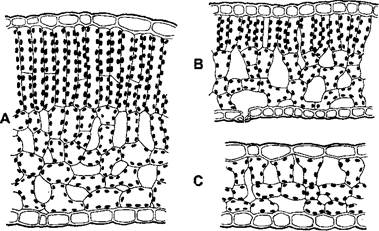
Many plants adapted to high light intensities (sun plants), but not shade-tolerant plants, respond to shading by neighboring plants with morphological adaptations that can be considered a form of partial etiolation. Above all, extension growth is promoted. This growth response often initiates as canopy density increases—even before direct shading occurs—triggered by light reflected from adjacent plants. This shade-avoidance reaction, much like etiolation, serves to optimize the exposure of assimilatory organs to light. In many deciduous trees, leaf anatomy is strongly dependent on illumination. Sun leaves located at the periphery of the crown, particularly on the more brightly illuminated southern side, typically feature palisade parenchyma cells (sometimes arranged in multiple layers) and are significantly thicker than shade leaves located inside the crown or on the northern side (Fig. 7.73). Compared to sun leaves, shade leaves exhibit a reduced soluble protein content per unit of leaf area and lower chlorophyll levels—largely attributable to lower amounts of RubisCO—along with numerous other alterations in the photosynthetic apparatus (see 6.5.11.1). Leaf and shoot morphology can also depend on light availability. For instance, Campanula rotundifolia develops rounded leaves only under low light, whereas strong light induces the formation of narrow leaves; conversely, Opuntia and Nopalxochia form flattened shoots instead of radial ones under high light conditions (see Fig. 4.34).
Fig. 7.73. Cross section through a leaf of Fagus sylvatica: A — leaf grown in direct sunlight; B — leaf under medium illumination; C — leaf from deep shade (approx. 340x)
7.7.2.2. Photoperiodically Induced Morphoses
The term photoperiod refers to the duration of the light phase within a 24-hour daily cycle at a plant's natural habitat, commonly known as "day length." This duration varies considerably depending on geographical latitude and season, remaining constant throughout the year only at the equator. However, at higher latitudes, the light phase fluctuates more dramatically over the course of the year: at 30° N (Cairo, Delhi) it ranges between 14 and 10 hours; at 45° N (Bordeaux, Minneapolis) between 15.5 and 9 hours; and at 60° N (Stockholm, St. Petersburg) between 19 and 6 hours. Consequently, variations in day length correlate strongly with distinct seasonal changes and local climatic patterns.
Photoperiodism refers to the collective set of morphoses induced by Changes in the photoperiod. In this process, supplementary light energy exceeding a threshold radiation intensity of 10-3 to 10-2 W • m-2 is virtually negligible; under certain circumstances, even full moonlight (illuminance of 5 • 10-3 W • m-2) can trigger a photoperiodic response.
The relative length of day or night can influence:
✵ flower induction;
✵ the onset and termination of dormancy periods;
✵ cambial activity;
✵ growth rate;
✵ the formation of storage organs (e.g., potato tubers);
✵ the development of frost resistance;
✵ leaf abscission,
and, where applicable, branching, adventitious root formation, leaf structural features, leaf succulence, and pigment synthesis.
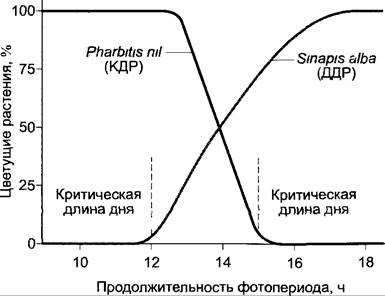
A distinction is made between long-day plants (LDPs), in which the photoperiodically controlled morphose occurs only when the photoperiod exceeds a species-specific minimum duration known as the critical day length, and short-day plants (SDPs), in which the day length must be shorter than the critical value for the photoperiodically induced morphose to begin. Plants that lack this dependence on the photoperiod are termed day-neutral (photoperiod-insensitive). Photoperiodic control of flowering induction is the most thoroughly researched and will be the focus of our discussion here.
The critical day length for a short-day response can be substantially longer than that for a long-day response (Fig. 7.74). For flower induction in the SDP Xanthium pensilvanicum, for example, it is 15.5 hours (the day must be shorter than this to induce flowering), whereas in the LDP Hyoscyamus niger the critical day length is approximately 11 hours (the day must exceed this duration to trigger flowering). Consequently, at a day length of 13 hours, both species will flower.
Fig. 7.74. Dependence of flower formation in a short-day plant (morning glory, Pharbitis nil) and a long-day plant (white mustard, Sinapis alba) on the duration of daily illumination
As Table 7.6 shows, the heavily simplified scheme of dividing plants into short-day plants (SDPs), long-day plants (LDPs), and day-neutral species requires refinement. For instance, a distinction is made between qualitative (or absolute) SDPs and LDPs, which respond according to an all-or-nothing principle, and quantitative SDPs and LDPs, in which the photoperiod merely accelerates flowering. Even different cultivars of the same species can exhibit varying photoperiodic responses during floral induction. For example, many species or cultivars initially classified as "photoperiod-neutral" will indeed flower under all available photoperiods (in experiments often under continuous light as well, and in some cases—with appropriate Nutrition—even under continuous darkness, as in Hordeum, Raphanus, and Cuscuta). However, it later became apparent that changes in day length strongly stimulate the transition to flowering (quantitative LDPs are stimulated by day-length extension, while quantitative SDPs respond to day-length shortening).
Alongside SDPs and LDPs, There are also long-short-day plants (e.g., Kalanchoe daigremontianum or the nightshade Cestrum nocturnum) and short-long-day plants (e.g., Campanula medium, Trifolium repens). To initiate flowering, these plants require two different photoperiods occurring in succession. Under our natural conditions1, a long-short-day plant will flower only in the autumn under short days, but not in the spring under short days.
1 Referring to the conditions of the temperate latitudes of the Northern Hemisphere. — Ed. note.
It stands to reason that a correlation must exist between a plant's geographic distribution and its photoperiodic response. Tropical plants should theoretically be SDPs or photoperiod-insensitive (neutral), because the tropics lack long days (in any case, day length there does not exceed 12–14 hours)2. Conversely, high-latitude plants are frequently LDPs; they must flower at a time of year (summer) that allows fruits and seeds to mature before the onset of winter. In temperate latitudes (roughly 35–40°), which are THE ORIGIN OF numerous crop plants, both LDPs and SDPs are represented. Here, correlations with the timing of the annual dry season can often be established: plants originating from regions with winter drought (certain areas of India, China, and Central America) are predominantly SDPs, whereas those from regions with summer drought (parts of the Mediterranean, Western Asia, and Central Asia) are predominantly LDPs. In their native habitats, SDPs must transition to flowering and fruiting before winter, while LDPs must do so before summer, allowing them to survive the arid period in the form of seeds.3
2 The authors contradict themselves; cf. the definition and the example of Hyoscyamus niger. Tropical long-day plants can be found in climates with a "winter" (short-day) drought. — Ed. note.
3 This picture is a significant oversimplification. Compare this with the logic for temperate latitudes: winter (short day) is unfavorable -> flowering in the warm summer -> LDPs (require a long day). The logic for India: winter (short day) is unfavorable -> flowering before winter (in summer9) -> SDPs (require a short day). In reality, the dry season in India nominally falls in winter, but not during the shortest days. Similarly, in the Mediterranean, winter moisture reserves last well into early summer (June), and the drought itself does not coincide with the longest days (July–October). — Ed. note.
Table 7.6. Dependence of floral induction on the photoperiod in various plants
Long-day plants (LDPs) |
Photoperiod-neutral plants |
Short-day plants (SDPs) |
* Avena sativa |
Agrimonia eupatoria |
Cannabis sativa |
* Triticum aestivum |
Cardamine amara |
* Chrysanthemum indicum |
* Secale cereale |
Cucumis sativus |
* Chrysanthemum hort. |
* Anthoxanthum odoratum |
Euphorbia lathyrus |
* Coffea arabica |
* Festuca pratensis |
Fagopyrum esculentum |
Dahlia variabilis |
* Lemna gibba |
Helianthus tuberosus |
* Glycine max |
* Lolium temulentum |
Pastinaca sativa |
* Kalanchoe blossfeldiana |
* Phleum pratense |
Poa annua |
* Lemna perpusilla |
* Poa pratensis |
Senecio vulgaris |
* Perilla ocymoides |
* Anagallis arvensis |
Stellaria media |
* Xanthium pensylvanicum |
Arabidopsis thaliana |
Taraxacum officinale |
Saccharum officinarum |
* Begonia semperflorens |
Thlaspi arvense |
* Setaria viridis |
* Beta vulgaris |
* Euphorbia pulcherrima |
|
* Vicia sativa |
* Amaranthus caudatus |
|
* Trifolium pratense |
* Pharbitis nil |
|
* Sinapis alba |
||
* Hyoscyamus niger |
||
* Nicotiana tabacums |
Nicotiana tabacums |
* Nicotiana tabacums |
* Digitalis purpureas |
Digitalis purpureas |
|
* Hordeum vulgares |
Hordeum vulgares |
|
* Lactuca sativas |
Lactuca sativas |
|
Oryza sativas |
* Oryza sativas |
|
Phaseolus vulgariss |
* Phaseolus vulgariss |
|
Soja hispidas |
Soja hispidas |
|
Solanum tuberosum |
Solanum tuberosums |
Solanum tuberosums |
Zea mayss |
* Zea mayss |
s — individual cultivars.
* — qualitative (absolute) LDPs or SDPs, respectively; all other species respond quantitatively.
The number of induction cycles required to trigger flowering varies greatly among species. For instance, the SDPs Xanthium pensylvanicum and Pharbitis nil require only a single short day, and the LDP Lolium temulentum a single long day, whereas Salvia occidentalis needs 17 short days and Plantago lanceolata 25 long days. While LDPs can be induced under natural or continuous light, SDPs would starve in continuous darkness: for them, photosynthesis must take place for at least 1 to 5 hours daily. Photoperiodism is perceived primarily by the leaves. Often, exposing a leaf (or part of a leaf) to inductive conditions is sufficient to trigger flowering. For example, floral induction can be achieved by darkening a leaf of an SDP kept under long-day conditions1. Because floral induction occurs in the shoot meristem (for the molecular control of flower formation, see 7.4.3), the flowering signal must be transported from the perceiving leaf to the meristem. The very low transport velocity (2–4 mm · h-1) points to a cell-to-cell transmitted factor or complex of factors—known as florigen—which, however, has not yet been isolated in pure form.2 Grafting experiments have shown that this flowering-inducing factor must be similar or identical across SDPs, LDPs, and neutral plants. For instance, an induced SDP rootstock can induce flowering in a grafted LDP scion. If LDPs or grasses are grafted onto neutral plants, the scions will flower alongside the rootstock even under non-inductive conditions for the scion; similarly, the photoperiodically insensitive parasite Cuscuta flowers in synchrony with its host plant: with the LDP Calendula under long days, and with the SDP Cosmos under short days.
1 These experiments were first conducted by M.Kh. Chailakhyan (Russia). — Ed. note.
2 Most recently, this factor has been identified in Arabidopsis as the product of the FLOWERING LOCUS T (FT) gene, which moves from the leaves to the shoot meristem. — Ed. note.
Gibberellins can replace the flower-inducing long day in certain LDPs, specifically those that form rosettes under non-inductive conditions (short days). However, gibberellins formed under long days (or applied exogenously) merely stimulate stem elongation and branching, which serve as a prerequisite for flower formation in these plants. In SDPs, gibberellin levels do not appear to be a limiting factor for flower formation; they branch even under non-inductive conditions, and exogenous gibberellins cannot induce flowering under such non-inductive regimes. Consequently, gibberellins cannot be considered the hypothetical florigen originally envisioned1. Instead, the actual flower-initiation factor is likely to be macromolecules (perhaps even mRNA) that are transported from Cell to Cell into the shoot meristem, where they participate in gene regulation (for intercellular macromolecule transport, see 7.4.4.1).
1 This represents an imprecise presentation of M.Kh. Chailakhyan's theory (cf. note to section 7.7.1.3). — Ed. note.
If a light regime is established that promotes flowering in SDPs while inhibiting it in LDPs, and the dark period is then interrupted by a brief flash of light, the SDP remains vegetative while the LDP flowers (Fig. 7.75). Conversely, if the inductive light period—which causes LDPs to flower while keeping SDPs vegetative—is briefly interrupted by darkness, floral induction remains unaffected. Thus, the decisive factor in photoperiodic floral induction is not the duration of the continuous day, but rather the duration of the continuous "night." Consequently, it might be more appropriate to refer to SDPs as long-night plants and LDPs as short-night plants, though the terms SDP and LDP have become firmly entrenched in the literature. For highly sensitive SDPs, a night-interrupting flash lasting only a minute is sufficient. By contrast, to induce flower formation in LDPs during excessively long dark periods, such as in greenhouse plants in winter, artificial lighting often must be applied for several hours. In both SDPs and LDPs, the Physiological Effect of a light flash depends heavily on the exact timing of its delivery within the dark period. In experiments involving short light flashes interrupting an extended dark period, floral induction fluctuates depending on the timing (Fig. 7.76).
Table 7.7. Examples of circadian daily rhythms in plants
Plant group |
Organism |
Rhythm |
Cyanobacteria |
Synechococcus |
Metabolism |
Photosynthetic flagellates |
Gonyaulax polyedra |
Bioluminescence, photosynthetic rate, growth |
Algae |
Euglena gracilis |
Phototaxis |
Hydrodictyon reticulatum |
Photosynthesis, respiration |
|
Oedogonium cardiacum |
Spore formation |
|
Acetabularia major |
Photosynthetic rate |
|
Fungi |
Sclerotinia fructigena |
Conidiogenesis |
Daldinia concentrica |
Spore discharge |
|
Pilobolus sphaerosporus |
Sporangium discharge |
|
Neurospora crassa |
Growth, sporulation |
|
Fern allies |
Selaginella serpens |
Plastid ultrastructure |
Seed plants |
Phaseolus multiflorus |
Leaf movement |
Kalanchoe blossfeldiana |
Petal movement |
|
Avena sativa |
Coleoptile growth |
|
Kalanchoe fedtschenkoi |
CO2 release in darkness |
Fig. 7.75. Effect of a brief light flash during the dark period on flower formation in short-day plants (SDPs) and long-day plants (LDPs) — the night-break effect

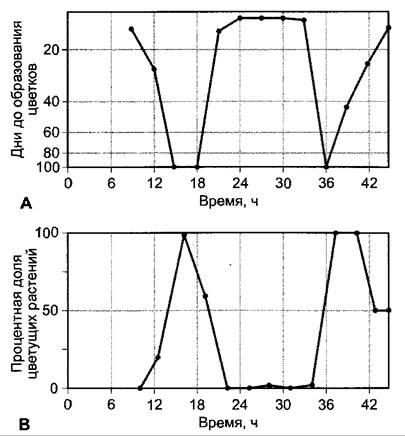
Fig. 7.76. Periodically varying floral induction in experiments with short light flashes as evidence of a circadian rhythm (A — after R. Bünソー; B — after H. Claes and A. Lang): A — Short-day plants (Kalanchoe blossfeldiana) were kept in the light for 9 hours and subsequently in constant darkness. At various times during the dark phase (abscissa), parts of the plants were exposed to light for 2 hours, and the time until inflorescence initiation was determined (ordinate). The phases of varying light sensitivity repeated periodically; B — Specimens of the long-day plant Hyoscyamus niger were illuminated for 2 hours at various points during an extended dark period, after which the percentage of flowering plants was determined. Light sensitivity likewise fluctuates periodically here
Because the period of this rhythm is approximately one day (24 hours), it is referred to as a circadian rhythm (from Latin circa — around, about; dies — day). It is governed by endogenous, autonomously oscillating physiological clocks—a complex biochemical mechanism whose mode of operation is only partially understood (see 7.7.2.3). Not only photoperiodically induced developmental processes, but also many other circadian processes (Table 7.7), are controlled by these physiological clocks, which function as an endogenous timing system for measuring an organism's "internal time."
7.7.2.3. Daily Rhythm and Physiological Clocks
Circadian rhythms are found in both PROKARYOTES AND EUKARYOTES, including A wide variety of cyanobacteria, fungi, and green plants (Table 7.7; Fig. 7.77). They encompass circadian fluctuations in many types of metabolic activity, as well as organ positioning, growth processes, and differentiation, with a period of approximately 24 hours. These very phenomena form The basis of the aforementioned photoperiod-controlled developmental processes (see 7.7.2.2). Therefore, circadian rhythms represent an ADAPTATION OF ORGANISMS to the regular alternation of day and night driven by Earth's axial rotation, as well as to the associated seasonal changes.
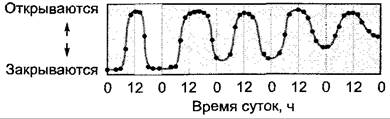
Fig. 7.77. Circadian daily rhythm. Sustained rhythmic movements of Kalanchoe blossfeldiana petals with a decaying amplitude in complete darkness
Meanwhile, numerous genes are known whose activity changes with a characteristic daily rhythm. These include the majority of genes for metabolic Enzymes in the cyanobacterium Synechococcus (e.g., Nitrogenase, etc.), the glyceraldehyde-3-phosphate dehydrogenase gene in the ascomycete Neurospora crassa, and Carbonic anhydrase (Chlamydomonas), nitrate reductase (tobacco, Arabidopsis thaliana), catalase (maize, Arabidopsis), ACC oxidase (Stellaria longipes), Rubisco activase (tomato, apple, Arabidopsis), and light-harvesting complex LHCII chlorophyll a/b-binding protein genes (wheat, tomato, Arabidopsis, Chlamydomonas) in green plants.
An essential feature of circadian rhythms is their control by an endogenous oscillator, which, in turn, is phase-synchronized by the alternation of day and night; in some cases, temperature changes and other stimuli also play a supplementary role. The time cue (day/night or temperature transition) and the endogenous oscillator together constitute the physiological clock; ultimately, they govern the observed daily rhythms of biochemical processes, which can therefore be viewed as the "hands of the clock" (Fig. 7.78).
Fig. 7.78. Diagram of the internal daily clock. Signal inputs and outputs presumably consist of complex, interconnected signaling pathways. Individual components of circadian oscillators have been characterized at THE MOLECULAR LEVEL (cf. Fig. 7.80)

Circadian rhythms are characterized by the following three features.
1. Circadian rhythms persist for weeks and months even under constant external conditions (continuous light or continuous darkness, constant temperature and humidity). In higher plants, these rhythms are generally maintained for 1–2 weeks; the daily rhythmicity of oxygen evolution observed in the unicellular alga Acetabularia persists for up to 8 months. The amplitude of oscillations in circadian processes under constant conditions slowly declines (see Fig. 7.77). This is attributed to the weakening coupling between the physiological clock and the process it controls in the absence of a time cue. However, the rhythmic process can often be restarted by a single time cue signal.
In unicellular dinoflagellates responsible for bioluminescence in the sea, such as Gonyaulax polyedra, after three years of culture under constant light and arrhythmic conditions, a single shift in light intensity is sufficient to re-initiate the circadian rhythm of luminescence. If, for example, bean seedlings are kept in continuous darkness or continuous light starting from germination, circadian leaf movements begin only upon replacing constant light with darkness (or, conversely, constant darkness with light).
2. The period length of circadian oscillations occurring under constant environmental conditions ("free-running" oscillations) is not exactly 24 h (see Fig. 7.76), even though it is synchronized to precisely 24 h under natural conditions. For instance, it is 27 h for the leaf movements of Phaseolus multiflorus (at 25 °C); 22.4 h for the endogenous rhythm of CO2 emission by Bryophyllum leaves; and 30 h in constant darkness (and 24.5 h in constant light) for the expression of the CAB gene in Arabidopsis thaliana, which encodes the chlorophyll a/b-binding protein of the light-harvesting complex LHCII (see 6.4.3). These "free-running" rhythms reflect the periodicity of the endogenous oscillatory mechanism, which is synchronized with an external time cue (such as the 24-hour light/dark cycle). This is also supported by the fact that, under appropriate experimental conditions, the physiological clock can be synchronized over a wide range (from 6 to 36 h) to different period lengths (e.g., to a 20 h period using a 10 h light / 10 h dark cycle).
External time cues (such as light-dark or temperature cycles, as well as periodic changes in the COMPOSITION OF THE culture medium) can be used to synchronize growth and developmental rhythms across all cells in cultures of unicellular organisms (e.g., algae). In synchronized cultures, all cells divide simultaneously, with concurrent DNA doubling, simultaneous spore formation, and so forth. Therefore, these cultures are highly convenient for investigating physiological processes at the level of cell populations rather than individual cells.
3. Circadian rhythms exhibit temperature compensation. While the reaction rates of individual enzymatic processes roughly double or triple with a 10 °C temperature increase ($Q_{10} = 2–3$, see 6.1.6.4), the $Q_{10}$ values of daily rhythms lie within the range of 0.8–1.4 (for example, 1.0–1.1 for Arabidopsis thaliana at temperatures above 20 °C). This is not because the reactions involved in the physiological clock are independent of temperature, but rather because this independence is achieved through a specific compensation mechanism whose participants and modes of operation are not yet fully understood.
In contrast, the search for the Components of the physiological clock is progressing quite successfully. Although all endogenous oscillators known to date appear to operate on a similar principle—involving feedback systems of Transcription factor genes regulated by their own products (for gene regulation, see 7.2.2.3)—the genes involved in cyanobacteria, fungi, green plants, and animals are not homologous to one another. Consequently, it is more accurate to speak of multiple physiological clocks, which may have arisen independently multiple times in the course of evolution.
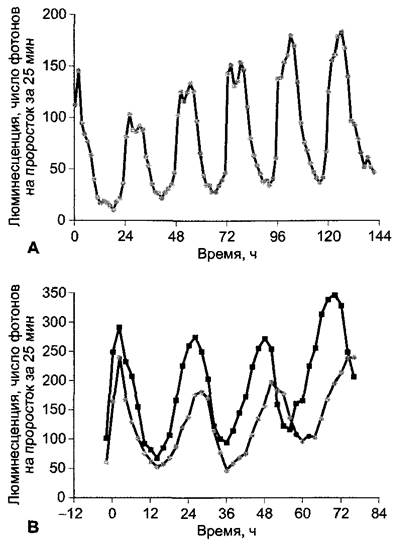
Daily oscillators are best understood in Drosophila (where ecdysis of the adult from the pupa is subject to a circadian rhythm), the ascomycete Neurospora crassa (circadian regulation of sporulation), and the cyanobacterium Synechococcus. The elucidation of the oscillation mechanism in higher plants has been particularly successful in Arabidopsis thaliana: a series of mutants has recently been isolated that exhibit defects in the operation of the physiological clock, especially the daily oscillator. Mutants were screened among Transgenic Plants (see Box 7.3) expressing the bacterial luciferase gene under the control of a circadianly activated promoter of the aforementioned CAB gene. In the presence of exogenously added luciferin (the luciferase substrate), these plants luminesce rhythmically due to the cyclically varying amount of luciferase within the plant. Luminescence can be detected using highly sensitive video cameras (Fig. 7.79)1.
1 Mutants affecting the endogenous oscillator (physiological clock) show altered luminescence periodicity. — Ed. note.
Fig. 7.79. Endogenous circadian rhythm of transcription of a bacterial luciferase reporter gene under the control of the CAB promoter in transgenic Arabidopsis thaliana plants. Although luminescence serves as a measure of luciferase enzymatic activity, it provides a very precise picture of the corresponding transcriptional activity of the luciferase gene because the enzyme protein is unstable and degrades very rapidly. The plant promoter is derived from the CAB gene, which encodes the chlorophyll a/b-binding protein of Photosystem II — LHCII (see Fig. 6.54). The CAB gene is under strict transcriptional control by the physiological clock. A — Luminescence of 5-day-old seedlings kept at a constant temperature (22 °C) under a 12-hour light (50–60 $\mu$mol m-2 s-1 photon flux density) and 12-hour dark regime. The rhythm period is 24 h, driven by synchronization with the lighting program. Interestingly, luciferase activity begins to rise 3–4 h before the onset of the light period and drops again just before the end of the photoperiod. Consequently, the circadian day/night-synchronized clock governs physiological processes in anticipation of the light or dark phase; thus, the plant prepares in advance for upcoming metabolism (photosynthesis during illumination), which can prove to be a more efficient regulatory mechanism than continuous synthesis or initiating protein synthesis only upon illumination, especially if these Proteins must be constantly resynthesized due to a short biological half-life. B — Autonomous circadian rhythm of luciferase activity in plants grown under constant light starting from time zero after a light/dark shift (12 h + 12 h). Wild-type plants (gray symbols) show an endogenous rhythm period of 24.5 h, whereas the photoperiodic mutant toc1 (timing of cab expression, black symbols) has a shortened period of 21 h
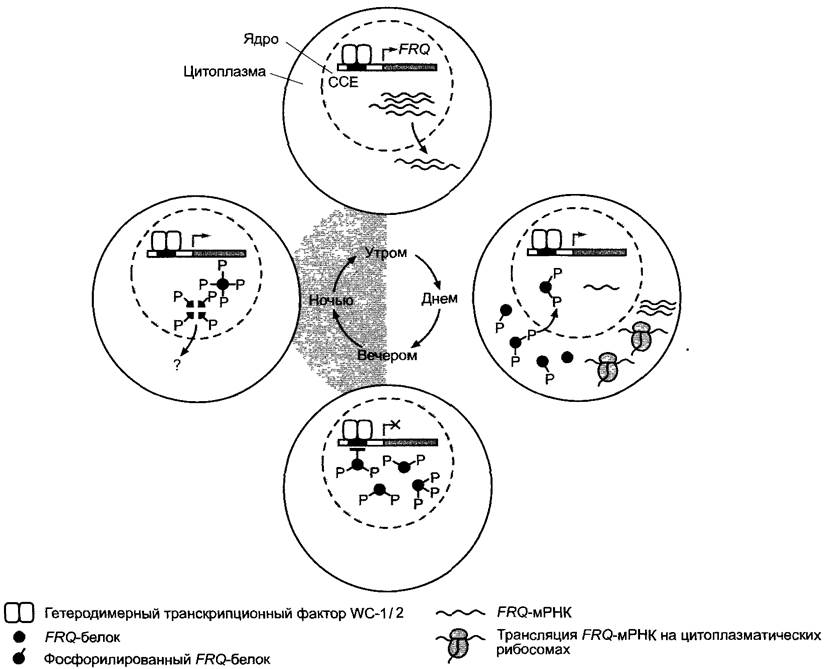
Current concepts regarding the mode of action of the daily oscillator are summarized in a generalized and simplified scheme based on data from Neurospora (Fig. 7.80). The connection between downstream processes leading to individual observable circadian phenomena and the oscillator(s) remains unclear; likewise, the signaling pathway(s) from stimulus receptors (e.g., photoreceptors, see Fig. 7.78) to the oscillator is largely enigmatic. In contrast, plant photoreceptors have been characterized in detail in recent years, once again owing to mutant analysis and the cloning of mutated genes.
Fig. 7.80. Hypothetical functional model of the circadian oscillator in Neurospora crassa. The system consists of two transcription factors, WC-1 and WC-2 (white collar; named after the mutant phenotype because the mutant fails to form carotenoids in the light and remains white), which form a heterodimer and activate the Transcription of the "clock gene" FRQ (frequency, named after the mutant phenotype). The gene product, the FRQ protein, acts as a negative regulator of WC-1 and WC-2 activity, thereby inhibiting its own production. Cis-acting elements essential for rhythmic expression, termed CEs (CCEs — circadian clock elements), have been identified in the promoters of clock genes. The model represents a negative feedback loop whose period length is determined primarily by slow Intracellular Transport processes (transport of FRQ mRNA from The Nucleus to the Cytoplasm, and transport of the phosphorylated FRQ protein from the cytoplasm to the nucleus). At THE START OF the cycle (top of the diagram), the WC-1/2 factors activate transcription of the FRQ gene; FRQ mRNA accumulates initially in the Cell Nucleus and is subsequently exported to the cytoplasm to an increasing extent. There, the FRQ protein is synthesized and phosphorylated (right). The phosphorylated FRQ translocates into The Cell nucleus and progressively represses the transcription of its own gene until it eventually ceases (bottom). Over time, the FRQ protein undergoes increasing phosphorylation. Highly phosphorylated FRQ is unstable and undergoes proteolytic degradation. Once the concentration of active FRQ protein in the cell nucleus drops below the threshold required to inhibit transcription, FRQ gene transcription is re-initiated (left). Under constant external conditions, the overall process exhibits a circadian period. The inner circle illustrates the approximate timing of individual processes during synchronization of the oscillator by a 12 h light / 12 h dark shift within a 24-hour cycle. It is hypothesized that light inhibits the hyperphosphorylation of the FRQ protein and, consequently, its proteolytic degradation.
7.7.2.4. Photoreceptors and Signaling Pathways of Light-Controlled Development
In fungi, wavelengths < 520 nm stimulate photomorphogenesis (blue and UV range), whereas in eukaryotic plants, light-regulated processes depend only partially on blue and/or UV light, with red light playing a far more prominent role. Meanwhile, the photoreceptors responsible for light perception in angiosperms have been characterized at the molecular level. These primarily include phytochromes, which absorb in the red region of the spectrum and partially in the blue and UV ranges, as well as cryptochromes, which are mainly responsible for absorbing blue and UV light (cryptochromes are so named because they evaded biochemical identification for a long time and were only characterized by cloning their genes from mutants defective in their physiological response to blue light). However, photoreceptors are involved not only in controlling light-dependent developmental processes—which become irreversible from a certain point onward and are collectively termed photodifferentiation. Phytochromes and cryptochromes also regulate many reversible processes of photomodulation, which are contrasted with photodifferentiation as a whole. Alongside phytochromes and cryptochromes, other photoreceptors exist to govern phototropism (see 8.3.1.1), stomatal opening (see 8.3.2.5; 6.5.7), and phototaxis (see 8.2.1.2); information on these is summarized in Table 7.8. The subsequent description is limited to phytochromes and cryptochromes, while other photoreceptors are discussed in the context of their respective physiological processes.
Typical phytochromes occur in all green plants, starting from algae. They are homodimeric Chromoproteins; each monomer consists of an apoprotein with a molecular mass of 120–129 kDa, carrying a phytochromobilin molecule covalently linked to a thiol group of a Cysteine residue. The synthesis of phytochromobilin—an open-chain tetrapyrrole structurally very similar to cyanobacterial phycocyanobilin (see Fig. 6.51)—takes place in Chloroplasts (see Fig. 6.112), whereas apoprotein synthesis occurs in the cytoplasm. The apoprotein and chromophore assemble in the cytoplasm to form the holoprotein (Fig. 7.81), which then dimerizes. Phytochrome proteins act here as bilin lyases: they autocatalytically promote the covalent attachment of the chromophore, thereby transitioning into the holoprotein. Different phytochromes differ in their apoprotein moiety, whereas the chromophore is identical in all of them; consequently, various phytochromes within a plant cannot be distinguished even on the basis of their spectral properties1.
Phytochrome-like photoreceptors have recently been discovered in prokaryotes as well. They are widespread among all photoautotrophic prokaryotes (e.g., cyanobacteria and purple bacteria) and are also found in a few non-photoautotrophic bacteria (e.g., Pseudomonas aeruginosa, Deinococcus radiurans). In photoautotrophic prokaryotes, these bacteriophytochromes covalently bind phycocyanobilin via a cysteine residue, whereas in non-photoautotrophic bacteria, they bind biliverdin—a product of heme degradation—via a Histidine residue. Bacteriophytochrome holoproteins also absorb red or far-red light, respectively, and exhibit photo-reversibility (see below). They participate in regulating bacterial pigment synthesis, particularly carotenoids, which serve as protective pigments against excessive irradiation in bright light. Mutants impaired in bacteriophytochrome formation grow poorly in the light. Bacteriophytochromes act as receptor components of typical bacterial Two-component regulatory systems. Upon illumination, they undergo autophosphorylation utilizing ATP at a histidine residue. The phosphate group is subsequently transferred to an aspartate residue in a second, regulatory protein, which, in its phosphorylated state, Functions as an active transcription factor that directly interacts with target genes (in the case of bacteriophytochromes, light-regulated pigment biosynthesis genes) and activates their transcription. Phytochromes of eukaryotic plants appear1 to be light-activated protein Kinases as well; although they lack histidine kinase activity, they function as Serine/Threonine kinases.
1 Nevertheless, the spectral properties differ depending on the apoprotein. For instance, phytochrome A exhibits a broader shoulder in the red region of the spectrum compared to phytochrome B, although the peak positions coincide. — Note by the Editor.
Table 7.8. Examples of photoreceptors and light-regulated processes in lower and higher plants
Photoreceptor type |
Chromophore group(s) |
Spectral sensitivity |
Example1 |
Regulated processes |
Class I phytochrome |
Phytochromobilin |
R, (B) |
phyA (At) |
Far-red-light-induced photomorphoses of etiolated seedlings (VLFR2). HIR2 — photomorphogenetic responses of etiolated seedlings (with cryl). |
Class II phytochrome |
Phytochromobilin |
R |
phyB, С, D, Е (At) |
HIR2 — photomorphogenetic responses under light. Photoperiodically controlled morphoses (e.g., flowering induction) (with cry2). Photo-reversible R/FR responses at low light intensities (LFR2) (e.g., light-dependent seed germination). Shade avoidance response. Photomodulation (e.g., leaf positioning during the day/night cycle). |
Cryptochrome |
Pterin, flavin |
B, UV-A |
cry1 (At) |
HIR2 — photomorphogenetic responses of etiolated seedlings (with phyA). |
Pterin, flavin |
B, UV-A |
cry2 (At) |
Photoperiodically controlled morphoses (with phyB). |
|
Phototropin |
Flavin |
B |
phot1, phot2 (At) |
Phototropism in higher plants. Stomatal opening in higher plants. |
Sensor rhodopsin |
Retinal |
G |
Chlamydopsin |
Phototaxis in Chlamydomonas and other Chlorophyceae. |
Directly light-sensitive transcription factor |
Flavin |
B |
WC-1 |
Carotenoid biosynthesis and sporulation in Neurospora crassa. |
Unknown |
Flavin |
B |
— |
Phototropism in Phycomyces. |
Unknown |
Flavin |
B |
— |
Phototaxis in Euglena. |
1 For Arabidopsis thaliana (At), following established convention for this species, apoproteins are designated by uppercase letters, and holoproteins (= apoprotein + chromophore) by lowercase letters (example: PHYA — phytochrome A apoprotein, phyA — phytochrome A holoprotein).
2 For VLFR, LFR, and HIR, see Table 7.10. R — red; B — blue; G — green; UV-A — long-wave ultraviolet (320 – 390 nm).
Fig. 7.81. Cytology/cytology/92.html">SCHEMATIC STRUCTURE OF a phytochrome holoprotein and light-dependent isomerization of the phytochromobilin chromophore. The N-terminal domain of the apoprotein carries the phytochromobilin chromophore, which is covalently linked to a cysteine via a thioether bridge; the C-terminal domain is essential for signal Transduction and exhibits protein kinase activity. Mutations in regulatory domains lead to phytochrome inactivation. The C-terminal domain also contains regions responsible for dimerization and proteolytic degradation following ubiquitination. During the reversible Pr ⇄ Pfr transition, the chromophore undergoes isomerization at the methine bridge (C-15) between the C and D rings. The double bond adopts a Z-conformation in Pr and an E-conformation in Pfr (for Z, E nomenclature, see chemistry textbooks)
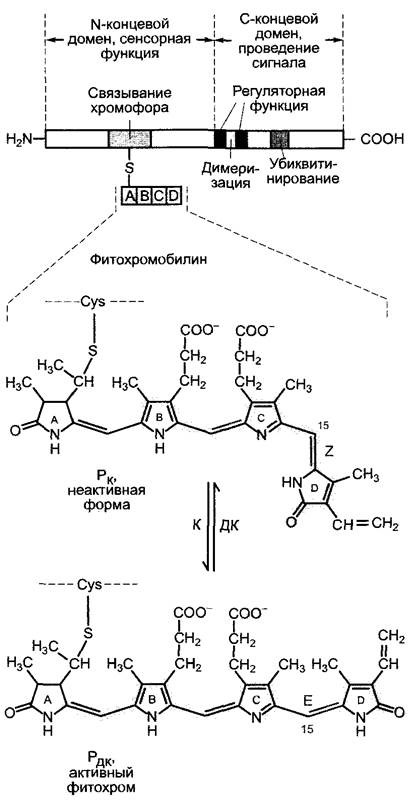
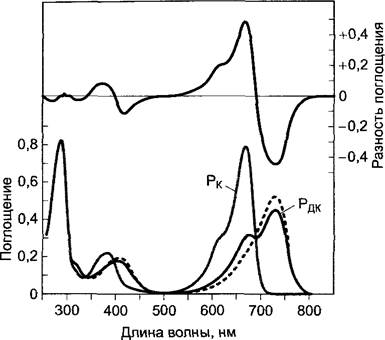
The primary photochemical process upon absorption of a light quantum by phytochrome leads to the isomerization of the double bond between the pyrrole rings C and D (see Fig. 7.81). This transition (Z-E isomerization) is reversible. Experiments on etiolated seedlings have demonstrated that in the dark, newly synthesized phytochrome exists as the Z-isomer of the methine bridge connecting the C/D rings. This phytochrome exhibits an absorption peak in the red region of the spectrum (Fig. 7.82) and is therefore designated as Pr (German: Hellrot, 650 – 680 nm,  = 667 nm; English: Pr, r = red)1. It is also referred to as P660 based on the absorption wavelength (660 nm) used in experiments to activate the phytochrome system. Pr is the physiologically inactive form of phytochrome. Upon illumination with red light (e.g., experimental monochromatic light with a wavelength of 660 nm), the chromophore is isomerized into the E-form. Consequently, phytochrome Pr is converted into its active form, which, owing to its absorption maximum in the far-red region, is also designated as Pfr (German: dunkelrot, 710 – 740 nm,
  = 730 nm, or P730, English: Pfr, fr = far red) (see Fig. 7.82).
1 The German designations are somewhat misleading: hellrot (light red) and dunkelrot (dark red) describe the brightness of the red color rather than its spectral position. The English terms red and far red (i.e., shifted toward longer wavelengths relative to red, closer to purple) are much more appropriate. — Note by the Editor.
Fig. 7.82. Absorption spectra of Pr and Pfr (bottom), along with the difference spectrum of the two pigments [E(Pr) – E(Pfr)] (top). The spectra shown were determined for oat etiolated seedling phytochrome, a Class I phytochrome such as phyA from Arabidopsis thaliana (see text). The spectra of other phytochromes, including Class II phytochromes (e.g., phyB), are spectroscopically indistinguishable from Class I phytochromes. The dashed line represents the Pfr spectrum corrected for the fraction of unreacted Pr (20%) still present in photoequilibrium following saturating red-light irradiation
As a result of illumination with far-red light (e.g., experimental monochromatic light with a wavelength of 730 nm), Pfr can reversibly convert back into the inactive Pr form. Short light pulses are sufficient to activate or inactivate phytochrome. When red and far-red light pulses are applied in rapid succession, The Nature of the final light flash determines the direction of the physiological process. Photoreversibility is a crucial criterion for physiologically demonstrating the involvement of the phytochrome system (see Figs. 7.75, 7.83; Table 7.9), although photoreversibility is not observed in all phytochrome-controlled processes (Table 7.10).
Fig. 7.83. Physiological demonstration of phytochrome system involvement in flowering induction in the short-day plant Xanthium strumarium. Experiments show that the photoperiodic response depends on the duration of the continuous dark period rather than the continuous light period. A light pulse during the dark period acts as a long continuous day. The involvement of the phytochrome system is confirmed by the effectiveness of red light and the reversibility of the process by subsequent far-red irradiation. SDP — short-day plant.

The absorption spectra of Pr and Pfr overlap significantly (see Fig. 7.82); therefore, even under illumination with monochromatic light at 660 nm or 730 nm, a dynamic photoequilibrium is always established between Pr and Pfr. This equilibrium varies depending on the R:FR ratio, ranging from 2.5% Pr and 97.5% Pfr (after irradiation with 730 nm monochromatic light) to 80% Pfr and 20% Pr (after irradiation with 660 nm monochromatic light). Certain physiological processes (e.g., light-induced germination of specific seeds1 under extremely low photon fluence rates, i.e., VLFR processes; see Table 7.10) are triggered by the minute amounts of Pfr present even under far-red irradiation (2.5%). Consequently, such processes can no longer be reversed by far-red irradiation; instead, they are induced by both red and far-red light.
1 The term used here is Lichtkeimer, i.e., requiring light for germination. — Note by the Editor.
Table 7.9. Reversibility of seed germination induction in lettuce (Lactuca sativa cv. Grand Rapids) by shifting the Pr:Pfr ratio of the phytochrome system through red (R) or far-red (FR) irradiation.
Irradiation sequence |
Germination percentage, % |
R |
70 |
R + FR |
6 |
R + FR + R |
74 |
R + FR + R + FR |
6 |
R + FR + R + FR + R |
76 |
R + FR + R + FR + R + FR |
7 |
R + FR + R + FR + R + FR + R |
81 |
R + FR + R + FR + R + FR + R + FR |
7 |
Irradiation for 5 min at an intensity of 1 W · m-2 R or 5 W · m-2 FR, respectively. As with other tissues, neither photoinduction nor photoreversal can be triggered in dry tissue. Seeds are irradiated in an imbibed state. Conversely, the established phytochrome induction state is maintained throughout the dormant phase.
In natural plant habitats, unlike experimental conditions, monochromatic light does not exist; rather, the environment constantly contains a spectral continuum enriched to varying degrees with R and FR light. However, these proportions vary significantly depending on the situation. The ratio

is approximately 1.13 under maximal daytime sunlight (at noon), drops below 1 (0.9 – 0.8) during morning and evening twilight, and decreases to low values (<0.9) beneath soil, leaf litter, or mulch layers. The R:FR ratio is much lower in plant shade (<0.2); due to strong chlorophyll Absorption in the red region of the spectrum (see Fig. 6.46), the far-red component is exceptionally high here. Consequently, light reflected by green plants also possesses a high proportion of FR.
Because of the considerable overlap between the absorption spectra of Pr and Pfr, shifts in the R:FR ratio cause profound changes in the active state of phytochrome (see Fig. 7.82). Therefore, phytochrome serves as an ideal photoreceptor for detecting twilight (which is crucial for photoperiodic responses and circadian rhythms), sensing shading in soil (e.g., in seedlings), and perceiving "green shade" (shade avoidance response). "Neutral shade," such as the shadow of a stone wall, conversely, has no effect. In sunlight, with an R:FR ratio > 1, more than half of the phytochrome is maintained in the active Pfr form. Sunlight thus acts analogously to R light. In special cases (e.g., in lower plants, see 8.3.1.1), phytochrome molecules within the cell are spatially oriented and, owing to their dichroic properties, detect the plane of polarization of polarized light.
Based on their stability in light, phytochromes can be divided into two classes: Class I phytochromes, which are typical of angiosperms and absent in spore-bearing plants, and Class II phytochromes, which occur in all photoautotrophic pro- and eukaryotes (Fig. 7.84).
Fig. 7.84. Differences between Class I and Class II phytochromes illustrated using phytochromes A–E of Arabidopsis thaliana. In some cases, phytochrome A interacts with the blue-light receptor cryptochrome 1 (cry1) (high-intensity light photomorphogenesis responses, see text), whereas Class II phytochrome phyB interacts with cryptochrome 2 (cry2, photoperiodism, see text). Both active phytochrome A (phyAfr) and active phytochrome B (phyBfr) participate in repressing PHYA transcription in the light. UQ — ubiquitin
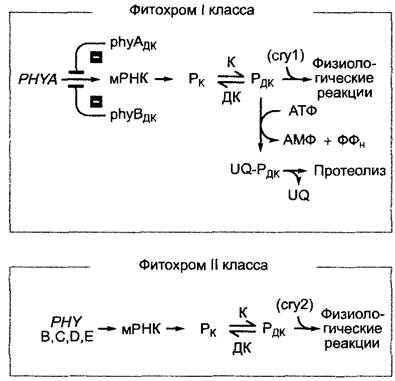
Class I phytochrome is unstable in the light and is rapidly degraded via proteolysis involving the ubiquitin system (proteolysis of the Pfr form) (see 7.3.1.3; Fig. 7.44); at the same time, its de novo synthesis is inhibited by transcriptional repression in the light. Class I phytochrome is predominant in etiolated seedlings and occurs in dicotyledons, particularly in the plumule region, as well as in the coleoptiles and leaf primordia of cereal seedlings. It mediates The first phase of photomorphogenesis in etiolated seedlings, interacting here in a high-irradiance response (HIR, see Tab. 7.10) with the blue-light/UV-A receptor cryptochrome I (Fig. 7.85; Box 7.5), but it is subsequently degraded rapidly and is no longer detectable in the greened plant exposed to light. Furthermore, Class I phytochrome is responsible for seed germination induced by very low-fluence far-red light. Its function in plant development is apparently restricted to the initial contact of the etiolated seedling or imbibed seeds with light (see Tab. 7.10). In Arabidopsis thaliana, there is only a single Class I phytochrome: phytochrome A (phyA, nomenclature; see Tab. 7.8; Box 7.2), whose apoprotein (PHYA) is encoded by the PHYA gene.
Table 7.10. Physical Classification of phytochrome responses
Characteristic |
Very low fluence responses (VLFR1) |
Low fluence responses (LFR1) |
High irradiance responses of plants (HIR1) |
|
etiolated |
light-grown plants |
|||
Photoreversibility |
No |
Yes |
No |
No |
Reciprocity |
Yes |
Yes |
No |
No |
Action spectrum absorption maxima |
R, B |
R, FR |
FB, B, UV-A |
R |
Photoreceptor |
phyA |
phyB |
phyA + cry1 |
phyB |
Examples |
✵ Light-stimulated germination of certain seeds (e.g., Arabidopsisw); ✵ stimulation of coleoptile growth and inhibition of mesocotyl growth in etiolated oat seedlings |
✵ Light-stimulated germination of certain seeds (e.g., Lactuca, Arabidopsisw); ✵ shade avoidance response; ✵ photoperiodically induced morphoses (involving phyB + cry2); ✵ circadian daily-periodic responses (e.g., leaf movements) |
✵ Inhibition of hypocotyl elongationw; ✵ cotyledon expansion; ✵ induction of anthocyanin synthesis in dicot seedlings; ✵ unfolding of the apical hook |
✵ Inhibition of hypocotyl elongationw |
1 VLFR (very low fluence response); LFR (low fluence response); HIR (high irradiance response);
w The corresponding action spectra are shown in Fig. 7.85. Photoreceptors are designated According to the established convention for Arabidopsis thaliana (see Tab. 7.8).
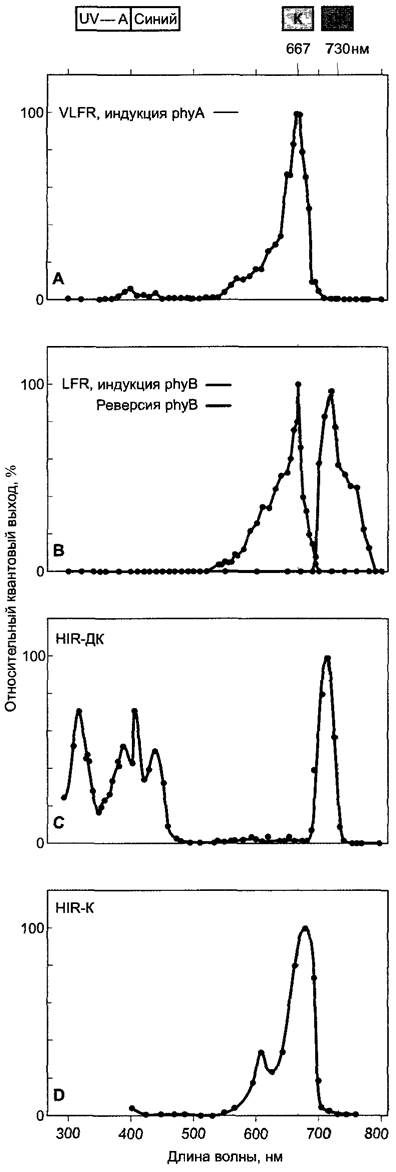
Fig. 7.85. Action spectra of plant photomorphoses (A, B — courtesy of T. Shinomura, M. Furuya; C — after K.M. Hartmann; D — after C.J. Beggs, E. Schäfer).
Action spectra of photobiological processes that depend on photon fluence are obtained by irradiating the test object with monochromatic light of various wavelengths at an equal photon fluence (mol photons m-2), while determining various physiological parameters (e.g., germination percentage). Action spectra for responses that depend on light intensity are obtained similarly by varying the wavelength at a constant light flux (mol photons · m-2 · s-1, photobiological units: see Box 6.2). A — Very low fluence response (VLFR) exemplified by seed germination of a phyB-deficient mutant of Arabidopsis thaliana. The phyA response is triggered by red light and can no longer be reversed by subsequent far-red irradiation (e.g., 730 nm). The phyA VLF response also shows characteristic, albeit weak, activity in the blue region of the spectrum; B — Low fluence response (LFR) of seed germination in a phyA-deficient mutant of Arabidopsis thaliana; the phyB response is photoreversible, and blue light is completely ineffective; C — High-irradiance far-red (FR) response exemplified by the inhibition of hypocotyl elongation in etiolated lettuce seedlings. In addition to peaks in the blue and UV-A regions attributable to cryptochrome, the action spectrum exhibits a far-red absorption peak indicating Class I phytochrome (corresponding to phyA in Arabidopsis thaliana); D — High-irradiance red (R) response exemplified by the inhibition of hypocotyl growth in light-grown Sinapis alba seedlings. Blue light is ineffective, and the activity peak in the red region of the spectrum is attributed to Class II phytochrome (corresponding to phyB in Arabidopsis thaliana)
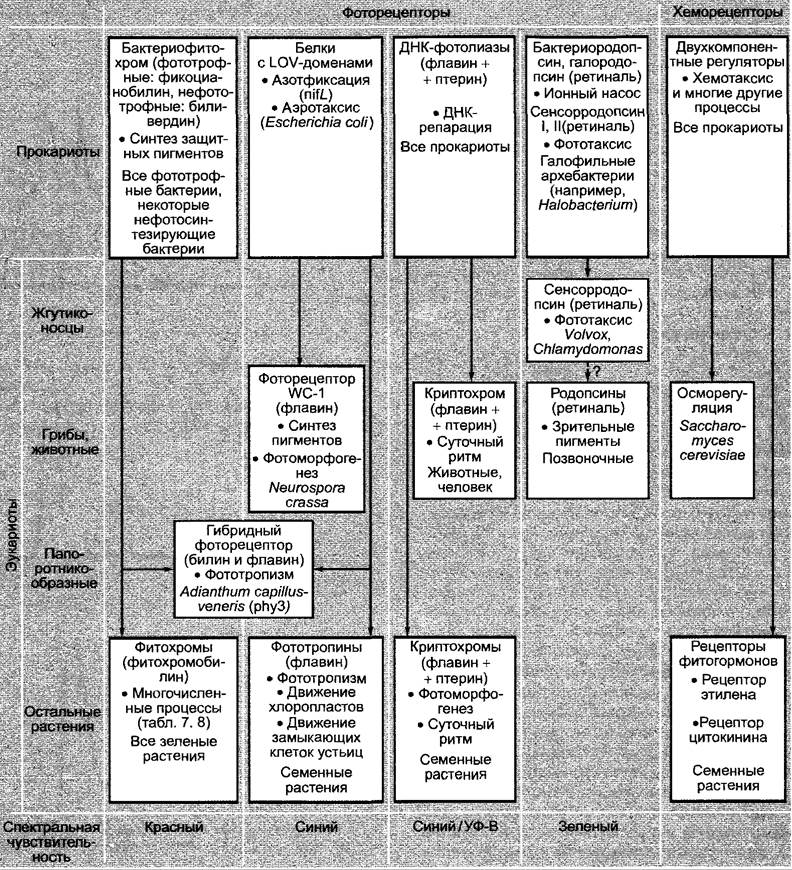
Box 7.5. Evolution of Plant Receptors
Plants respond to a multitude of endogenous (see 7.6) and exogenous (see 7.7, 8.2, 8.3) stimuli. It is only in recent years that the molecular structure of certain plant receptors has been elucidated. While our knowledge of photoreceptors is already quite extensive, little is known about chemoreceptors. For all functionally characterized plant receptors to date, it has been shown that they evolved from prokaryotic precursors still found in living prokaryotes today (Fig. A). Consequently, the sensors for external signals in plants appear to be of prokaryotic origin. Recently, prokaryotic precursors (rhodopsin, cryptochrome) for certain animal receptors have also been identified.
Fig. A. Evolutionary relationships of plant photo- and chemoreceptors. The following terms are briefly explained in Sections 7.6, 7.7, 8.2, and 8.3: LOV domain-containing proteins represent a group of proteins isolated from prokaryotes whose activity is regulated by environmental factors, namely light, oxygen, or redox processes (LOV — light, oxygen, voltage). All these proteins contain a non-covalently bound flavin (FAD) that can be excited by Light absorption or redox processes. In the phototropin photoreceptor, this excited state leads to the phosphorylation of an amino acid residue within its own polypeptide chain (autophosphorylation). WC-1 is the designation for a mutant of the ascomycete Neurospora crassa (white collar). This albino mutant carries a defect in the flavin-binding LOV domain of the apoprotein. The mutant is impaired in all blue light-regulated processes, such as carotenoid synthesis, perithecial phototropism, and the circadian rhythm of conidiation. WC-1 is a directly light-regulated transcription factor
Higher plants possess several Class II phytochromes (four in Arabidopsis: phyB, phyC, phyD, and phyE, whose apoproteins are encoded by genes ranging from PHYB to PHYE. To date, only phyB, the predominant Class II phytochrome, has been thoroughly investigated). Class II phytochromes are stable in the light and occur in the plant under both light and dark conditions. They function as photoreceptors for "classic" photoreversible phytochrome responses (see Figs. 7.83, 7.84; Tabs. 7.8, 7.9) and are responsible for phytochrome-mediated reactions in light-grown plants (photoperiodic regulation; circadian processes, e.g., leaf nasties; shade avoidance reactions; chloroplast movement in algae, see 8.2.2).
Action spectra (see Fig. 6.46) often allow an Assessment of the involvement of specific photoreceptors in light-induced processes (see Fig. 7.85). In recent years, precise information has been obtained through the study of mutants that lack specific photoreceptors (or combinations of photoreceptors) or express them differently than wild-type plants.
Phytochrome-controlled processes can be divided into three classes based on the photon fluence required to trigger them: VLFR responses (very low fluence responses, 0.1 – 100 nmol quanta · m-2), LFR responses (low fluence responses, 1 – 1000 µmol quanta · m-2), and HIR responses (high irradiance responses, which are induced by prolonged or continuous high-intensity irradiation). For VLFR and LFR responses, the Bunsen-Roscoe reciprocity law holds within certain limits, according to which the product of irradiance intensity $I$ (photon fluence rate, mol · m-2 · s-1) and time (s)—i.e., the photon fluence (mol · m-2)—determines the magnitude of the physiological response. Within this proportional range, one can work either with low irradiance intensity and long duration, or with high intensity and correspondingly shorter duration. In contrast, HIR responses (hence their name) are largely proportional to light intensity and are triggered only by high intensity, rather than by prolonged irradiation with weak light. Examples of physiological responses are given in Tab. 7.10.
Absorbing blue light (390 – 500 nm) / UV-A (320 – 390 nm), cryptochromes are chromoproteins that resemble photolyases but lack photolyase activity. Photolyases occur in bacteria, archaea, and eukaryotes; in a blue/UV-A light-induced reaction, they catalyze the splitting of pyrimidine dimers formed in DNA AS A result of UV-B irradiation (200 – 300 nm), thus acting as DNA Repair enzymes. They possess two light-absorbing pigments: a pterin and a flavin (the flavin being partially reduced as a flavosemiquinone radical, FADH•). The pterin is responsible for Light Absorption and transfers its excitation energy to the flavin, thereby lowering its redox potential. In the excited state, the flavin catalyzes the reductive Cleavage of the pyrimidine dimer. Cryptochromes must also contain a pterin and a semireduced flavin, leading to the hypothesis that they initiate a (still unknown) redox process upon light absorption.
Two cryptochrome genes have been discovered in Arabidopsis thaliana. Phenotypic mutant analyses have revealed that cryptochrome 1 (cry1), together with Class I phytochrome (phyA), is important for the initiation of photomorphogenesis in etiolated seedlings, whereas cryptochrome 2 (cry2), together with phytochrome B, appears to be involved in the perception of the photoperiodic signal via the biological clock. Cry2-like photoreceptors have recently also been discovered in animals and humans, where they are believed to regulate circadian rhythms.
The signaling pathways of light-controlled development remain largely unresolved. It has recently been discovered that both phyA and phyB are translocated from the cytoplasm into the cell nucleus following illumination. The cry2 receptor appears to be permanently localized in the cell nucleus, while the localization of cry1 is still unknown. However, cry1 interacts directly with phyA and either moves into the cell nucleus in a complex with it upon illumination, or is already present there like cry2. Phytochromes possess protein kinase activity in their C-terminal domain (cf. Fig. 7.81). Phosphorylation reactions and presumably redox reactions of activated cryptochromes could serve as starting points for signaling cascades that are triggered by photoreceptors in the cell nucleus upon illumination, ultimately altering The activity of light-regulated genes. Numerous genes whose transcription is regulated by light are known. The genes encoding the nuclear-encoded small subunit of ribulose-1,5-bisphosphate carboxylase/oxygenase (RBCS, where S stands for small) and chlorophyll a/b-binding proteins (CAB genes) have been studied in particular detail. Cis-elements within the promoters of these and other light-regulated genes have been identified; although required for light regulation, they are not yet sufficient on their own, as similar elements also occur in certain non-light-regulated genes. These include the so-called GT boxes (5'-GGTTAA-3'), G boxes (5'-CACGTG-3'), and I boxes (5'-GATAA-3'). Studies on light-regulated genes have also demonstrated that the Specificity of transcriptional control is ensured through complex interactions between cis-elements and transcription factors binding to them.
The mechanism of phyB action has recently been elucidated in broad outline. Upon illumination, the active Pfr form of phyB is translocated from the cytoplasm through the nuclear pores into the cell nucleus, where it activates the transcription of phyB-regulated genes (Fig. 7.86). Similar mechanisms likely underlie the action of other phytochromes and possibly cryptochromes as well. Over time, numerous differences in regulatory details will undoubtedly emerge, given the considerable number of light-regulated genes and their promoters.
Fig. 7.86. Model of gene activity control by phytochrome B. Active phytochrome B (Pfr) migrates into the cell nucleus and activates transcription there by binding to the G-box-binding transcription factor PIF3 (phytochrome interacting factor) and RNA polymerase II holoenzyme, thereby initiating the transcription of two directly phyB-regulated MYB-type transcription factors (CCA1, LHY). In turn, their products subsequently activate numerous genes that are not directly dependent on light, but whose products are nevertheless required for the plant's physiological response to light stimuli. The reverted form of phytochrome B is unable to form a complex with PIF3
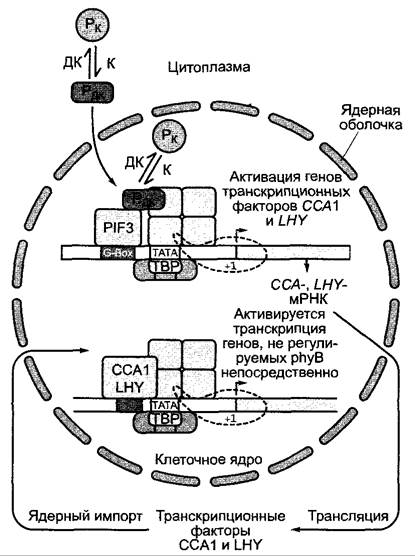
Alongside the effects of temperature and light (see 7.7.1, 7.7.2), other morphological adaptations are known that are caused by water excess or deficiency, gravity, Touch stimuli, or nutrient availability.
Water availability often has a profound effect on plant appearance and structure. On arid soils, typical dwarf growth (nanism) is observed, whereas dry air leads to cuticle thickening, a reduced stomatal density, increased pubescence, and more pronounced vascular and strengthening element development (xeromorphoses). In a humid atmosphere, by contrast, internodes and leaf petioles are often elongated, leaf area is larger, leaves are thin and nearly entire-margined, pubescence is sparse, and stomatal density is elevated (hygromorphoses).
True, not all xeromorphic traits encountered during drought are a consequence of water shortage. For instance, nutrient deficiencies in plant habitats—most notably nitrogen—frequently lead to similar morphoses.
The influence of nutrition (trophomorphoses) is most easily studied in the development of heterotrophs. For example, the fungus Basidiobolus ranarum forms branched, septate hyphae in a nutrient solution containing sugar and peptone (a peptide mixture derived from the enzymatic or chemical partial Hydrolysis of Proteins). Conversely, in a medium containing sugar and ammonium salts, it produces rounded, thick-walled cells that divide irregularly in all planes. In many plants, particularly lower ones, nutritional conditions can also affect reproductive organ formation and the duration of vegetative growth.
In higher plants, mutual competition for light, water, and nutrients plays a decisive role in GROWTH AND DEVELOPMENT, especially in dense stands.
Occasionally, even physical contact alone with surrounding objects can exert a morphogenetic effect (thigmorphoses). For instance, certain algae form rhizoids upon touching a substrate, the tendrils of Parthenocissus form attachment discs (see Fig. 4.69, C), and the shoots of Cuscuta develop haustoria precursors (appressoria). Tendrils that wrap around a support thicken at the point of contact. The initially thin aerial roots of epiphytic Ficus species, which hang freely, begin secondary thickness growth and form tree-like props when their tips touch the soil (see 11.2). Some fungi develop normal caps in the dark only when their fruiting bodies come into contact with an object. Chemical action from the touched substrate presumably plays no role in any of these cases.
Like light, gravity can not only stimulate a plant's spatial growth movements—Tropisms—(see 8.3.1.2), but can also trigger profound morphogenetic effects (gravimorphoses). Thus, not only polarity (see 7.3.3) but also the dorsiventrality of certain organs is determined in conjunction with gravity, although the simultaneous action of light frequently overrides gravitational effects (anisophylly: see Fig. 4.67). For example, the dorsiventrality of yew and spruce branches is realized under the influence of gravity. Certain zygomorphic flowers, such as those of Epilobium, Gladiolus, or Hemerocallis, become radially symmetrical if their buds are subjected to radially uniform acceleration, such as on a clinostat (see Fig. 8.19). Under the same conditions, the twisting (resupination) of orchid Ovaries is suppressed. The formation of compression or tension wood is also a gravimorphosis.1
1 Under mechanical load, the Nature of the wood deposited by the cambium changes. The dimensions of the xylem vessels and fibers decrease, but the tissue becomes stronger as a result. Uneven wood deposition can lead to the displacement of branches in space, allowing for the optimal distribution of mechanical load across the shoot system. — Ed. note.
The influences of other living organisms on a plant's development and metabolism are diverse. These biotic interactions are covered in a separate chapter, as this field of research is increasingly evolving into an independent discipline within physiology (allelophysiology, see Chapter 9).
Last update: 07/08/2026
Editorial and Educational Adaptation: This material has been compiled based on the primary/original source text. The project team performed an editorial review, corrected technical inaccuracies, structured sections, and adapted the content for an educational format.
What was processed:
- elimination of formatting defects (OCR errors, structural breaks, corrupted characters);
- editorial organization of content;
- standardization of terminology in accordance with academic sources;
- verification of factual statements against the original source text.
All mentions of the author, publication year, and origin of the primary text have been preserved in accordance with the source.