PLANT SYSTEMATICS - Y. I. Korniievskyi - 2017
Lecture Notes
Lecture No. 1. Generative Organs: Flower, Inflorescence, Fruits
Lecture Objective: to examine the Characteristics of plant generative Organs.
Lecture Outline
1. Flower
2. Inflorescence
3. Fruits
3.1. Simple apocarpous fruits (follicle, legume, succulent legume, loment, nut, drupe).
3.2. Aggregate, or complex, apocarpous fruits (etaerio of achenes, cynarhodium, polyfollicle, polyahene, polydrupe).
3.3. Coenocarpous succulent, multi-seeded, indehiscent fruits (berry, hesperidium, pepo, balausta, pyrenarium, pome).
3.4. Coenocarpous dry, multi-seeded, dehiscent fruits (capsule, silique, silicle).
3.5. Coenocarpous dry, schizocarpic fruits (schizocarps).
3.6. Coenocarpous dry, single-seeded, indehiscent fruits (pseudomonocarps).
3.7. Multiple fruits (infructescences).
Class="center">Generative Organs
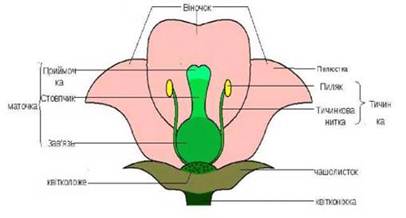
The flower (flos) is a modified, shortened, unbranched SHOOT of limited growth adapted for The production of spores and Gametes. It consists of sterile (infertile) and fertile parts. The sterile parts of stem origin include the pedicel and receptacle, while those of leaf origin are the floral leaves that form the perianth. The fertile Components of the flower, which ensure pollination and fruit formation, include the pistil—the Structural and functional unit of the gynoecium—and the androecium, which is the collective term for the stamens.
Depending on their flowering frequency, plants are classified as monocarpic, which flower once in their lifetime, and polycarpic, which flower several or many times. The duration of flowering also varies. For instance, the "queen of the night" cactus blooms for a single night, while some orchids bloom for two months.
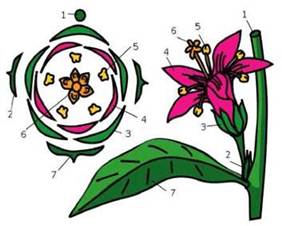
To symbolically represent the Structure and arrangement of floral parts, a floral formula is used, consisting of a specific sequence of letters, numbers, and symbols. The following conventional signs are employed: morphologically distinct whorls (rings) of floral parts are denoted by specific letters (calyx-like simple perianth — Sa, corolla — Co, androecium — A, gynoecium — G); the number of parts in a given whorl is indicated by numbers; when the number is not fixed or large, the infinity sign ∞ is used, and complete absence is indicated by zero (0); fusion of members within a whorl is shown by parentheses; the arrangement of organs in multiple whorls is indicated by the plus sign (+); superior and inferior Ovaries are indicated by a line below or above the number designating the carpel count; zygomorphy is denoted by an arrow  or a vertical line with two dots on the sides •│•, and actinomorphy by an asterisk (*) or a circle with a cross +; staminate (male) unisexual flowers are denoted by the Mars sign
  , and pistillate (female) unisexual flowers by the Venus sign
  . Additionally, a floral diagram—a schematic cross-sectional PROJECTION OF THE flower—is typically constructed.
Perianth — perigonium (P) — is termed double, complex, or heterochlamydeous if it consists of a calyx (Sa) that differs in appearance and coloration from the corolla, and simple or homogeneous if it consists of uniform tepals: either green and inconspicuous, in which case the perianth is sepaloid, or monochlamydeous (PСа), or brightly colored or white, making the perianth petaloid, or homochlamydeous (PСо). If the perianth is absent (P0), the flower is considered naked, achlamydeous, or nude.
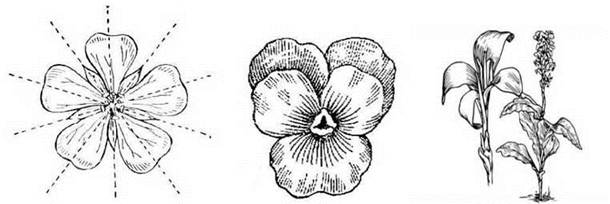
Based on their Symmetry, flowers are classified as actinomorphic, or regular (*) — having two or more axes of symmetry; zygomorphic, or irregular () — having a single axis of symmetry; and asymmetric  — lacking any axis of symmetry.
Calyx - calyx (Са) - consists of green, occasionally colored or modified sepals; it protects the internal PARTS OF THE flower from damage and Temperature fluctuations, carries out Photosynthesis, and assists in pollination and plant dispersal. The calyx is characterized by its symmetry (regular, irregular), the presence and degree of sepal fusion (chorisepalous/aposepalous, gamosepalous to varying degrees: lobed or dentate; parted; divided), the number and arrangement of sepals, shape, coloration, and pubescence. The shapes of a chorisepalous actinomorphic calyx include:
- cruciate stellate
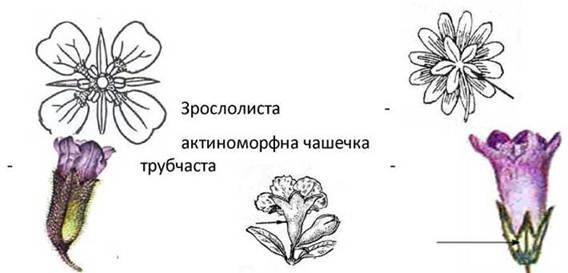


Types of synsepalous calyces:
dentate, lobed, cleft, deeply cleft.
Corolla (Co) - the inner, brightly colored or white whorl of the perianth, composed of petals. The corolla protects the fertile parts of the flower and attracts pollinators. The petals of some flowers have a well-defined narrowed lower part called the claw, and an expanded, reflexed upper part called the limb. Petals lacking a claw are termed sessile. Sometimes petals bear nectaries of various structures, including nectary pits, either covered by a scale or exposed. If the petals are free, the corolla is choripetalous (polypetalous). Sympetalous (gamopetalous) corollas possess a tube, a limb, and a throat at their junction.
Regular choripetalous corollas:
caryophyllaceous - with five petals, a long claw, and a wide limb;
cruciform - formed by four oppositely arranged pairs of petals, with a more or less distinct claw and a wide limb;
rotate-stellate - with five petals, a short claw, and a wide limb.
Regular sympetalous corollas:
tubular - formed by five petals fused into a cylindrical tube, with a short dentate or indistinct limb;
globose (urceolate/campanulate) - with a globally inflated tube and a dentate limb;
rotate - with a very short tube and a wide limb;
campanulate - with a tube gradually expanding toward the apex, and a dentate or lobed limb;
infundibuliform (funnel-shaped) - with a long, narrow tube expanding upward, and an entire, dentate, or lobed limb.
Irregular choripetalous corolla - papilionaceous (characteristic of legumes) consisting of five petals: one large petal called the banner or standard, two lateral free smaller petals called wings, and two smaller partially fused petals forming the keel.
Irregular sympetalous corollas:
ligulate (strap-shaped) - with five petals, a very short tube, and a long, five-toothed limb;
pseudoligulate - formed by three fused petals, with a very short tube and a ligulate, three-toothed limb;
bilabiate (two-lipped) - with a more or less developed tube and a two-lipped limb, where the upper lip is bilobed and the lower lip is trilobed;
unilabiate (one-lipped) - a bilabiate corolla with a reduced lower or upper lip;
personate - with both Lips well developed, the lower lip strongly inflated and bearing a spur at the base—a narrow, pointed, hollow outgrowth;
digitaliform (glove-shaped) - with an obliquely truncated tube and an indistinct limb.
Androecium - androeceum (A) - the collective term for stamens, the Male reproductive organs of a flower. A stamen consists of a filament, a connective, and an anther.
Staminal filaments are most commonly long and cylindrical, less frequently short, expanded, and flattened. They can be thin or wide, branched, pubescent or glabrous, and may bear appendages, outgrowths of various shapes, hairs, etc. When the filament is absent, the anther is sessile (as in some species of magnolia and violet). Occasionally, the lengths of the filaments vary within a flower, or they may fuse to form a staminal tube.
Anthers are spore-producing structures of characteristic shape, consisting of two pollen sacs connected by a connective—a plate of varying shape attached to the apex of the filament. Each pollen sac contains two microsporangia, or pollen chambers. Stamens with underdeveloped anthers are called staminodes; they become sterile and sometimes function as glands or nectaries (e.g., in hellebores). Within the anthers, microspores or pollen grains are formed through Meiosis, which subsequently develop into pollen, or the male gametophyte.
Attachment site of stamens within the flower:
to the receptacle; to the hypanthium; to the Ovary of the pistil; to the corolla tube.
Types of androecium:
A. based on stamen size relative to one another: equal; unequal; didynamous; tridynamous; tetradynamous; pentadynamous;
Б. based on the fusion of filaments: free; monadelphous; diadelphous; polyadelphous.
B. based on the connection of anthers.
Gynoecium — gynoecium (G) - the collective term for pistils, carpels, merisms, or carpels—the female reproductive parts.
The gynoecium can be: monocarpous, apocarpous, and syncarpous.
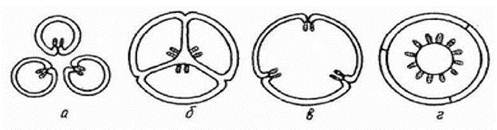
Types of gynoecium: a - apocarpous; б, в, г - syncarpous (б - syncarpous, в - paracarpous, г - lysicarpous)
Monocarpous, or simple apocarpous, gynoecium - consisting of a single carpel.
Apocarpous, or choricarpous, gynoecium - consisting of several or many carpels or simple pistils that are free or only slightly fused.
Syncarpous gynoecium - consisting of two or more carpels that are fused together to form a single compound pistil.
Types of syncarpous gynoecium:
syncarpous - multilocular, formed by the lateral fusion of carpels (e.g., tulip);
paracarpous - unilocular, formed by the marginal fusion of carpels with parietal placentation of ovules (e.g., poppy, cucumber);
lysicarpous - unilocular, with a central Column, derived from a syncarpous gynoecium through the dissolution of septa (e.g., soapwort).
The pistil consists of three distinct parts: the ovary, the style, and the stigma.
Stigma - the upper part of the pistil. It attracts pollinators, traps pollen, and stimulates its germination.
Style - the narrowed part of the pistil connecting the stigma and the ovary. It elevates the stigma to an optimal position for pollen capture and facilitates the passage of pollen tubes through to the ovary, delivering sperm Cells to the ovules.
Ovary - the lower, expanded, hollow part of the pistil. Its locules contain the ovules. Depending on its position, the ovary may be superior, inferior, or half-inferior.
A superior ovary is characteristic of monocarpous and apocarpous gynoecia; it sits freely on a flat, convex, or concave receptacle and is easily detached from it.
A half-inferior ovary is fused up to halfway with a cup-shaped receptacle.
An inferior ovary is characteristic of a coenocarpous gynoecium; it fuses with the walls of the concave receptacle and, following Fertilization, typically transforms into the fleshy part of so-called "false" fruits.
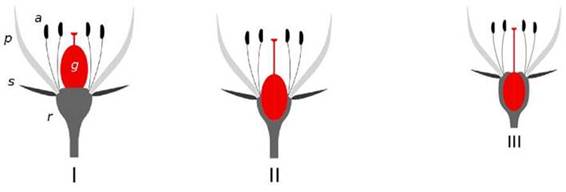
An ovule is a multicellular structure within the ovary of seed plants that develops into a seed following fertilization.
Flower sex is determined by the presence of stamens and pistils. Bisexual flowers possess both stamens and pistils; unisexual flowers contain either stamens only (staminate or male flowers) or pistils only (pistillate or female flowers). Asexual or sterile flowers lack both stamens and pistils. When male and female flowers are borne on the same individual, the plant is monoecious; if they are on separate individuals, the plant is dioecious.
An infructescence (infructescentia) is a cluster of mature fruits combined with the enlarged stem structures of a dense inflorescence, which is distinctly separated from the vegetative portion of the shoot.
Adaptations for the dispersal of seeds and fruits, as well as for the preservation and propagation of species, evolved in terrestrial plants through natural Selection. There are two primary modes of dispersal: via external natural vectors (wind, Water, animals) and through the plant's own mechanisms (autochory).
Anemochory involves the dispersal of small fruits or seeds equipped with aerodynamic appendages, such as a pappus (valerian), wings (birch), or parachutes (dandelion).
Hydrochory is the Dispersal of fruits by water, facilitated by hairs, buoyant air pockets, or corky, water-resistant cells (e.g., water hemlock).
Zoochory is the dispersal of brightly colored, sticky, or barbed seeds and fruits with the help of mammals, birds, and insects.
Autochory is the self-dispersal of seeds.
Fertilization is the fusion of two gametes, one male and one female. In angiosperms, the male gamete is termed a sperm Cell, and the female gamete is the egg cell. Upon landing on the stigma, a pollen grain extends a long pollen tube through an aperture in the exine, sometimes growing several centimeters long. Inside this tube, the generative cell divides to produce two sperm cells. The pollen tube grows through the loose tissue of the stigma and style toward the ovary, enters the ovule through the micropyle or integuments, and makes contact with one of the synergids. The pollen tube then penetrates the synergid and ruptures, releasing the sperm cells. One sperm fuses with the egg cell to form a zygote, while the other fuses with the central cell of the embryo sac to produce a triploid cell. This process is known as double fertilization, a feature unique to angiosperms. The discovery of double fertilization is credited to the Ukrainian scientist and academician S.G. Navashin (1898). Following double fertilization, the zygote develops into the embryo, the triploid cell becomes the endosperm (nutritive tissue), the integuments form the seed coat (testa), and the entire ovule matures into the seed. The synergids and antipodal cells typically degenerate, whereas the nucellus is consumed as nourishment during embryo development, or less commonly, transforms into a storage tissue known as perisperm.
An inflorescence (inflorescentia) is a specialized shoot bearing flowers—more or less distinct from the vegetative region—typically lacking standard vegetative leaves. The stem portion supporting an individual flower is the pedicel, while the stalk bearing an entire inflorescence is the peduncle. The continuation of the peduncle axis forms the main axis (rachis) of the inflorescence. When branched, it produces lateral axes of the first, second, and subsequent orders. The ultimate axes are the pedicels bearing flowers, located in the axils of unmodified upper shoot leaves or modified bracts (involucral leaves, bracteoles, or spathas). Additionally, a small bracteole or epicalyx may develop on the pedicel directly beneath the flower.
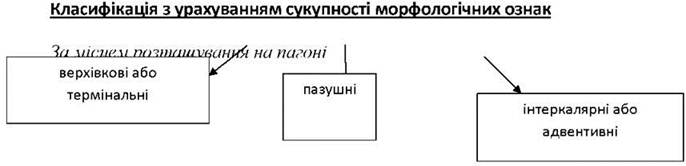
apical or terminal, located at the apex of the main axis or its branches;
axillary, situated in leaf axils;
intercalary or adventitious, originating from accessory buds on the internodes of branches and trunks (cauliflory), as seen in the cacao tree.
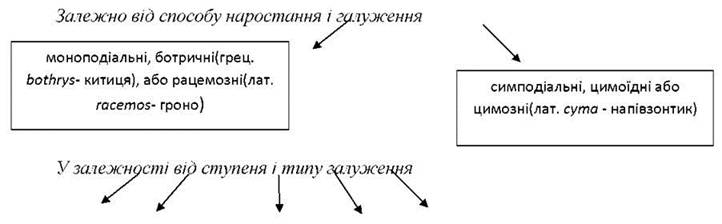

simple – the main axis is unbranched and bears either stalked or sessile flowers;
compound – the main axis branches, and the lateral axes bear flowers with or without pedicels;
compound homogeneous – consisting of uniform, simple (elementary) inflorescences (e.g., compound raceme, compound corymb, compound umbel);
compound heterogeneous, or mixed – consisting of elementary inflorescences of different types (e.g., panicle of capitula, raceme of spikelets, corymb of heads);
thyrses – the main axis grows monopodially, while the lateral axes form cymose inflorescences (e.g., raceme of dichasia, spike of monochasia, panicle of cymes, etc.).

frondose - leafy, with well-developed green, sometimes brightly colored foliage leaves or small bracts;
bracteate - with scale-like bracts:
aphyllous or naked - with reduced bracts or entirely without them.

monogamous - with unisexual flowers: female flowers bearing pistils and male flowers bearing stamens:
polygamous - with unisexual or a mix of unisexual and bisexual flowers.

determinate, closed, limited - the shoot apex terminates growth early, ending in a primary flower; all other flowers develop in a basipetal sequence from lateral axes of the first, second, and subsequent orders;
indeterminate, open, unlimited - the main axis shows unlimited growth and does not end in a flower; the lateral flower opens first, followed by all others in an acropetal sequence, so that the youngest flower is located at the apex or in the center of the inflorescence.
Based on flower count, density, and the orientation of the main axis, inflorescences are classified as:
few-flowered, many-flowered, dense, lax, interrupted, erect, drooping.
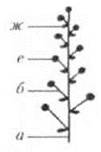
Simple monopodial, or botryose, inflorescences can be open (indeterminate) or closed (determinate), with sessile or pedicellate flowers. The most common types are the raceme and its derivatives.
Raceme - the main axis is well-developed, flowers are alternate and borne on pedicels of more or less equal length. A raceme can be unilateral (lily-of-the-valley), dense, compact, lax, interrupted, erect, or drooping (bird cherry).

Spike - the main axis is well-developed, flowers are sessile and alternate (plantain).
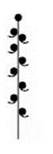
Spadix - the main axis is elongated, thickened, fleshy, and densely covered with sessile flowers (sweet flag). It is usually subtended by a spathe formed by a broad upper leaf.
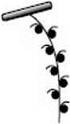
Catkin (ament) - the main axis is drooping and deciduous, flowers are sessile and unisexual (willow, poplar, oak, alder).
Umbel - the main axis is greatly shortened, nodes are congested, and pedicels are of approximately equal length, appearing to originate from a single point (onion, cherry). The Base of the umbel rays typically features bracts forming an involucre or spathe.
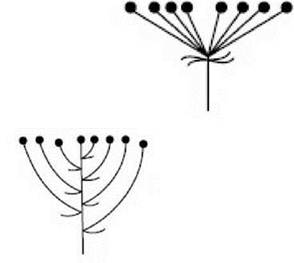
Corymb - the main axis is well-developed or slightly shortened, flowers are alternate, and the pedicels of the lower flowers are longer than those of the upper ones, so that all flowers lie in approximately the same plane (pear, hawthorn).

HEAD (capitulum) - the main axis is shortened and somewhat thickened, flowers are sessile or nearly sessile, densely clustered (clover, eryngo, milkvetch).
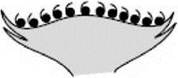
Capitulum (head) - the main axis is horizontally expanded into a common receptacle of the inflorescence, surrounded by an involucre of bracts; flowers are small, sessile, with characteristic corolla types (Asteraceae).
Compound monopodial homogeneous inflorescences - lateral axes of the second and subsequent orders bearing flowers or simple (elementary) monopodial inflorescences branch off from the main axis.
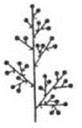
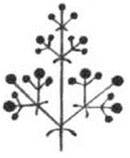
Panicle - a continuously growing main axis branches out, and the axes of subsequent orders bear racemes (compound raceme) or corymbs (corymbose panicle).

Compound umbel - composed of simple umbels, or umbellets (Apiaceae).
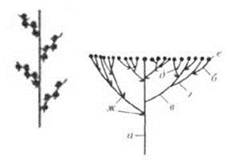
Compound spike - formed by elementary inflorescences known as spikelets (Poaceae).
Compound corymb - consists of simple corymbs (rowan, chokeberry).
Compound monopodial heterogeneous (mixed) inflorescences: the main axis bears simple monopodial inflorescences of another type: a panicle of umbels, a panicle of capitula, a spike of capitula, a corymbose panicle of capitula, a panicle of spikelets.
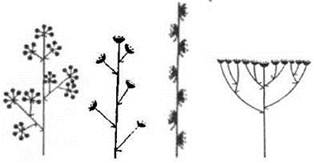
Sympodial or cymose inflorescences are determinate because the early-developed terminal flower halts the growth of the main axis. Further growth of the inflorescence is driven by lower lateral shoots of subsequent orders, which also terminate in flowers. Cymose inflorescences are subdivided into monochasia, dichasia, and pleiochasia.
Simple monochasium (uniparous cyme) - has one or two lateral axes (buttercup).
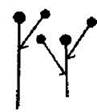
Compound monochasium - has several alternating lateral axes, each producing only one lateral axis with a flower.
Varieties of the monochasium include the cincinnus  , bostryx
  , and glomerule.
Cincinnus (or helicoid cyme) - lateral axes are directed to one side (henbane, lungwort, forget-me-not).
Glomerule - lateral axes of the cincinnus are greatly shortened, with congested flowers (beet).
Bostryx (or scorpioid cyme) - lateral flower-bearing axes depart alternately in mutually opposite directions (iris, gladiolus).
Dichasium (forked cyme or biparous cyme) - a determinate inflorescence in which opposite lateral axes of the first and subsequent orders produce two opposite axes (centaury, carnation, stichwort).
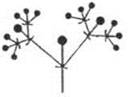
Pleiochasium (multiparous cyme) or false umbel - has more than two second-order lateral axes arranged in whorls, bearing flowers, dichasia, or monochasia (spurge, elder, viburnum, dogbane). In members of the Lamiaceae family, nearly sessile pleiochasia and dichasia form verticils. They are arranged in a single plane in half-rings (false whorls) in the axils of ordinary or floral opposite leaves.
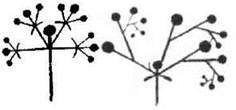
Thyrses, or mixed heterogeneous inflorescences, are characterized by a main axis that grows monopodially, while the lateral axes grow sympodially, and the degree of branching of the lateral axes decreases from the base of the inflorescence to its apex. Thyrses can be determinate or indeterminate, with alternate or opposite arrangement of elementary inflorescences. Examples of morphological variations: a panicle of cincinni (horse chestnut), a corymbose thyrse (tormentil), a spicate thyrse (great mullein), an amentaceous thyrse (alder, birch), an umbellate thyrse (geranium), a pleiothyrse (nettle).
FRUIT
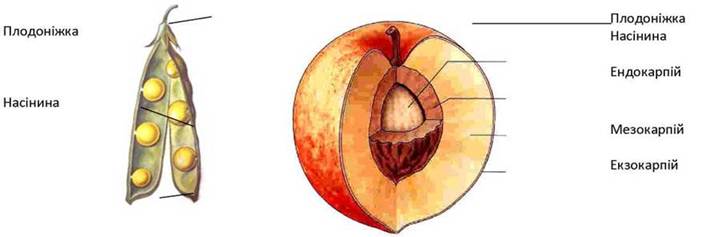
The fruit (fructus) is the reproductive organ of angiosperms. It forms as the gynoecium matures, frequently with the involvement of other floral structures. A fruit consists of a seed and the pericarp. The structure of the pericarp is either relatively uniform or differentiated into the exocarp, mesocarp, and endocarp. When only the ovary wall takes part in forming the pericarp, it is termed a true fruit. If, following fertilization, other structures proliferate alongside the ovary wall—such as the receptacle, perianth parts, stamens, or hypanthium—the fruit is referred to as a false (or accessory) fruit.
Fruit Type |
Development |
True fruit |
formed exclusively by the ovary wall |
False fruit |
formed by the ovary wall along with post-fertilization growth of the receptacle, perianth parts, stamens, or hypanthium |
Simple apocarps, or monocarps:
Follicle - a dry pericarp that dehisces along the ventral suture, along which numerous seeds are arranged (e.g., larkspur).
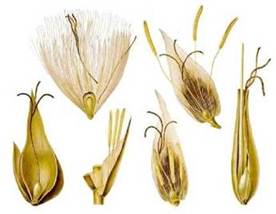
Fleshy follicle - a fleshy, indehiscent pericarp (e.g., baneberry)
Legume (pod) - typically a dry, many-seeded fruit that dehisces along both the ventral and dorsal sutures by two Valves.
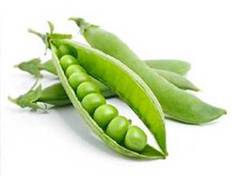
Fleshy legume - a fleshy, indehiscent pericarp containing several seeds (e.g., Japanese pagoda tree).
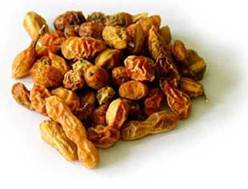
Loment (articulated legume) - breaks transversely into single-seeded segments (e.g., crownvetch, hedysarum)
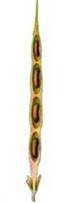
Nutlet (nut) - a single-seeded, indehiscent fruit (e.g., agrimony, burnet) or a constituent part (fruitlet) of an etaerio of nuts.
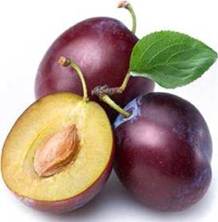
Drupe - a single-loculed, single-seeded, indehiscent fruit. The pericarp consists of a thin, leathery outer layer—the exocarp; a more or less fleshy (e.g., cherry, bird cherry, blackthorn) or dry (e.g., almond) middle layer—the mesocarp; and a woody inner layer—the endocarp, or stone.
Aggregate, or compound, apocarps:
Etaerio of follicles - composed of several separate or more or less fused dry follicular fruitlets.
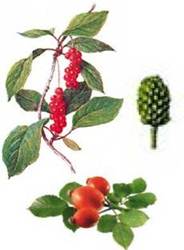
Fleshy etaerio of follicles - consists of fleshy, berry-like follicles that do not dehisce, yet feature a noticeable ventral suture (e.g., schisandra).
Etaerio of achenes (or nutlets) - composed of free achenes that easily detach from a convex receptacle (e.g., pheasant's eye, cinquefoil) or are embedded within a dry or fleshy receptacle.
Cynarhodium - free nutlet fruitlets enclosed compactly within a urn-shaped hypanthium (e.g., rose hip).
Etaerio of drupes (poly-drupe) - fleshy drupelet fruitlets borne on a convex receptacle that separate relatively easily upon maturation (e.g., raspberry, blackberry).

The mericarps of aggregate fruits – such as nutlets and drupelets – are classified as simple fruits, depending on their spatial orientation and mode of attachment to the receptacle (sessile, stalked, sunken, coiled, or pendulous).
Coenocarpous fleshy, many-seeded, indehiscent fruits.
A berry can develop from either a superior ovary (e.g., potato, lily of the valley) or an inferior ovary (e.g., blueberry, banana). The mesocarp and endocarp are more or less uniform and fleshy, whereas the exocarp is leathery, pubescent, or prickly.

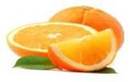
A hesperidium (or orange-type fruit) is characteristic of citrus plants. It develops from a superior ovary, featuring a colored, leathery exocarp embedded with essential oil glands, and a spongy, white mesocarp.
A pepo develops from an inferior ovary in members of the Cucurbitaceae family. The exocarp is relatively hard, dense, and sometimes woody, while the fleshy meso- and endocarp also incorporate enlarged, succulent placentae (as seen in watermelons and cucumbers).

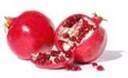
A balausta (characteristic of pomegranates) is formed from an inferior ovary; upon ripening, its pericarp becomes nearly dry, while the seed coats remain juicy.
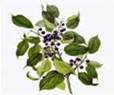
A pyrenarium (or coenocarpous drupe) develops from either a superior (buckthorn) or inferior (viburnum, medlar) ovary and contains one or more seeds protected by a hard endocarp.
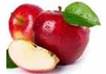
An apple (pome) develops in rosaceous plants from an inferior, 5-locular ovary and an enlarged, fleshy hypanthium, making it a false fruit. In a berry-like pome, the locules are separated by cartilaginous, leathery walls and contain either a single seed (chokeberry) or multiple seeds (apple, rowan). In a drupaceous pome, the walls of the 2–5-locular ovary transform into stony seed coverings (hawthorn, firethorn).
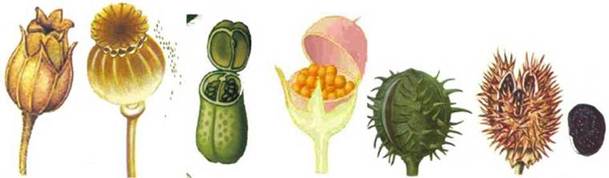
Dry, many-seeded, dehiscent coenocarps.
A capsule develops from a superior ovary (e.g., Liliaceae, Scrophulariaceae). The pericarp dehisces in various ways: from bottom to top (marsh Labrador tea), from top to down (rhododendron), via a transverse fissure (myrtle), by a lid or operculum (henbane, plantain), or longitudinally along the septa of commissural sutures (foxglove, St. John's wort, tulip).
A silique is formed by two carpels with a superior ovary, fusing at their margins.
Lomentaceous (jointed) siliques break apart transversely into individual segments (e.g., wild radish).
A silicle is a silique whose length and width are approximately equal. Siliques and silicles are characteristic of the Brassicaceae (cabbage) family.
Dry coenocarps, splitting or schizocarpic fruits:
A regma (or split capsule) is a fruit whose mericarps simultaneously dehisce along the vertical suture.
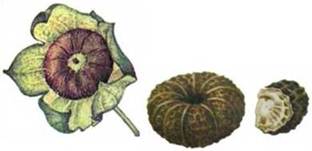
A schizocarp with an epicalyx consists of several or many mericarps arranged in a circle on the receptacle. It breaks apart into beak-bearing mericarps that subsequently dehisce (e.g., marsh-mallow, mallow).
A cenobium or four-nutlet fruit is formed by a bicarpellate, bilocular gynoecium that, as it matures, becomes divided by false partitions into four locules, each containing an eremus.
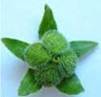
A sterigma is a split capsule with mericarps that detach from the receptacle and central column from the bottom up, bearing ribbon-like appendages.
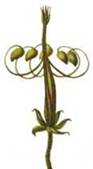
A diamericarp or schizocarp (cremocarp) typically splits along the commissure into two mericarps suspended from a carpophore—a bifid funiculus.
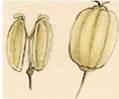
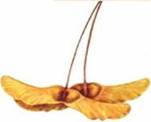
A samara or double-winged schizocarp features a thin, membranous or flattened outgrowth—a wing—at the apex of each mericarp (in maple) or surrounding it (in Dipteronia).
Dry, one-seeded, indehiscent coenocarps (pseudomonocarps)
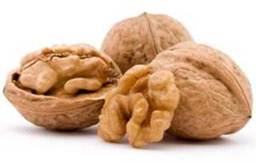
A nut develops from an inferior or superior ovary formed by several carpels containing a single ovule each. The pericarp is woody (as in hop, alder, hazel) or leathery (as in linden). Varieties of the nut include the drupaceous nut or pseudomonocarpic drupe (found in the walnut family).
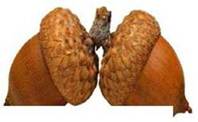
An acorn (in Fagaceae) develops from a trilocular inferior ovary, with a leathery or stony pericarp. The base of the fruit is surrounded by a cupule formed by fused, lignified pedicels, inflorescence axes, bracts, and bracteoles.

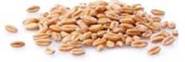
A caryopsis (in grasses) develops from a superior syncarpous ovary consisting of 2–3 carpels. On the ventral side of the grain, There is a hilum, which is the scar left by the seed attachment.
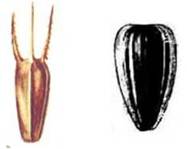
An achene develops from a superior or inferior ovary. The pericarp is leathery, more or less firm, and typically bears appendages: modified bracts (in Dipsacaceae), perianth segments (in Urticaceae, Moraceae, Cyperaceae), or sepals forming a leathery pappus (in dandelion, coltsfoot).
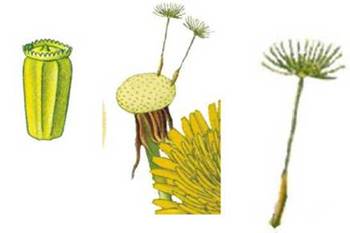
(Valerianaceae, Asteraceae). An achene of this type is called a cypsela.
Multiple fruit / Infructescence (infructescentia)
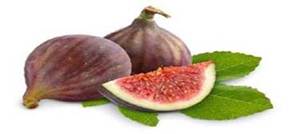
An infructescence is a cluster of mature fruits combined with enlarged stem structures of a dense inflorescence that is clearly distinct from the vegetative part of the shoot. Sometimes, primitive infructescences are considered to be clusters of free, more or less united or closely compressed fruits formed from a single compact inflorescence (mulberry, pineapple, fig, Maclura, breadfruit, alder, hop).
Last update: 07/08/2026
Editorial and Educational Adaptation: This material has been compiled based on the primary/original source text. The project team performed an editorial review, corrected technical inaccuracies, structured sections, and adapted the content for an educational format.
What was processed:
- elimination of formatting defects (OCR errors, structural breaks, corrupted characters);
- editorial organization of content;
- standardization of terminology in accordance with academic sources;
- verification of factual statements against the original source text.
All mentions of the author, publication year, and origin of the primary text have been preserved in accordance with the source.