LEHNINGER PRINCIPLES OF BIOCHEMISTRY - VOL. 1. THE FOUNDATIONS OF BIOCHEMISTRY: STRUCTURE AND CATALYSIS - 2011
1. FOUNDATIONS OF BIOCHEMISTRY
1.3. Physical Foundations of Biochemistry
To maintain life and reproduce, living organisms must perform certain types of work. Synthetic reactions occurring within Cells, much like manufacturing processes, require an input of energy. Energy is expended when a bacterium swims, when a sprinter runs in the Olympic Games, when fireflies emit light, or when an electric eel discharges electricity. The storage and transmission of information also demand energy; without it, information-rich macromolecules would inevitably lose their Structure and significance.
Over the course of evolution, cells have developed highly efficient mechanisms for harnessing energy from sunlight or fuel molecules to drive numerous energy-requiring processes. One of the central tasks of biochemistry is to describe the acquisition, Transduction, and utilization of energy by living cells in chemical and quantitative terms. Energy transformations within The Cell, like all other energy conversion processes, can be analyzed using the Laws of Thermodynamics.
Living organisms exist in a dynamic steady state, not at equilibrium with their surroundings
The molecules and ions present in living organisms differ in type and concentration from those in their surrounding environment. A paramecium in a pond, a shark in the ocean, a bacterium in the soil, and an apple tree in an orchard all differ in composition from the world around them. Furthermore, upon reaching maturity, they maintain their composition relatively constant despite continuously changing external conditions.
Although the characteristic composition of a living Organism changes very little over time, the population of molecules within it is by no means in a static state. Small molecules, macromolecules, and supramolecular structures are continuously synthesized and degraded through Chemical Reactions accompanied by a constant turnover of matter and energy within the system. The Hemoglobin molecules that are carrying oxygen from your Lungs to your Brain at this very moment were synthesized last month. By next month, they will be degraded and entirely replaced by new ones. The glucose your body obtained from its last meal is currently circulating in your bloodstream. By the end of the day, these glucose molecules will have been converted into something else, perhaps carbon dioxide or fat, and replaced by fresh glucose, so that its concentration in the Blood remains more or less constant throughout the day. The amounts of hemoglobin and glucose in the blood remain relatively constant because The rate of synthesis or uptake of each substance matches the rate of its breakdown, consumption, or conversion into other products. This constancy of concentration is the result of a dynamic steady state far from equilibrium. Maintaining this steady state requires an ongoing input of energy. If a cell can no longer produce energy, it dies and begins to degrade, ultimately reaching equilibrium with its environment. Below, we will discuss The concepts of "steady state" and "equilibrium" in greater detail.
Organisms transform energy and matter from their surroundings
A system in which a chemical reaction takes place in solution can be defined as the sum of all reacting substances, reaction products, and solvent, along with their immediate atmospheric surroundings—in short, everything contained within a defined region of space. The System and Its surroundings together constitute the universe. If a system exchanges neither matter nor energy with its surroundings, it is said to be isolated. If a system exchanges energy with its surroundings but not matter, it is called closed. If both energy and matter are exchanged, the system is termed open.
A living organism is an open system: it exchanges both energy and matter with its environment. Living organisms can acquire energy in two ways: 1) by extracting chemical fuel (such as glucose) from the environment and oxidizing it (see Box 1–3, Case 2); or 2) by absorbing sunlight.
The First Law of thermodynamics posits THE PRINCIPLE OF conservation of energy: in any physical or chemical change, the total amount of energy in the universe remains constant, although the form of the energy may change. Cells are remarkably adept at transforming chemical, electromagnetic, mechanical, and osmotic energy with very high efficiency (Fig. 1–24).
Class="center">Fig. 1–24. Some Pathways of Energy transformation in living organisms. Energy conversions during METABOLISM are accompanied by an increase in the randomness of the system and its surroundings, expressed in terms of Entropy, as the potential energy of complex nutrient molecules decreases. a) Living organisms acquire energy from their surroundings; b) convert a portion of that energy into forms required by the cell; c) return a portion of the energy to the environment as heat; d) excrete end products whose molecules are less organized than the initial fuel molecules, thereby increasing the entropy of the system. One outcome of these transformations is e) an increase in internal order (decreased randomness) within the system, associated with the synthesis of complex macromolecules. We will return to the quantitative Treatment of entropy in Chapter 13.

Box 1–3. Entropy: The Advantage of Being Disordered
The term "entropy," which literally means "transformation within," was first introduced in 1851 by Rudolf Clausius, one of the principal architects of The Second Law of thermodynamics. A precise quantitative definition of entropy requires the application of mathematical statistics and probability theory, but the qualitative essence of the concept can be understood through three simple Examples, each illustrating a different facet of entropy. Here, such fundamental Definitions of entropy as "randomness" and "disorder" manifest themselves in various ways.
Example 1: A Hot Teapot and Heat Dissipation
We know that steam generated by boiling Water can perform useful work. However, suppose we turn off the burner beneath a kettle of boiling water (at 100 °C)—which constitutes our "system"—in the kitchen (the "surroundings") and let the teapot cool down. As it cools, no visible work is performed, but heat flows from the hot teapot into the surroundings, raising the Temperature of the kitchen by an infinitesimally small amount until equilibrium is established. At equilibrium, the teapot (with its water), the air, and the objects in the kitchen all share the same temperature. The Free energy concentrated in the kettle of boiling water is potentially capable of doing work. Thermal energy equivalent to that free energy is still present in the hot water (teapot) and the kitchen (i.e., in the "universe"), but it is now in a completely dispersed state. This energy can no longer be used to perform work because the temperature throughout the kitchen is uniform. Moreover, the increase in the entropy of the surroundings (the kitchen) is irreversible. We all know from personal experience that heat never spontaneously flows back from the surrounding air into the teapot, and the temperature of the water in the kettle cannot spontaneously rise back to 100 °C (or even by a few degrees).
Example 2: The oxidation of Glucose
Entropy characterizes the state of matter as well as energy. Aerobic (heterotrophic) organisms utilize the Free energy of glucose obtained from their environment by oxidizing it with molecular oxygen, also taken from the environment. The End products of this oxidative metabolism, CO2 and H2O, are returned to the surroundings. As a result of this process, the entropy of the surroundings increases, while the organism itself maintains a steady state, with no change in its internal order. A certain increase in entropy is associated not only with heat release, but also with another type of disorder, as seen in the equation for the oxidation of glucose:

As a result of this oxidation reaction, the atoms that previously made up 1 molecule of glucose and 6 molecules of oxygen (a total of 7 molecules) become dispersed into a less ordered system, since the number of product molecules is now 12 (6CO2 + 6H2O).
In any chemical reaction that results in an increase in the number of molecules (or in The conversion of a solid into a liquid or gas, whose molecules move more freely), the molecular order decreases and, consequently, the entropy increases.
Example 3: Entropy and Information
The short excerpt from Brutus's soliloquy as the army of Mark Antony approaches (Julius Caesar, Act IV, Scene 3) shown below is a meaningful, information-rich sequence of words constructed from 25 letters of the English alphabet:
There is a tide in the affairs of men,
Which, taken at the flood, leads on to fortune:
Omitted, all the voyage of their life
Is bound in shallows and in miseries.*
*There is a tide and ebb in the affairs of men,
With the tide we achieve success.
When the ebb comes, the boat of life
Drifts along the shoals of misfortune.
(Translated by M. Zenkevich)
Beyond the literal meaning of the words, much remains hidden here—it points to the intricate web of events unfolding within the play, while also reflecting the author's views on the conflict itself, the characters' ambitions, and their drive for supremacy. This brief excerpt, imbued with Shakespeare's profound understanding of human nature, is remarkably rich in information.
However, if the 125 letters used in this fragment are rearranged in a random order, as shown in the box, they will become completely devoid of meaning.

In this case, 125 letters carry virtually no information, yet they are characterized by extremely high entropy. Such reasoning helps us understand that information is a form of energy, often referred to as “negative entropy.” Indeed, the branch of mathematics known as information theory, which underpins computer programming logic, is closely linked to thermodynamics. Living organisms are highly ordered structures, exceptionally rich in information, and consequently exhibit low entropy.
The flow of electrons provides the organism with energy
Virtually All living organisms directly or indirectly derive their energy from solar radiation, which is the result of thermonuclear reactions in the Sun. During Photosynthesis, the light-driven splitting of water releases electrons for the reduction of CO2 and liberates molecular oxygen into the atmosphere:
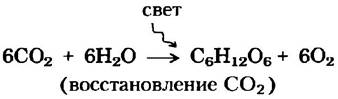
Non-photosynthetic cells and organisms obtain the energy they need by oxidizing energy-rich photosynthetic products and transferring electrons from these molecules to atmospheric oxygen, yielding water, CO2, and other end products, thereby driving their recycling in the environment:
С6Н12О6 + О2 —> 6СО2 + 6Н2О + energy
(oxidation of glucose with the release of energy)
Autotrophs and heterotrophs participate in global Carbon and Oxygen cycles ultimately driven by sunlight, making these two Major Groups of organisms mutually interdependent. Virtually all energy transformations within a cell can be traced through the flow of electrons from one molecule to another, moving from a higher to a lower Electrochemical Potential. In this respect, the process is formally analogous to the flow of electrons in a battery-powered electrical circuit. All electron-transfer reactions are oxidation-reduction (redox) reactions: one reactant is oxidized (loses electrons) while another is reduced (gains electrons).
Creating and maintaining order requires work and Energy Expenditure
As previously mentioned, DNA, RNA, and Proteins are informational macromolecules; The sequence of their constituent monomer units carries specific information—much like the sequence of words in a sentence. The cell expends energy not only to form covalent bonds between these polymer units, but also to arrange them in a strictly defined order. It is crucial that Amino Acids from a pool assemble in a specific sequence into a distinct protein molecule. This results in an increase in order within the population of molecules. However, in accordance with the second law of thermodynamics, nature tends toward increasing disorder: the total entropy of the Universe is constantly growing. Thus, for the synthesis of macromolecules from monomer building blocks to occur, the system (in this case, the cell) must receive free energy.
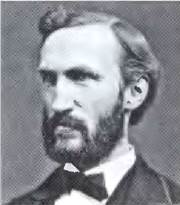
Key Conventions. To quantify the randomness or disorder among the components of a chemical system, the entropy parameter (S) is used (see Box 1–3). Any Changes in the system's randomness are expressed as changes in entropy (ΔS), which by convention are considered positive when entropy increases. J. Willard Gibbs, who developed The Theory of Energy Changes During chemical reactions, demonstrated that the free energy (Gibbs free energy, G) of any closed system can be described by three parameters: enthalpy (H), reflecting the number and type of bonds; entropy (S); and absolute temperature (T) expressed in kelvins. The free energy equation is as follows: G = H — TS. If a chemical reaction occurs at a constant temperature, The change in free energy (ΔG) is determined by the change in enthalpy (ΔH), which reflects the type and number of chemical bonds and noncovalent interactions formed and broken, as well as the change in entropy (ΔS), which reflects the alteration of randomness within the system:
ΔG = ΔН - TΔS
where ΔH is, by definition, negative for a heat-releasing (exothermic) reaction, and ΔS is positive for a reaction that increases the system's randomness. ■
J. Willard Gibbs, 1839–1903
A chemical reaction can occur spontaneously only if ∆G is negative (i.e., if free energy is released during the process). However, cellular function relies heavily on molecules such as proteins and Nucleic Acids, which are characterized by a positive Standard Free Energy of formation: they are less stable and far more ordered than a mixture of their monomeric building blocks.
To drive thermodynamically unfavorable (endergonic) reactions, the cell couples them with other reactions that release free energy (exergonic reactions), rendering the overall process energetically favorable with a net negative change in free energy. A common source of free energy in coupled biological reactions is the Hydrolysis of phosphoanhydride bonds, such as those found in adenosine triphosphate (ATP, Fig. 1-25) and guanosine triphosphate (GTP). Here, the symbol  designates phosphoryl groups:

Figure 1-25. The adenosine triphosphate (ATP) molecule as an energy source. Here, the symbol  denotes phosphoryl groups. Cleavage of the terminal phosphoanhydride bond, which removes the terminal phosphoryl group from ATP (highlighted in pink), yields adenosine diphosphate (ADP) and an inorganic phosphate ion (HPO2-4). This exergonic process is coupled to many endergonic processes within the cell (as shown in the example in Fig. 1-26, b). In addition, ATP serves as an energy source for numerous cellular processes through a cleavage reaction in which ATP loses two terminal phosphoryl groups, producing inorganic pyrophosphate (H2P2O2-7), commonly denoted as PPi.

When these two reactions are coupled, the sum of ∆G1 and ∆G2 is negative, meaning the overall process is exergonic. By employing this coupling strategy, cells synthesize and maintain the information-rich molecules essential for life.
Energy Coupling in Biological Reactions
In The Study of bioenergetics (the science of energy transformations in living systems), primary focus is given to coupled processes in which energy derived from the metabolism of fuel molecules or sunlight is harnessed to drive energy-requiring cellular reactions. To understand this, it is helpful to consider a simple mechanical analogue (Fig. 1-26, a). An object positioned at the top of an inclined plane possesses a certain amount of potential energy due to its elevation. As the object slides down the plane, it loses this potential energy. If this sliding object is connected via a pulley to a smaller object, the spontaneous downward motion of the larger object can pull the smaller one upward, thereby performing work. The amount of energy available to perform work is equal to the change in Gibbs free energy (∆G).
Figure 1-26. Energy coupling in mechanical and chemical processes, a) The downward movement of an object releases potential energy that can be used to perform mechanical work. The potential energy released by spontaneous downward movement (an exergonic process, shown in pink) can be used to lift another object (an endergonic process, shown in blue). b) The formation of glucose-6-phosphate from glucose and inorganic phosphate (Pi) in Reaction 1 yields a product richer in energy than the starting Materials. This endergonic reaction has ∆G >0. The exergonic hydrolysis of ATP (Reaction 2) is characterized by a large negative value of ∆G2. The overall reaction, obtained by combining Reactions 1 and 2, has a free energy change of ∆G3 = ∆G1 + ∆G2. Because ∆G3 <0, the net reaction is exergonic and can proceed spontaneously.
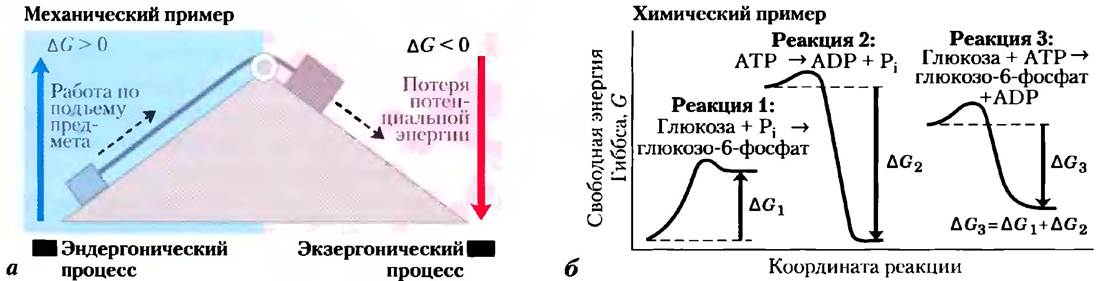
This value is always somewhat less than the theoretical amount of energy released because a fraction of it is dissipated as heat. The higher the larger object is elevated, the greater the energy (∆G) released as it slides downward, and the more work that can be performed using that energy. The larger object can lift the smaller one only because it was initially far from equilibrium: at some earlier point in time, it was raised above the ground through the expenditure of energy.
How do these principles apply to chemical reactions? In closed systems, chemical reactions proceed spontaneously until they reach equilibrium. At equilibrium, the rate of product formation exactly equals the rate of the reverse reaction converting products back into reactants. Consequently, there is no net change in the concentrations of reactants and products: a steady state is attained. The change in the system's energy from the initial state to equilibrium (at constant temperature and pressure) is determined by the change in free energy (∆G). The magnitude of ∆G depends on the specific chemical reaction and the distance of the initial system from equilibrium. Every substance participating in a reaction possesses a characteristic potential energy determined by the type and number of its chemical bonds. In spontaneous reactions, the energy of the products is lower than that of the reactants, resulting in the release of energy that can be harnessed to perform work. These are exergonic reactions, in which the difference in free energy between reactants and products is negative. Conversely, endergonic reactions require an input of energy, and their ∆G is positive. Much like in mechanical processes, only a fraction of The energy released in an exergonic chemical reaction can be harnessed to do work; in living systems, some of this energy is dissipated as heat or lost as entropy increases.
In living organisms, just as in the mechanical example of Figure 1-26a, an exergonic reaction can be coupled to an endergonic reaction to drive an otherwise energetically unfavorable process. Figure 1-26b uses energy diagrams to illustrate the conversion of glucose into glucose-6-phosphate, the initial step in the oxidative Catabolism of glucose. The simplest way to generate glucose-6-phosphate would be:
Reaction 1:
Glucose + Pi —> glucose-6-phosphate
(∆G >0, endergonic process).
Here, Pi denotes inorganic phosphate, HPO42-. We will defer a detailed Discussion of the structures of the compounds involved until later. This reaction cannot occur spontaneously because ∆G >0. By contrast, the second reaction is exergonic and proceeds readily in all cells:
Reaction 2:
ATP —> ADP + Pi
(∆G <0, exergonic process).
Both reactions involve Pi, which is consumed in the first reaction and produced In the second. Consequently, these two reactions can be combined into a single net equation (canceling Pi from both sides):
Reaction 3:
Glucose + ATP —> glucose-6-phosphate + ADP.
Reaction 2 releases more energy than is consumed in reaction 1; therefore, the change in free energy for reaction 3 (∆G3) is negative, meaning that the Synthesis of glucose-6-phosphate via this pathway is thermodynamically favorable.
The coupling of exergonic and endergonic reactions that share common intermediates is a fundamental principle of Energy Metabolism in living organisms. As we will see, reactions driven by ATP breakdown (such as reaction 2 in Fig. 1-26b) release energy that makes many otherwise unfavorable cellular endergonic processes possible. ATP cleavage in the cell is an exergonic process because in all living cells, the concentration of ATP exceeds its equilibrium concentration. It is precisely this departure from equilibrium that makes ATP the primary source of chemical energy within the cell.
Keq and ∆G° indicate whether a reaction can occur spontaneously
The tendency of a reaction to proceed to completion can be expressed in terms of its Equilibrium Constant. For a reaction in which $a$ moles of substance A react with $b$ moles of substance B to yield $c$ moles of substance C and $d$ moles of substance D
a A + bB —> cC + dD
the equilibrium constant Keq (or simply K) is defined by the equation

where [Aeq] is the concentration of A, [Beq] is the concentration of B, and so forth, at equilibrium. A high value of K indicates that the reaction proceeds until the reactants are converted almost entirely into products.
Gibbs demonstrated that the free-energy change (∆G) of any chemical reaction is a function of the standard free-energy change (∆G°), which is a characteristic parameter for a given reaction, as well as the concentrations of reactants and products:

where [Ainit] is the initial concentration of A, and so forth, R is the universal gas constant, and T is the absolute temperature.
∆G is a measure of how far a system is from equilibrium. When equilibrium is reached, no further work can be performed: ∆G = 0. In this case, [Ainit] = [Aeq] and so on for all reactants and products, such that
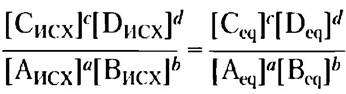
Substituting ∆G = 0 and K = [Cinit]c[Dinit]d / [Ainit]a[Binit]b into Equation 1-1 yields the relationship
∆G° = - RT lnKeq
which shows that ∆G° provides another way (along with Keq) of expressing the driving force of a reaction. Because Keq can be measured experimentally,
we can calculate ∆G°, a thermodynamic parameter that characterizes the reaction.
The units of ∆G and ∆G° are J/mol or cal/mol. When Keq >> 1, ∆G° is a large negative number; when Keq << 1, ∆G° is a large positive number. Tables of experimental values for Keq or ∆G° make it easy to determine which reactions will proceed to completion and which will not.
One important caveat regarding the interpretation of ∆G° must be emphasized: thermodynamic constants of this type indicate where the ultimate equilibrium lies for a given reaction, but they tell us nothing about how rapidly that equilibrium is established. Reaction rates are governed by the laws of kinetics, which we will discuss in Chapter 6.
Enzymes accelerate chemical reactions
All biological macromolecules are much less stable thermodynamically than their monomeric subunits, yet they are kinetically very stable: in the absence of catalysts, their degradation is extremely slow (taking years), making them stable on the time scale of living organisms. Virtually all chemical reactions in the cell proceed at significant rates only because of the presence of enzymes—biological catalysts that, like all catalysts, dramatically enhance the rates of specific chemical reactions without being consumed in the process.
The pathway from reactant(s) to product(s) almost inevitably involves passing through an energy barrier known as the activation barrier (Fig. 1-27). A reaction can take place only if this barrier is overcome. Breaking existing bonds and forming new ones generally requires the distortion of bonds, leading to a Transition State that has a higher free energy than either the reactants or the products. The transition state represents the peak of the energy profile, and the energy difference between the reactant in its ground state and the transition state is termed the activation energy, ∆G*. An enzyme catalyzes a reaction by providing a favorable environment for reaching the transition state, being structurally complementary to the transition state in terms of stereochemistry, polarity, and charge. The binding of the enzyme to the transition-state species is an exergonic process; the energy released by this binding lowers the activation energy of the reaction and enormously accelerates the rate of the process.
Figure 1-27. Energy changes during a chemical reaction. The activation barrier (representing the transition state, see Chapter 6) for the conversion of reactant A into product B must be overcome, even though the products are more stable than the reactants (large negative ∆G). The energy required to surmount this activation barrier is called the activation energy (∆G*). Enzymes catalyze reactions by lowering this activation barrier. They bind to molecules in the transition state, and this binding energy reduces the activation energy from ∆G*uncat (blue curve) to ∆G*cat (red curve). (Note that activation energy is independent of the overall free-energy change, ∆G.)
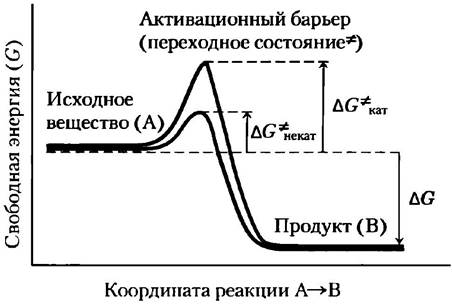
Another major advantage of Enzymatic Catalysis is The ability to bring two or more reactants into close proximity on the enzyme surface in a stereospecific orientation highly favorable for reaction. This increases the probability of productive collisions among the reactants by many orders of magnitude. As a result of these and other factors discussed in Chapter 6, enzyme-catalyzed reaction rates are typically about 1012 times greater than those of uncatalyzed reactions. (That is a million million times faster!)
Biological catalysts are, with rare exceptions, proteins (though RNA molecules can sometimes perform catalytic Functions, see Chapters 26 and 27). Again with few exceptions, each enzyme catalyzes a specific reaction, and each reaction in the cell is catalyzed by a specific enzyme. Naturally, every cell requires thousands of different enzymes. The Diversity of enzymes, their Specificity (the ability to distinguish between reactants), and their capacity for regulation enable the cell to selectively lower activation barriers. This selectivity is crucial for the efficient Regulation of cellular processes. By allowing certain reactions to proceed at significant rates during specific periods, enzymes regulate the flow of matter and energy in cellular pathways.
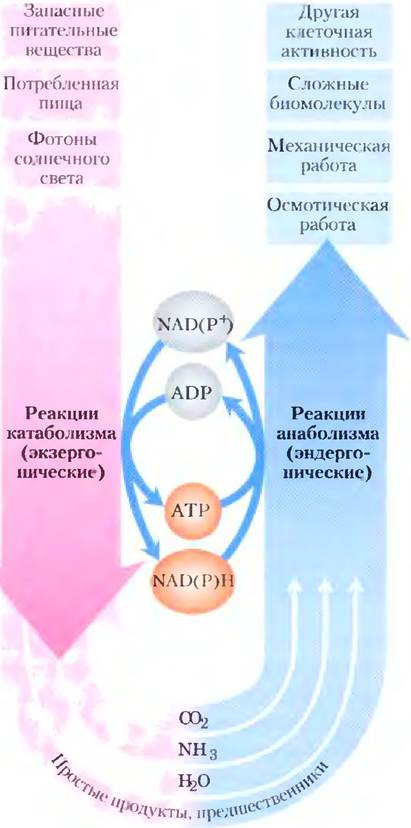
Thousands of enzymatic chemical reactions within a cell are organized into numerous sequences called metabolic pathways, in which the product of one reaction serves as the Starting Material for the next. Some metabolic pathways break down organic molecules into simple end products, channeling the released chemical energy toward the cell's needs. Collectively, all degradation reactions that release free energy are termed catabolism. The energy liberated during catabolic reactions is harnessed to synthesize ATP. As a result, the intracellular concentration of ATP significantly exceeds its equilibrium concentration, making ∆G for ATP hydrolysis a large negative value. Similarly, metabolism generates reduced electron carriers—NADH and NADPH—both of which can donate electrons in processes that generate ATP or drive the reductive steps of biosynthetic reactions.
Other metabolic pathways start from small precursor molecules and convert them into increasingly larger and more complex molecules, including proteins and nucleic acids. Such synthetic reactions, which inevitably require an input of energy, are collectively called anabolism. The overall network of enzymatic reactions constitutes the cell's metabolism. ATP, along with its energy equivalents cytidine triphosphate (CTP), uridine triphosphate (UTP), and guanosine triphosphate (GTP), serves as the connecting link between the Catabolic and anabolic components of this network (see the scheme in Fig. 1-28). The metabolic pathways involving the major cellular components—proteins, Lipids, CARBOHYDRATES, and nucleic acids—are virtually identical across all living organisms.
Fig. 1-28. The Role of ATP in metabolism. ATP acts as an intermediate in many energy-consuming and energy-yielding processes. Its significance to the cell is comparable to that of money in an economy: it is "earned/produced" in exergonic reactions and "spent/consumed" in endergonic reactions. Nicotinamide adenine dinucleotide (phosphate), NAD(P)H, is an electron carrier that accepts electrons released in oxidation reactions and subsequently donates them to various reductive biosynthetic pathways. Within the cell, this essential anabolic cofactor is present in relatively low concentrations and must therefore be continually regenerated through catabolic processes.
Balanced and efficient cellular function is achieved through the REGULATION OF METABOLISM
Living cells not only constantly synthesize thousands of Different types of carbohydrates, proteins, lipids, nucleic acids, and their monomers, but they produce them in precisely the amounts required under specific conditions. For example, rapid growth demands a large supply of PROTEIN AND NUCLEIC acid precursors, whereas a non-growing state requires far fewer. Key Enzymes across all Metabolic pathways are regulated to ensure that each type of precursor molecule is synthesized in the exact quantity needed at any given moment.
Consider the metabolic pathway for the Synthesis of the amino acid isoleucine in E. coli cells. This pathway consists of five steps catalyzed by five different enzymes (intermediates are designated by the letters A through F):

If a cell begins producing more isoleucine than is required for Protein Synthesis, the excess molecules accumulate and inhibit the catalytic activity of the first enzyme in the pathway, immediately reducing the rate of isoleucine synthesis. This type of feedback regulation maintains a balance between the formation and consumption of metabolites. (Throughout this book, the symbol  denotes the inhibition of an enzymatic reaction.)
THE CONCEPT OF discrete metabolic pathways is essential for understanding metabolism, yet it greatly simplifies reality. A cell contains thousands of metabolites, many of which participate in multiple pathways. Metabolism is more accurately viewed as a dense web of interconnected and interdependent pathways. A shift in the concentration of even a single metabolite can ripple through other pathways and trigger a metabolic rerouting. While it might seem impossible to fully comprehend and quantitatively describe such a complex web of interactions, emerging approaches (Chapter 15) are already making vital contributions to our understanding of global Metabolic Regulation. Furthermore, cells regulate the synthesis of their own catalysts—enzymes—in response to rising or falling demands for specific metabolic products, a topic explored in Chapter 28. Gene Expression (translating the information encoded in DNA into cellular proteins) and enzyme synthesis provide additional layers of Metabolic control that must be factored into any Description of the cell's complete regulatory system.
Summary of Section 1.3 Physical Basis of Biochemistry
■ Living cells are open systems that exchange matter and energy with their surroundings, utilizing this energy to maintain a dynamic steady state far from equilibrium with their environment. Cells extract energy from sunlight or fuel molecules, channeling it from electron flows into the chemical bonds of ATP molecules.
■ The tendency of a chemical reaction to proceed toward equilibrium can be expressed by the change in Gibbs free energy (∆G), which has two components: the change in enthalpy (∆H) and the change in entropy (∆S). These variables are related by the equation: ∆G = ∆H — T∆S.
■ If the ∆G of a reaction is negative, the reaction is exergonic and proceeds spontaneously toward products; if ∆G is positive, the reaction is endergonic and proceeds in the reverse direction. The overall ∆G of a coupled process is the sum of the ∆G values of the individual reactions.
■ The conversion of ATP to Pi and ADP, or to PPi and AMP, is an exergonic process (characterized by a large negative ∆G), allowing many endergonic reactions to proceed by being coupled to this highly exergonic process.
■ The standard free-energy change of a reaction (∆G°) is a thermodynamic parameter related to the equilibrium constant: ∆G° = -RTlnKeq.
■ Most exergonic reactions in the cell proceed at significant rates only because of enzyme catalysis. Enzymes stabilize the transition state, lower the activation energy ∆G‡, and thereby accelerate reaction rates by many orders of magnitude. The catalytic activity of enzymes within the cell is tightly regulated.
■ Metabolism comprises a vast network of interconnected Reactions Involving the sequential transformation of cellular metabolites. Each reaction sequence is regulated to provide the cell with everything it needs at any given moment while expending the minimum amount of energy.
Last update: 06/08/2026
Editorial and Educational Adaptation: This material has been compiled based on the primary/original source text. The project team performed an editorial review, corrected technical inaccuracies, structured sections, and adapted the content for an educational format.
What was processed:
- elimination of formatting defects (OCR errors, structural breaks, corrupted characters);
- editorial organization of content;
- standardization of terminology in accordance with academic sources;
- verification of factual statements against the original source text.
All mentions of the author, publication year, and origin of the primary text have been preserved in accordance with the source.