Biochemistry - Chemical Reactions in Living Cells, Volume 1 - D. Metzler 1980
Bioenergetics of Biochemical Reactions
Tables of ∆G0 Values for Biochemical Compounds
Standard Free Energy of Combustion in the Presence of O2 and NAD+
Due to the exceptional importance of oxidation processes in the METABOLISM of aerobic organisms, it is often very useful to know the standard Free energy of combustion for a given compound. These data can be readily derived from the free energy of formation. For example, ∆Gc of acetate (aq) can be determined as follows:
Class="center">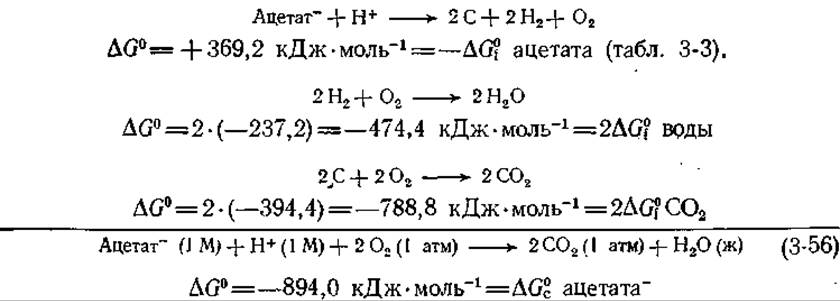
Table 3-3 lists The values of ∆G2 alongside the values of ∆G0.
A great many cellular oxidation processes involve the specialized oxidizing agent nicotinamide adenine dinucleotide (NAD+) or its relative NADP+ (Chapter 8). Therefore, it is convenient to have tabulated values of ∆G0 for the Complete oxidation of compounds to CO2 driven by NAD+ rather than O21. These values, designated as ∆G0ox and ∆G'ox(pH 7), are also presented in Table 3-3. Note that these values are relatively small and, consequently, NAD+-linked oxidations yield little energy for The Cell. Consider, for instance, the following reaction:

1 A similar approach was used by Decker et al. [22].
When the NADH generated from the reduction of NAD+ is subsequently reoxidized in Mitochondria [Eq. (3-58)], the cell captures a large amount of energy:

Equations (3-57) and (3-58) sum to the overall combustion of acetate in O2, and the sum of the two ∆G values equals ∆Gc of acetate-.

The values of ∆Gox (Table 3-3) not only provide an immediate measure of the relative energy released during substrate oxidations involving NAD+, but they are also exceptionally convenient for estimating the ∆G of Fermentation reactions. Consider, for example, The conversion of glucose to ethanol:

The standard free energy change ∆G' (pH 7) for the fermentation of glucose to ethanol and CO2 can be obtained directly from Table 3-3:
∆G'(pH7) =—243,8—2∙(—4,6) = —234,6 кДж∙моль-1 (3-61)
(the ∆Gox values for H2O, CO2, and H+ are defined as zero). The same calculation can be performed using ∆G0c values (which is cumbersome because the numbers are excessively large) or ∆G0f values. The latter are likewise quite large, and furthermore require incorporating data for CO2 and Water into the calculations. Table 3-3 can be used to determine ∆G0 values for many of the metabolic reactions discussed later. Data from any Column of the table are suitable for this purpose, but for simplicity, it is best to use the ∆G'ox values.
Note, however, that for oxidations driven by oxygen or any oxidant other than NAD+ (and not included in Table 3-3), the ∆Gox values cannot be used directly. In such cases, the Procedure is as follows: first, one calculates ∆G0 or ∆G' for the reaction under consideration assuming NAD+ is the oxidant, and then adds the free energy of oxidation of the resulting NADH by oxygen (or another oxidant). Such values for O2 are listed in Table 3-7; based on these data, one can also estimate the corresponding values for A number of other oxidants, such as Fe3+ and cytochrome c.
Last update: 06/08/2026
Editorial and Educational Adaptation: This material has been compiled based on the primary/original source text. The project team performed an editorial review, corrected technical inaccuracies, structured sections, and adapted the content for an educational format.
What was processed:
- elimination of formatting defects (OCR errors, structural breaks, corrupted characters);
- editorial organization of content;
- standardization of terminology in accordance with academic sources;
- verification of factual statements against the original source text.
All mentions of the author, publication year, and origin of the primary text have been preserved in accordance with the source.