Biochemistry and Molecular Biology - Belyasova N.A. 2002
Metabolism. Energy-Requiring Processes
Biological Role and Biosynthesis of Vitamins
Water-Soluble Vitamins
Water-soluble Vitamins can be classified according to their Molecular Structure and the Functions they perform in the Organism (Fig. 17.5). Coenzyme vitamins act as enzyme Cofactors, whereas non-coenzyme vitamins perform other, rather diverse functions.
Class="center">
Fig. 17.5. Classification of water-soluble vitamins. The diagram shows true vitamins and Vitamin-like substances.
Vitamin B1 (thiamine). This vitamin was the first to be isolated in pure form (by the Polish scientist K. Funk in 1912). The thiamine molecule consists of pyrimidine (P) and thiazole (T) rings linked by a methylene group (Fig. 17.6). The active form of the vitamin is Thiamine diphosphate (Fig. 17.6), which functions as a prosthetic group for keto acid Decarboxylases. Thiamine diphosphate (cocarboxylase) is involved in such vital processes as The oxidative decarboxylation of Pyruvate (Chapter 11), transketolase Reactions of the Pentose Phosphate Pathway and The Calvin Cycle, as well as the Cleavage of a-hydroxyketones and a-diketones. The primary catalytic center of the enzyme is the 2nd carbon atom of the thiazole ring (Fig. 17.6). Vitamin B1 also exhibits non-coenzyme functions, including Participation in the active transfer of energy-rich phosphate groups, involvement in redox reactions, and the conduction of nerve impulses.
Thiamine is synthesized by plants, Yeast, and many Bacteria, including those inhabiting the intestines of humans and animals (E. coli, Proteus vulgaris, Bacillus mesentericus, Alcaligenes faecalis). Consequently, B1-avitaminosis is rare in adults. However, during certain periods of life, the requirement for thiamine can increase severalfold, such as in pregnant and lactating women. This vitamin is found in cereal grains, legumes, yeast products, and lean pork.

Fig. 17.6. Structure of vitamins B1, B6, B9 and their coenzyme forms. The Role of Pyridoxal phosphate in Transamination reactions.
The daily requirement of an adult for thiamine is 1.5 mg. Its deficiency leads to cardiovascular diseases, muscular atrophy, and beriberi, which is accompanied by Nervous system disorders.
Thiamine is used in medicine, added to enrich beverages and certain types of bread, and utilized in the pharmaceutical industry. It is also added to animal feed.
Vitamin B2 (riboflavin). It is a heterocyclic compound of flavin nature (Fig. 7.4) containing a functionally active isoalloxazine system. Riboflavin serves as a structural element of such prosthetic groups as FAD and FMN, the functions of which are described in Chapter 7.
The daily requirement for riboflavin is 1.8 mg. Riboflavin is abundant in milk, eggs, animal Liver and Kidneys, vegetables, and yeast. The body also obtains this vitamin through The activity of the intestinal microflora. B2 deficiency manifests as Skin diseases (cracks at the corners of the Mouth), growth retardation, inflammation of mucous membranes including the corneal epithelium (leading to impaired Vision), chronic fatigue, and Disorders of the hematopoietic and nervous systems.
In nature, riboflavin is synthesized by plants, filamentous Fungi, Yeasts, and bacteria. The pathways of riboflavin Biosynthesis have been well studied in the bacterium Salmonella typhimurium, yeasts of the genus Saccharomyces, and fungi of the genus Eremothecium, and they share many common features. In yeasts, GTP serves as the precursor for riboflavin synthesis. The First stage involves the opening of the imidazole ring within the guanine residue and the Cleavage of the 8th carbon atom, which is released as formate (Fig. 17.7). This is followed by the successive cleavage of pyrophosphate, an intramolecular rearrangement (Amadori rearrangement), reduction, removal of the amino group (replaced by a keto group), and cleavage of orthophosphate. This forms 3,4-dihydroxy-2-butanone 4-phosphate precursor and 5-amino-6-(D-ribitylamino)uracil (DARPP), to which eight carbon atoms required for the construction of the benzene ring are attached. It is hypothesized that the source of these carbon atoms is pyruvate, which is converted into acetoin or diacetyl. The addition of carbon atoms occurs in two stages: in the first stage, the addition of four carbon atoms leads to The formation of dimethylribityllumazine, one of the molecules of which serves as a donor of another 4 carbon atoms In the second stage (Fig. 17.7).
Flavin cofactors (FAD, FMN) are synthesized in yeast and bacterial Cells with the participation of ATP:
Riboflavin + ATP → FMN + ADP
FMN + ATP → FAD + PPi
Riboflavin, along with its derivatives (FAD, FMN), finds application in medicine; vitamin B2 is used to enrich certain types of bread and to impart an orange-yellow color to food products. The presence of riboflavin in animal feed is critically important.

Fig. 17.7. Riboflavin biosynthesis
Vitamin B3 (pantothenic acid). This compound consists of a pantoic acid residue (a,y-dihydroxy-β,β-dimethylbutyrate) and ß-Alanine (Fig. 7.8). Pantothenic acid is an essential component of CoA—a cofactor of paramount importance to The Cell—and is also part of the prosthetic group of the acyl carrier protein (Chapter 15). Thus, without vitamin B3, the synthesis of these cofactors cannot proceed, leading to a disruption in fatty acid METABOLISM, carbohydrate interconversion, the TCA cycle, and other processes. Consequently, pantothenic acid is present in the cells of all organisms, from bacteria to higher animals; however, animals cannot synthesize it themselves and must obtain it from their diet. The highest concentrations of pantothenic acid are found in the liver, Heart, and kidneys of animals, as well as in yeast, egg yolk, peas, and milk. Commensal Escherichia coli bacteria residing in the intestine supply vitamin B3 to their hosts. Therefore, B3 deficiencies are very rare, yet associated with severe disorders, including skin and mucosal lesions, degenerative changes in Organs and Tissues, Hair loss, and others. The daily requirement for this vitamin is 7 mg.
Vitamin B5 (nicotinic acid, nicotinamide, Vitamin PP). This vitamin is essential for the synthesis of two Coenzymes—NAD and NADP. The structure of nicotinamide is shown in Fig. 7.1 (as part of NAD). In the nicotinic acid molecule, which, like nicotinamide, can be utilized for the synthesis of nicotinamide coenzymes, the amino group in the radical is replaced by a hydroxyl group. Small amounts of nicotinic acid can be synthesized from Tryptophan; however, this pathway has a low yield and additionally requires another vitamin, B6. Therefore, B5 deficiencies are typically associated with a shortage of tryptophan and vitamin B6, manifesting as skin disease (pellagra), gastrointestinal inflammation, and depression.
The Biological Significance of vitamin B5 for the organism stems from the cellular role of nicotinamide Carriers of Reducing equivalents (Chapter 7). The daily requirement is 20 mg or 1.2 g of tryptophan. Yeast-based products, meat, fruits, and vegetables are rich in this vitamin.
Vitamin B6 (pyridoxine). Strictly speaking, vitamin B6 encompasses three pyridine derivatives: pyridoxal, pyridoxine, and pyridoxamine (Fig. 17.6). Each of these compounds can be converted within cells into the active form—pyridoxal phosphate—which serves as the prosthetic group for over 50 Enzymes involved in amino acid Synthesis and degradation, carbohydrate phosphorylation, and Fatty acid and Lipid Metabolism. One of the most critical functions of pyridoxal phosphate is The transfer of an amino group from an amino acid to a keto acid during transamination reactions, as described in Chapter 16. In this process, pyridoxal phosphate is converted into pyridoxamine phosphate (Fig. 17.6).
Vitamin B6 enters the body from the intestine thanks to the activity of the intestinal microflora, and it is also found in numerous foods, primarily beef, fish, peas, vegetables, egg yolk, green plant tissues, and grain-Processing products. B6 deficiencies are rare. Their symptoms include anemia, dermatitis, convulsions, and growth retardation in young individuals. The daily requirement for the vitamin is 2 mg.
Vitamin B9 (folic acid). Several forms of pteroylglutamic acid, differing in the number of glutamate residues (from 1 to 6), are known under this name. Fig. 17.6 illustrates the STRUCTURE OF THE pteroylmonoglutamic acid molecule, which consists of three structural components: a pteridine residue, a Para-aminobenzoic Acid residue, and a single glutamic acid residue. In its reduced form (tetrahydrofolic acid), this compound functions as a coenzyme, mediating the transfer of single-carbon units. Such reactions occur during The biosynthesis of Methionine and thymine (Methyl group transfer), Serine biosynthesis (hydroxymethyl group transfer), purine and formylmethionine-tRNA synthesis (formyl group transfer), and others. The attachment of these fragments occurs at the nitrogen atom located at position 5 and/or 10 (Fig. 17.6).
Folic acid is not synthesized in animal and human cells, but is obtained through the diet and absorbed from the intestine, where it is also produced by microorganisms. Microorganisms do not utilize preformed vitamin B9, but synthesize it de novo; the incorporation of para-aminobenzoic acid into folic acid is blocked in the presence of sulfonamides, which forms The basis of their therapeutic action. Para-aminobenzoic acid is referred to as vitamin Bx (H1).
Vitamin B9 deficiencies are associated with impaired hematopoietic function and manifest as anemia and multiple gastrointestinal disorders. The daily requirement for this vitamin is 0.2 mg. Folic acid is abundant in fresh green vegetables, particularly spinach and cauliflower, animal liver, and grains.
Vitamin B12 (cobalamins). The cobalamin group comprises complex compounds consisting of the following parts: a planar base formed by a corrin tetrapyrrole ring stabilized by a cobalt atom; two ligands—upper (X) and lower; and an aminopropanol bridge (Fig. 17.8). In turn, the upper Ligand in vitamin B12 can be a cyanide ion, a hydroxyl group, nitrite, nitrate, or chloride ions, etc. The lower ligand is a nucleotide core composed of a phosphoribose residue and 5,6-dimethylbenzimidazole. The nucleotide core is linked via an aminopropanol bridge into a cycle with a carbon substituent of one of the pyrrole rings.
In the Human and Animal body, cobalamins are converted into the coenzyme B12-cobamamide (adenosylcobalamin), in which the upper ligand is a deoxyadenosine residue linked to the cobalt atom by an unusual cobalt-carbon bond. The biochemical functions of adenosylcobalamin include the isomerization of compounds involved in carbohydrate, nitrogen, nucleic, and lipid metabolism, the biosynthesis of methionine from homocysteine (in which vitamin B9 also participates), the reduction of ribonucleotides to deoxyribonucleotides (in bacteria), and other processes.
Vitamin B12 is synthesized exclusively by microorganisms, including those inhabiting the gastrointestinal tract of humans and animals. However, the absorption of this vitamin by the gastric and intestinal mucosa requires a specific protein—the so-called "intrinsic factor." Thus, vitamin B12 deficiencies can develop not only from a dietary lack of the vitamin, but primarily due to the absence of the intrinsic factor. The resulting deficiency leads to pernicious anemia (from Latin perniciosus meaning destructive).
Sources of vitamin B12 include animal products such as meat, liver, eggs, and milk, as well as legumes, where it is produced by nodule bacteria. Small amounts of this vitamin can be stored in the liver of humans and animals. The daily requirement is 0.002 mg.
The industrial production of vitamin B12 and adenosylcobalamin is based on microbial synthesis. The producers of the vitamin include bacteria of the following genera: Pseudomonas, Propionibacterium, Streptomyces, Rhodopseudomonas, Bacillus, Achromobacter, Aerobacter, Agrobacterium, Rhizobium, Flavobacterium, Nocardia, as well as methanogenic bacteria. This vitamin is critically important for livestock farming and finds widespread application in medicine.
The biosynthesis of each component part of adenosylcobalamin proceeds independently. The precursors for the biosynthesis of the corrin macrocycle are Glycine and succinyl-CoA, which interact to form 5-aminolevulinic acid (Fig. 17.8). Two molecules of aminolevulinic acid undergo multi-step dimerization to porphobilinogen. Four molecules of porphobilinogen condense stepwise to form uroporphyrinogen. This compound is also a precursor of heme and chlorophyll; at the stage of its structural rearrangements, the biosynthetic pathways of these named compounds diverge.
During cobalamin synthesis, uroporphyrinogen undergoes sequential methylation, reduction, decarboxylation, and other transformations indicated in Fig. 17.8. This results in the Formation of the simplest corrinoid compound lacking a nucleotide—cobyrinic acid, which is subsequently amidated in several steps to cobinamide.
The source of the upper ligand in cobinamides—adenosyl—is ATP, and the formation of the adenosyl derivative of cobinamide occurs via the direct interaction of the cobalt atom bound to the corrin ring with ATP.
Aminopropanol, which acts as a bridge between the nucleotide core and one of the substituents on the corrin ring, is formed by the decarboxylation of L-Threonine. The nucleotide core is synthesized from riboflavin, wherein the ribityl residue of riboflavin is not incorporated into the core, while the $\alpha$-ribose it contains originates from nicotinamide mononucleotide. ATP and GTP participate in the attachment of the nucleotide core to the corrinoid molecule.

Fig. 17.8. Structure and Biosynthesis of vitamin B12. Designations: A — -CH2COOH; P — -CH2-CH2-COOH; R — -CH3; Y — -H2CONH2; X — upper ligand
Vitamin C (ascorbic acid). Virtually everyone is familiar with this vitamin due to its versatile functions in the body, including therapeutic and prophylactic effects against colds, as well as potent antioxidant properties.
Ascorbic acid is the $\gamma$-lactone of 2,3-dehydrogulonic acid. This compound contains a "reductone" moiety (Fig. 17.9) that is readily oxidized to form dehydro-L-ascorbic acid. Both hydroxyl groups of ascorbic acid are acidic in nature, and upon proton loss, a third active form of vitamin C—the ascorbate anion—can be formed. L-Ascorbic acid is the most powerful reducing agent in living organisms, and this crucial property underlies its physiological activity: it participates in numerous redox processes, while the resulting dehydroascorbic acid is easily reduced by reductase. Among the many biochemical reactions involving vitamin C are Collagen synthesis, the degradation of Tyrosine and Lysine, Bile acid synthesis, lipid metabolism, and the hydroxylation of precursors of certain Hormones, etc. Ascorbic acid has also been shown to protect protein SH-groups from oxidation, which, among other things, helps stabilize enzymatic activity. Ascorbic acid serves as a potent antioxidant protecting biologically active cellular substances from radical attack. Finally, vitamin C participates in maintaining high intracellular concentrations of cAMP—an important regulatory substance that exerts, for example, an inhibitory effect on Cancer tumor development.
Vitamin C Deficiency manifests as scurvy (scorbutus), which gave the vitamin its name. The disease is characterized by increased permeability and fragility of Blood Vessels, resulting in spontaneous hemorrhages, as well as the destruction of Bone tissue (tooth loss). Connective Tissue atrophy and hematopoietic disorders also occur. The daily requirement for vitamin C is 60 mg (quite high for a vitamin). Large amounts of ascorbic acid are found in fresh vegetables and fruits, with rose hips, sweet red peppers, lemons, black currants, and cabbage being particularly rich sources.
Vitamin C is synthesized by all plants and the majority of animals, with the exception of invertebrates, insects, fish, certain birds, guinea pigs, many primates, and humans. These organisms lack the enzyme gulonolactone oxidase, which catalyzes one of the steps in The conversion of glucose to ascorbic acid (Fig. 17.9).
Among microorganisms, only a few species are capable of synthesizing ascorbic acid from glucose. These primarily include the yeast Lipomyces starkeyi, the mold Aspergillus niger, certain species of the genus Fusarium, and the bacterium Streptococcus thermophilus. Large-scale production of ascorbic acid relies on chemical synthesis, in which a single step (The oxidation of D-sorbitol to L-sorbose) is carried out by acetic acid bacteria.
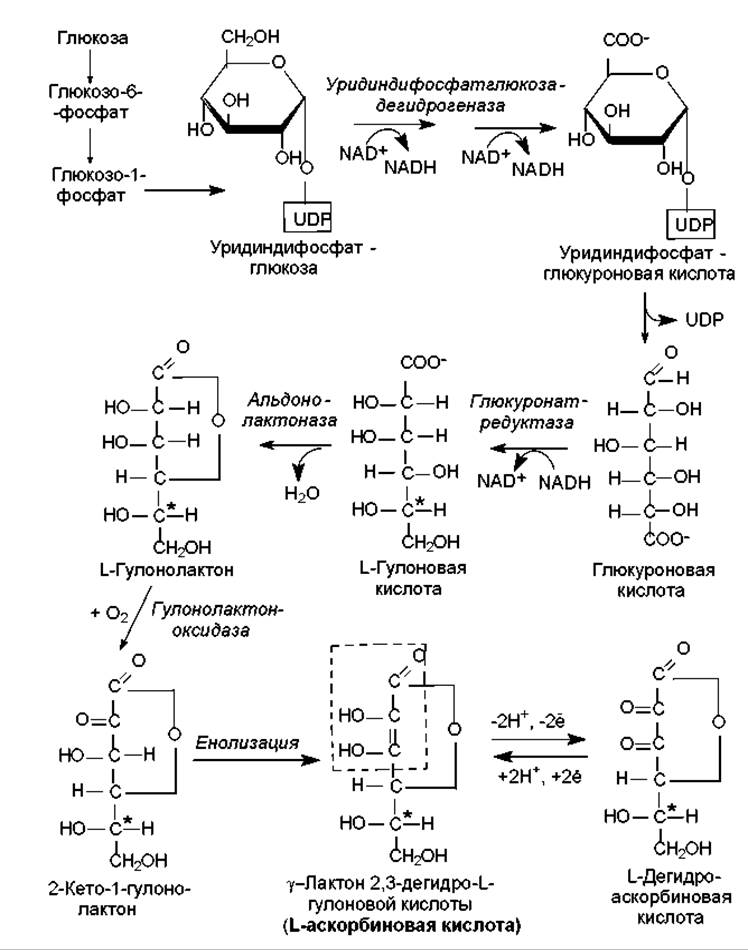
Fig. 17.9. Biosynthesis of ascorbic acid from glucose. The structural formulas of the compounds involved in the first three reactions and the reactions themselves are shown in Fig. 14.3. The dashed box in the ascorbic acid molecule encloses the "reductone" moiety
Vitamin H (biotin). The STRUCTURE AND FUNCTIONS of this vitamin as part of the $N_5$-carboxybiotin cofactor are described in Chapter 7 (Fig. 7.7). Biotin participates in carboxyl group transfer reactions that underlie FATTY ACID BIOSYNTHESIS (Fig. 15.2), purine base synthesis, the conversion of pyruvate to oxaloacetate, Amino acid synthesis, and other processes. A deficiency of vitamin H in the body leads to skin depigmentation, neurological disorders, dermatitis, and seborrhea (excessive sebum secretion by the Sebaceous Glands).
Vitamin H deficiencies are rare because biotin is synthesized by the intestinal microflora and is present in many foods: egg yolk, beef liver and kidneys (into which biotin is introduced mainly through the activity of symbiotic microorganisms), yeast products, legumes, nuts, milk, oatmeal, tomatoes, soybeans, etc. The human daily requirement for biotin is 0.1 mg.
Concluding this far from exhaustive Overview of vitamin properties, it should be added that most of these compounds are unstable and degrade under The Influence of certain factors. For instance, vitamins E, K, B2, B6, and B12 lose activity and are destroyed by light; vitamins K, B1, and C degrade rapidly in alkaline solutions; vitamins K, B2, and C are particularly sensitive to heat; and vitamins D and H are easily cleaved by the action of oxidizing agents and mineral acids. Furthermore, nature contains A large number of antivitamins—substances that compete with vitamins in corresponding biochemical processes or inactivate them. Such action is exhibited by the aforementioned sulfa drugs, which block folic acid formation; egg albumin acts as an antivitamin relative to biotin by binding it into an insoluble, biologically inactive complex; the enzyme thiaminase cleaves the thiamine molecule; and D-ascorbic acid, a biologically inactive compound, competes with L-ascorbic acid and acts as its antivitamin. Let us examine these Examples in detail.
Last update: 06/08/2026
Editorial and Educational Adaptation: This material has been compiled based on the primary/original source text. The project team performed an editorial review, corrected technical inaccuracies, structured sections, and adapted the content for an educational format.
What was processed:
- elimination of formatting defects (OCR errors, structural breaks, corrupted characters);
- editorial organization of content;
- standardization of terminology in accordance with academic sources;
- verification of factual statements against the original source text.
All mentions of the author, publication year, and origin of the primary text have been preserved in accordance with the source.