Biochemistry and Molecular Biology - Belyasova, N.A. 2002
Structure and Functions of Cellular Components
Cofactors
Carriers of Reducing Equivalents
Reduction equivalents generally refer to hydrogen atoms, electrons, or hydride ions. Since their transfer takes place during oxidation-reduction reactions, the corresponding carriers are called redox Cofactors. These include both Coenzymes and prosthetic groups. The most important and widespread are the nicotinamide (NAD and NADP) and flavin (FAD and FMN) cofactors.
Nicotinamide carriers of reduction equivalents. There are about 270 known Enzymes that utilize nicotinamide redox coenzymes during catalysis. These coenzymes are nicotinamide adenine dinucleotide (NAD) and nicotinamide adenine dinucleotide phosphate (NADP). The structural formulas of NAD and NADP are shown in Fig. 7.1, demonstrating that the two coenzymes are very similar in Structure.
Class="center">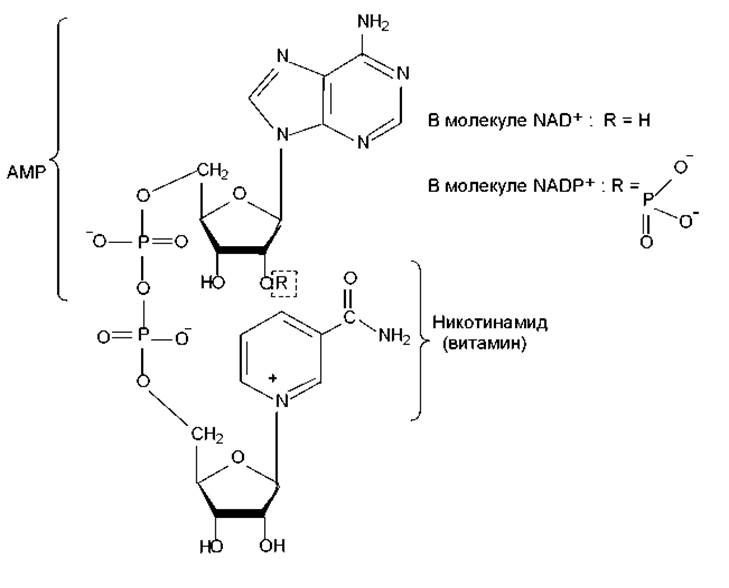
Fig. 7.1. Structure of nicotinamide redox coenzymes
At physiological pH values (7.0–7.5), the acid groups of the phosphate residues in these coenzymes are ionized, and the net charge of the oxidized NAD molecule is (-)1, while that of the NADP molecule is (-)3. Nevertheless, the oxidized forms of these coenzymes are conventionally designated as NAD+ and NADP+ to emphasize the presence of a net positive charge on the nitrogen atom of the nicotinamide ring.
The functional group of nicotinamide reduction equivalent carriers is the nicotinamide ring, which is a component of nicotinamide—one of the forms of vitamin B5 (PP). During the enzymatic oxidation of a substrate involving NAD+ (NADP+), the nicotinamide ring is reduced through The addition of a hydride ion, which consists of a proton and two electrons (Fig. 7.2). In this process, substrate dehydrogenation is accompanied in most cases by the abstraction of two hydrogen atoms, during which a proton is released into the surrounding medium.
An example of the action of nicotinamide reduction equivalent carriers is The oxidation of ethanol to acetaldehyde, catalyzed by Alcohol dehydrogenase (Fig. 7.3). This enzyme carries out the stereospecific abstraction of two hydrogen atoms from the ethanol molecule: the hydrogen bound to the carbon of the alcohol group is transferred to NAD+, while the hydrogen attached to the hydroxyl oxygen is released into the medium as a proton.
The two pyrimidine coenzymes participate in different redox reactions at varying redox potentials: NAD+ more frequently acts as an oxidizing agent in Catabolic pathways, whereas NADP+ is reduced to NADPH and Functions as a reducing agent in biosynthetic processes.
Flavin carriers of reduction equivalents. There are at least 80 flavin-containing enzymes that use either flavin adenine dinucleotide (FAD) or flavin mononucleotide (FMN) as a prosthetic group. Both of these cofactors are built on The basis of the vitamin riboflavin (B2) (Fig. 7.4).

Fig. 7.2. Oxidation–reduction of the nicotinamide ring

Fig. 7.3. Reduction of the nicotinamide ring during the stereospecific dehydrogenation of ethanol involving alcohol dehydrogenase
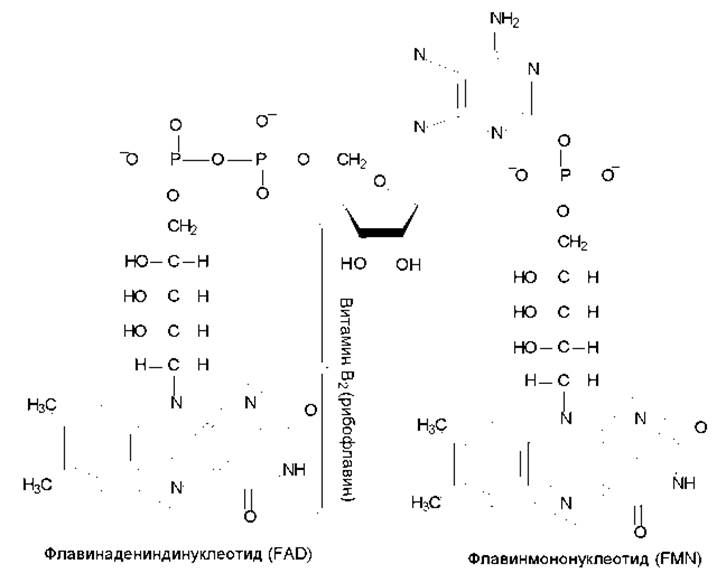
Fig. 7.4. Structure of flavin cofactors: the dashed box encloses the reactive part, the isoalloxazine system
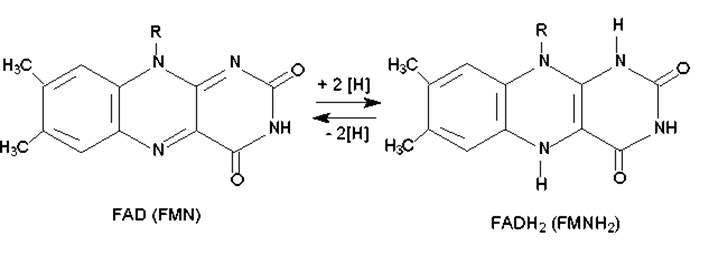
Fig. 7.5. Oxidation–reduction of flavin cofactors
The reactive part of FAD and FMN is the isoalloxazine system, which contains conjugated double bonds. The structure of the isoalloxazine system changes upon reduction (Fig. 7.5). It should be noted that dehydrogenation involving flavin cofactors is also accompanied by the abstraction of two hydrogen atoms from the substrate, but unlike nicotinamide coenzymes, which accept a hydride ion, flavin cofactors accept both hydrogen atoms (Fig. 7.5). Therefore, the reduced forms of flavin adenine dinucleotide and flavin mononucleotide are designated as FADH2 and FMNK2, respectively.
Flavin cofactors are stronger oxidizing agents than nicotinamide ones, whereas the reduced forms of nicotinamide coenzymes serve as stronger reducing agents than reduced flavins.
Other known carriers of reduction equivalents include Cytochromes, Quinones, Lipoic Acid, ascorbic acid, and Glutathione.
Last update: 06/08/2026
Editorial and Educational Adaptation: This material has been compiled based on the primary/original source text. The project team performed an editorial review, corrected technical inaccuracies, structured sections, and adapted the content for an educational format.
What was processed:
- elimination of formatting defects (OCR errors, structural breaks, corrupted characters);
- editorial organization of content;
- standardization of terminology in accordance with academic sources;
- verification of factual statements against the original source text.
All mentions of the author, publication year, and origin of the primary text have been preserved in accordance with the source.