Plant Physiology - Musienko, M. M. 2001
Root Nutrition of Plants
Physiological Role of Macroelement Metals
Potassium
Most plants are characterized by a high potassium content (0.9–1.2%), although only a very minor fraction is bound within cellular structures. It is a typically mobile element. Plants obtain potassium from its salts dissolved in the soil solution (0.5–2% of the total soil reserve). The highest concentrations are found in Meristems, young shoots, leaves, and buds. In plant Cells, about 80% of potassium is located in the vacuoles. The major part of it (70%) exists in The Cell in a free ionic form, while the rest (30%) is in an adsorbed state. Potassium is not a constituent of any organic compound. It is absorbed as the K+ cation. Potassium is an osmotically active element; it promotes protoplasm Hydration, reduces its viscosity, and increases Water content.
The Role of potassium in Photosynthesis is associated with its participation in regulating the stomatal apparatus and in Photophosphorylation. It is believed that cell turgor changes As a result of the functioning of potassium ion pumps. Open Stomata are characterized by a high potassium content in the guard cells, whereas upon their closure, potassium ions are pumped outward.
A decrease in potassium content to 0.2–0.6% causes a sharp decline in The rate of photosynthesis, inhibits growth, and disrupts phosphorus METABOLISM, pigment synthesis, and The production of Proteins and CARBOHYDRATES.
The redistribution of photoassimilates is also related to the potassium content in the conducting Cells of the phloem, where it is predominantly localized. It is believed that the overall osmotic level in sieve tubes is maintained through the mutual compensation of sucrose and potassium ions. The cationic equilibrium in these cells is shifted toward potassium ions, which is a prerequisite for developing high electrochemical gradients across membranes and for the active functioning of Na+-K+ pumps.
The optimal potassium content ensures a balance between synthesis and Hydrolysis processes within the cell. Potassium ions are precisely what create ionic Asymmetry and, consequently, the Membrane Potential between the cell and its environment.
Potassium acts as an activator of over 60 enzyme systems, though it is not a structural part of them. It activates the incorporation of phosphates into Organic compounds and participates in the synthesis of riboflavin, a component of all flavin dehydrogenases. By stimulating the synthesis of starch, sucrose, Monosaccharides, and pectic substances, it greatly contributes to achieving high quality metrics in all fruit crops. Incidentally, an excess of potassium for fruit quality formation can sometimes be more harmful than its deficiency, because such conditions weaken the effectiveness of calcium and magnesium.
The ability of potassium ions to maintain the PHYSICOCHEMICAL PROPERTIES OF colloids appropriate for life—such as elasticity, viscosity, dispersity, and hydration—is of paramount importance in building Plant resistance to unfavorable environmental conditions.
Potassium is characterized by reutilization; towards the end of the growing season, one can observe the migration of potassium from older PARTS OF THE plant Organism to younger ones. Its deficiency leads to a reduction in the dominance effect of apical buds.
The critical period for the requirement of this element occurs during the early Selection/3.html">Stages of development. Its deficiency causes yellowing of the lower leaves and browning of the edges of the remaining leaves, as if scorched. Due to the fact that this element exerts a specific influence on the Cytoplasm, it cannot be substituted by another, although some physiological processes can utilize sodium and rubidium instead. Potassium fertilizers have an especially favorable effect on the yields of wheat, sugar beets, potatoes, and fruit crops.
Calcium
The calcium content in plants is up to 0.2%, whereas in older leaves its amount reaches 1%. It enters the plant organism in the form of Ca2+ ions. Based on their calcium requirements, plants are divided into calciphiles
(beans, chickpeas), calciphobes (yellow lupine, corn), which practically lack free calcium, and neutral species (pumpkin).
Most cruciferous and legume plants absorb Calcium Ions in significant amounts and accumulate them in the cell sap. It is present in smaller quantities in cereal crops and sugar beets. With age, increasing amounts accumulate in leaves and other vegetative Organs. During cell Aging, calcium moves from the cytoplasm into the vacuoles, where it is deposited as various crystalline inclusions of organic acid salts. In seeds, it occurs as a component of phytin.
The role of calcium is diverse. Quantitatively, its primary function involves incorporation into The Structure of the middle lamella of The Cell wall, where it acts as an exchangeable calcium pool. By binding with Pectins, it forms insoluble salts of calcium pectates, which cause the hardening of the semi-fluid STRUCTURE OF THE cell wall. The middle lamellas, which cement the cell walls of adjacent cells, consist primarily of calcium pectates. In the case of calcium deficiency, The formation of new cell walls ceases, although nuclear division proceeds normally.
Unlike potassium and magnesium, calcium is tightly bound to various organic compounds within the cell, making it relatively immobile, although there is evidence that it is capable of being reused by the plant.
Calcium is a component of many cell Organelles (Chloroplasts, Mitochondria, Ribosomes, nucleus). It maintains the colloidal-Chemical properties of the protoplasm and influences its hydration and viscosity. It can regulate cytoplasmic streaming by affecting Structural components of the Cytoskeleton—microtubules. Calcium is also required for the granulocrine secretion of cell wall components with the participation of dictyosomes of the Golgi apparatus. Due to its influence on the formation of cytoskeletal elements, it is also linked to mitosis. Calcium reacts with various organic acids to form salts, thereby acting as a regulator of cell sap pH.
Today, it can be stated that Ca2+ ions influence various types of intracellular activity. Calcium is an activator of certain enzyme systems (phosphorylase, α-amylase, Glutamate dehydrogenase, glucose-6-phosphate dehydrogenase, lipase, adenosine triphosphatase).
Calcium ions have been detected in the nuclear zone, which is possibly related to its requirement for Cell Division and growth processes during the elongation phase. Pollen germination and pollen tube growth are stimulated by ions of this element. Elevated doses of calcium inhibit auxin-independent growth while simultaneously enhancing the ability of Auxins to induce electrophysiological cell polarization.
As is known, pectins and other cell wall compounds contain a significant number of carboxyl groups that dissociate by releasing hydrogen, which gives the cell wall a net negative charge. They electrostatically attract calcium ions (Ca2+), meaning a continuous exchange of H+ for Ca2+ takes place. Almost the entire cation-exchange capacity of The ROOT System is occupied by Ca2+ and H+, which is why this element plays a crucial role in the primary uptake of mineral nutrient elements.
It should be noted that Ca++ ions affect various types of intracellular activity through their association with a specific protein, calmodulin. It is widely known in both the animal and plant kingdoms, with a molecular mass of 16,000–19,000. In almost All living organisms, calmodulin has the exact same Amino Acid Sequence and is rich in glutamic and aspartic acid residues. Evolutionarily, this is one of the oldest and most highly conserved proteins. Acting as an intracellular calcium receptor, it regulates the majority of Ca2+-dependent processes in the cell (The activity of protein Kinases, transport Ca2+-ATPases, intracellular calcium concentration, and participation in secretory processes) (Fig. 137). When saturated with Ca2+ ions, calmodulin is extremely thermostable. There is evidence linking it to the gravitropic response of the root cap.
Class="center">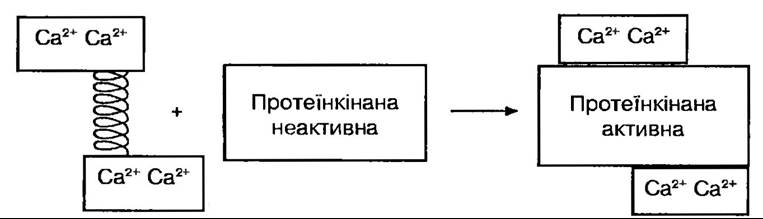
Fig. 137. Activation of protein kinases by Ca2+-calmodulin
Calcium deficiency primarily affects meristems and root systems. During cell division, the formation of cell walls is suppressed, and The Development of lateral roots and root hairs ceases. Light-green stripes appear along the edges of young leaves, Tissues in certain areas undergo necrosis, apical buds often die off, and the tips of the leaves curl upward. Necrotic spots also appear on fruits and storage tissues. Characteristic metabolic changes associated with calcium deficiency manifest as alterations in the pathways of carbohydrate and nitrogenous substance synthesis.
Magnesium
The content of this element in plants ranges from 0.013 to 3.15% of dry matter, depending on the species, physiological state, and Nutrition conditions. It enters the plant as Mg2+ ions. Magnesium is a core component of chlorophyll, the primary pigment in green leaves. It accumulates predominantly in the most viable tissues, such as meristems, tillering nodes, and grain embryos. As fruit Setting begins, it concentrates in the seeds, forming phytin there alongside phosphoric acid. Magnesium is quite mobile, which allows for its partial reutilization from aging organs. Its highest percentage is found in Plastids, mitochondria, and the pectates of the primary cell wall.
The Effect of magnesium on plants is remarkably diverse. It can alter the Spatial Structure of protein molecules by reducing their asymmetry. This is one of the reasons it influences the structural viscosity of protoplasm and the mobility of intracellular water.
A particular function of magnesium is related to its involvement in photosynthesis as a component of chlorophyll, which accounts for up to 15% of its total content in the plant. It is not only a structural part of chlorophylls but also participates in the Cytology/cytology/16.html">Early stages of porphyrin ring Biosynthesis, specifically in the synthesis of protoporphyrin IX. Magnesium regulates organelle structure, enhancing the activity of primary photosynthetic processes. It is believed to influence the formation of larger multicenter photosynthetic units from individual photochemical Reaction Centers and Light-Harvesting Complexes. It activates electron transport between the Two Photosystems, photophosphorylation, and NADP+ reduction. An increased concentration of magnesium in the chloroplast stroma activates ribulose-1,5-bisphosphate carboxylase and increases its affinity for CO2.
Magnesium ions play a crucial role in the functioning of the protein-synthesizing system. They maintain the structural integrity of ribosomes by binding RNA and Protein. The large and small ribosomal subunits associate only in the presence of magnesium ions. Magnesium deficiency not only causes the dissociation of 70S-ribosome particles into 30S and 50S subunits, but also leads to the unwinding of even smaller fragments. Secondly, magnesium facilitates the binding of messenger and Transfer RNA to ribosomes through Electrostatic Interactions with Mg2+ ions. Ions of this element improve the conditions for amino acid incorporation into proteins. It activates DNA and RNA Polymerases and participates in the formation of specific spatial structures of Nucleic Acids.
The functioning of many Enzymes is associated with magnesium, with phosphotransferases representing its most prominent independent group, where Mg-ATP can act as a substrate (phosphokinases, ATPases, pyrophosphatases). Enzymes specifically activated by magnesium include 5-nucleotidase, argininosuccinate synthetase, ribulose-1,5-bisphosphate carboxylase, and aldolase, among others. Most reactions of Glycolysis and the Krebs cycle are activated by magnesium. In several cases, the effect of magnesium on enzyme activity is determined by its reaction with reaction products, shifting the equilibrium toward their formation.
The connection between magnesium and enzyme activity dictates its essential role in plant metabolism, growth, and developmental processes.
Magnesium activation of the nitrate-reducing capacity of plants and Glutamine Synthetase—one of the Key Enzymes in nitrogen assimilation—plays a positive role in plant Nitrogen metabolism. It also induces significant changes in phosphorus metabolism, driven by magnesium's role in activating enzymes involved in phosphorus turnover.
Magnesium is capable of enhancing synthetic processes associated with the formation of various Essential Oils, Vitamins, and rubber.
External signs of magnesium deficiency include leaf Veins remaining green while only the interveinal lamina turns yellow. Magnesium chlorosis is known as marble-like leaf chlorosis. This deficiency occurs when the magnesium content in the soil drops below 2 mg per 100 g of soil. Magnesium is particularly important for plants developing in acidic soils.
To supply plants with magnesium, potassium-magnesium and complex fertilizers containing potassium, magnesium, and phosphorus are used.
Iron
The iron content in soil ranges from 1 to 7%, and in plants from 0.02 to 0.08%, placing it on the borderline between Macronutrients and micronutrients. It enters the plant as Fe3+ ions. Its role is primarily linked to its ability to easily transition from the oxidized form (Fe3+) to the reduced form (Fe2+) and vice versa. The absence or even shortage of iron causes very noticeable disruptions in plant physiological activity.
As a mineral nutrition element, iron is involved in the structure of individual enzymes and entire enzyme systems associated with cellular redox reactions. In addition to photosynthesis and Respiration processes, its ions participate in nitrate reduction and Biological Nitrogen Fixation as components of nitrate reductase and Nitrogenase.
The role of ferredoxins and Cytochromes in plant cell metabolism is primarily determined by the catalytic properties of iron, which serves as a constitutional and functional component of these compounds. One need only recall its importance in the oxidative and Energy Metabolism of tissues to understand the immense role iron plays in vital processes.
An example of iron participation in biosynthetic reactions is the synthesis of flavoprotein enzymes. Iron is necessary for the formation of chlorophylls. It catalyzes the formation of their precursors (aminolevulinic acid and protoporphyrins).
Iron can also be stored in a reserve form as the protein ferritin, which contains iron in a non-heme form.
Iron deficiency is most frequently observed in calcareous soils, which can be explained by its transition into a form poorly accessible to plants. Under such conditions, the application of complex organic iron compounds—chelates—is quite effective. Within plant tissues, iron exists exclusively in the form of complex organo-mineral compounds, while Inorganic Compounds are absent. Iron is not subject to reutilization. This explains why chlorosis typically affects the leaves of upper tiers first. If plants fail to absorb iron for a prolonged period, the leaves turn brown and eventually die off. In case of iron deficiency, foliar feeding can be applied.
Last update: 07/08/2026
Editorial and Educational Adaptation: This material has been compiled based on the primary/original source text. The project team performed an editorial review, corrected technical inaccuracies, structured sections, and adapted the content for an educational format.
What was processed:
- elimination of formatting defects (OCR errors, structural breaks, corrupted characters);
- editorial organization of content;
- standardization of terminology in accordance with academic sources;
- verification of factual statements against the original source text.
All mentions of the author, publication year, and origin of the primary text have been preserved in accordance with the source.