LEHNINGER PRINCIPLES OF BIOCHEMISTRY - VOL. 1. THE FOUNDATIONS OF BIOCHEMISTRY: STRUCTURE AND CATALYSIS - 2011
PART I. STRUCTURE AND CATALYSIS
9. DNA-BASED INFORMATION TECHNOLOGY
9.4. Genome Alterations and New Biotechnology Products
We need not look far into the future to find Structure/179.html">Practical Applications OF new biotechnologies or to appreciate the promise of new discoveries in basic science; Genomics delivers ideas and puts them into practice. Not only can we understand the structures of genomes, but we can also alter them—perhaps the ultimate achievement of modern technology. By expanding our ability to manage organisms and produce novel pharmaceutical agents, we can improve Human Nutrition and health. Such Prospects, however, can be realized only if appropriate safeguards are implemented in practice to prevent the irresponsible use of these new technologies.
Bacterial Plant Parasites Facilitate Cloning in Plants
The Introduction of recombinant DNA into plants is of paramount importance for agriculture, allowing the modification of nutritional characteristics, crop yields, and resistance to environmental stresses such as insect pests, diseases, cold, soil salinity, and drought. Adult plants of certain species can be generated from a single transformed Cell in such a way that the introduced Gene is passed on to progeny via seeds.
Because researchers have not yet found naturally occurring plant Plasmids that facilitate cloning in plants, the principal technical challenge lies in introducing DNA into plant Cells. This problem was solved using the soil bacterium Agrobacterium tumefaciens, which is capable of infecting plants at wound sites, transforming neighboring cells, and inducing The formation of a tumor known as a crown gall. An Agrobacterium cell contains a massive (~200,000 bp) Ti plasmid (Fig. 9-26a). Upon contact with a wounded plant cell, a 23,000 bp segment of the Ti plasmid, termed T-DNA, is excised from the plasmid and integrated at a random site in one of The plant cell Chromosomes (Fig. 9-26b). The transfer of T-DNA from Agrobacterium into the plant cell chromosome depends on 25 bp repeats at the ends of the T-DNA and on virulence (vir) gene products encoded by the Ti plasmid (Fig. 9-26a).
Class="center">Figure 9-26. DNA transfer to plant cells mediated by a parasitic bacterium. (a) The Ti (tumor-inducing) plasmid of Agrobacterium tumefaciens. (b) Wounded plant cells produce and release the phenolic compound acetosyringone. Upon detecting this compound, Agrobacterium initiates expression of the virulence (vir) GENES OF THE Ti plasmid. These vir genes encode Enzymes required for the Integration of the T-DNA segment of the Ti plasmid into The Genome of neighboring plant cells. A single-stranded copy of the T-DNA is produced and transferred into the plant cell, where it is converted into double-stranded DNA and integrated into the host chromosome. The T-DNA encodes enzymes that synthesize both plant growth Hormones and opines (Fig. 9-27). The latter compounds serve as a nutrient source exclusively for Agrobacterium species. Thus, expression of T-DNA genes in transformed plant cells leads both to aberrant plant cell proliferation (tumor formation) and to the supply of plant cell nutrients to the bacterium.

The T-DNA encodes enzymes that convert plant metabolites into two classes of compounds beneficial to the bacterium (Fig. 9-27). First are plant growth hormones (Auxins and Cytokinins), which stimulate the proliferation of transformed plant cells to form a crown gall tumor. Second are a group of unusual Amino Acid Derivatives called opines, which serve as a nutrient source for the bacterium. Opines are produced in large quantities within tumor cells and secreted into the surrounding environment, where they can be utilized only by Agrobacterium, using enzymes encoded within its Ti plasmid. Thus, the bacterium redirects plant resources, converting them into a form that exclusively serves its own survival.
Figure 9-27. Metabolites produced in plant cells infected by Agrobacterium species. Auxins and cytokinins are plant growth hormones. The most common auxin, indoleacetate, is synthesized from Tryptophan. Cytokinins are adenine derivatives. Opines are generally formed from amino acid precursors; enzymes encoded by Ti plasmids from various Agrobacterium species generate at least 14 different opines.

This extraordinary example of DNA transfer from a prokaryotic to a Eukaryotic Cell provides a natural Genetic Engineering tool that researchers can harness to introduce recombinant DNA (in place of T-DNA) into the plant genome. A common cloning Procedure utilizes Agrobacterium colonies harboring two different recombinant plasmids. The first is a Ti plasmid from which the T-DNA segment has been artificially deleted (Fig. 9-28a). The second is an Agrobacterium–E. coli shuttle vector in which the 25 bp T-DNA repeats flank a foreign gene to be introduced into the plant cell, along with a selectable marker such as a gene for resistance to the antibiotic kanamycin (Fig. 9-28b). An Agrobacterium culture engineered in this manner is used to infect plant leaves, but crown galls do not form because the genes for enzymes involved in auxin, cytokinin, and opine Biosynthesis have been removed from both plasmids. Instead, vir gene products from the modified Ti plasmid direct the transformation of plant cells with the foreign gene flanked by the 25 bp T-DNA repeats on the second plasmid. Transformed plant cells can be selected by growth on Agar plates containing kanamycin, and The addition of growth hormones stimulates the regeneration of new plants containing the foreign gene in every cell.
Figure 9-28. The two-plasmid method for generating Transgenic Plants. (a) One plasmid is a modified Ti plasmid containing vir genes but lacking T-DNA. (b) The other plasmid contains a DNA segment carrying both a foreign gene of interest (such as an insecticidal protein gene, as shown in Fig. 9-30) and an Antibiotic Resistance factor (in this case, kanamycin resistance), flanked by two 25 bp T-DNA repeats required for the transfer of plasmid genes to the plant chromosome. The plasmid also includes an origin of Replication (ori) necessary for the propagation of Agrobacterium.

When the bacterium is applied to a wound site (the cut edge of a leaf), the vir genes of the first plasmid mediate the transfer of the 25 bp repeat-flanked segment of the second plasmid into the plant genome. Leaf fragments are placed on agar plates containing both kanamycin and appropriate concentrations of plant growth hormones, allowing new plants to regenerate exclusively from fragments containing transformed cells. Untransformed cells are killed by kanamycin. Because the foreign gene and the antibiotic resistance marker are typically transferred together, plant cells that survive and grow on this medium almost invariably contain the gene of interest.
Successful transfer of recombinant DNA to plants was definitively demonstrated in an experiment introducing the firefly luciferase gene into tobacco cells (Fig. 9-29)—a model plant of choice for transformation studies because its cells are exceptionally amenable to Agrobacterium-mediated transformation. Naturally, the applications of this technology extend far beyond the creation of glowing plants. The same methodology has been used to develop crops resistant to herbicides, plant Viruses, and insect pests (Fig. 9-30). Potential benefits include increased crop yields and a reduced reliance on environmentally damaging agricultural chemicals.
Figure 9-29. A tobacco plant expressing the firefly luciferase gene. Light emission was triggered by watering the plant with a solution of luciferin, the substrate for the luciferase enzyme that catalyzes Bioluminescence (see Box 13–1). However, glow-in-the-dark houseplants should not be expected at local nurseries anytime soon; the emitted light is quite faint, and capturing this photograph required a 24-hour exposure. Nonetheless, this experiment elegantly demonstrates the profound potential of this technology to confer entirely new traits upon plants.
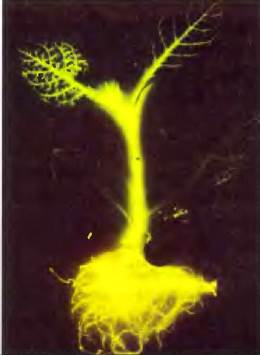
Figure 9-30. Tomato plants resistant to insect larvae. Two tomato plants were exposed to equal numbers of moth larvae. The plant on the left is wild-type (non-transgenic). The plant on the right expresses a gene encoding a toxin protein from the bacterium Bacillus thuringiensis. This protein, introduced via the strategy outlined in Figure 9-28, is toxic to the larvae of certain lepidopteran species while remaining safe for humans and other organisms. Insect resistance has similarly been engineered into cotton and various other crops.

Biotechnology allows new traits to be conferred upon plants much faster than traditional breeding Methods. A striking example is The Development of soybean varieties resistant to glyphosate, a broad-spectrum herbicide (the active ingredient in RoundUp). Glyphosate breaks down rapidly in the environment (sensitive crops can be planted in treated fields after just 48 hours), and its use generally avoids groundwater contamination or carryover into the following season. Fields planted with glyphosate-resistant soybeans can be treated once with this herbicide during the summer growing season to eliminate virtually all weeds without harming the crop itself (Fig. 9-31). Nevertheless, potential pitfalls of this technology—such as The Emergence of glyphosate-resistant weeds or the proliferation of hard-to-control feral transgenic plants—remain a source of concern for scientists and the public alike.
Figure 9-31. Glyphosate-resistant soybean shoots. Two plots of a soybean field in Wisconsin, USA. (a) The untreated portion of the field is overgrown with weeds. (b) Glyphosate-resistant soybean shoots thrive in the area treated with the herbicide. Glyphosate degrades rapidly in the environment. The agricultural use of genetically modified plants like these will proceed only after careful weighing of all pros and cons, balancing the exceptional promise of the new technology against The Need for prudent Selection of new traits. Both science and society share a common interest in ensuring that The Use of genetically modified crops does not adversely affect the environment or human health.

Manipulating animal cell genomes yields insights into Chromosome structure and Gene Expression
Transforming animal cells with foreign genetic material not only broadens our understanding of how their genomes are structured and function, but also provides a vital means for breeding animal strains with novel traits. This prospect has spurred intensive research into more refined methods of animal cloning.
Most work of this nature requires a source of cells capable of incorporating DNA. Although intact Tissues are often difficult to preserve and work with in vitro, many animal cell types can be isolated and cultured in the laboratory provided their growth requirements are meticulously met. Cells derived from a specific animal tissue and propagated under appropriate tissue culture conditions can maintain their differentiation (for example, hepatocytes (Liver cells) remain hepatocytes) for weeks or even months.
No suitable vector analogous to plasmids has been found for introducing DNA into animal cells; therefore, transformation typically
requires inserting the DNA into the host cell's chromosome. Efficiently delivering DNA to the Cell Nucleus and integrating it into the chromosome without damaging any vital genes remains a major technical challenge in animal cell genetic engineering.
The developed methods for transferring DNA into animal cells vary in efficiency and convenience. Some success has been achieved with spontaneous DNA uptake or electroporation (methods remotely resembling common Bacterial Transformation techniques). However, these are inefficient for animal cells, transforming only 1 in 100 to 10,000 cells. Microinjection — injecting DNA directly into The Nucleus using an extremely fine needle — yields high success rates in skilled hands, yet the total number of cells that can be processed is small because the DNA must be introduced into each cell individually.
The most efficient and widespread methods for animal cell transformation rely on Liposomes or viral vectors. Liposomes are small particles consisting of a lipid bilayer enclosing an aqueous interior (see Fig. 11-4). Liposomes carrying a recombinant DNA molecule can fuse with the membranes of target cells to deliver the DNA inside. Occasionally, the DNA reaches the nucleus, where it may integrate into a chromosome (most often at random positions). Viral vectors are even more effective at delivering DNA. Animal viruses possess efficient mechanisms for introducing their Nucleic Acids into cells, and some species also have mechanisms for integrating their DNA into the host cell chromosome. Several of these, such as Retroviruses (see Figs. 26-33) and Adenoviruses, have been modified to serve as viral vectors for introducing foreign DNA into mammalian cells.
The use of retroviruses is illustrated in Fig. 9-32. When a specially engineered retrovirus enters a cell, its RNA genome is reverse-transcribed into DNA by Reverse Transcriptase and then integrated into the host genome by the viral integrase enzyme. This procedure requires specific DNA segments: Long Terminal Repeat sequences (LTR sequences) at the ends to integrate the retroviral DNA into the host chromosome, and a Ψ (psi) packaging sequence to encapsulate the viral DNA into Viral Particles (see Fig. 26-34).
Fig. 9-32. Use of retroviral vectors in mammalian cell cloning. A typical retroviral genome (depleted here to a somewhat simplified form), engineered to carry a foreign gene (colored pink), is added to a host cell tissue culture. A helper virus (not shown here) lacks the packaging sequence, Ψ, so its RNA transcripts cannot be packaged into viral particles, but it provides the gag, pol, and env gene products necessary to package the engineered retrovirus into functional viral particles. This enables the foreign gene within the recombinant retrovirus genome to efficiently integrate into target cells.

The gag, pol, and env genes of the retrovirus genome, which are required for replication and viral particle formation, can be replaced with foreign DNA. To generate viruses carrying recombinant Genetic information, DNA must be introduced into cultured cells infected with a "helper virus" that supplies the genes for viral particle formation but lacks the Ψ sequence required for packaging. This allows the DNA to be transcribed and its RNA packaged into viral particles. These particles can act as vectors to introduce recombinant RNA into target cells. The viral enzymes reverse transcriptase and integrase (produced with the help of the helper virus) are also packaged into the viral particle and delivered to the target cells. Once the engineered viral genome is inside The Cell, these enzymes create a DNA copy of the recombinant viral RNA genome and integrate it into the host chromosome. Afterward, the integrated recombinant DNA becomes a permanent part of the target cell's chromosome and replicates with it during every Cell Division. The cells themselves are not endangered by the insertion of the viral DNA because the recombinant virus lacks the genes required to make RNA copies of its genome and package them into new viral particles. The use of recombinant retroviruses is often the best approach for introducing DNA into A large number of mammalian cells.
MEDICINE. The Human Genome and Human Gene Therapy
As biotechnology gained strong momentum in the 1980s, the prospect of preventing genetic diseases became highly enticing. In principle, DNA could be introduced into human cells to correct hereditary Genetic Disorders. Genetic correction could even be performed at the level of an individual tissue by infecting a person with a genetically engineered, tissue-specific virus carrying the requisite DNA payload to be delivered into defective cells. While this objective sounds captivating, research in this area is fraught with obstacles.
Modifying chromosomal DNA entails significant risks—risks that cannot be fully evaluated in the Cytology/cytology/16.html">Early stages of discovery. Consequently, initial attempts at human gene therapy were restricted to a small number of genetic disorders. Scientists and ethicists jointly developed a set of criteria that must be met to justify the associated risks: (1) The genetic defect must be a well-understood single-gene disorder. (2) Both the mutant and normal genes must be cloned and sequenced. (3) In the absence of a way to eliminate the existing mutant gene, the functional gene must function adequately in the presence of the mutant. (4) Most importantly, the severity of the disease must outweigh the risks inherent in the novel technology. Protocols for human clinical trials were proposed by scientists from several countries and critically reviewed for ethical compliance and scientific rigor by carefully constituted advisory panels in each nation before human trials could commence.
From the outset, gene therapy has targeted cancers and genetic diseases affecting The Immune System. Immunity is controlled by several types of leukocytes (white Blood Cells) originating from undifferentiated Bone Marrow stem cells. These cells divide rapidly and possess distinctive metabolic features. For various reasons, differentiation can stall, leading to a condition known as severe combined immune deficiency (SCID). One form of SCID stems from hereditary Genetic Defects in the gene encoding adenosine deaminase (ADA), an enzyme involved in nucleotide biosynthesis (discussed in Chapter 22). Another form of SCID arises from a defect in a cell-surface receptor protein that binds cytokine signaling molecules, which trigger differentiation. In both cases, progenitor stem cells fail to differentiate into mature Cells of the immune system, such as T AND B lymphocytes (see p. 249). Children with these rare disorders are exceptionally vulnerable to bacterial and VIRAL INFECTIONS AND frequently suffer from a cascade of related physiological and neurological problems. Without effective therapy, these children must be kept in sterile environments. Approximately 20% of such children have a sibling with an identical human leukocyte antigen (HLA) type who can serve as a donor for bone marrow transplantation. For the remaining children, alternative approaches are required.
The very first attempt at human gene therapy was performed at the National Institutes of Health in Bethesda, Maryland, in 1990. The patient was a four-year-old girl suffering from ADA deficiency. The child's bone marrow cells were transformed with a specially constructed retrovirus carrying a functional ADA gene; when cells are modified in this manner—albeit in the laboratory rather than directly within the living patient—the procedure is said to be performed ex vivo. The treated cells were reintroduced into the patient's bone marrow. Four years later, the child was leading a normal life, attending school, and even making public statements about her experiences before Congress. Nevertheless, the girl's recovery cannot be attributed entirely to gene therapy. Prior to the clinical trials of the gene therapy method, researchers developed a novel Treatment for ADA deficiency in which synthetic adenosine deaminase was administered complexed with polyethylene glycol (PEG). For many patients with ADA-SCID, administration of the ADA-PEG complex allows the immune system to begin developing, accompanied by weight gain and a reduced frequency of infections, although it does not lead to its complete restoration.
The success of the new gene therapy was not guaranteed, so withholding the PEG-enzyme complex treatment during the gene therapy trial would have been unethical. Consequently, trial participants received both treatments simultaneously, making it unclear which one was primarily responsible for the positive clinical outcomes. Nonetheless, the clinical trial provided invaluable information: Ex Vivo Gene transfer to a large number of leukocytes is feasible, and gene-transferred cells were still detectable several years after treatment, indicating the potential for long-term correction. Furthermore, the risks associated with retroviral vectors were assessed as low.
During the 1990s, hundreds of clinical trials of gene therapy were conducted for numerous human genetic disorders, but in most cases, the results were discouraging. It became apparent that the primary hurdle was the inefficient delivery of new genes into cells. Transformation of many cell types simply failed, and the number of successfully transformed cells often proved insufficient to correct the genetic defect. In the ADA experiments, obtaining a sufficient population of transformed cells was exceptionally difficult due to the concurrent ADA-PEG therapy. Normally, stem cells harboring the correct ADA gene possess a growth advantage over untreated cells, expanding their population and gradually taking over the bone marrow. However, administering the ADA-PEG complex to the same patients allowed untransformed (ADA-deficient) cells to survive and thrive, depriving the transformed cells of the growth advantage necessary to expand their population at the expense of the others.
In 2000, medical researchers from France, Italy, and the UK reported that gene therapy initiated in 1999 for a form of SCID caused by defective cytokine receptors (specifically, the γc subunit) had proven successful. They introduced the corrected gene for the cytokine receptor γc subunit into CD34+ cells (stem cells that give rise to immune system cells and bear the CD34 protein on their surface; these cells can be separated from other bone marrow cells using anti-CD34 Antibodies). The transformed cells were returned to the patient's bone marrow. In this experiment, introducing the corrected gene conferred a clear growth advantage to the transformed cells over the untransformed ones. In four out of the first five patients, the immune system began functioning within 6 to 12 weeks, and the levels of mature immune system T lymphocytes reached those of age-matched control subjects (who lacked SCID) within 6 to 8 months. Immune function was restored, and after approximately 4 years, most of the children were leading normal lives. Similar results were achieved in four additional patients, providing compelling evidence that human gene therapy can cure a severe genetic disease.
In early 2003, a setback occurred. Two of the first four patients who received cells with the correct cytokine receptor gene developed a severe form of leukemia. During the course of the gene therapy treatment, one of the introduced retroviruses had spontaneously integrated into the chromosome of a single CD34+ cell, leading to abnormally high expression of the LMO2 gene. The affected cell differentiated into an immune system T cell, and the overexpression of the LMO2 gene triggered uncontrolled cell division, resulting in leukemia. Both patients responded well to Chemotherapy, and the other patients did not experience this problem. However, the incident confirmed that initial concerns regarding the risks associated with retroviral vectors were indeed well-founded. Following a review of clinical trial protocols and consultations with ethicists and the parents of affected children, plans were made to continue treating children who are not candidates for bone marrow transplantation. The reasoning is quite simple: it was recognized that the potential benefits to children in such a debilitated state outweigh the identified risks. Evidently, the development of novel viral vectors remains the single most critical factor for the successful advancement of gene therapy.
Human gene therapy is not limited to inherited disorders. Cancer cells can be engineered to express genes encoding Proteins capable of destroying the cell or restoring normal Regulation of Cell division. Tumor-associated immune system cells known as tumor-infiltrating effector lymphocytes can be genetically modified to produce tumor necrosis factor (TNF, see Fig. 12-51). If such lymphocytes are harvested from a cancer patient, modified, and reinfused, the recombinant cells will home in on the tumor, and the TNF they produce will cause the tumor to regress. AIDS can also be addressed via gene therapy. DNA encoding an RNA molecule complementary to the mRNA of a viable HUMAN IMMUNODEFICIENCY VIRUS (HIV) can be introduced into immune system cells (the targets of HIV). The RNA transcribed from the integrated DNA should complementarily bind to HIV mRNA, preventing its Translation and disrupting the viral life cycle. Alternatively, a gene encoding an inactive form of a single subunit of a multimeric HIV enzyme could be introduced; with a single nonfunctional subunit, the entire enzyme may be rendered inactive.
Our growing understanding of the human genome and the GENETIC BASIS OF various diseases offers hope for early Diagnosis and targeted intervention. However, judging by initial results, the road to effective therapy promises to be long and fraught with obstacles. We need to learn more about cellular METABOLISM, gene interactions, and how to manage risks. The prospect of conquering life-threatening genetic disorders and other debilitating diseases provides ample motivation to press forward with active research.
Because each virus species has distinct characteristics, various classes of animal viruses are employed when designing vectors for mammalian cell transformation. For instance, adenoviruses lack a mechanism for integrating DNA into chromosomes. Consequently, recombinant DNA delivered via an adenoviral vector is expressed only briefly before being degraded. Nonetheless, this transient expression can be advantageous when short-term gene expression is desired.
In animals, cell transformation by any of the aforementioned methods comes with its own set of challenges. The introduced DNA typically integrates into the chromosome at random sites. Even if the foreign DNA shares Sequence Homology with the host chromosome designed to target a specific locus, the nonhomologous components remain orders of magnitude larger than the "target." If such insertions disrupt vital genes, it can occasionally alter cellular function (though most cells are diploid or polyploid, meaning that at least one copy of any given gene usually remains intact). A particularly detrimental outcome of such insertion could be the inadvertent Activation of a proto-oncogene, potentially leading to tumorigenesis. Although this event was once thought to be highly unlikely, recent studies have confirmed its significant hazard (Box 9-2). Finally, the site of integration can dictate the expression level of the inserted gene, as integrated segments are not transcribed uniformly across the entire genome.
Despite these challenges, animal cell transformation has been instrumental in studying chromosome Structure and function, as well as gene regulation and expression. Successful recombinant DNA transfer in animals can be illustrated by experiments that permanently altered an easily observable, inherited physical trait. Microinjecting DNA into the nucleus of a fertilized mouse egg leads to efficient transformation (chromosomal integration). If such eggs are implanted into a surrogate mouse mother and allowed to develop, some of the resulting offspring frequently express the new gene. Those in which the germline has been altered can be identified by analyzing their progeny. By carefully breeding these mice, researchers can establish a new line of transgenic mice in which all individuals are homozygous for the new gene or genes. To date, Transgenic Mice exhibiting a wide range of genetic variations—many modeling human diseases and their management—have been produced, paving the way toward human gene therapy (Box 9-2). A similar approach is used to create mice in which a specific gene is inactivated ("knockout mice") to elucidate its function. This approach has been applied to disrupt mouse genes regulating body weight (see Fig. 23-34). Generating a transgenic mouse
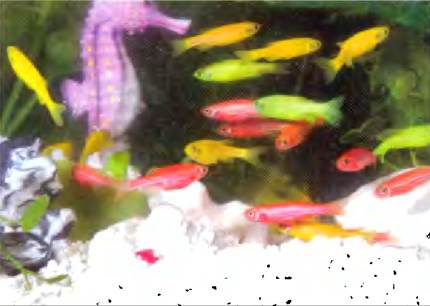
Animal genome modification experiments are not limited to mice. An important model Organism, for instance, is the zebrafish—a tropical aquarium fish. Today, pet stores offer new zebrafish strains (Fig. 9-33) whose genomes have been engineered to express a variant of green fluorescent protein that emits light in various Regions of the visible spectrum (see Fig. 9-15).
Fig. 9-33. Cloning in vertebrate cells. Genes encoding certain variants of green fluorescent protein were introduced into the genomes of various zebrafish strains, making these fish literally glow in the dark. Each fluorescent protein variant emits light at a specific wavelength, resulting in fish that glow with red, green, or yellow light.
New technologies promise the rapid discovery of novel drugs
It is difficult to list all the ways in which Genomics and Proteomics can influence drug discovery, but a few Examples illustrate these possibilities. Hypertension, acute Heart Failure, hypercholesterolemia, and obesity are treated with drugs that alter human physiology. Treatment strategies are developed by identifying the enzymes or receptors involved in a pathological process and finding inhibitors that block their activity. Proteomics will play an increasingly vital role in identifying potential drug targets. For example, urotensin II is known to be the most potent vasoconstrictor discovered to date. Originally isolated from fish CEREBROSPINAL FLUID, urotensin II is a small cyclic peptide consisting of 11 amino acid residues in humans and 12 or 13 in certain other organisms. The vasoconstriction it triggers can cause or exacerbate hypertension, acute heart failure, or other cardiovascular diseases. Several methods described in Section 9.3 for studying Protein-Protein Interactions were used to demonstrate that urotensin II binds to a G-protein-coupled receptor designated GPR14 (G-protein-coupled receptor 14). G proteins play a crucial role in numerous signaling pathways (Chap. 12). However, GPR14 was an "orphan" receptor—identified through human genome sequencing as a G-protein-coupled receptor of unknown function. The binding of urotensin II to GPR14 now establishes this receptor as a key target for therapeutic interventions designed to block urotensin II action.

Another major objective of medical research is the discovery of novel drugs to combat human pathogens. Currently, this entails identifying enzymes within pathogen cells that can be inactivated by a new drug. An ideal microbial enzyme target must (1) be essential for the pathogen's survival, (2) occur across a wide range of pathogens, and (3) be absent from or significantly different in humans. The task of identifying metabolic processes crucial to microorganisms yet absent in humans is greatly facilitated by comparative genomics, complemented by functional insights derived from genomics and proteomics. ■
Recombinant DNA technology yields results and opens new horizons
The products of recombinant DNA technology range from proteins to engineered organisms. These technologies enable The production of vast arrays of commercial proteins, the design of microorganisms tailored for specific tasks, and the creation of plants and animals with advantageous traits for agriculture and medicine. While some of these products have already been approved for consumer or professional use, many others are still in development. In just a few years, genetic engineering has transformed from a promising new technology into a multi-billion-dollar industry, with the pharmaceutical sector experiencing the most dramatic growth. Table 9-4 lists several Major Classes of novel products generated by recombinant DNA technology.
Table 9-4. Selected medical products of recombinant DNA technology
Product Category |
Examples/Applications |
Anticoagulants |
Tissue plasminogen activator (TPA): activates plasmin, an enzyme involved in dissolving blood clots; effective in the treatment of heart attacks |
Blood-clotting factors |
Factor VIII; promotes blood clotting and is deficient in patients with hemophilia; treatment with recombinant DNA-derived factor VIII reduces the risk of transmission of blood-borne pathogens |
Colony-stimulating factors |
Immune system growth factors that stimulate WHITE BLOOD CELL production; used in the treatment of immune deficiencies and infections |
Stimulates red blood cell production; used to treat anemia in patients with Kidney disease |
|
Growth factors |
Stimulate the differentiation and proliferation of various cell types; promote wound healing |
Human Growth Hormone |
Treatment of dwarfism |
Human Insulin |
Treatment of Diabetes Mellitus |
Interferons |
Inhibit viral replication; used in the treatment of certain cancers |
Interleukins |
Activate and stimulate various classes of white blood cells; potential applications include the treatment of injuries, HIV infections, cancer, and immune deficiencies |
Exceptional binding Specificity utilized in diagnostic tests, targeted drug delivery, and The transport of toxins or radioactive compounds to tumors in cancer therapy; numerous other applications exist |
|
Superoxide dismutase |
Prevents tissue Damage caused by reactive oxygen species when blood flow is abruptly restored to tissues deprived of O2 during surgery |
Viral envelope proteins that are safer and just as effective at priming the immune system as killed viruses traditionally used in vaccines; hepatitis B vaccine was the first of this kind to be developed |
■ Erythropoietin is among the newest products of recombinant DNA technology. This protein hormone (Mr = 51,000) stimulates the formation of red blood cells. Individuals with renal disorders frequently suffer from a deficiency of this protein, leading to anemia. Recombinant human erythropoietin can be administered to treat such patients, thereby reducing the need for repeated blood transfusions. ■
New applications of this technology continue to emerge. Enzymes produced via recombinant DNA methods are already utilized in the manufacturing of detergents, sweeteners, and cheese. Modified proteins serve as nutritional additives to enhance food value, flavor, and aroma. Microorganisms with engineered or entirely novel Metabolic pathways are being developed for enhanced oil recovery, mineral extraction from subterranean deposits, bioremediation of oil spills, and the detoxification of hazardous waste sites and wastewater. Engineered crops featuring enhanced resistance to drought, frost, insect pests, and diseases improve agricultural yields while reducing the need for chemical inputs. Furthermore, whole animals can now be cloned by transferring a somatic cell nucleus containing its complete genetic material into a pre-prepared oocyte from which the native nucleus has been removed.
The extraordinary prospects of modern biotechnology are a subject of ongoing debate. Mammalian cloning raises complex ethical issues and can be accompanied by serious health complications and reduced lifespans in cloned animals. Furthermore, techniques capable of producing beneficial therapeutics could potentially be misused to generate biological toxins for weaponry. The potential risks associated with the release of genetically modified crops and other organisms into the biosphere continue to be closely monitored. The full spectrum of long-term consequences of these technologies for the human species and the global environment cannot be reliably predicted without a deeper understanding of both cellular metabolism and ecology.
Summary of Section 9.4 Genome Alterations and New Biotechnology Products
■ Advances in whole-genome sequencing and genetic engineering techniques are dramatically expanding our ability to modify the genomes of all biological species.
■ Plant cloning, which frequently utilizes Plasmid Vectors from the bacterium Agrobacterium, makes it possible to introduce novel agronomic traits into plants.
■ In animal cloning, researchers typically introduce foreign DNA via viral vectors or microinjections. These methods lay the groundwork for producing Transgenic Animals AND advancing human gene therapy.
■ The application of genomics and proteomics in basic and pharmaceutical research is accelerating the discovery of novel drugs. Additionally, biotechnology is yielding an ever-expanding array of alternative products and technologies.
Last update: 06/08/2026
Editorial and Educational Adaptation: This material has been compiled based on the primary/original source text. The project team performed an editorial review, corrected technical inaccuracies, structured sections, and adapted the content for an educational format.
What was processed:
- elimination of formatting defects (OCR errors, structural breaks, corrupted characters);
- editorial organization of content;
- standardization of terminology in accordance with academic sources;
- verification of factual statements against the original source text.
All mentions of the author, publication year, and origin of the primary text have been preserved in accordance with the source.