Fundamentals of Molecular Biology - V.I. Rezyapkin 2009
Mobile Genetic Elements
Long Terminal Repeat (LTR) Retrotransposons
LTR Retrotransposons consist of a central region, termed the "body," which is 5,000 - 8,000 bp in size. Their flanks contain direct LTRs, typically 300 - 400 bp long. The LTRs harbor regions responsible for METABOLISM/31.html">Transcription initiation and polyadenylation. The retrotransposon is bounded by short direct repeats generated As a result of target site duplication upon its insertion (Fig. 10.8). The copy number of retrotransposons belonging to the same family in a genome varies from several to hundreds of thousands.
Class="center">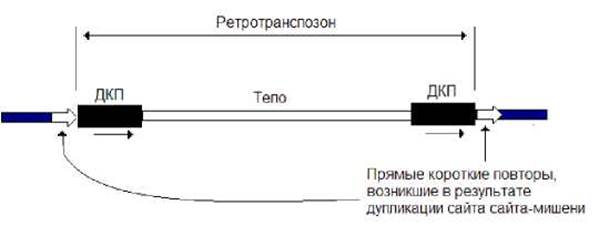
Fig. 10.8. LTR retrotransposon
One of the mechanisms of retrotransposon mobilization resembles the retrovirus life cycle. This transposition pathway involves Proteins encoded within the MGE body: integrase and Reverse Transcriptase (revertase). The retrotransposition mechanism is illustrated in Fig. 10.9. Initially, Transcription of the retrotransposon by RNA polymerase II yields an RNA copy, which is then transported from The Nucleus to the Cytoplasm. Subsequently, using reverse transcriptase, the RNA serves as a template to synthesize a DNA copy of the mobile element. The latter is transported into the Cell Nucleus and integrated into a new DNA site via integrase. In this manner, retrotransposons can spread throughout The Genome.

Fig. 10.9. Scheme of retrotransposon mobilization involving The formation of an RNA copy
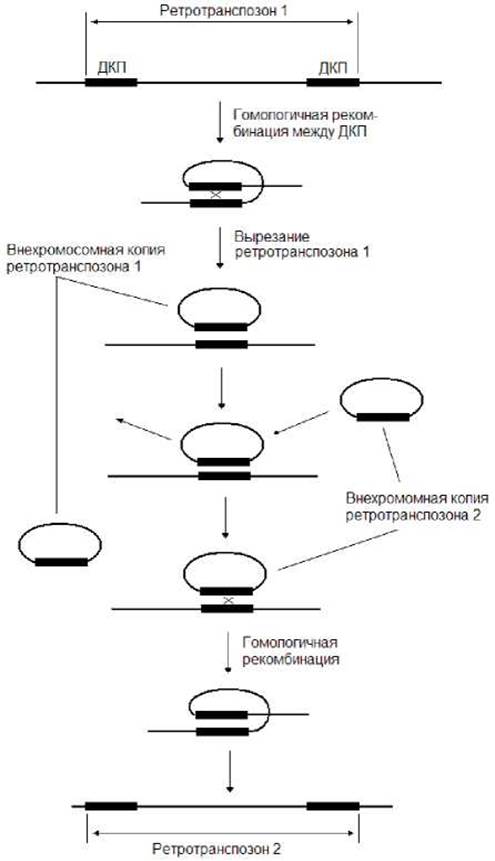
Fig. 10.10. Scheme of retrotransposon mobilization using Homologous Recombination
Retrotransposons can also mobilize via homologous recombination. In this pathway (Fig. 10.10), homologous recombination between the LTRs excises the retrotransposon from the chromosome, leaving one LTR in the genome while the other remains as part of the excised MGE. The LTR retained in the genome is capable of mediating the insertion of another member of the same retrotransposon family—possessing an identical LTR Structure—at this locus via homologous recombination.
Retrotransposons are responsible for a variety of genetic events. Insertion into an exon can result in Gene inactivation (Fig. 10.11) due to the disruption of the exon's Primary Structure.
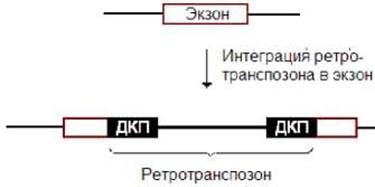
Fig. 10.11. Insertion of a retrotransposon into an exon can lead to gene inactivation
A retrotransposon may also integrate into an intron. Consequently, several scenarios are possible. An LTR located downstream of an exon can cause premature transcription termination due to the presence of a terminator sequence within it, resulting in the synthesis of a truncated RNA molecule. Alternatively, another LTR can drive the transcription of the next exon from its own promoter (Fig. 10.12). Thus, in this case, the insertion of the retrotransposon leads to The production of two RNA molecules instead of one.
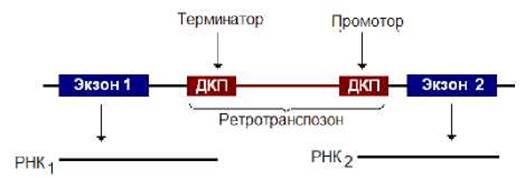
Fig. 10.12. Insertion of a retrotransposon into an intron can lead to the synthesis of two RNA molecules instead of one
The insertion of a retrotransposon near a gene can enhance its expression via an enhancer located within the LTR (Fig. 10.13) or through a strong promoter within the LTR (Fig. 10.14).
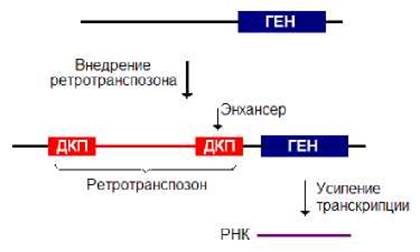
Fig. 10.13. Insertion of a retrotransposon near a gene can enhance its expression via an enhancer within the LTR
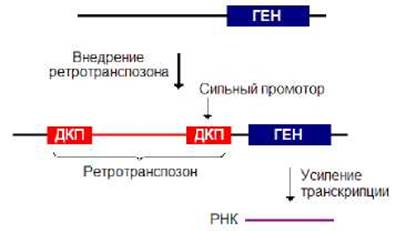
Fig. 10.14. Insertion of a retrotransposon near a gene can enhance its expression via a strong promoter within the LTR
Another interesting feature of retrotransposons is their ability to repair double-strand DNA breaks.
Last update: 12/08/2026
Editorial and Educational Adaptation: This material has been compiled based on the primary/original source text. The project team performed an editorial review, corrected technical inaccuracies, structured sections, and adapted the content for an educational format.
What was processed:
- elimination of formatting defects (OCR errors, structural breaks, corrupted characters);
- editorial organization of content;
- standardization of terminology in accordance with academic sources;
- verification of factual statements against the original source text.
All mentions of the author, publication year, and origin of the primary text have been preserved in accordance with the source.