Fundamentals of Molecular Biology - V.I. Rezyapkin 2009
Mobile Genetic Elements
Non-LTR Retrotransposons
This type of MGE lacks LTRs at the flanks, which is why they are called non-LTR Retrotransposons. Reverse Transcriptase and integrase Enzymes are involved in their mobility. It is therefore easy to deduce that the mobilization mechanism of non-LTR retrotransposons involves reverse METABOLISM/31.html">Transcription (Fig. 10.15). The initial stage of transposition entails the Transcription of the retrotransposon. The resulting RNA serves as a template for the synthesis of Proteins that facilitate the movement of the non-LTR retrotransposon. Concurrently, the RNA copy of the retrotransposon binds to a DNA strand at the site of a DNA break and acts as a template for the Synthesis of the complementary DNA strand via reverse transcriptase. Upon completion of this DNA strand synthesis, the RNA is degraded, and the second DNA strand is synthesized.
Class="center">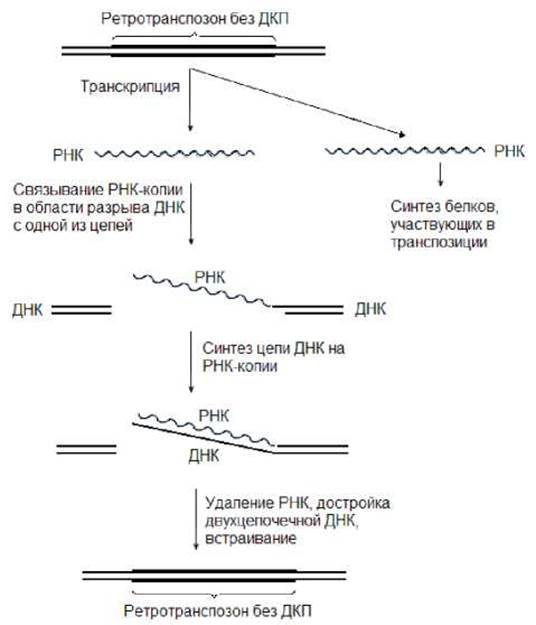
Fig. 10.15. Mechanism of non-LTR retrotransposon mobilization
Non-LTR retrotransposons can be involved in The formation of chromosome telomeres. The Significance of telomeres for proper chromosome function is immense, as they protect genetic material from degradation during Cell Division and are vital for chromosomal stability. In many eukaryotic organisms, Telomere Synthesis is carried out by telomerase. However, this enzyme lacks activity in A number of insects. Consequently, non-LTR retrotransposons perform the function of telomere synthesis in these organisms. The pathway of telomere elongation mediated by non-LTR retrotransposons is illustrated in Fig. 10.16. Initially, the RNA copy of the retrotransposon interacts with the 5’-end of one of the DNA strands. Then, using reverse transcriptase, a DNA strand complementary to the RNA copy is synthesized. After the RNA has served its template function, it is removed, and the second DNA strand is completed. These events are repeated numerous times, resulting in the formation of telomeres composed of repeating retrotransposon units. Thus, non-LTR retrotransposons ensure chromosomal integrity.

Fig. 10.16. Diagram of telomere formation mediated by non-LTR retrotransposons
Last update: 12/08/2026
Editorial and Educational Adaptation: This material has been compiled based on the primary/original source text. The project team performed an editorial review, corrected technical inaccuracies, structured sections, and adapted the content for an educational format.
What was processed:
- elimination of formatting defects (OCR errors, structural breaks, corrupted characters);
- editorial organization of content;
- standardization of terminology in accordance with academic sources;
- verification of factual statements against the original source text.
All mentions of the author, publication year, and origin of the primary text have been preserved in accordance with the source.