Molecular Biology of the Cell - Volume 1 - Alberts B., Bray D., Lewis J., Raff M., Roberts K., Watson J. 1994
Introduction to Cell Biology
Evolution of the Cell
From Molecules to the First Cell
1.1.1. Simple biological molecules can form under prebiotic conditions
The conditions that existed on Earth During the first billion years of its history are still a subject of debate. We do not know whether The surface of our planet was initially molten. Did the atmosphere contain ammonia or methane? We can only assume that Earth was a highly turbulent place, with constant volcanic eruptions, torrential rains, and flashing lightning. There was little to no oxygen, and the ozone layer, which absorbs harsh ultraviolet radiation from the Sun, was absent.
Under such conditions, simple organic (i.e., carbon-containing) molecules evidently arose. The best evidence for this comes from laboratory experiments. If an electric discharge or ultraviolet radiation is passed through a heated mixture of Water and gases, such as CO2, CH4, NH3, and H2, they react to form small organic molecules. Usually, the variety of such molecules is small, but each is formed in relatively large quantities (Fig. 1-1). Among the products are several compounds, such as hydrogen cyanide (HCN) and formaldehyde (HCHO), which readily undergo subsequent reactions in aqueous solution (Fig. 1-2). Most importantly, these experiments successfully yield the four Major Classes of small intracellular molecules: Amino Acids, NUCLEOTIDES, sugars, and Fatty acids.
Although such experiments cannot precisely replicate the conditions that previously existed on Earth, they demonstrate that organic molecules form with surprising ease. Furthermore, our developing planet had immense advantages over any experimenter: it was vast and provided a wide range of conditions. Most importantly, Earth had hundreds of millions of years at its disposal. Under these circumstances, it seems highly probable that at some point, in some place, many of the simple organic molecules that make up modern Cells became concentrated.
Class="center">Cell/cell.files/image004.jpg" width="235"/>
Fig. 1-1. A typical experiment simulating primordial conditions on Earth. Water is heated in a sealed vessel containing CH4, NH3, and H2.
An electric discharge is passed through the mixture of gases and water vapor. Organic compounds accumulate in a U-tube trap.

Fig. 1-2. Some compounds that could have formed in the experiment described in Fig. 1-1. The compounds highlighted in color are essential components of modern living cells.
1.1.2. Polynucleotides are capable of directing their own synthesis
Simple organic molecules, such as amino acids or nucleotides, can associate to form large polymers. Two amino acids can link via a peptide bond, and two nucleotides can be joined by a phosphodiester bond. The sequential repetition of these reactions leads to The formation of linear polymers, termed Polypeptides and polynucleotides, respectively. In modern organisms, polypeptides (called Proteins) and polynucleotides in the form of ribonucleic acid (RNA) and deoxyribonucleic acid (DNA) are generally considered the most crucial components. The universal Building Blocks of proteins consist of just 20 amino acids, while DNA and RNA molecules are built from only four types of nucleotides. One can only wonder why these specific sets of monomers, rather than others with similar chemical properties, were selected for Biosynthesis.
The very first polymers could have formed in several ways, such as by heating dry organic compounds or through the catalytic effect of high concentrations of inorganic polyphosphates. When analogous reactions are carried out in a test tube, polymers of varying lengths with random sequences are formed, where the presence of a given amino acid or nucleotide at each position is determined by chance (Fig. 1-3). However, once a polymer has formed, it can influence the Formation of other polymers. This is especially true for polynucleotides, which can serve as templates in polymerization reactions and thus determine The nucleotide sequence in new polynucleotides. For example, a polymer consisting of a single type of nucleotide (polyuridylic acid, or poly U) can serve as a template for the synthesis of a second polymer composed of another type of nucleotide (polyadenylic acid, or poly A). Such template properties are based on specific, so-called complementary binding of polynucleotides to one another. Poly U promotes the formation of poly A by aligning the necessary subunits along its chain (Fig. 1-4).

Fig. 1-3. Four types of nucleotides (indicated by the letters A, U, G, C) can spontaneously polymerize with the release of water. This results in a mixture of oligonucleotides of random length and random sequence.

Fig. 1-4. Nucleotides are capable of binding to each other (with G preferentially binding to C, and A to U) via relatively weak chemical bonds (left). This binding allows one polynucleotide to serve as a template for the synthesis of another (right).
Specific pairing of complementary nucleotides likely played a crucial role in THE ORIGIN OF life. Consider, for example, an RNA-like polynucleotide containing the bases uracil (U), adenine (A), cytosine (C), and guanine (G). Due to complementary base pairing—A with U and G with C—when RNA is added to a mixture of activated nucleotides under conditions favoring polymerization, a new RNA molecule is synthesized, whose nucleotide sequence is complementary to that of the original RNA. Thus, the new molecules represent a kind of mold of the original molecule, where each A corresponds to a U in the copy, and so on. In The First stage, the information contained in The sequence of the original RNA strand is preserved in the newly forming complementary strands. In the second stage, copying using the complementary strand as a template restores the original sequence (Fig. 1-5).
The mechanisms of complementary template copying are elegant and simple, and they lie at The Heart of information transfer processes in biological systems. The Genetic information of every cell is encoded in The base sequence of its polynucleotides, and this information is transmitted from generation to generation through complementary base pairing.

Fig. 1-5. Replication of a polynucleotide sequence (here, an RNA molecule). In stage 1, the original RNA molecule serves as a template for the formation of an RNA molecule with a complementary sequence. In stage 2, this complementary molecule in turn serves as a template for the formation of an RNA molecule with the original sequence. Since each template is capable of producing many complementary copies, these reactions can lead to the "multiplication" of the original sequence.
For the rapid formation of polynucleotides in a test tube, specific protein catalysts—Enzymes—must be present, which could not have existed in the "prebiotic soup." However, minerals and Metal Ions were likely present there, capable of serving as less efficient catalysts. Furthermore, catalysts only accelerate reactions that would occur without them, albeit over a much longer period. Since both time and chemically active nucleotide precursors were abundant, it is entirely possible that under prebiotic conditions on Earth, slowly replicating polynucleotide systems were able to emerge.
1.1.3. Self-replicating molecules are subject to natural Selection
In any copying process, errors inevitably occur, and inaccurate copies of the original are propagated. Consequently, As a result of multiple replication cycles, the resulting nucleotide sequence will differ significantly from the original. This is how molecular diversity is generated. In the case of RNA, these molecules will likely also possess different functional properties. After all, RNA molecules are not just chains of symbols abstractly carrying information. They possess a chemical individuality that influences their behavior. A specific nucleotide sequence determines The properties of the molecule, particularly its folding pattern (conformation) in solution. Polynucleotide monomers can not only pair with free complementary nucleotides in the medium to form a new polymer, but also form pairs with complementary nucleotide residues within the same polymer. A GGGG sequence in one part of the polynucleotide chain can bind relatively strongly to a CCCC sequence in another region of the molecule. Such interactions give rise to various three-dimensional folds, and the molecule as a whole acquires a unique shape entirely determined by its nucleotide sequence (Fig. 1-6).
The three-dimensional folding of a polynucleotide affects its stability and its ability to replicate, so not all molecules in a replicating mixture will propagate with equal success. Laboratory experiments have shown that a system of replicating RNA molecules is subject to a form of natural selection, in which a particular sequence will come to predominate depending on the specific conditions.
Thus, an RNA molecule possesses two key properties: the information encoded in its nucleotide sequence is transmitted during replication, and its unique Spatial Structure determines how it interacts with other molecules and responds to environmental conditions. Both of these properties—informational and functional—are essential Prerequisites for the evolutionary process. The nucleotide sequence of an RNA molecule is analogous to hereditary information, or the genotype of an Organism. The spatial folding is analogous to the phenotype—the set of organismal traits subject to natural selection.
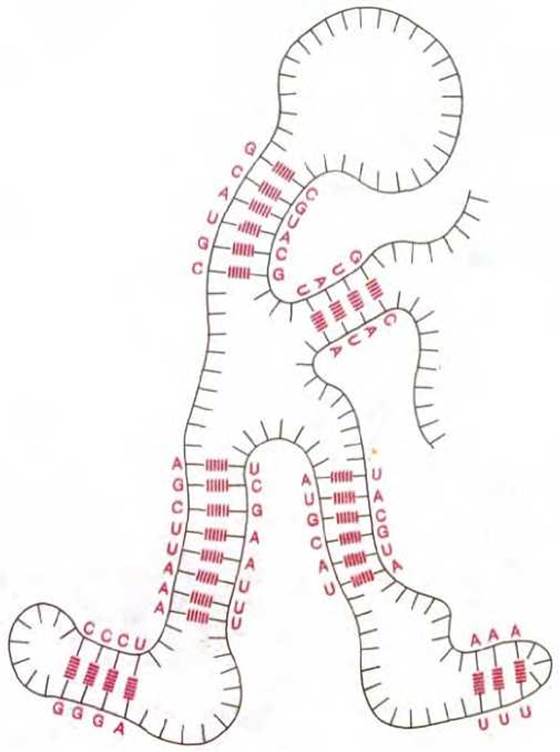
Fig. 1-6. As a result of nucleotide pairing between different Regions of the same polynucleotide chain (RNA), the molecule adopts a specific shape.
1.1.4. Specialized RNA molecules can catalyze biochemical reactions
Natural selection depends on environmental conditions. For a replicating RNA molecule, a critical component of the environment is the set of other RNA molecules in the solution. In addition to serving as templates for their own replication, these molecules can catalyze the Cleavage and formation of covalent bonds, including bonds between nucleotides. Some specialized RNA molecules can catalyze changes in other RNA molecules by cleaving the nucleotide sequence at a specific point, while Other types of RNA molecules are capable of excising a portion of their own nucleotide sequence and joining the cut ends (a process called self-splicing). Each RNA-catalyzed reaction depends on a specific arrangement of atoms On the surface of the catalytic RNA molecule, which causes one or more of its nucleotides to become highly reactive.
One can assume that certain reactions were of fundamental importance in the primordial soup. Consider, in particular, RNA polymerization, a process in which a given RNA molecule is used as a template and is catalyzed by it. RNA, acting on its own copies, will replicate with high speed and efficiency (Fig. 1-7, A). This can facilitate the replication of other types of RNA molecules in adjacent areas. Some of these may possess catalytic activity that helps or hinders the preservation or replication of RNA in other ways. If the beneficial effects are interconnected, Different types of RNA molecules specialized for different reactions will form a cooperative system that replicates with unusually high efficiency (Fig. 1-7, B).

Fig. 1-7. Schematic diagram of three successive stages in the evolution of a self-replicating system of RNA molecules capable of directing Protein Synthesis.
1.1.5. Information is transferred from polynucleotides to polypeptides
Thus, we assume that 3.5–4 billion years ago, somewhere on Earth, self-replicating systems of RNA molecules initiated the evolutionary process. Systems with different sets of nucleotide sequences competed for the supply of precursors needed to build copies (analogous to how organisms compete for food resources today). Success depended on the accuracy and speed of copying, as well as the Stability of the copies.
Although The structure of polynucleotides is well suited for storing and transmitting (replicating) information, the catalytic capabilities of RNA molecules appear to be too limited to support all the Functions of a modern cell. Greater versatility is inherent in polypeptides; they consist of amino acids with chemically diverse side chains and are capable of adopting various three-dimensional shapes rich in reactive sites. The properties of polypeptides make them ideally suited for a wide range of Structural and functional tasks. Even polypeptides with random sequences, arising from prebiotic synthetic mechanisms, apparently possessed catalytic properties and, in particular, could facilitate the replication of RNA molecules. Polynucleotides that promoted the synthesis of useful polypeptides in their environment must have gained a major advantage in the evolutionary struggle. But how could polynucleotides exert such control? How can the information encoded in their sequence determine the sequence of a different type of polymer? Clearly, polynucleotides must act as catalysts for the assembly of selected amino acids. In modern organisms, a coordinated system of RNA molecules directs the synthesis of polypeptides (i.e., protein synthesis), but this process occurs with the participation of other pre-synthesized proteins. The biochemical machinery that carries out Protein synthesis is extremely complex. One type of RNA molecule contains the genetic information for the sequence of the corresponding polypeptide. The Role of other RNA molecules is to bind a specific Amino Acid and transfer it to the assembly site of the polypeptide chain. The basis of the interaction between these Two Types of RNA molecules is the complementarity of their bases, allowing the nucleotide sequence of Messenger RNA to direct the incorporation of specific amino acids, delivered by Transfer RNA molecules, into the growing polypeptide chain. Precursors of these two types of RNA molecules apparently directed the first protein synthesis without the aid of proteins (Fig. 1-7, C).
Today, the assembly of new proteins in The Cell occurs on the surface of Ribosomes—complex particles consisting of several large RNA molecules (of a different class) and more than 50 different types of proteins. In Chapter 5, we will show that ribosomal RNA plays the role of the main catalyst in The process of protein synthesis, making up more than 60% of the ribosome's mass. At least from an evolutionary perspective, this RNA represents the core component of the ribosome.
Thus, it currently seems highly probable that RNA directed the primordial synthesis of proteins in a primitive manner. For more efficient biosynthesis, the cell needed to develop a set of "tools" (in the form of proteins), some of which could be used in RNA replication and in the process of synthesizing these protein "tools."
The Synthesis of specific proteins directed by RNA required the "development" of a code by which a polynucleotide sequence determines the sequence of amino acids in a protein. This code—METABOLISM/28.html">The Genetic Code—is written in a "dictionary" of three-letter words: different nucleotide triplets encode specific amino acids. The code appears to have been "chosen" arbitrarily and remains virtually identical in All living organisms to this day. This suggests that all modern cells are descendants of a single primitive Lineage of cells that succeeded in "developing" an efficient mechanism for protein synthesis.

Fig. 1-8. Micrograph of a bacterial cell (Escherichia coli) in a normal healthy state (A) and one hour after infection with bacteriophage T4 (B). Phage particles (some of which are visible attached to the outer membrane of the cell) inject their DNA into the cell; this DNA then directs the synthesis of specific phage proteins, some of which destroy the host bacterium's DNA, while others catalyze the replication of the bacteriophage DNA. At the stage shown, the newly synthesized phage DNA, packaged in protein coats, is visible as
Once the evolution of Nucleic Acids progressed to encoding enzymes that ensure their own reproduction, the spread of the replicative system must have accelerated dramatically. The explosive nature of such an autocatalytic process can be seen in The life cycle of some modern bacterial Viruses: upon entering a bacterium, these viruses direct the synthesis of proteins that selectively catalyze their own replication, rapidly taking over the entire cell (Fig. 1-8).
1.1.6. The first cell surrounds itself with a membrane
One of the decisive events leading to the Formation of the first cell was obviously the formation of an outer membrane. Indeed, proteins synthesized under the control of a specific type of RNA could not facilitate the reproduction of those very RNA molecules unless they were kept in close proximity to them. Moreover, as long as proteins diffused freely within a population of replicating RNA molecules, they equally aided the reproduction of any competing RNA species. If an RNA arose that produced an improved type of enzyme, the new enzyme was unable to selectively ensure the survival of that specific mutated RNA. Selection of RNA molecules based on the quality of the proteins they encoded could not begin until some closed compartment emerged to enclose the proteins produced by the RNA molecule. Thus, these proteins became available only to the RNA that generated them (Fig. 1-9).

Fig. 1-9. Diagram demonstrating the evolutionary advantage of compartmentalization. In a mixed population of self-replicating RNA molecules capable of directing protein synthesis (as shown in Fig. 1-7), any improved species of RNA that produces a more useful protein is forced to share the benefits of this advantage with all its competitors. However, if the RNA is enclosed within a compartment (such as a lipid membrane), any protein it produces is used for its own needs. Thus, it becomes possible to select RNA based on the quality of the protein it produces.
A crucial role in the evolution of cell membranes apparently belongs to a class of amphipathic molecules that possess a simple physicochemical property: one part is hydrophobic (insoluble in water), and the other is hydrophilic (soluble in water). When such molecules are placed in water, they arrange themselves so that their hydrophobic parts come into close contact with each other, while their hydrophilic parts contact the water. Amphipathic molecules are capable of spontaneously aggregating to form bilayer structures in the form of small closed vesicles, isolating the aqueous content from the external environment (Fig. 1-10). This phenomenon can be demonstrated in a test tube by simply mixing Phospholipids and water: under appropriate conditions, small vesicles indeed form. All existing cells are surrounded by a Plasma Membrane consisting of amphipathic molecules, mainly phospholipids, of such a structure; in cell membranes, The Lipid Bilayer also includes amphipathic proteins. Under an Electron microscope, such membranes appear as sheets about 5 nm thick with a distinct three-dimensional structure (a consequence of the tight tail-to-tail packing of phospholipid molecules).
It is not entirely clear at what point in the evolution of biological catalysis the first cells were formed. They might have appeared when phospholipid molecules in the prebiotic soup spontaneously assembled into a Membrane Structure, enclosing a self-replicating mixture of catalytic RNA molecules. However, it is generally believed that protein synthesis occurred before the appearance of cells. In any case, once they became enclosed within a closed membrane, RNA molecules began to evolve not only based on their own structure but also depending on their effects on other molecules in the same compartment: RNA nucleotide sequences could now influence the CHARACTERISTICS OF THE entire cell.

Fig. 1-10. Cell membranes consist of phospholipids. Since these molecules have hydrophilic "heads" and lipophilic (hydrophobic) "tails," at a water-oil interface they will spontaneously arrange themselves with their HEAD ends toward the water and their tail ends toward the oil. In water, these molecules associate to form closed bilayer vesicles in which the lipophilic tails contact each other and the hydrophilic heads contact the water.
1.1.7. All present-day cells use DNA as their hereditary material
The picture we have painted above is, of course, highly speculative. No fossil record exists to trace the Origin of the first cell. Nevertheless, analyses of contemporary organisms and laboratory experiments convincingly demonstrate that our evolutionary Overview is correct in its main features. The events that led to the formation of the first cell (prebiotic synthesis of small molecules, self-replication of RNA molecules, Translation of RNA sequences into Amino acid sequences, and The Emergence of membrane-enclosed compartments through the self-assembly of lipid molecules) apparently occurred 3.5–4 billion years ago.
It is useful to compare our hypothetical first cell with the simplest contemporary cells, the Mycoplasmas. Mycoplasmas are small, Bacteria-like organisms that usually lead a parasitic lifestyle closely associated with plant or animal cells (Fig. 1-11). They are about 0.3 µm in diameter and contain enough nucleic acid to code for approximately 750 different proteins. Some of these proteins are enzymes, others perform structural functions; some are located inside the cell, while others are embedded in its membrane. Together, they synthesize the small molecules required by the cell that are not present in the environment, redistribute the energy needed for biosynthetic reactions, and maintain the necessary chemical conditions within the cell.
The first cells on Earth apparently contained far fewer components than mycoplasmas and divided much more slowly. However, There is a more fundamental difference between primitive cells and mycoplasmas (and, indeed, any other contemporary cells): genetic information in modern cells is stored in DNA rather than RNA, which was characteristic of primitive cells. Modern cells contain both types of polynucleotides, but in the course of evolution, they have specialized and work together, each performing its own function. Small chemical differences between these two types of molecules make them suited for different tasks. For example, DNA is used as a repository of genetic information because its molecule is more stable than that of RNA. This is partly because DNA lacks a sugar hydroxyl group, making RNA more susceptible to Hydrolysis. Furthermore, unlike RNA, DNA exists predominantly as double-stranded molecules consisting of two complementary polynucleotide chains. This double-stranded structure allows DNA to replicate relatively easily (as will be discussed in Chapter 3) and to repair damage: the undamaged DNA strand serves as a template for restoring the complementary defective strand. Using the same principle of complementarity, DNA directs the synthesis of individual RNA molecules, although in this case, pairing occurs between slightly different types of nucleotides. The single-stranded RNA molecules synthesized in this way perform the other two functions of primordial polynucleotides: they direct protein synthesis both as coding molecules (messenger RNAs) and as catalytic molecules (ribosomal and other non-coding RNAs).
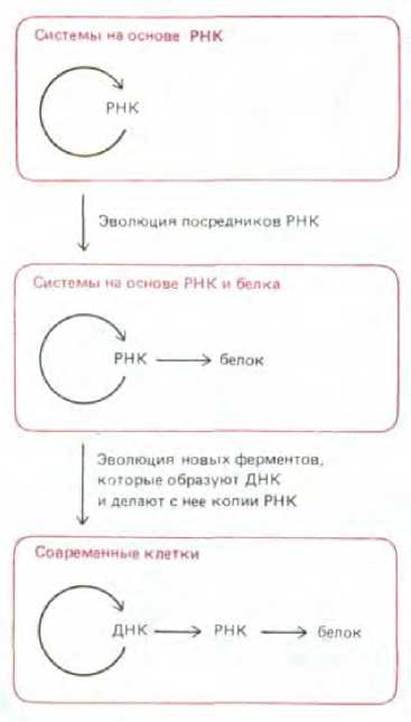
Fig. 1-11. Spiroplasma citrii, a mycoplasma that reproduces in plant cells.
Our current understanding of the evolution of primordial molecules can be summarized as follows. The genetic and catalytic properties of RNA suggest that these molecules were the first to enter the evolutionary process. After the emergence of efficient protein synthesis, DNA assumed the genetic function, proteins became the primary catalysts, and RNA was preserved mainly as an intermediary between them (Fig. 1-12). DNA became necessary only when cells grew highly complex and required far more genetic information than could be stably maintained by RNA molecules.

Fig. 1-12. Proposed stages of evolution from simple self-replicating RNA molecule systems to modern cells, in which DNA serves as the repository of genetic information and RNA acts as an intermediary in protein synthesis.
Living cells most likely appeared on Earth approximately 3.5 billion years ago through the spontaneous aggregation of molecules. The Study of contemporary organisms and their molecular components suggests that The Development of autocatalytic mechanisms inherent in living systems began with the evolution of a family of RNA molecules capable of catalyzing their own replication. Over time, one of these groups of cooperatively catalyzing RNAs acquired The ability to direct the synthesis of polypeptides. The earliest cells apparently made extensive use of the catalytic functions of both RNA and proteins, and contained only RNA as their hereditary material. Once the accumulation of additional catalytic proteins enabled the development of more efficient and complex cells, double-stranded DNA replaced RNA as the repository of genetic information.
Last update: 12/08/2026
Editorial and Educational Adaptation: This material has been compiled based on the primary/original source text. The project team performed an editorial review, corrected technical inaccuracies, structured sections, and adapted the content for an educational format.
What was processed:
- elimination of formatting defects (OCR errors, structural breaks, corrupted characters);
- editorial organization of content;
- standardization of terminology in accordance with academic sources;
- verification of factual statements against the original source text.
All mentions of the author, publication year, and origin of the primary text have been preserved in accordance with the source.