Biochemistry - Chemical Reactions in Living Cells, Volume 1 - D. Metzler 1980
The Molecules We Are Made Of
Lipids
Building Blocks of Lipids
The term Lipids refers to a very large and highly heterogeneous group of substances. These substances are classified into a single category based on their high solubility in nonpolar Solvents or their structural similarity to compounds possessing this property. Most lipids are not high-molecular-weight polymers; rather, they consist of just a few interconnected molecules. Some of these "building blocks" are linear chains of various carboxylic acids formed through complex polymerization reactions. The resulting molecules, such as Fatty acids, are largely hydrophobic, yet they typically contain at least one polar group that can serve as a binding site for other components. Ionic groups (such as phosphate or —NH3) or polar carbohydrate components are also quite common. Lipids containing both polar and nonpolar groups are typically found in membranes and other interfaces separating aqueous environments from hydrophobic regions within Cells.
Structural formulas of certain lipids are shown in Fig. 2-31.
a. Acetic acid derivatives CH3COOH
Common fatty acids (with an even number of carbon atoms) and fatty alcohols, occasionally containing double bonds; these almost invariably have the cis-configuration (Table 2-7).
Fatty acids with an odd number of carbon atoms.
Branched-chain, cyclopropane-containing, and other specific fatty acids.
Polyprenyl derivatives: Terpenes, carotenoids, sterols, and Steroids formed from acetate via reductive Condensation
and decarboxylation. Structurally, they can be viewed as polymerization products of isoprene
Class="center">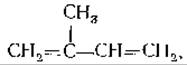
hence their former designation as Isoprenoids.
b. Polar components that are not acetate derivatives
Glycerol.
Serine, ethanolamine, Choline (these compounds are structurally interrelated, as ethanolamine and choline are derived from serine). Sphingosine (partially a fatty acid derivative). Inorganic phosphate and sulfate, as well as organic sulfonates and Phosphonates.
Inositol, sugars.

FIG. 2-31. Structural formulas of some lipids.

FIG. 2-31. (continued)
Last update: 06/08/2026
Editorial and Educational Adaptation: This material has been compiled based on the primary/original source text. The project team performed an editorial review, corrected technical inaccuracies, structured sections, and adapted the content for an educational format.
What was processed:
- elimination of formatting defects (OCR errors, structural breaks, corrupted characters);
- editorial organization of content;
- standardization of terminology in accordance with academic sources;
- verification of factual statements against the original source text.
All mentions of the author, publication year, and origin of the primary text have been preserved in accordance with the source.