Medical Genetics - V. M. Zaporozhan 2005
Introduction to Medical Genetics
Molecular Basis of Heredity
The Genetic Code and Its Properties
A specific sequence of nucleic acid NUCLEOTIDES that encodes the Amino Acid Sequence in corresponding polypeptide chains is called METABOLISM/28.html">THE Genetic Code. The genetic code possesses the following fundamental properties:
1. The code is triplet, meaning that each amino acid is encoded by three nucleotides (a triplet or codon).
2. The code is degenerate, since Proteins consist of 20 Amino Acids, whereas 4 types of nucleotides can form a combination of 64 triplets. All amino acids, except for Methionine and Tryptophan, are encoded by two or more triplets.
3. The Specificity of the code lies in the fact that a single codon encodes only one specific amino acid.
4. The code is non-overlapping (triplets do not overlap with one another).
5. There are no punctuation marks between triplets.
6. The linear arrangement of nucleotides in DNA corresponds to the linear order of amino acids in a protein—this is known as the colinearity of the code.
7. The code is largely universal (the same triplets encode identical amino acids across different species of organisms).
8. Three triplets (UAA, UAG, and UGA) do not encode amino acids; they are located at the end of a Gene and signal the termination of synthesis (terminating triplets, or nonsense codons).
Class="center">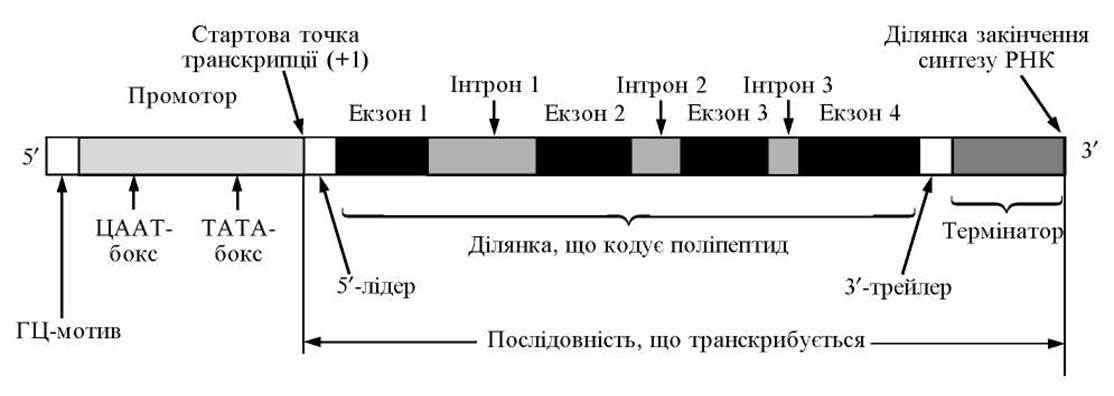
Fig. 1.6. Schematic Organization of a protein-coding eukaryotic gene (coding strand)
Last update: 11/08/2026
Editorial and Educational Adaptation: This material has been compiled based on the primary/original source text. The project team performed an editorial review, corrected technical inaccuracies, structured sections, and adapted the content for an educational format.
What was processed:
- elimination of formatting defects (OCR errors, structural breaks, corrupted characters);
- editorial organization of content;
- standardization of terminology in accordance with academic sources;
- verification of factual statements against the original source text.
All mentions of the author, publication year, and origin of the primary text have been preserved in accordance with the source.